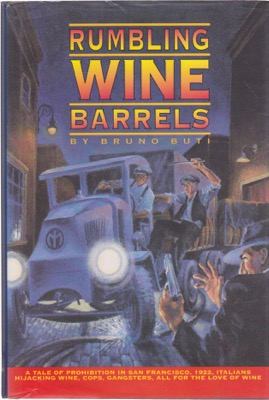
Hardcover. Berkeley, University of California, 1st, 2000, Book: Very Good, Dust Jacket: Very Good, 292 pages. Hardcover with sunned dust jacket. INSCRIBED BY AUTHOR ON FRONT FLY LEAF. Clean and tight copy. Color and black and white photographs throughout.
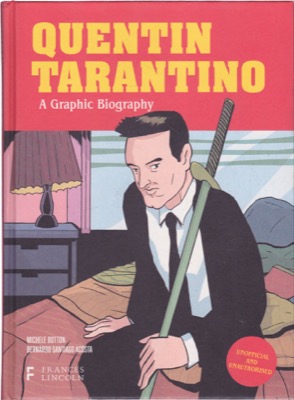
Hardcover. London, Frances Lincoln, 1st US, 2024, Book: Very Good, Dust Jacket: None, Hardcover in pictorial boards. A biography of the filmmaker told in a graphic novel format. From the set of 1993's Pulp Fiction, to a bar room meeting with Robert Rodriguez and an inspirational lunch with Leonardo di Caprio, this unique graphic novel takes us across a series of Hollywood-inspired vignettes covering the movie-obsessed life and career of one of modern cinema's greatest filmmakers - Quentin Tarantino. Join the conversation as Tarantino talks John Travolta into starring in Pulp Fiction, find out about the inspiration for his earliest screenplays and learn about Tarantino's obsessive childhood growing up in California. 126 pages in color. Clean copy.
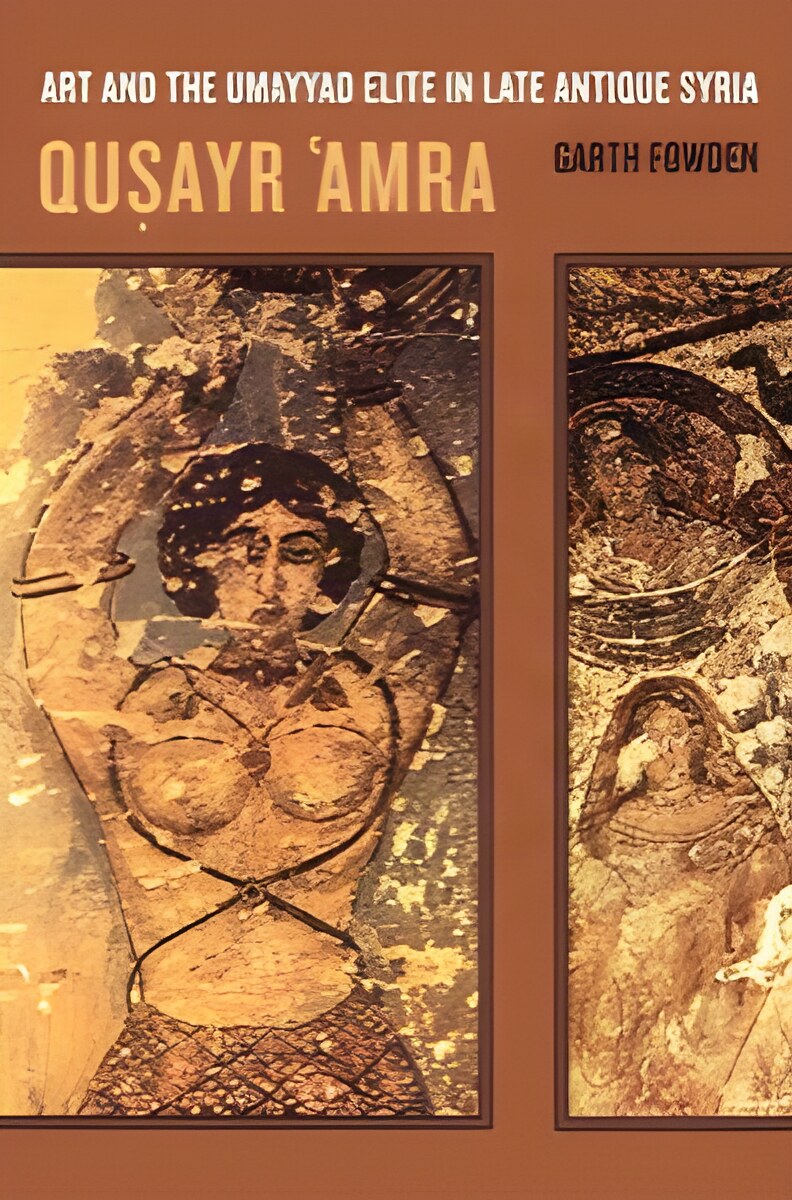
Hardcover. Berkeley, University of California Press, 1st, 2004, Book: Very Good, Dust Jacket: Very Good, Hardcover in a bright dust jacket, 390 pages, b&w illustrations. From the stony desolation of Jordan's desert, it is but a step through a doorway into the bath house of the Qusayr 'Amra hunting lodge. Inside, multicolored frescoes depict scenes from courtly life and the hunt, along with musicians, dancing girls, and naked bathing women. The traveler is transported to the luxurious and erotic world of a mid-eighth-century Muslim Arab prince. For scholars, though, Qusayr 'Amra, probably painted in the 730s or 740s, has proved a mirage, its concreteness dissolved by doubts about date, patron, and meaning. This is the first book-length contextualization of the mysterious monument through a compelling analysis of its iconography and of the literary sources for the Umayyad period. It illuminates not only the way of life of the early Muslim elite but also the long afterglow of late antique Syria. Clean copy.
Hardcover. NY, Taschen, reprint, 2025, Book: Very Good, Dust Jacket: Very Good, Hardcover in a bright dust jacket. Color frontispiece. Black & white illustrations throughout on every page. 11" high X 8" wide, 448 pages. The perfect tribute to the world's favorite dirty old man. It spans the years 1982 to 1989, a period when the artist was comfortably ensconced in rural California, raising his young daughter Sophie, who appears throughout this volume. But Crumb was still Crumb, declaring in one drawing, above a lovingly rendered tree, "As I get older I get more twisted, convoluted, depraved, cynical, embittered, self-centered, jaded, debauched, ruthless, greedy, conceited, set-in-my-ways, long-winded, absent-minded, prejudiced, closed-minded, misanthropic, nervous..." To prove this self-flagellating analysis he fills the pages with his signature perversions (in country settings), scathing social commentary, cruel self-portraits, experimental cubism... and some lovely sylvan landscape. His mastery of the Rapidograph pen is at its zenith here in his 40s, Clean, still in publisher's shrinkwrap.
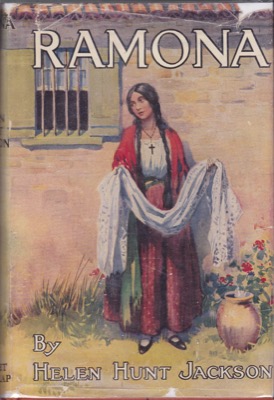
Hardcover. NY, Grosset & Dunlap, reprint, Book: Very Good, Dust Jacket: Good, Hardcover in a bright wraparound dust jacket. Ramona, written by Helen Hunt Jackson, is a timeless work of historical fiction that first captured hearts in 1884. Set against the rugged beauty of post-Mexican-American War California, this powerful novel weaves together romance, cultural heritage, and social justice in a narrative that resonates deeply with readers. We follow the life of a young woman of mixed Native American and European descent as she navigates the complexities of identity, love, and survival in a land fraught with change. Name on front fly leaf otherwise clean.
Hardcover. Hatje Cantz, 1st, 2013, Book: Very Good, Dust Jacket: None, Hardcover with illustrated boards, 212 pages. Since the late 1970s, as a pioneer of Southern California underground culture, Raymond Pettibon has blurred the boundaries of "high" and "low," from the deviations of marginal youth to art history, literature, sports, religion, politics and sexuality. Rich in detail, his obsessively worked drawings pull freely from myriad sources spanning the cultural spectrum. The resulting, highly poetic constructions function as acute reflections of contemporary society. Throughout the years, his subjects have included political figures and historical events, with particular intensity since the events of September 11, 2001. Seen here are images of Ronald and Nancy Reagan, J. Edgar Hoover, both Bush presidents, the Kennedys, Hitler, scenes from the Vietnam War and protest movements, wars in Iraq and Afghanistan, the prisoner abuse of Abu Ghraib, President Obama and Osama bin Laden. Raymond Pettibon (born 1957) studied economics at UCLA around the same time he joined his brother in the punk band Black Flag. He soon began to contribute artwork to album covers, flyers and t-shirts, for the band and its label, SST Records, and exhibited his work in group shows in galleries in the 1980s. Since the 1990s his work has been the subject of numerous major solo exhibitions.
Hardcover. NY, Crowell, 1st, 1957, Book: Very Good, Dust Jacket: Good, Hardcover in a worn, chipped dust jacket. Roger Rasmussen travels to the Boy Scout Jamboree in Southern California. 180 pages, b&w drawings by Henry Pitz. Clean copy.
Softcover. Berkeley CA, University of California Press, 1st, 1997, Book: Very Good, Dust Jacket: None, Softcover, 370 pages. Focuses on the religious beliefs and political actions of Muslim elites and their followers in Algeria and Tunisia. In this study the author provides a detailed analysis of resistance and accommodation to colonial rule. Clean, bright copy.
Softcover. Berkeley CA, University of California Worth Ryder Art Gallery, 1st, 1964, Book: Very Good, Dust Jacket: None, Softcover, b&w pictorial wraps. exhibition catalog, April-May 1964 23 pages, B&W frontispiece photo of artist in his studio, and 5 full color reproductions of artworks: "Fantasia," "Effervescence," "Le Gilotin," "The Lark," and "Heraldic Call."
Hardcover. New York, HarperCollins Publishers, 1st, 2011, Book: Very Good, Dust Jacket: Very Good, 242 pages. Hardcover. INSCRIBED BY THE AUTHOR. Gilt title on spine. Color illustrations throughout. From the front flap: "In Red, Sammy tells the outrageous story of his tear through rock 'n' roll, detailing the backstage antics and nonstop touring hat have made his voice instantly recognizable. Beginning with his musical coming-of-age in blue-collar towns of California, Sammy traces his rough and determined rise to fame, working harder than anyone else out there and writing songs about the things he loved--fast cars, loud parties, and lots of good times."
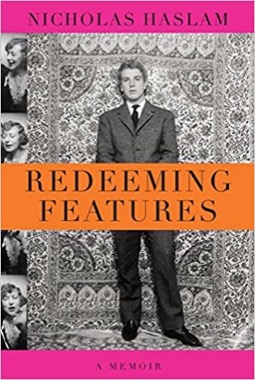
Hardcover. NY, Knopf, 1st, 2009, Book: Very Good, Dust Jacket: Very Good, Hardcover, 352 pages. In this chatty, self-absorbed memoir told with a hefty dose of name-dropping and a devout reverence for fame and fortune, British interior decorator Haslam proudly reveals his intimate connections with many members of British and American high society from the 1950s to the present, from his distant relation to Princess Diana to his brief but adoring encounters with Tallulah Bankhead, Mick Jagger, the Beatles, Joan Crawford, and many more. Indeed his busy social life started young; for most of the first hundred pages he is a fairly wide-eyed ingenue at Eton, followed by stints in London, New York, California, and back to London as a magazine editor, interior designer, and columnist. His has been a life where everyone and everything is darling and divine; in his world, elevator doors open to reveal Salvador Dali, and Andy Warhol is a frequent and amusing dinner companion. While claiming to be telling all, Haslam hides most of what makes many memoirs truly personal and affecting; in exchange readers get a chance to feel as if they are on a first-name basis with the stars. His superficial obsession with high society is, still, highly entertaining and refreshingly honest, and will delight those who travel in international circles of design and fashion.
Softcover. Berkeley CA, University of California Press, reprint, 1977, Book: Very Good, Dust Jacket: None, Softcover, 170 pages. Having previously published a more standard ethnographic study about Morocco, here Rabinow describes in straight-forward language a series of encounters with his informants, from a French innkeeper holding on to the vestiges of a colonial past to the rural descendants of a seventeenth-century saint. The unfolding of these encounters over the length of the author's stay in Morocco develops the book's main theme, that the collection of cultural data shapes and informs that material and its participant observer as well.
Hardcover. Berkeley, CA , University of California Press, 1st, 2002, Book: Very Good, Dust Jacket: Very Good, 283 pages. Hardcover with dust jacket. A very clean, unmarked copy with only minor wear to dust jacket edges. A tight copy. Black and white illustrations throughout. This richly detailed study reconceptualizes a striking but enigmatic moment in Rembrandt's art from the 1650s--one of the artist's most prolific and creative periods. Michael Zell identifies a significant theological shift in Rembrandt's use of religious imagery and interprets this shift in light of the unique religious and social conditions of seventeenth-century Amsterdam. Rembrandt's biblical art has generally been regarded as the embodiment of a Protestant aesthetic. By looking closely at the artist's relationship with his patron Rabbi Menasseh ben Israel and the ideas of a group of "philosemitic" Protestants with whom the rabbi was engaged in an apologetic dialogue, Zell deepens and complicates our understanding of Rembrandt's sacred art from this period.
Hardcover. Koln GR, Taschen, 1st, 2000, Book: Very Good, Dust Jacket: None, Hardcover, 464 pages. Original publisher's faux wood boards, lettered orange at the spine and front cover. Copiously illustrated in color and black and white throughout. Text in English, German and French. Many photographs By Julius Shulman. Originally from Vienna, Richard Neutra came to America early in his career, settling in California. His influence on post-war architecture is undisputed, the sunny climate and rich landscape being particularly suited to his cool, sleek modern style. Neutra had a keen appreciation for the relationship between people and nature; his trademark plate glass walls and ceilings which turn into deep overhangs have the effect of connecting the indoors with the outdoors. Neutra's ability to incorporate technology, aesthetic, science, and nature into his designs brought him to the forefront of Modernist architecture. For the first time, all of Neutra's works (nearly 300 private homes, schools, and public buildings) are gathered together in one volume.
Hardcover. NY, Pantheon Books, 1st, 1985, Book: Very Good, Dust Jacket: Very Good, Hardcover in a bright, price-clipped dust jacket, 402 pages. SIGNED BY THE AUTHOR on the title page. Worster presents a picture of a technological empire based on vast water projects, designed by engineers and controlled by a small managerial elite. This reality, he argues, considerably limited the West's fabled freedom, the claims of promoters, hack writers, and self-serving local historians notwithstanding . this is a major theoretical work, well-argued and generally well-written, a must for any bookshelf that seeks thoroughness in matters western. Chapter five "The Grapes of Wealth," is focused on irrigation in the Central Valley of California and the Central Valley Project. Donald Worster (born 1941) is a prize-winning American academic, one of the founders of, and leading figures in, the field of environmental history. Clean copy.
Softcover. Los Angeles, Spurl Editions, 1st, Book: Very Good, Dust Jacket: None, Softcover, Color plates throughout, unpaginated. Limited to 500 copies. Clean. Documents the eerie fragments of existence left behind in one city. John Brian King photographed RIVIERA from 2016 to 2018 in Palm Springs, California, and its surroundings; a full-time resident at the time, he used a cheap instant film camera to give his photographs a unique, washed-out, hazy aesthetic. King depicts a city that is frozen in a visually arresting state of decline.
Hardcover. NY, W. W. Norton, 1st, 2000, Book: Very Good, Dust Jacket: Very Good, Hardcover in a bright dust jacket, 464 pages, b&w illustrations. Johnson's exquisitely researched and beautifully written book starts with the premise that the Southern mines during the early years of the California Gold Rush (1948-1852) were "a grand field for human interaction and connectedness." They were a kind of experiment in human relations, and Johnson points the spot light on the dynamic and flexible quality of race, gender, and sexuality. She argues that the social world of the gold rush - the organization of domestic labor, the leisure pursuits, and gaming activities (both mining and gambling) - reflected a topsy-turvy world not at all comfortable with itself. Johnson tells a story whereby the gold rush, particularly the relationships that developed in the more diverse and less wealthy Southern mines, created a crisis of racial and gender representation that only sorted itself out with the collusion of Anglo miners and the authority of the state. Johnson notes that Anglo miners, "Conflated their daily lives with a project of national expansion and economic growth infused with notions of progress and 'manifest destiny.'" In this way, Johnson explains the messy and not uncontested work of colonization and racial dominance, and she does so with an eye to the function of gender and sexuality. Clean copy.
Hardcover. Berkeley CA, University of California Press, 1st, 1959, Book: Very Good, Dust Jacket: Good, Hardcover in a lightly worn dust jacket. Foreword by Luella Cole Lowie. Illustrated with 24 b/w photographs. Chronological biography, bibliography. Lowie wrote this book to document ethnographic study in the early 20th century; to put his own professional life on record; to stress methods of field work and their application under very different circumstances.
Hardcover. Berkeley CA, University of California Press/Dia Art Foundation, 1st, 2005, Book: Very Good, Dust Jacket: None, Hardcover, 208 pages, b&w and color plates. Essays and interview with the artist, bibliography, pictorial boards. In publisher's shrinkwrap.
Softcover. Berkeley CA, University of California, reprint, 1996, Book: Very Good, Dust Jacket: None, Softcover, 425 pages, b&w illustrations. Previous owner's signature, otherwise clean, very good. The definitive study o the career of this Italian filmmaker first published in 1987.
Hardcover. Berkeley CA, University of California Press, 1st, 1999, Book: Very Good, Dust Jacket: Very Good, Hardcover, 156 pages. Between 1935 and 1938 the celebrated photographer Roman Vishniac explored the cities and villages of Eastern Europe, capturing life in the Jewish shtetlekh of Poland, Romania, Russia, and Hungary, communities that even then seemed threatened-not by destruction and extermination, which no one foresaw, but by change. Using a hidden camera and under difficult circumstances, Vishniac was able to take over sixteen thousand photographs; most were left with his father in a village in France for the duration of the war. With the publication of Children of a Vanished World, seventy of those photographs are available, thirty-six for the first time. The book is devoted to a subject Vishniac especially loved, and one whose mystery and spontaneity he captured with particular poignancy: children.
Hardcover. Los Alamitos, CA, Art Bagnall Publishing, 1st, 1990, Book: Very Good, Dust Jacket: None, Hardcover, 379 pages, with photographs throughout and illustrated cover. Minor corner and edge wear, previous owner's embossed stamp on title page, otherwise, very clean and tight copy. Richter was a professional auto racer in Southern California in the 1930s and 1940s who then founded Bell Auto Parts and devoted his life to creating specialty safety products for auto and motorcycle sports, including the Bell helmet, which quickly became an essential and popular part of driving gear.
Hardcover. Cloverdale CA, Buti Publications, 1st, 1996, Book: Very Good, Dust Jacket: Very Good, Hardcover in a bright dust jacket, 355 pages illustrated with b&w drawings, not credited. GENERIC INSCRIPTION & SIGNATURE BY AUTHOR on the front fly leaf. Bruno Buti, (pronounced "booty") born to immigrant Italian parents May 23, 1922, in San Bruno, California, the youngest of three children. Nursed to an age he can still remember, then weaned on wine for lack of a cow, he was raised in an era when milk pails runneth over with fresh made alcohol. Growing up underfoot of tough bootleggers, he spent his childhood experiencing unpleasant run-ins between them and crooked lawmen. Haunted by memories of the involvement that his father, relatives and colleagues had in bucking prohibition, their ups and downs in the struggle to make it in a society hostile to immigrant minorities, the author finally dares to unload the burden he carried for so long. His tale attempts to bring out the characteristics and qualities of this particular group of people by depicting them the way they were during those fabulous Twenties. Clean copy.
Softcover. NY, Fordham University Press, 1st, 2014, Book: Very Good, Dust Jacket: None, Softcover, 476 pages, b&w illustrations. INSCRIBED BY AUTHOR on the front fly leaf. This volume gathers groundbreaking critical essays on Sabato (Simon) Rodia's renowned Watts Towers (Los Angeles, California) from diverse disciplinary perspectives, extensively highlighting his migration context as never before, as well as the Towers in the context of human and community development within the 'Watts Towers Common Ground Initiative. Clean copy.

 "Pleasant Places: The Rustic Landscape from Bruegel and Ruisdael (SIGNED COPY)by: Gibson, Walter S.")







 "Raymond Pettibon: Here's Your Irony Back: Political Works 1975-2013by: Raymond Pettibon/Benjamin Buchloh")


 "Razzberry Jamboreeby: Julilly House Kohler/Henry Pitz")




 "Reframing Rembrandt: Jews and the Christian Image in Seventeenth-Century Amsterdamby: Zell, Michael")
 "Richard Neutra : Complete Worksby: Barbara Mac Lamprecht, (Photography) Julius Shulman, (Editor) Peter Goessel")

 "Riviera: Photographs of Palm Springs by: King, John Brian")

 "Robert H. Lowie, Ethnologist: A Personal Recordby: Lowie, Robert H.")
 "Robert Smithson: Spiral Jetty: True Fictions, False Realitiesby: Smithson, Robert with others")
 "Roberto Rosselliniby: Brunette, Peter")
 "Roman Vishniac: Children of a Vanished Worldby: Mara Vishniac Kohn/Roman Vishniac")