Softcover. Berkeley, University of California Press, reprint, 1986, Book: Very Good, Dust Jacket: None, Softcover, 947 pages. Complete in one volume. Revised and annotated by Charles S. Singleton. Singleton preserves the genius of Payne's language and style, but removes the Victorianisms that intrude upon the enjoyment of contemporary readers. He adds essential annotation and original interpretation to round out this unexcelled English edition of Boccaccio's great work. Clean copy.
Hardcover. San Francisco, Chronicle Books, 1st, 2019, Book: Very Good, Dust Jacket: None, Hardcover, pictorial boards. 144 pages, color throughout. Delicious Metropolis brings together two of Wayne Thiebaud's most celebrated bodies of work: desserts and cityscapes. Between the two, fascinating juxtapositions develop. The layers of a Neapolitan cake echo the shadows cast across a street in the late afternoon. The pastel hues of iced sponge cakes match California's candy-colored houses. Curators, critics, and artists guide the reader through the book via insightful bite-size essays. This gorgeous hardcover offers fans and newcomers a refreshing and accessible way to enjoy the oeuvre of this iconic American painter.
Hardcover. Gibbs Smith, 1st, 2005, Book: Very Good, Dust Jacket: Very Good, Hardcover, 192 pages. Sim Van der Ryn is the president of Van der Ryn Architects, a northern California firm known worldwide for its work in sustainable architecture. He taught architecture and design at the University of California, Berkeley for more than thirty years, inspiring a new generation to create buildings and communities that are sensitive to place, climate, and the flow of human interactions. He is the author of six groundbreaking books about planning and design, including Sustainable Communities and Ecological Design. He lives and works in the San Francisco Bay area.
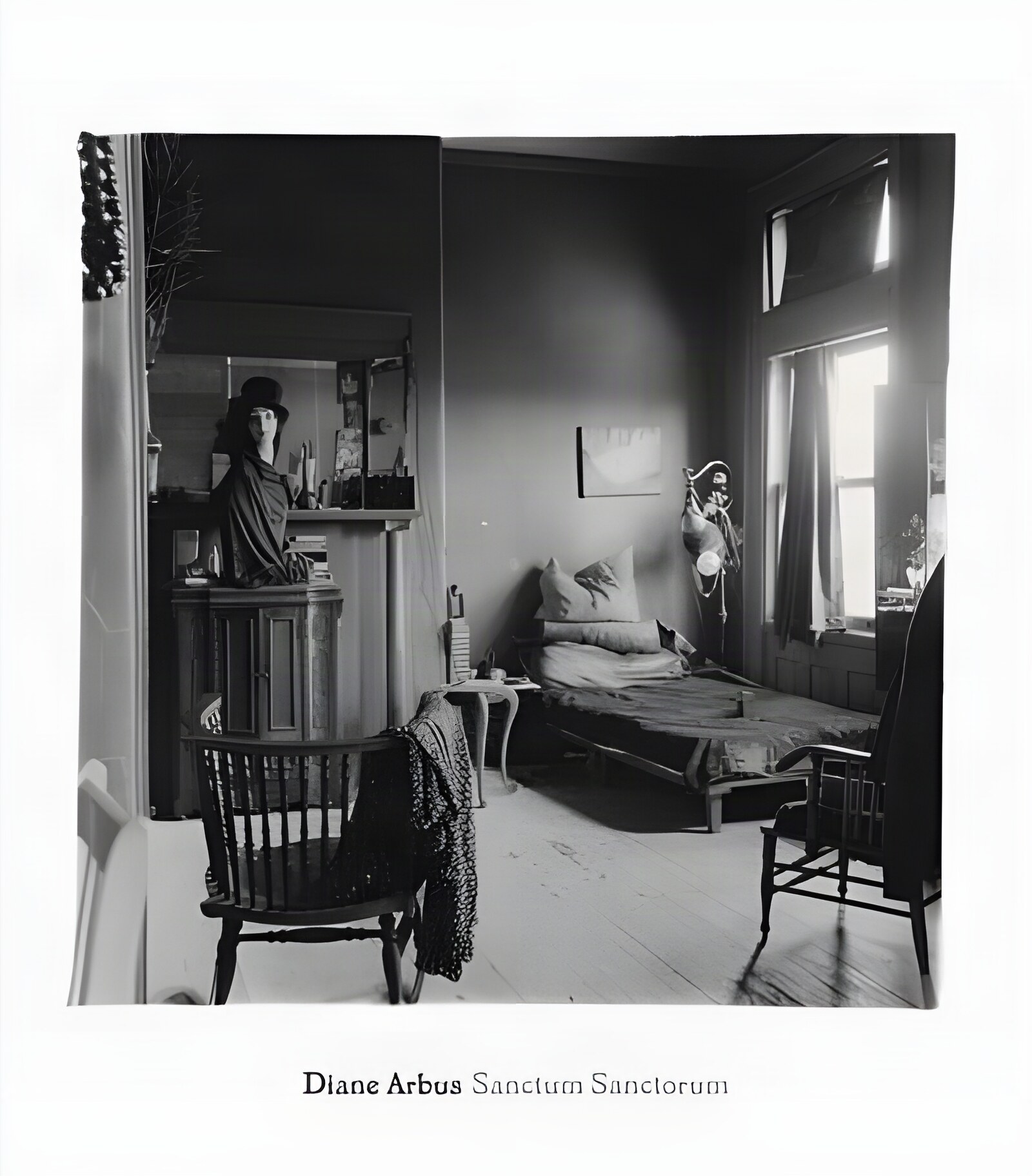
Hardcover. David Zwirner, 1st, 2025, Book: Very Good, Dust Jacket: None, Hardcover in pictorial boards. A new collection of photographs by Diane Arbus illuminates her singular ability to enter private worlds. It brings together forty-five photographs made in private places across New York, New Jersey, California, and London between 1961 and 1971. Through her singular combination of intelligence, charisma, intuition, and courage, Diane Arbus (1923-1971) was frequently invited into personal realms seldom seen by strangers. Though made in intimate settings, the photographs collected in this volume convey no sense of intrusion or trespass-instead, they reveal an unspoken exchange between photographer and subject, a moment of recognition in which confidences emerge freely and without judgment. Arbus's desire to know people embraced a vast spectrum of humanity. Still in publisher's shrinkwrap.
Softcover. Berkeley CA, Counterpoint, 1st, 2015, Book: Very Good, Dust Jacket: None, Softcover, 288 pages. In 1969 Gary Snyder returned from a long residence in Japan to northern California, to a homestead in the Sierra foothills where he intended to build a house and settle on the land with his wife and young sons. He had just published his first book of essays, Earth House Hold. A few years before, after a long absence, Wendell Berry left New York City to return to land near his grandfather's farm in Port Royal, Kentucky, where he built a small studio and lived there with his wife as they restored an old house on their newly acquired homestead. In 1969 Berry had just published Long-Legged House. These two founding members of the counterculture and of the new environmental movement had yet to meet, but they knew each other's work, and soon they began a correspondence. Neither man could have imagined the impact their work would have on American political and literary culture, nor could they have appreciated the impact they would have on one another. Clean copy.
Softcover. Berkeley CA, University of California Press, 2nd pr., 1991, Book: Very Good, Dust Jacket: None, Softcover, 361 pages, b&w plates throughout. Portrays America in the last years of the Great Depression and the first years of World War II in nearly three hundred images by Lange, Delano, Evans, Vachon, Collins, Lee, Rothstein, Parks, Bubley, Wolcott, et al. Clean, bright copy.
Hardcover. Taschen, 1st, 2006, Book: Very Good, Dust Jacket: Very Good, Hardcover, 580 pages. 1950-1954: Architecture of the Avant-Garde. This volume covers the first half of the 1950s, a time characterized by great optimism. The consequences of World War II had largely been overcome, the most urgent needs of the population were satisfied, and economic prospects looked bright. Architecture and design looked for new forms of expression, for new materials and their applications - and the possibilities seemed limitless. Volume III shows contemporary trends of the time through detailed reports on the ninth Triennial in Milan and about designers like Tapio Wirkkala, Finn Juhl, Carlo de Carli, Carlo Mollino, Piero Fornasetti, Marco Zanuso, Harry Bertoia and George Nelson. Via features on Le Corbusier's famous Unite d'Habitation in Marseille, the groundbreaking Case Study Houses by Charles and Ray Eames, the efforts of Richard Neutra in California, the work of Oscar Niemeyer in Brazil, and the futuristic Olivetti Showroom by Studio BBPR in New York. In publisher's shrink wrap.
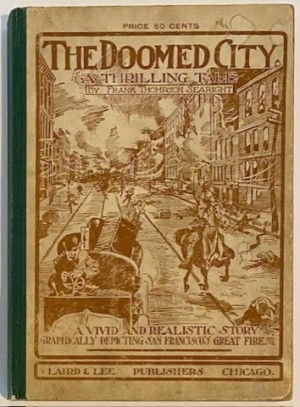
Hardcover. Chicago, IL, Laird & Lee, 1st, 1906, Book: Very Good, Dust Jacket: None, 186 pages. Hardcover. Illustrated front cover. Photo illustrated throughout. Green cloth spine. Original binding with a touch of water staining on front cover right corner. Pages and edges have a touch of tanning from age, doesn't affect text or images. Spine is becoming separated from coverboard, but still attached and repairable. "A vivid and realistic story graphically depicting San Fancisco's great fire."
Hardcover. Berkeley CA, University of California Press, 1st, 2008, Book: Very Good, Dust Jacket: Very Good, Hardcover in a bright dust jacket, illustrated with 237 b&w photos. Much has already been written about early motion picture pioneers like D.W. Griffith, Mary Pickford and Charlie Chaplin, but their invaluable partner, Douglas Fairbanks, Sr has been overlooked and neglected - until now. With this very attractive and professional book, author Jeffrey Vance has given due credit to one of early cinema's most brilliant stars and dynamic personalities who not only had true star power but was a driving force behind the scenes as well. Often remembered these days only for his successful 1920s costume adventure dramas such as "The Mark of Zorro", "Robin Hood" and "The Three Musketeers" to name a few, Douglas Fairbanks had a varied, interesting and successful career well before this period, and also contributed greatly to the development of Hollywood. He was one of the founders of United Artists, he and wife Mary Pickford were the first `golden couple' of Hollywood who established Beverley Hills as the suburb of movie stars;
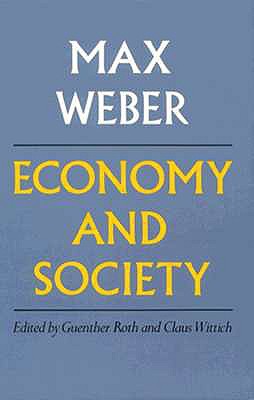
Softcover. Berkeley, University of California Press, reprint, 1978, Book: Very Good, Softcover, 640 pages. Max Weber's "Economy and Society" is the greatest sociological treatise written in this century. Published posthumously in Germany in the early 1920's, it has become a constitutive part of the modern sociological imagination. "Economy and Society" was the first strictly empirical comparison of social structures and normative orders in world-historical depth, containing the famous chapters on social action, religion, law, bureaucracy, charisma, the city, and the political community with its dimensions of class, status and power. "Economy and Society" is Weber's only major treatise for an educated general public. It was meant to be a broad introduction, but in its own way it is the most demanding textbook yet written by a sociologist. Clean copy.
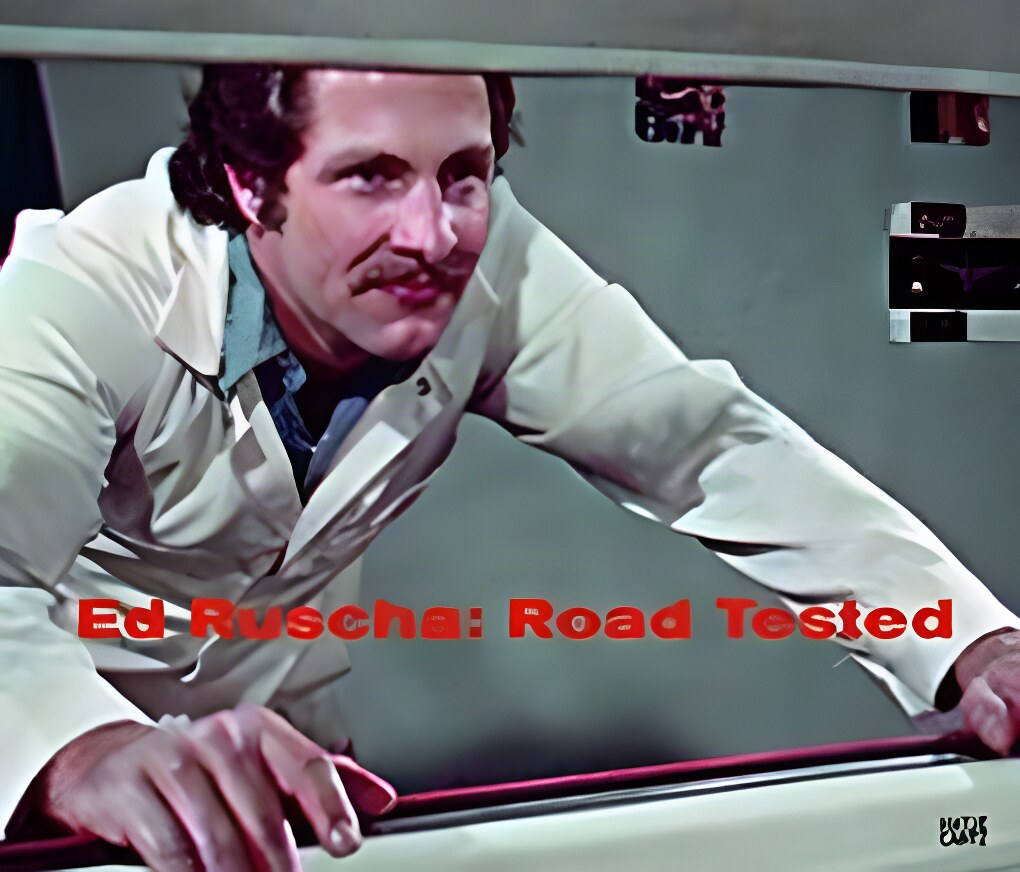
Hardcover. Hatje Cantz, 1st, 2011, Book: Very Good, Dust Jacket: Very Good, Harcover, 128 pages. Since his first road trip in 1956, driving from Oklahoma City to Los Angeles, Ed Ruscha has continued to muse on America as seen from the road: "I like being in the car, and seeing things from that vantage point," he has said. "Sometimes I give myself assignments to go out on the road and explore different ideas. My books are an example of that." Consisting of around 75 works spanning the artist's entire career, Ed Ruscha: Road Tested includes many of the famous aforementioned artist's books, including Twenty-Six Gasoline Stations, Real Estate Opportunities, Some Los Angeles Apartments, Thirty-Four Parking Lots and the groundbreaking artist's book Every Building on the Sunset Strip; some of Ruscha's most iconic paintings, such as the "Standard Stations" and the "Hollywood Signs," as well as paintings inspired by street names and road signs; and his exploration of the topography of greater Los Angeles in paintings that depict aerial grids of the city, as well as various southern California horizons and sunsets. Also examined here is the rarely seen Ruscha film Miracle (1975), which tells the story of a mechanic whose obsessive repair of the carburetor on a 1965 Mustang dooms his date with a beautiful woman. The first-ever treatment of a primary theme in the artist's career, Road Tested at last gives Ed Ruscha his own road show.
Softcover. Berkeley CA, University of California Press, 1st, Book: Very Good, Dust Jacket: None, Softcover. 314 pages, b&w illustrations. In 1930 the Olmsted Brothers and Harland Bartholomew & Associates submitted a report, "Parks, Playgrounds, and Beaches for the Los Angeles Region," to the Los Angeles Chamber of Commerce. After a day or two of coverage in the newspapers, the report dropped from sight. The plan set out a system of parks and parkways, children's playgrounds, and public beaches. It is a model of ambitious, intelligent, sensitive planning commissioned at a time when land was available, if only the city planners had had the fortitude and vision to act on its recommendations. "Parks, Playgrounds, and Beaches" has become a highly valued but difficult-to-find document. In this book, Greg Hise and William Deverell examine the reasons it was called for, analyze why it failed, and open a discussion about the future of urban public space. In addition to their introduction and a facsimile reproduction of the report, Eden by Design includes a dialogue between Hise, Deverell, and widely admired landscape architect Laurie Olin that illuminates the significance of the Olmsted-Bartholomew report and situates it in the history of American landscape planning. Clean copy.
Hardcover. San Francisco, Chronicle Books, 1st, 2006, Book: Very Good, Dust Jacket: Very Good, Hardcover, 192 pages, illustrated with color, b&w photos throughout. A visual biography of Edie Sedgwick, 60's fashion and film icon. Like new in an acetate dust jacket.Model, film star, socialite, friend, lover, addict, Edie Sedgwick was the first "it" girl of the Andy Warhol Factory scene and later muse to Bob Dylan. The arc of Edie's life traced the rise and fall of the 1960s from idyllic experimentation to dissolute recklessness. After being toasted by the whole of New York City, Edie died alone of a drug overdose in California at the age of 28. David Weisman (with John Palmer) filmed Edie for the last five years of her life in his cult film Ciao! Manhattan. When he recently uncovered lost footage of Edie, David was inspired to create Edie: Girl on Fire, a book and a documentary film that explores Edie's true story. He and coauthor Melissa Painter have tracked down and interviewed many of Edie Sedgwick's surviving intimates, including Danny Fields, Baby Jane Holzer, and Ultra Violet. They also unearthed hundreds of never-before-published photos portraits, professional ad shoots, and heartbreaking snapshots of the girl who won New York's heart and nearly burned down the Chelsea hotel. The book also features a CD with Edie's last interview ever, a riveting account of a rollercoaster life.
Hardcover. Berkeley, University of California Press, 1st, 1990, Book: Very Good, Dust Jacket: Very Good, Hardcover in a bright dust jacket, 480 pages. Although he is referred to as a "genius" more often than any other scholar of his period, Edward Sapir has received no full-scale biography since his death in 1939. At long last, Regna Darnell provides a comprehensive assessment of the life, ideas, and wide-ranging interests of this remarkable man. Sapir, the foremost linguist and anthropologist of his generation, contributed substantially to the professionalization of linguistics as an independent discipline. He was the first to apply comparative Indo-European methods to the study of American Indian languages, on which he conducted extensive fieldwork. His theoretical work on the relationship of the individual personality to culture remains fundamental to culture theory in anthropology, as does his insistence on the symbolic nature of culture and the importance of culture as understood by its members, in their own words.Sapir became the first professional anthropologist in Canada and teacher of a whole generation of linguists and anthropologists at Chicago and Yale. Holding to a humanistic view of anthropology (his own work included poetry and literary criticism), he was the most articulate spokesman for the interdisciplinary social science of the late 1920s and 1930s. In both linguistics and anthropology Sapir is a revered master whose ideas continue to inspire discussion and research. A sixteen-volume Collected Works is now in progress. Clean copy.
Hardcover. NY, Merrell, 1st, 2017, Book: Very Good, Dust Jacket: Very Good, Hardcover, 160 pages. Over the course of his fifty-year career, American photographer Edward Weston (1886-1958) blazed a path into Photo-Modernism rendering portraits, landscapes, still-lifes and nudes. In 1902, a sixteen-year-old Weston took up photography in Highland Park, Illinois, where he worked as an amateur for five years. In 1907, at the age of twenty-one, Weston moved to Tropico, California, now the city of Glendale in Los Angeles County, where he constructed his first studio and set about with great purpose to become a photographic artist. Examining Weston's earliest sharp- and soft-focus photographs reveals that the young artist had already formed a perfect sense of composition that was to be the hallmark of his later work. Presenting Weston's earliest work from a recently discovered family album, Edward Weston: Portrait of the Young Man as an Artist compares the artist's naive first artistic efforts with his latest masterworks to show the persistence and evolution of his singular vision to find essential form in the vernacular with an ever-increasing intensity. As a young man deeply intuitive and original in his creative expression, Edward Weston demonstrates that his teenage work, beginning with his amateur snapshots, embrace the same significant form as the later work for which he is now considered a master.
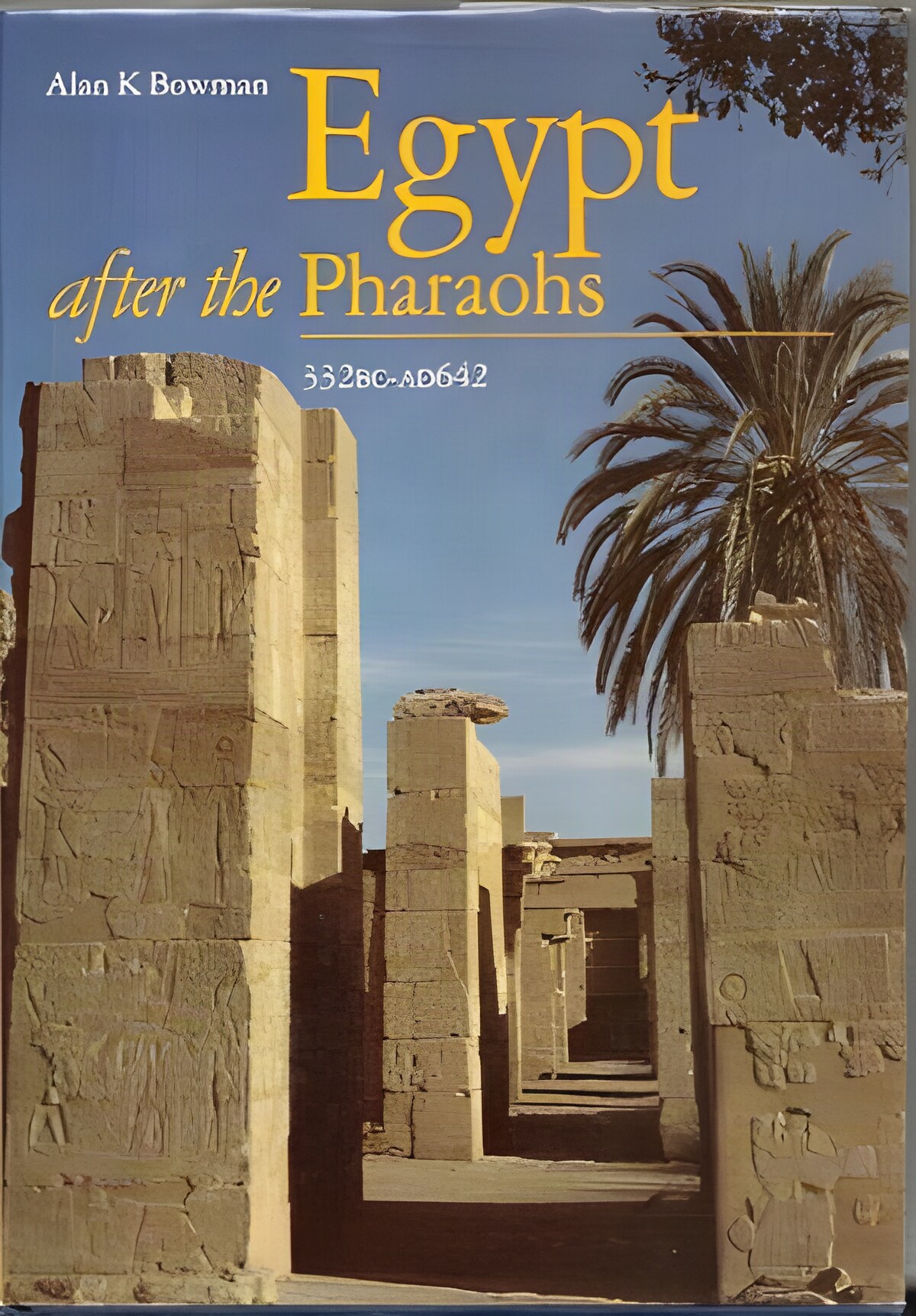
Hardcover. Berkeley CA, University of California Press, 1st, 1986, Book: Very Good, Dust Jacket: Very Good, Hardcover in a bright dust jacket, 264 pages, photographs throughout. Egypt After the Pharoahs treats the period which witnessed the arrival of the Greeks and Hellenistic culture in Egypt, the reign of the Ptolemies from Ptolemy I to Cleopatra, the conquest by Rome, the scientific and cultural achievements of Alexandria, and the rise of Christianity. The rich social, cultural, and intellectual ferment of this period comes alive in Alan Bowman's narrative. Clean copy.
Hardcover. Berkeley CA, University of California Press, 2nd pr., 1995, Book: Very Good, Dust Jacket: Very Good, Hardcover in a bright, unclipped dust jacket, 671 pages. Robert D. Richardson Jr. brings to life an Emerson very different from the old stereotype of the passionless Sage of Concord. Drawing on a vast amount of new material, including correspondence among the Emerson brothers, Richardson gives us a rewarding intellectual biography that is also a portrait of the whole man. Clean copy.
Hardcover. Berkeley CA, University of California Press, 1st, 1974, Book: Very Good, Dust Jacket: Good, Hardcover in a lightly worn dust jacket, 205 pages. Name on front fly leaf otherwise clean. Small hole on dj front.
Softcover. Berkeley CA, University of California Press, reprint, 1966, Book: Very Good, Dust Jacket: None, Softcover, 151 pages. Deals with the parliamentary group in England which claimed the Whig tradition during the American Revolution. The Americans asserted rights that were essentially Whig, but at the same time repudiated the authority of parliament, the stronghold of Whig tradition. Fading to spine, name on front fly leaf, otherwise clean.
Hardcover. US, Prestel, 1st, 2013, Book: Very Good, Dust Jacket: Very Good, 128 pages. Like new in publisher's shrink-wrap. The first publication dedicated to Rose Mandel, a pioneering woman in photography, introduces her remarkable, if often overlooked, body of work to a wider audience. Born in Poland, Rose Mandel immigrated to California in 1942. A love of photography soon brought her into contact with Edward Weston, and then with Ansel Adams and Minor White, both of whom had a strong influence on Mandel's work. Including her important sequence The Errand of the Eye, this book presents the sensitivity and clarity of Mandel's vision. Images from natural and man-made environments, eloquent portraits, and abstract landscapes convey Mandel's delight in the compositions and patterns that can be found anywhere, whether walking along a city street or a country path. These photographs are the result of a highly refined sense of craftsmanship and a complex understanding of psychology and abstract expressionism that caused Mandel to be described as "a painter with a camera." The first monograph on the artist, this volume features an enlightening overview of Mandel's life and work, along with an illustrated chronology and exhibition history.
Hardcover. Christie's, 1987-1989, Book: Very Good, Dust Jacket: None, Complete 7 volume set including index, bound handsomely in red cloth over boards with gilt lettering and insignia to front covers, gilt titles to spines. Part I, Eighteenth Century Books Including the Gutenberg Bible; Part II, Medieval and Renaissance Manuscripts; Part III, Printed Books and Manuscripts Including Western Americana; Part IV, Printed Books and Manuscripts Including Early Printing, Literature, and Fine Bindings; Part V, Printed Books and Manuscripts Including Americana, Literature, and Fine Bindings; Part VI, Printed Books and Manuscripts Concerning William Morris and His Circle; Index and Price Lists. (12" x 9"). 302pp, 125pp, 320pp, 344pp, 316pp, 102pp, 99pp. Color and b/w plates throughout.
Hardcover. NY, W. W. Norton & Company, 1st, 2016, Book: Very Good, Dust Jacket: Very Good, Hardcover in a bright, unclipped dust jacket, 580 pages, b&w illustrations. Los Angeles is a city founded on blood. Once a small Mexican pueblo teeming with Californios, Indians, and Americans, all armed with Bowie knives and Colt revolvers, it was among the most murderous locales in the Californian frontier. In Eternity Street: Violence and Justice in Frontier Los Angeles, "a vivid, disturbing portrait of early Los Angeles" (Publishers Weekly), John Mack Faragher weaves a riveting narrative of murder and mayhem, featuring a cast of colorful characters vying for their piece of the city. These include a newspaper editor advocating for lynch laws to enact a crude manner of racial justice and a mob of Latinos preparing to ransack a county jail and murder a Texan outlaw. In this "groundbreaking" (True West) look at American history, Faragher shows us how the City of Angels went from a lawless outpost to the sprawling metropolis it is today. A riveting popular history of Los Angeles's bloody beginnings. Clean copy.
Hardcover. NY, WW Norton & Co, 1st, 2016, Book: Very Good, Dust Jacket: Very Good, Hardcover in a bright, unclipped dust jacket. 580 pages, 16 pages of illustrations. Eternity Street tells the story of a violent place in a violent time: the rise of Los Angeles from its origins as a small Mexican pueblo. In a masterful narrative, John Mack Faragher relates a dramatic history of conquest and ethnic suppression, of collective disorder and interpersonal conflict. Eternity Street recounts the struggle to achieve justice amid the turmoil of a loosely governed frontier, and it delivers a piercing look at the birth of this quintessentially American city. In the 1850s, the City of Angels was infamous as one of the most murderous societies in America. Saloons teemed with rowdy crowds of Indians and Californios, Mexicans and Americans. Men ambled down dusty streets, armed with Colt revolvers and Bowie knives. A closer look reveals characters acting in unexpected ways: a newspaper editor advocating lynch law in the name of racial justice; hundreds of Latinos massing to attack the county jail, determined to lynch a hooligan from Texas. Murder and mayhem in Edenic southern California. "There is no brighter sun...no country where nature is more lavish of her exuberant fullness," an Angeleno wrote in 1853. "And yet, with all our natural beauties and advantages, there is no country where human life is of so little account. Men hack one another to pieces with pistols and other cutlery as if God's image were of no more worth than the life of one of the two or three thousand ownerless dogs that prowl about our streets and make night hideous." Like-new.
Hardcover. Chicago, University Of Chicago Press, 1st, Book: Very Good, Dust Jacket: Very Good, Hardcover in a bright dust jacket, 236 pages. A butler school in Houston, a livestock auction in Little Rock, a home for "frozen guys" in California, JFK's humidor in Manhattan--all are jumping off points for Friedman's baleful and sharply satirical scrutiny of American life and behavior in the second half of the twentieth century. Travel with Friedman from Harlem to Hollywood, from Port-au-Prince to Etta's Eat Shop in Chicago. In these pieces, which were published in literary and mass-circulation magazines from the 1960s to the 1990s, you'll meet such luminaries as Castro and Clinton, Natalie Wood and Clint Eastwood, and even Friedman's friends Irwin Shaw, Nelson Algren, and Mario Puzo. Friedman is a master of the essay, whether the subject is crime reporting ("Lessons of the Street"), Hollywood shenanigans ("My Life among the Stars"), or his outrageous adventures as the editor of pulp magazines (the classic "Even the Rhinos Were Nymphos"). We could sing his praises as a journalist, humorist, and social critic. But, as Buckley tells us, being Bruce Jay Friedman is enough. Clean copy.


 "Delicious Metropolis: The Desserts and Urban Scenes of Wayne Thiebaudby: Wayne Thiebaud")


 "Design For Life: The Architecture of Sim Van der Rynby: Sim Van Der Ryn")

 "Documenting America 1935-1943 by: Fleischhauer, Carl; Brannan, Beverly W.")
 "Domus, Volume 3, 1950-1954by: Ponti, Lisa Licitri/ Luigi Spinelli, et al.")


 "Douglas Fairbanksby: Vance, Jeffrey")

 "Edie: Girl on Fireby: Painter, Melissa and David Weisman")
 "Edward Sapir. Linguist Anthropologist Humanistby: Darnell, Regna")
 "Edward Weston: Portrait of the Young Man as an Artistby: Graham Howe and R.D. Beth Warren")
 "Emerson The Mind on Fireby: Richardson Jr. Robert D.")

 "English Whiggism and the American Revolution by: G. H. Guttridge")
 "Errand of the Eye, The: Photographs by Rose Mandelby: Ehrens, Susan")
 "Estelle Doheny Collection, The: From The Edward Laurence Doheny Memorial Library St. John`s Seminary, Camarillo, California. Catalogued by Felix de Marez Oyens and Paul Needham (7 Volumes)by:")


 "Even the Rhinos Were Nymphos: Best Nonfictionby: Friedman, Bruce Jay")