Softcover. Berkeley CA, University of California Press, 1st, 2010, Book: Very Good, Dust Jacket: None, Softcover, 118 pages, illustrations in color. Clean, unmarked copy in excellent condition. In Telling Stories, David Kaufmann focuses on Philip Guston's controversial figurative paintings of the late 1960s and 1970s. He looks at the early critical reception of these works to see what the artist was actually doing and, at another level, to investigate the odd alchemy of artists and their audiences. Grounding his historical approach in careful readings of the paintings, Kaufmann pays close attention to Guston's intense and complicated relationship to Judaism. At the same time, by situating Guston in the context of the fashions of the New York art world, Kaufmann provides unique insight into the workings of that world at the moment when the strictures of artistic modernism began to fade.
Hardcover. NY, Doubleday, 1st, 2002, Book: Very Good, Dust Jacket: Very Good, Hardcover in a bright, unclipped dust jacket. The discovery of gold by a team of Mormon mill workers in 1848 sparked a frenzy that shook the world. People swarmed to California from as far as China and Australia. They came from England and France, from Ireland and Chile, leaving behind their families and everything they owned in the hope of making their fortunes in the new world. They came by ship and overland, braving Tierra del Fuego and the pestilences of Panama, lured by the promise of gold. In a spellbinding narrative that spans several continents, Brands brings the fervour and excitement of the gold rush vividly to life. The Age of Gold is narrative history at its best -- the astonishing tale of one of the most extraordinary speculative frenzies in history, told by a master historian. 547 pages, clean copy.
Softcover. Berkeley CA, University of California Press, 1st, 1998, Book: Very Good, Dust Jacket: None, Softcover, 272 pages. The prolific talents of painter Joan Brown (1938-1990) inform every page of this shining testament to a singular artist. For Brown, art was a means of self-revelation and self-investigation, a fact made abundantly clear by the autobiographical nature of her work. In the first book to fully explore Joan Brown's artistic career, Karen Tsujimoto provides an overview of Brown's life from her San Francisco childhood to her years as a mature artist and teacher. Jacquelynn Baas focuses on Brown's use of universal and personal symbolism by analyzing one of her most celebrated paintings, The Bride. Both authors make extensive use of interviews that let Joan Brown speak for herself about art and the creative process.
Hardcover. Berkeley CA, University of California Press, 1st, 1994, Book: Very Good, Dust Jacket: Very Good, Hardcover in a bright dust jacket, 200 pages, b&w illustrations. Kathleen Kete's wise and witty examination of petkeeping in nineteenth-century Paris provides a unique window through which to view the lives of ordinary French people. She demonstrates how that cliche of modern life, the family dog, reveals the tensions that modernity created for the Parisian bourgeoisie. Kete's study draws on a range of literary and archival sources, from dog-care books to veterinarians's records to Dumas's musings on his cat. The fad for aquariums, attitudes toward vivisection, the dread of rabies, the development of dog breeding-all are shown to reflect the ways middle-class people thought about their lives. Petkeeping, says Kete, was a way to imagine a better, more manageable version of the world-it relieved the pressures of contemporary life and improvised solutions to the intractable mesh that was post-Enlightenment France. Clean copy.
NY, Henry Holt , 1st, 2014, Book: Very Good, Dust Jacket: Very Good, Hardcover in a bright, unclipped dust jacket. Raymond Chandler's incomparable private eye is back, pulled by a seductive young heiress into the most difficult and dangerous case of his career "It was one of those summer Tuesday afternoons when you begin to wonder if the earth has stopped revolving. The telephone on my desk had the look of something that knows it's being watched. Traffic trickled by in the street below, and there were a few pedestrians, too, men in hats going nowhere." So begins The Black-Eyed Blonde, a new novel featuring Philip Marlowe-yes, that Philip Marlowe. Channeling Raymond Chandler, Benjamin Black has brought Marlowe back to life for a new adventure on the mean streets of Bay City, California. It is the early 1950s, Marlowe is as restless and lonely as ever, and business is a little slow. Then a new client is shown in: young, beautiful, and expensively dressed, she wants Marlowe to find her former lover, a man named Nico Peterson. Marlowe sets off on his search, but almost immediately discovers that Peterson's disappearance is merely the first in a series of bewildering events. Soon he is tangling with one of Bay City's richest families and developing a singular appreciation for how far they will go to protect their fortune.
Hardcover. NY, Scribner, 1st, 2006, Book: Very Good, Dust Jacket: Very Good, Hardcover in a bright, unclipped dust jacket. When wealthy horse trainer H. R. Geiger dies, Denver bookman Cliff Janeway encounters the legacy of the man's wife, Candice, a true bookwoman who left behind an assortment of rare first-edition children's books. Sent to assess the collection, Janeway soon finds that several titles are missing, replaced by cheap reprints -- while other hugely expensive pieces remain. Why would a thief take one priceless book and leave an equally valuable volume on the shelf? Suspecting foul play, Janeway follows the trail of Candice's shadowy past to California's Golden Gate and Santa Anita racetracks, where he signs on as a racehorse hot walker. Eavesdropping on the chatter among the hands, he doesn't like what he hears. And when he goes to the house where Candice died to look for answers, Janeway finds much more than he bargained for.
Hardcover. Berkeley CA, University of California Press, 1st, 1999, Book: Very Good, Dust Jacket: Very Good, Hardcover in a bright dust jacket, 150 pages. Superbly illustrated in full color throughout, bound in black cloth over boards, gilt lettering to spine. Illustrated endpapers. Includes major treasures such as the Domesday Book and the Magna Carta, Oscar Wilde's calling card and the last letter written by Mary Queen of Scots. Clean copy.
Hardcover. Berkeley CA, University of California Press, 1st, 1999, Book: Very Good, Dust Jacket: Very Good, Hardcover in a bright dust jacket, 150 pages. Superbly illustrated in full color throughout, bound in black cloth over boards, gilt lettering to spine. Illustrated endpapers. Includes major treasures such as the Domesday Book and the Magna Carta, Oscar Wilde's calling card and the last letter written by Mary Queen of Scots. Clean copy.
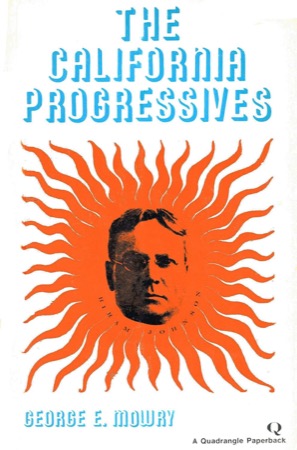
Softcover. NY, Quadrangle, reprint, 1976, Book: Very Good, Dust Jacket: None, Softcover, 344 pages. In this exciting history, Professor Mowry has determined the motives and actions of men who established the Progressive movement in California, and has reconstructed the conditions which opened the way to their ascendancy and fall. The progressive represented, in the author's words, "a pivot on which the democratic process could swing." By examining progressivism in California, its grassroots development and its leaders, Professor Mowry contributes to an understanding of the nature of national progressivism and recent American liberalism. He also illuminates the curious and paradoxical social phenomena of American reform movements - why they begin and why they die. Name on front fly leaf, otherwise clean.
Softcover. London, Hard Case Crime, 1st thus, 2004, Book: Very Good, Dust Jacket: None, Softcover, colorful wraps with a retro-style illustration by Richard B. Farrell. WINNER OF THE EDGAR ALLAN POE AWARD FOR BEST PAPERBACK NOVEL OF THE YEAR! Jake Danser has it all: a beautiful wife, a house in the California hills, a high-profile job as a forensic psychologist. But he's also got a mistress. And when Jake's mistress is found strangled to death with his necktie, it's up to him to prove he didn't do it. But how can he, when all the evidence says he did? Like new.
Softcover. London/Berkeley, James Currey/University of California, 1989, Softcover, 422 pages, despite a quarter century of "nation building," most African states are still driven by ethnic particularism--commonly known as "tribalism." The stubborn persistence of tribal ideologies despite the profound changes associated with modernization has puzzled scholars and African leaders alike. The bloody hostilities between the tribally-oriented Zulu Inkhata movement and supporters of the African National Congress are but the most recent example of tribalism's tenacity. The studies in this volume offer a new historical model for the growth and endurance of such ideologies in southern Africa. Name on front fly leaf, underlining to Introduction, otherwise clean.
Softcover. Berkeley, University of California, reprint, 1985, Book: Very Good, Dust Jacket: None, Softcover, 371 pages, b&w illustrations. A bright, clean copy with sunning to spine.
Hardcover. NY, Simon and Schuster, 1st, 1979, Book: Very Good, Dust Jacket: Very Good, Hardcover in a bright, unclipped dust jacket, 319 pages. SIGNED BY THOMAS on the title page. Minor Jackson is broke when he meets Ploscaru, a dwarf, who tells Jackson that Kurt Oppenheimer's relatives would pay highly to have him found. What Ploscaru doesn't tell Jackson is that Oppenheimer is a professional killer who is being sought by the British, the Americans, and the Russians. Set in 1946, this intricately woven espionage thriller traverses four major settings beginning with Beverly Hills, California and continuing with Mexico, Germany and Washington, D.C. Clean copy.
Softcover. Berkeley, University of California Press, 1st pbk, 2006, Book: Very Good, Dust Jacket: None, Softcover, 417 pages, b&w illustrations. Hollywood celebrities feared her. William Randolph Hearst adored her. Between 1915 and 1960, Louella Parsons was America's premier movie gossip columnist and in her heyday commanded a following of more than forty million readers. This first full-length biography of Parsons tells the story of her reign over Hollywood during the studio era, her lifelong alliance with her employer, William Randolph Hearst, and her complex and turbulent relationships with such noted stars, directors, and studio executives as Orson Welles, Joan Crawford, Louis B. Mayer, Ronald Reagan, and Frank Sinatra-as well as her rival columnists Hedda Hopper and Walter Winchell. Loved by fans for her "just folks," small-town image, Parsons became notorious within the film industry for her involvement in the suppression of the 1941 film Citizen Kane and her use of blackmail in the service of Hearst's political and personal agendas. As she traces Parsons's life and career, Samantha Barbas situates Parsons's experiences in the broader trajectory of Hollywood history, charting the rise of the star system and the complex interactions of publicity, journalism, and movie-making.
Hardcover. San Francisco, CA, John Howell-Books, 1st, 1971, Book: Very Good, Dust Jacket: Good, Hardcover. Limited to 5000 copies. 130 pages. 6 color illustrations. Color frontispiece. The original narrative, hitherto unpublished by Father Vicente Maria and further details by participants in the first explorations of the Bay's waters. Illustrations by Louis Choris in brush and pencil who was at San Francisco in 1816. Blue dust jacket with wear. Sun-fading to spine. Blue boards with gilt title to spine and front. Previous owner sticker on front flyleaf. Overall, a clean, tight copy.
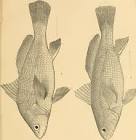
Hardcover. San Francisco, California Academy of Sciences, 1st, 1904, Book: Good, Dust Jacket: None, Hardcover in marbled boards with a green cloth spine, 304 pages, 9 1/4 by 12 inches. Ex-lib of Harvard University with bookplate on inside front cover, light stamping. "Reprinted from the Memoirs of the California academy of sciences, vol. IV." 225 pages of text and charts followed by 33 exquisite b&w plates of fish. Sound attractive copy despite scratches, edgewear to cover boards. This book is more for an ichthyologist than a fisherman. Very technical. This is a heavy and oversized book and will require extra shipping. International customers please ask for a shipping quote before purchasing.
Softcover. Berkeley CA, California University Press, reprint, 2018, Book: Very Good, Dust Jacket: None, Softcover, 308 pages. The German Enlightenment and the Rise of Historicism traces the thought of a large and neglected group of German thinkers and their encounter with the ideas and ideal of the Enlightenment from 1740 to 1790. Concentrating on the nature of their historical consciousness, Peter Hanns Reill addresses two basic issues in the interpretation of the Enlightenment: to what degree can one speak of the unity of the Enlightenment and to what extent can the Enlightenment be characterized as "modern"? Reill attempts to revise the traditional interpretation of the Enlightenment as an age insensitive to the postulates of modern historical thought and to dissolve the alleged opposition of the Enlightenment to later intellectual developments such as Idealism. He argues that German Enlightened thinkers generated the general presuppositions upon which modern historical thought is founded. Bright, clean copy.
Softcover. Washington DC, U.S. Department of Interior, 1st, 1975, Book: Good, Dust Jacket: None, Softcover, 180 pages, b&w illustrations. Fading to red on covers, light musty odor. Name on front fly leaf, otherwise clean.
Softcover. Berkeley, University of California Press, 1st, 1987, Book: Very Good, Dust Jacket: None, Softcover, 248 pages. Name on front fly leaf whited out, otherwise clean.
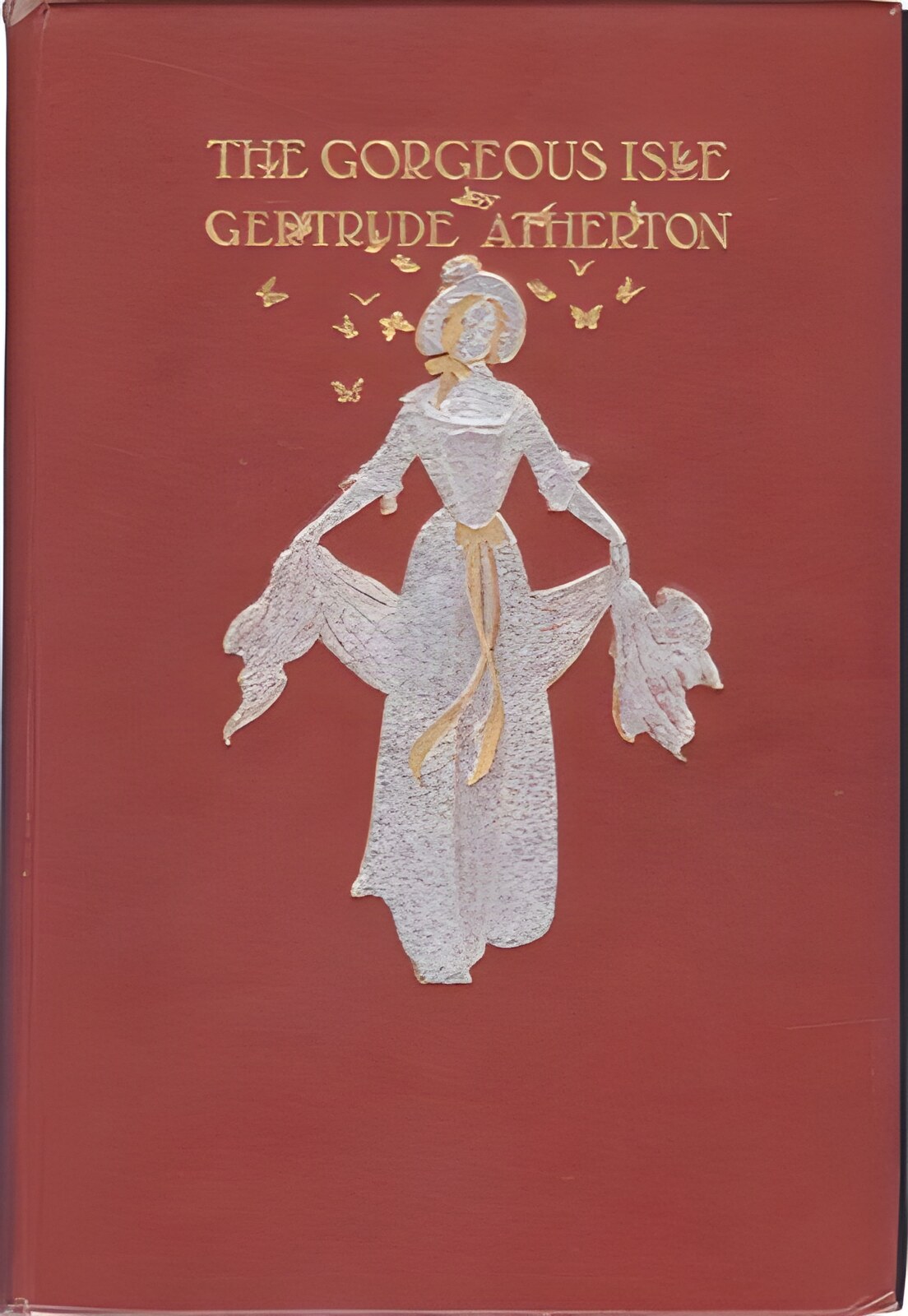
Hardcover. NY, Doubleday, Page & Co. , 1st, 1908, Book: Very Good, Dust Jacket: None, Hardcover, rust colored cloth binding decorated in silver and gilt. Color illustrated end papers. Four color plates by C. Cole Phillips. Gertrude Franklin Horn Atherton (October 30, 1857 - June 14, 1948) was an American author. Many of her novels are set in her home state of California. Her bestseller Black Oxen (1923) was made into a silent movie of the same name. In addition to novels, she wrote short stories, essays, and articles for magazines and newspapers on such issues as feminism, politics, and war. Light smudge to blank prelim page, otherwise clean.
Hardcover. Millbrae CA, Celestial Arts, 1st, 1981, Book: Very Good, Dust Jacket: Very Good, Hardcover, oblong format in a bright dust jacket. 168 pages, map frontis. Period photographs throughout primarily from the San Francisco Public Library collection, as well as the Bancroft Library and Presidio Army Museum collections among others. Clean copy.
Hardcover. Berkeley CA, University of California Press, 1st, 1975, Book: Very Good, Dust Jacket: Very Good, Hardcover, 433 pages including index. B&w illustrations. Recounts the Wilkes Expedition, whose six ships set out from Norfolk in summer 1838 to sail to the polar regions, the South Pacific, and the coasts of present-day Oregon, Washington, and British Columbia. The expedition discovered new islands and reefs in the Pacific and charted the Fijis and other islands. Its men explored, fought with natives, and gathered copious scientific specimens, many of which were given to the National Museum, the Naval Observatory, and the U.S. Botanical Garden. Dust jacket with light edgewear, clean copy.
Hardcover. NY, Random House, 1st, 1943, Book: Very Good, Dust Jacket: None, Hardcover, pictorial boards with a red cloth spine. First edition of Dahl's rare first book, with 14 vibrant full-page illustrations by Walt Disney Productions. The author wrote The Gremlins, a children's story expanding on a mythical creature enshrined for years in RAF lore. Disney expressed an interest in making it into an animated film. The author went to California to work on a screenplay that never made it into production. The book was produced from preliminary work done by the Disney artists. A nice copy with light rubbing to covers, mild foxing, no dust jacket.
Softcover. Berkeley CA, University of California Press, 1st pbk, 1981, Book: Very Good, Dust Jacket: None, Softcover, yellow wrappers, 258 pages. Examines the unique religious brotherhoods of Morocco, tracing their origins to two saints from the late 17th and early 18th centuries, Sidi Ali ben Hamdush and Sidi Ahmed Dghughi. Known for their dramatic and sometimes controversial rituals, such as trance dances and acts of self-mutilation, the Hamadsha are healers who address spiritual and psychogenic ailments through symbolic and therapeutic practices. Their activities, deeply rooted in the Moroccan cult of saints, reflect a complex interplay of Islamic mysticism, local traditions, and social dynamics. Through these rituals, the Hamadsha incorporate patients into their brotherhoods, providing them with new roles and a symbolic framework to articulate and resolve personal and societal tensions. Drawing on extensive fieldwork, historical analysis, and psychoanalytic perspectives, this study explores the Hamadsha's history, their organizational structure, and their relationship with Moroccan culture and religion. It examines the saints' tombs as focal points of veneration, the social dynamics of the brotherhoods, and their therapeutic methods, including pilgrimages and trance dances. Clean copy.

 "Telling Stories: Philip Guston's Later Worksby: Kaufmann, David")

 "The Art of Joan Brownby: Karen Tsujimoto , Jacquelynn Baas , et al.")
 "The Beast in the Boudoir: Petkeeping in Nineteenth-Century Parisby: Kathleen Kete")

 "The Bookwoman's Last Fling: A Cliff Janeway Novelby: Dunning, John")


 "THE CONFESSIONby: Domenic Stansberry")
 "The Creation of Tribalism in Southern Africaby: Leroy Vail")
 "The Drum and the Hoe: Life and Lore of the Haitian Peopleby: Courlander, Harold")


 "The First Spanish Entry into San Francisco Bay 1775by: Galvin, John (ed)")

 "The German Enlightenment and the Rise of Historicism by: Peter H. Reill")


 "The Great San Francisco Earthquake and Fire 1906by: Saul, Eric; Denevi, Don")
 "The Great United States Exploring Expedition of 1838-1842 by: Stanton, William")