Hardcover. Los Angeles, CA, Getty Research Institute, 1st, 2008, Book: Very Good, Dust Jacket: None, 320 pages. Hardcover with no dust jacket. Very clean, unmarked copy still in publishers shrink-wrap. Color photographs throughout. California Video presents the first comprehensive survey of the history of video art in California. Since the late 1960s
Hardcover. New York, Random House, 1st, 1939, Book: Good, Dust Jacket: None, Non- paginated. Hardcover. Extensive b&w photographs throughout. Illustrated title page. Some edge wear to top edge, otherwise clean, tight copy.
Hardcover. Boston, Houghton Mifflin, 1st, 1977, Book: Very Good, Dust Jacket: Very Good, Hardcover in a bright, price-clipped dust jacket. Novel of Early California during the period when United States adventurers were beginning to move in and take over. Clean copy.
Hardcover. Berkeey, University of California, 1st, 1997, Book: Very Good, Dust Jacket: Very Good, Hardcover, 305 pages, nearly 150 b&w photos accompany the text. A survey of photography in East Germany; from 1945 to 1989. In a very good dust jacket with light fade to spine. "Behind the Iron Curtain, against all odds, photography flourished as an art in the German Democratic Republic. The many images in this volume amply demonstrate that fact while also providing an illustrated social history of people 'caught' in the conflicting dictates of ideology, artistic oppression, a troubled national past, and basic human desires."
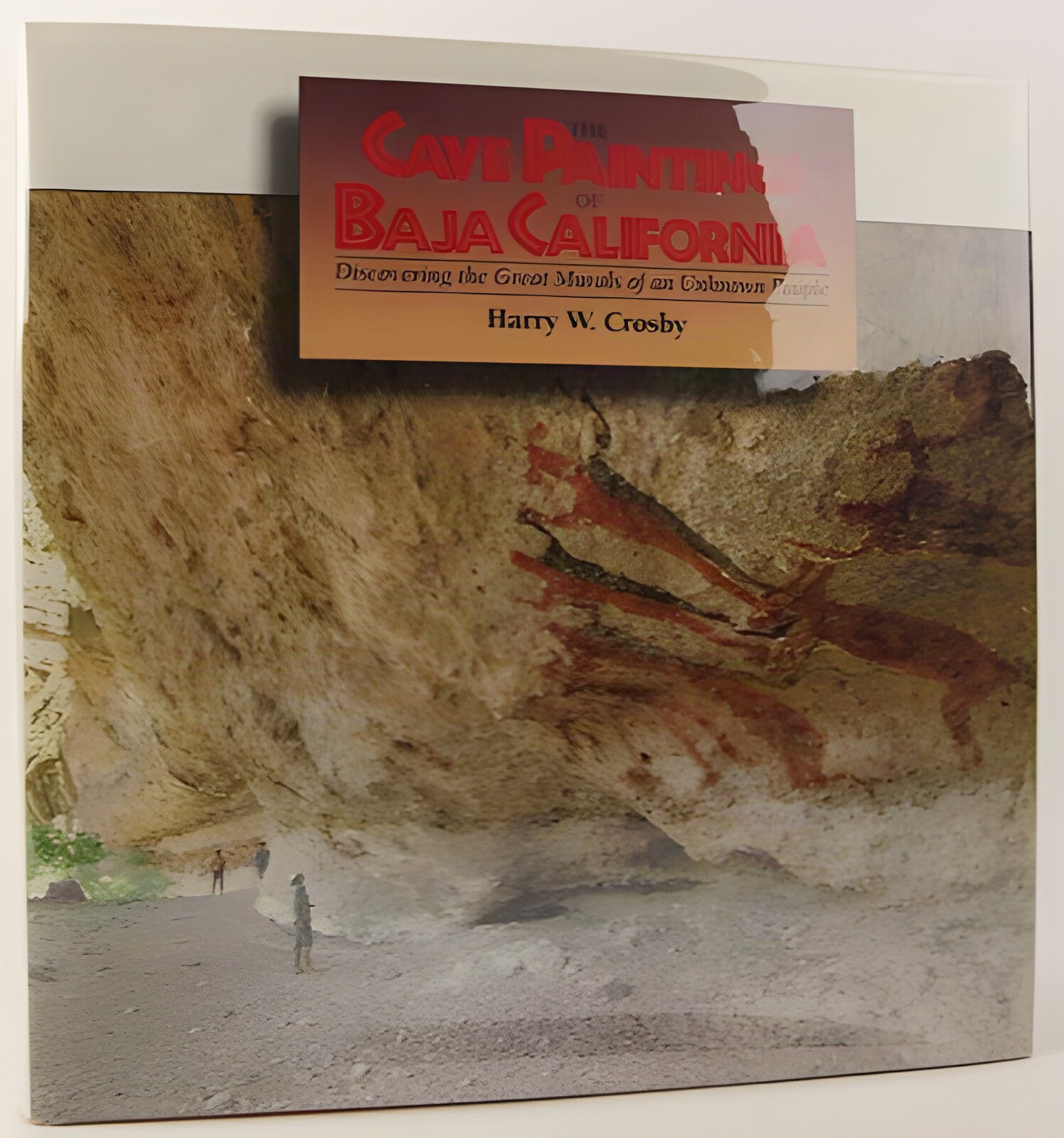
Hardcover. San Diego, Sunbelt Publications, Revised Ed., 1998, Book: Very Good, Dust Jacket: Very Good, Hardcover, 246 pages, color photographs and illustrations throughout, illustrated end paper. The Great Murals of Mexico's Baja California are one of the five greatest sites in the world for primitive rock art. They rank with those of southern France, northern Spain, northwest Africa, and outback Australia. These Great Murals, created by an unknown people, are without doubt the most distinctive trove of rock art in the Western Hemisphere. The site was unveiled to the modern world in the 1960s by adventure/mystery writer Erle Stanley Gardner who brought in UCLA archaeologist Clement Meighan to validate the importance of his find. But it was not until the 1970s, when author/photographer Harry W. Crosby undertook a systematic search for the largely unknown works hidden in the mountains of central Baja that the scope and significance of the find became known. He documented his search and discovery of over 200 previously unreported rock art sites leading to the original publication of The Cave Paintings of Baja California by Copley Books in 1975 which first introduced this cave art to the general public. Since that time, Baja California's Great Murals have been designated a United Nations Heritage Site. This lavishly illustrated full-color account is greatly revised and expanded from the original edition and offers Crosby's unique perspective on the painted sites and painting styles found in different parts of the Great Mural area. Light edge wear to dust jacket. Else a very clean, tight copy.
Hardcover. Los Angeles, Angel City Press, 1st, 1996, Book: Very Good, Dust Jacket: None, Hardcover, illustrated boards, 100 pages. We may never be able to toast Frank Sinatra with a Flame of Love martini, join Jimmy and Gloria Stewart over calf's liver and onions, or share a steaming bowl of Boiled Beef Belmont with the President and Mrs. Reagan on Tuesday nights. But we can come close. CHASEN'S has every great recipe that kept the stars coming back for more, plus its fascinating text stirs delivers the dish on the restaurant and its famous fans. Recipes include the world famous Chasen's Chili that Elizabeth Taylor had air-freighted to the Cleopatra set in Italy, the Chicken Pot Pie served to Queen Elizabeth, the Shirley Temple cocktail that Chasen's bartender invented for the curly-topped star, and a host of other favorites including Deviled Beef Bones, Banana Shortcake, Sole Hitchcock, Coupe Snowball, and the dish President Reagan always ordered, Boiled Beef Belmont.
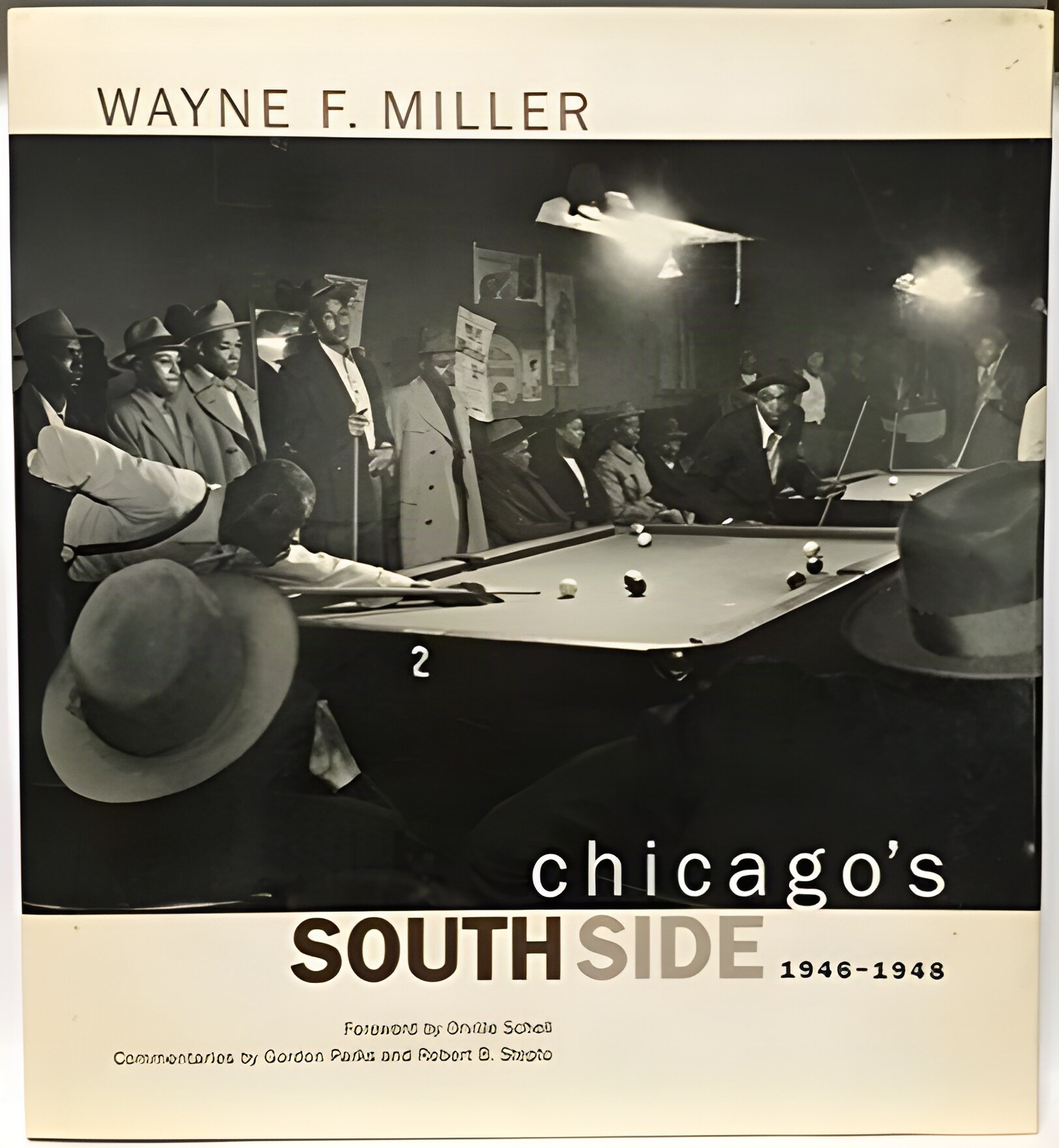
Hardcover. Berkeley CA, University of California Press, 1st, 2000, Book: Very Good, Dust Jacket: Very Good, Hardcover in a bright dust jacket, 112 pages. Schell, Orville [Foreword]; Parks, Gordon [Commentary]; Stepto, Robert B. [Commentary]. Shortly before the end of the Second World War, Wayne Miller was awarded a grant from the Guggenheim Foundation to photograph 'The Way of Life of the Northern Negro'." This project documented the wartime migration of African Americans northward, specifically looking at the black community on the south side of Chicago, covering all the emotions in daily life. The people depicted are mostly ordinary people, but some celebrities appear, such as Lena Horne, Ella Fitzgerald, Duke Ellington and Paul Robeson. He was a contributor to Magnum Photos beginning in 1958. Stamped name on front fly leaf, otherwise clean copy.
Hardcover. Berkeley, University Of California Press, 1st, 2000, Book: Very Good, Dust Jacket: Very Good, Hardcover, black cloth stamped with silver lettering in a bright dust jacket, 112 pages. An immensely important record of black life in Chicago at the near end of the 1940's. Apart from a few photos of entertainers the rest capture, in fascinating detail, life in Chicago's south side. The workplace and workers, interiors of homes and bars, parades, funerals, sport and street scenes with plenty of activity. The detail in all these pictures is impressive and typical of Miller's eye to capture a scene that reveals so much. Foreword by Orville Schell. commentaries by Gordon Parks and Robert Stepto. Small color sticker on front fly leaf, otherwise clean.
Hardcover. Berkeley CA, University of California, 1st, 1992, Book: Very Good, Dust Jacket: Very Good, Hardcover, 525 pages, in a bright unclipped dust jacket.
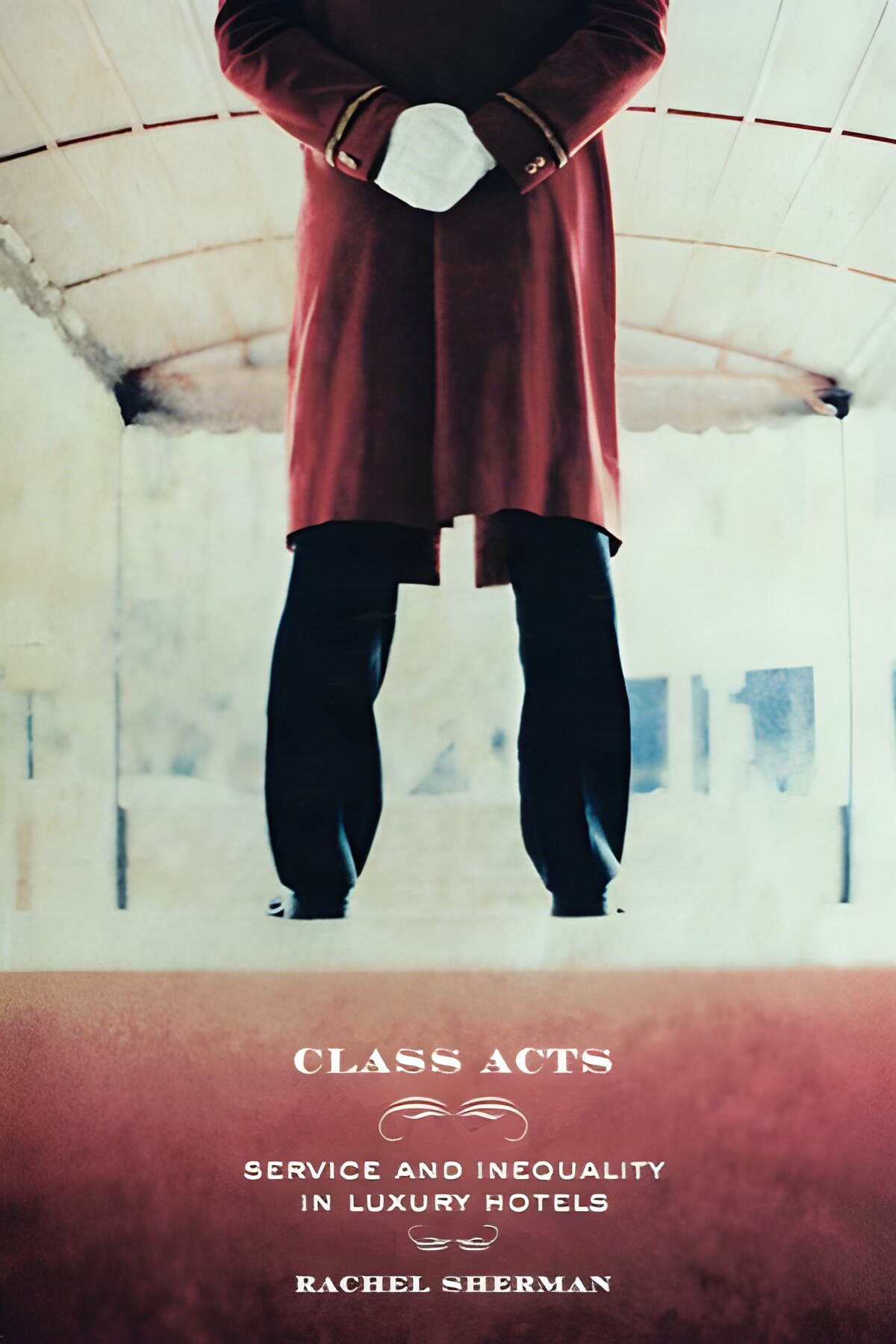
Softcover. Berkeley CA, University of California Press, 1st pbk, 2007, Book: Very Good, Dust Jacket: None, Softcover, 366 pages. In this lively study, Rachel Sherman goes behind the scenes in two urban luxury hotels to give a nuanced picture of the workers who care for and cater to wealthy guests by providing seemingly unlimited personal attention. Drawing on in-depth interviews and extended ethnographic research in a range of hotel jobs, including concierge, bellperson, and housekeeper, Sherman gives an insightful analysis of what exactly luxury service consists of, how managers organize its production, and how workers and guests negotiate the inequality between them. She finds that workers employ a variety of practices to assert a powerful sense of self, including playing games, comparing themselves to other workers and guests, and forming meaningful and reciprocal relations with guests. Through their contact with hotel staff, guests learn how to behave in the luxury environment and come to see themselves as deserving of luxury consumption. These practices, Sherman argues, help make class inequality seem normal, something to be taken for granted. Throughout, Class Acts sheds new light on the complex relationship between class and service work, an increasingly relevant topic in light of the growing economic inequality in the United States that underlies luxury consumption. Clean, bright copy.
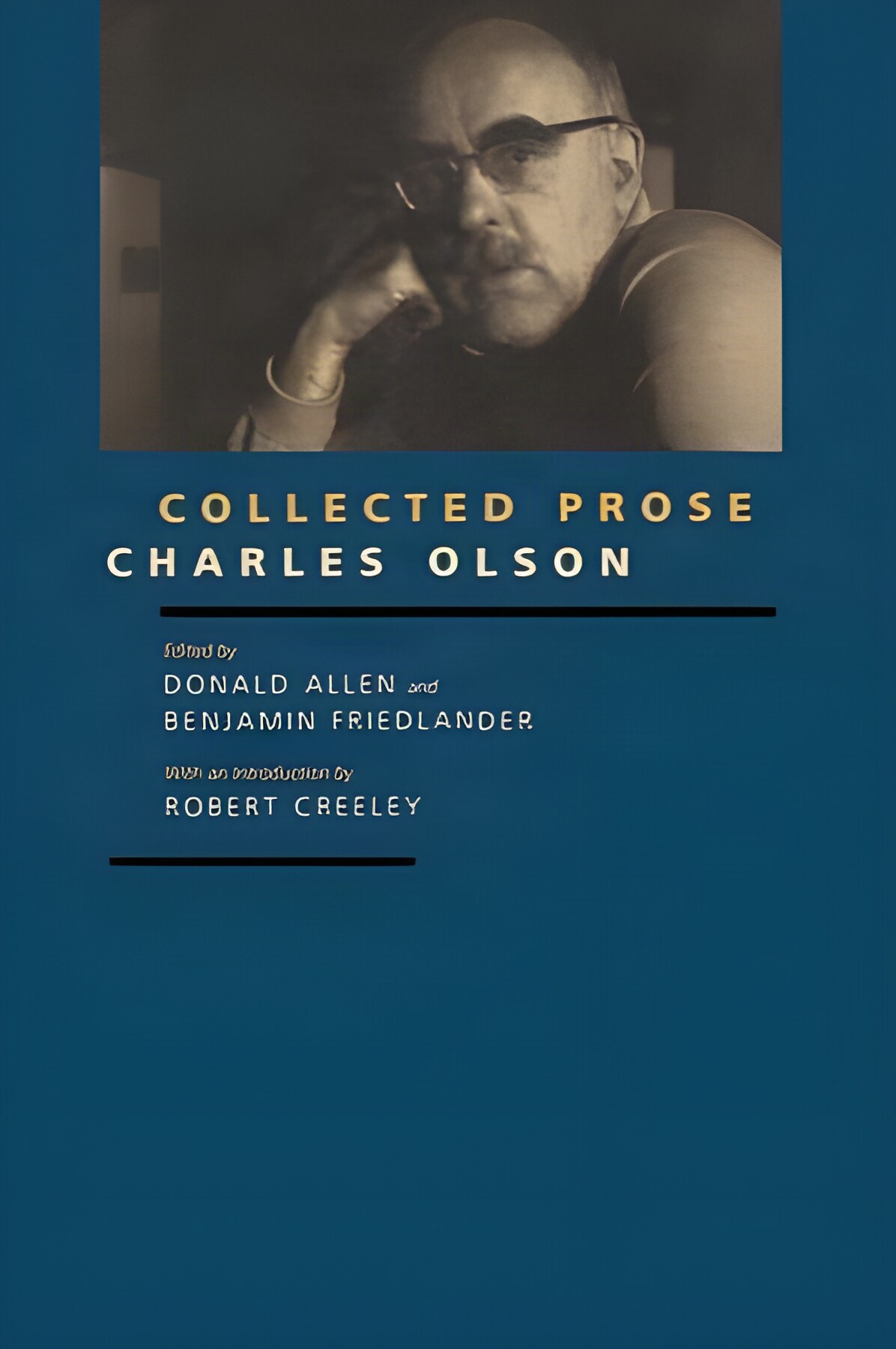
Softcover. Berkeley CA, University of California Press, 1st pbk, 1997, Book: Very Good, Dust Jacket: None, Softcover, 472 pages. The prose writings of Charles Olson (1910-1970) have had a far-reaching and continuing impact on post-World War II American poetics. Olson's theories, which made explicit the principles of his own poetics and those of the Black Mountain poets, were instrumental in defining the sense of the postmodern in poetry and form the basis of most postwar free verse. The Collected Prose brings together in one volume the works published for the most part between 1946 and 1969, many of which are now out of print. A valuable companion to editions of Olson's poetry, the book backgrounds the poetics, preoccupations, and fascinations that underpin his great poems. Included are Call Me Ishmael, a classic of American literary criticism; the influential essays "Projective Verse" and "Human Universe"; and essays, book reviews, and Olson's notes on his studies. In these pieces one can trace the development of his new science of man, called "muthologos," a radical mix of myth and phenomenology that Olson offered in opposition to the mechanistic discourse and rationalizing policy he associated with America's recent wars in Europe and Asia. Clean copy.
Hardcover. Berkeley CA, University of California Press, 1st, 1966, Book: Very Good, Dust Jacket: Very Good, Hardcover in an unclipped dust jacket, 248 pages. Errata slip laid in. Name on blank prelim pages. Otherwise clea.
Hardcover. NY, Rizzoli, 1st, 2010, Book: Very Good, Dust Jacket: Very Good, Hardcover, More than a century ago, when Abbot Kinney built his Venice-of-America with its network of canals and fanciful buildings, cultural aspirations were high. Over the years, this aura of fantasy and imaginative possibility endured as integral to the zeitgeist of the place. Today, this spirit of innovation and creativity is richly expressed in the vintage bungalows and cottages that have been embraced and brought back to life by homeowners more in love with place than size. Stalwart survivors of the ebb and flow of the area's fortunes over a century, these small homes channel the creative spirit of the place and provide a welcome counterpoint to oversize houses. Color, landscape, treasured collections, personal narrative, contemporary overlays and additions, art and craft, and inventive design--all combine in various ways to produce domestic environments with unique and deeply personal points of view.
Hardcover. Philadelphia, Lippincott, 1st, 1887, Book: Very Good, Dust Jacket: None, Hardcover, 260 pages. Hardcover with no dust jacket. Brief notes in pencil on front endpaper. Clean, tight copy. Habberton spent nearly twenty years as the literary and drama critic for the New York Herald, but he is best known for his stories about early California life and for his hugely successful book 'Helen's Babies.'
Hardcover. Berkeley CA, University of California Press, 1st, 2012, Book: Very Good, Dust Jacket: Very Good, Hardcover, 267 pages, b&w photos. Clean, unmarked copy with only minor wear to dust jacket. This book examines the often-neglected role played by immigrant artists and critics in the circle of Alfred Stieglitz, including Japanese-German author Sadakichi Hartmann, Mexican-born caricaturist Marius de Zayas and English Sri-Lankan curator Ananda Coomaraswamy, as well as better-known U.S.-born painters, including Arthur Dove and Georgia O'Keeffe.
Hardcover. NY, Library of America , 4th pr., 1997, Book: Very Good, Dust Jacket: Very Good, Hardcover in a bright dust jacket. 990 pages. James M. Cain's pioneering novel of murder and adultery along the California highway, The Postman Always Rings Twice (1934), shocked contemporaries with its laconic toughness and fierce sexuality. Horace McCoy's They Shoot Horses, Don't They? (1935) uses truncated rhythms and a unique narrative structure to turn its account of a Hollywood dance marathon into an unforgettable evocation of social chaos and personal desperation. In Thieves Like Us (1937), Edward Anderson vividly brings to life the dusty roads and back-country hideouts where a fugitive band of Oklahoma outlaws plays out its destiny. The Big Clock (1946), an ingenious novel of pursuit and evasion by the poet Kenneth Fearing, is set by contrast in the dense and neurotic inner world of a giant publishing corporation under the thumb of a warped and ultimately murderous chief executive. William Lindsay Gresham's controversial Nightmare Alley (1946), a ferocious psychological portrait of a charismatic carnival hustler, creates an unforgettable atmosphere of duplicity, corruption, and self-destruction. I Married a Dead Man (1948), a tale of switched identity set in the anxious suburbs, is perhaps the most striking novel of Cornell Woolrich, who found in the techniques of the gothic thriller the means to express an overpowering sense of personal doom. Clean copy.
Hardcover. NY, Library of America , 4th pr., 1997, Book: Very Good, Dust Jacket: Very Good, Hardcover in a bright dust jacket. 990 pages. James M. Cain's pioneering novel of murder and adultery along the California highway, The Postman Always Rings Twice (1934), shocked contemporaries with its laconic toughness and fierce sexuality. Horace McCoy's They Shoot Horses, Don't They? (1935) uses truncated rhythms and a unique narrative structure to turn its account of a Hollywood dance marathon into an unforgettable evocation of social chaos and personal desperation. In Thieves Like Us (1937), Edward Anderson vividly brings to life the dusty roads and back-country hideouts where a fugitive band of Oklahoma outlaws plays out its destiny. The Big Clock (1946), an ingenious novel of pursuit and evasion by the poet Kenneth Fearing, is set by contrast in the dense and neurotic inner world of a giant publishing corporation under the thumb of a warped and ultimately murderous chief executive. William Lindsay Gresham's controversial Nightmare Alley (1946), a ferocious psychological portrait of a charismatic carnival hustler, creates an unforgettable atmosphere of duplicity, corruption, and self-destruction. I Married a Dead Man (1948), a tale of switched identity set in the anxious suburbs, is perhaps the most striking novel of Cornell Woolrich, who found in the techniques of the gothic thriller the means to express an overpowering sense of personal doom. Clean copy.
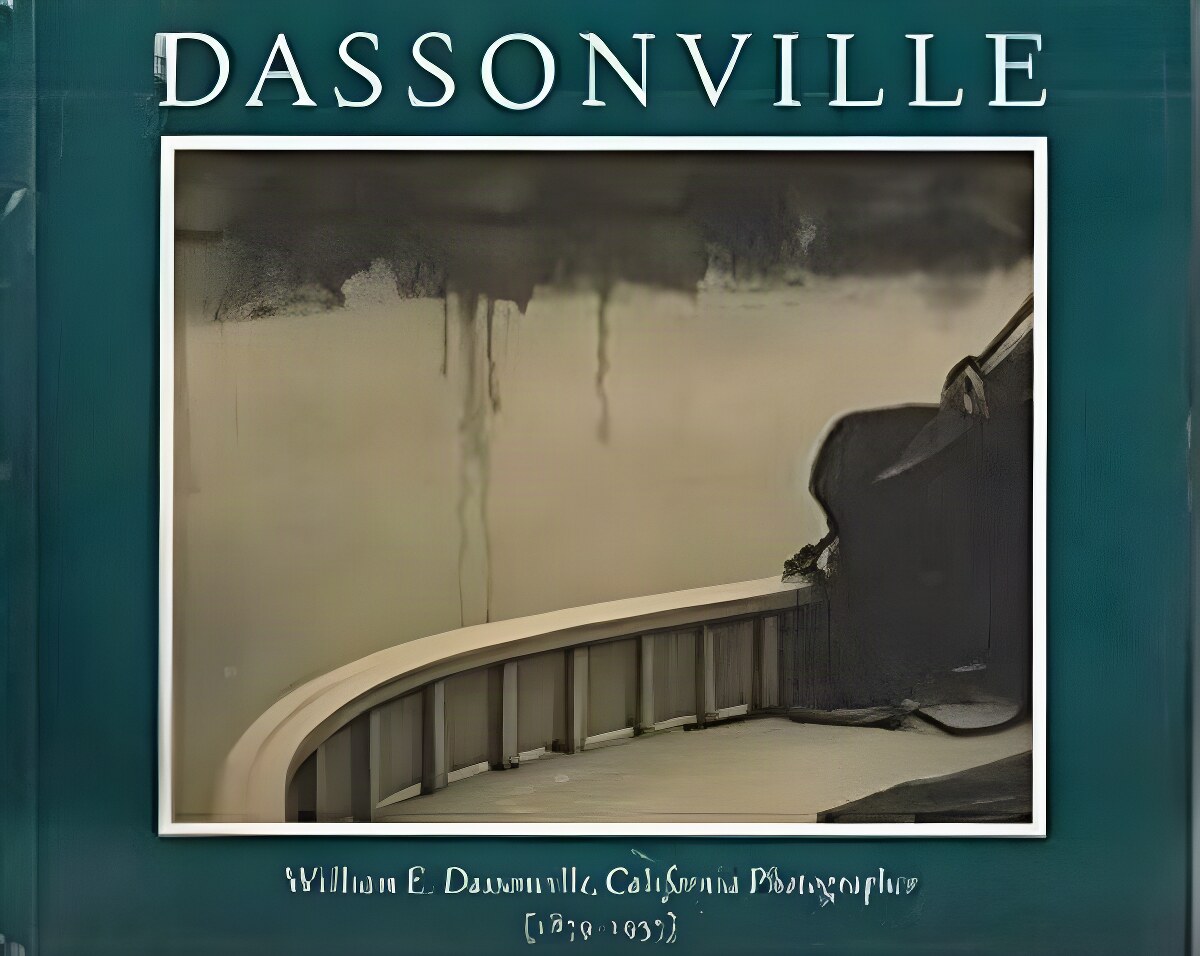
Hardcover. Nevada City CA, Carl Mautz Publishung, 1st, 1999, Book: Very Good, Dust Jacket: Very Good, Oblong hardcover. 111 pages. Researched and edited by Susan Herzig and Paul Hertzman. Essay by Peter Palmquist. Includes 60 illustrations with 47 color and duotone plates.
Hardcover. New York, Aperture, 1st, 1973, Book: Very Good, Dust Jacket: Good, Hardcover, 214 pages. Excerpts from Weston's diaries covering the California period of 1923 - 1926. A remarkable documentation of the important and the mundane by an artist at the height of his powers. Includes 32 plates from the period. Crisp, clean and unmarked with tiny bit of sunning to board edges. Dust jacket with light tape repair, wear, unclipped.
Hardcover. New York, Horizon Press, 1st, 1966, Book: Very Good, Dust Jacket: Good, Hardcover, 290 pages. Excerpts from Weston's diaries covering the California period of 1927 - 1944. A remarkable documentation of the important and the mundane by an artist at the height of his powers. Includes 40 plates from the period. Crisp, clean and unmarked with tiny bit of sunning to board edges. Dust jacket with light soil, wear, price-clipped.
Softcover. NewYork, Aperture, 2nd, 1973, Book: Very Good, Dust Jacket: None, Vol. 1: 214 pages. Softcover. B/w illustrations throughout. Covers slightly yellow with age, clean inside and intact. Vol. 2: 290 pages. Softcover. B/w illustrations throughout. Covers slightly yellow with age, clean inside and intact. Soil/stain on bottom foredge, does not affect pages. From the back cover of Vol. 1: "To see, to react, to create; these are the fundamentals of all art production. But also to share is the measure of the great artist and the great person. In both his magnificent photographs and in the confidences and clarifications of his Daybook, Edward Weston takes us into himself and shares with us his particular mirror of beauty and compassion."
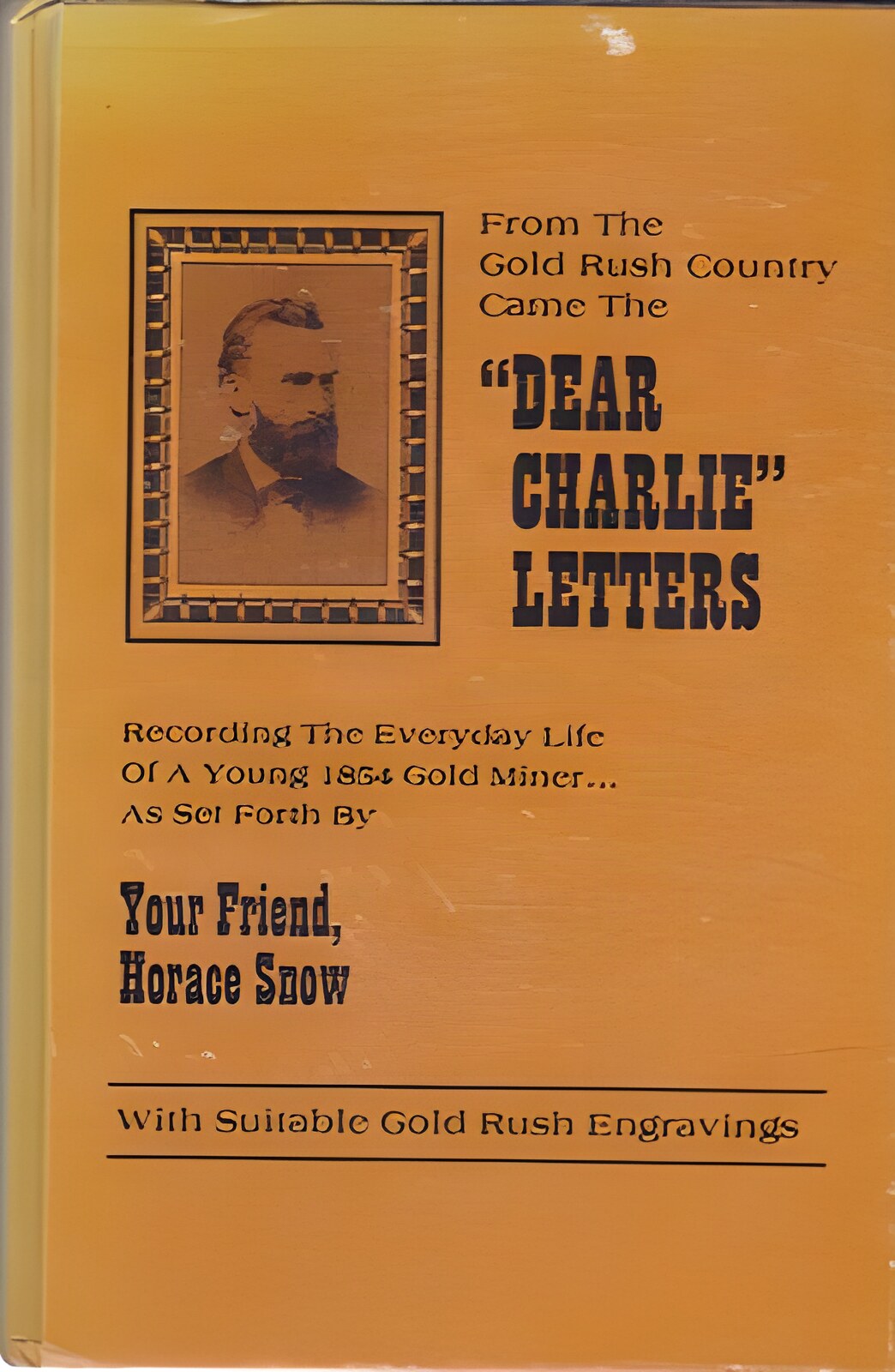
Hardcover. Fresno CA, Mariposa County Historical Society, 1st, 1979, Book: Very Good, Dust Jacket: None, Hardcover, orange cloth stamped in black, 118 pages, b&w illustrations. Horace C. Snow, the writer of the "Dear Charlie" letters, was one of many young men who came to California to make their fortune in the gold fields. Laid in is a 8-page supplement containing a lost letter not included in the first edition. Signed on title page by a member of the historical society. Spine faded. Clean copy.
Softcover. Berkeley CA, University of California Press, reprint, 1993, Book: Very Good, Dust Jacket: None, Softcover, 614 pages, b&w illustrations. When lives are dominated by hunger, what becomes of love? When assaulted by daily acts of violence and untimely death, what happens to trust? Set in the lands of Northeast Brazil, this is an account of the everyday experience of scarcity, sickness and death that centres on the lives of the women and children of a hillside "favela". Bringing her readers to the impoverished slopes above the modern plantation town of Bom Jesus de Mata, where she has worked on and off for 25 years, Nancy Scheper-Hughes follows three generations of shantytown women as they struggle to survive through hard work, cunning and triage. It is a story of class relations told at the most basic level of bodies, emotions, desires and needs. Most disturbing - and controversial - is her finding that mother love, as conventionally understood, is something of a bourgeois myth, a luxury for those who can reasonably expect, as these women cannot, that their infants will live. Clean copy.


 "Camera Over Hollywood by: Swope, John")
 "Carlotaby: O'Dell, Scott")
 "Caught - The Art of Photography in the German Democratic Republicby: Kuehn, Karl Gernot")
 "Chasen's: Where Hollywood Dined: Recipes and Memories by: Goodwin, Betty")

 "Christmas in July - The Life and Art of Preston Sturgesby: Jacobs, Diane")
 "Conceptions of Reality in Modern American Poetry by: Dembo, L.S.")
 "Cottages in the Sun: Bungalows of Venice, Californiaby: Margaret Bach, Melba Levick (Photographer)")
 "Country Luckby: Habberton, John")
 "Creative Composites: Modernism, Race, and the Stieglitz Circle (The Phillips Book Prize Series)by: Kroiz, Lauren")
 "Crime Novels: American Noir of the 1930s and 40s: The Postman Always Rings Twice/.../I Married a Dead Manby: Robert Polito (Ed.) Robert,McCoy, Horace, Fearing, Kennet")

 "Daybooks of Edward Weston, The (Vol. 1) Mexicoby: Weston, Edward; Newhall, Nancy (Ed.)")
 "Daybooks of Edward Weston, The (Vol. 2) California by: Weston, Edward; Newhall, Nancy (Ed.)")
 "Daybooks of Edward Weston, The (2 Volumes): Mexico (Vol. 1), California (Vol. 2)by: Weston, Edward")
 "Death Without Weeping: The Violence of Everyday Life in Brazilby: Nancy Scheper-Hughes")