Hardcover. NY, Doubleday, 1st, 1994, Book: Very Good, Dust Jacket: Very Good, Hardcover in a bright, unclipped dust jacket with minor edgewear. 1118 pages. This book is the second volume in John Meier's masterful trilogy on the life of Jesus. In it he continues his quest for the answer to the greatest puzzle of modern religious scholarship: Who was Jesus? To answer this Meier imagines the following scenario: "Suppose that a Catholic, a Protestant, a Jew, and an agnostic were locked up in the bowels of the Harvard Divinity School library... and not allowed to emerge until they had hammered out a consensus document on who Jesus of Nazareth was and what he intended...". A Marginal Jew is what Meier thinks that document would reveal. Volume one concluded with Jesus approaching adulthood. Now, in this volume, Meier focuses on the Jesus of our memory and the development of his ministry. To begin, Meier identifies Jesus's mentor, the one person who had the greatest single influence on him, John the Baptist. All of the Baptist's fiery talk about the end of time had a powerful effect on the young Jesus and the formulation of his key symbol of the coming of the "kingdom of God." And, finally, we are given a full investigation of one of the most striking manifestations of Jesus's message: Jesus's practice of exorcisms, hearings, and other miracles. In all, Meier brings to life the story of a man, Jesus, who by his life and teaching gradually made himself marginal even to the marginal society that was first century Palestine. Clean copy.
Hardcover. Glasgow, Burns, 1st, 1962, Book: Very Good, Dust Jacket: Very Good, Hardcover in a lightly worn dust jacket. The author was a Catholic priest from Liverpool who was recuperating from several operations by sailing around Africa in 1960: his comments on the vovage and on the places where they stopped are very interesting. He chose to visit Africa because he thought it was the 'crossroads of the world' and 'possibly the place where the future of mankind will be decided.' He expresses strong anti-apartheid sentiments, describes visiting the site of the Sharpeville massacre, the pro-Nkrumah sentiment in Kenya, as well as discussions of the history and customs of Africa. Illustrated with photographs. 183 pages.
Hardcover. NY, P.J. Kenedy & Sons, 1st, 1962, Book: Very Good, Dust Jacket: None, Hardcover, dark blue cloth, 242 pages. The history of a Catholic mission to Uganda and how in 1886 its native converts were executed. No dustjacket. Front fly leaf clipped otherwise very good, clean copy.
Chicago, Chicago Review Press, 1st, 2014, Book: Very Good, Dust Jacket: Very Good, Hardcover in a bright dust jacket. The presidential election of 1844 was one of the two or three most momentous elections in American history. Had Henry Clay won instead of James K. Polk, we'd be living in a very different country today. Polk's victory cemented the westward expansion that brought Texas, California, and Oregon into the union. It also took place amid religious turmoil that included anti-Mormon and anti-Catholic violence, and the "Great Disappointment," in which thousands of followers of an obscure preacher named William Miller believed Christ would return to earth in October 1844. Author and journalist John Bicknell details even more compelling, interwoven events that occurred during this momentous year: the murder of Joseph Smith, the religious fermentation of the Second Great Awakening, John C. Fremont's exploration of the West, Charles Goodyear's patenting of vulcanized rubber, the near-death of President John Tyler in a freak naval explosion, and much more. All of these elements illustrate the competing visions of the American future--Democrats versus Whigs, Mormons versus Millerites, nativists versus Catholics, those who risked the venture westward versus those who stayed safely behind--and how Polk's election cemented the vision of a continental nation. Clean copy.
Softcover. New York, Robert Miller Gallery , 1st, 2001, Book: Very Good, Dust Jacket: None, Non paginated. Softcover. Extensive color photographs throughout. Illustrated end papers and paste downs. Creasing to covers, otherwise clean, tight copy. An autobiographical and transitional work, American Family explores the various roles Renee Cox has assumed throughout her life: Catholic schoolgirl, wife, mother, woman who knows and shows her sexual pleasure, and black woman artist contesting an art history that has all but excluded her race. A cross between Diary of a Mad Housewife and The Sensual Woman, American Family is a veritable minefield of taboos, revealed by the miscegenated family album and the erotic display of the artist's own beautiful body. Compartmentalized into sections called Family Room, Erotica, and the Salon, American Family accompanied an exhibition which included a video projection, large scale Cibachrome prints mounted on aluminum, a series of smaller black-and-white diptychs and triptychs, as well as photographs culled from the artist's own family album. Essay by Jo Anna Isaak.
Hardcover. NY, Doubleday, reprint, 1972, Book: Very Good, Dust Jacket: Good, Hardcover in a worn, chipped dust jacket, 272 pages. Mr. Wills takes the disarray of the Catholic Church as a model of institutional breakdown, tracing parallel agonies in church and state... He asks whether life can rise again from our institutional ruins, and finds promising signs of this, not only among Catholic "prophets" but Protestant and Jewish ones as well." Name on front leaf, otherwise clean.
Hardcover. NY, Harper & Row, 1st, 1984, Book: Very Good, Dust Jacket: Very Good, Hardcover in a bright, price-clipped dust jacket, 394 pages. Gives insight into the evolution of Schumacher's philosophy and character while providing the necessary historical details and context. The author is his daughter and while Ms.Wood's love for her Dad is evident throughout, she does not appear to treat him with kid gloves. Her report of Fritz's struggles to understand his family's tacit support for Hitler and the Nazi's was an interesting revelation. According to Ms. Wood, Fritz progressed from atheism early on to membership in the Roman Catholic Church toward the end of his life. Small sticker on dj spine otherwise clean and tight.
Hardcover. Oxford UK, Oxford University Press, 1st, 2016, Book: Very Good, Dust Jacket: Very Good, Hardcover in a bright dust jacket, 382 pages. This study addresses the need for a more current understanding of Cartesian philosophy by considering the different constructions of Descartes's thought that emerged in the Calvinist United Provinces (Netherlands) and Catholic France, the two main centers for early modern Cartesianism, during the period dating from the last decades of his life to the century or so following his death in 1650. It turns out that we must speak not of a single early modern Cartesianism rigidly defined in terms of Descartes's own authorial intentions, but rather of a loose collection of early modern Cartesianisms that involve a range of different positions on various sets of issues. Though more or less rooted in Descartes's somewhat open-ended views, these Cartesianisms evolved in different ways over time in response to different intellectual and social pressures. Chapters of this study are devoted to: the early modern Catholic and Calvinist condemnations of Descartes and the incompatible Cartesian responses to these; conflicting attitudes among early modern Cartesians toward ancient thought and modernity; competing early modern attempts to combine Descartes's views with those of Augustine; the different occasionalist accounts of causation within early modern Cartesianism; and the impact of various forms of early modern Cartesianism on both Dutch medicine and French physics. Name on front fly leaf, otherwise clean.
Hardcover. Durham UK, Acumen, 1st, 2009, Book: Very Good, Dust Jacket: None, Hardcover in blue cloth, with red title block, gilt lettering, 348 pages. The early modern period in philosophy - encompassing the 16th to the 18th centuries - reflects a time of social and intellectual turmoil. The Protestant Reformation, the Catholic Counter-Reformation, and the birth of the Enlightenment all contributed to the re-evaluation of reason and faith. The revolution in science and in natural philosophy swept away two millennia of Aristotelian certainty in a human-centered universe. Covering some of the most important figures in the history of Western thought - notably Descartes, Locke, Hume and Kant - "Early Modern Philosophy of Religion" charts the philosophical understanding of religion at a time of intellectual and spiritual revolution. "Early Modern Philosophy of Religion" will be of interest to historians and philosophers of religion, while also serving as an indispensable reference for teachers, students and others who would like to learn more about this formative period in the history of ideas. Lacks dust jacket. Clean copy.
Softcover. West Lafayette IN, Purdue University Press , 1st, 2020, Book: Very Good, Dust Jacket: None, Softcover, 529 pages, b&w illustrations. Eva and Otto is a true story about German opposition and resistance to Hitler as revealed through the early lives of Eva Lewinski Pfister (1910-1991) and Otto Pfister (1900-1985). It is an intimate and epic account of two Germans-Eva born Jewish, Otto born Catholic-who worked with a little-known German political group that resisted and fought against Hitler in Germany before 1933 and then in exile in Paris before the German invasion of France in May 1940. After their improbable escapes from separate internment and imprisonment in Europe, Eva obtained refuge in America in October 1940 where she worked to rescue other endangered political refugees, including Otto, with the help of Eleanor Roosevelt. As revealed in recently declassified records, Eva and Otto later engaged in different secret assignments with the US Office of Strategic Services (OSS) in support of the Allied war effort. Despite their vastly different backgrounds, Eva and Otto gave each other hope and strength as they acted upon what they understood to be an ethical duty to help others threatened by fascism. The book provides a sobering insight into the personal risks and costs of a commitment to that duty. Their unusually beautiful writing-directed to each other in diaries and correspondence during two long periods of wartime separation-also reveals an unlikely and inspiring love story.
Hardcover. NY, powerHouse Books, 1st, 2004, Book: Very Good, Dust Jacket: Very Good, Hardcover, 124 pages. Faith, Hope and Love, the first comprehensive examination of the life's work of Edward Powis Jones, details a remarkable artistic journey that begins as an accomplished American painter living in Paris in the shadow of the Second World War and concludes as that of an exceptional and surprising photographer whose work has no precedent. Jones employed all the disparate art mediums of his era and produced a life's work that is startlingly cohesive. After developing a passion for printmaking, he produced sculptures in bronze, wax, plaster, and papier-mache. By the time of his death in New York in 1998, Jones had been treating photographic emulsion as painter's gesso for more than a decade and had become fascinated by the potential of the photocopier. His enormous artistic output springs both from an abiding affection for his family and from a deep sense of loss, with roots in the early death of his parents. Beneath the surface of his work lies something disconcerting, if not menacing. Jones' conversion to Catholicism is reflected in etchings of the Stations of the Cross and paintings depicting the Crucifixion. Yet despite the focus on mortality, especially his own, his work also displays great joy and humor.
Softcover. Philadelphia, Paul Dry Books, 1st US, 2002, Book: Very Good, Dust Jacket: None, Softcover, 326 pages. In an extraordinary literary debut, Aldo Zargani reconstructs the lost world of his Jewish childhood during the perilous years 1938-45 when he and his family fled from Fascists and Nazis in northern Italy. His haunting memoir acquires a cinematic intensity as he crosscuts from the blood-red stone spires of Basel, where his father failed to find refuge for his family in 1939, to fiery scenes of the Allied bombing of Turin in 1942, to the freezing winter of 1943-44, which Zargani and his brother spent hidden in a Catholic boarding school deep in the countryside.
Hardcover. NY, Fordham University Press, 1st, 2008, Hardcover, black cloth with gilt lettering on the spine, 196 pages. Philosophers have long and skeptically viewed religion as a source of over-easy answers, with a singular, totalizing "God" and the comfort of an immortal soul being the greatest among them. But religious thought has always been more interesting-indeed, a rich source of endlessly unfolding questions. With questions from the 1885 Baltimore Catechism of the Catholic Church as the starting point for each chapter, Karmen MacKendrick offers postmodern reflections on many of the central doctrines of the Church: the oneness of God, original sin, forgiveness, love and its connection to mortality, reverence for the relics of saints, and the doctrine of bodily resurrection. Clean copy. No dust jacket.
Softcover. Santa Monica CA, Gitta Rosenzweig , 1st, 2015, Book: Very Good, Dust Jacket: None, Softcover, 421 pages, illustrated with b&w, color photographs. A self-published memoir chronicling her family's past during the Holocaust. The author was raised in a Catholic orphanage in Poland, later immigrated to America and later returned to trace her parent's history. INSCRIBED BY AUTHOR on front fly leaf. Clean, bright copy.
Hardcover. NY, Oxford University Press, 1st, 2005, Book: Very Good, Dust Jacket: None, Hardcover, glazed boards, 205 pages. Much has been written about Graham Greene's relationship to his Catholic faith and its privileged place within his texts. His early books are usually described as "Catholic Novels" - understood as a genre that not only uses Catholic belief to frame the issues of modernity, but also offers Catholicism's vision and doctrine as a remedy to the present crisis in Western civilization. Greene's later work, by contrast, is generally regarded as falling into political and detective genres. In this book, Mark Bosco argues that this is a false dichotomy created by a narrowly prescriptive understanding of the Catholic genre and obscures the impact of Greene's developing religious imagination on his literary art. Clean copy.
Hardcover. Leiden/Boston, Brill, 1st, 1999, Book: Very Good, Dust Jacket: Very Good, Hardcover in a dust jacket, 332 pages. Volume 77 in the 'Studies in Medieval and Reformation Thought Series'. Through the examination of over 250 sermons by the most popular preacher in Paris before the Religious Wars, Francois Le Picart (1504-1556), this book offers a close look at religious mentalites in the French capital in these critical years and offers insight into changing definitions of orthodoxy and heresy.
Hardcover. Baltimore, Johns Hopkins University Press, 1st US, 2012, Book: Very Good, Dust Jacket: Very Good, Hardcover, 394 pages, b&w illustrations. The adventures of Tintin and his dog, Snowy, have captivated people worldwide since they first appeared as an insert in the Belgian Catholic newspaper Le Vintieme Siecle in 1929. Available for the first time in English, this insightful biography delves deep into the psyche of Tintin creator Georges Remi and his public persona Herge. Author of the critically acclaimed Tintin and the World of Herge and the last person to interview Remi, Benoit Peeters tells the complete story behind Herge's origins and shows how and why the nom de plume grew into a larger-than-Remi personality as Tintin's popularity exploded. Drawing on interviews and using recently uncovered primary sources for the first time, Peeters reveals Remi as a neurotic man who sought to escape the troubles of his past by allowing Herge's identity to subsume his own. As Tintin adventured, Herge lived out a romanticized version of life for Remi.
Hardcover. NY, Viking, 1st, 1999, Book: Very Good, Dust Jacket: Very Good, Hardcover in a bright, unclipped dust jacket, 430 pages. In this book, backed by a wealth of new research, the author tells for the first time the story of the career of Eugenio Pacelli, the man who as Pius XII was Pope during the Second World War and arguably the most powerful churchman in modern history. Adding to the continuing debate about collective guilt and the Holocaust this is an extraordinary and explosive history. In the first decade of the century, as a brilliant young lawyer, Pacelli helped shape an ideology of unprecedented papal power; during the 1920s he employed cunning and moral blackmail to impose that power in Germany. In 1933 Hitler became his perfect negotiating partner and a concordat was established that granted religious and educational advantages to the Catholic Church in exchange for Catholic withdrawal from social and political action. This 'voluntary' abdication of political Catholicism imposed from Rome facilitated the rise of Nazism. Clean copy.
Softcover. NY/London, Routledge, 1st, 1995, Book: Very Good, Dust Jacket: None, Softcover in pictorial wrappers, 233 pages. Ignatiev traces the tattered history of Irish and African-American relations, revealing how the Irish used labor unions, the Catholic Church and the Democratic party to succeed in American. He uncovers the roots of conflict between Irish-Americans and African-Americans and draws a powerful connection between the embracing of white supremacy and Irish "success" in 19th century American society. Clean copy.
Hardcover. NY, Oxford University Press, 1st, 2012, Book: Very Good, Dust Jacket: Very Good, Hardcover in a bright, unclipped dust jacket. In contemporary France, Charles de Gaulle has become a figure of legend, consistently acclaimed as the nation's pre-eminent "historical" figure. But paradoxes abound. For one, his personal popularity sits oddly with his social origins and professional background. Neither the nobility, nor the Catholic Church, nor the Army is particularly well-regarded in France today, as they are seen to represent antiquated traditions and values. So why, then, do the French nonetheless identify with, celebrate, and even revere this austere and devout nobleman, who remained closely wedded to military values throughout his life? In the Shadow of the General resolves this mystery and explains how de Gaulle has come to occupy such a privileged position in the French imagination. Sudhir Hazareesingh's story of how an individual life was transformed into national myth also tells a great deal about the French collective self in the twenty-first century: its fractured memory, its aspirations to greatness, and its manifold anxieties. Indeed, alongside the tale of de Gaulle's legacy, the author unfolds a much broader narrative: the story of modern France. Clean copy.
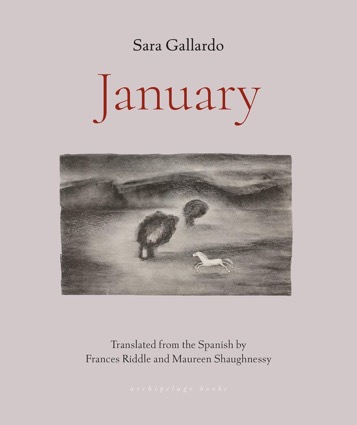
Softcover. NY, Archipelago Books, 1st transl. thus, 2023, Book: Very Good, Dust Jacket: None, Softcover in pictorial wrappers, 114 pages. "This debut novel--by an acclaimed Argentinean writer, and first published in 1958--centers on a sixteen-year-old who becomes pregnant after an assault by an older man. Setting the story in the sweltering heat of Argentina's Pampas, Gallardo re-creates the world of ranchers and missionaries from the perspective of the girl, with her adolescent confusion and private sense of guilt. Gallardo juxtaposes her solitary desperation--she visits a local medicine woman for an abortion, and gallops recklessly on horseback to induce a miscarriage--with the conservative Catholic society that closes ranks against her." Clean, bright copy.
Hardcover. NY, Charles Scribner's Sons, 1st, 1955, Book: Very Good, Dust Jacket: None, Hardcover, black cloth stamped in gilt, 338 pages including index. John Carroll (January 8, 1735 - December 3, 1815) was an American prelate of the Catholic Church who served as the first bishop and archbishop in the United States. He served as the ordinary of the first diocese and later Archdiocese of Baltimore, in Maryland, which at first encompassed all of the United States and later after division as the eastern half of the new nation. Previous owner's name inside front cover, otherwise clean. No dust jacket.
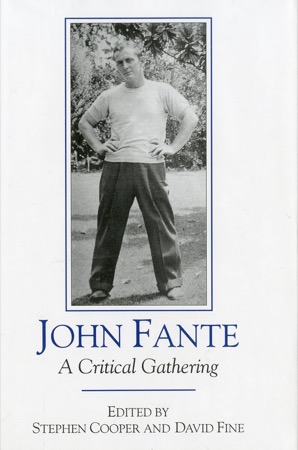
Hardcover. Fairleigh Dickinson University Press, 1st, 1999, Book: Very Good, Dust Jacket: Very Good, Hardcover in a bright dust jacket, 160 pages. This book offers eleven essays on Fante's career, ranging from close thematic analysis of individual stories and novels to broadly informed assessments of Fante's life and art in the context of his times. Major areas explored in the book include Fante's treatment of the Italian-American experience; his relationship to other American writers of the 1930s and beyond; the deeply Catholic nature of Fante's fiction; his unique and still-seminal vision of Los Angeles; and his lifelong concern to render in fiction both the comedy and the horrors of the writing life. Clean copy.
Hardcover. Urbana IL, University of Illinois Press, 2nd pr., 1988, Book: Very Good, Dust Jacket: Very Good, Hardcover, 465 pages, index, biographical essay, b&w photos and illustrations, Biography of Catholic Irish-American boxer John Lawrence Sullivan. Clean, bright copy in a similar dust jacket.

 "A Marginal Jew: Rethinking the Historical Jesus, Vol. 2 - Mentor, Message, and Miraclesby: John P. Meier")
 "African Diary by: Ripley, Francis")
 "African Holocaust The Story of the Uganda Martyrsby: Faupel, J.F.")

 "American Family by: Renee Cox, Jo Anna Isaak, et al.")

 "E.F. Schumacher: His Life and Thought by: Barbara Wood")
 "Early Modern Philosophy of Religion (The History of Western Philosophy of Religion, Volume 3) by: Oppy, G.raham & Trakakis, Nick N. (eds)")
 "Eva and Otto: Resistance, Refugees, and Love in the Time of Hitlerby: Pfister, Tom; Pfister, Kathy; Pfister, Peter")
 "Faith, Hope and Loveby: Mark Holborn and Edward Powis Jones")


 "Gitta: Hidden Child of the Holocaust (SIGNED COPY)by: Rosenzweig, Gitta, and Fuller, Martha (Editor)")
 "Heresy and Orthodoxy in Sixteenth-Century Paris - Francois Le Picart and the Beginnings of the Catholic Reformationby: Taylor, Larissa Juliet")
 "Herge: Son of Tintinby: Peeters, Benoit")

 "John L. Sullivan and His America by: Isenberg, Michael T.")