Softcover. Dublin IR, The Lilliput Press, 1st, 2005, Book: Very Good, Dust Jacket: None, Softcover, 266 pages, b&w illustrations. INSCRIBED BY SANDS on the front fly leaf. 'With a Fenian fiddle in one ear and an Orange drum in the other', singer Tommy Sands was reared in the foothills of the Mourne mountains, where he still lives. As a child, he was immersed in folk music - his father played the fiddle, his mother the accordion. The kitchen was where Protestant and Catholic farmers alike would gather for songs and storytelling at the end of a day's harvesting. During the sixties and seventies Tommy was chief songwriter for The Sands Family, who played wherever they were welcome, from local wakes and weddings to New York's Carnegie Hall; his songs have been recorded by Joan Baez, Dolores Keane, Dick Gaughan and The Dubliners. He tells of his family's traditional way of life; of the turbulent days of the civil rights movement; The Bothy Band brawling in Brittany; encounters with Alan Stivell, Mary O'Hara and Pete Seeger; Ian Paisley on his radio show Country Ceili; and a 'defining moment' during the Good Friday Agreement talks, when he organized an impromptu performance with children and Lambeg drummers. The Songman is a memoir replete with warmth and wit.
Softcover. New Haven CT, Yale University Press, reprint, 1992, Book: Very Good, Dust Jacket: None, Softcover, 654 pages, b&w illustrations. This major revisionist account of the pre-Reformation Church recreates lay people's experience of religion in 15th-century England. Eamon Duffy shows that late mediaeval Catholicism was neither decadent nor decayed, but was a strong and vigorous tradition, and that the Reformation represented a violent rupture from a popular and theologically respectable religious system. Clean copy.
Hardcover. NY, Doubleday, 1st, 1999, Book: Very Good, Dust Jacket: Very Good, Hardcover in a bright dust jacket, 480 pages. A fascinating figure of English literary and political history, Radclyffe Hall was born in 1880 in Bournemouth, England. Hall suffered through an exceedingly unhappy childhood until her father's death. With her inheritance, Hall leased a house in Kensington and began to live the way she pleased. She started dressing in chappish clothes, called herself Peter, then John, and wrote her first collection of verse. She was a political reactionary, a reformed Catholic, a member of the Society for Psychical Research, fussy about food and obsessive about work. She got her pipes from Dunhill's, wore brocade smoking jackets, spats in winter, and had her hair cropped off at the barber's. Hall is most famous today for her book, The Well of Loneliness, which she wrote in 1928. A novel about lesbian love, the book caused an enormous scandal on its publication and it was suppressed both in the U.S. and the United Kingdom, where Hall was put on trial under the Obscene Publications Act.
Hardcover. Cambridge MA, Harvard University Press, 1st, 2000, Book: Very Good, Dust Jacket: Very Good, hardcover in a bright, unclipped dust jacket. The Supreme Court under Chief Justice Earl Warren was the most revolutionary and controversial Supreme Court in American history. But in what sense? Challenging the reigning consensus that the Warren Court, fundamentally, was protecting minorities, Lucas Powe revives the valuable tradition of looking at the Supreme Court in the wide political environment to find the Warren Court a functioning partner in Kennedy-Johnson liberalism. Thus the Court helped to impose national liberal-elite values on groups that were outliers to that tradition--the white South, rural America, and areas of Roman Catholic dominance. In a learned and lively narrative, Powe discusses over 200 significant rulings: the explosive Brown decision, which fundamentally challenged the Southern way of life; reapportionment (one person, one vote), which changed the political balance of American legislatures; the gradual elimination of anti-Communist domestic security programs; the reform of criminal procedures (Mapp, Gideon, Miranda); the ban on school-sponsored prayer; and a new law on pornography. Most of these decisions date from 1962, when those who shaped the dominant ideology of the Warren Court of storied fame gained a fifth secure liberal vote. The Justices of the majority were prominent individuals, brimming with confidence, willing to help shape a revolution and see if it would last. Clean copy.
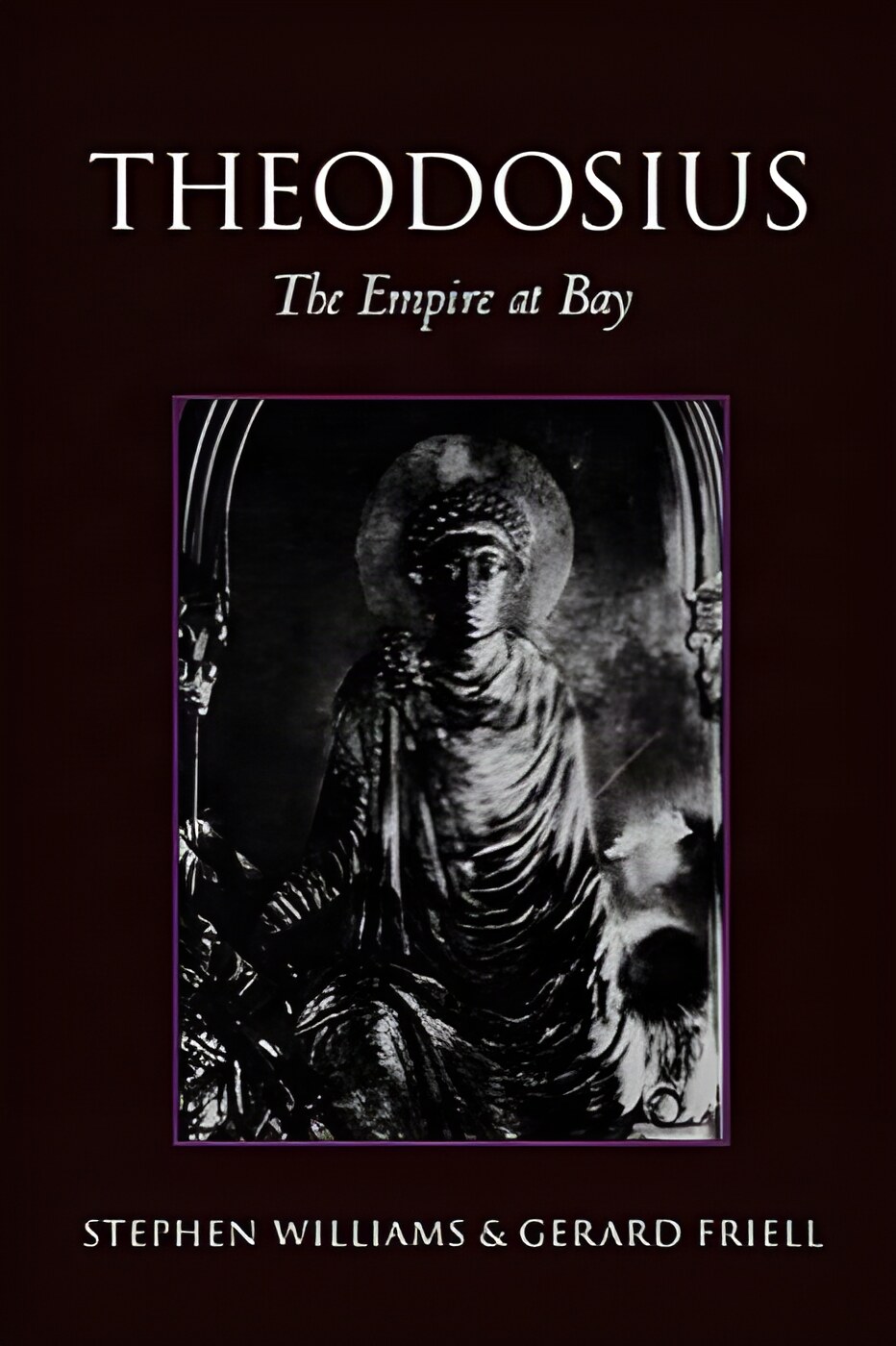
Hardcover. New Haven CT, Yale University Press, 1st, 1994, Book: Very Good, Dust Jacket: Very Good, Hardcover in a bright dust jacket, 238 pages. Theodosius I was the last Roman emperor to rule over both East and West. After the military disaster of Adrianople he had to rebuild the state by adopting a new policy of cooperation with the barbarians. He also suppressed paganism and established a unified Catholic Church by law. His reign was a turning point in the history of the late Roman Empire. The authors describe the military, political, and religious struggles of this turbulent period and analyze the far-reaching effects of his policies in the fourth and fifth centuries. Clean copy.
Softcover. NY, The Feminist Press, 1ST, 1999, Book: Very Good, Dust Jacket: None, Softcover, 400 pages, b&w illustrations. The memoir of a young Catholic women's affair with a pastor in Italy. INSCRIBED BY AUTHOR on the half-title page. A few pages with light pencil underlining., otherwise clean.

 "The Songman: A Journey in Irish Music (SIGNED COPY)by: Tommy Sands")
 "The Stripping of the Altars: Traditional Religion in England, 1400-1580 by: Duffy, Eamon")

 "The Warren Court and American Politicsby: Lucas A. Powe Jr.")
 "Under the Rose: A Confession (INSCRIBED COPY)by: Flavia Alaya")