Softcover. Paderborn GER, Mentis, 1st, 2002, Book: Very Good, Dust Jacket: None, Softcover, 199 pages. INSCRIBED BY AUTHOR on the front fly leaf. This book investigates whether knowledge is closed under known entailment. Clean copy.
Hardcover. Lewisburg ME, Bucknell University Press, 1st, 1974, Book: Very Good, Dust Jacket: Very Good, Hardcover in a bright dust jacket, 184 pages. Translated with an Introduction and Notes by Victor Nuovo. Dust jacket chipped with light stain, book is very good, clean copy.
Hardcover. Oxford UK, Clarendon Press, reprint, 2003, Book: Very Good, Dust Jacket: None, Hardcover in glossy boards, 639 pages. Volume 3 ONLY of a six volume set. Clean, bright copy.
Hardcover. Amherst MA, University of Massachusetts Press, 1st US, 1976, Book: Very Good, Dust Jacket: Very Good, Hardcover in a bright blue dust jacket, 143 pages. Edited by P. T. Geach and A. J. P. Kenny. Name on front fly leaf, light pencil notations to 20 pages.
Hardcover. Chicago, University of Chicago Press, 1st, 1980, Book: Very Good, Dust Jacket: Very Good, Hardcover in a bright dust jacket, 275 pages, b&w illustrations. Clean copy.
Hardcover. Boston, Kluwer Academic Publishers, 1st, 2000, Book: Very Good, Dust Jacket: Very Good, Hardcover in a bright dust jacket, 408 pages. The only biographical account of More by one of his contemporaries. Ward's almost hagiographical tone is testimony to the high regard in which More was held by his admirers. This account testifies to the continuing impact of More's ideas in the enlightenment. This volume prints the only modern edition of Ward's biography printed in 1710 together with the manuscript account of More's writings published here for the first time. Clean copy.
Hardcover. UK, Oxford University Press, 1st, 1995, Book: Very Good, Dust Jacket: Very Good, Hardcover in a bright dust jacket, 162 pages. In this book, Gopal Sreenivasan provides a comprehensive interpretation of Locke's theory of property, and offers a critical assessment of that theory. Locke argued that the appropriation of things as private property does not violate the rights of others, provided that everyone still has access to the materials needed to produce their subsistence. Given that, the actual appropriation of particular things is legitimated by one's labor. Holding Locke's theory to the logic of its own argument, Sreenivasan examines the extent to which it is really serviceable as a defense of private property. He contends that a purified version of this theory - one that adheres consistently to the logic of Locke's argument while excluding considerations extraneous to it - does in fact legitimate a form of private property. This purified theory is defensible in contemporary, secular terms, since nothing to which Locke gives an ineliminable theological foundation belongs to the logical structure of his argument. The resulting regime of private property is both substantially egalitarian and significantly different from the traditional liberal institution of private property. Clean copy.
Hardcover. UK, Routledge, 1st, 2022, Book: Very Good, Dust Jacket: None, Hardcover in pictorial boards, 599 pages. John Locke (1632-1704) is considered one of the most important philosophers of the modern era and the first of what are often called 'the Great British Empiricists.' His major work, An Essay Concerning Human Understanding, was the single most widely read academic text in Britain for fifty years after its publication and set new limits to the scope and certainty of what we can claim to know about ourselves and the natural world. The Declaration of Independence and the United States Constitution were both highly influenced by Locke's libertarian philosophical ideas, and Locke continues to have an impact on political thought, both conservative and liberal. It is less commonly known that Locke was a practicing physician, an influential interpreter of the Bible, and a policy maker in the English Carolina colonies. Clean, bright copy.
Hardcover. Oxford UK, Clarendon Press, 1st, 1993, Book: Very Good, Dust Jacket: Very Good, Hardcover in a bright dust jacket, Maurice Wiles was Regius Professor of Divinity at the University of Oxford from 1970-1991. To celebrate his seventieth birthday, a group of distinguished friends and colleagues have written this important series of original and perceptive essays on the twin themes of making and remaking Christian doctrine. The topics covered in this thought-provoking collection range from the notion of divine action in Hebrew Wisdom literature to reflections on the nature of the ministry, from the concept of God and the doctrines of Christology and of the Trinity to the character of theological reflection, and from revelation and tradition to the "lex orandi," the nature of interpretation in religion and the historical basis of theological understanding. Clean copy.
Hardcover. NY, Harry N. Abrams, 1st, 2022, Book: Very Good, Dust Jacket: None, Hardcover in pictorial boards, 271 pages. Journey into the mind and creative process of one of the most celebrated anime directors working today with The Man Who Leapt Through Film: The Art of Mamoru Hosoda. Written by renowned animation critic and historian Charles Solomon (The Art of WolfWalkers) and featuring exclusive interviews alongside hundreds of never-before-seen sketches, storyboards, background paintings, character designs, and concept art, this is the ultimate companion piece to Hosoda's work. Writer/director/animator Mamoru Hosoda's work includes Belle (2021), the Academy Award-nominated Mirai (2018); The Boy and the Beast (2015); Wolf Children (2012); Summer Wars (2009); and The Girl Who Leapt Through Time (2006). He is the cofounder of Studio Chizu, one of Japan's premier animation studios. Clean, bright copy.
Softcover. Berkeley CA, Oneiric Press, reprint, 1977, Book: Very Good, Dust Jacket: None, Softcover, 222 pages. Wilson has blended H.P. Lovecraft's dark vision with his own revolutionary philosophy and unique narrative powers to produce a stunning, high-tension story of vaulting imagination. A professor makes a horrifying discovery while excavating a sinister archeological site. For over 200 years, mind parasites have been lurking in the deepest layers of human consciousness, feeding on human life force and steadily gaining a foothold on the planet. Now they threaten humanity's extinction. Clean copy.
Hardcover. San Rafael CA, Rocky Nook, 1st, 2022, Book: Very Good, Dust Jacket: None, Hardcover in pictorial cloth, 202 pages. In The Mindful Photographer, teacher, author, and photographer David Ulrich follows up on the success of his previous book, Zen Camera, by offering photographers, smartphone camera users, and other cultural creatives 55 short (1-5 pages) essays on topics related to photography, mindfulness, personal growth, creativity, and cultivating personal and social awareness. Whether you're seeking to become a better photographer, find your voice, enhance your ability to "see" the world around you, realize your full potential, or refine your personal expression, The Mindful Photographer can help you. Clean copy.
Hardcover. NY, Charles Scribner's Sons, 1st thus, 1953, Book: Good, Dust Jacket: None, Hardcover, green cloth with gilt stamping, First one-volume edition, 300 and 332 pages. Spine lettering faded. Good sound copy, but pencil marking throughout.
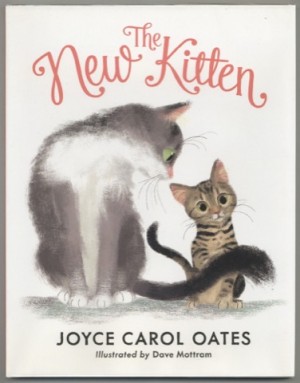
Hardcover. NY, Harper, 1st, 2019, Book: Very Good, Dust Jacket: Very Good, Hardcover in a bright dust jacket, illustrated in color by Dave Mottram. From acclaimed author (and cat lover!) Joyce Carol Oates comes a charming, heartwarming picture book. As the only cat in her house, Cherie is accustomed to being showered with treats and affection. So when her family brings home a new kitten named Cleopatra, Cherie resents that she's no longer the center of attention--and she can't believe all the trouble that the kitten gets away with! Is one home big enough for two kitties? Beautifully illustrated by Dave Mottram, this picture book will resonate for any reader who has--eventually!--found the joy in sharing the spotlight with a new family addition. Clean copy.
Hardcover. London, Pickering & Chatto, 1st, 1999, Book: Very Good, Dust Jacket: None, Hardcover, black cloth, spine with maroon title block and gilt lettering, 377 pages. Vol. 2 ONLY of a six volume set. Clean, bright copy, no markings.
Hardcover. London, Pickering & Chatto, 1st, 1999, Book: Very Good, Dust Jacket: None, Hardcover, black cloth, spine with maroon title block and gilt lettering, 384 pages. Vol. 3 ONLY of a six volume set. Name and date on front fly leaf, otherwise clean.
Hardcover. London, Pickering & Chatto, 1st, 1999, Book: Very Good, Dust Jacket: None, Hardcover, black cloth, spine with maroon title block and gilt lettering, 448 pages. Vol. 4 ONLY of a six volume set. Clean, bright copy, no markings.
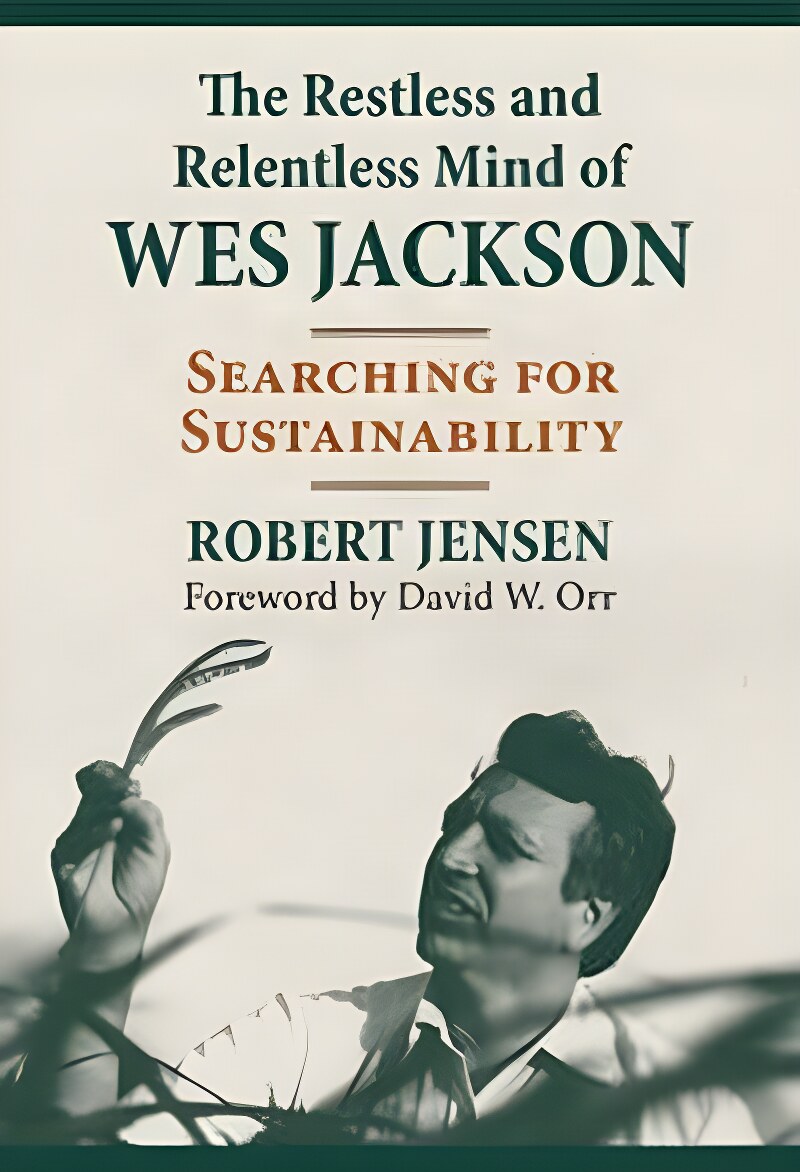
Hardcover. Lawrence KS, University Press of Kansas, 1st, 2021, Book: Very Good, Dust Jacket: Very Good, Hardcover in a bright dust jacket. In more than four decades as president of The Land Institute, Wes Jackson became widely known as one of the founders of the sustainable agriculture movement for his work on perennial grains and Natural Systems Agriculture. But Jackson's contribution to contemporary intellectual and political life goes well beyond plant breeding. Ever since he created one of the first university environmental studies programs in the early 1970s, Jackson has been exploring the human predicaments around sustainability and justice, asking questions that pull not only on agriculture and ecology but also on politics, economics, and culture. That work has appeared in four sole-authored books by Jackson, but nowhere is there an accessible summary of his key ideas. Robert Jensen provides a short, elegant introduction to Jackson's ideas on ways to provide humanity with a truly sustainable foundation in grain agriculture, presented in a way that connects to the growing concern about climate change and other ecological crises. Clean copy.
Hardcover. Minneapolis, University of Minnesota Press, 1st, 1983, Book: Very Good, Dust Jacket: None, Hardcover, maroon cloth with gilt lettering, 269 pages. Name on front fly leaf, otherwise a clean copy.
Softcover. London/NY, Routledge, reprint, 2001, Book: Very Good, Dust Jacket: None, Softcover, 328 pages. This unique collection of essays, published together for the first time, not only elucidates the complexity of ancient Greek thought, but also reveals Karl Popper's engagement with Presocratic philosophy and the enlightenment he experienced in his reading of Parmenides. As Karl Popper himself states himself in his introduction, he was inspired to write about Presocratic philosophy for two reasons - firstly to illustrate the thesis that all history is the history of problem situations and secondly, to show the greatness of the early Greek philosophers, who gave Europe its philosophy, its science and its humanism. Light pencil marking to 8 pages.
Hardcover. Cambridge MA, Belknap Press / Harvard University Press, 1st, 1979, Book: Very Good, Dust Jacket: Very Good, Hardcover in a lightly worn dust jacket, 896 pages. This masterly study has a grand sweep. It ranges over centuries, with a long look backward over several millennia. Yet the history it unfolds is primarily the story of individuals: thinkers and dreamers who envisaged an ideal social order and described it persuasively, leaving a mark on their own and later times. The roster of utopians includes men of all stripes in different countries and eras--figures as disparate as More and Fourier, the Marquis de Sade and Edward Bellamy, Rousseau and Marx. Fascinating character studies of the major figures are among the delights of the book. 1980 National Book Award winner. Name on front fly leaf, otherwise clean.
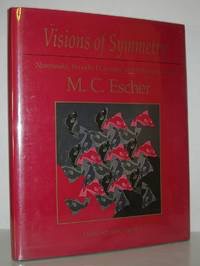
Hardcover. NY, W. H. Freeman & Co., 1st, 1990, Book: Very Good, Dust Jacket: Very Good, Hardcover in a very good dust jacket with fading to spine, 354 pages. 411 illustrations (254 in color). "The book contains the complete set of numbered symmetry drawings and two Escher Notebooks (1941-1942) in which he explored the world of symmetry patterns and regular division of the plane." [From the dust wrapper copy]. Clean copy.
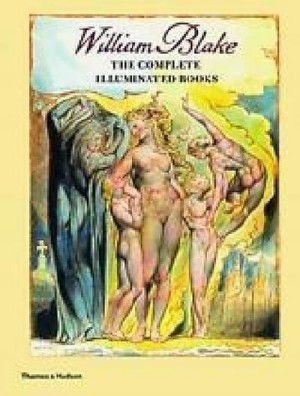
Softcover. NY, Thames & Hudson, reprint, 2004, Book: Very Good, Dust Jacket: None, Softcover, 480 pages. In his 'illuminated' books, William Blake combined his handwritten text with his exuberant imagery on pages the like of which had not been seen since the great decorated books of the Middle Ages. To have Blake's great prophetic poems - Jerusalem and Songs of Innocence and of Experience, for example - in cold letterpress bears no comparison to seeing and reading them in Blake's own medium, with his sublime and exhilarating colours.This edition, produced together with The William Blake Trust, contains all the pages of Blake's twenty or so illuminated books reproduced in true size, an appendix with all Blake's text set in type and an introduction by the noted Blake scholar, David Bindman. Clean, bright copy. DUE TO WEIGHT, DOMESTIC SHIPPING ONLY.
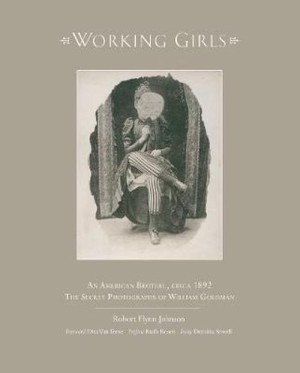
Hardcover. NY, Glitterati, 1st, Book: Very Good, Dust Jacket: Very Good, Hardcover in a bright dust jacket. After becoming captivated by the beauty and originality of a group of nineteenth-century photographs, Robert Flynn Johnson has uncovered more than two hundred vintage images of women who lived and worked at a brothel in Reading, Pennsylvania, circa 1892, and showcases them here for the first time for a wider public. Working Girls details the private, creative archive of commercial photographer William Goldman, whose imagery paints a complete picture of the environments that these women inhabited - from inside the brothel, posing artistically for the camera, to their off-duty routines, such as reading, smoking, and bathing. Taken two decades before the famous E. J. Bellocq photographs of prostitutes in Storyville, New Orleans, circa 1913, Johnson chronicles the aesthetic, historical, and sociological importance of Goldman's artwork in the history of photography, referencing them alongside paintings and photographs by such artists as Degas, Eakins, and Monsieur X. With essays that provide an insightful historical overview of Goldman's work in context of the period in which they were taken, by feminist and cultural luminaries including Dita Von Teese, Ruth Rosen and Dennita Sewell, this extraordinary collection provides a personal visual record of lives of these women while also offering a deeper understanding of the 'working girls' that existed in that era. Clean copy.

 "The Construction of the History of Religion in Schelling's Positive Philosophy: Its Presuppositions and Principles by: Tillich, Paul")






 "The Nature and Destiny of Man; A Christian Interpretation; I. Human Nature; II. Human Destiny; Gifford Lectures by: Reinhold Niebuhr")
 "The Reception of Locke's Politics Vol 2: Patriarchalism, the Social Contract and Civic Virture 1705- 1760by: Goldie, Mark (Ed.)")
 "The Reception of Locke's Politics Vol 3: The Age of the American Revolution 1760-1780by: Goldie, Mark (Ed.)")
 "The Reception of Locke's Politics Vol 4: Poitical Reform in the Age of The French Revolution 1780-1838by: Goldie, Mark (Ed.)")
 "The Skeptical Realism of David Humeby: Wright, John P.")