Hardcover. New York, The Century Co., 1st, 1929, Book: Very Good, Dust Jacket: None, Hardcover, 341 pages, gilt title on spine, blue cloth cover. Very slight edge and corner wear, otherwise, very clean and tight copy.
Hardcover. NY, Abrams, 1st, 2000, Book: Very Good, Dust Jacket: Very Good, Hardcover, 328 pages. A noted photographer offers a visual tour of Christian communities around the world--in such diverse areas as Cuba, Jerusalem, Lourdes, the United States, Mali, and Russia--that explores what it means to be a Christian at the dawn of a new millennium.
Hardcover. NY, Abrams, 1st, 2000, Book: Very Good, Dust Jacket: Very Good, Hardcover, 328 pages. A noted photographer offers a visual tour of Christian communities around the world--in such diverse areas as Cuba, Jerusalem, Lourdes, the United States, Mali, and Russia--that explores what it means to be a Christian at the dawn of a new millennium.
Hardcover. NY, Oxford University Press, 1st, 1987, Book: Very Good, Dust Jacket: Very Good, Hardcover in a bright dust jacket, 186 pages. What is the origin of Christian faith? Are the roots of the concept the same in both the Old and New Testaments? With the support of semantic, historical, and analytical evidence, Kinneavy develops a controversial and persuasive hypothesis that the origin of the Christian concept of faith can be traced to Greek classical rhetoric. The author examines the notions of faith formulated by eight major Christian and Jewish theologians, presents a meticulous case for the historical influence of Greek rhetoric on Hebraic thought, and concludes with a novel rhetorical study of the several hundred occurrences of the Greek terms for "faith" and "to believe," emerging with overwhelming support for the Greek influence on Christian faith. Name on front fly leaf, otherwise clean.
Hardcover. Bellows Falls, VT, P.H. Gobie Press, 1st Edition, 1913, Book: Good, Dust Jacket: None, 700 pages. Hardcover. B/w illustrations throughout including frontispiece. Hinge cracked on front and back endpapers, but binding good. Previous owner's ID stamp on front flyleaf. Brown cloth cover boards, gilt title on spine and front cover board. Pages unmarked. History of leaders of the Vermont Baptist church.
Hardcover. NY, Viking, 1st, 1999, Book: Very Good, Dust Jacket: Very Good, Hardcover in a bright, unclipped dust jacket, 430 pages. In this book, backed by a wealth of new research, the author tells for the first time the story of the career of Eugenio Pacelli, the man who as Pius XII was Pope during the Second World War and arguably the most powerful churchman in modern history. Adding to the continuing debate about collective guilt and the Holocaust this is an extraordinary and explosive history. In the first decade of the century, as a brilliant young lawyer, Pacelli helped shape an ideology of unprecedented papal power; during the 1920s he employed cunning and moral blackmail to impose that power in Germany. In 1933 Hitler became his perfect negotiating partner and a concordat was established that granted religious and educational advantages to the Catholic Church in exchange for Catholic withdrawal from social and political action. This 'voluntary' abdication of political Catholicism imposed from Rome facilitated the rise of Nazism. Clean copy.
Hardcover. Lewes, DE, GILES, 1st, 2015, Book: Very Good, Dust Jacket: Very Good, 232 pages. Hardcover with dust jacket. A very clean, unmarked copy still in publishers shrinkwrap. Over 140 color illustrations. Provides analysis of this single panel painting of St. Francis, rendered by Italian Renaissance painter Giovanni Bellini
Hardcover. New York, Abingdon Press, 1st , 1918, Book: Very Good, Dust Jacket: None, 224 pages. Hardcover. Green cloth with gilt titles. NOT a reprint or print on demand edition. Light wear. Clean, tight copy.
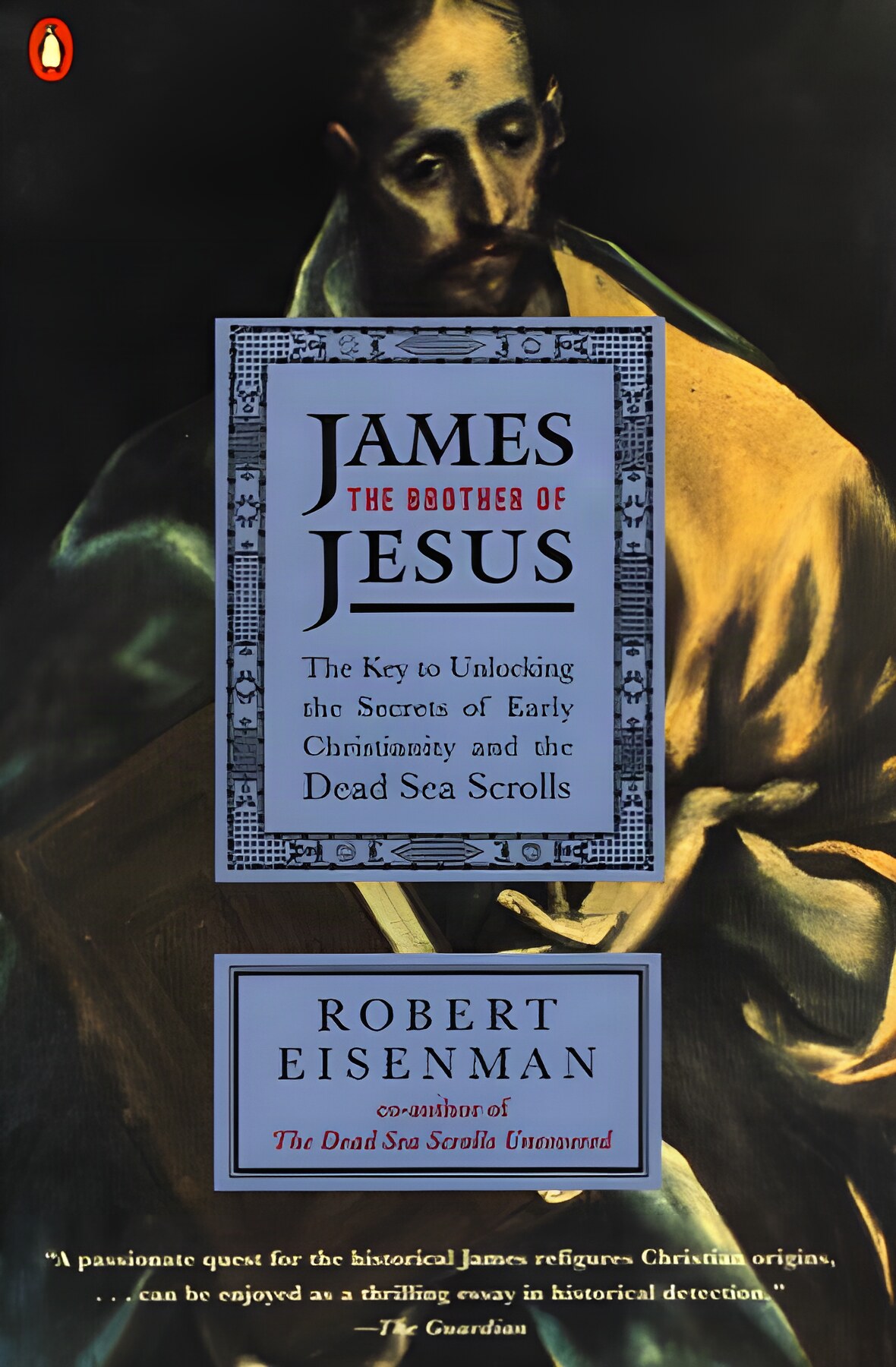
Softcover. NY, Penguin Books, reprint, 1998, Book: Very Good, Dust Jacket: None, Softcover, 1074 pages. James was a vegetarian, wore only linen clothing, bathed daily at dawn in cold water, and was a life-long Nazirite. In this profound and provocative work of scholarly detection, eminent biblical scholar Robert Eisenman introduces a startling theory about the identity of James--the brother of Jesus, who was almost entirely marginalized in the New Testament.Drawing on long-overlooked early Church texts and the Dead Sea Scrolls, Eisenman reveals in this groundbreaking exploration that James, not Peter, was the real successor to the movement we now call "Christianity." In an argument with enormous implications, Eisenman identifies Paul as deeply compromised by Roman contacts. James is presented as not simply the leader of Christianity of his day, but the popular Jewish leader of his time, whose death triggered the Uprising against Rome--a fact that creative rewriting of early Church documents has obscured. Clean copy.
Hardcover. Boston, American Unitarian Association, 1st, nd, Book: Very Good, Dust Jacket: None, 225 pages. Hardcover. No date of publication. Ex-library copy with bookplate on inside front cover and label at bottom of spine. Top edge gilt. Black & white photographs. Light wear. Clean, unmarked text.
Softcover. Amherst MA, Warring States Project, 1st, 2017, Book: Very Good, Dust Jacket: None, Softcover, 191 pages. This book is an overview of the history of Early Christianity. Each chapter is based on one selection from Jewish texts or from those produced by the Jesus sect of Judaism. It gives a sense of how things happened, from the words of certain ancient prophets, to Jesus' effort to bring about those prophecies, to the efforts of his followers to reshape their expectations after his death. It follows the movement as it came to regard Jesus himself as divine, a process which eventually led to the separation of the sect from the parent religion. It ends with a glimpse of a surviving early Christian church on the shores of the Black Sea, and how it appeared to the Roman administrator who was in charge of executing those who, like the Early Christians, refused Emperor worship. From the evidence of two deaconesses whom he tortured, which Pliny reported to Emperor Trajan, we too learn what were the regular practices of that church. Clean copy.
Hardcover. Edinburgh, T and T Clark, 1st, 1998, Book: Very Good, Dust Jacket: Very Good, Hardcover in a bright dust jacket, 342 pages. Jewish-Christian contact and controversy were central to early Christian experience. An understanding of this contact and controversy and its continuation over the centuries is also central to any true understanding of the history of Christianity and of the history of Judaism. The twelve chapters of this book deal especially with the interconnected subjects of polemic and biblical interpretation. Nine are concerned with the ancient world, beginning with post-exilic Jewish writing and the New Testament and going on to later pagan, Jewish and Christian controversies. Three concentrate on medieval and early modern Jewish controversies. Clean copy.
Softcover. UK, Sutton, Revised Ed., 1999, Book: Very Good, Dust Jacket: None, Softcover, 216 pages. Joachim of Fiore has been described as the most singular and fascinating figure of mediaeval Christendom. This title explores his unique understanding of history and looks at the powerful influence of his ideas.
Hardcover. Philadelphia, David McKay, reprint, 1918, Book: Good, Dust Jacket: None, Oblong hardcover, 28 unnumbered pages. Previous owner's name and date on front end paper, binding cracked. Stamped cloth covers with dark blue lettering. Illustrated cover. Illustrated by author. Reduced in size from the French and Century Co. editions with fewer illustrations. This edition with 10 pages in full color.
Hardcover. Thoemmes Press, 1st, 1997, Book: Very Good, Dust Jacket: None, Hardcover, black cloth with gilt lettering on spine. 284 pages. the first scholarly edition of John Locke's A Vindication (1695) and A Second Vindication of the Reasonableness of Christianity (1697), in which Locke defends the New Testament and the Christian Religion against charges of heterodoxy. The texts are accompanied by a wealth of critical and contextual apparatus. Clean copy.
Hardcover. New York, Collins Brother & Co, 1st, 1845, Book: Fair, Dust Jacket: None, 309 pages. Hardcover, full leather with black band on spine. Heavy wear to tan leather edges. Water staining throughout bottom half pages, heavy foxing and tanning. bottom corners bumped. Previous owner's name on front fly leaf and end paper. Front end paper has previous owner's name pasted on small piece of paper bottom corner. Binding tight for age of copy.
Hardcover. London, Lutterworth, 1st UK, 1955, Book: Very Good, Dust Jacket: None, Hardcover, blue cloth with faded gilt lettering on spine, 115 pages. A fascinating glimpse into the debate in Scandinavia concerning a number of inter-related Biblical themes focused on the concept of the Messiah, a debate associated with scholars such as Mowinckel, Pedersen, Widengren, and Bentzen himself. The argument traces the development of the Messianic figure from its Old Testament roots, starting with the Messiah of many of the Psalms, which represents a demythologised form of the Oriental conception of kingship, through the eschatologised Messiah of the prophetic thought of Isaiah and Micah, and then to the prophet-Messiah of Second Isaiah, which although still a present and entirely human figure, embodies the insight that the saviour of Israel must suffer and be cast in the role of a Moses Redivivus as leader of a new Exodus. The Son of Man of Daniel 7 carries this eschatologising process even further, until the Christology of the New Testament emerges as a creative synthesis of these Old Testament types. In this synthesis, Jesus is a new Adam, the Messiah present in the flesh and present still in His body the Church, the suffering Prophet playing the part of the new Moses and the once and future Divine King. Bentzen argues that ultimately this figure of Christ the Messiah transcends not only the Old Testament types on which it is based, but also the subsequent historical development of the Christian Messianic tradition.
Hardcover. Chez Rene' Pean, 1st thus, 1680, Book: Good, Dust Jacket: None, 648 pages. Hardcover. Brown leather bound cover boards (age wear-see images) with faded gilt title on spine and raised bands. Front cover board completely separated from spine with front flyleaf. Previous owner's notes on preliminary page, dated "1694 16 November". Dark brown dyed edges. Tanning to pages (some partially detached from spine) from age. A few stray ink marks on pages. Christian devotions in French text.
Hardcover. London, England, SPCK, 1st Edition, 1950, Book: Very Good, Dust Jacket: None, 175 pages. Hardcover. Red cover boards, fading to spine and edges, gilt title on spine. Pages unmarked. Binding tight. Spine straight. The Epitome covers a wide range of topics, including the nature of God, the creation of the world, the fall of man, the life and teachings of Jesus Christ, and the end of the world. It also discusses various aspects of Christian morality.
Hardcover. Berkeley CA, University of California Press, 1st, 1985, Book: Very Good, Dust Jacket: Very Good, Hardcover in a bright dust jacket, 423 pages. Volume III only. Edited by Peter C. Hodgson. Translated from the German by R. F. Brown, et al. The third volume of philosopher G.W.F. Hegel's LECTURES ON THE PHILOSOPHY OF RELIGION covers Hegel's philosophical interpretation of Christianity. Taken together, the three volumes establish a critical study, separating the material and publishing it as autonomous units on the basis of a complete re-editing of the sources--a series of actual lectures delivered by Hegel in 1821, 1824, 1827, and 1831. Name on front fly leaf, otherwise clean.
Hardcover. New York , Nelson & Phillips, 1st, 1873, Book: Very Good, Dust Jacket: None, Hardcover, 309 pages. Terracota cloth with gilt titles and decor to front and spine. Light edgewear and rubbing to covers, previous owner's bookplate on front end paper, else a clean, tight copy.
Softcover. Chicago, University of Chicago Press, reprint, 1992, Book: Very Good, Dust Jacket: None, Softcover, 414 pages. An anthropological and historical discourse on the arrival of Christianity in the Southern Tswana region of South Africa. A compelling read and referenced in an in-depth manner. Clean copy.
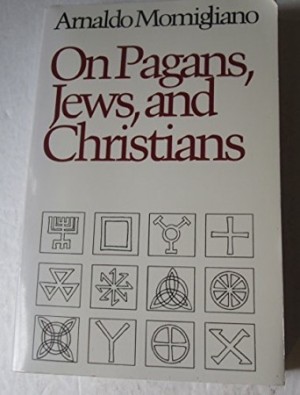
Softcover. Hanover NH, Wesleyan University Press, 3rd pr., 1987, Book: Very Good, Dust Jacket: None, Softcover in pictorial wraps, 343 pages. The focus of this book is the secular cultures of pagan Greece and imperial Rome, and the religious cultures of Judaism and Christianity which, in turn, grew from and influenced them and the modern world. For Momigliano, religion, secular ideology, and politics live in and illuminate the present. Brings together nineteen essays written over five years from sources such as The New York Review of Books, The American Scholar, and the Annali della Scuola Normale Superiore di Pisa. Clean copy.
Hardcover. Princeton, N.J., Princeton University Press, 1st, 1992, Book: Very Good, Dust Jacket: Very Good, Hardcover, 287 pages. Clean, unmarked copy with only minor wear to dust jacket.

 "Experience with the Supernatural in Early Christian Timesby: Case, Shirley Jackson")
 "Faces of Christianity: A Photographic Journeyby: Abbas")
 "Faces of Christianity: A Photographic Journeyby: Abbas")


 "In a New Light: Giovanni Bellini's \"St. Francis in the Desert\"by: Rutherglen, Susannah")
 "In the Rift of the Rock by: Vincent, Edgar L.")
 "Jasper Douthit's Story - The Autobiography of a Pioneerby: Douthit's, Jasper")



 "Joan of Arcby: De Monvel, M. Boutet")
 "John Locke and Christianity: Contemporary Responses to the Reasonableness of Christianity (Key Issues Series)by: Nuovo, Victor {edited and introduced by )")
 "Journal of the Life, Gospel Labors, and Christian Experiences of That Faithful Minister of Jesus Christby: Woolman, John")





 "Lactantius' Epitome of the Divine Institutesby: Blakeney, E.H. (Editor and translation with commentary)")



 "Methodism Forty Years Ago and Now: Embracing Many Interesting Reminiscences and Incidentsby: Culver, Rev. Newell")
 "Of Revelation and Revolution, Volume 1: Christianity, Colonialism, and Consciousness in South Africa by: Comaroff, Jean, Comaroff, John L.")