Hardcover. NY, powerHouse Books, 1st, 2006, Book: Very Good, Dust Jacket: Very Good, Hardcover, 127 pages. Lili Almog's color photos taken at three Carmelite monasteries (of nuns) are revealing of their faith.. The sisters showing their distinctive profession crucifixes (normally worn hidden under their scapulars, and pinned to their beds when they go to sleep) are revealing their personal symbols of "perfect intimacy." And the statues and/or holy cards of our holy mother St. Teresa, our holy father St. John of the Cross, St. Therese, and St. Joseph make Carmelites feel right at home. The monasteries are also significant: they are on Mt. Carmel (Haifa) and in Bethlehem--founded by Sister Miriam, "the little Arab"; and in Port Tobacco, Maryland, whose community is the oldest and first Discalced Carmelite convent founded in the US. The spartan surroundings emphasize the importance of the nuns' relationship with God. The photos of the sisters revealing their profession crucifixes, which they wear near their hearts and pin to their beds when going to sleep, I found especially moving. Almog's photos are neither stilted nor rigid, but reminiscent of the photos that St. Therese's sister Celine took of her! The quotations from Blessed Teresa of the Andes are very apt comments on the photos.
Hardcover. NY, Bloomsbury USA, 1st, 2009, Book: Very Good, Dust Jacket: Very Good, Hardcover in a bright, unclipped dust jacket. The third installment to Downie's Roman Empire series--the second-century saga of a witty and courageous army surgeon, Gaius Ruso, and his smart and loyal lover, Tilla, a barbarian woman from Britannia--continues in gripping fashion. Ruso returns to his family home in southern Gaul, summoned by a forged letter pleading for his immediate return. Once Ruso and Tilla return, Ruso is thrust into a dangerous quagmire involving a missing ship, huge family debts and, before long, the murder of the family's principal creditor--a crafty phony named Severus--who is poisoned in Ruso's home. While Ruso and his family are quickly suspected of the murder, Ruso and Tilla's attempts to solve the crime are hampered by interfering family members, a lying politician, a greedy banker and a pair of too-eager investigators sent from Rome. Ruso and Tilla must also deal with prejudice, envy and a new religion, Christianity. The plotting is clever and suspenseful, with subtle clues and lots of action, while the setting and supporting cast are vividly drawn. Clean copy.
Hardcover. NY, Arno Press, reprint, 1977, Book: Very Good, Dust Jacket: None, Hardcover, green cloth with silver lettering on spine and front cover, A facsimile reprint of the corrected 1716 4th edition published in London. Sixteen sermons with notes and observations. Name on front fly leaf otherwise a clean, bright copy.
Hardcover. Cambridge MA, Harvard University Press, 1st, 2001, Book: Very Good, Dust Jacket: Very Good, Hardcover in a very good dust jacket with light fading to spine, 342 pages. The Platonic Theology is a visionary work and the philosophical masterpiece of Marsilio Ficino (1433-1499), the Florentine scholar-philosopher-magus who was largely responsible for the Renaissance revival of Plato. A student of the Neoplatonic schools of Plotinus and Proclus, he was committed to reconciling Platonism with Christianity, in the hope that such a reconciliation would initiate a spiritual revival and return of the golden age. His Platonic evangelizing was eminently successful and widely influential, and his Platonic Theology, translated into English for the first time in this edition, is one of the keys to understanding the art, thought, culture, and spirituality of the Renaissance.
Hardcover. Cambridge MA, Harvard University Press, 1st, 2002, Book: Very Good, Dust Jacket: Good, Hardcover in a dust jacket with fading to spine and front cover, 397 pages. The Platonic Theology is a visionary work and the philosophical masterpiece of Marsilio Ficino (1433-1499), the Florentine scholar-philosopher-magus who was largely responsible for the Renaissance revival of Plato. A student of the Neoplatonic schools of Plotinus and Proclus, he was committed to reconciling Platonism with Christianity, in the hope that such a reconciliation would initiate a spiritual revival and return of the golden age. His Platonic evangelizing was eminently successful and widely influential, and his Platonic Theology, translated into English for the first time in this edition, is one of the keys to understanding the art, thought, culture, and spirituality of the Renaissance. Clean copy.
Hardcover. Cambridge MA, Harvard University Press, 1st, 2003, Book: Very Good, Dust Jacket: Very Good, Hardcover in a very good dust jacket with light fading to spine, 362 pages. The Platonic Theology is a visionary work and the philosophical masterpiece of Marsilio Ficino (1433-1499), the Florentine scholar-philosopher-magus who was largely responsible for the Renaissance revival of Plato. A student of the Neoplatonic schools of Plotinus and Proclus, he was committed to reconciling Platonism with Christianity, in the hope that such a reconciliation would initiate a spiritual revival and return of the golden age. His Platonic evangelizing was eminently successful and widely influential, and his Platonic Theology, translated into English for the first time in this edition, is one of the keys to understanding the art, thought, culture, and spirituality of the Renaissance. Name on front fly leaf otherwise clean.
Hardcover. Lanham MD, Prometheus Books, 1st, 1994, Book: Very Good, Dust Jacket: None, Hardcover, glossy boards, 181 pages. Throughout its first three centuries, the growing Christian religion was subjected not only to official persecution but to the attacks of pagan intellectuals, who looked upon the new sect as a band of fanatics bent on worldwide domination even as they professed to despise the things of this world. Prominent among these pagan critics was Porphyry of Tyre (ca. 232-ca. 305 C.E.), scholar, philosopher, and student of religions. His book Against the Christians (Kata Christianon), was condemned to be burned by the imperial Church in 448. It survives only in fragments preserved by the cleric and teacher Macarius Magnes.This new translation of the remains of Against the Christians, by renowned biblical scholar R. Joseph Hoffmann, reveals a work of deft historical and literary criticism. Porphyry's trenchant comments extend to key figures, beliefs, and doctrines of Christianity as he roundly attacks the divinity of Jesus, the integrity of the apostles, the Christian concept of God, and the Resurrection. Clean copy.
Hardcover. Seattle, Fantagraphics, 1st, 2013, Book: Very Good, Dust Jacket: None, Hardcover, 120 pages in color. You might think that birth of Prince Valiant's son Arn at the end of the previous volume would have slowed down Val's adventuring, but you would be wrong. In Prince Valiant Vol. 7, after the baby has been christened, Valiant and Gawain are dispatched to investigate reports of black magic in Wales, ending up in pitched battle at the aptly named Castle Illwynde. Then it's off to Scotland to battle the Picts, and then home yet again for Val to visit his growing boy. Valiant now enters the 1950s: The Thule winter is hard and bleak, and a prince who has designs on Aleta must be dealt with. Then it's another epic-length story, "The Missionaries," in which Val and several of his fellow knights and crew travel to Rome on a quest for teachers who might bring Christianity to Thule. The story also features an escape through the Alps, far too many red-headed girls, and a tragic, life-changing event for the young squire Geoffrey (a.k.a. "Arf "). And Foster charmingly ends the book with "The Prince Arn Story," a three-week sequence narrated by the toddler.
Hardcover. Edinburch and London, William Blackwood and Sons, 2nd revised edition, 1874, Book: Very Good, Dust Jacket: None, Vol. 1: 463 pages. Vol. 2: 500 pages. Scarce. Hardcovers. Colored endpapers (black). Light pencil notes/marks in margins. Red cloth cover boards, gilt title on spine, light age wear to covers. Front endpapers' gutters are split, binding is good. Spines straight. Edges untrimmed, pages and edges have some tanning from age. Some foxing to preliminary pages. DOMESTIC SHIPPING ONLY.
Hardcover. Berkeley, CA , University of California Press, 1st, 2002, Book: Very Good, Dust Jacket: Very Good, 283 pages. Hardcover with dust jacket. A very clean, unmarked copy with only minor wear to dust jacket edges. A tight copy. Black and white illustrations throughout. This richly detailed study reconceptualizes a striking but enigmatic moment in Rembrandt's art from the 1650s--one of the artist's most prolific and creative periods. Michael Zell identifies a significant theological shift in Rembrandt's use of religious imagery and interprets this shift in light of the unique religious and social conditions of seventeenth-century Amsterdam. Rembrandt's biblical art has generally been regarded as the embodiment of a Protestant aesthetic. By looking closely at the artist's relationship with his patron Rabbi Menasseh ben Israel and the ideas of a group of "philosemitic" Protestants with whom the rabbi was engaged in an apologetic dialogue, Zell deepens and complicates our understanding of Rembrandt's sacred art from this period.
Hardcover. Princeton, N.J., Kingston Press, Incorporated, The, 1st, 1984, Book: Very Good, Dust Jacket: Very Good, SIGNED BY AUTHOR. 227 pages. Light foxing to top and fore-edge. Minor wear to dust jacket; spine slightly faded. Else a very clean, tight copy.
Hardcover. Chicago, University of Chicago Press, 1st, 2005, Book: Very Good, Dust Jacket: Very Good, Hardcover, 284 pages. In Rustic Cubism, Bruce Adams tells the fascinating story of Moly-Sabata, an art colony founded in the Rhone Valley during the height of French modernism by Cubist pioneer Albert Gleizes. Following his social and spiritual agenda of earthly labor and a Celtic-medievalist view of Christianity, Gleizes' disciples worked to fuse Cubism with a revival of ancient agrarian, artisanal traditions. The most important and committed member of this experimental commune was ceramicist Anne Dangar (1885-1951). Generously illustrated with photographs of the art and social milieu of the period, this captivating and original narrative makes a considerable contribution to our understanding of French modernism and early twentieth-century cultural politics as well as of the life of a most talented and intriguing female artist.
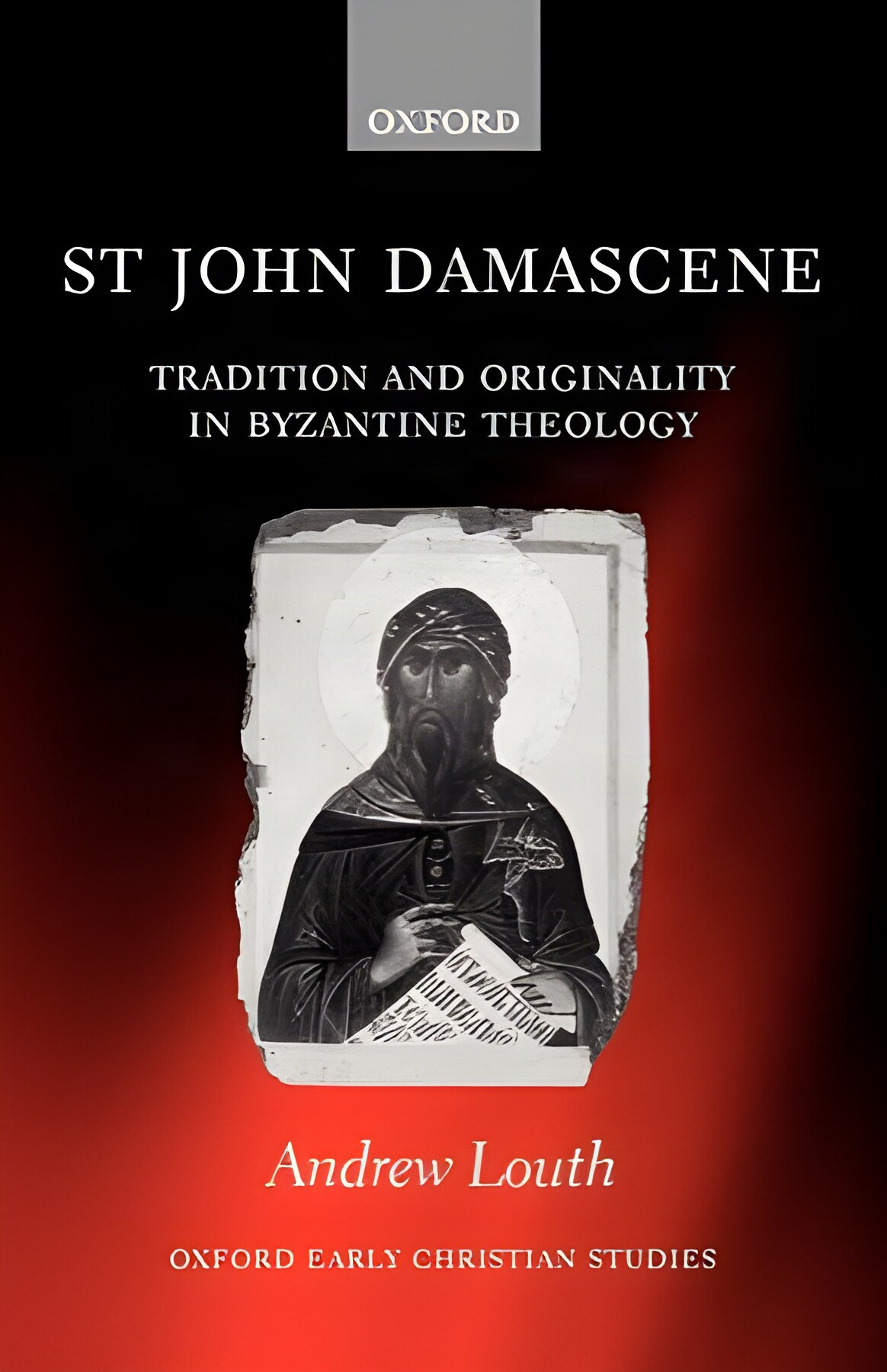
Hardcover. UK, Oxford University Press, 2nd pr., 2002, Book: Very Good, Dust Jacket: Very Good, Hardcover in a bright dust jacket, 327 pages. John Damascene, a monk near Jerusalem in the early 700s, never set foot in the Byzantine Empire, yet he had a great influence on Byzantine theology. This book, the first to present an overall account of John's life and work, sets him in the context of the early synods of the Church that took place in the Palestinian monasteries during the first century of Arab rule.
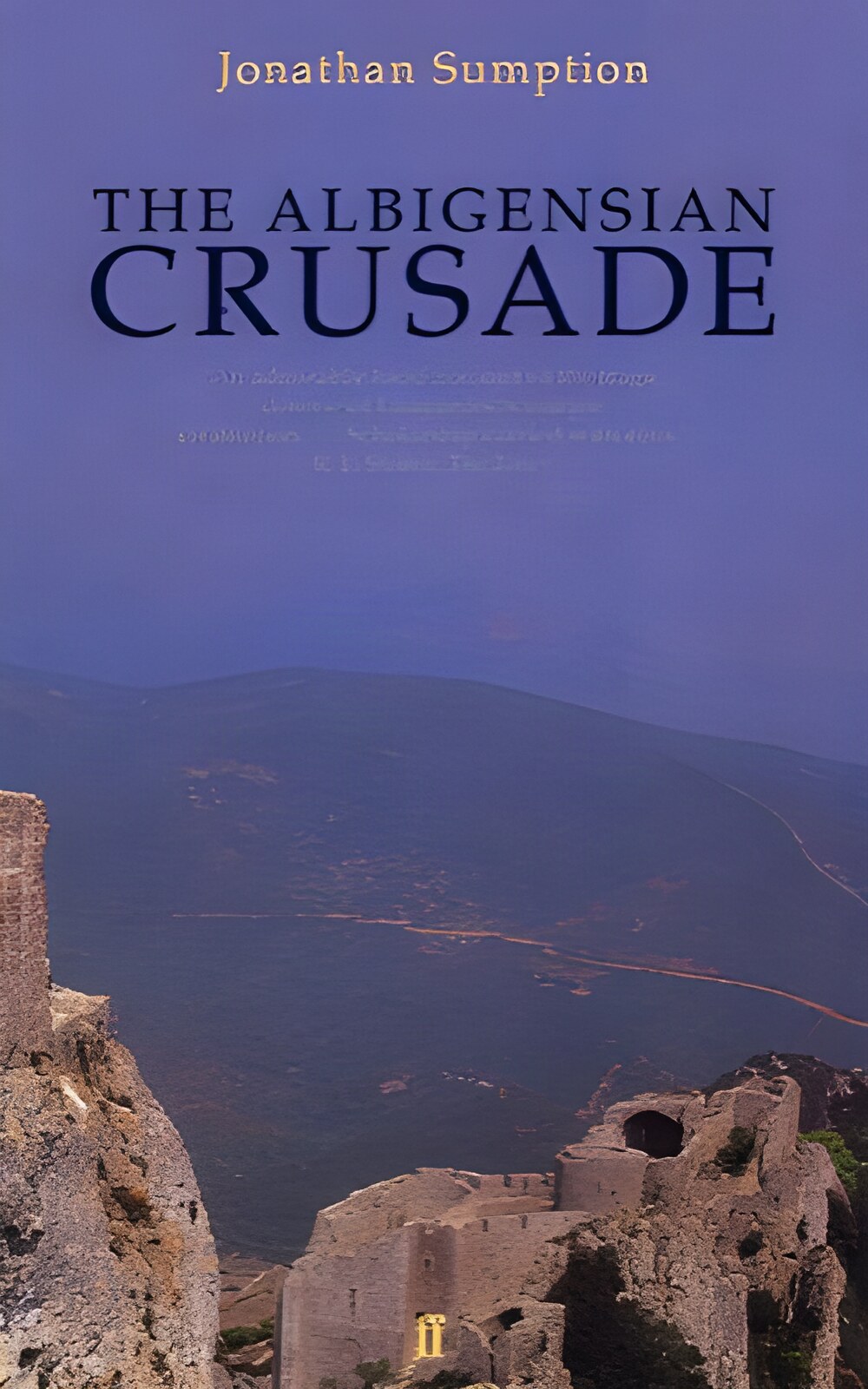
Softcover. UK, Faber & Faber, reprint, 1988, Book: Very Good, Dust Jacket: None, Softcover, 271 pages. In the twelfth century, Languedoc, in the far south, was among the most beautiful parts of France, far away from the world of the feudal north. However, it was in this rich region that a heresy of Eastern origin took hold, forcing the Catholic Church to confront a rival whose teachings questioned the foundations of Christian thought. These heretics, called Cathars, held a profoundly pessimistic view of the world that was based on the duality of all things, including good and evil: according to one heretic, "The one, the good God, made the invisible world, while the other, the evil God, made the visible one." Jonathan Sumption's acclaimed history examines the roots of this heresy as well as of the crusade the Church undertook in 1208 to stamp out the infidels, who ultimately were conquered by the Catholic armies. But this book does more than simply describe this terrible war; it reconstructs a lost world of great cultural richness, one that saw the creation in Languedoc of the troubadour tradition as well as the magnificent castles at Cabaret and Carcassonne. Clean copy.
Hardcover. NY, Seabury Press, 1st US, 1975, Book: Very Good, Dust Jacket: Very Good, Hardcover in a bright, unclipped dust jacket. Illustrated in colo and b&w by Joanna Troughton. An East Saxon boy, recently converted to Christianity, tries to deal with the villager's and his own brother's hostility to the monks with whom he now makes his home. Dust jacket with minor edgewear.
Hardcover. Cambridge MA, Harvard University Press, 1st, 1982, Book: Very Good, Dust Jacket: None, Hardcover, blue cloth with gilt lettering and design to spine and front cover. 274 pages. Clean, bright copy.
Hardcover. Cambridge MA, Harvard University Press, 1st, 1977, Book: Very Good, Dust Jacket: None, Hardcover, blue cloth with gilt lettering and design to spine and front cover. 552 pages. Clean, bright copy.
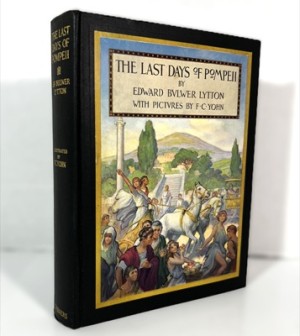
Hardcover. NY, Charles Scribner's Sons, 1st Illust. thus, 1926, Hardcover in black cloth with color label on front cover, gilt lettering on spine. First printing with these illustrations. A title in the Scribner's Classic series, illustrated by F.C. Yohn with a pasted-on cover illustration, pictorial endpapers and title page plus 9 inserted color plates. A lovely edition of this classic set in the days of the Roman Empire and early Christianity. Clean copy.
Hardcover. Oxford UK, Clarendon Press, 1st, 1993, Book: Very Good, Dust Jacket: Very Good, Hardcover in a bright dust jacket, Maurice Wiles was Regius Professor of Divinity at the University of Oxford from 1970-1991. To celebrate his seventieth birthday, a group of distinguished friends and colleagues have written this important series of original and perceptive essays on the twin themes of making and remaking Christian doctrine. The topics covered in this thought-provoking collection range from the notion of divine action in Hebrew Wisdom literature to reflections on the nature of the ministry, from the concept of God and the doctrines of Christology and of the Trinity to the character of theological reflection, and from revelation and tradition to the "lex orandi," the nature of interpretation in religion and the historical basis of theological understanding. Clean copy.
Hardcover. NY, Doubleday, 3rd pr., 2006, Book: Very Good, Dust Jacket: Very Good, Hardcover in a bright, unclipped dust jacket. 527 pages, b&w illustrations. No one predicted success for Henry Ward Beecher at his birth in 1813. The blithe, boisterous son of the last great Puritan minister, he seemed destined to be overshadowed by his brilliant siblings--especially his sister, Harriet Beecher Stowe, who penned the century's bestselling book Uncle Tom's Cabin. But when pushed into the ministry, the charismatic Beecher found international fame by shedding his father Lyman's Old Testament-style fire-and-brimstone theology and instead preaching a New Testament-based gospel of unconditional love and healing, becoming one of the founding fathers of modern American Christianity. By the 1850s, his spectacular sermons at Plymouth Church in Brooklyn Heights had made him New York's number one tourist attraction, so wildly popular that the ferries from Manhattan to Brooklyn were dubbed "Beecher Boats." SIGNED BY APPLEGATE on the half-title page. Clean copy.
Hardcover. NY, Doubleday and Company, 1st, 1983, Book: Very Good, Dust Jacket: Very Good, Hardcover in a lightly chipped dust jacket. The writers of the Bible, like any other authors, were dependent on a vast array of literary sources from their time-the ancient world. Many of these documents are tragically lost, but what remains provides insight into the voluminous, fascinating, complex, and dynamic literary world that shaped the expressions of faith found in the Old and New Testaments. Part of these extant sources are known as the Pseudepigrapha. This collection of Jewish and Christian writings shed light on early Judaism and Christianity and their doctrines. Volume 1 only (of a 2-volume set). 995 pages. Clean copy.
Hardcover. NY, Doubleday and Company, 1st, 1985, Book: Very Good, Dust Jacket: Very Good, Hardcover in a lightly chipped dust jacket. The writers of the Bible, like any other authors, were dependent on a vast array of literary sources from their time-the ancient world. Many of these documents are tragically lost, but what remains provides insight into the voluminous, fascinating, complex, and dynamic literary world that shaped the expressions of faith found in the Old and New Testaments. Part of these extant sources are known as the Pseudepigrapha. This collection of Jewish and Christian writings shed light on early Judaism and Christianity and their doctrines. Volume 2 only (of a 2-volume set). 1006 pages. Clean copy.

 "Perfect Intimacyby: Lili Almog")
 "Persona Non Grata: A Novel of the Roman Empireby: Ruth Downie")
 "Physico-Theology: Or, A Demonstration of the Being and Attributes of God, From His Works of Creationby: William Derham")

 "Platonic Theology, Volume 2: Books V-VIII (The I Tatti Renaissance Library)by: Ficino, Marsilio/ Editor: Hankins, James / Translator: Allen, Michael")






 "Reframing Rembrandt: Jews and the Christian Image in Seventeenth-Century Amsterdamby: Zell, Michael")

 "Ruin of The Ancient Civilization and The Triumph of Christianity, Theby: Ferrero, Guglielmo")

 "Saint Paul's Epistles to the Galatians: A Revised Textby: Lightfoot, J. B.")
 "The Fire Brother by: Kevin Crossley-Holland/Joanna Troughton")
![The Folger Library Edition of the Works of Richard Hooker: Of the Lawes of Ecclesiastical Polity: Attack and Response - Volume Four ] by: Richard Hooker/ John E. Boot](https://www.browsingisarousing.com/shop/images/The-Folger-Library-Edition-of-the-Works-of-Richard-Hooker-Of-the-Lawes-of-Ecclesiastical-Polity-Atta386149-437874.jpg "The Folger Library Edition of the Works of Richard Hooker: Of the Lawes of Ecclesiastical Polity: Attack and Response - Volume Four ] by: Richard Hooker/ John E. Boot")


 "The Most Famous Man in America: The Biography of Henry Ward Beecher (SIGNED COPY)by: Debby Applegate")

