Hardcover. NY, Alfred A. Knopf, 1st, 2001, Book: Very Good, Dust Jacket: Very Good, Hardcover in a bright, unclipped dust jacket, 355 pages. In this meticulously researched, unflinching, and reasoned study, National Book Award finalist David I. Kertzer presents shocking revelations about the role played by the Vatican in the development of modern anti-Semitism. Working in long-sealed Vatican archives, Kertzer unearths startling evidence to undermine the Church's argument that it played no direct role in the spread of modern anti-Semitism. In doing so, he challenges the Vatican's recent official statement on the subject, We Remember. Kertzer tells an unsettling story that has stirred up controversy around the world and sheds a much-needed light on the past. Newspaper review laid in. Clean copy.
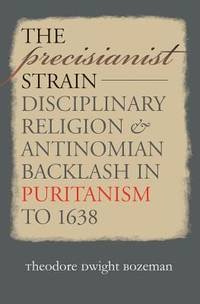
Hardcover. Omohundro Institute/University of North Carolina Press, 1st, 2004, Book: Very Good, Dust Jacket: Very Good, Hardcover in a bright dust jacket, 349 pages. In an examination of transatlantic Puritanism from 1570 to 1638, Theodore Dwight Bozeman analyzes the quest for purity through sanctification. The word "Puritan," he says, accurately depicts a major and often obsessive trait of the English late Reformation. He argues forcefully for the various movements in England and New England termed 'antinomianism' to be seen as sustained protests against and deliberate alternatives to this great and defining Puritan achievement in practical divinity.
Hardcover. Amherst NY, Prometheus Books, 1st, 2000, Book: Very Good, Dust Jacket: Very Good, Hardcover in a bright dust jacket, 554 pages. More than one hundred years ago Western scholars began to investigate the origins of Islam, using the highest standards of objective historical scholarship of the time. Their aim was to determine what could be known about Muhammad and the rise of early Islam quite apart from the pious and totally unobjective traditions preserved by the Muslim religious community. In some ways this research was inspired by a similar investigation of Christianity made famous by Albert Schweitzer's Quest of the Historical Jesus. Today although much has been learned about early Christianity, little comparable progress has been made in the field of Islamic Studies. Here objective historical research has long been severely handicapped both by the resistance of Muslim societies to Western analysis of their sacred traditions and by the apologetic approaches of many Western scholars, who have compromised their investigations for fear of offending Muslim sensibilities. It is in this context that Ibn Warraq presents this important anthology of the best studies of Muhammad and early Islam ranging from the very beginnings of Islamic Studies in the nineteenth century to contemporary research. Clean copy.
Hardcover. Ithaca NY, Cornell University Press, 2nd pr., 2005, Book: Very Good, Dust Jacket: Very Good, Hardcover in a bright dust jacket, 261 pages, previous owner's signature on front fly leaf. "Evil is the most serious of our moral problems. All over the world cruelty, greed, prejudice, and fanaticism ruin the lives of countless victims. Outrage provokes outrage. Millions nurture seething hatred of real or imagined enemies, revealing savage and destructive tendencies in human nature. Understanding this challenges our optimistic illusions about the effectiveness of reason and morality in bettering human lives. But abandoning these illusions is vitally important because they are obstacles to countering the threat of evil. The aim of this book is to explain why people act in these ways and what can be done about it." The first part of this book is a detailed discussion of six horrible cases of evil: the Albigensian Crusade of about 1210; Robespierre's Terror of 1793?94; Franz Stangl, who commanded a Nazi death camp in 1943?44; the 1969 murders committed by Charles Manson and his "family"; the "dirty war" conducted by the Argentinean military dictatorship of the late 1970s; and the activities of a psychopath named John Allen, who recorded reminiscences in 1975. John Kekes includes these examples not out of sensationalism, but rather to underline the need to hold vividly in our minds just what evil is. The second part shows why, in Kekes's view, explanations of evil inspired by Christianity and the Enlightenment fail to account for these cases and then provides an original explanation of evil in general and of these instances of it in particular.
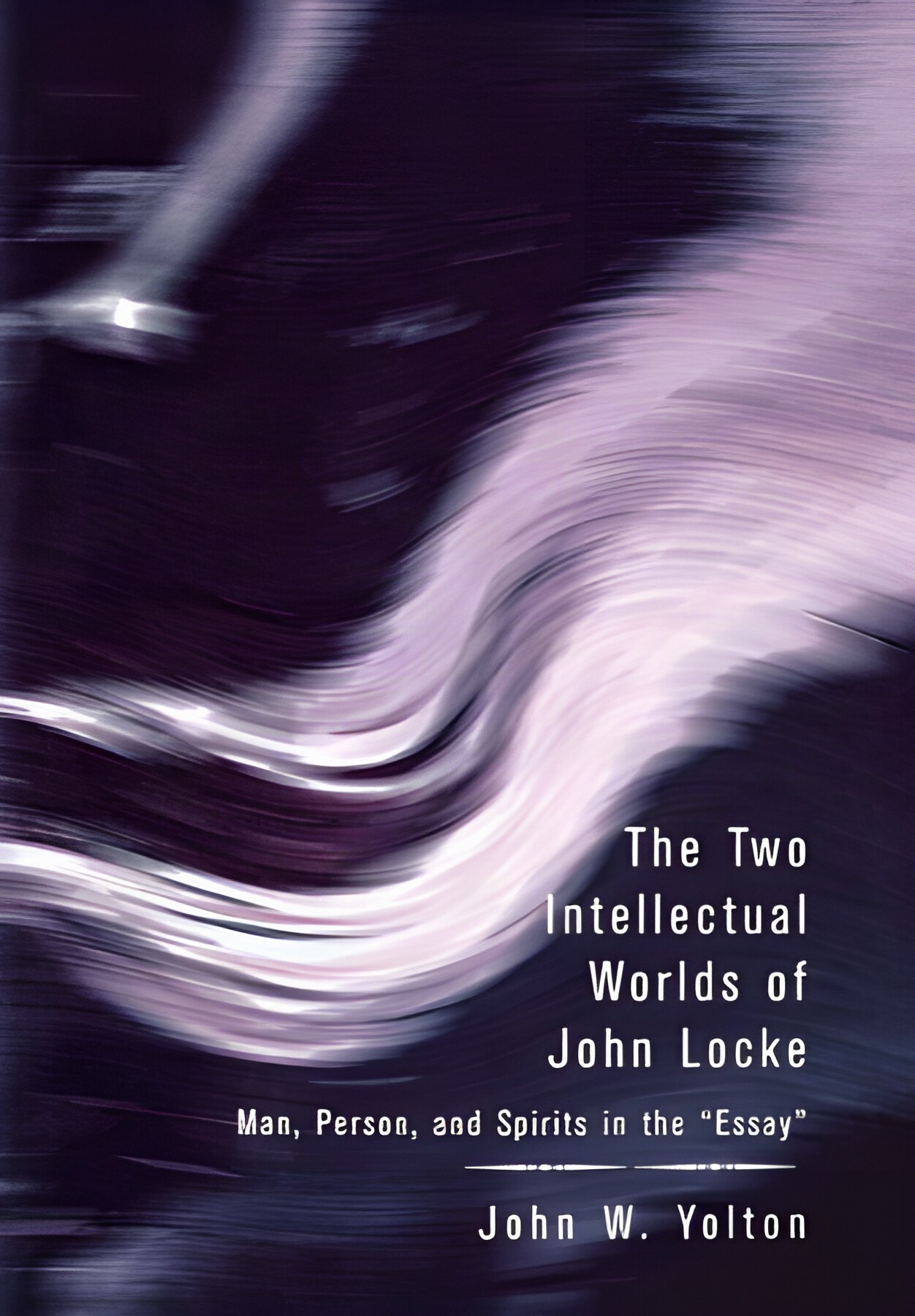
Hardcover. Ithaca NY, Cornell University Press, 1st, 2004, Book: Very Good, Dust Jacket: Very Good, Hardcover in a bright dust jacket, 180 pages. Using his intimate knowledge of John Locke's writings, John W. Yolton shows that Locke comprehends "human understanding" as a subset of a larger understanding of other intelligent Beings-angels, spirits, and an omniscient God. Locke's books on Christianity (The Reasonableness of Christianity and Paraphrases of St. Paul's Epistles) have received extensive analysis and commentary, but little attention has been given to the place of his Essay Concerning Human Understanding in his religious and theological beliefs. Yolton shows that Locke's account of what it is to be human in that work is profoundly religious. Yolton's book opens with an attempt to sort out several important terms basic to Locke's account of identity: man, self, person, and soul. A number of rarely examined components of Locke's thought emerge: the nature of man, the nature of a human being, and the place of man in the universe among the other creatures. Some will be surprised to learn that the domain of God, angels, and spirits is a part of Locke's universe, where it is considered the hoped-for destination of the just. Name, date on front fly leaf, otherwise clean.
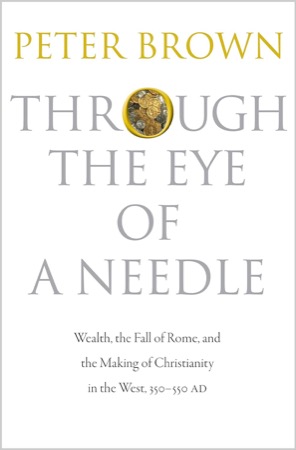
Hardcover. Princeton NJ, Princeton University Press, 1st, 2012, Book: Very Good, Dust Jacket: Very Good, Hardcover in a bright dust jacket, 759 pages, b&w illustrations. A sweeping intellectual history of the role of wealth in the church in the last days of the Roman Empire Jesus taught his followers that it is easier for a camel to go through the eye of a needle than for a rich man to enter heaven. Yet by the fall of Rome, the church was becoming rich beyond measure. Through the Eye of a Needle is a sweeping intellectual and social history of the vexing problem of wealth in Christianity in the waning days of the Roman Empire, written by the world's foremost scholar of late antiquity. Peter Brown examines the rise of the church through the lens of money and the challenges it posed to an institution that espoused the virtue of poverty and called avarice the root of all evil. Drawing on the writings of major Christian thinkers such as Augustine, Ambrose, and Jerome, Brown examines the controversies and changing attitudes toward money caused by the influx of new wealth into church coffers, and describes the spectacular acts of divestment by rich donors and their growing influence in an empire beset with crisis. He shows how the use of wealth for the care of the poor competed with older forms of philanthropy deeply rooted in the Roman world, and sheds light on the ordinary people who gave away their money in hopes of treasure in heaven. Clean copy.
Hardcover. Boston, Benjamin H. Greene, 1st, 1837, Book: Good, Scarce. 168 pages. Dark brown cloth covers w/ gilt lettering. Light edge wear, soiling to covers. Foxing to edges, end papers and pages. Pages slightly warped. Else in good condition.
Softcover. Oxford UK, Clarendon Press, reprint, 2016, Book: Very Good, Dust Jacket: None, Softcover, 400 pages. Clean, bright copy. This volume makes available for the first time critical editions of John Locke's A Vindication and A Second Vindication of the Reasonableness of Christianity, in which Locke defends his interpretation of the New Testament and of the Christian Religion against charges of heterodoxy. These works contribute greatly to our understanding of Locke's Christian commitments, which it is now recognized played an important role in shaping his philosophical opinions; they also demonstrate his sophistication as a biblical scholar, and the breadth of his theological learning. The texts are accompanied by a historical introduction explaining the origin of the works and setting them in context. In addition to a textual introduction and critical apparatus, editorial notes help to clarify the text. The volume also includes a French translation and abridgment by Pierre Coste, a Huguenot scholar, who was patronized by Locke and worked on his translations while residing in Locke's household. This definitive edition is an important contribution to an understanding of the development of modern enlightened Christian attitudes.
Hardcover. NY, Knopf, 1st, 2024, Book: Very Good, Dust Jacket: Very Good, Hardcover in a bright, unclipped dust jacket. Tommy Orange traces the legacies of the Sand Creek Massacre of 1864 and the Carlisle Indian Industrial School through three generations of a family in a story that is by turns shattering and wondrous. Star, a young survivor of the Sand Creek Massacre, is brought to the Fort Marion prison castle, where he is forced to learn English and practice Christianity by Richard Henry Pratt, an evangelical prison guard who will go on to found the Carlisle Indian Industrial School, an institution dedicated to the eradication of Native history, culture, and identity. A generation later, Stars son, Charles, is sent to the school, where he is brutalized by the man who was once his fathers jailer. Clean copy.
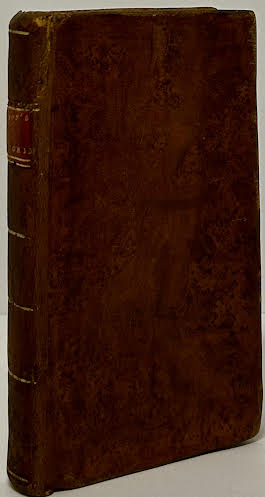
Hardcover. Middlebury, VT, Swift & Chipman, 2nd American from the 7th London Edition, 1811, Book: Good, Dust Jacket: None, 202 pages. Hardcover. Brown leather cover boards, front cover board slightly bowed (see image), gilt title on spine with gilt bands. Binding tight. Spine straight. Some appropriate agewear throughout: tanning, foxing, etc. A series of graphic and interesting scenes illustrating the temper and conduct of the pilgrim on his way to Zion.


 "The Quest for the Historical Muhammadby: Ibn Warraq (Editor)")



 "True Believer's Defence Against Charges Preferred by Trinitarians, for Not Believing in the Divinity of Christ, the Deity of Christ, the Trinity, etc., Theby: Morgrid")
 "Village Sermons; or, Short and Plain discourses, for he Use of Families, Schools, and Religious Societies.by: Burder, George")
 "Vindications of the reasonableness of Christianity. Edited with introductions, notes, and critical apparatus by Victor Nuovoby: John Locke")
 "Wandering Stars by: Orange, Tommy")