Hardcover. NY, Random House, 1st, 2016, Book: Very Good, Hardcover in a bright, unclipped dust jacket. 1941. The City of Light is dark and silent at night. But in Paris and in the farmhouses, barns, and churches of the French countryside, small groups of ordinary men and women are determined to take down the occupying forces of Adolf Hitler. Mathieu, a leader of the French Resistance, leads one such cell, helping downed British airmen escape back to England. Alan Furst's suspenseful, fast-paced thriller captures this dangerous time as no one ever has before. He brings Paris and occupied France to life, along with courageous citizens who outmaneuver collaborators, informers, blackmailers, and spies, risking everything to fulfill perilous clandestine missions.
Hardcover. London, England, Gret Western Railway, 1st edition, 1925, Book: Very Good, Dust Jacket: None, 154 pages. Hardcover. Color illustrated frontispiece, color and b/w illustrations, including several fold out blueprint diagrams, throughout. Previous owner's ID stamp on front flyleaf. Red cover boards (some fading), black quarter cloth, gilt title on spine and front cover board. Pages unmarked, some light tanning from age. Binding good, spine straight. With additional chapter on "Monastic Life and Buildings" by A. Hamilton Thompson, M.A., D.LITT., F.S.A. Professor of Mediaeval History in the University of Leeds. With One Hundred Illustrations by Photographic Reproduction, fifty-six drawings, thirteen plans, seven color plates and map (in pocket on back endpapers).
Hardcover. London, Church Missionary Society, 1st, 1925, Book: Very Good, Dust Jacket: None, 118 pages, gray cloth with gilt titles, frontispiece color illustration and foreword by Randall Cantuar, Archbishop of Canterbury dated March, 1925. No publication date on copyright page, crease on frontispiece, minor corner and edge wear, otherwise, very clean and tight copy.
Hardcover. Paris, Zodiaque, 1st, 1983, Book: Very Good, Dust Jacket: Very Good, 374 pages plus index. Color, b&w gravure photographs, plans of churches, cathedrals, abbeys and monasteries in England. Text in French. Ribbon marker.
Hardcover. New York, Board of Publications of the Reformed Protestant Ditch Church, 3rd Edition, 1857, Book: Good, Dust Jacket: None, 479 pages. Hardcover. B/w illustrations with tissue guards for most. Red cloth cover boards with blindstamped design and gilt title on spine (faded), agewear to covers. Foxing throughout. Tanning to edges and pages from age. Binding good. Spine straight.
Hardcover. Baltimore, Johns Hopkins University, 1st, 2002, Book: Very Good, Dust Jacket: None, An extraordinary work, unparalleled in its breadth and depth of detail, this three-volume set offers the first comprehensive history of architecture and town planning throughout colonial North America, from Russian Alaska to French Quebec, to Spanish Florida and California, to British, Dutch, and other settlements on the East Coast. Across this vast terrain, James Kornwolf conjures the outlines of the constructed environment as it emerged in settlements and communities, in structures and sites, and in the flourishes and idiosyncrasies of the families and individuals who erected and inhabited colonial buildings and towns. Here as never before readers can observe the impulses and principles of colonial design and planning as they are implemented in the buildings and streets, harbors and squares, gardens and landscapes of the New World. Incorporating more than 3,000 illustrations, Kornwolf's massive work conveys the full range of the colonial encounter with the continent's geography, from the high forms of architecture through formal landscape design and town planning. From these pages emerge the fine arts of environmental design, an understanding of the political and economic events that helped to determine settlement in North America, an appreciation of the various architectural and landscape forms that the settlers created, and an awareness of the diversity of the continent's geography and its peoples. Considering the humblest buildings along with the mansions of the wealthy and powerful, public buildings, forts, and churches, Kornwolf captures the true dynamism and diversity of colonial communities-their rivalries and frictions, their outlooks and attitudes-as they extended their hold on the land. His work conveys for the first time the full scale, from intimate to grand, of their enduring transformation of the natural landscape of North America. NOTE: DOMESTIC SHIPPING ONLY.
Hardcover. Baltimore MD, Penguin Books, 2nd pr., 1965, Book: Very Good, Dust Jacket: Very Good, Hardcover in a bright dust jacket housed in a pictorial cardboard slipcase. 234 pages, 192 b/w plates, glossary, bibliography. Describes the architecture of the period that stretches from the Early Renaissance to the post-Waterloo Greek and Gothic Revivals. Among the great names of those centuries were Inigo Jones, Christopher Wren, Vanbrugh, Robert Adam, and John Nash. During the same period were built Hampton Court, Hatfield, the new St Paul's, the City Churches, the graceful London Squares, and the crescents and terraces of Bath. In addition to the main text there are two long appendices, one on Scottish architecture and the other on the architecture c f the Thirteen Colonies. Numerous plans, the majority of which have been especially drawn for this book, and over three hundred half-tone illustrations form an integral part of the author's account. Clean copy.
Hardcover. NY, Atheneum, 3rd pr., 1999, Book: Very Good, Dust Jacket: Very Good, Hardcover in a bright, unclipped dust jacket. In a clear, straightforward style, Katz describes the settlement of the Ohio and Mississippi Valleys (covering Ohio, Indiana, Illinois, Michigan, Wisconsin, Minnesota, Iowa, Kansas, and Missouri) by African Americans seeking freedom, including biographical sketches of men and women who formed churches, started schools, or were politically active in their region. Some of these settlers were fugitive slaves; several set up stations on the Underground Railroad with the aid of the Quakers; others were farmers, poets, and soldiers. In several states, they helped form black regiments in the Civil War. Chronologically arranged, the book introduces many lesser-known personages not found in most collective biographies and places them in a broader context of U.S. history as a whole.
Hardcover. NY, Atheneum, 3rd pr., 1999, Book: Very Good, Dust Jacket: Very Good, Hardcover in a bright, unclipped dust jacket. In a clear, straightforward style, Katz describes the settlement of the Ohio and Mississippi Valleys (covering Ohio, Indiana, Illinois, Michigan, Wisconsin, Minnesota, Iowa, Kansas, and Missouri) by African Americans seeking freedom, including biographical sketches of men and women who formed churches, started schools, or were politically active in their region. Some of these settlers were fugitive slaves; several set up stations on the Underground Railroad with the aid of the Quakers; others were farmers, poets, and soldiers. In several states, they helped form black regiments in the Civil War. Chronologically arranged, the book introduces many lesser-known personages not found in most collective biographies and places them in a broader context of U.S. history as a whole.
Hardcover. Oxford, Thomas Baskett and Robert Baskett, 1st, 1743, Book: Good, Dust Jacket: None, Unpaginated in parts. Leather binding shows heavy wear to edges, especially corners. Gilt decoration on spine and stamped embellishment on front. Heavy foxing on pages. Gutter cracked in center. Black and white illustrations.
Hardcover. Cambridge, England, Cambridge University, 1st Edition, 1777, Book: Good, Dust Jacket: None, Nonpaginated. Hardcover. Cover boards bound in polished calf (agewear--see image), gilt bands on spine. Front cover boards and front flyleaf still attached but coming loose from binding,Binding tight otherwise. Spine straight. Previous owner's inscription on front flyleaf and dated signatures (178? and 1792) on title page (see image). Some light pencil on top of title page (see image). Tanning throughout from age. Beautiful old volume, a collector's dream.
Softcover. New York, Rizzoli, 1st, 1993, Book: Very Good, Dust Jacket: None, 305 pages, illustrated throughout in color and b&w. Light edgewear and sun-fade to spine. Previous owner's signature on front end paper. Clean, tight copy. Briefly traces the career of this contemporary American architect and shows examples of his houses, apartment buildings, libraries, museums, schools, hotels, churches, and conference centers.
Hardcover. Great Britain, Academy Editions, 1st, 1997, Book: Very Good, Dust Jacket: Very Good, 224 pages. Hardcover. Gilt title on spine. Dust jacket unclipped. Color and b/w illustrations throughout. In excellent condition, clean inside and out.
Hardcover. NY, Architectural Book Pub. Co., 1st, 1931, Book: Very Good, Dust Jacket: None, Hardcover, blue cloth, 291 pages. Measured drawings by William Allen Dunn, Many b&w photos, ex-lib but very clean, tight. stamp on foredge, small envelope on back end paper
Hardcover. New York, Hastings House, 1st, 1963, Book: Good, Dust Jacket: Good, Hardcover, 574 pages. Nearly 400 photographs pictures 345 still standing houses of worship ranging from English medieval Gothic to classical Georgian, most of them pinpointed on 15 maps. Blue cloth, gilt lettering to spine and front cover. Dust jacket with minor edge wear. Original blue slip case, edge wear at bottom and opening edge. previous owner's inscription in front. Otherwise a clean, tight and crisp copy.
Softcover. Baltimore, Gateway Press, 1st, 2004, Book: Very Good, Dust Jacket: None, Softcover, 164 pages, b&w illustrations. SIGNED BY HAAS on the title page. This is the story of a 19th century German-American industrialist who made his fortune manufacturing hard rubber combs thanks to his friendship with Charles Goodyear and his invention, vulcanized rubber. Poppenhusen founded a town, College Point, New York, and became a much-loved philanthropist funding churches, libraries and an educational institute that is today both a National and New York City landmark, the Institute that bears his name. He was an innovator in education introducing the first free kindergarten for his workers and the people of the town, perhaps the first corporate day care facility in the U.S. He made the catastrophic mistake of getting involved in the railroads in the late 1860's and used his vast fortune to bring about the consolidation of what has come down to us today as the Long Island Railroad.
Hardcover. Rome, Institut Suisse De Rome, 1st Edition, 1976, Book: Good, Dust Jacket: Good, 159 pages followed by 46 plates in black & white. Hardcover limited edition to 800 copies in German Text. White cloth boards with brick titles to spine. Previous owner's name to front flyleaf. Spotting, foxing to preliminary pages & edges. Dust jacket with light foxing, now protected with plastic cover. Plates detail fresco cycle of the Oratorio di San Giovanni Decollato in Rome commissioned by the Florentine confraternity of the Misericordia, related drawings & sculptures. Clean, unmarked copy.
Hardcover. Cambridge, MA, Belknap Press of Harvard University Press, 1st Edition, 1961, Book: Very Good, Dust Jacket: None, 154 pages. Hardcover. Navy blue cloth cover boards, title on spine in white and small gilt design on front cover board. Previous owner's name on front flyleaf. Light pencil marks (erasable) throughout. Binding tight. Spine straight. This small book, the last work of a world-renowned scholar, has established itself as a classic. It provides a superb overview of the vast historical process by which Christianity was Hellenized and Hellenic civilization became Christianized.
Hardcover. London, Elek, 1st, 1975, Book: Very Good, Dust Jacket: Good, Hardcover, 537 pages, illustrated throughout with 420 plates, including 86 in full color. Very large, heavy book. Light edgewear, rubbing and de-lamination to dust jacket. Clean, tight copy.
UK, Cambridge University Press, 1st, 1927, Book: Very Good, Dust Jacket: None, Hardcover, blue cloth with gilt decoration, lettering, 56 pages plus 111 b&w plates. This 1927 book presents an accessible guide to Gothic foliage sculpture, aimed at visitors to ancient English churches. 186 pages total. Decorative bookplate inside front cover otherwise clean copy.
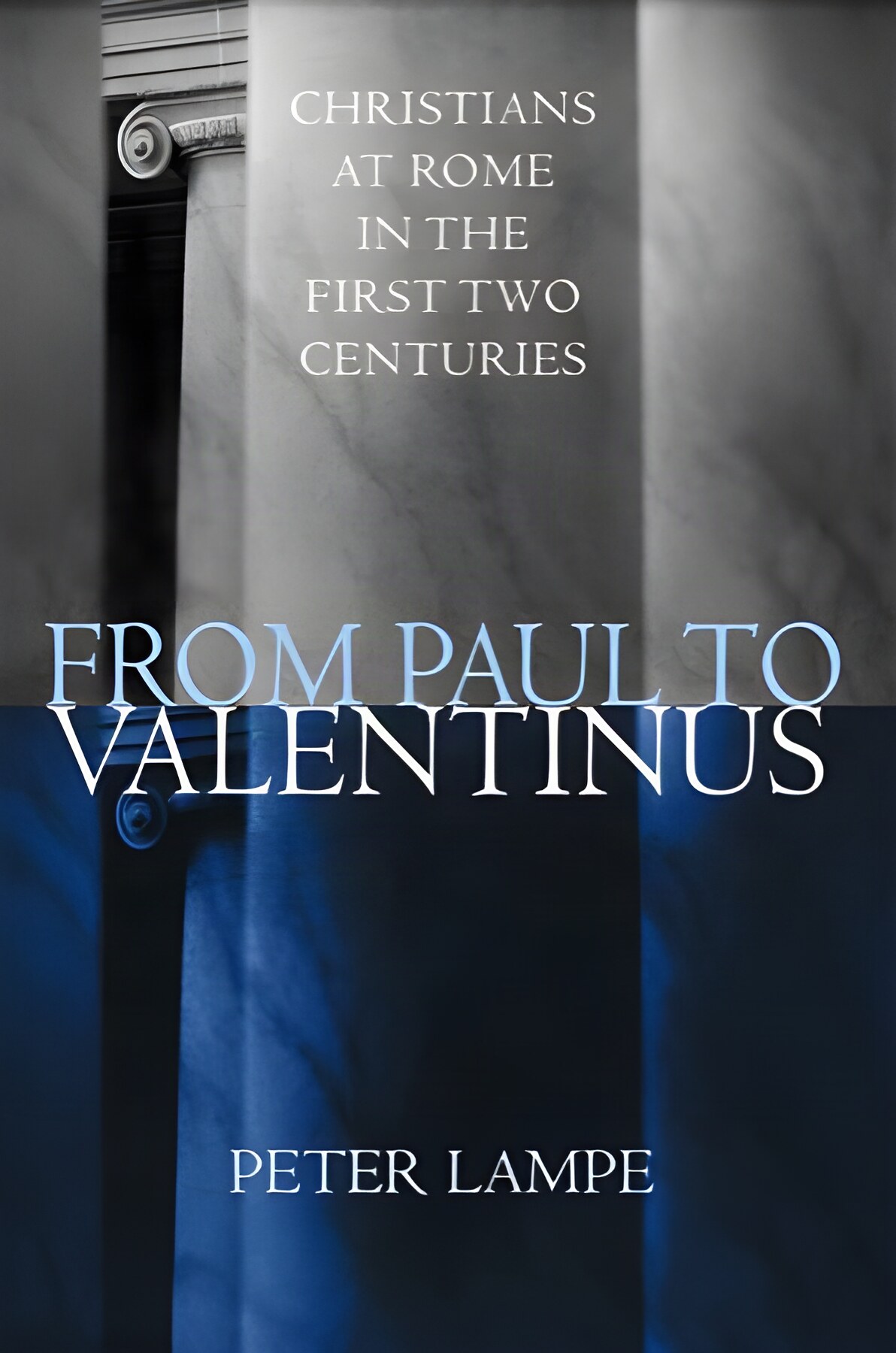
Hardcover. Minneapolis, Fortress Press, 1st, 2003, Book: Very Good, Dust Jacket: Fair, Hardcover in a dust jacket with large chunk of rear panel gone. 525 pages. In this pathbreaking study of the rise and shape of the earliest churches in Rome, Lampe integrates history, archaeology, theology, and social analysis. He also takes a close look at inscriptional evidence to complement the reading of the great literary texts: from Paul's Letter to the Romans to the writings of Clement of Rome, Justin Martyr, Montanus, and Valentinus. Thoroughly reworked and updated by the author for this English-language edition, this study is a groundbreaking work, broad in scope and closely detailed. Lampe deals with the shape of leadership and the Christians' relation to the Judeans living in Rome. In six parts, comprised of fifty-one chapters and four appendices, Lampe greatly advances our knowledge of the shape of leadership and the Christians' relation to the Judeans living in Rome. Name and date on front fly leaf, otherwise clean.
Softcover. New Haven CT, Yale University Press, 1st pbk, 2022, Softcover, 483 pages. An engaging, richly illustrated account of parish churches and churchgoers in England, from the Anglo-Saxons to the mid-sixteenth century. Parish churches were at the heart of English religious and social life in the Middle Ages and the sixteenth century. In this comprehensive study, Nicholas Orme shows how they came into existence, who staffed them, and how their buildings were used. He explains who went to church, who did not attend, how people behaved there, and how they--not merely the clergy--affected how worship was staged. Clean, bright copy.


 "African Church in Building, Anby: Willis, Right Rev. J. J.")


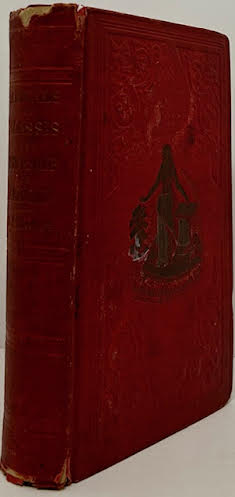


 "Architecture and Town Planning in Colonial North America (3 Vol. Set)by: James D. Kornwolf and Georgiana W. Kornwolf")


 "Black Pioneers: An Untold Storyby: William Loren Katz")
 "Book of Common Prayer, and Administration of the Sacraments and other Rites and Ceremonies of the Church, According to the use of the Church of England: Together with the Psalter or Psalms of David, Pointed as they are to be sung and")
 "Book of Common Prayer, The: and Administration of the Sacraments, and Other Rites and Ceremonies of the Church, According to the Use of the Church of England; Together with the Psalter or Psalms of David, Pointed as they are to be su")


 "Charles Moore: Buildings and Projects 1949-1986by: Johnson, Eugene J.")
 "Church Buildersby: Heathcote, Edwin, Iona Spens")
 "Colonial Churches and Meeting Houses/ Pennsylvania, New Jersey and Delawareby: Wallace, Philip B.")
 "Colonial Houses of Worship in America, Theby: Rose, Harold Wickliffe")

 "Das Oratorium Von San Giovanni Decollato In Rom - Eine Studie Seiner Freskenby: Keller, Rolf E.")
 "Early Christianity and Greek Paideiaby: Jaeger, Werner")

 "Early Russian Architectureby: Faensen, Hubert")
 "English Gothic Foliage Sculptureby: Samuel Gardner")
 "Forgotten Shrines of Spainby: Byne, Mildred Stapley")
 "Going to Church in Medieval Englandby: Nicholas Orme")