Softcover. Newark, New Jersey Historical Society, 1st, 1977, Book: Very Good, Dust Jacket: None, Softcover, blue pictorial wrappers, lettered in white on the spine and front cover. Illustrations nearly every page with one or more b&w photographs of historic buildings (old houses, barns, churches, schools, prisons, floor plans, interior and exterior views, etc.) plus architectural details, plans and measured drawings. Clean copy.
Hardcover. Philadelphia, J. B. Lippincott Company, 1st, 1915, Book: Very Good, Dust Jacket: None, 527 pages, with 316 illustrations throughout, gilt top edge and titles on green cloth board. Minor corner bumps and edge wear and fade, frontispiece page loose, and previous owner's bookplate on front fly leaf. Overall, clean and tight copy, a limited edition. PLEASE NOTE: DUE TO WEIGHT, DOMESTIC SHIPPING ONLY.
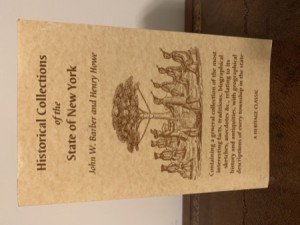
Softcover. Bowie MD, Heritage Books, reprint, 1999, Book: Very Good, Dust Jacket: None, Softcover, 608 pages, b&w illustrations, fold-out map in front. Includes Preface; Counties, Townships, Villages; and Index. Illustrated with 230 engravings, double-page map of New York, and engraved frontispiece portraits. "This wonderful volume belongs in the bookcase of all New York historians. More than 150 years old, this ancient text is rich in historical perspective and information that is no longer available to the modern researcher. The work begins with a general outline of New York history. Thereafter, the book is arranged alphabetically by county. Dictionary-like entries for each town are listed alphabetically within each county section. The entries give the location and history of each town, including date of settlement, famous and notable residents, important events, population statistics, number of dwellings, churches and schools, local Indians, and so on. Comprehensively annotated and profusely illustrated with engravings of towns, historic structures and distinctive natural features. Contains an index of counties, townships and villages plus a separate index of subjects and full names. Facsimile reprint of the 1842 edition. Clean, like new.
Hardcover. New York, Harper & Brothers, 1st, 1880, Book: Good, Dust Jacket: None, 331 pages, with gilt top edge and titles. Minor corner and edge wear, light crack along spine but no loose pages, overall, clean and tight copy.
Hardcover. Rhiinebeck, N.Y., Frank D. Blanchard, 1st Edition, 1931, Book: Very Good, Dust Jacket: None, 191 pages. Hardcover. Scarce. Brown cloth cover boards, gilt title on spine and front cover. Pages and edges have some tanning from age, unmarked. Spine straight. Binding good. History of the church, from the eighteenth century through 1931. Clean copy.
Hardcover. US, Frances Lincoln, 1st, 2015, Book: Very Good, Dust Jacket: Very Good, Hardcover, pages. The most widely read British poet of the twentieth century, Philip Larkin was also a keen amateur photographer and through his life he made images of the people, places and things that meant most to him. The Importance of Elsewhere gathers the best of Larkin's photographic work, divided into short thematic chapters arranged in chronological order. Written by Richard Bradford, the acclaimed author of the Larkin biography First Boredom, Then Fear, the book shows how Larkin, as an individual, as a writer and indeed as a photographer, developed an acute sensitivity to all aspects of the world around him, from his love of open uninhabited landscapes and empty churches to his mixed feelings about crowds. There are also fascinating portraits of those people who were closest to Larkin, including his lovers, his mother and his literary peers. The book beautifully reproduces more than 200 images from the Larkin archive at Hull: the majority have never previously been seen in print. A substantial foreword by Mark Haworth-Booth, formerly curator of photography at the V&A, explores what it meant to be a serious amateur photographer of Larkin's generation.
Hardcover. University of Nebraska Press, 1st, 1985, Book: Very Good, Dust Jacket: Very Good, Hardcover, 279 pages, 227 plates. Traces the life of the Wyoming photographer and shows his pictures of people, landscapes, stories, street scenes, churches, farms, homes and businesses of the West
Hardcover. Boston, American Unitarian Association, 1st, nd, Book: Very Good, Dust Jacket: None, 225 pages. Hardcover. No date of publication. Ex-library copy with bookplate on inside front cover and label at bottom of spine. Top edge gilt. Black & white photographs. Light wear. Clean, unmarked text.
Hardcover. New York, Abbeville Press, 1st, 1987, Book: Very Good, Dust Jacket: Very Good, Hardcover, 280 pages, 164 illustrations (76 in color). Essays by Henry Adams, Kathleen A. Foster, Henry A. La Farge, H. Barbara Weinberg, Linnea H. Wren, and James L. Yarnall. John La Farge was not only a painter of still lifes and landscapes in watercolor and oil, but he created extraordinary decorative schemes and revolutionary stained glass art for some of the country's most impressive churches and mansions as well.
Hardcover. London, Macmillian St. Martin's Press, 1st, 1967, Book: Very Good, Dust Jacket: Very Good, 553 pages. Hardcover with price-clipped dust jacket. Dust jacket spine has St. Martin's Press sticker on bottom. Internally, clean and tight. Cover boards have light soil to front and fading to bottom edge.
Hardcover. London, England, Oxford at the Clarendon Press, 2nd Edition, 1955, Book: Very Good, Dust Jacket: None, 479 pages plus maps and fold-out family tree/timeline. Hardcover. Paste down presentation label on front flyleaf. Previous owner's signature on front flyleaf. Blue cloth cover boards, gilt title on spine (slightly faded). A touch of tanning to pages. In very good condition.
Hardcover. Baton Rouge, Louisiana State University Press, 1st, 2011, Book: Very Good, Dust Jacket: Very Good, Hardcover in a bright dust jacket, 175 pages, b&w illustrations. Vermont-native Twitchell sets out from his current home in Florida on the inauguration day of America's first black president to find the "real" South and to try to understand the truth about his illustrious ancestor. He travels in an RV from Georgia's Okefenokee Swamp across Alabama and Mississippi to Coushatta, Louisiana. As he drives through the heart of Dixie, Twitchell sorts through the prejudices he learned from his northern rearing. In searching for the culture he had held at arm's length for so long, he tours small-town southern life -- in campgrounds, cotton gins, churches, country fairs, and squirrel dog kennels -- and uncovers some fundamental truths along the way. Notably, he discovers that prejudices of race, class, and ideology are not limited by geography. As one man from Georgia mockingly summed up North versus South stereotypes, "Y'all are rude and we're stupid." Unexpectedly, Twitchell also uncovers facts about his great-grandfather and sheds new light on his family's past. An enlightening, humorous, and refreshingly honest search, Look Away, Dixieland reveals some of the differences and similarities that ultimately define us as a nation. Clean copy.
Softcover. Tucson, AZ, Arizona University Press , 1st paperback, 1993, Book: Very Good, Dust Jacket: None, Softcover. Black & white photos by George Alexander Grant. Some color fade to edges of cover. The Spanish missions founded by Padre Eusebio Kino in Sonora, Mexico, during the 1690s and early 1700s are historical as well as architectural marvels. Once self-supporting villages with central churches, the missions stand today as monuments to perseverance in the face of a hostile New World. These "Kino Missions" were surveyed in 1935 by the National Park Service to prepare for the restoration of the mission at Tumacacori, Arizona, then a National Historic Monument. That report, which was never published, provided insights into the missions' history and architecture that remain of lasting relevance. Perhaps more important, it documented these structures in photographs and drawings--the latter including floor plans and sketches of architectural detail--that today are of historic as well as aesthetic interest. This volume reproduces that 1935 report in its entirety, focusing on sixteen missions and including two maps, 52 drawings, and 76 photographs. With a new introduction and appendixes that place the original study in context,
Hardcover. Lawrence KS, University Press of Kansas, 1st, 1994, Book: Very Good, Dust Jacket: Very Good, Hardcover with a bright dust jacket. B&w vintage photos throughout. The Midwest's one-room schools were, Fuller observes, the most democratic in the nation. Located in small, independent school districts, these schools virtually wiped out illiteracy, promoted democratic values, and opened up new vistas beyond the borders of their students' lives. Entire communities, Fuller shows, revolved around these schools. At various times they were used as churches, polling places, sites of political caucuses, and meeting halls for local organizations. But as America urbanized and the movement to consolidate took hold in rural counties, these little centers of learning were left at the margins of the educational system. Some were torn down, some left to weather away, some sold at auction, and still others transformed into museums.
Softcover. Indianapolis, Indiana Historical Society, 1st, 1994, Book: Very Good, Dust Jacket: None, Softcover 96 pages. Otto Ping began taking pictures of the people and places of his native Brown County, Indiana, in 1900 at the age of seventeen in order to make some extra money. He continued doing so for forty years while he worked at such other endeavors as peddling, farming, canning, and chicken raising. Unlike the painters and photographers who came to the county in these years to capture quaint and rustic scenes for sophisticated audiences elsewhere, Ping made his pictures for the people who were in them. Primarily a portraitist, Ping photographed individuals, couples, family groups, and larger gatherings. He had no studio and carried with him no lights or props. His portraits are characterized by hastily thrown up backdrops, stark lighting, and rigid poses. They have a documentary quality, and one senses in the faces that peer from these images the determination with which these people met lives of toil and hardship. Many of the portraits betray a sense of melancholy. Life was tenuous for both young and old, and the photographer often worked against time to provide a family with images of the living before his efforts became memorial. Ping photographed people at work and play. Images abound of stiffly posed groups in front of sawmills, churches, schools, and lodge halls; families in front of cabins or newly framed houses; couples with buggies; and children at play. Clean copy.
Hardcover. New York, William Morrow and Company, Inc., 1st, 1994, Book: Very Good, Dust Jacket: Very Good, 128 pages. Hardcover. Color and b/w illustrations throughout. Dust jacket unclipped. Gilt title on spine. Dust jacket has a little bit of chipping at top of spine, patched with tape. Otherwise great. Clean and unmarked inside. Gilt endpapers.
Hardcover. New York, W. W. Norton, 1st, 1976, Book: Very Good, Dust Jacket: Good, Hardcover in a very good plus dust jacket. 192 pages. Color frontispiece, color photographs, illustrations, diagrams, bibliography, index. The dust jacket has very minor edgewear. A photographic look at some of the earlier churches built in North America.
Hardcover. Brewster MA, Paraclete Press, 1st, 2015, Book: Very Good, Dust Jacket: Very Good, Hardcover, 112 pages. This volume marks the first translation of these prayer-poems into English. Originally written in 1899, Rilke wrote them upon returning to Germany from his first trip to Russia. His experience of the East shaped him profoundly. He found himself entranced by Orthodox churches and monasteries, above all by the icons that seemed to him like flames glowing in dark spaces. He intended these poems as icons of sorts, gestures that could illumine a way for seekers in the darkness. As Rilke here writes, "I love the dark hours of my being, for they deepen my senses." Translated by Mark S. Burrows.
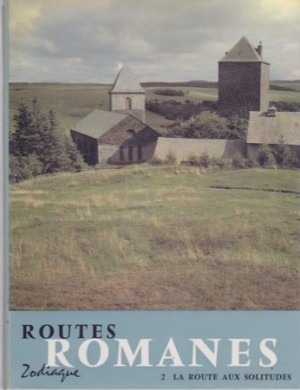
Hardcover. Paris, Zodiaque, 1st, 1984, Book: Very Good, Dust Jacket: Very Good, 334 pages plus index. Color, b&w gravure photographs, plans of churches, cathedrals, abbeys and monasteries in France. Text in French. Ribbon marker. Clean, tight copy in a bright dust jacket.
Hardcover. Paris, Zodiaque, 1st, 1982, Book: Very Good, Dust Jacket: Very Good, Hardcover, 407 pages plus index. Color and b&w gravure plates, plans of medieval churches of France. French text. A clean, tight copy in a bright dust jacket.
Softcover. Spain, Editorial Escudo de Oro. S.A., 1st, 1995, Book: Very Good, Dust Jacket: None, 93 pages. Softcover. Mild soiling throughout. An otherwise unmarked copy with only minor edgewear. Color photographs throughout.

 "Historic American Buildings Survey of New Jersey ; Catalog of the Measured Drawings, Photographs and written Documents in the Survey by: Bassett, William B.")



 "Historical Studies of Church-Building in the Middle Ages: Venice, Siena, Florenceby: Norton, Charles Eliot")
 "History of the Methodist Episcopal Church in Burlington, Vermont (SIGNED COPY)by: Castle, C. A.")
 "History of the Reformed Dutch Church of Rhinebeck Flatts, N.Y.by: Blanchard, Rev. Frank D.")

 "Importance of Elsewhere, The: Philip Larkin's Photographsby: Bradford, Richard/ Philip Larkin (Photographer), Mark Haworth-Booth (Foreword)")

 "Jasper Douthit's Story - The Autobiography of a Pioneerby: Douthit's, Jasper")


 "John La Fargeby: Adams, Henry")




 "Le Cupole Del Brunelleschi: Capire per conservare by: Rossi, Paolo Alberto")


 "One-Room Schools of the Middle West: an Illustrated History by: Fuller, Wayne E.")

 "Picture History of the Reformation and Protestantism by: Haverstick, John")

 "Pioneer Churchesby: Kalman, John De Visser (photographe), Harold")
 "Prayers of a Young Poetby: Rainer Maria Rilke/ Mark S. Burrows (trensl.)")
 "Routes Romanes - 2: La Route aux Solitudesby: Oursel, Raymond")
 "Sevilla Cathedral by: Delgado. Francisco Gil (Editor)")