Softcover. New York, Oxford University Press, 1st, 1997, Book: Very Good, Dust Jacket: None, 297 pages. Softcover. In very good condition, clean and bright inside. Wrapper has a slight yellowing at top edge, barely visable. Binding tight.
Hardcover. New York, Hastings House, 1st, 1963, Book: Good, Dust Jacket: Good, Hardcover, 574 pages. Nearly 400 photographs pictures 345 still standing houses of worship ranging from English medieval Gothic to classical Georgian, most of them pinpointed on 15 maps. Blue cloth, gilt lettering to spine and front cover. Dust jacket with minor edge wear. Original blue slip case, edge wear at bottom and opening edge. previous owner's inscription in front. Otherwise a clean, tight and crisp copy.
Softcover. NY, Oxford University Press, 2nd pr., 1995, Book: Very Good, Dust Jacket: Very Good, Hardcover in a bright, unclipped dust jacket. George Schuyler, a renowned and controversial black journalist of the Harlem Renaissance, and Josephine Cogdell, a blond, blue-eyed Texas heiress and granddaughter of slave owners, believed that intermarriage would "invigorate" the races, thereby producing extraordinary offspring. Their daughter, Philippa Duke Schuyler, became the embodiment of this theory, and they hoped she would prove that interracial children represented the final solution to America's race problems. Able to read and write at the age of two and a half, a pianist at four, and a composer by five, Philippa was often compared to Mozart. During the 1930s and 40s she graced the pages of Time and Look magazines, the New York Herald Tribune, and The New Yorker. Philippa grew up under the adoring and inquisitive eyes of an entire nation and soon became the role model and inspiration for a generation of African-American children. But as an adult she mysteriously dropped out of sight, leaving America to wonder what had happened to the "little Harlem genius." Suffering the double sting of racism and gender bias, Philippa had been rejected by the elite classical music milieu in the United States and forced to find an audience abroad, where she flourished as a world-class performer and composer. She traveled throughout South America, Europe, Africa, and Asia performing for kings, queens, and presidents. By then Philippa had added a second career as an author and foreign correspondent reporting on events around the globe--from Albert Schweitzer's leper colony in Lamberene to the turbulent Asian theater of the 1960s. She would give a command performance for Queen Elisabeth of Belgium one day, and hide from the Viet Cong among the ancient graves of the Annam kings another.
Hardcover. NY, Oxford University Press, 1st, 1986, Book: Very Good, Dust Jacket: Very Good, Hardcover in a bright dust jacket, 166 pages. Pindar (c. 518-438 B.C.), one of ancient Greece's most famous lyric poets, is perhaps best known for his victory (epinicean) odes, written to honor the winners at various sets of games, such as the Olympiad. In Crown of Song, Deborah Steiner's study of these odes, she writes "If Pindar is remote from us in genre, his style strikes the reader as vivid and immediate. And in my reading of the epinicean odes, it is the poet's use of metaphor that accounts for the dynamic quality of his verse." Steiner begins her analysis by exploring both ancient and modern theories of metaphor, and then turns to specific imagery employed by the poet--plant life, athletics, minerals and numerous others--as a way of understanding how these metaphoric complexes function in the poet's praise of the victor, his assertion of his own place as perpetuator of the victor's immortal fame, and in his vision of human achievement and glory in the context of mortal life and immortal gods. Written in a lively, readable style, Crown of Song opens up the sometimes difficult verse of this celebrated ancient poet to modern readers. Name on front fly leaf, otherwise clean.
Hardcover. NY, Doubleday, reprint, Book: Very Good, Dust Jacket: Fair, Hardcover in a heavily chipped dust jacket, 192 pages illustrated in color and b&w by the D'Aulaires. A collection of idealized Greek myths, a child's first introduction to the Classical world.
Hardcover. New York , Boni & Liveright, Limited, 1925, Book: Good, Dust Jacket: None, 2 volume set. Translated by John Payne, illustrated by Clara Tice. Edition limited to 2000 copies. This is number 85. 374 + 355 pages. Light wear and sun-fade to black cloth covers. Binding on both volumes is a little shaken but still intact. There is a small hole close to the fore-edge on rear cover of volume 2. Overall a nice set in good condition.
Hardcover. New York, Oxford University Press, 3rd Ed., 1931, Book: Very Good, Dust Jacket: None, Five volumes complete, 594, 576, 543. 645 and 593 pages. Olive cloth binding with gilt lettering on spine, top edge gilt.Couple hinges tender. Bright, clean set. DUE TO WEIGHT, DOESTIC SHIPPING ONLY.
Hardcover. NY, Wynwood Press, 1st, 1989, Book: Very Good, Dust Jacket: Very Good, Hardcover, 256 pages, b&w photos. In a bright, unclipped dust jacket. Rozsa was both a classical composer and extremely successful Hollywood film composer. Hence the title. He scored such films as Ben Hur, El Cid and Lust for Life and many others.
Softcover. NY, Dover Publications, reprint, 1980, Book: Very Good, Dust Jacket: None, Softcover, 364 pages with 295 b&w plates. Originally published as a hardcover in 1939. In this, the definitive work on Duncan Phyfe, Nancy McClelland, noted authority on the history of American antiques, recounts with keen appreciation the story of his life and work. She identifies the English Regency style, tells how the style developed, shows how it influenced Phyfe, and then describes both the man himself and numerous examples of his furniture construction -- his tables, chairs, sofas, sideboards, beds, etc. Accompanying the text are many fine photographs of famous Regency homes and furniture, houses built during the Classical Revival in America, and scores of Phyfe's masterpieces. Succeeding chapters, also enriched with photographs of surviving pieces, describe work by Phyfe's competitors -- Lannuier, Michael Allison, John Gruez, John Seymour, Samuel McIntire, Nehemiah Adams, Henry Connelly, etc. -- and work by Phyfe known to have been bought by specific customers. Clean copy.
Hardcover. Princeton NJ, Princeton University Press, 2nd pr., 2013, Book: Very Good, Dust Jacket: Very Good, Hardcover in a bright dust jacket, 332 pages, b&w illustrations. Einstein and the Quantum reveals for the first time the full significance of Albert Einstein's contributions to quantum theory. Einstein famously rejected quantum mechanics, observing that God does not play dice. But, in fact, he thought more about the nature of atoms, molecules, and the emission and absorption of light-the core of what we now know as quantum theory-than he did about relativity. A compelling blend of physics, biography, and the history of science, Einstein and the Quantum shares the untold story of how Einstein-not Max Planck or Niels Bohr-was the driving force behind early quantum theory. It paints a vivid portrait of the iconic physicist as he grappled with the apparently contradictory nature of the atomic world, in which its invisible constituents defy the categories of classical physics, behaving simultaneously as both particle and wave. And it demonstrates how Einstein's later work on the emission and absorption of light, and on atomic gases, led directly to Erwin Schrodinger's breakthrough to the modern form of quantum mechanics. The book sheds light on why Einstein ultimately renounced his own brilliant work on quantum theory, due to his deep belief in science as something objective and eternal. Clean copy.
Hardcover. San Rafael CA, Insight Kids, 5th pr., Book: Very Good, Dust Jacket: Very Good, Hardcover in a bright dust jacket. Elephant-headed and big-bellied, mischievous and sweet, the god Ganesh is one of the most familiar faces in the world. But why does he have the head of an elephant? Set in the Himalayas in a time of gods and goddesses, Elephant Prince tells the story of a remarkable bond between a mother and her son, a remorseful god, a generous elephant and the boy who became Ganesh. Belgin K. Wedman's jewel-toned illustrations, reminiscent of classical Indian miniatures, complement this poetic story of one of the most beloved gods of all.
Hardcover. US, Amer Federation of Arts, 1st, 2001-07-01, Book: Very Good, Dust Jacket: None, 134 pages, illustrated throughout in color and b&w. Light edgewear and rubbing to boards. No dust jacket. Clean, tight copy.
Hardcover. US, Glitterati, 1st, 2015, Book: Very Good, Dust Jacket: Very Good, Like new in publisher's shrink-wrap. Hardcover, 272 pages. In his debut book of photography, with a foreword by one of the luminaries of NYC culture and entertainment, Adrian Buckmaster's monograph presents a staggeringly beautiful collection of portraits - a cross-section of humanity in all of its glorious diversity, from the ordinary to the extraordinary and everything in-between. Having spent his early years shooting commercial beauty and fashion, Buckmaster soon shifted focus to more personal projects, challenging conventional notions of beauty and celebrating the eccentricities of those whom society might classify as "misfits." Echoes of Buckmaster's early career remain, in the form of exquisite costuming, make-up, and scenic design. Despite an element of performance, there is an undeniable rawness to these portraits, in which subjects are both aware of the camera's gaze and sympathetically self-conscious, robing and disrobing, revealing and concealing. Buckmaster's photographic genius is encapsulated in his uncanny ability to fastidiously art direct while simultaneously stripping away layers of formality and convention. Arranged in three movements: Imposing, Revealing, and Inventing, this collection progresses from traditional portraiture to increasingly intimate portrayals, as subjects expose, create, and invent themselves. Included in this endlessly varied spectrum of characters are Burlesque performers, families, brides, lovers, and all manner of tattoos and body piercings. There are classical reclining nudes, reminiscent of Edouard Manet's Olympia or Titian's Sleeping Venus, dancers with incredible physical strength and dexterity, women costumed as peacocks and geishas, a contortionist inside a trunk, even a green-skinned man, bejewelled like an Indian deity.
Softcover. Durham NC, Duke University Press, 2nd pr., 1994, Book: Very Good, Dust Jacket: None, Softcover, 342 pages. In Extended Play, one of the country's most innovative music writers conducts a wide-ranging tour through the outer limits of contemporary music. Over the course of more than twenty-five portraits, interviews, and essays, John Corbett engages artists from lands as distant as Sweden, Siberia, and Saturn. With a special emphasis on African American and European improvisers, the book explores the famous and the little known, from John Cage and George Clinton to Anthony Braxton and Sun Ra. Employing approaches as diverse as the music he celebrates, Corbett illuminates the sound and theory of funk and rap, blues and jazz, contemporary classical, free improvisation, rock, and reggae. Using cultural critique and textual theory, Corbett addresses a broad spectrum of issues, such as the status of recorded music in postmodern culture, the politics of self-censorship, experimentation, and alternativism in the music industry, and the use of metaphors of space and madness in the work of African American musicians. He follows these more theoretically oriented essays with a series of extensive profiles and in-depth interviews that offer contrasting and complementary perspectives on some of the world's most creative musicians and their work. Clean copy.
Hardcover. New York , Charles Scribner's Sons, 1st, 1972, Book: Very Good, Dust Jacket: Good, 176 pages, illustrated throughout in b&w. Dust jacket price clipped with slight rubbing, wear, sunning to edges and spine. Internally very good.
Softcover. London, World Scientific Publishing, 1st, 2005, Book: Very Good, Dust Jacket: None, Softcover, 121 pages. Richard Feynman?s never previously published doctoral thesis formed the heart of much of his brilliant and profound work in theoretical physics. Entitled "The Principle of Least Action in Quantum Mechanics," its original motive was to quantize the classical action-at-a-distance electrodynamics. Because that theory adopted an overall space?time viewpoint, the classical Hamiltonian approach used in the conventional formulations of quantum theory could not be used, so Feynman turned to the Lagrangian function and the principle of least action as his points of departure. The result was the path integral approach, which satisfied ? and transcended ? its original motivation, and has enjoyed great success in renormalized quantum field theory, including the derivation of the ubiquitous Feynman diagrams for elementary particles. Path integrals have many other applications, including atomic, molecular, and nuclear scattering, statistical mechanics, quantum liquids and solids, Brownian motion, and noise theory. It also sheds new light on fundamental issues like the interpretation of quantum theory because of its new overall space?time viewpoint. Clean copy.
Hardcover. Cleveland OH, Dayton C. Miller, reprint, 1922, Book: Very Good, Dust Jacket: None, 197 pages, dark blue cloth with gilt lettering and design. Many b&w drawings and photos, some fold-out. Light edgewear to cloth edges, mild foxing to end papers, otherwise clean.
Hardcover. Chicago, Agate Midway, 1st, 2014, Book: Very Good, Dust Jacket: None, 192 pages. Hardcover with no dust jacket. Black and white photographs throughout. Clean, unmarked copy with only minor wear to covers.
Hardcover. NY/Oxford UK, Routledge, 1st, 2023, Book: Very Good, Dust Jacket: None, Hardcover in pictorial boards, 190 pages. This book examines Gore Vidal's lifelong engagement with the ancient world. Incorporating material from his novels, essays, screenplays and plays, it argues that his interaction with antiquity was central to the way in which he viewed himself, his writing, and his world. Divided between the three primary subjects of his writing - sex, politics, and religion - this book traces the lengthy dialogue between Vidal and antiquity over the course of his sixty-year career. Broughall analyses Vidal's portrayals of the ancient past in novels such as Julian (1964), Creation (1981) and Live from Golgotha (1992). He also shows how classical literature inspired Vidal's other fiction, such as The City and the Pillar (1948), Myra Breckinridge (1968), and his Narratives of Empire (1967-2000) novels. Beyond his fiction, Broughall examines the ways in which antiquity influenced Vidal's careers as a playwright, an essayist and a satirist, and evaluates the influence of classical authors and their works upon him. Clean copy.
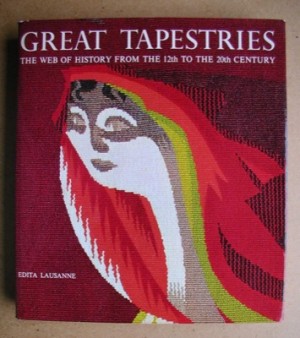
Hardcover. Switzerland, Edita S. A. Lausanne, 1st, 1965, Book: Very Good, Dust Jacket: Very Good, Hardcover, large folio in a bright dust jacket. 278 pages, color and b&w illustrations, many tipped-in color plates. Essay on Gothic tapestry by Pierre Verlet; essay on classical tapestry by Michel Florisoone; contemporary tapestry by Adolf Hoffmeister. An essay titled "The Weaver's Art" is by Francois Tabard. Lacks slipcase. DUE TO SIZE & WEIGHT, DOMESTIC SHIPPING ONLY.
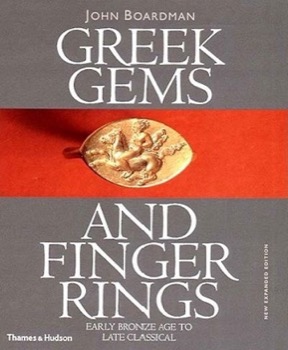
Hardcover. NY, Thames & Hudson Ltd, reprint, 2001, Book: Very Good, Dust Jacket: Very Good, Hardcover in a bright dust jacket, 480 pages illustrated in color and b&w. first published in 1970, this is the new enlarged edition. The miniaturist art of gem engraving is the least familiar of the major arts of ancient Greece, yet we know it to have been practiced by the greatest artists. This book presents a comprehensive account of the art in Greek lands from the early Bronze Age down to the Hellenistic period. The gems are related to history and to the artistic achievements in other media of their day, and the subject matter of the scenes engraved upon them is examined and found to hold much that will be new to students of Greek myth and iconography. The development of the Bronze Age studios in the Minoan and Mycenaean world is discussed, and the works of the great period of Classical gem engraving are resolved into their styles and schools, with a special chapter devoted to Greek works within the Persian Empire. Clean copy. DOMESTIC SHIPPING ONLY.
Hardcover. NY, Oxford University Press, 1st, 1987, Book: Very Good, Dust Jacket: Very Good, Hardcover in a bright dust jacket, 186 pages. What is the origin of Christian faith? Are the roots of the concept the same in both the Old and New Testaments? With the support of semantic, historical, and analytical evidence, Kinneavy develops a controversial and persuasive hypothesis that the origin of the Christian concept of faith can be traced to Greek classical rhetoric. The author examines the notions of faith formulated by eight major Christian and Jewish theologians, presents a meticulous case for the historical influence of Greek rhetoric on Hebraic thought, and concludes with a novel rhetorical study of the several hundred occurrences of the Greek terms for "faith" and "to believe," emerging with overwhelming support for the Greek influence on Christian faith. Name on front fly leaf, otherwise clean.
Hardcover. London, Oxiford University Press, Reprint, 1958, Book: Very Good, Dust Jacket: None, Hardcover, 2111 pages. Blue cloth cover. Gilt titles on spine. Extremely sun-faded spine. Slight wear and soiling to front and back cover. Overall a nice, tight copy. DOMESTIC SHIPPING ONLY.
Hardcover. NY, Skira, 1t, 2010, Book: Very Good, Dust Jacket: Very Good, Hardcover, 216 pages. The never-before-published wardrobe of a timeless star, for lovers of fashion, photography and film history. Greta Garbo's influence over fashion has transcended time. Her dresses, suits, impeccably-tailored coats with a slightly masculine look and the indispensable accessories (shoes, bags, glasses, foulards) has created a style emulated, imitated, even occasionally reviled, but never fully examined. For the first time a catalogue of great glamour and a travelling exhibition detail this extraordinary wardrobe whose minimalism fits so well with current fashion trends. Edited by Stefania Ricci, the Director of Museo Salvatore Ferragamo in Florence, as the Divine Greta Garbo was a Ferragamo client from the 1920s until her death, and the founder of the Italian maison designed hundreds of original, classical, futuristic, hand-made shoes and sandals exclusively for her, most of them shown here for the first time. A stunning selection of black and white Garbo portraits by celebrated photographers completes the volume.

 "Classical Social Theoryby: Craib, Ian")
 "Colonial Houses of Worship in America, Theby: Rose, Harold Wickliffe")
 "Composition in Black and White: The Life of Philippa Schuyler by: Talalay, Kathryn")

 "D'Aulaires' Book of Greek Myths by: D'Aulaire Ingri & Edgar Parin")

 "Dialogues of Plato, The: Translated into English with Analyses and Introductions - Third Edition (5 Vols.)by: Jowett, B.")
 "Double Lifeby: Rozsa, Miklos")



 "Elie Nadelman: Classical Folkby: Nadelman, Elie")
 "Embarrassment of Riches, An: Photographsby: Buckmaster, Adrian/Susanne Bartsch")

 "Felix Mendelssohn: His Life, His Family, His Musicby: Kupferberg, Herbert")

 "Flute and Flute-Playing, The: In Acoustical, Technical, and Artistic Aspectsby: Boehm, Theobald and Dayton Miller (transl.)")
 "Gangsters & Grifters: Classic Crime Photos from the Chicago Tribuneby: Staff, Chicago Tribune/")



 "Greek-English Lexicon. A New Edition. Revised and Augmented throughout by Henry Stuart Jones with the assistance of Roderick McKenzie and with the co-operation of many scholarsby:")
 "Greta Garbo: The Mystery of Styleby: Stefania Ricci")