Hardcover. NY, Back Stage Books, 1st, 2001, Book: Very Good, Dust Jacket: Very Good, Hardcover in a bright dust jacket, 320 pages. Foreword by Frank Rich. Henderson (curator of the White Barn Theater Museum in Westport, Connecticut, she's lectured and written extensively on theater), using the substantial archive of his writings, has assembled a suitable tribute to one of America's most influential creators of theater design. The book proceeds chronologically through Mielziner's life and long career, richly supplemented with photos and high quality color reproductions of the designer's watercolor and pencil drawings, and excerpts from his writings. He designed the original sets for A Streetcar Named Desire, Death of a Salesman, and Carousel and operas such as Don Giovanni. NOTE: While this book is bright and clean, it has a light musty odor.
Hardcover. Essex, Pequot Press, First Edition, 1971, Book: Very Good, Dust Jacket: Very Good, 69 pages. Hardcover. Gray cloth boards with gilt titles to spine. Black & white illustrations throughout. Frontis illustration, The Harpist, A Portrait of Miss Florence by Alphonse Jonghers, tipped-in & in full color. Dust jacket with same full color image on bright blue background. Dj has age related wear to edges. Clean, unmarked. A nice copy.
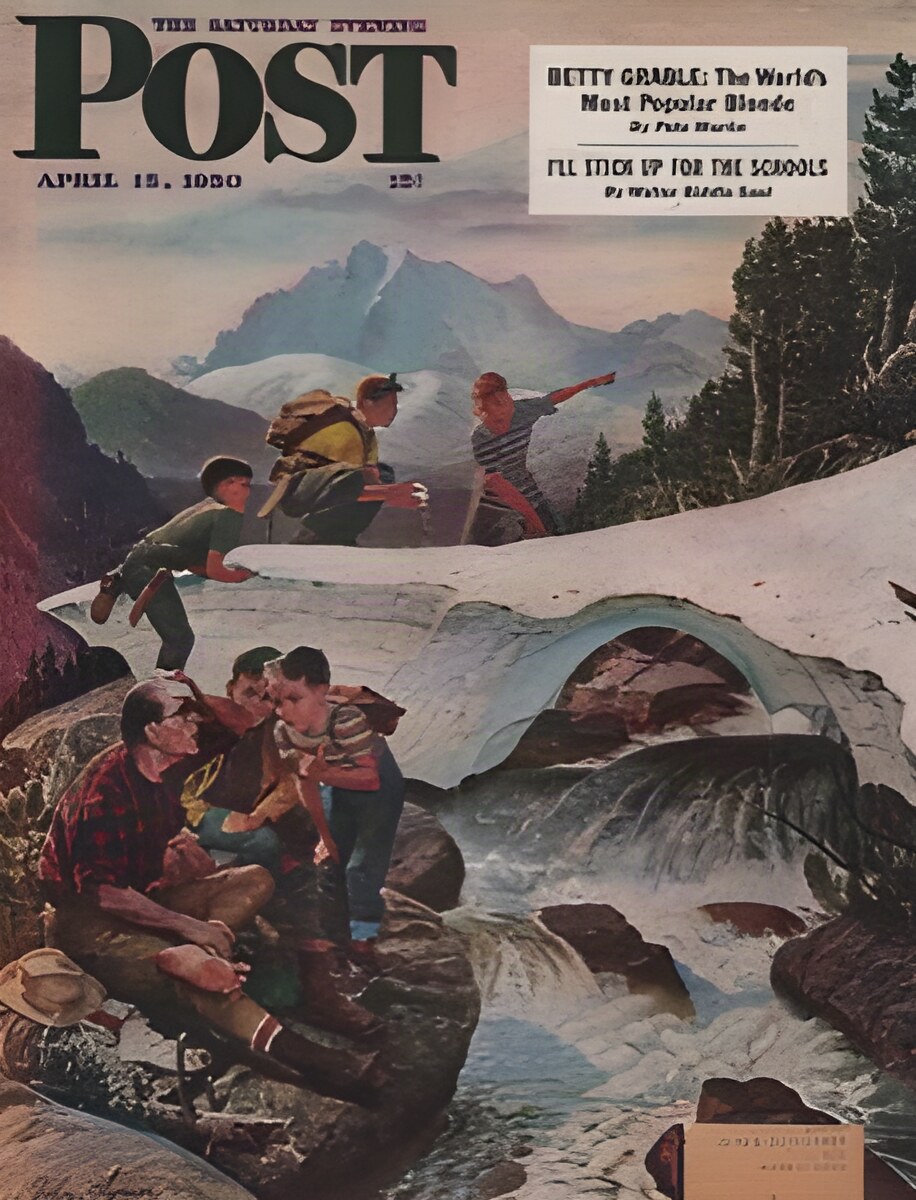
Exhausted man resting with eager boy hikers, art by John Clymer. 10 x 13.5", very good. Mailing label. Clymer first studied art through an Art Instruction School correspondence course. Then he attended the Vancouver School of Art and the Ontario College of Art and Design's summer school. He spent eight years illustrating for Canadian magazines. He moved to Connecticut and studied under N.C. Wyeth and Harvey Dunn. He established his career as an illustrator for American magazines, including Argosy, The Saturday Evening Post, Woman's Day and Field and Stream. Clymer created over eighty covers for The Saturday Evening Post. In 1976, Clymer received the Prix de West from the Academy of Western Art. His oils and charcoal drawings earned him awards from the Cowboy Artists of America. He was named Western Artist of the Year by the National Wildlife Art Collectors Society.
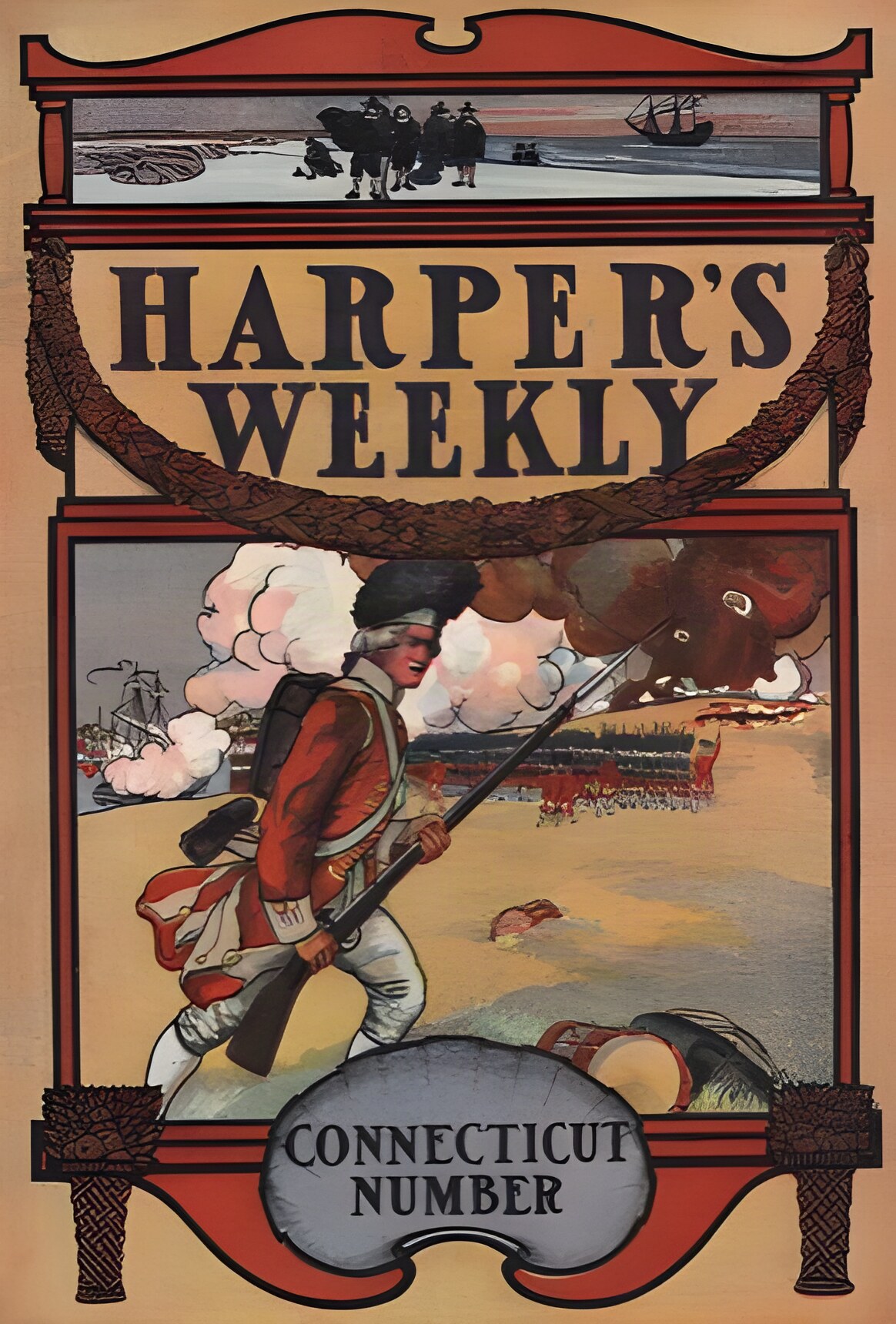
NY, Harper & Brothers, 1911, Book: Very Good, Dust Jacket: None, Decorative cover featuring Revolutionary War scene. PLEASE NOTE The image shown is a scan of the actual product you are purchasing. What you see is what you get. The sheet may have some imperfections beyond the cropped area shown. You are buying THIS PAGE ONLY- not the entire magazine. Your order will be placed carefully between stiff paper and an acetate overlay, then packed in a rigid cardboard sleeve to prevent bending.
Hardcover. NY, Charles Scribner's Sons, 1st, 1994, Book: Very Good, Dust Jacket: Very Good, Hardcover in a bright, unclipped dust jacket. SIGNED BY AUTHOR on title page. "Narrator Kyle Malachi, writing as Stokes Moran, is a syndicated mystery reviewer working on his first mystery novel. His "beautiful agent, " Lee Holland, convinces him to take a $25, 000 assignment from Playboy to find and interview a reclusive bestselling mystery author. The only clue to Seymour Severe's whereabouts is the New Orleans setting of his books. Kyle goes there, spends some time in a dark gay bar, passes out and wakes up in bed next to a naked, dead boy. He flees back to Connecticut, but Lee convinces him he's been hoaxed and must return to the Crescent City where the puzzle finally assembles itself--without any help from Kyle". Clean copy.
Hardcover. NY, Monacelli, 1st, 2003, Book: Very Good, Dust Jacket: Very Good, Hardcover, 192 pages, color illustrations throughout. Highlights structures, both in the planning and executed stages, designed in the 1990s by the firm of Philip Johnson/Alan Ritchie Architects, that demonstrate the firm's sculptural achievements, including Da Monsta and the Glass House in New Canaan, Connecticut. Introduction by Paul Goldberger. In a bright dust jacket, clean.
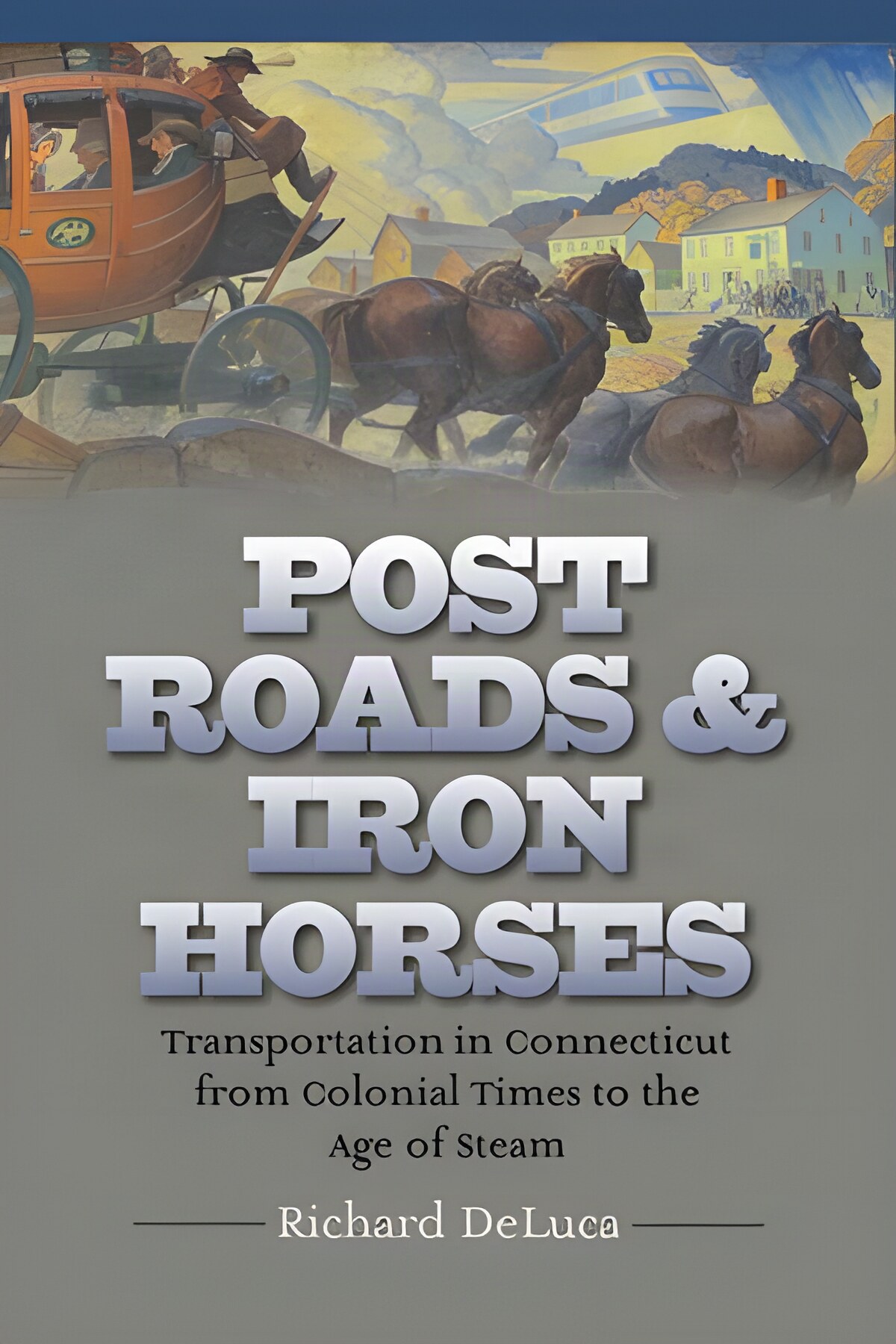
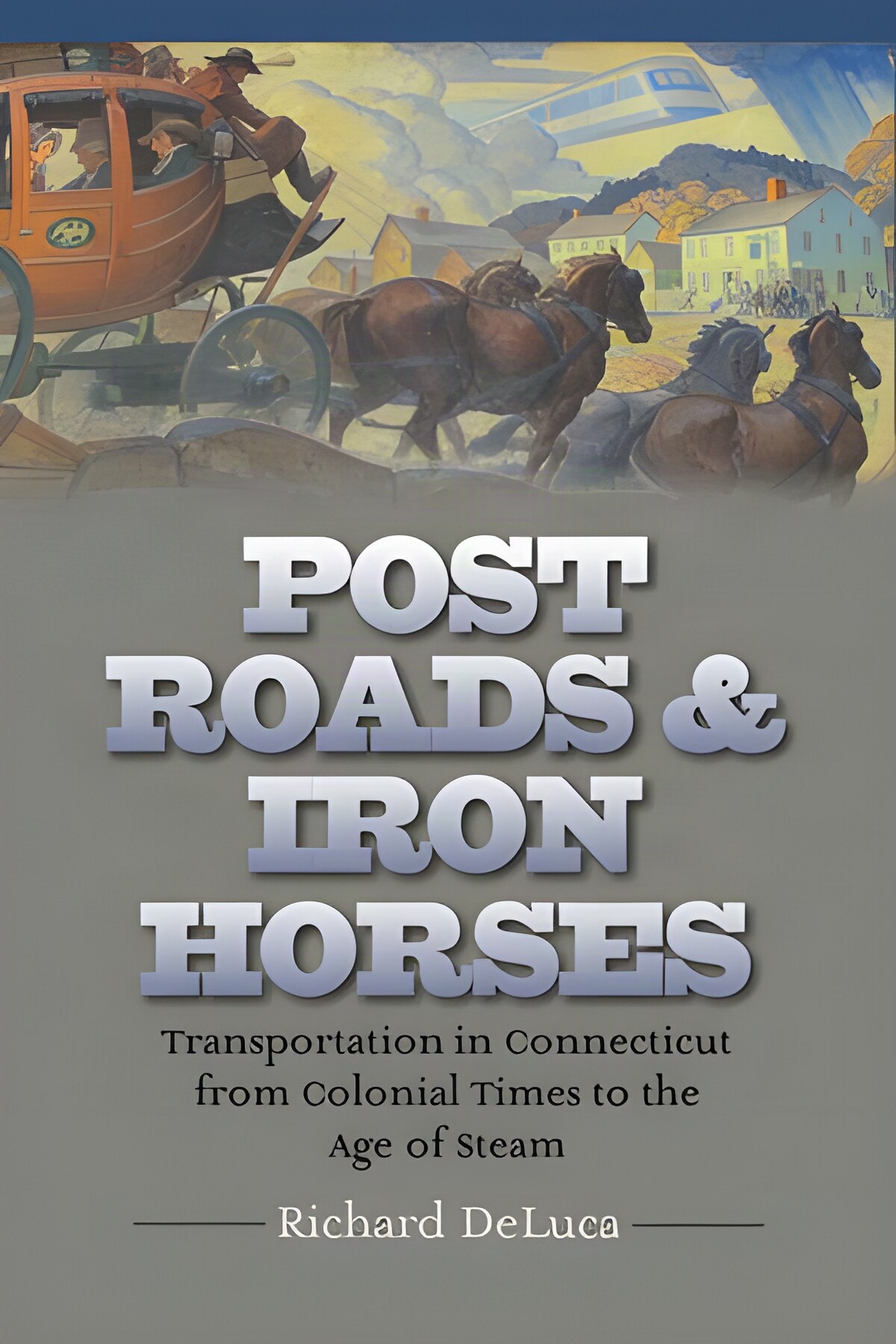
Hardcover. Middletown CT, Wesleyan University Press, 1st, 2011, Book: Very Good, Dust Jacket: Very Good, Hardcover in a bright dust jacket. The first book to look in detail at the turnpikes, steamboats, canals, railroads, and trolleys (street railroads) that helped define Connecticut and shape New England. Advances in transportation technology during the nineteenth century transformed the Constitution State from a rough network of colonial towns to an industrial powerhouse of the Gilded Age. From the race to build the Farmington Canal to the shift from water to rail transport, historian and transportation engineer Richard DeLuca gives us engaging stories and traces the significant themes that emerge as American innovators and financiers, lawyers and legislators, struggle to control the movement of passengers and goods in southern New England. The book contains over fifty historical images and maps, and provides an excellent point of view from which to interpret the history of New England as a whole. Clean copy.
Hardcover. Middletown CT, Wesleyan University Press, 1st, 2011, Book: Very Good, Dust Jacket: Very Good, Hardcover in a bright dust jacket. The first book to look in detail at the turnpikes, steamboats, canals, railroads, and trolleys (street railroads) that helped define Connecticut and shape New England. Advances in transportation technology during the nineteenth century transformed the Constitution State from a rough network of colonial towns to an industrial powerhouse of the Gilded Age. From the race to build the Farmington Canal to the shift from water to rail transport, historian and transportation engineer Richard DeLuca gives us engaging stories and traces the significant themes that emerge as American innovators and financiers, lawyers and legislators, struggle to control the movement of passengers and goods in southern New England. The book contains over fifty historical images and maps, and provides an excellent point of view from which to interpret the history of New England as a whole. Clean copy.
Hardcover. Baltimore, Genealogical Publishing Company, 2nd pr., 1997, Book: Very Good, Dust Jacket: None, Hardcover, blue cloth stamped with gilt lettering, 608 pages. After the Revolutionary War, the federal government awarded bounty lands to citizens and soldiers for services rendered. In its simplest form, this involved the exchange of free land for military service. Federal records of these Revolutionary War bounty land awards are well known and readily accessible to genealogists. But the federal government was not alone in rewarding its citizens and soldiers with bounty lands. Nine state governments adopted similar policies, generating even more records. Unlike the federal bounty land records, however, these state records are not centralized; instead, they are found in the various states in the form of manuscript records and printed books and are all but inaccessible to the researcher. Until now, that is! Because with this work by Lloyd Bockstruck we now have a master index to state bounty land records, a Revolutionary War resource unparalleled for freshness, originality, and research potential. The nine states that awarded bounty lands in their western reserves or on their western borders (directly affecting the future states of Indiana, Kentucky, Maine, Ohio, and Tennessee) are Connecticut, Georgia, Maryland, Massachusetts, New York, North Carolina, Pennsylvania, South Carolina, and Virginia. (The basis for the Connecticut and Georgia awards, by the way, differ from the norm.) Clean, bright copy.
Softcover. Port Townsend WA, Feral House, 1st, 2022, Book: Very Good, Dust Jacket: None, Softcover, 339 pages. Ladies' man. Child soldier. Civil War hero. Egotist. Tramp. Drunkard. Published author. Roving Bill Aspinwall: Dispatches from a Hobo in Post-Civil War America tells the story of an American hobo entirely in his own words. William 'Roving Bill' Aspinwall was all of these things and yet no lone descriptor does him justice. Born one of 23 siblings, married 5 times, wounded fighting for the Union in one of the bloodiest battles of the American Civil War, kicked out of numerous jobs and soldiers' homes for drunkenness, and having spent decades wandering as a penniless vagabond, Bill also kept up a 24-year correspondence with John James McCook, Professor of Modern Languages at Trinity College, Hartford, Connecticut. In so doing Bill provided the earliest and best account of life on the road by an American hobo. Written between 1893 and 1917, Roving Bill Aspinwall: Dispatches from a Hobo in Post-Civil War America tells Bill's story entirely in his own words. Describing experiences on the road, the people he meets, his dalliances with women and his memories of the Civil War, the letters are a rich and unique correspondence. Having been physically and mentally scarred at the 1863 Battle of Champion Hill, Bill details his lifelong battle with booze. He also gives first-hand accounts of men thrown out of work during the economic Panic of 1893, of wandering around the country as an itinerant umbrella-mender, of working in factories, farms and even a circus, as well as his visit to the St. Louis World's Fair in 1903. Bill's words are the real voice of a nineteenth-century hobo.
Hardcover. Middletown, Connecticut, Wesleyan University Press, 1st, 1975, Book: Very Good, Dust Jacket: None, Study of American artists influenced by Dada and their relationship with American avant-garde. 283 pages, 94 black/white illustrations. Cloth bound book in near fine condition, only sign of wear is slight discoloration to the top edges of pages (light spotting), not visible when reading the book.
Hardcover. Harrisburg PA, National Historical Society, reprint, 1988, Book: Very Good, Dust Jacket: None, Hardcover, glossy green pictorial boards. No DJ as issued. A like new copy, no marks. Volume 13 of the Architectural Treasures of Early America. From material originally published as the Georgian Period edited by Professor William Rotch Ware. 223 page book with historic photographs and home plans. Clean copy.
Hardcover. New Haven CONNECTICUT, Yale University Press, 1st, 1978, Book: Very Good, Dust Jacket: Very Good, Hardcover, 317 pages, b&w illustrations, red cloth with gilt lettering on spine. Bright dust jacket with price-clip.
Softcover. Madison WI, University of Wisconsin, reprint., 2005, Book: Very Good, Dust Jacket: None, Softcover in pictorial wraps, 244 pages. The Blind African Slave recounts the life of Jeffrey Brace (ne Boyrereau Brinch), who was born in West Africa around 1742. Captured by slave traders at the age of sixteen, Brace was transported to Barbados, where he experienced the shock and trauma of slave-breaking and was sold to a New England ship captain. After fighting as an enslaved sailor for two years in the Seven Years War, Brace was taken to New Haven, Connecticut, and sold into slavery. After several years in New England, Brace enlisted in the Continental Army in hopes of winning his manumission. After five years of military service, he was honorably discharged and was freed from slavery. As a free man, he chose in 1784 to move to Vermont, the first state to make slavery illegal. There, he met and married an African woman, bought a farm, and raised a family. Although literate, he was blind when he decided to publish his life story, which he narrated to a white antislavery lawyer, Benjamin Prentiss, who published it in 1810. Upon his death in 1827, Brace was a well-respected abolitionist. In this first new edition since 1810, Kari J. Winter provides a historical introduction, annotations, and original documents that verify and supplement our knowledge of Brace's life and times. Clean copy.
Hardcover. NY, St. Martin's Press, 1st, 2007, Book: Very Good, Dust Jacket: Very Good, Hardcover in a bright, unclipped dust jacket, 432 pages, b&w illustrations. Despite having to contend with icebergs, storms, rogue whales, sharks, hostile natives, disease, the scarcity of whales, the increasing dangers of going farther into the Arctic, and the roving Confederate privateers, Captain Thomas William Williams of Wethersfield, Connecticut wemt out voyage after voyage, even taking on board with him his tiny wife, Eliza, and his infant son and daughter. This thrilling narrative recounts Williams' remarkable career, including a daring rescue and salvage of lost ships off Alaska's coast. Songini has crafted a historical masterpiece in recording a family saga, a true narrative of adventure and death on the high seas, and a detailed and well-researched look at the demise of Yankee whaling. Clean copy.
Hardcover. NY, The Monacelli Press, 1st, 2008, Book: Very Good, Dust Jacket: None, Hardcover, 208 pages. Debate and banter between the irascible Philip Johnson and the equally articulate and opinionated Robert A. M. Stern generates a provocative combination of astute commentary and personal observation on the state of architecture in the twentieth century. Philip Johnson's multifaceted career as an architect, curator, and collector extended from the early 1920s to his death in 2005. Captivated by the work of the European modernists Gropius, Le Corbusier, and Mies van der Rohe, Johnson assembled the seminal exhibition "Modern Architecture--International Exhibition" at the Museum of Modern Art in 1932. Among his most notable achievements are the famous Glass House in Connecticut, designed for his own use, and the Seagram Building in New York, in association with Mies van der Rohe. Recognized as the dean of American architecture, Johnson had a profound influence on the next generation of architects, including Robert A. M. Stern. Stern has conducted a series of ten interviews with Johnson, each covering a decade of his life, that provide an illuminating assessment of a significant period of American architecture. No dj issued.
Softcover. Bridgeport CT, The Bridgeport Centennial Inc., 1st, 1936, Book: Good, Dust Jacket: None, Softcover, bound in blue textured heavy paper wrappers with gilt stamping. 176 pages, Illustrations, bibliography, index. Wraps are edgeworn, separating from spine. Interior clean and bright.
Hardcover. NY, St. Martin's Press, 1st, 1989, Book: Very Good, Dust Jacket: Very Good, Hardcover in a bright, unclipped dust jacket. Cartoonist Jack Deacon is astonished when a colleague he had not seen in years, Mutt Shermer, dies in his yard from gunshots. He is even more surprised when he finds beautiful Sally Westerland hiding in his closet. Jack and his fellow cartoonists ponder these events at a Connecticut diner, but it is not until a package addressed to Sally arrives at Jack's house, where Sally once lived, that things fall quickly into place. In the package is a "Tijuana bible," and in its pages is a coded map leading to a collection of "Golden Age" comics worth millions. Clean, like new.
Hardcover. NY, Knopf, 1st, 2008, Book: Very Good, Dust Jacket: Very Good, Hardcover, 736 pages. A rich and revelatory biography of one of the crucial cultural figures of the twentieth century. Lincoln Kirstein's contributions to the nation's life, as both an intellectual force and advocate of the arts, were unparalleled. While still an undergraduate, he started the innovative literary journal Hound and Horn, as well as the modernist Harvard Society for Contemporary Art--forerunner of the Museum of Modern Art. He brought George Balanchine to the United States, and in service to the great choreographer's talent, persisted, against heavy odds, in creating both the New York City Ballet and the School of American Ballet. Among much else, Kirstein helped create Lincoln Center in New York, and the American Shakespeare Festival in Stratford, Connecticut; established the pathbreaking Dance Index and the country's first dance archives; and in some fifteen books proved himself a brilliant critic of art, photography, film, and dance. This stunning biography, filled with fascinating perceptions and incidents, is a major act of historical reclamation. Utilizing an enormous amount of previously unavailable primary sources, including Kirstein's untapped diaries, Martin Duberman has rendered accessible for the first time a towering figure of immense complexity and achievement.
Hardcover. NY, St. Martin's Press, 1st, 1994, Book: Very Good, Dust Jacket: Very Good, Hardcover in a bright, unclipped dust jacket. Follows the lives of Frances and Hart Drummond, married nearly forty years, and their grown children, as they cope with communication problems, love, marriage, and Connecticut real estate. INSCRIBED BY AUTHOR on front fly leaf. Clean copy.
Hardcover. NY, Fordham University Press, 1st, 2006, Book: Very Good, Dust Jacket: Very Good, Hardcover in a bright dust jacket, 309 pages. Barolini profiles six gifted women transformed by Italy's mythic appeal. Unlike Barolini herself, they were not daughters of the great Italian diaspora. Rather, they were drawn to an idea of "Italy" and its gifts-in whose welcome a new self could be created. Or discovered. Emily Dickinson traveled to Italy only in the imaginative genius of her verse. Margaret Fuller struggled alongside her Italian lover in the political revolutions that gave birth to the Italian Republic, while the novelist and short-story writer Constance Fennimore Woolson found her home in Venice and Florence. Here, too, is the flamboyant artist Mabel Dodge Luhan, entertaining at her villa near Florence; and Marguerite Chapin of Connecticut, who married an Italian prince and in Rome founded the premier literary review of the mid-century, Botteghe Oscure. Finally, here is Iris Cutting Origo, the Anglo-American heiress who, with her Italian nobleman husband, built a Tuscan estate, where she wrote acclaimed biographies-and created a refuge from Mussolini's fascism. Clean copy.
Hardcover. New York, American Subscription Publishing House, 1st, 1859, Book: Very Good, Dust Jacket: None, 358 pages. Black & white illustrations. Title in gilt on spine. Fading to spine, and along top 1" of front cover.
Hardcover. US, Acc Art Books, 1st, 2018, Book: Very Good, Dust Jacket: None, 224 pages. Hardcover with laminated boards. Like new in publisher's shrinkwrap. One of the largest archives of film-set photography and editorial magazine shots from the '70s and '80s. Introduction by Jacqueline Bisset and Charlotte Rampling. Archive contains almost 100 unseen pictures, all narrated by Eva Sereny herself: a top professional photographer, working in a male-dominated fieldo Includes shots from the sets of several great classical films ('The Great Gatsby', 'The Night Porter', and 'Indiana Jones and the Temple of Doom', and more)Stories and photography intermingle on the pages of this gorgeous homage to '70s and '80s cinema and celebrity. Including rare and never-before-seen images. Through Her Lens is a wonderful collection of images and memoires that capture the spirit of the age. From unexpected late-night calls from Romy Schneider, to a stay at Paul Newman's home in Connecticut; from working on set with Bernardo Bertolucci, Werner Herzog, Steven Spielberg and Sydney Pollack, to lounging poolside with Raquel Welch; Sereny reveals her favorite moments from working behind the lens. This is the first photographic retrospective of Sereny's star-studded career, including nearly 100 never-before-seen images complemented by Eva's own stories.
Hardcover. South Windsor, CT, Barney E. Daley, 1st, 1998, Book: Very Good, Dust Jacket: None, 300+ pages. Hardcover. INSCRIBED BY AUTHOR. Bound in green cloth; gilt lettering & design on spine and front cover. From the introduction (Evan Lawn): "Whether one reads straight through or reads here and there in a checkered fashion, every reader will enjoy meeting Barney. ...And if the reader happens to be an historian, these memoirs will be prized as a treasure trove of living information about rural, daily life before electricity and indoor plumbing."

 "Mielziner: Master of Modern Stage Designby: Henderson, Mary")


 "Miss Florence and the Artists of Old Lymeby: Heming, Arthur/James Stevenson (Illustrator)")
 "Otherwise Known As Murder: A Mystery Introducing Stokes Moran (SIGNED COPY)by: McGaughey, Neil")
 "Philip Johnson/Alan Ritchie Architectsby: Johnson, Philip")
 "Revolutionary War Bounty Land Grants Awarded by State Governmentsby: Bockstruck, Lloyd DeWitt")
 "Roving Bill Aspinwall: Dispatches from a Hobo in Post-Civil War America by: Bill Aspinwall (Author), Owen Clayton (Editor)")
 "Skyscraper Primitives: Dada and the American Avant-Garde, 1910-1925by: Tashjian, Dickran")
 "Styles of the Emerging Nation (Architectural Treasures of Early America, Vol. 13) by: Mullins, Lisa C. (editor)")
 "Teachings of Taoist Master Chuang, Theby: Saso, Michael")
 "The Blind African Slave: Or Memoirs of Boyrereau Brinch, Nicknamed Jeffrey Brace by: Jeffrey Brace; Editor Kari J. Winter; Contributor Benjamin F. Prentiss")

 "The Philip Johnson Tapes: Interviews by Robert A. M. Sternby: Robert A.M. Stern")

 "The Tijuana Bibleby: Goulart, Ron")
 "The Worlds of Lincoln Kirsteinby: Martin Duberman")

 "Through Her Lens: The Stories Behind the Photography of Eva Serenyby: Sereny, Eva")
 "Tobacco Parish: A Collection of South Windsor's Memories (INSCRIBED BY AUTHOR)by: Daley, Barney E.")