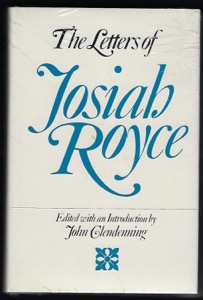
Hardcover. MA, University of Massachusetts Press , 1st, 1967, Book: Very Good, Dust Jacket: Good, 268 pages. Previous owner's signature on front fly leaf. Dust jacket with light edgewear and sunning and a small sticker-stain to front cover.
Hardcover. NY, Oxford University Press, 2nd pr., 2003, Book: Very Good, Dust Jacket: Very Good, Hardcover in a bright dust jacket, 493 pages. Truth is one of the most debated topics in philosophy; Wolfgang K?nne presents a comprehensive critical examination of all major theories, from Aristotle to the present day. He argues that it is possible to give a satisfactory 'modest' account of truth without invoking problematic notions like correspondence, fact, or meaning. The clarity of exposition and the wealth of examples will make Conceptions of Truth an invaluable and stimulating guide for advanced students and scholars. Kunne expounds and engages with the ideas of many thinkers, from Aristotle and the Stoics, to Continental analytic philosophers like Bolzano, Brentanoand Kotarbinski, to such leading figures in current debates as Dummett, Putnam, Wright, and Horwich. He explains many important distinctions (between varieties of correspondence, for example, between different conceptions of making true, between various kinds of eternalism and temporalism) which have so far beenneglected in the literature. Kunne argues that it is possible to give a satisfactory 'modest' account of truth without invoking problematic notions like correspondence, fact, or meaning. And he offers a novel argument to support the realist claim that truth outruns justifiability. Clean, bright copy.
Hardcover. NY, Oxford University Press, 1st, 1994, Book: Very Good, Dust Jacket: Very Good, Hardcover in a bright dust jacket, 206 pages. Marian David defends the correspondence theory of truth against the disquotational theory of truth, its current major rival. The correspondence theory asserts that truth is a philosophically rich and profound notion in need of serious explanation. Disquotationalists offer a radically deflationary account inspired by Tarski and propagated by Quine and others. They reject the correspondence theory, insist truth is anemic, and advance an "anti-theory" of truth that is essentially a collection of platitudes: "Snow is white" is true if and only if snow is white; "Grass is green" is true if and only if grass is green. According to disquotationalists the only profound insight about truth is that it lacks profundity. David contrasts the correspondence theory with disquotationalism and then develops the latter position in rich detail--more than has been available in previous literature--to show its faults. He demonstrates that disquotationalism is not a tenable theory of truth, as it has too many absurd consequences.
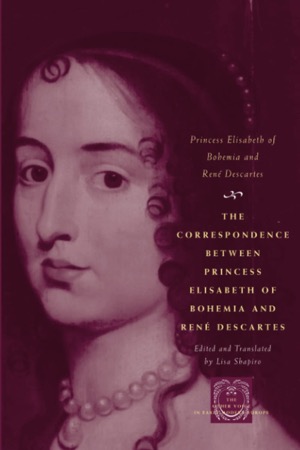
Softcover. Chicago, University of Chicago Press, 2nd pr., 2007, Book: Very Good, Dust Jacket: None, Softcover, 246 pages. Between the years 1643 and 1649, Princess Elisabeth of Bohemia (1618-80) and Rene Descartes (1596-1650) exchanged fifty-eight letters--thirty-two from Descartes and twenty-six from Elisabeth. Their correspondence contains the only known extant philosophical writings by Elisabeth, revealing her mastery of metaphysics, analytic geometry, and moral philosophy, as well as her keen interest in natural philosophy. The letters are essential reading for anyone interested in Descartes's philosophy, in particular his account of the human being as a union of mind and body, as well as his ethics. They also provide a unique insight into the character of their authors and the way ideas develop through intellectual collaboration.
Softcover. Ontario CAN, Broadview Press, 1st, 2011, Book: Very Good, Dust Jacket: None, Softcover, 365 pages. An important work in the debate between materialists and dualists, the public correspondence between Anthony Collins and Samuel Clarke provided the framework for arguments over consciousness and personal identity in eighteenth-century Britain. In Clarke's view, mind and consciousness are so unified that they cannot be compounded into wholes or divided into parts, so mind and consciousness must be distinct from matter. Collins, by contrast, was a perceptive advocate of a materialist account of mind, who defended the possibility that thinking and consciousness are emergent properties of the brain.Appendices include philosophical writings that influenced, and responded to, the correspondence. Clean copy.
Hardcover. Staten Island NY, Center Migration Studies , 1st, 2000, Book: Very Good, Dust Jacket: Very Good, Hardcover in a bright dust jacket, 359 pages. Clean copy.
Softcover. Cambridge UK, Cambridge University Press, 1st pbk, 2004, Book: Very Good, Dust Jacket: None, Softcover, 148 pages. Andrew Janiak examines Newton's philosophical positions and his relations to canonical figures in early modern philosophy through Newton's principal philosophical writings. Janiak's study includes excerpts from the Principia and the Opticks, Newton's famous correspondence with Boyle and with Bentley, and his equally significant correspondence with Leibniz, often ignored in favor of Leibniz's later debate with Samuel Clarke. (Newton's exchanges with Leibniz place their different understandings of natural philosophy in sharp relief.) Clean copy.
Softcover. San Rafael CA, Coracle Press, reprint, 2007, Book: Very Good, Dust Jacket: None, Softcover, 330 pages, b&w frontis. A new printing of the journal and letters of Stephen Mackenna (1872-1934), a vivid and representative thinker whose life intersected with many of the leading figures of his day, and especially those of the Irish literary renaissance. The editor, E. R. Dodds, writes: Stephen MacKenna's working life was divided among three countries, and was further broken by two complete changes of occupation and by continual changes of residence. When he died, he left behind him no wife, child or lifelong friend; . . . and with the exception of the 1907-9 Journal no papers of any considerable biographical value. He left instead a legend. In the Memoir which follows I have endeavored to recover and present the facts underlying the legend. Best known for what AE (George William Russell) called his 'noble translation of Plotinus', MacKenna nonetheless harbored views that collided with those of Plotinus, and so speaks to us as an authentic forerunner of the 'modern' human being, by which is meant those who, once their individual inner light is lit-and no matter how it may gutter in the wind of uncertain freedoms-must, even while hallowing earlier and magisterial records of paths of spiritual ascent, accept the need for a complete 'descent' (without which the whole engine of creation will have had no final purpose), with all the provisional darkness this may entail, so that the final ascent may be made in personal love and freedom. Clean, bright copy.
Hardcover. Bristol, Thoemmes Press, Reprint, 1991, Book: Very Good, Dust Jacket: None, 2 Hardcover Volumes. Volume 1 - 447 pages. Previous owners name at top right corner of front endpaper. Blue cloth covers with gilt title on spine. Clean, tight copy. Volume 2 - 519 pages. Previous owners name at top right corner of front endpaper. Approximately 15 pages of light pencil marking/marginalia. Blue cloth covers with gilt title on spine. Clean, tight copy.
Hardcover. Oxford UK, The Voltaire Foundation, 1st, 1991, Book: Very Good, Dust Jacket: None, Hardcover in blue cloth, gilt lettering on spine, 251 pages. As France moved from the seventeenth to the eighteenth century, it found itself in the grip of anglomanie - a fascination with new English ideas in the domains of science and philosophy. Chief among the English thinkers it enthusiastically embraced was John Locke. On his visits to France and in his personal correspondence, Locke interacted with prominent French thinkers, scientists and savants of the day, such as Charles Barbeyrac and Pierre Magnol, and his works engaged in a critical dialogue with those of Descartes. However, Locke has been feted to such an extent that his position in the history of ideas in France is often overlooked. In Locke in France 1688-1734, Ross Hutchison re-examines and re-contextualises the precise nature and extent of Locke's influence in France by exploring how his ideas were incorporated into contemporary French debates and controversies in the transitional period from the seventeenth to the eighteenth century. Hutchison highlights the various channels of dissemination which brought Locke to the attention of the French, including translations of his major works and his personal friendships with French Protestant exiles. Hutchison also presents case studies of interactions in which Lockean ideas played a dominant role in the evolution of French thought, ranging from political theory to the nature of language, theories of education, and the relation between soul and matter. Clean copy, no dust jacket.
Hardcover. Cambridge UK, Cambridge University Press, 1st, 1953, Book: Very Good, Dust Jacket: Good, Hardcover in a worn dust jacket with a chunk gone from rear panel, 309 pages. This book gives a complete account of all that Locke saw, did and heard during his four years in France. The entries vary from laconic jottings to detailed accounts - full of colour and wit - of life in Paris and the provinces. Locke's variety of interests presents a vivid and thorough account of France at that time. He observed and recorded the absolutism of Louis XIV and the poverty of the peasants, the growing persecution of the Protestants and the external manifestations of Catholicism, recent developments in science and technology - even agricultural methods and the system of taxes. So that this is a book for the general reader as well as for the student of Locke, the social historian and the historian of science. Three b&w plates including a map of his travels. Name on front fly leaf, rubber withdrawn stamp on copyright page, otherwise clean.
Softcover. Carbondale IL, Southern Illinois University, 1st, 1995, Book: Very Good, Dust Jacket: None, Softcover, 114 pages. In this engrossing double volume, the work and thought of Nicolas Malebranche is examined through the eyes of Simon Foucher and Dortous de Mairan. Part 1 consists of Richard A. Watson's translation of the first published critique, by Simon Foucher, of Malebranche's main philosophical work, Of the Search for the Truth. In the second part, Marjorie Grene presents a meticulous translation of the long correspondence between Malebranche and Jean-Jacques Dortous de Mairan that ended shortly before Malebranche's death. Both Watson and Grene provide insightful introductions to their translations. Clean copy.
Hardcover. Burlington VT, Ashgate, 1st, 2005, Book: Very Good, Dust Jacket: None, Hardcover, black cloth stamped in gilt, 263 pages. (Early Modern Englishwoman: a Facsimile Library of Essential Works) Name on front fly leaf otherwise clean.
Hardcover. NY, Greenwood Press, reprint, 1969, Book: Very Good, Dust Jacket: None, Hardcover, blue cloth covers with gilt lettering on spine, 477 pages, two b&w plates. A reprint of the 1913 revised Second Edition. A selection from his correspondence with Boccaccio and other friends, designed to illustrate the beginnings of the Renaissance. Name on front fly leaf, otherwise clean
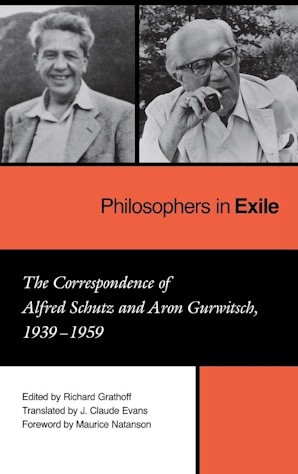
Hardcover. Bloomington, Indiana University Press, 1st, Book: Very Good, Dust Jacket: Very Good, Hardcover in a bright dust jacket, 341 pages. This book presents the remarkable correspondence between Alfred Schutz and Aron Gurwitsch, emigre philosophers influenced by Edmund Husserl, who fled Europe on the eve of World War II and ultimately became seminal figures in the establishment of phenomenology in the United States. Their deep and lasting friendship grew out of their mutual concern with the question of the connections between science and the life-world. Interwoven with philosophical exchange is the two scholars' encounter with the unfamiliar problems of American academic life-what Gurwitsch called the "passology" of exile. Apart from its brilliant and moving portrait of two distinguished men, the correspondence holds rich significance for current issues in philosophy and the social sciences. Clean copy.
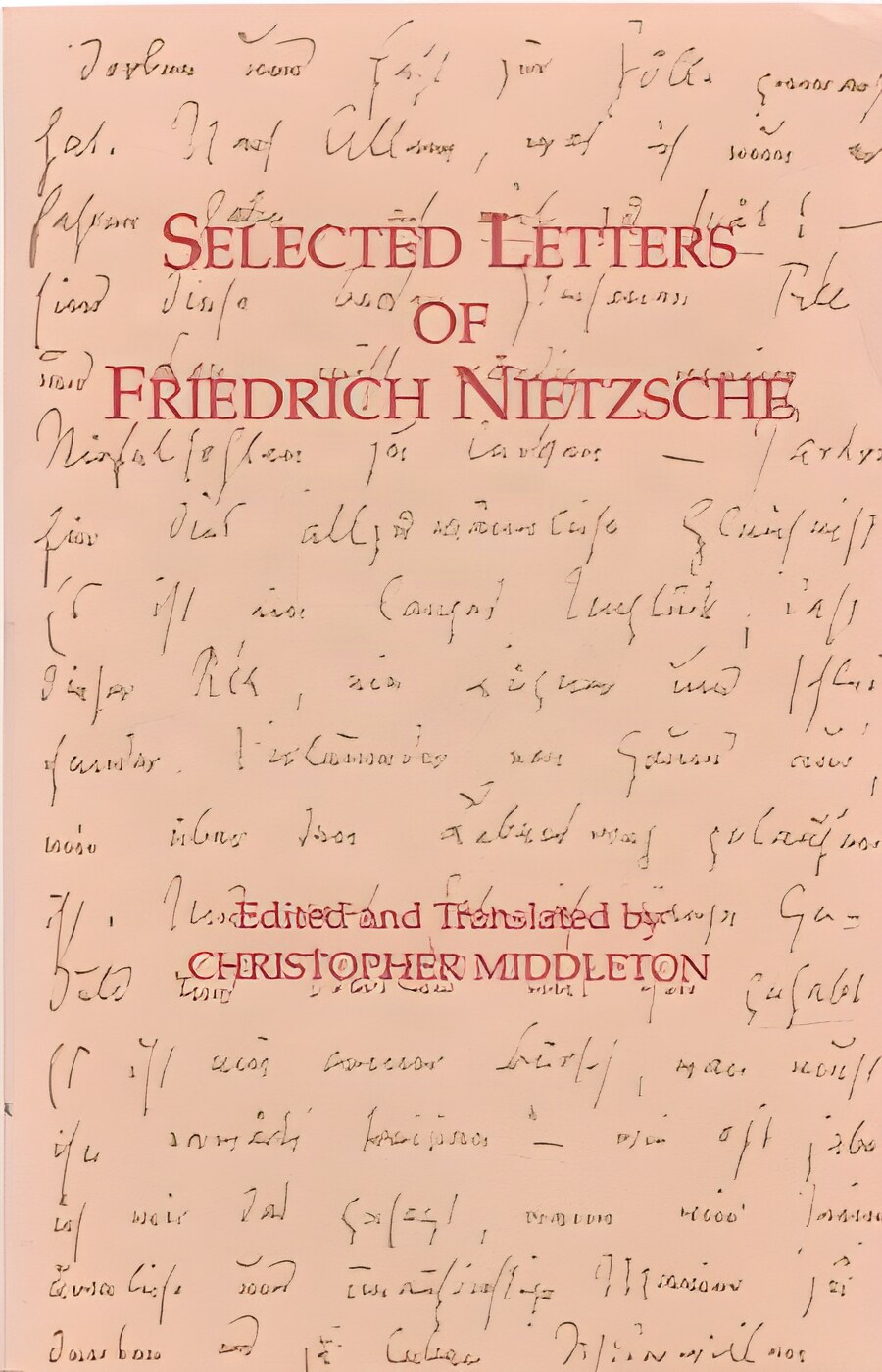
Softcover. Indianapolis IN, Hackett Publishing, reprint, 1996, Book: Very Good, Dust Jacket: None, Softcover, 368 pages. This collection of more than two hundred of Nietzsche's letters offers a representative body of correspondence on subjects of main concern to him--philosophy, history, morals, music and literature. Also included are letters of biographical interest which, in Middleton's words, mark the stresses and turnings of his life. Among the addressees are Richard Wagner, Erwin Rohde, Jacob Burkhardt, Lou Salome, his mother, and his sister Elisabeth. The annihilating split in Nietzsche's personality that has been associated with his collapse on a street in Turin in 1889 is described in a moving letter from Franz Overbeck which forms the Epilogue. Index. Light cease to front cover, otherwise clean, bright copy.
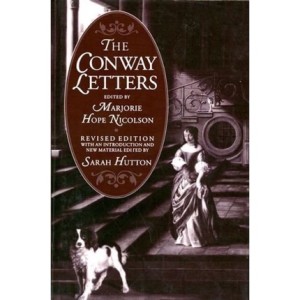
Hardcover. Oxford UK, Clarendon Press, Revised Ed., 1992, Book: Very Good, Dust Jacket: Very Good, Hardcover in a bright dust jacket, 592 pages, b&w illustrations. Lady Anne Conway was a remarkable woman who became a philosopher in her own right at a time when most women were denied even basic education. The Conway Letters is the record of her friendship with the Cambridge Platonist, Henry More, which began when he acted as her unofficial tutor in philosophy and lasted until her death. The letters cover a wide range of topics - personal, philosophical, religious, and social. They give a detailed picture of the More-Conway circle, including such figures as Jeremy Taylor, Ralph Cudworth, Robert Boyle, and Francis Mercury van Helmont, as well as Lady Conway's Quaker associates, George Keith and William Penn. The letters are thus a valuable source for mid-seventeenth-century history, and especially for the intellectual history of the period. Revised from the 1930 printing with new material and introduction by Sarah Hutton. Name on front fly leaf, small chip/tear to top spine of the dust jacket.
Hardcover. Durham NC, Duke University Press, 1st, 1994, Book: Very Good, Dust Jacket: Very Good, Hardcover in a bright dust jacket, 382 pages, b&w frontis. Remainder line to fore-edge of the text block.
Hardcover. Durham NC, Duke University Press, 1st, Book: Very Good, Dust Jacket: Very Good, Hardcover in a bright dust jacket, 348 pages. Perhaps best known as a political philosopher, Richard Price (1723-1791) made important contributions to British and American intellectual life in a variety of fields--philosophy, theology, mathematics, demography, probability and public finance, and private and social insurance. The first in a three-volume series edited by W. Bernard Peach and D. O. Thomas, The Correspondence of Richard Price makes available the extant copies of the correspondence to and from Price, including many published for the first time. These letters reveal Price's absorption with financial problems, his influence on the policies adopted by the British government, his defense of Newtonianism against Lord Monboddo, as well as important insights into the political and cultural life in Britain and America. Correspondents include John Adams, William Adams, J. D. van der Capellen, Benjamin Franklin, Thomas Jefferson, Henry Laurens, Lord Monboddo, William Pitt, Joseph Priestly, the Earl of Shelburne, Ezra Stiles, P. W. Wargentin, and Joseph Willard. Clean copy.
Hardcover. Durham NC, Duke University Press, 1st, 1991, Book: Very Good, Dust Jacket: Very Good, Hardcover in a bright dust jacket, 348 pages. Perhaps best known as a political philosopher, Richard Price (1723-1791) made important contributions to British and American intellectual life in a variety of fields--philosophy, theology, mathematics, demography, probability and public finance, and private and social insurance. The second in a three-volume series edited by W. Bernard Peach and D. O. Thomas, The Correspondence of Richard Price makes available the extant copies of the correspondence to and from Price, including many published for the first time. These letters reveal Price's absorption with financial problems, his influence on the policies adopted by the British government, his defense of Newtonianism against Lord Monboddo, as well as important insights into the political and cultural life in Britain and America. Correspondents include John Adams, William Adams, J. D. van der Capellen, Benjamin Franklin, Thomas Jefferson, Henry Laurens, Lord Monboddo, William Pitt, Joseph Priestly, the Earl of Shelburne, Ezra Stiles, P. W. Wargentin, and Joseph Willard. Clean copy.
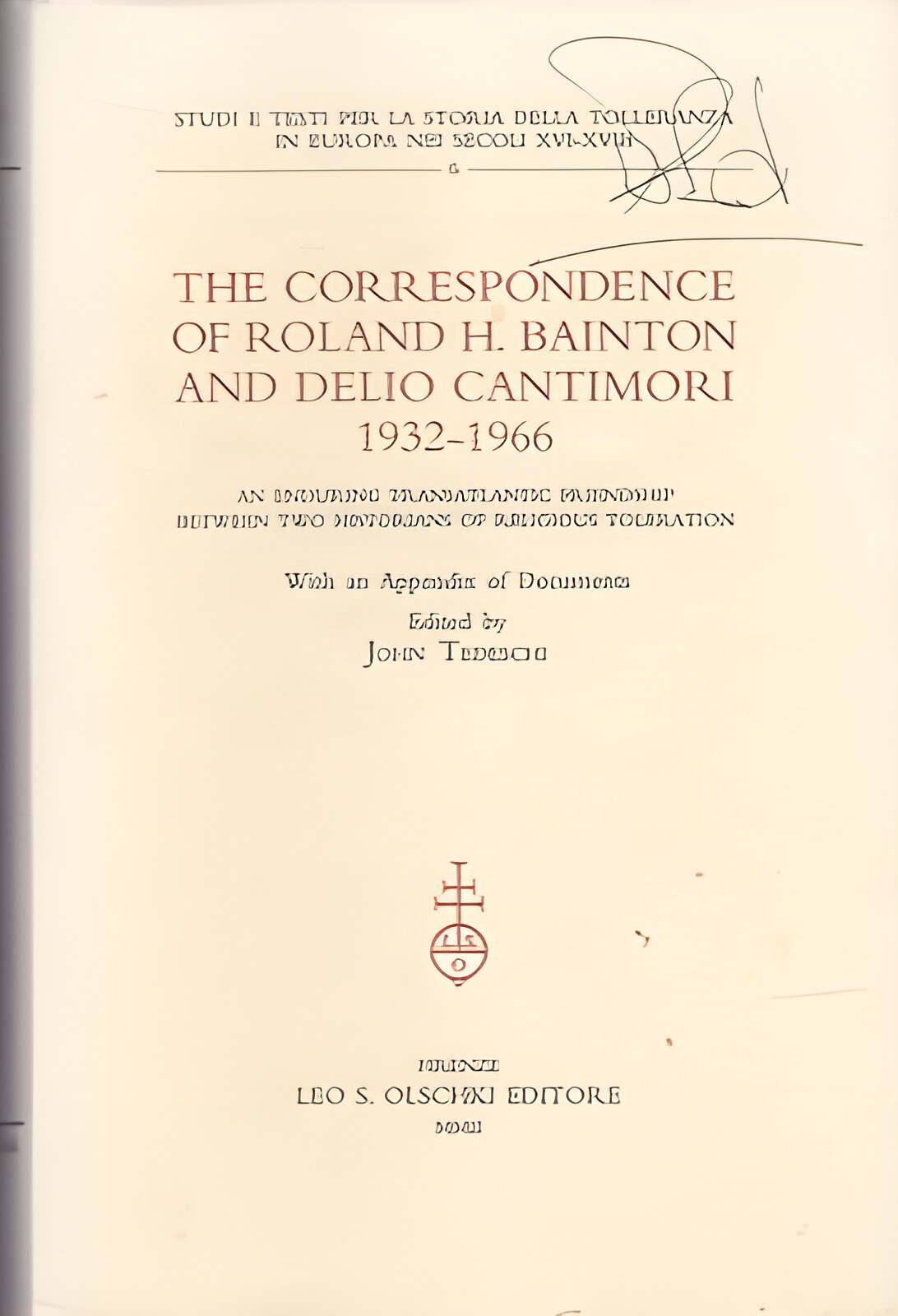
Softcover. Italy, Leo S. Olschki Editore, 1st, 2002, Book: Very Good, Dust Jacket: Very Good, Softcover in a dust jacket, 313 pages. The first complete collection of all that is conserved of the correspondence that endured for more than thirty years between two great scholars of 16th century religious toleration. The ample introduction and detailed erudite comments accompanying each letter provide precious information on four decades of American and European historiography on the 16th century. Name on cover
Hardcover. Duke University Press, 1st, 2003, Book: Very Good, Dust Jacket: None, Hardcover, 440 pages. Black cloth, no dust jacket. The Edge of Surrealism is an essential introduction to the writing of French social theorist Roger Caillois. Caillois was part of the Surrealist avant-garde and in the 1930s founded the College of Sociology with Georges Bataille and Michel Leiris. He spent his life exploring issues raised by this famous group and by Surrealism itself. Though his subjects were diverse, Caillois focused on concerns crucial to modern intellectual life, and his essays offer a unique perspective on many of twentieth-century France's most significant intellectual movements and figures. Including a masterful introductory essay by Claudine Frank situating his work in the context of his life and intellectual milieu, this anthology is the first comprehensive introduction to Caillois's work to appear in any language. These thirty-two essays with commentaries strike a balance between Caillois's political and theoretical writings and between his better known works, such as the popular essays on the praying mantis, myth, and mimicry, and his lesser-known pieces. Presenting several new pieces and drawing on interviews and unpublished correspondence, this book reveals Caillois's consistent effort to reconcile intellectual rigor and imaginative adventure. Perhaps most importantly, The Edge of Surrealism provides an overdue look at how Caillois's intellectual project intersected with the work of Georges Bataille and others including Breton, Bachelard, Benjamin, Lacan, and Levi-Strauss.
Hardcover. Chicago, University of Chicago Press, 1st, 1970, Book: Very Good, Dust Jacket: Very Good, Hardcover in a bright dust jacket, 696 pages. Name on front fly leaf, otherwise clean.

 "Annotated Catalogue of the Papers of Charles S. Peirceby: Robin, Richard S.")


 "Correspondence of Samuel Clarke and Anthony Collins, 1707-08 by: Clarke, Samuel/ Collins, Anthony/ Uzgalis, William L. (Editor)")
 "Encontro \"Magick\" de Fertnando Pessoa e Aleister Crowleyby: Roza (Luiz Miguel Rosa Dias), Miguel")


 "Life of John Locke - With extracts from his Correspondence, Journals, and Common-place books - In Two Volumes, Theby: King, Peter")



 "Petrarch: The First Modern Scholar and Man of Lettersby: James Harvey Robinson")


 "The Edge of Surrealism: A Roger Caillois Readerby: Roger Caillois; Editor Claudine Frank; Translator Camille Naish")