Hardcover. San Diego, Thunder Bay, 1st, 2018, Book: Very Good, Dust Jacket: None, Hardcover, pictorial boards, color throughout. Nevermind, Achtung Baby, Use Your Illusion 1&2 - the 90s saw some classic albums produced by artists such as Nirvana, U2, Gun n Roses and Red Hot Chili Peppers, as well as a resurgence in country music popularized by Shania Twain and Garth Brooks. Combining information from both the US and UK charts provided by the Recording Industry Association of America (RIAA) and British Phonographic Industry (BPI), 100 Best Selling Albums of the 90s features chart-topping work from Michael Jackson, Puff Daddy and Green Day. Each album entry is accompanied by the original sleeve artwork front and back - and is packed full of facts and recording information, including a complete track listing, musician and production credits, and an authoritative commentary on the record and its place in cultural history. Soundtracks featured include the 60s and 70s hits on Forrest Gump, the Elton John/Tim Rice songs in The Lion King, and the orchestral score for Titanic (and Celine Dion's Oscar-winning My Heart Will Go On). Other stand-out albums include the Eagles' reforming to make Hell Freezes Over and Eric Clapton's Unplugged, a career revival for him in the popular 90s back-to-basics semi-acoustic series.
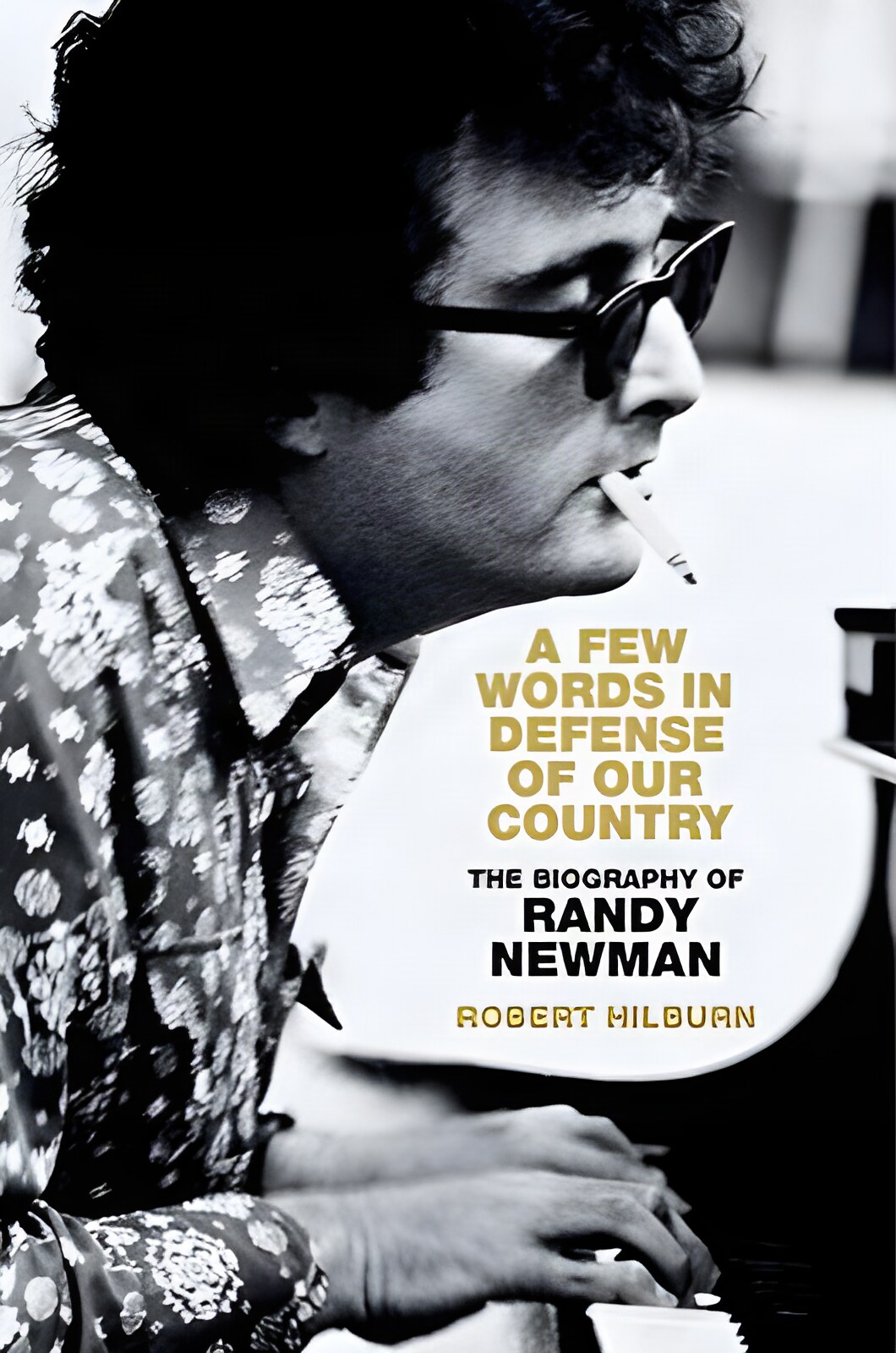
Hardcover. NY, Hachette, 1st, 2024, Book: Very Good, Dust Jacket: Very Good, Hardcover in a bright, unclipped dust jacket, 513 pages. Veteran music journalist Robert Hilburn presents the definitive portrait of an American legend. Hilburn has known Newman since his club debut at the Troubadour in 1970, and the two have maintained a connection in the decades since, conversing over the course of times good and bad. Though Newman has long refused to talk with potential biographers, he now gives Hilburn unprecedented access not only to himself but also to his archives, as well as his family, friends, and collaborators. Bob Dylan, Paul Simon, John Williams, Linda Ronstadt, Don Henley, Bonnie Raitt, Chuck D, James Taylor, and New York Times' Pulitzer-winning columnists, Thomas Friedman and Wesley Morris, among others, contributed to the book. Clean copy.
Hardcover. London, Heinemann, 1st, 1971, Book: Very Good, Dust Jacket: None, Hardcover, 288 pages, b&w illustrations. The story and rural life of three Generations of the Copper Family. Large section of old English country songs with scores. No dust jacket, bookplate, name on inside front cover, otherwise clean.
Hardcover. NY, Bloomsbury USA, 1st, 2013, Book: Very Good, Dust Jacket: Very Good, Hardcover, 320 pages. More than thirty years have passed since Al Capp's death, and he may no longer be a household name. But at the height of his career, his groundbreaking comic strip, Li'l Abner, reached ninety million readers. The strip ran for forty-three years, spawned two movies and a Broadway musical, and originated such expressions as "hogwash" and "double-whammy." Capp himself was a familiar personality on TV and radio; as a satirist, he was frequently compared to Mark Twain. Though Li'l Abner brought millions joy, the man behind the strip was a complicated and often unpleasant person. A childhood accident cost him a leg-leading him to art as a means of distinguishing himself. His apprenticeship with Ham Fisher, creator of Joe Palooka, started a twenty-year feud that ended in Fisher's suicide. Capp enjoyed outsized publicity for a cartoonist, but his status abetted sexual misconduct and protected him from the severest repercussions. Late in life, his politics became extremely conservative; he counted Richard Nixon as a friend, and his gift for satire was redirected at targets like John Lennon, Joan Baez, and anti-war protesters on campuses across the country. With unprecedented access to Capp's archives and a wealth of new material, Michael Schumacher and Denis Kitchen have written a probing biography. Capp's story is one of incredible highs and lows, of popularity and villainy, of success and failure-told here with authority and heart.
NY, Knopf, 1st, 1942, Book: Good, Dust Jacket: None, Hardcover, maroon cloth covers with white cloth spine. Illustrated in color by Elizabeth Black Carmer. 244 pages. Previous owner's signature front end paper, light wear, spine a bit faded. A collecton of folk tales followed by a piece of music that was inspired by the story. Name on inside front cover. Otherwise clean.
Hardcover. NY, Da Capo Press, 1st, 2017, Book: Very Good, Dust Jacket: Very Good, Hardcover, 352 pages. As well-known as Robert Frank the photographer is, few can say they really know Robert Frank the man. Born and raised in wartime Switzerland, Frank discovered the power and allure of photography at an early age and quickly learned that the art meant significantly more to him than the money, success, or fame. The art was all, and he intended to spend a lifetime pursuing it. American Witness is the first comprehensive look at the life of a man who's as mysterious and evasive as he is prolific and gifted. Leaving his rigid Switzerland for the more fluid United States in 1947, Frank found himself at the red-hot social center of bohemian New York in the '50s and '60s, becoming friends with everyone from Jack Kerouac, Allen Ginsberg, and Peter Orlovsky to photographer Walker Evans, actor Zero Mostel, painter Willem de Kooning, filmmaker Jonas Mekas, Bob Dylan, writer Rudy Wirlitzer, jazz musicians Ornette Coleman and Charles Mingus, and more. Frank roamed the country with his young family, taking roughly 27,000 photographs and collecting 83 of them into what is still his most famous work: The Americans. His was an America nobody had seen before, and if it was harshly criticized upon publication for its portrait of a divided country, the collection gradually grew to be recognized as a transformative American vision.
Hardcover. NY, Da Capo Press, 1st, 2017, Hardcover, 352 pages. As well-known as Robert Frank the photographer is, few can say they really know Robert Frank the man. Born and raised in wartime Switzerland, Frank discovered the power and allure of photography at an early age and quickly learned that the art meant significantly more to him than the money, success, or fame. The art was all, and he intended to spend a lifetime pursuing it. American Witness is the first comprehensive look at the life of a man who's as mysterious and evasive as he is prolific and gifted. Leaving his rigid Switzerland for the more fluid United States in 1947, Frank found himself at the red-hot social center of bohemian New York in the '50s and '60s, becoming friends with everyone from Jack Kerouac, Allen Ginsberg, and Peter Orlovsky to photographer Walker Evans, actor Zero Mostel, painter Willem de Kooning, filmmaker Jonas Mekas, Bob Dylan, writer Rudy Wirlitzer, jazz musicians Ornette Coleman and Charles Mingus, and more. Frank roamed the country with his young family, taking roughly 27,000 photographs and collecting 83 of them into what is still his most famous work: The Americans. His was an America nobody had seen before, and if it was harshly criticized upon publication for its portrait of a divided country, the collection gradually grew to be recognized as a transformative American vision.
NY, Crown, 1st, 1999, Book: Very Good, Dust Jacket: Very Good, SIGNED BY BOTH MARY ANN HOBERMAN AND KEVIN HAWKES ON PRELIM PAGE. Dust jacket and covers completely illustrated, gorgeous full page color illustrations. No sign of wear, spine stiff and tight, dust jacket, covers and pages crisp, clean and unmarked; a beautiful book in excellent condition. In rhyming verse that's a deliberate homage to Dr. Seuss, poet and picture book author Mary Ann Hoberman takes on quarreling and its consequences, and shows how turning fighters into friends leads to greater peace. It all starts with a fighting brother and sister, who make up with the help of another sibling. When the family begins fighting with their noisy neighbors, it's music that brings them together. Soon the whole town is marching in a parade, and eventually the parade swells to include the whole country, and even the animals. By the end of this optimistic picture book, the whole world is united in friendship.
Hardcover. NY, Bantam, 1st, 2010, Book: Very Good, Dust Jacket: Very Good, Hardcover in a bright, unclipped dust jacket. 518 pages, b&w illustrations. Appetite for America is the incredible real-life story of Fred Harvey--told in depth for the first time ever--as well as the story of this country's expansion into the Wild West of Bat Masterson and Billy the Kid, of the great days of the railroad, of a time when a deal could still be made with a handshake and the United States was still uniting. As a young immigrant, Fred Harvey worked his way up from dishwasher to household name: He was Ray Kroc before McDonald's, J. Willard Marriott before Marriott Hotels, Howard Schultz before Starbucks. His eating houses and hotels along the Atchison, Topeka, and Santa Fe railroad (including historic lodges still in use at the Grand Canyon) were patronized by princes, presidents, and countless ordinary travelers looking for the best cup of coffee in the country. Harvey's staff of carefully screened single young women--the celebrated Harvey Girls--were the country's first female workforce and became genuine Americana, even inspiring an MGM musical starring Judy Garland. Clean copy.
Hardcover. NY, Pantheon, 1st, 2003, Book: Very Good, Dust Jacket: Very Good, Hardcover in a bright, price-clipped dust jacket, 495 pages. Boogaloo--the synonym of choice among the cognoscenti for rhythm and blues--is a stylish and profound meditation on the art, influence, and commerce of black American popular music. At once deeply knowing and keenly observant, Arthur Kempton reveals the tensions between the sacred and the profane at the heart of "soul music," and the complex centrality of "Aframericans" in the evolution of our mass musical culture. What that culture is all about, who owns it, and who gets paid--these are issues of moment in his epic narrative. Kempton brilliantly traces the interconnections among a century's worth of signal personalities, events, and achievements: from Thomas A. Dorsey, the so-called Father of Gospel Music, whose career ("Got to Know How to Work Your Show") sheds light on Mahalia Jackson, Aretha Franklin, and James Brown, among others, to the rise of that "handsome Negro lad," Sam Cooke (perhaps the greatest of soul singers) and his definitive crossover dreams; from Berry Gordy Jr.'s infatuation with Doris Day and his sharp business plan to capture and exploit the sounds of young America through Motown ("It's What's in the Grooves That Counts") to the founding of Stax Records and Memphis Soul by a white farm kid who grew up dreaming of being a country fiddler; from the visionary funk of George Clinton to the ascendancy of hip hop ("Sharecropping in Wonderland"), the murders of Tupac Shakur and Biggie Smalls, and the story of Death Row Records. Clean copy.
Softcover. Chicago, University of Chicago Press, 1st, 1997, Book: Very Good, Dust Jacket: None, Softcover, 306 pages, b&w illustrations. In Creating Country Music, Richard Peterson traces the development of country music and its institutionalization from Fiddlin' John Carson's pioneering recordings in Atlanta in 1923 to the posthumous success of Hank Williams. Clean copy.
Softcover. NY, Cooper Square Press, 1st pbk, 2001, Book: Very Good, Dust Jacket: None, Softcover, 285 pages, b&w illustrations. As told by the musicians who made it happen, Desperados: The Roots of Country Rock revisits country rock's rise to the top of the charts. Music scholar John Einarson delves into the years from 1963, when Buck Owens and his Buckaroos brought an electric edge to their Texas honky-tonk tunes, to 1973, when The Eagles released their album "Desperado" on David Geffen's label. Einarson examines how folk, rockabilly, blues, Nashville country, Tejano, bluegrass, and other musical idioms influenced a generation of journeyman musicians. He traces the paths taken by the songsmiths, the bands in which they served their apprenticeships, and the songs they wrote together, as they steadily shaped the country rock sound. The protagonists of this story include talented but troubled Gram Parsons, a virtuoso determined to burn out before he faded away; the versatile and appealing Linda Ronstadt; Mike Nesmith, the Monkee from Texas who returned to his musical roots with a trilogy of country-rock albums; TV heartthrob turned country rocker Rick Nelson; folkie songbird Emmylou Harris before she made it in Nashville; and many others. Clean.
Softcover. Durham NC, Duke University Press, 2nd pr., 1994, Book: Very Good, Dust Jacket: None, Softcover, 342 pages. In Extended Play, one of the country's most innovative music writers conducts a wide-ranging tour through the outer limits of contemporary music. Over the course of more than twenty-five portraits, interviews, and essays, John Corbett engages artists from lands as distant as Sweden, Siberia, and Saturn. With a special emphasis on African American and European improvisers, the book explores the famous and the little known, from John Cage and George Clinton to Anthony Braxton and Sun Ra. Employing approaches as diverse as the music he celebrates, Corbett illuminates the sound and theory of funk and rap, blues and jazz, contemporary classical, free improvisation, rock, and reggae. Using cultural critique and textual theory, Corbett addresses a broad spectrum of issues, such as the status of recorded music in postmodern culture, the politics of self-censorship, experimentation, and alternativism in the music industry, and the use of metaphors of space and madness in the work of African American musicians. He follows these more theoretically oriented essays with a series of extensive profiles and in-depth interviews that offer contrasting and complementary perspectives on some of the world's most creative musicians and their work. Clean copy.
Hardcover. University Of Iowa Press, 1st, 2001, Book: Very Good, Dust Jacket: Very Good, Hardcover in a bright dust jacket, 168 pages. Using jazz as the key metaphor, Porter refocuses old interpretations of Ellison by placing jazz in the foreground and by emphasizing, especially as revealed in his essays, the power of Ellison's thought and cultural perception. Clean copy.
Hardcover. London, Faber and Faber, 1st, 1996, Book: Very Good, Dust Jacket: Very Good, Hardcover in a bright, unclipped dust jacket. Music's confrontation with modernity has been difficult, and has often involved the artist leaving his country for political and social reasons. In the company of a range of performers,this work reflects the difficulties encountered and the audiences' often reluctant attitude towards them.
Hardcover. NY, Abrams, 2006, Book: Very Good, Dust Jacket: Very Good, Hardcover in a bright dust jacket. Introduction by Terry Zwigoff. Includes Bonus Music CD Selected and Compiled by R. Crumb. Bright, clean & tight copy, 240 pages. "Anyone who knows R. Crumb's work as an illustrator knows of his passion for music. And all those who collect his work prize the 'Heroes of the Blues, Early Jazz Greats, and Pioneers of Country Music' trading card sets he created in the early to- mid-1980s. Now they are packaged together for the first time in book form, along with an exclusive 21-track CD of music selected and compiled by Crumb himself (featuring original recordings by Charley Patton, Dock Boggs, Jelly Roll Morton, and others). A brief biography of each musician is provided, along with a full-color original illustration by Crumb.
Hardcover. New York, W. W. Norton & Company, 1st, 2011, Book: Very Good, Dust Jacket: None, Hard cover in slipcasse. Like new in publishers shrink-wrap. A landmark work that pays splendid homage to a forgotten era of seminal American music. Robert Crumb first began drawing record covers in 1968 when Janis Joplin, a fellow Haight Ashbury denizen, asked him to provide a cover for her album Cheap Thrills. It was an invitation the budding artist couldn't resist, especially since he had been fascinated with record covers-particularly for the legendary jazz, country, and old-time blues music of the 1920s and 1930s-since he was a teen. This early collaboration proved so successful that Crumb went on to draw hundreds of record covers for both new artists and largely forgotten masters. So remarkable were Crumb's artistic interpretations of these old 78 rpm singles that the art itself proved influential in their rediscovery in the 1960s and 1970s. Including such classics as Truckin' My Blues Away, Harmonica Blues, and Please Warm My Weiner, Crumb's opus also features more recent covers done for CDs. R. Crumb: The Complete Record Cover Collection is a must-have for any lover of graphics and old-time music. 450 four-color illustrations
Hardcover. NY, Norton, 1st, 2011, Book: Very Good, Dust Jacket: None, Hardcover, 96 pages, in slim decorated slipcase. Robert Crumb first began drawing record covers in 1968 when Janis Joplin, a fellow Haight Ashbury denizen, asked him to provide a cover for her album Cheap Thrills. It was an invitation the budding artist couldn't resist, especially since he had been fascinated with record covers-particularly for the legendary jazz, country, and old-time blues music of the 1920s and 1930s-since he was a teen. This early collaboration proved so successful that Crumb went on to draw hundreds of record covers for both new artists and largely forgotten masters. So remarkable were Crumb's artistic interpretations of these old 78 rpm singles that the art itself proved influential in their rediscovery in the 1960s and 1970s. Including such classics as Truckin' My Blues Away, Harmonica Blues, and Please Warm My Weiner, Crumb's opus also features more recent covers done for CDs. R. Crumb: The Complete Record Cover Collection is a must-have for any lover of graphics and old-time music. 450 four-color illustrations.
Hardcover. New York, W. W. Norton & Company, 1st, 2011, Book: Very Good, Dust Jacket: None, Hard cover in slipcase. Like new in publishers shrink-wrap. A landmark work that pays splendid homage to a forgotten era of seminal American music. Robert Crumb first began drawing record covers in 1968 when Janis Joplin, a fellow Haight Ashbury denizen, asked him to provide a cover for her album Cheap Thrills. It was an invitation the budding artist couldn't resist, especially since he had been fascinated with record covers-particularly for the legendary jazz, country, and old-time blues music of the 1920s and 1930s-since he was a teen. This early collaboration proved so successful that Crumb went on to draw hundreds of record covers for both new artists and largely forgotten masters. So remarkable were Crumb's artistic interpretations of these old 78 rpm singles that the art itself proved influential in their rediscovery in the 1960s and 1970s. Including such classics as Truckin' My Blues Away, Harmonica Blues, and Please Warm My Weiner, Crumb's opus also features more recent covers done for CDs. R. Crumb: The Complete Record Cover Collection is a must-have for any lover of graphics and old-time music. 450 four-color illustrations
NY, Abrams Press, 1st, 2020, Book: Very Good, Dust Jacket: Very Good, Hardcover in a bright dust jacket. 380 pqges, color and b&w photos. An action-packed memoir that takes readers on the road with rock and roll's hardest-working photographer. Bob Gruen is one of the most well-known and connected photographers in rock and roll. For almost 50 years, he has documented the music scene in pictures that have captured the world's attention. Right Place, Right Time is Gruen's first written account of his winding, adventure-filled journey. He takes us on visits to John and Yoko's apartment, on a cross-country road trip with the Ike and Tina Turner band, to Glasgow with Debbie Harry, backstage with KISS, inside CBGB, and on the bus as he swaps steel-toed boots with Sid Vicious. In wildly entertaining stories and iconic images, Gruen gives the reader a unique window into the evolution of American music culture over the last five decades.
Hardcover. NY, powerHouse Books, 1st, 2019, Book: Very Good, Hardcover in pictorial boards. Back in 1961 it was still possible to know a few of America's original country musicians from the '20s and '30s. Renowned and celebrated musician and artist John Cohen came of age at the confluence of Old Time and early Bluegrass music, the historic intersection of traditional and folk music. Cohen travelled the country playing music, recording, and documenting what was to be a generation of musicians who would influence American music and culture for decades to come. Travelling between the Union Grove Fiddlers' Convention to the Grand Old Opry to a Coal Celebration in Hazard, Kentucky, Cohen made historic photographs of performers like Bill Monroe and Doc Watson, the country's very first all bluegrass show, and a bluegrass bar in Baltimore, among much more. Still in publisher's shrinkwrap.
Softcover. New Lebanon NY, Omega Publications, 1st, 2007, Book: Very Good, Dust Jacket: None, Softcover, 234 pages, b&w photos. Everything about Noor Inayat Khan was extraordinary. A great-great-great granddaughter of Tipu Sultan, the Tiger of Mysore, she was born in Moscow to an American mother and an Indian Sufi Muslim father. Due to the unrest in Russia the family moved to London and from there to France where she spent the happiest years of her life studying music, child psychology and writing children's books. In 1940, her father having deserted the family and died in India years before, the family moved once again to England where Noor was trained as a wireless operator with the aim of sending her to German-occupied France to join up with the resistance. Noor was small and delicate, emotional, imaginative, shy, easily flustered and distracted. On the other hand there was her steely determination to serve her country, the desperate need for wireless operators and her perfect French. She was sent on her mission in June 1943. Her biography contains all the elements of an exciting spy novel but it was horrific and deadly reality. Clean copy.
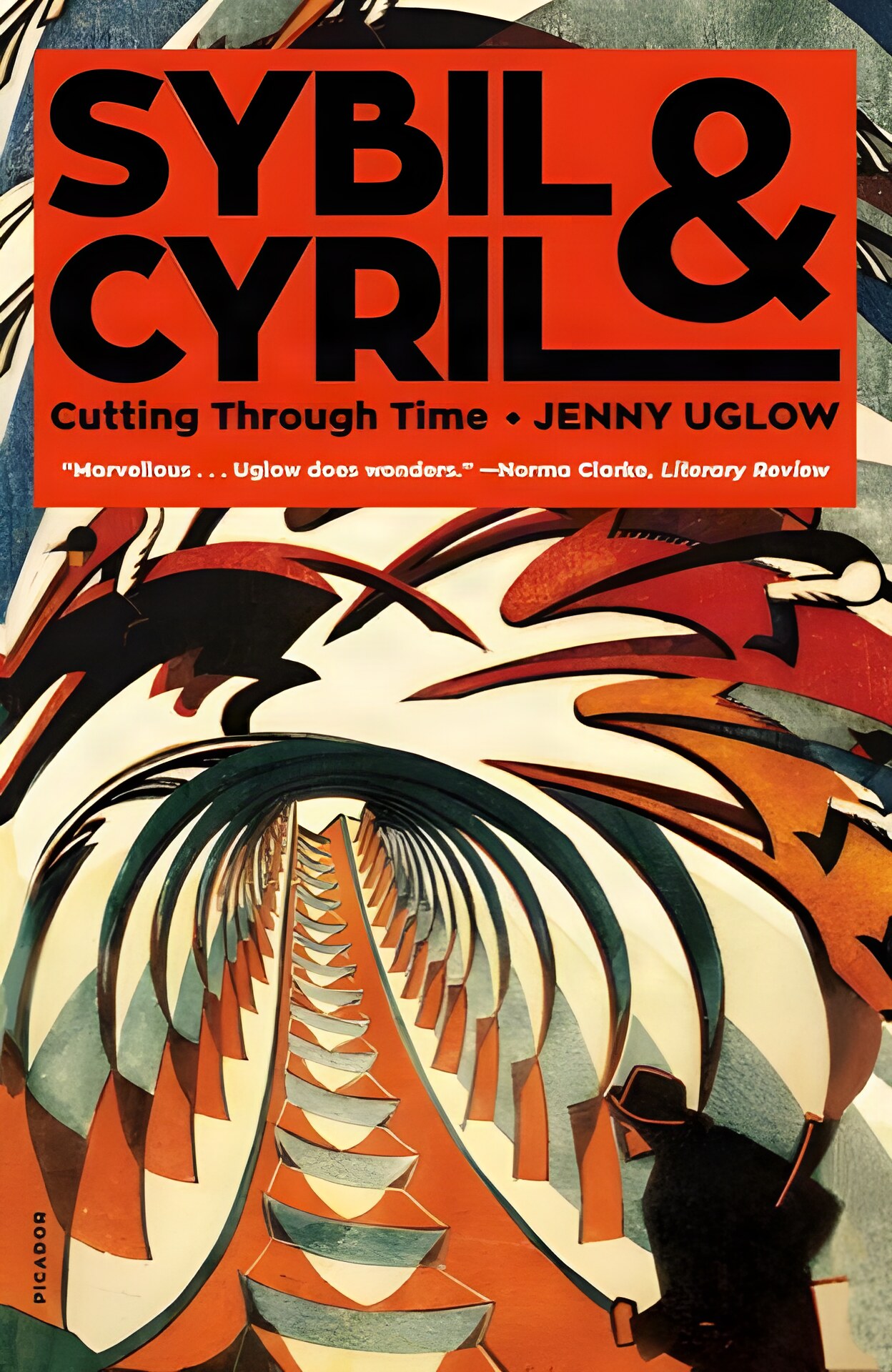
Softcover. NY, Picador/Farrar Straus Giroux, 1st US, 2022, Book: Very Good, Dust Jacket: None, Softcover, 398 pages, Illustrated in color and b&w. In 1922, Cyril Power, a fifty-year-old architect, left his family to work with the twenty-four-year-old Sybil Andrews. They would be together for twenty years. Both became famous for their dynamic, modernist linocuts-streamlined, full of movement and brilliant color, summing up the hectic interwar years. Yet at the same time, they looked back to medieval myths and early music, to country ways that were disappearing from sight. Jenny Uglow's Sybil & Cyril: Cutting Through Time traces their struggles and triumphs, conflicts and dreams, following them from Suffolk to London, from the New Forest to Vancouver Island. This is a world of futurists, surrealists, and pioneering abstraction, but also of the buzz of the new, of machines and speed, of shops and sport and dance, shining against the threat of depression and looming shadows of war. Remainder dot to top edge otherwise like new.
Hardcover. Utah, Gibbs Smith Publisher, 1st, 1990, Book: Very Good, Dust Jacket: Very Good, 150 pages. Hardcover. SIGNED BY AUTHOR. Gilt title on spine and front cover board. Clean inside. From the dust jacket front flap: "In his latest book,..., Cheuse once again presents a vividly rendered gallery of characters traversing a shifting moral landscape, this time the 'new' South and West of the eighties."

 "100 Best Selling Albums of the 90sby: Auty, Dan; Cawthorne, Justin; Barrett, Chris; Dodd, Peter")
 "A Song For Every Season, A Hundred Years of Sussex Farming by: Copper, Bob")
 "America Sings - Stories and Songs of Our Country's Growingby: Carmer, Carl")

 "American Witness: The Art and Life of Robert Frankby: Smith, R. J.")
 "And to Think That We Thought That We'd Never Be Friends (SIGNED COPY)by: Mary Ann Hoberman/Kevin Hawkes")


 "Creating Country Music: Fabricating Authenticityby: Richard A. Peterson")
 "Desperados: The Roots of Country Rockby: Einarson, John")

 "Jazz Country: Ralph Ellison in Americaby: Porter, Horace A.")
 "Leaving Home: A Conducted Tour of Twentieth-century Music with Simon Rattle by: Michael Hall")
![R. Crumb's Heroes of Blues, Jazz & Country [book & CD] by: Crumb, Robert; Calt, Stephen; Nevins, Richard; Jasen, David](https://www.browsingisarousing.com/shop/images/399703.jpg "R. Crumb's Heroes of Blues, Jazz & Country [book & CD] by: Crumb, Robert; Calt, Stephen; Nevins, Richard; Jasen, David")
 "R. Crumb: The Complete Record Cover Collectionby: Crumb, R.")
 "R. Crumb: The Complete Record Cover Collectionby: Crumb, R.")
 "Right Place, Right Time: The Life of a Rock & Roll Photographerby: Bob Gruen")


 "Speed Bumps on a Dirt Road: When Old Time Music Met Bluegrassby: Cohen, John")
 "Spy Princess: The Life of Noor Inayat Khanby: Basu, Shrabani")
 "Tennessee Waltz and Other Stories (SIGNED BY AUTHOR)by: Cheuse, Alan")

