Hardcover. Portland, OR, Nazraeli Press, 1st, 2010, Book: Very Good, Dust Jacket: None, 108 pages. This printing limited to 1000 copies. Hardcover with no dust jacket. Creasing to a few pages. An otherwise clean, unmarked copy with only minor edgewear. In the mid-1980s, Stu Levy began making 'grid-portraits' in order to overcome his his frustration with traditional portraiture's limited point of view. These constructs of photographs, consisting of twelve to twenty-five individual images, scan the architecture and flow of time in a subject's living or working environment. The resulting portraits, usually of artists, craftspeople and musicians, are made in the subjects' studios or living spaces and serve as a backstage tour of the artist s mind and creative process. Levy is fascinated by the artifacts that fill these spaces the possessions by which the subjects are themselves possessed. Rather than confining himself to a single 'decisive' moment, Levy explore its antithesis, a maze of scrambled time. These are made with a view camera using 4 x 5-inch negatives to allow for precision of detail. The sections are printed together to form the illusion of glancing through a window at a 'snapshot' of an event, which in reality might consist of fragmentary views made months apart and in totally separate rooms or environments. Among the subjects included in this important new monograph are Dr. Stanley Burns, Linda Connor, Barbara Crane, Jay Dusard, David Hockney, Graham Nash, and Jerry Uelsmann. Beautifully printed in duotone on matt art paper and bound in black Japanese cloth, this first printing of Grid-Portraits is limited to 1,000 copies.
Hardcover. Syracuse NY, Syracuse University Press, 1st, 1983, Book: Very Good, Dust Jacket: Very Good, Hardcover in a bright dust jacket. 186 pages, 116 illustrations. "The first serious study of the totality of Stickley's accomplishments, especially his architecture", and as a central figure in the American Arts and Crafts Movement as founder of The Craftsman and of the Stickley Workshops. Bibliographical references, pages 169-181. Clean copy.
Hardcover. NY, Macmillan , 1st, 1986, Book: Very Good, Dust Jacket: Very Good, 160 pages, illustrated throughout in b&w. Previous owner's signature on front end paper. Light edgewear to dust jacket, else a clean, tight copy.
Softcover. Lark Books, 1st, 2008, Book: Very Good, Dust Jacket: None, Softcover, 416 pages, illustrated in color. Feast your eyes on more than 300 of today's most creative, imaginative, and gorgeous hand-made guitars--all illustrated in full color and featuring information about the innovative artisans who created them. Meet guitar-making legends, such as C.F. Martin, Les Paul, and Leo Fender, who revolutionized the instrument's design. Discover why the past 25 years have seen an explosion of craftspeople who build guitars by hand, employing an attention to detail factories can't afford and using higher quality materials and more technical skill than in any previous era. Explore the various guitar styles used in a range of musical traditions, from blues to classical. Detailed information about each guitar's specifications, plus personal statements and anecdotes from the artisans about their work and techniques complete each entry.
Hardcover. Hanover NH, University Press of New England , 1st, 2009, Book: Very Good, Dust Jacket: Very Good, Hardcover in a bright dust jacket, 458 pages. Through furniture, this exhibition catalogue will explore the cultural identity of a little-studied region of 18th and 19th century New England: southeastern Massachusetts, an area that stretches from just south of Boston to Providence, east to the tip of Cap Cod, and includes the islands of Nantucket and Martha's Vineyard. The era between 1710 and 1850 was marked by enormous changes in the landscape, population, and economy of this area, as well as in the activities of furniture craftsmen and the purchasing patterns of local residents. Three themes are paramount here: 1. Regionalism in the character of furniture made in the area and the forces that shaped that identity. 2. Fashion, changing tastes and the growing affluence of local residents over time. 3. Shop practices and the evolving craft practices of furniture makers through the recreation of two shops, the rural handcraft tradition of Samuel Wing of Sandwich in 1800 and the mechanized operation of a New Bedford or Fall River chair factory in 1850. The exhibition will include approximately 75 pieces of furniture from private and institutional collections, tools and equipment from the Samuel Wing cabinet shop (now owned by Sturbridge Village), and selected household furnishings depicting interiors in southeastern Massachusetts during the 18th and 19th centuries. Still in publisher's shrinkwrap. DOMESTIC SHIPPING ONLY.
Hardcover. London, Sir Isaac Pitman & Sons, reprint, 1929, Book: Very Good, Dust Jacket: None, Hardcover, green boards with beige buckram spine, black lettering on spine and front cover. 425 pages with index. The Artistic Crafts Series of Technical Handbooks. Diagrams by the author and numerous illustrations, colored lithographs and collotype reproductions from ancient examples. Gutter cracked at half-title page, previous owner's name otherwise clean.
Hardcover. UK, Sona Books, 1st, 2024, Book: Very Good, Dust Jacket: None, Hardcover in pictorial boards, 141 pages in color. Famous for the Birkin Bag and Silk Scarf and beloved by the great, the good and the uber glamorous - Hermes boasts an instantly recognizable signature style all of its own. This book, beautifully illustrated with images of some of the world's iconic fashion items, charts the story of Hermes origins and how the brand became the symbol of French luxury and craftsmanship and the influential, innovative haute couture power house it is today. Clean, bright copy.
Hardcover. New York, George Braziller Incorporated, 1st, 1986, Book: Fair, Dust Jacket: Good, 256 pages. Hardcover with dust jacket. Clean, tight copy. Color pictures throughout. landscapes. Hiroshige's One Hundred Famous Views of Edo, actually composed of 118 splendid woodblock landscape and genre scenes of mid-nineteenth century Tokyo, is one of the greatest achievements of Japanese art. The series contains many of Hiroshige's best-loved and most extraordinary prints. Like Venice and Florence in the 14th and 15th centuries, or Paris in the age of the Impressionists, the city of Edo, with its superb landmarks and its festive display of elegant urban life, exerts a special and compelling fascination. Hiroshige revealed the panorama of his city's activities with subtle and vivid visual anecdotes: fireworks seen from the river, fashionable geishas on parade, the kabuki district at night, intimate moments in the gardens and teahouses. It is a tour de force of artistic vision and printmaking craftsmanship. This edition has been reproduced from an exceptionally fine, first-edition set in the Brooklyn Museum of Art to insure maximum fidelity to the original prints. Henry Smith ex-plains the world of Edo in its twilight before the Meiji Restoration and the beginnings of a modern urban society. Each plate is accompanied by a commentary that discusses its artistic and cultural interest in detail. For anyone interested in Japan, the One Hundred Famous Views of Edo is perhaps the finest guide and one of the greatest legacies imaginable.
Softcover. Colorado Springs, Colorado, Colorado Springs Fine Arts Center, 1st, 1977, Book: Good, Dust Jacket: None, Softcover. Exhibition catalogue featuring the Hispanic art of the American Southwest. 118 pages, 21 black/white plates, 105 other black/white illustrations of pieces, and 36 black/white photographs of featured artists. Good condition, some soiling/light discoloration on the cover, top right corner bent.
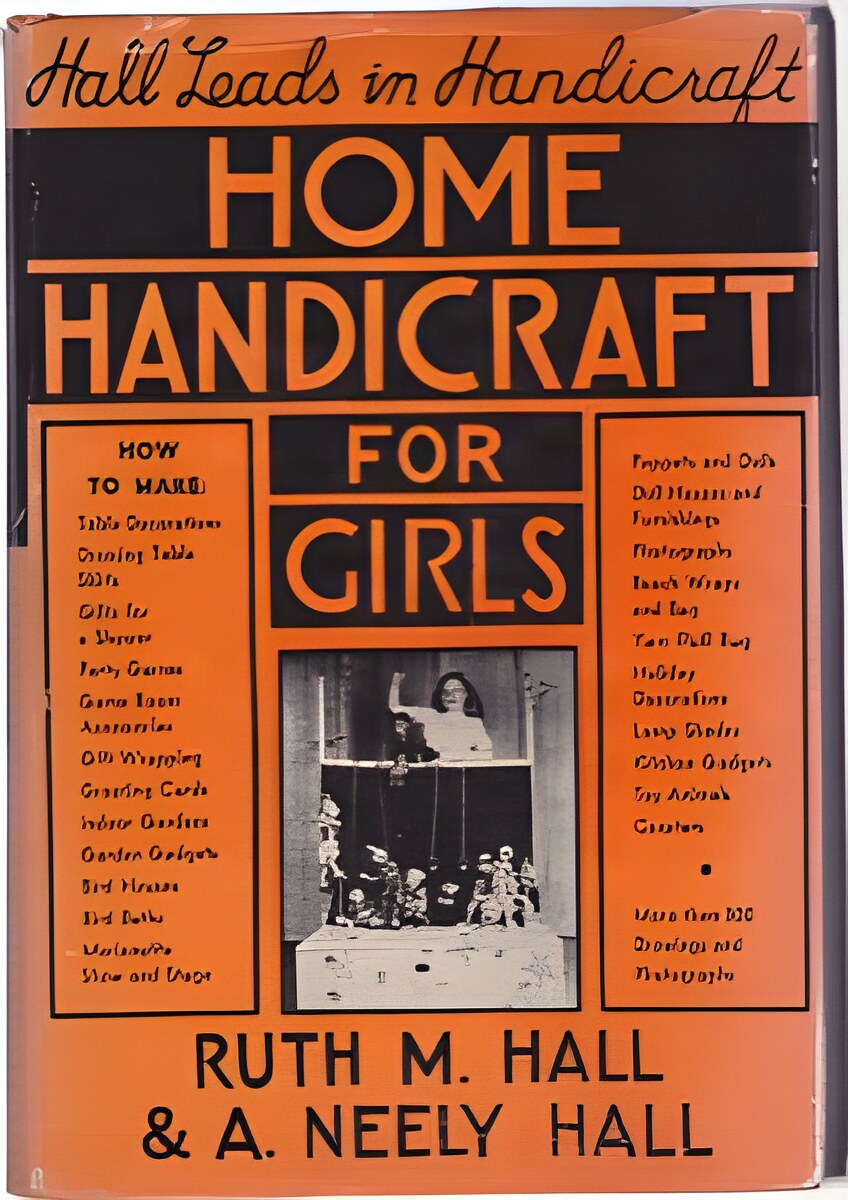
Hardcover. New York , Jr. Literary Guild/J.B. Lippincott, Book Club Ed, 1941, Book: Very Good, Dust Jacket: Very Good, 359 pages, 348 b&w drawings and photographs by the authors. Scarce in the bright orange dust jacket, light edgewear and chipping.
Hardcover. New York, Doubleday, Page, and Company, 1st, 1925, Book: Fair, Dust Jacket: None, Volume to accompany the American Wing of the Metropolitan Museum of Art in New York. 302 pp. Features 20 color plates in addition to 217 other black/white illustrations (mostly photographs). Covers beginnings of New England through the Early Days of the Republic. Development of Interior Architecture and House Decoration from craftsmen influenced by old world style and the evolution.Shows significant wear due to age and water damage. Discoloration throughout, though text still entirely legible and color still vivid in the plates. Edges show significant wear as well. Prior owner's name and date (1929) written in ink twice inside the cover.
Hardcover. US, Thames & Hudson Ltd, 1st, 1992, Book: Very Good, Dust Jacket: Very Good, Hardcover, 224 pages, illustrated throughout in color and b&w. Light edgewear to dust jacket, else a clean, tight copy. From its founding in 1875, the firm of Liberty has been a byword for high-quality design. Arthur Lasenby Liberty, its founder, set out to transform the appearance of dress and interior decoration; that sense of energy and excitement remains integral to the house, making Liberty a world-recognized name. This account and celebration is divided into chronological sections. It begins with the early emporium and ends with a survey of the institution's influence on post-war aesthetics and design. The Arts and Crafts Movement found Liberty's associated with leading craftsmen-designers. After World War I its textiles continued the famous lines of prints. Now, in keeping with its role as innovator, the firm continues to commission designers and to promote both traditional and avant-garde furniture and artifacts. This history of a unique enterprise reflects in microcosm major developments in taste from the late 19th-century to the present.
Hardcover. New York , Doubleday, Page & Company, 1st, 1902, Book: Very Good, Dust Jacket: None, 130 pages. Light purple embossed cloth cover. Cloth faded on spine, corners and edges are worn. Library stamp on front endpage. Previous owner's inscription on front flyleaf. Minor foxing on frontispiece, title page, and rear flyleaf and endpage. Inside is bright and clean, with b&w illustrations. Includes instruction and patterns for weaving and dyeing woolen, ingrain carpet and cotton rugs. A nice copy.
Softcover. Watkins Glen NY, American Lfe Books, reprint, nd, Book: Very Good, Dust Jacket: None, Softcover, pictorial orange wrappers, facsimile reprint of the 1871 edition, "Sign Writing and Glass Embossing; A Complete Practical Illustrated Manual of the Art" by James Callingham. heavily illustrated with solid introduction, drawing essentials, many different alphabets, numerals and more. Clean, bright copy.
Softcover. np (Chicago), np, 1st, 1928, Book: Very Good, Softcover magazine, 32 pages plus 2-color illustrated stapled wraps. Features plans for The Penquin Ice Racer shown on cover. Lead article on "Shattering the Lowly Atom". Paper tanning, still very good.
Softcover. New York, Christie's , 1st, 1989, Book: Very Good, Dust Jacket: None, 155 lots, illustrated in color. Softcover with minor wear to covers and spine else in very good condition.
Hardcover. Portland, Or., C. H. Belding, 1st, 1978, Book: Very Good, Dust Jacket: Very Good, Hardcover, 119 pages, illustrated throughout in color. Clean, unmarked copy with only minor wear to dust jacket.
Hardcover. Chicago, A. C. McClurg and Co., reprint, 1934, Book: Very Good, Dust Jacket: None, 213 pages, 254 illustrations in color and b&w. First published in 1914, this is the 1934 reprint. Light yellow cloth with two-color design. Previous owner's signature, date on front fly leaf. Otherwise clean, very good.
Hardcover. NY, William Morrow & Co., 1st, 1957, Book: Very Good, Dust Jacket: None, Hardcover, tan cloth covers stamped in black. 126 pages, b&w illustrations by author.14 games such as guessing game, tross ball, toss and catch, Indian rattles, Hopi Kachinas. Name on inside front cover, otherwise clean.
Hardcover. Germany, Daab, 1st, 2012, Book: Very Good, Dust Jacket: None, 320 pages. Hardcover no dust jacket. Like new in publisher's shrink-wrap.. The Label Book of Clothing Culture presents over 40 TOP labels within the fashion business which are among the very best in the world. Great names such as Barbour and Brioni stand next to numerous 'Hidden Champions' of clothing culture. But this extraordinary coffee-table book is about much more than mere fashion, it also presents craftsmanship and history, style and quality; it highlights those companies that have committed themselves to this tradition with heart and soul. The editor and enthusiastic art collector, Dr. Dr. Thomas Rusche, knows what he is talking about, since it is he that coined the term 'clothing culture.' He shares his knowledge of the true champions of the business and provides interesting background information about the companies presented here.


 "Gustav Stickley, The Craftsmanby: Smith, Mary Ann")


 "Harbor & Home: Furniture of Southeastern Massachusetts, 1710 - 1850by: Brock Jobe/Gary R. Sullivan / Jack O'Brien")




 "Hispanic Crafts of the Southwestby: Wroth, Ed., William")

 "Homes of Our Ancestors, Theby: Halsey & Tower, R. T. H. & Elizabeth")
 "House of Liberty, The : Masters of Style and Decorationby: Calloway, Stephen")
 "How to Make Rugsby: Wheeler, Candace")
 "How to Make Victorian Letters and Signs for Posters and Buildings by: James Callingham")
 "Illustrated Science and Mechanics - December 1928by: N/A")
 "Important Works by Tiffany Studios and John La Farge: Auction December 9, 1989 - Sale 6988by: Christie's")
 "Indian Baskets of the Northwest Coastby: Lobb, Allan")
 "Indian Blankets and Their Makersby: James, George Wharton")


 "Label Book of Clothing Culture, The: Tradition. Quality. Styleby: Rusche, Thomas")