Hardcover. New Haven CT, Yale University Press, 1st, 1998, Book: Very Good, Dust Jacket: Very Good, Hardcover in a bright dust jacket, 436 pages, b&w illustrations. The humiliation of Russia by separatist rebels in the Chechen War marked a key moment in Russian - and perhaps world - history. In this new analysis Anatol Lieven offers a riveting account of the war as a means to explore the painful fate of the post-Soviet state. Lieven looks into the long, troubled history of Russian-Chechen relations, noting that each side despised the other for largely cultural reasons (the Chechens have long been involved in organized crime in major Russian cities, whereas Russians have long tried to strip Chechnya of its resources). He notes that Chechen society has historically been militarized (one Armenian said to Lieven, "The men are always fighting and the women are cooking for them, nursing their wounds, and bringing up their children"), making the mountain people a formidable foe. In the meanwhile, writes Lieven, the Russian military suffered from low morale and from corruption of various kinds: Russian field soldiers sold their guns to Chechen guerrillas for vodka and currency, while Russian officers stole their soldiers' pay and Russian politicians skimmed off the top. This is an extraordinary look at a little-known conflict. Clean copy.
Hardcover. Chicago IL, University of Chicago Press, 1st, 2007, Book: Very Good, Dust Jacket: Very Good, Hardcover, 263 pages. When the Chicago Daily News closed its doors in March 1978 after over a century of publication, the city mourned the loss of an American original. The Daily News boasted the inventive, aggressive writing of such luminaries as Carl Sandburg and Ben Hecht. It was also one of the first newspapers in the country to feature black-and-white photography. In 1900, staffers from the paper's art department began lugging bulky cameras, heavy glass plates, and explosive flash powder throughout the city. A labor strike, a boxing match, or a crime scene--it was all in a day's work for the Daily News photographer. These cameramen helped sell papers, but, as Mark Jacob and Richard Cahan reveal, they also made art. Chicago under Glass: Early Photographs from the Chicago Daily News is the first collection of images from the photo staff's early years, 1901 to 1930. Jacob and Cahan, seasoned journalists themselves, have selected more than 250 images--many of which have never before been published--from the nearly 57,000 glass negatives housed at the Chicago History Museum. They include rare photographs of a young Buster Keaton with his wife and child, waiting to board a train and the notorious Al Capone outside a courtroom, smoking a cigar and consulting with his lawyer. Each thematic section begins with a fascinating introduction by the authors, and each image is accompanied by insightful historical commentary.
Softcover. Baltimore, Johns Hopkins University Press, 1st, 1994, Book: Very Good, Dust Jacket: None, Softcover, 295 pages. The infamous Nuremberg Doctors' Trials of 1946-47 revealed horrifying crimes --ranging from grotesque medical experiments on humans to mass murder--committed by physicians and other health care workers in Nazi Germany. But far more common, argue the authors of Cleansing the Fatherland, were the doctors who profited professionally and financially from the killings but were never called to task--and, indeed, were actively shielded by colleagues in postwar German medical organizations. The authors examine the role of German physicians in such infamous operations as the "T 4" euthanasia program (code-named for the Berlin address of its headquarters at Number 4 Tiergartenstrasse). They also reveal details of countless lesser known killings--all ordered by doctors and all in the name of public health. Maladjusted adolescents, the handicapped, foreign laborers too illto work, even German civilians who suffered mental breakdowns after air raids were "selected for treatment." (One physician who persisted in speaking of "killings" was officially reprimanded for his "negative attitude.") The book also includes original documents--never before published in English--that give unique and chilling insight into the everyday workings of Nazi medicine. Clean copy.
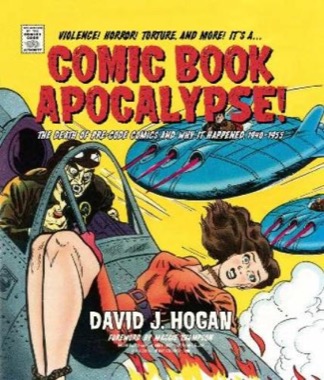
Hardcover. Atglen PA, Schiffer Publishing, 1st, 2025, Book: Very Good, Dust Jacket: None, Hardcover, pictorial boards, 255 pages. illustrated in color. Explore the rise and fall of pre-Code comics with 500 covers revealing America's cultural shifts, censorship, and controversy. From 1940 to 1955, American society and culture underwent dramatic changes, including the introduction of the Comics Code in October 1954, which heavily impacted comic books. The Code aimed to moderate comic content in response to public opinion, including such topics as juvenile delinquency, wartime sentiment, teenage sex, drugs, violent crime, and more. While compliance was technically voluntary, most publishers followed its strict rules. Those who didn't faced ruin when wholesalers and distributors refused to handle noncompliant comics, returning them unopened to publishers, who soon self-destructed. Comic Book Apocalypse! explores this downfall through 500 examples of pre-Code cover art, highlighting why some deemed the Code necessary. The book also examines who decided what content was acceptable, demonstrating how pre-Code comics reflect the larger story of 1950s America. DOMESTIC SHIPPING ONLY.
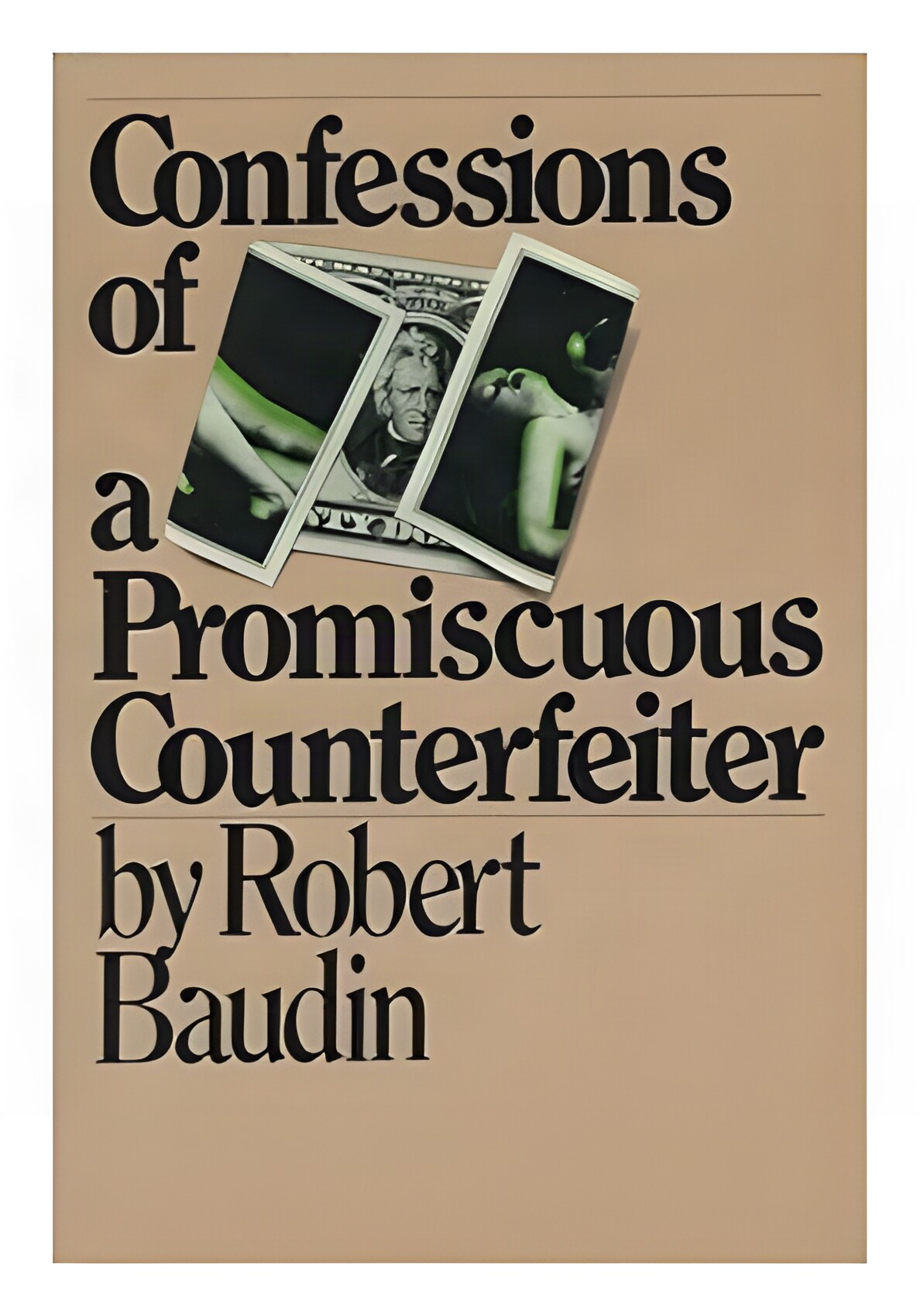
Hardcover. NY, Harcourt Brace Jovanovich, 1st, 1979, Book: Very Good, Dust Jacket: Very Good, Hardcover in a bright dust jacket, 330 pages. This outrageous autobiography is the story of an adventurous man who lived and loved all over the world, courtesy of two million dollars in counterfeit money. Clean copy.
Hardcover. NY, W. W. Norton & Company, 1st, 2015, Book: Very Good, Dust Jacket: Very Good, Hardcover in a bright, unclipped dust jacket. 402 pages. Remarkable study of smuggling, which illustrates how Americans related to the world from the Founding to World War I. From the beginning, the United States sought to build nationalism by limiting their own ability to trade with foreigners. But at the same time, Americans like Charles L. Lawrence defied customs authorities, insisting that trade be free. The government responded by building a potent army of customs inspectors and treasury agents, who profiled Jews, Asians, and women in the pursuit of tariff revenues. Beautifully written, the author uses the stories of smugglers like Jean Lafitte, Charles L. Lawrence, and Rose Eytinge to illustrate not only the history of Protectionism, but also the rise of American empire and the development of the modern social safety net. He shows that the tariff was far from an unpopular relic, but rather the foundation of the nineteenth century state. Clean copy.
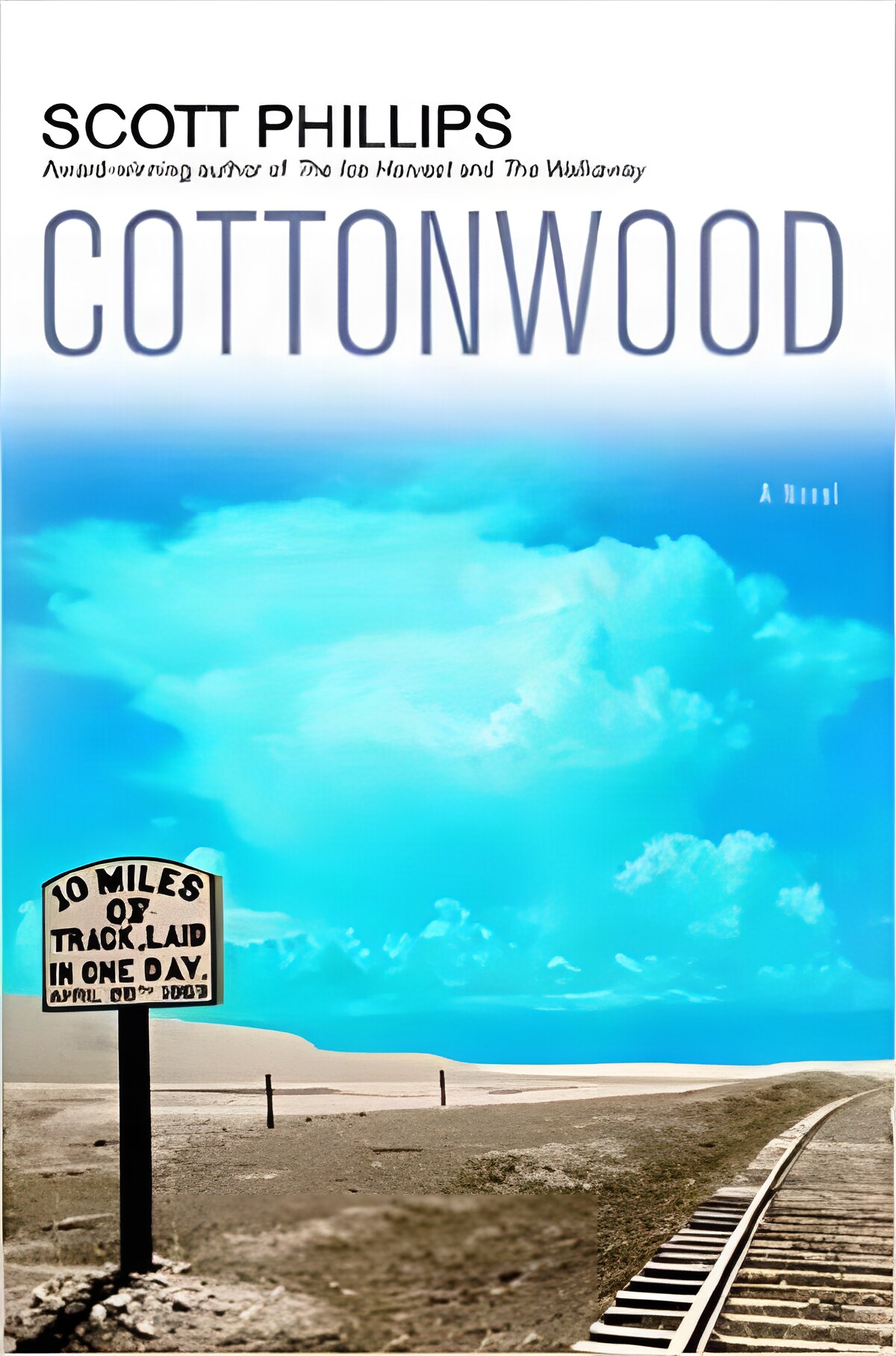
Hardcover. NY, Ballantine Books, 1st, 2004, Book: Very Good, Dust Jacket: Very Good, Hardcover in a bright, unclipped dust jacket. In 1872, Cottonwood, Kansas, is a one-horse speck on the map; a community of run-down farms, dusty roads, and two-bit crooks. Self-educated saloon owner and photographer Bill Ogden looks on his adopted town with an eye to making a profit or getting out. His brains and ambition bring him to the attention of one Marc Leval, a wealthy Chicago developer with big plans for the small town. The advent of the railroad and rumors of a cattle trail turn Cottonwood into a wild and wooly boomtown--and with Leval as a partner, Ogden dreams of bringing civilization to the prairie. But civilizing the Great Plains was never that simple. While many in Cottonwood distrust Leval's motives, and mob violence threatens to derail the town's dreams of greatness, Ogden finds himself dangerously obsessed with Leval's stunningly beautiful wife. Meanwhile, plying its sinister trade unnoticed, an apparently ordinary local farm family quietly butchers traveling salesmen, weary travelers, and other unsuspecting wanderers. In his own inimitable brand of narrative wizardry, Scott Phillips traces the metamorphosis of a frontier town that becomes a lightning rod for sin, corruption, and murder. He also brings to life actual crimes that befell Kansas in the 1870s and 1880s, carried out by a strange clan who popularly became known as The Bloody Benders. Brilliantly written, maliciously fun, and full of many surprises, Cottonwood is historical fiction at its finest.
Hardcover. Paris, France, Guy Delcourt Productions, 1st Edition, 1989, Book: Very Good, Dust Jacket: None, 48 pages. Hardcover. FRENCH TEXT. Color illustrations throughout. Decorated cover boards, glossy, very good. Pages and edges clean and unmarked. Binding tight, spine straight. In excellent condition. Coutoo is dead. But Coutoo lives again. Coutoo, the mad killer with the terrifying face, once again haunts the streets of New York. Like his father before him, Inspector Krafft goes up the bloody trail taken up by this monstrous psychopath.
Hardcover. Indianapolis , Bobbs-Merrill, 1st, Book: Very Good, Dust Jacket: None, Hardcover, dark green cloth with gilt lettering. B&W plates by Frederic Dorr Steele. Hinges partially cracked, otherwise nice, clean.
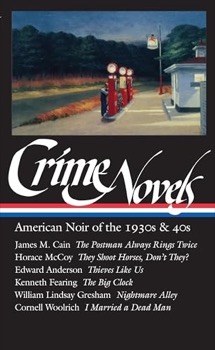
Hardcover. NY, Library of America , 4th pr., 1997, Book: Very Good, Dust Jacket: Very Good, Hardcover in a bright dust jacket. 990 pages. James M. Cain's pioneering novel of murder and adultery along the California highway, The Postman Always Rings Twice (1934), shocked contemporaries with its laconic toughness and fierce sexuality. Horace McCoy's They Shoot Horses, Don't They? (1935) uses truncated rhythms and a unique narrative structure to turn its account of a Hollywood dance marathon into an unforgettable evocation of social chaos and personal desperation. In Thieves Like Us (1937), Edward Anderson vividly brings to life the dusty roads and back-country hideouts where a fugitive band of Oklahoma outlaws plays out its destiny. The Big Clock (1946), an ingenious novel of pursuit and evasion by the poet Kenneth Fearing, is set by contrast in the dense and neurotic inner world of a giant publishing corporation under the thumb of a warped and ultimately murderous chief executive. William Lindsay Gresham's controversial Nightmare Alley (1946), a ferocious psychological portrait of a charismatic carnival hustler, creates an unforgettable atmosphere of duplicity, corruption, and self-destruction. I Married a Dead Man (1948), a tale of switched identity set in the anxious suburbs, is perhaps the most striking novel of Cornell Woolrich, who found in the techniques of the gothic thriller the means to express an overpowering sense of personal doom. Clean copy.
Hardcover. NY, Library of America , 4th pr., 1997, Book: Very Good, Dust Jacket: Very Good, Hardcover in a bright dust jacket. 990 pages. James M. Cain's pioneering novel of murder and adultery along the California highway, The Postman Always Rings Twice (1934), shocked contemporaries with its laconic toughness and fierce sexuality. Horace McCoy's They Shoot Horses, Don't They? (1935) uses truncated rhythms and a unique narrative structure to turn its account of a Hollywood dance marathon into an unforgettable evocation of social chaos and personal desperation. In Thieves Like Us (1937), Edward Anderson vividly brings to life the dusty roads and back-country hideouts where a fugitive band of Oklahoma outlaws plays out its destiny. The Big Clock (1946), an ingenious novel of pursuit and evasion by the poet Kenneth Fearing, is set by contrast in the dense and neurotic inner world of a giant publishing corporation under the thumb of a warped and ultimately murderous chief executive. William Lindsay Gresham's controversial Nightmare Alley (1946), a ferocious psychological portrait of a charismatic carnival hustler, creates an unforgettable atmosphere of duplicity, corruption, and self-destruction. I Married a Dead Man (1948), a tale of switched identity set in the anxious suburbs, is perhaps the most striking novel of Cornell Woolrich, who found in the techniques of the gothic thriller the means to express an overpowering sense of personal doom. Clean copy.
Softcover. Beverly Hills, CA, Lawrence Bassoff Collection, 1st, 1997, Book: Very Good, Dust Jacket: None, Large softcover, 159 pages, illustrated throughout in color. Light wear to pictorial covers, else a very nice, tight. clean copy. Foreword by Robert Wise. 100 beautiful reproductions of classic crime film posters.
New York, Van Nostrand Reinhold, 1st, 1981, Book: Very Good, Dust Jacket: Very Good, Hardcover in a bright dust jacket, 196 pages. Black & white photography. Reveals the war with Russia, the first war to be extensively recorded by photography. Here are 85 photos and commentary. Many of the photos were taken by two Englishmen, Roger Fenton and William Robertson.
Hardcover. NY, Walker Books, 1st, 2006, Book: Very Good, Dust Jacket: Very Good, Hardcover in a bright, unclipped dust jacket. In Sallis's beautifully written second book to feature Turner, an ex-cop and ex-con (after 2004's Cypress Grove), Turner is working as a deputy sheriff in Cripple Creek, Tenn., a small town where crime is minor and strictly local. Then, late one night, Sheriff Don Lee arrests drunk driver Judd Kurtz with $200,000 in a nylon gym bag hidden in the trunk of his car. Kurtz breaks out of the town jail, seriously wounding two officers in the process. Turner's investigation leads him to an organized crime connection in nearby Memphis that enmeshes him in a web of escalating violence.
Softcover. London, Hard Case Crime, 1st thus, 2016, Book: Very Good, Dust Jacket: None, Softcover, colorful wraps with a retro-style illustration by Robert McGinnis. Maybe no one liked Del Gilbert a whole lot, not the men he ruthlessly did business with, not the women who discovered they weren't his only lover, not even his partner in the Gilbert and Blake literary agency--me. But when I found him shot to death on the floor of his office, I had no choice. I had to track down the person responsible. And not just to lay Del to rest, either. Next to his body, the office safe was wide open, and a contract worth millions was missing. From the pen of MWA Grand Master Ed McBain comes this unforgettable story of warring agents and Hollywood dealmaking, murder and scandal--and passions igniting in the dark of night. Like new.
Softcover. NY, DC Comics, 1st, 2025, Book: Very Good, Dust Jacket: None, Softcover. Uncover the origin of one of DC's wackiest heroes in this collection spanning the early days of Plastic Man! He can bounce, stretch, and crack wise, but can he save the day? And, more importantly, does he even want to? What business does a petty crook have playing superhero anyway? This volume collects Police Comics #1-36; Plastic Man #1-2. Patrick 'Eel' O Brian s life of crime just became a whole lot stranger! After an unfortunate accident leaves Eel s body transformed to have the properties of rubber, Plastic Man is born! But can Eel overcome his worst impulses and use his new abilities for good? Clean copy.
Softcover. London, Hard Case Crime, 1st thus, 2007, Book: Very Good, Dust Jacket: None, Softcover, colorful wraps with a retro-style illustration by Arthur Suydam. THE FINAL CRIME NOVEL FROM THE KING OF PULP FICTION. For 20 years, former NYPD cop Jack Stang has lived with the memory of his girlfriend's death in an attempted abduction. But what if she weren't actually dead? What if she somehow secretly survived--but lost her sight, and her memory, and everything else she had...except her enemies? Now Jack has a second chance to save the only woman he ever loved--or to lose her for good. Like new.
Hardcover. NY, Penzler Publishers, reprint, 2022, Book: Very Good, Dust Jacket: Very Good, Hardcover in a bright dust jacket, 266 pages. When Quinn first meets Bricky, she's working as a partner-for-hire at a dance hall and he's struggling to shake the anxiety of his guilty conscience. Earlier that day, the young man took advantage of a found key and used it to rob a stranger's home. Now, with the purloined money in his pocket, Quinn is unable to escape the memory of his wrongdoing-and not even a night spent dancing is enough to silence his nagging thoughts. When the dance hall closes, he and Bricky-linked, after many intimate hours, by a budding romance-return to the scene of the crime intending to restore the stolen fortune and begin a new life together, only to discover, upon arrival, that the owner of the property has been murdered. There's evidence present that easily links Quinn to the crime, and he expects that, as soon as day breaks and the authorities learn of the gruesome scene, he will be arrested straight away. Clean copy.
Hardcover. Seattle, Fantagraphics, 1st, 2022, Book: Very Good, Dust Jacket: None, Hardcover, pictorial boards, 256 pages illustrated in b&w. This volume of Craig's crime and horror work collects comics stories he wrote and drew for Vault of Horror, Shock SuspenStories, and Crime SuspenStories, as well as the complete collection of all his "Dateline" stories from Extra!. In our title story, a reporter stranded in a Louisiana bayou seeks shelter in a seemingly abandoned mansion, only to discover and fall in love with a beautiful woman living there. He wants to be with her, and she wants to be with him; there's only one way that can happen. Also: Craig's murder masterpiece, "Understudies," in which two lovers conspire to remove their respective spouses, in a twisted twist recalling The Postman Always Rings Twice and Double Indemnity; and his signature horror story "...All Through the House" (twice adapted to film - for 1972's Tales From the Crypt movie and HBO's 1989 Tales From the Crypt pilot episode). Plus, the debut of EC's enigmatic horror hostess, Drusilla, and a look at the work of EC artists Harry Harrison, Howard Larsen, Sheldon Moldoff (Moon Girl) as well. Thirty-one stories in all, with essays and commentary by EC experts. Introduction by Grand Master crime novelist Max Allan Collins. Clean copy.
Hardcover. Baltimore, Johns Hopkins University Press, 1st, 2020, Book: Very Good, Dust Jacket: Very Good, Hardcover in a bright, unclipped dust jacket. America has had a love affair with the hard-boiled detective since the 1920s, when Prohibition called into question who really stood on the right and wrong side of the law. And nowhere did this hero shine more than in crime fiction. In Detectives in the Shadows, literary and cultural critic Susanna Lee tracks the evolution of this truly American character type from Race Williams to Philip Marlowe and from Mike Hammer to Jessica Jones. Lee explores how this character type morphs to fit an increasingly troubled world, offering compelling interpretations of The Wire, True Detective, and Jessica Jones. 216 pages, clean copy.
Hardcover. Boston, Little, Brown and Company, First Edition, 2000, Book: Very Good, Dust Jacket: Very Good, 266 pages. Hardcover. Black cloth boards with silver titles to spine. Black and white illustrations. Dust jacket in cream & white with photograph & only light marginal wear. Clean & unmarked. A biography of the controversial fighter follows Liston from the mean streets, where he was a petty criminal, to the heavyweight championship and his life as a pawn of organized crime. By the author of Power on Earth.
Softcover. New York, Plume/Penguin Group, 1st, 1990, Book: Very Good, Dust Jacket: None, Softcover, 218 pages. Chester Gould's Dick Tracy, his adventures, his enemies, his allies, and his long-suffering sweetheart and eventual mate, Tess Truehart, live again in the one book that traces his entire crime-fighting career; enriched by a wealth of original classic strips in black-and-white, with 24 pages of color. Bright, clean copy.

 "Chechnya: Tombstone of Russian Powerby: Anatol Lieven")







 "Cover Storyby: Boyle, Gerry")
 "Crime Doctor, Theby: Hornung, E. W.")
 "Crime Novels: American Noir of the 1930s and 40s: The Postman Always Rings Twice/.../I Married a Dead Manby: Robert Polito (Ed.) Robert,McCoy, Horace, Fearing, Kennet")
 "Crime Scenes: Movie Poster Art of the Film Noir : The Classic Period : 1941-1959by: Bassoff, Lawrence")


 "CUT ME INby: Ed McBain")
 "DC Finest: Plastic Man; The Origin of Plastic Man by: Jack Cole")
 "DEAD STREETby: Mickey Spillane")
 "Deadline at Dawn by: Cornell Woolrich")

 "Death Comes Staccatoby: Slovo, Gillian")

 "Devil and Sonny Liston, Theby: Tosches, Nick")
 "Dick Tracy: The Official Biographyby: Maeder, Jay")