Hardcover. NY, Simon & Schuster, 1st, 1972, Book: Very Good, Dust Jacket: Very Good, Hardcover, 284 pages. A book of both film criticism and as a piece of Greeneiana. Nearly 100 photographs taken from the films of the period. Very good in near fine dust jacket. Publisher's remainder mark on bottom edge. Oherwise clean. In an unclipped dust jacket.
Hardcover. NY, Columbia University Press, 2nd pr., 1990, Book: Very Good, Dust Jacket: Good, Hardcover in a lightly worn dust jacket, 199 pages, b&w illustrations. Familiarity with Duras's films, novels, plays, and screenplays is essential for a full appreciation of this set of interviews (originally published in a special issue of Cahiers du Cinema ) reflecting Duras's views on her own work and that of many film directors. This translation (by Carol Barko)captures the informal, "fireside chat" style of the original, and the reader will find a wealth of information regarding Duras's personal views on politics, the media, and literary and film production. An abundance of photos and film stills is a valuable addition. Previous owner's inscription on the front fly leaf, otherwise clean.
Hardcover. NY, Harcourt, Brace & Company, 1st, 1947, Book: Very Good, Dust Jacket: Good, Hardcover in an edgeworn, chipped dust jacket. 324 pages with index. A collection of the film writings of the pioneer British documentarian John Grierson. Clean copy.
Hardcover. Chicago, University of Chicago Press, 1st, 2017, Book: Very Good, Dust Jacket: Very Good, hardcover in a bright dust jacket, 224 pages. Roger Ebert was the most influential film critic in the United States, the first to win a Pulitzer Prize. For almost fifty years, he wrote with plainspoken eloquence about the films he loved for the Chicago Sun-Times, his vast cinematic knowledge matched by a sheer love of life that bolstered his appreciation of films. Ebert had particular admiration for the work of director Werner Herzog, whom he first encountered at the New York Film Festival in 1968, the start of a long and productive relationship between the filmmaker and the film critic. Herzog by Ebert is a comprehensive collection of Ebert's writings about the legendary director, featuring all of his reviews of individual films, as well as longer essays he wrote for his Great Movies series. The book also brings together other essays, letters, and interviews, including a letter Ebert wrote Herzog upon learning of the dedication to him of "Encounters at the End of the World;" a multifaceted profile written at the 1982 Cannes Film Festival; and an interview with Herzog at Facet's Multimedia in 1979 that has previously been available only in a difficult-to-obtain pamphlet. Herzog himself contributes a foreword in which he discusses his relationship with Ebert.
Hardcover. NY, Assouline , 1st, 2004, Book: Very Good, Dust Jacket: Very Good, Hardcover in a bright, unclipped dust jacket, 196 pages. From the motel in Psycho and the bachelor pad in Rear Window to the blonde elegance of Tippi Hedren and Grace Kelly, this is the first book about Hitchcock to explore the great director's style, art direction, and use of fashion. Hitchcock's images reveal an aesthetic as vivid as his suspenseful subject matter. Jean-Pierre Dufreigne explores the world of Hitchcock, examining the director's unique atmospheric sensibilities. Featuring many of the actors, set and costume designers, cameramen, composers, and title creators from Hitchcock's inner circle, this stylistic study ends with a catalogue raisonne of Sir Alfred's entire oeuvre. Well illustrated in color and b&w. Clean copy.
Softcover. Baltimore, Johns Hopkins University, 1st, 1998, Book: Very Good, Dust Jacket: None, Softcover, 327 pages, b&w illustrations. At least three of director Jacques Tourneur's films--Cat People, I Walked with a Zombie and The Leopard Man--are recognized as horror classics. Yet his contributions to these films are often minimized by scholars, with most of the credit going to the films' producer, Val Lewton. A detailed examination of the director's full body of work reveals that those elements most evident in the Tourneur-Lewton collaborations--the lack of monsters and the stylized use of suggested violence--are equally apparent in Tourneur's films before and after his work with Lewton. Mystery and sensuality were hallmarks of his style, and he possessed a highly artistic visual and aural style. This insightful critical study examines each of Tourneur's films, as well as his extensive work on MGM shorts (1936-1942) and in television. What emerges is evidence of a highly coherent directorial style that runs throughout Tourneur's works. Clean copy.
Hardcover. Jefferson NC, McFarland & Company, 1st, 1998, Book: Very Good, Dust Jacket: None, Hardcover, 271 pages. Maroon cloth with silver lettering to front and spine. No dust jacket. Clean, tight copy.
Hardcover. Cambridge MA, MIT Press, 1st, 1999, Book: Very Good, Dust Jacket: Very Good, 420 pages, illustrated with mostly b&w plates, 8 color pages. Small remainder stamp on bottom edge. "Tiege was at one and the same time both an agent provocateur and seismograph, at once provoking action and debate and yet simultaneously reacting with the utmost sensitivity to the shifting political spectrum of his time."--from the introduction by Kenneth FramptonKarel Teige (1900-1951), a leading figure of the avant-garde of the 1920s and 1930s, participated in every important argument and controversy of those turbulent years. He edited the most influential avant-garde journals on Czech and international cultural affairs and wrote profoundly original essays and books on the theory and criticism of art and architecture. He also produced paintings, collages, photomontages, film scripts, book covers, and typefaces and participated in theatrical performances.
Hardcover. Scranton PA, Newmarket, 1st, 1999, Book: Very Good, Dust Jacket: Very Good, Hardcover in a bright dust jacket. Illustrated with 72 photos and 19 posters. Based on interviews conducted over a period of 18 months. Fascinating and instructive comments by Kazan on his casting decisions, directorial techniques and perceptions, etc. All 19 of Kazan's films are discussed, including: A Tree Grows in Brooklyn (1947), Gentleman's Agreement (1947), A Streetcar Named Desire (1951), On the Waterfront (1954), East of Eden (1955), etc. Also recounted here are his role in the McCarthy era, his controversial testimony before the House Un-American Activities Committee in 1952, his thoughts about the blacklist, and involvement with the Communist Party. Filmography. Credits. Bibliography. Index. Clean copy.
Hardcover. US, White Star Publishers, 1st, 2013, Book: Very Good, Dust Jacket: None, 616 pages. Hardcover with no dust jacket. Clean, unmarked copy with only minor wear to boards. Holographic 3D cover.
Hardcover. New York, Liberty Street, 1st, 2012, Book: Very Good, Dust Jacket: Very Good, 176 pages. Hardcover with dust jacket. Very clean, unmarked copy with only minor wear to dust jacket edges. B&W and color photographs throughout. Fifty years ago, the dashing Scottish actor Sean Connery kicked off the Bond franchise, a cinematic series unlike any other. In November 2012, Skyfall, the 23rd movie in what is seen as the authorized line of Bond films, will be released, with Daniel Craig (the sixth Bond) again in the lead role. The world will once more stream to the theaters for another dose of Bond. LIFE was on the scene in the swinging '60s when James Bond became a cultural icon (in fact, when we put the gold-painted actress Shirley Eaton on the cover in 1964, we helped him along), and now LIFE tells the whole story in this commemorative book.
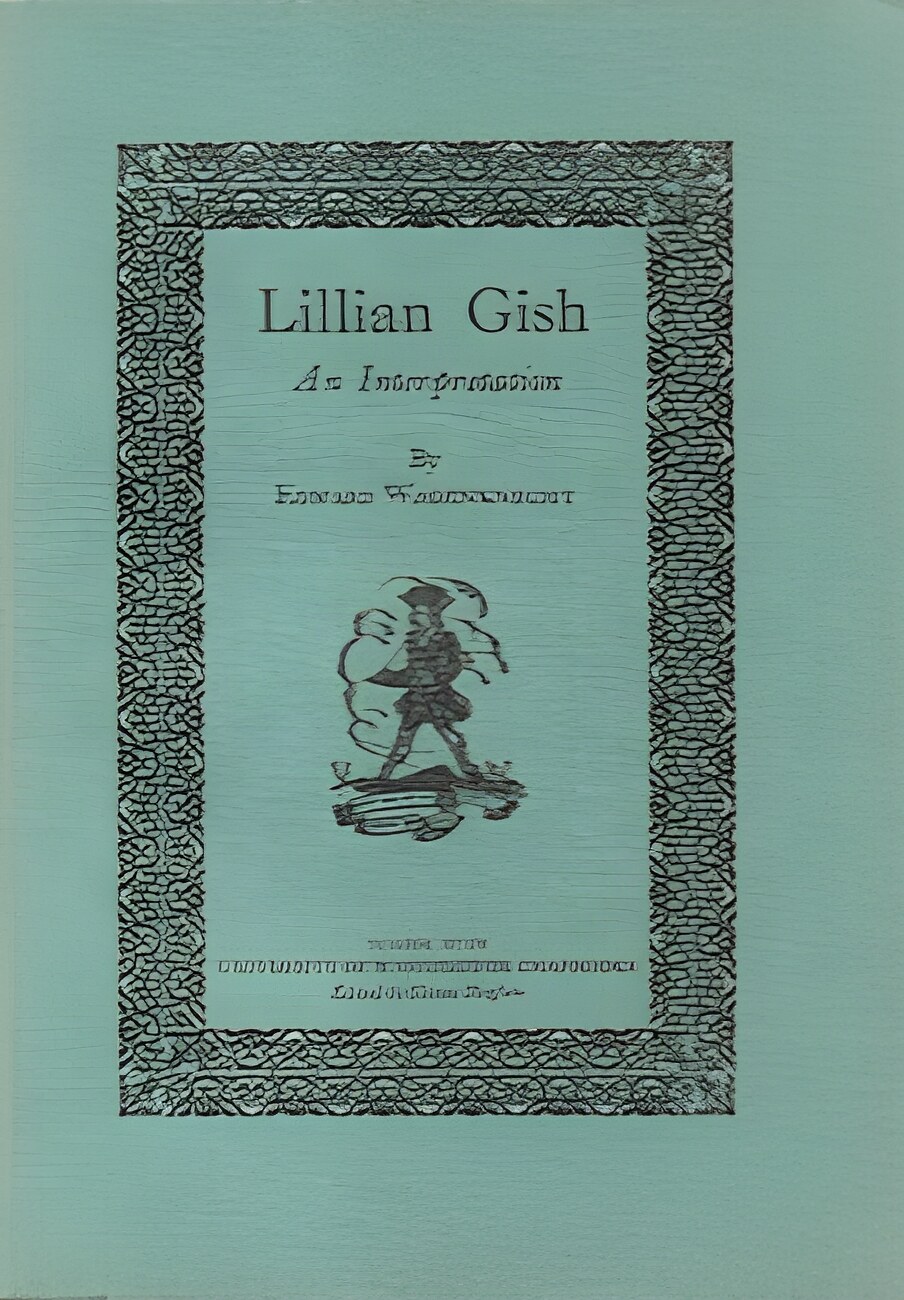
Softcover. Seattle, University of Washington Book Store, 1st, 1927, Book: Very Good, Dust Jacket: None, Softcover. Rare early 26 page analysis of the films of Ms. Gish. Frontispiece portrait of Lillian Gish. Light blue wrappers printed in black within decorative border with same vignette. The author, Edward Wagenknecht (1900-2004), was an American literary critic who also wrote on film. He received his PH.D. in 1932 from the University of Washington, where he taught from 1925 to 1943. This was his first published work. Clean copy.
Hardcover. Durham NC, Duke University Press, 1st, 2008, Book: Very Good, Dust Jacket: None, Hardcover, black cloth with magenta gilt lettering on spine, 269 pages, b&w illustrations. Masculine Singular is an original interpretation of French New Wave cinema by one of Frances leading feminist film scholars. While most criticism of the New Wave has concentrated on the filmmakers and their films, Genevive Sellier focuses on the social and cultural turbulence of the cinemas formative years, from 1957 to 1962. The New Wave filmmakers were members of a young generation emerging on the French cultural scene, eager to acquire sexual and economic freedom. Almost all of them were men, and they wrote in the masculine first-person singular, often using male protagonists as stand-ins for themselves. In their films, they explored relations between men and women, and they expressed ambivalence about the new liberated woman. Sellier argues that gender relations and the construction of sexual identities were the primary subject of New Wave cinema.Sellier draws on sociological surveys, box office data, and popular magazines of the period, as well as analyses of specific New Wave films. No dust jacket, Clean copy.
Hardcover. Swan Isle Press, 1st, 2008, Book: Very Good, Dust Jacket: Very Good, Hardcover, 180 pages. Spanish filmmaker Luis Bunuel (1900-83), known for his surrealist themes and unflinching social criticism, was an artist defined by intellectual ambition and controversy. An exile who produced some of his most famous work in Mexico and France during Franco's dictatorship, he left a complicated imprint on the creative landscape of the twentieth century and on generations of younger filmmakers--including his Mexican friend Claudio Isaac. Drawn from Isaac's personal papers, Midday with Bunuel: Memories and Sketches, 1973-1983 is an intimate and unconventional portrait of this cinematic icon--and memoir of Isaac's own artistic development.The text includes sketches, vignettes, and anecdotes from Isaac's notebooks, revealing his perspective first as a precocious boy and then as a young man. Isaac reflects on Bunuel's presence among a community of exiles, artists, actors, writers, and intellectuals in Mexico City. These are at once touching, perceptive, and critical glimpses into Bunuel's roles as husband and father, friend and colleague, surrealist, philosopher, and iconoclast during his last years. Throughout, Isaac's words reveal his deep admiration and affection for an older friend full of contradictions. Intimate photographs from the Isaac family archive complement the writing, and Bryan Thomas Scoular's careful translation makes this text available for the first time in English.
NY, Frederick Unger, 1st, 1981, Book: Very Good, Dust Jacket: Very Good, Hardcover in a bright, unclipped dust jacket. 383 pages, b&w illustrations. Clean copy.
Hardcover. NY, Thames & Hudson, 1st, 2013, Book: Very Good, Dust Jacket: Very Good, Hardcover in a bright, unclipped dust jacket. In the first fully illustrated work of his illustrious career, David Thomson re-examines a series of moments - which readers will experience in beautifully reproduced imagery - from seventy-two carefully selected films across a hundred-year time span. His moments range from a set of Eadward Muybridge's pioneering photographs to sequences in films from the classic - Citizen Kane , Sunset Boulevard and The Red Shoes - to the unexpected - The Piano Teacher , Burn After Reading - immersing the reader via a groundbreaking marriage of imagery and the author's accompanying narrative. David Thomson's evocative, unflinching prose and profound understanding of what makes film and art form identify him as one of the great film writers of our time, making it likely that Moments that Made the Movies will be widely viewed as an important classic on the subject of international cinema. Clean copy.
Hardcover. NY, Viking, 1st, 1991, Book: Very Good, Dust Jacket: Very Good, Hardcover, 304 pages. In essays that function at once as film criticism and autobiography, 23 writers recall the films that shaped them in this thoughtful and moving book that explores the mysterious interplay of art and life. Includes Russell Banks on Bambi, Joyce Carol Oates on Dracula, and Harold Bloom on The Fatal Glass of Beer.
Softcover. Baltimore, Johns Hopkins University Press, 1st, 2014, Book: Very Good, Dust Jacket: None, Softcover, 210 pages with index, b&w illustrations. Smoke. Shadows. Moody strains of jazz. Welcome to the world of "noir musical" films, where tormented antiheroes and hard-boiled musicians battle obsession and struggle with their music and ill-fated love triangles. Sultry divas dance and sing the blues in shrouded nightclubs. Romantic intrigue clashes with backstage careers. In her pioneering study, Music in the Shadows, film noir expert Sheri Chinen Biesen explores musical films that use film noir style and bluesy strains of jazz to inhabit a disturbing underworld and reveal the dark side of fame and the American Dream. Clean copy.
Softcover. London, Creation Books, 1st, 1997, Book: Very Good, Dust Jacket: None, Softcover, 250 pages. Celebrating the celluloid expression of the Beat spirit--arguably the most sustained legacy in U.S. counterculture--Naked Lens is a comprehensive study of the most significant interfaces between the Beat writers, Beat culture, and cinema. Naked Lens features key Beat players and their collaborators, including William Burroughs, Allen Ginsberg, Jack Kerouac, Charles Bukowski, Brion Gysin, Antony Balch, Ron Rice, John Cassavetes, Andy Warhol, Bob Dylan, Klaus Maeck, and Gus van Sant. As well as examining clearly Beat-inspired films such as Pull My Daisy, Chappaqua, and The Flower Thief, Jack Sargeant discusses cinema verite and performance films (Shadows and Wholly Communion), B-movies (The Subterraneans and Roger Corman's Bucket of Blood), and Hollywood adaptations (Heart Beat and Barfly). The second half of the book is devoted to an extensive analysis of the films relating to William Burroughs, from Antony Balch's Towers Open Fire to David Cronenberg's Naked Lunch. This book also contains the last ever interview with writer Allen Ginsberg, recorded three months before his death in April 1997.
Hardcover. Boston, Twayne Publishers, 1st, 1977, Book: Very Good, Dust Jacket: None, Hardcover, light tan cloth with black and gilt lettering on the spine, 230 pages with index. B&w illustrations. Career study of the director of IN A LONELY PLACE, REBEL WITHOUT A CAUSE, BIGGER THAN LIFE, JOHNNY GUITAR and other such fare. Includes: chronology, selected bibliography; filmography. Clean copy.
Hardcover. NY, Miramax/Hyperion, 1st, 1997, Book: Very Good, Dust Jacket: Very Good, Hardcover, 191 pages, in a bright, unclipped dust jacket.Profusely illustrated with black and white film stills. With a knowledgeable text by the director and film historian. Clean.
Hardcover. Chicago, Chicago Review Press, 1st, 2007, Book: Very Good, Dust Jacket: Very Good, Hardcover in a bright, unclipped dust jacket. 378 pages, b&w illustrations. Lanza looks at the life and work of director Ken Russell, detailing the wild ideas, surreal moments, personal faith, and the cavalcade of colorful personalities surrounding this eccentric filmaker, on and off the set. Clean copy.
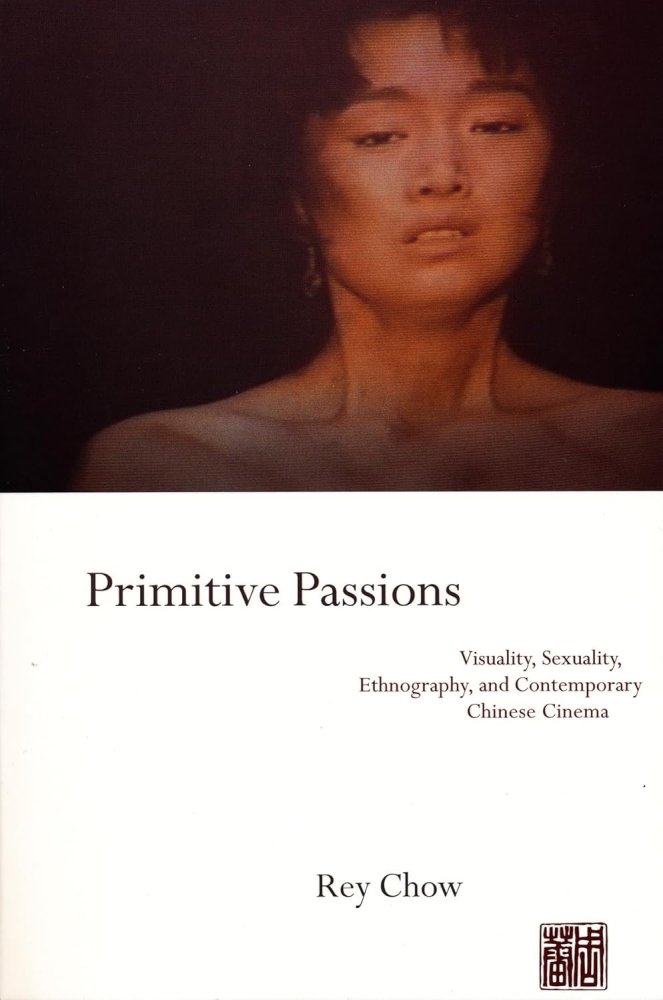
Softcover. NY, Columbia University Press, 1st, 1995, Book: Very Good, Dust Jacket: None, Softcover, 252 pages. Chow situates contemporary Chinese film within the broad context of Chinese history and culture, giving readers a glimpse of the unique shared identity that characterizes the current crop of outstanding filmmakers, such as Chen Kaige and Zhang Yimou.

 "Graham Greene on Film: Collected Film Criticism 1935 1939 by: Greene, Graham Edited by John Russell Taylor")
 "Green Eyes: Reflections on Filmby: Duras, Marguerite")

 "Herzog by Ebertby: Roger Ebert / Werner Herzog")
 "Hitchcock Styleby: Jean-Pierre Dufreigne")


 "Jacques Tourneur: The Cinema of Nightfallby:")
 "John Sayles, Filmmaker: A Critical Study of the Independent Writer-Director: With a Filmography and a Bibliographyby: Ryan, Jack")
 "Karel Teige/1900-1951: L'Enfant Terrible of the Czech Modernist Avant-Gardeby: Dluhosch (Ed.), Eric and Rostislav Svacha")

 "LIFE 50 Years of James Bondby: The Editors of LIFE Books")

 "Memoire Du Cinema: Les Films Noirs by: Patrick Brion")
 "Midday with Bunuel: Memories and Sketches, 1973-1983by: Claudio Isaac , Bryan T. Scoular, et al.")
 "Modern European Filmmakers and the Art of Adaptationby: Andrew S. Horton & Joan Magretta")
 "Moments That Made the Moviesby: David Thomson")
 "Movie That Changed My Life, Theby: Rosenberg (Ed.), David")

 "Naked Lens: Beat Cinemaby: Sargeant, Jack")

 "Personal Journey With Martin Scorsese Through American Movies, Aby: Scorsese, Martin And Wilson, Michael Henry")
 "Phallic Frenzy: Ken Russell and His Filmsby: Joseph Lanza")