Softcover. NY, Museum of Modern Art, 1st, 1983, Book: Very Good, Dust Jacket: None, 222 pages. Softcover. B/w illustrations throughout. Wrapper and pages have some tanning due to age, otherwise clean. Front cover has a crease. In very good condition, no rips or tears. Binding tight.
Hardcover. Cambridge MA, MIT Press, 2nd Pr., 1994, Book: Very Good, Dust Jacket: Very Good, Hardcover, 251 pages, with her photo-illustrated dust jacket. Who speaks? Who is silent? Who is seen? Who is absent? These questions focus on how cultures are constructed through pictures and words, how we are seduced into a world of appearances: into a pose of who we are and aren't. On both an emotional and an economic level, images and texts have the power to make us rich or poor. In these essays and reviews, written over the last decade, Barbara Kruger addresses that power with intelligence and wit, in the hope of engaging both our criticality and our dreams of affirmation. Barbara Kruger is an artist whose pictures and words engage issues of power, sex, money, difference, and death. Her work has appeared throughout America, Europe, and Japan in galleries, newspapers, magazines, and museums and on billboards, matchbooks, TV programs, t-shirts, postcards, and shopping bags. She has written about television, film, and cultures for Artforum, Esquire, the New York Times, and the Village Voice.
Hardcover. London, Ashgate, reprint, 2010, Book: Very Good, Dust Jacket: Very Good, 248 pages. Hardcover with dust jacket. Clean, unmarked copy with only minor wear to dust jacket. Silver gilt on spine. 'Like "the ring" itself, this book is viral: it gathers into itself literature and film, disease and survival, cultural studies and aesthetics, Japan and America, technology and the family. We won't read Suzuki's novels or watch the films in the same way again. A thoroughly readable and teachable text!' Steven Bruhm, Robert and Ruth Lumsden Professor of English, The University of Western Ontario, and author of Reflecting Narcissus: A Queer Aesthetic 'Taking as its point of departure the phenomenon of The Ring in all its manifestations"the Japanese novel, the Japanese film, the American film, and the various sequels"The Scary Screen offers an in-depth and sustained speculation about the anxiety created by the development of communication technologies. The collection introduces startling insights into the relationship between changes in media forms and widespread fears of contagion, while also identifying a new universal form of horror that has emerged in recent decades as the status of reproduction"both technological and biological"has undergone a profound transformation. The essays included here represent a powerful theoretical response to this transformation.' Todd McGowan, University of Vermont, and author of The Impossible David Lynch and The Real Gaze '... The Scary Screen is a useful contribution to studies of The Ring, horror film, and cultural anxieties evoked by technology.' Journal of the Fantastic in the Arts.
Hardcover. NY, William Morrow & Co. , 1st, 1989, Book: Very Good, Dust Jacket: Very Good, Hardcover in a bright, unclipped dust jacket. The movie critic for "Time" magazine explores the works and legacies of thirteen filmmaking giants, discussing how they shaped the industry and offering a revised perspective on The Hollywood Ten. Indexed. Essays on Marlon Brando, James Cagney,Harold Lloyd, Stanley Kubrick, John Ford, others. 312 pages, indexed. Clean copy.
Hardcover. NY, Harcourt Brace Jovanovich, 1st, 1979, Book: Very Good, Dust Jacket: Good, Hardcover, 295 pages, b&w photos. In a bright dust jacket that has 1/2" gone from bottom of spine. Otherwise very good.
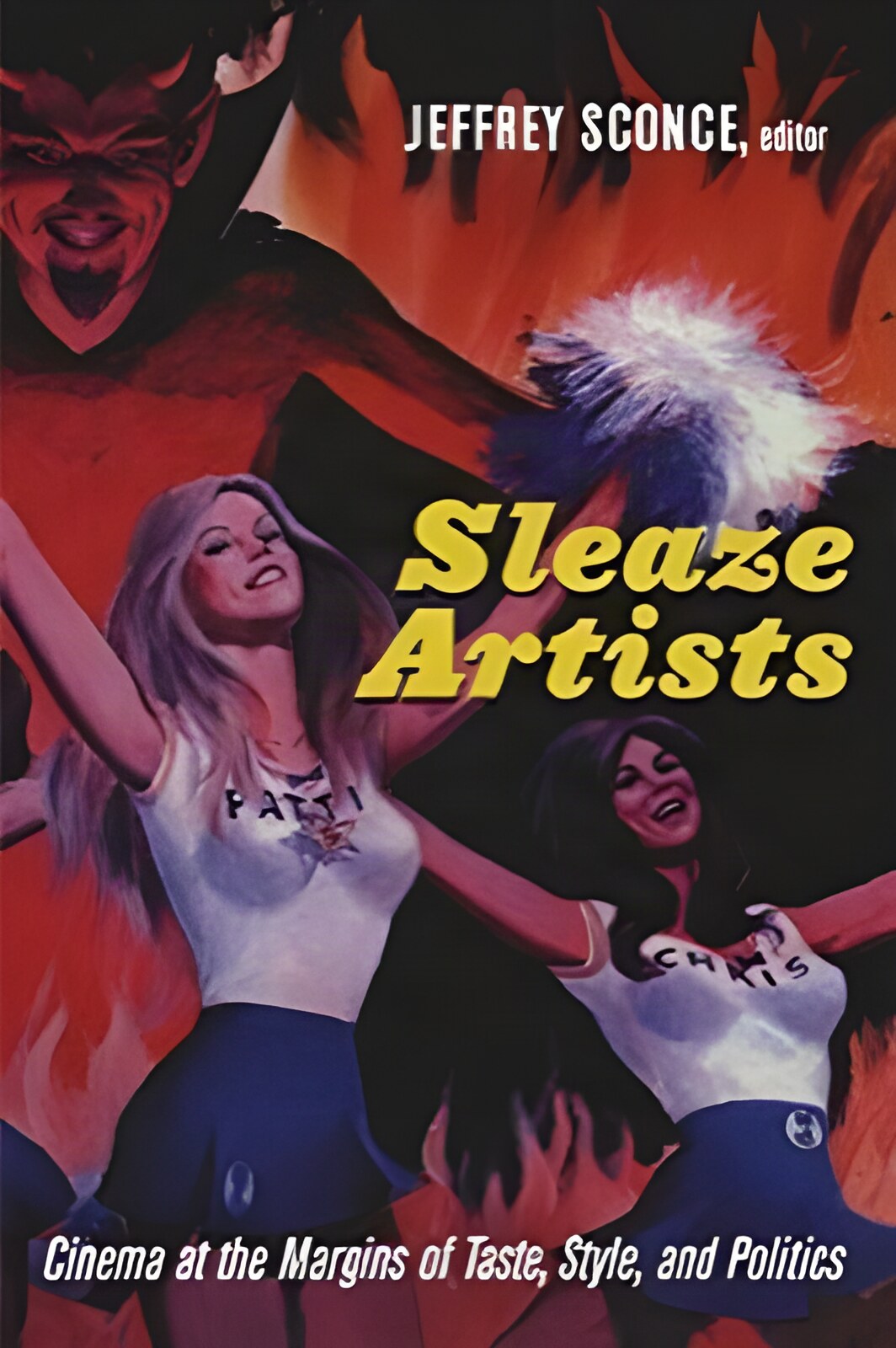
Softcover. Durham NC, Duke University Press, 1st, 2007, Book: Very Good, Dust Jacket: None, Softcover, 340 pages, b&w illustrations. Various critics continue the film lovers' ongoing conversation about the low, the bad, and the sleazy face of cinema, this book examines the ineffable quality of "sleaze" in relation to a range of issues, including the production realities of low-budget exploitation pictures and the ever-shifting terrain of reception and taste.
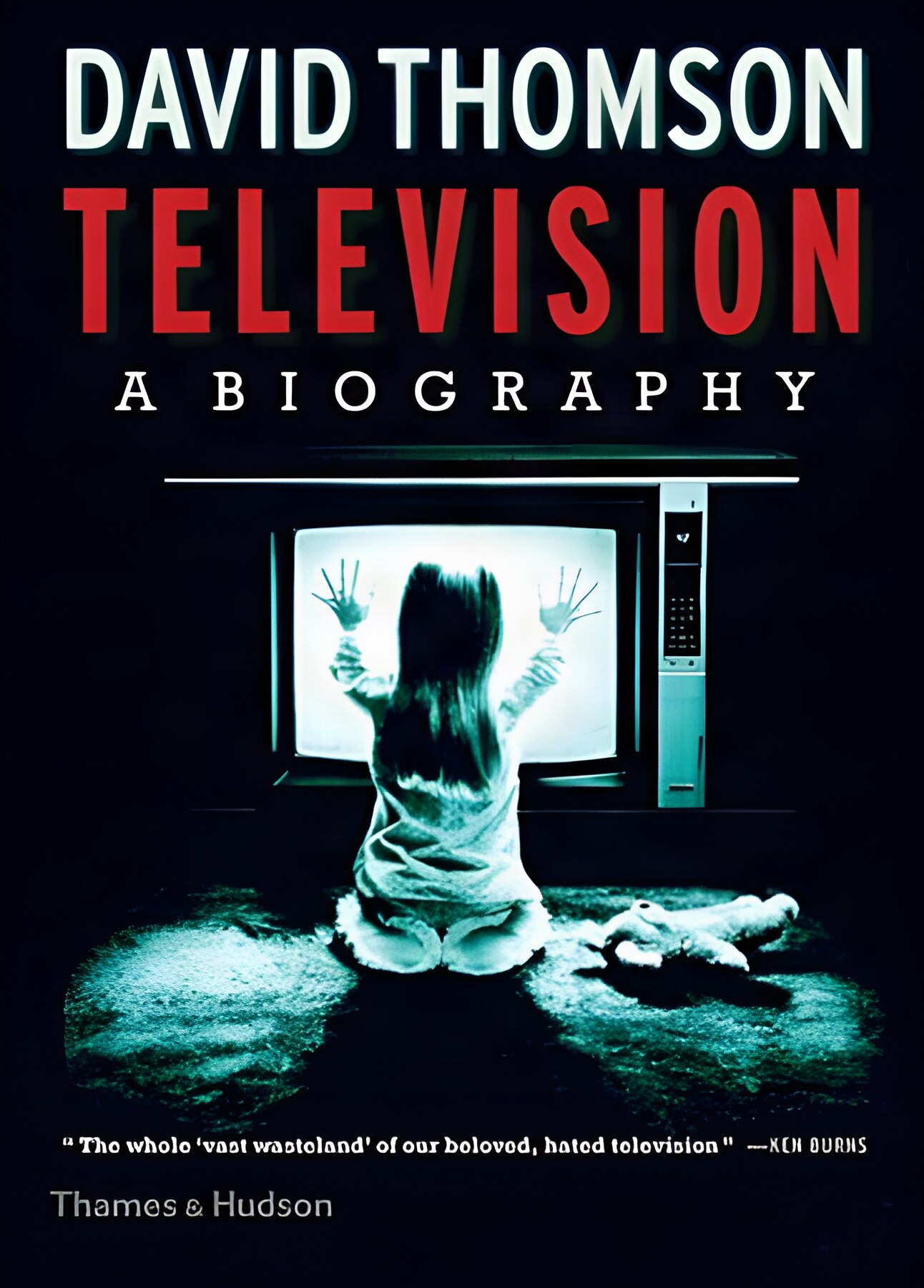
Hardcover. London, Thames & Hudson, 1st, 2016, Book: Very Good, Dust Jacket: Very Good, Hardcover in a bright dust jacket, 304 pages illustrated in b&w and some color. In just a few years, what used to be an immobile piece of living room furniture, which one had to sit in front of at appointed times in order to watch sponsored programming on a finite number of channels, morphed into a glowing cloud of screens with access to a near-endless supply of content available when and how viewers want it. With this phenomenon now a common cultural theme, a writer of David Thomson's stature delivering a critical history, or "biography" of the six-decade television era, will be a significant event which could not be more timely. With Television, the critic and film historian who wrote what Sight and Sound's readers called "the most important film book of the last 50 years" has finally turned his unique powers of observation to the medium that has swallowed film whole. Over twenty-two thematically organized chapters, Thomson brings his provocatively insightful and unique voice to the life of what was television. David Thomson surveying a Boschian landscape, illuminated by that singular glow-always "on"-and peopled by everyone from Donna Reed to Dennis Potter, will be the first complete history of the defining medium of our time. Clean copy.
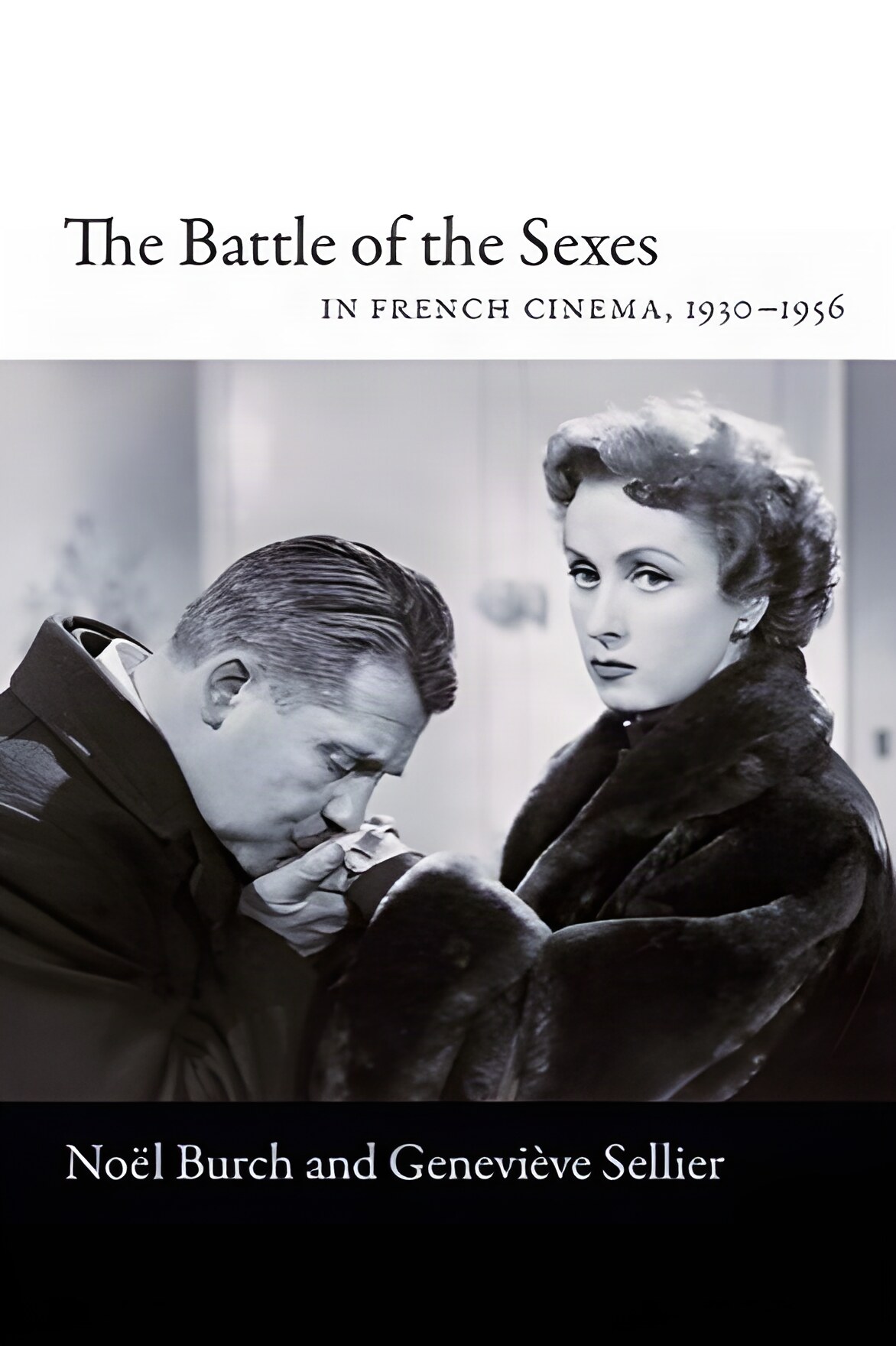
Softcover. Durham NC, Duke University Press, 1st, 2013, Book: Very Good, Dust Jacket: None, Softcover, 384 pages. Noel Burch and Genevieve Sellier adopt a sociocultural approach to films made in France before, during, and after World War II, paying particular attention to the Occupation years (1940-44). The authors contend that the films produced from the 1930s until 1956--when the state began to subsidize the movie industry, facilitating the emergence of an "auteur cinema"--are important, both as historical texts and as sources of entertainment. Citing more than 300 films and providing many in-depth interpretations, Burch and Sellier argue that films made in France between 1930 and 1956 created a national imaginary that equated masculinity with French identity. They track the changing representations of masculinity, explaining how the strong patriarch who saved fallen or troubled women from themselves in prewar films gave way to the impotent, unworthy, or incapable father figure of the Occupation. After the Liberation, the patriarch reemerged as protector and provider alongside assertive women who figured as threats not only to themselves but to society as a whole. Still in publisher's shrinkwrap.
Hardcover. Chicago, University of Chicago Press, 1st, 2000, Book: Very Good, Dust Jacket: Very Good, Hardcover in a bright, unclipped dust jacket. In this daring reexamination of the connections between national politics and Hollywood movies, Lary May offers a fresh interpretation of American culture from the New Deal through the Cold War and one in which a populist, egalitarian ethos found itself eventually supplanted by a far different view of the nation. Clean copy.
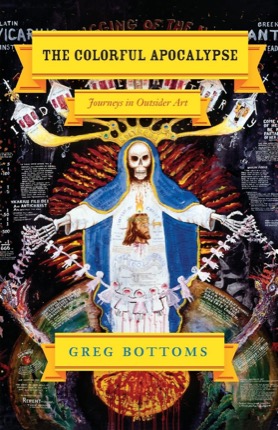
Hardcover. Chicago, University Of Chicago Press, 1st, 2007, Book: Very Good, Dust Jacket: Very Good, Hardcover in a bright dust jacket, 182 pages. The Reverend Howard Finster was twenty feet tall, suspended in darkness. Or so he appeared in the documentary film that introduced a teenaged Greg Bottoms to the renowned outsider artist whose death would help inspire him, fourteen years later, to travel the country. Beginning in Georgia with a trip to Finster's famous Paradise Gardens, his journey--of which The Colorful Apocalypse is a masterly chronicle--is an unparalleled look into the lives and visionary works of some of Finster's contemporaries: the self-taught evangelical artists whose beliefs and oeuvres occupy the gray area between madness and Christian ecstasy. With his prodigious gift for conversation and quietly observant storytelling, Bottoms draws us into the worlds of such figures as William Thomas Thompson, a handicapped ex-millionaire who painted a 300-foot version of the book of Revelation; Norbert Kox, an ex-member of the Outlaws biker gang who now lives as a recluse in rural Wisconsin and paints apocalyptic visual parables; and Myrtice West, who began painting to express the revelatory visions she had after her daughter was brutally murdered. These artists' works are as wildly varied as their life stories, but without sensationalizing or patronizing them, Bottoms--one of today's finest young writers--gets at the heart of what they have in common: the struggle to make sense, through art, of their difficult personal histories. Clean copy.
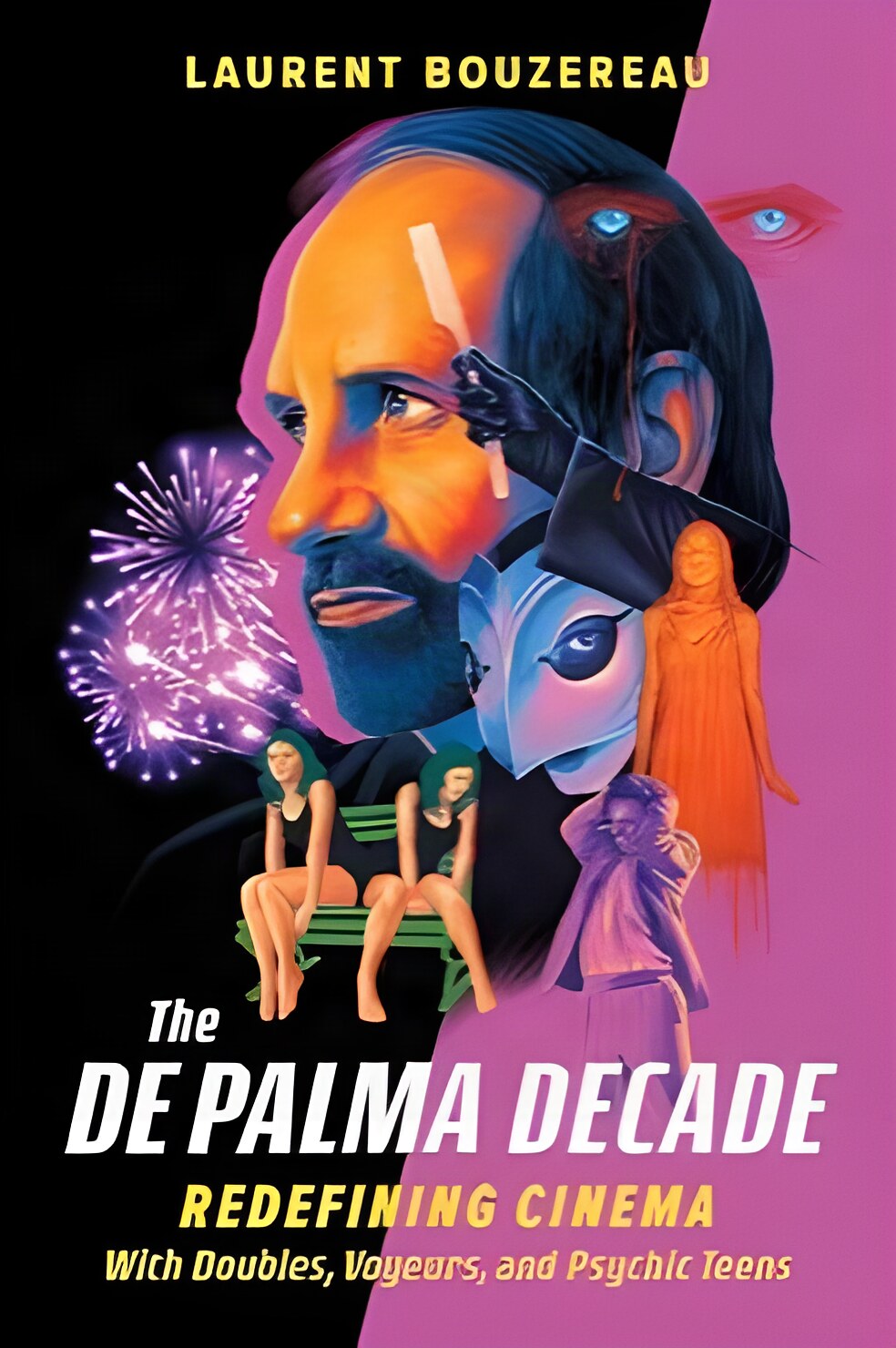
Hardcover. NY, Running Press, 1st, 2024, Book: Very Good, Dust Jacket: Very Good, Hardcover in a bright, unclipped dust jacket. 314 pages, b&w illustrations. Acclaimed filmmaker Laurent Bouzereau explores the seven films that came to define the De Palma decade-Sisters, Phantom of the Paradise, Obsession, Carrie, The Fury, Dressed to Kill, and Blow Out. Combining film analysis, detailed production histories, and new interviews with De Palma himself, his casts, and collaborators, Bouzereau presents the definitive record on this unrivaled period of cinematic creativity and the emergence of an auteur who would continue to influence filmmaking in the decades that followed. Clean copy.
Hardcover. NY, Dial Press, 1st, 1976, Book: Very Good, Dust Jacket: Very Good, Hardcover in a bright, unclipped dust jacket. A view of American film-making from the author's viewpoint.
Softcover. UK/Burlington VT, Ashgate Publishing, reprint, 2012, Book: Very Good, Dust Jacket: None, Softcover, 187 pages. First published in hardcover in 2008, this is the expanded Second Edition. It must be noted, no illustrations. Clean, bright copy.
Hardcover. NY, W W Norton & Co., 1st, 1993, Book: Very Good, Dust Jacket: Very Good, Hardcover in a bright dust jacket, 281 pages, minor dust jacket edge wear and foxing on edges, otherwise, very clean and tight copy. A brilliant, daring, and utterly original book that analyzes (even as it exemplifies) the effect that the image saturation of a hundred years of moving pictures have had on human culture and consciousness.
Hardcover. NY, Phaidon Press, 1st, 2014, Book: Very Good, Dust Jacket: Very Good, Hardcover in a bright, unclipped dust jacket. 192 pages, B&w and color illustrations. The Anatomy of an Actor series takes ten roles by a single actor, each studied in a dedicated chapter, and identifies the key elements that made the performances exceptional - carefully examining the actor's craft for both a professional audience and movie fans alike. This title looks at Hollywood icon Tom Cruise. First cast by Francis Ford Coppola in The Outsiders (1983), he gained international notoriety in the mid-1980s thanks to Tony Scott's Top Gun (1986). One of the most sought-after actors, Cruise has oriented his career to blockbusters, with a predilection for action and science fiction, starring in such movies as Michael Mann's Collateral (2004), Steven Spielberg's War of the Worlds (2005), the Mission: Impossible series (1996, 2000, 2006, 2011) and Joseph Kosinski's Oblivion (2013). Still in publisher'sshrinkwrap.

 "Rediscovering French Filmby: Bandy, Mary Lea (Editor), Raud, Richard (Introduction)")


 "Remote Control: Power Cultures and the World of Appearancesby: Kruger, Barbara")
 "Scary Screen, The: Media Anxiety in The Ringby: Lacefield (Ed.), Kristin")

 "Screen of Time, A: A Study of Luchino Viscontiby: Stirling, Monica")
 "The Big Tomorrow: Hollywood and the Politics of the American Way by: Lary May")
 "The Cinema of Stanley Kubrickby: Norman Kagan")
 "The Devil Finds Workby: Baldwin, James")
 "Tom Cruise: Anatomy of an Actor by: Amy Nicholson")