Hardcover. Carbondale IL, Southern Illinois University Press, 1st, 1995, Book: Very Good, Dust Jacket: Very Good, Hardcover in a bright dust jacket, 267 pages. In this original contribution to Elizabeth Bishop studies, Marilyn May Lombardi uses previously unpublished materials (letters, diaries, notebooks, and unfinished poems) to shed new light on the poet's published work. She explores the ways Bishop's lesbianism, alcoholism, allergic illnesses, and fear of mental instability affected her poetry--the ways she translated her bodily experiences into poetic form. Clean copy.
Softcover. Chapel Hill, University of North Carolina , 1st, 1984, Book: Good, Dust Jacket: None, Softcover, cream paper covers with red and black titling, 137 pages. There is underlining and notations to text in red ink to about half the pages.
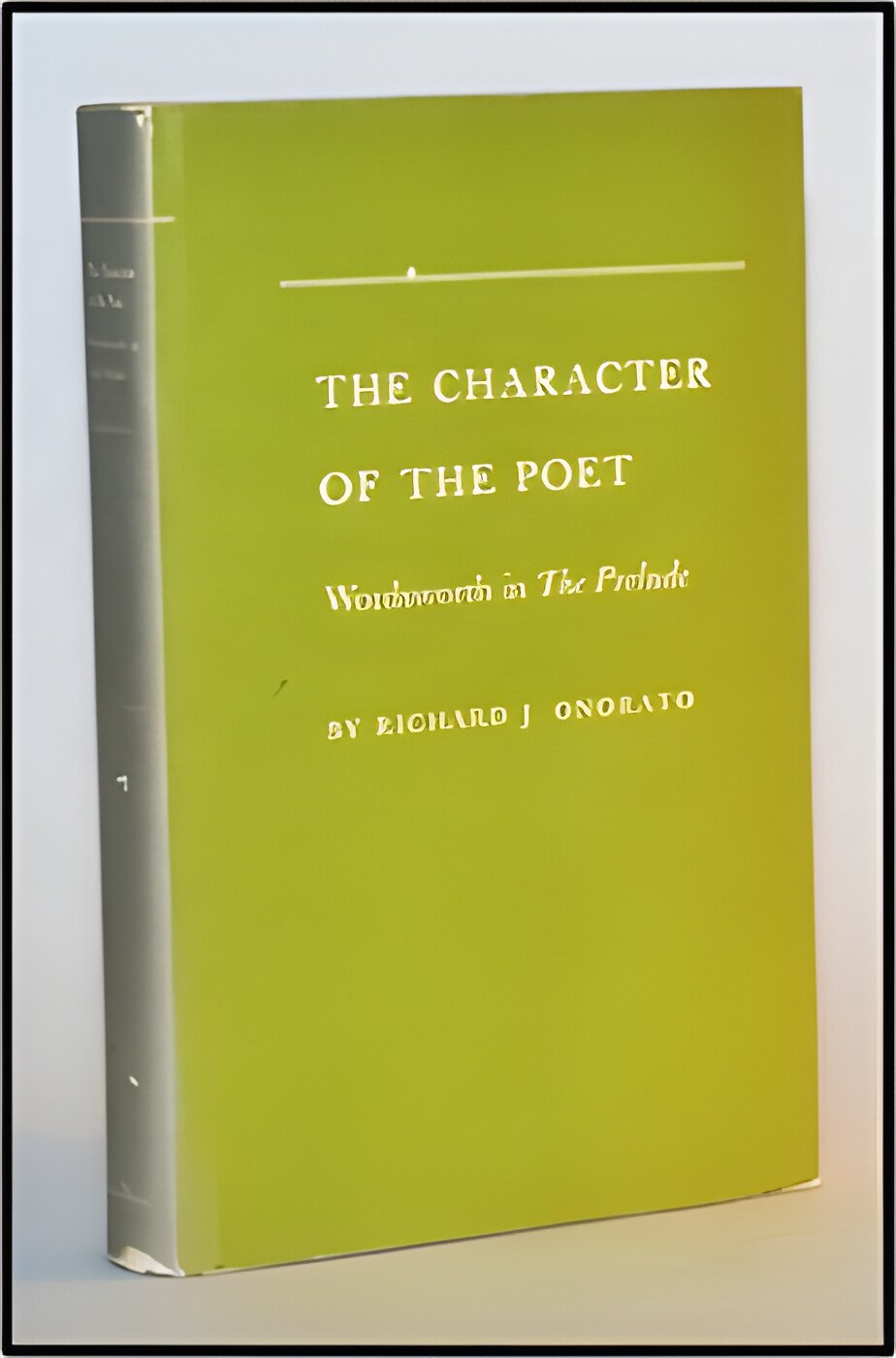
Hardcover. Princeton NJ, Princeton University Press, 1st, 1971, Book: Very Good, Dust Jacket: Very Good, Hardcover in a lightly worn dust jacket, 435 pages. By a judicious use of psychoanalytic concepts, Richard Onorato interprets the Wordsworth revealed in the poem The Prelude and relates the problems of poetic autobiography to those of personality. Spine of dj darkened. Clean copy.
Hardcover. London, Oxford University Press, 1st, 1927, Book: Very Good, Dust Jacket: None, Hardcover, green cloth with gilt lettering on spine, 274 pages. Nine lectures. Contents: Introductory; What is Meant by Tradition; The Molpe; Drama; Metre; Poetic Diction; Unity and Organic Construction; The Heroic Age; Hamlet and Orestes; Poetry; Index. Clean copy. Top of cloth spine frayed. Remnants of dust jacket laid in.
Hardcover. NY, Columbia University Press, 1st, 1993, Book: Very Good, Dust Jacket: Very Good, Hardcover in a bright dust jacket, 894 pages. Edited by Jay Parini and with poetry and poetry criticism by Anne Bradstreet and Edward Taylor by Francis Murphy, Early African American Poetry, by Carolivia Herron, The Epic in the Nineteenth Century, by John McWilliams, Longfellow in the Aftermath of Modernism, by Dana Gioia, The Transcendentalist Poets by Lawrence Buell, Emily Dickinson, Cynthia Griffin Wolff, Walt Whitman, by Donald Pease and many others, such as Dana Gioia, Gregory Orr, Ann Charters, William Pritchard, Helen Vendler, Edward Hirsch, and the work of Ezra Pound, William Carlos Williams, the Beat poets and Native American poets and others. SIGNED BY PARINI on the title page. Bright, clean copy.
Hardcover. NY, Harper & Brothers, 1st, 1835, Book: Very Good, Dust Jacket: None, Hardcovers, two volume set. Maroon cloth covers faded, gilt titles on spine bright. Vol. I - engraved frontis portrait with tissue guard, illustrated title page, 563 pages, Vol. II- 587 pages. Text mostly double column. Previous owner's inscription in Vol I otherwise clean. Tanning to prelim pages but text fairly free of foxing. The covers along the spine edge have loss of cloth, but binding is firm and tight. More was an English religious writer and philanthropist, remembered as a poet and playwright in the circle of Johnson, Reynolds and Garrick, as a writer on moral and religious subjects, and as a practical philanthropist.. She became involved with the London literary elite and a leading Bluestocking member. Her later plays and poetry became more evangelical; she joined a group campaigning against the slave trade. In the 1790s she wrote several Cheap Repository Tracts on moral, religious, and political topics for distribution to the literate poor (as a riposte to Thomas Paine's Rights of Man).. More has received both praise and criticism for her political conservatism and been variously described as an anti-feminist, a 'counter-revolutionary' feminist, or a conservative feminist.
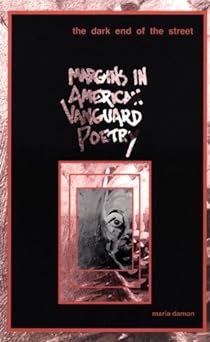
Softcover. Minneapolis, University of Minnesota Press , 1st, 1993, Book: Very Good, Dust Jacket: None, Softcover, 305 pages. "In The Dark End of the Street, Maria Damon brings a new sensitivity to modern poetic criticism. She adds an important dimension to cultural theory, revealing the struggles of one group of artists as they address improtant questions about art, social life, and the oppression they encounter. Taking as her premise that the intensity of poetic language is an appropriate venue for representing the 'dark end of the street' of social pain, Damon foregrounds the work and lives of a number of modern American poets in order to argue that the American avant-garde is located in the experimental literary works of social 'outsiders."
Hardcover. UK, Cambridge University Press, 1st, 1993, Book: Very Good, Dust Jacket: Very Good, Hardcover in a bright jacket, b&w illustrations, 167 pages. Donald Davie is the foremost literary critics of his generation and one of its leading poets. His career has been marked by a series of challenging critical interventions. The eighteenth century is the great age of the English hymn though these powerful and popular texts have been marginalized in the formation of the conventional literary canon. These are poems which have been put to the text of experience by a wider public than that generally envisaged by literary criticism, and have been kept alive by congregations in every generation. Davie's study of the eighteenth-century hymn and metrical psalm brings to light a body of literature forgotten as poetry: work by Charles Wesley and Christopher Smart, Isaac Watts and William Cowper, together with several poets unjustly neglected, such as the mysterious John Byron.
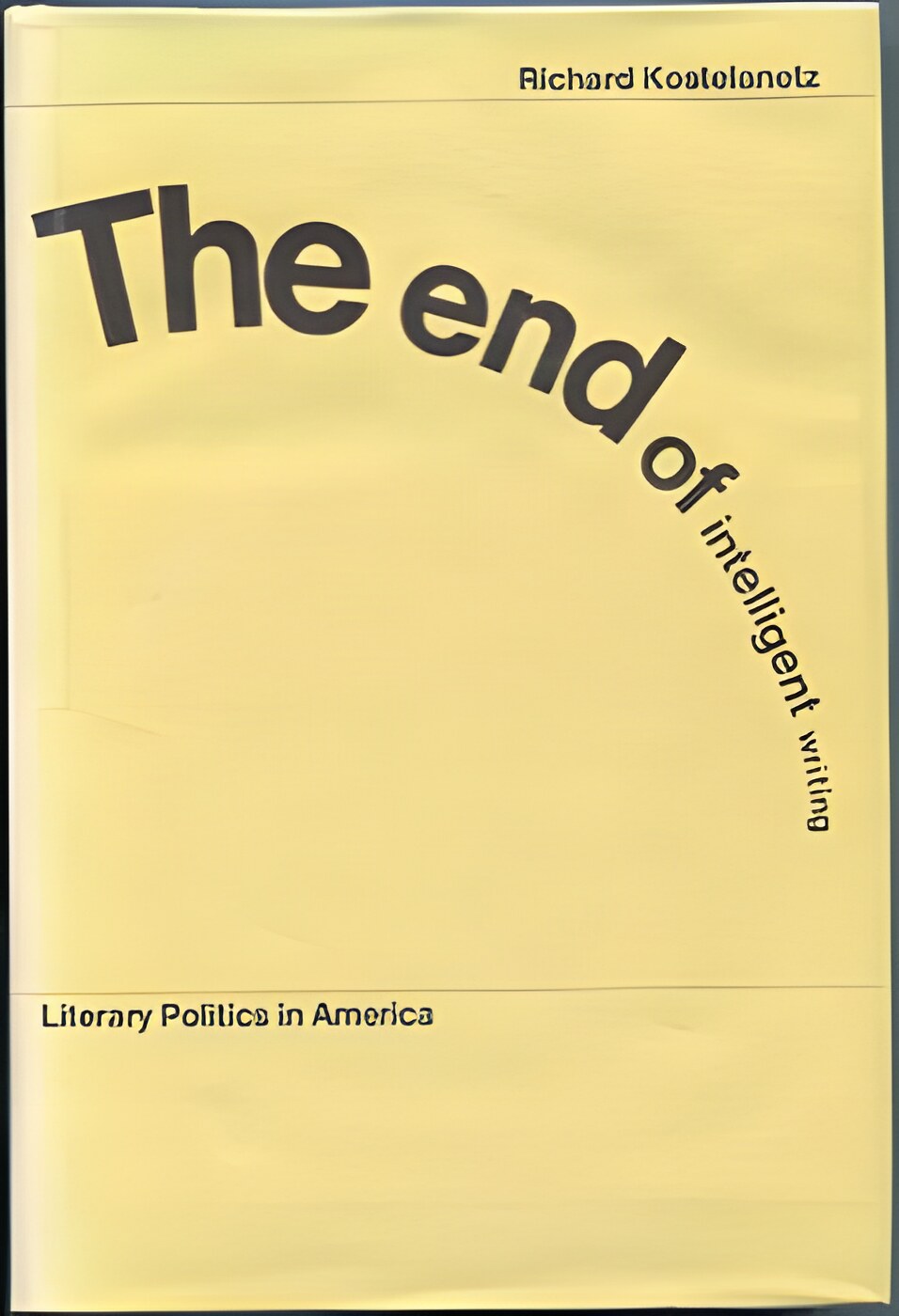
Hardcover. NY, Sheed and Ward, 1st, 1974, Book: Very Good, Dust Jacket: Very Good, Hardcover in a lightly worn dust jacket with faded spine, 480 pages. Richard Kostelanetz's monumental evisceration of the American book world circa 1974--the self-appointed backslapping elites, the perpetual disdain for the unconventional, the laziness in book reviewing and fear of losing one's status when criticising the wrong thing--remains, as a final sadness, itself a rare out of print tome. Kostelanetz has written perhaps the most fearless exploration of literary politics in print, taking on and naming the titans at the top of the heap, dissecting the power structures that emerged in the 1950s and 60s, and the emergence of the plutocratic hierarchies that continue to dominate publishing. Outing the various cliques as mobs, and using apt and amusing mafia parallels, Kostelanetz is unrelenting in his meticulousness, and counteracts the status quo with a passionate defence of the avant-garde, using the second half of the book to bring light to the various emerging authors of experimental poetry, fiction, and mixed media works around the time. At times a touch long-winded and overfed with quotes, this nevertheless is an essential read for those requiring a hard slap as to the inherent evil of the corporate book world and why indie is the only way forward. Clean copy.
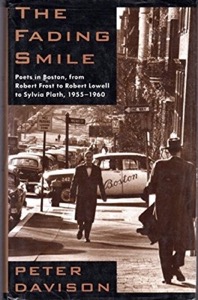
Hardcover. NY, Knopf, 1st, 1994, Book: Very Good, Dust Jacket: Very Good, Hardcover in a bright, unclipped dust jacket, 346 pages. An intimately perceptive account, by a poet who knew them all, of the brilliant circle of poets who lived and worked in Boston through the half-decade beginning in 1955. That was the year Peter Davison, coming to Boston as a book editor. was swept up in a world -- in a tumult -- of poetry. He rediscovered his father's old friend Robert Frost. He briefly squired Sylvia Plath. He came to know Robert Lowell (whose poems and private disasters dominated the period) and Adrienne Rich, Stanley Kunitz, Richard Wilbur. Anne Sexton, W. S. Merwin, and others who, closely bound together in friendship or rivalry or both, defined the shape of American poetry at mid-century Through their eves as well as his own, and often in their words, Davison presents a sharply fresh vision of the shift from confidence to a troubled questioning that overtook America -- a transformation that was, in a sense, foreshadowed in the sensibilities, in the writings, sometimes in the lives, of some of our finest poets. Clean copy.
Hardcover. NY, Columbia University Press, 1st, 1986, Book: Very Good, Dust Jacket: Very Good, Hardcover in a bright dust jacket, 248 pages. Clean copy.
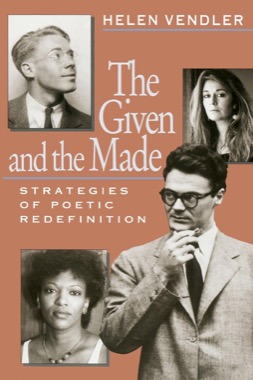
Softcover. Cambridge MA, Harvard University Press, 1st, 1995, Book: Very Good, Dust Jacket: None, Softcover, 139 pages. How does a poet repeatedly make art over a lifetime out of an arbitrary assignment of fate? By asking this question of the work of four American poets--two men of the postwar generation, two young women writing today--Helen Vendler suggests a fruitful way of looking at a poet's career and a new way of understanding poetic strategies as both mastery of forms and forms of mastery. Fate hands every poet certain unavoidable "givens." Of the poets Vendler studies, Robert Lowell sprang from a family famous in American and especially New England history; John Berryman found himself an alcoholic manic-depressive; Rita Dove was born black; Jorie Graham grew up trilingual, with three words for every object. In Vendler's readings, we see how these poets return again and again to the problems set out by their givens, and how each invents complex ways, both thematic and formal, of making poetry out of fate. Clean copy.
Hardcover. Charlestown MA, Printed and Sold By Samuel Etheridge, Revised Ed., 1810, Book: Very Good, Hardcovers, two volumes complete, 432 and 448 pages. bound in 3/4 calf, with red leather spine labels intact, bindings tight. New corrected edition. A collection of biographical studies on the life of important poets in the cannon of English literature, including: Cowley, Milton, Blackmore, Granville, Somerville, Thomson, Mallet, and Lyttelton. Written by Samuel Johnson, an English writer who made lasting contributions as a poet, playwright, essayist, moralist, critic, biographer, editor, and lexicographer. With the original advertisement to the first edition. originally published in 1779-81. Light edgewear to covers, mild water stain to first 4 pages of Vol. 2, otherwise clean, mild foxing, very good set overall.
Hardcover. NY, Pellegrini & Cudahy, 1st, 1952, Book: Very Good, Dust Jacket: Very Good, Hardcover in a mildly soiled dust jacket with tanning to spine,name on front fly leaf, otherwise clean.
Softcover. Seattle, Wave Books, 1st, 2023, Book: Very Good, Dust Jacket: None, Softcover, 219 pages. A collection of essay/talks that the poet Rachel Zucker, expanded from lectures presented for the Bagley Wright Lecture Series in 2016. Devastating in their revelations, yet hopeful in their endurance, these are lectures of protest and reckoning. Zucker declares 'I write against. My poetics is a poetics of opposition and provocation that I never outgrew. Against the status quo or the powers that be, writing out of and into wrongness.' Thus, Zucker deftly dismantles the outdated paradigms of motherhood, aesthetics, feminism, poetics, and politics. Bringing Bernadette Mayer, Marina Abramovic, Alice Notley, Adrienne Rich, Audre Lorde-among many others-into the conversation, Zucker questions the categories that have been imposed on poetry, as well as a poet's need to speak, and the resulting responsibilities. Clean copy.
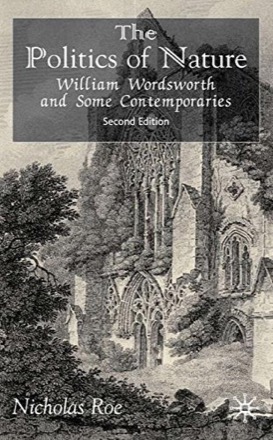
Softcover. NY/London, Palgrave , 2nd Ed., 2002, Book: Very Good, Dust Jacket: None, Softcover, 244 pages. Taking into account recent developments in historical and ecological criticism, and incorporating fresh research into poetry and politics in the 1790s, the second edition of The Politics of Nature enlarges and updates Nicholas Roe's acclaimed study of Romanticism. Hitherto marginal figures are restored to prominence, and there is new material on William Wordsworth's radical years.
Softcover. Berkeley CA, University of California Press, 1st, 1951, Book: Very Good, Dust Jacket: None, Softcover, 165 pages. Examining 20 poets and their poetry of the 1940s with relation to the prose of that period. Clean copy. University of California Publication Vol. 19 No. 3.
Softcover. Chicago, University of Chicago Press;, reprint, 2009, Book: Very Good, Dust Jacket: None, Softcover, pictorial wrappers, 123 pages. SIGNED BY AUTHOR on title page and INSCRIBED by him on front fly leaf. Poems inspire our trust, argues James Longenbach in this bracing work, because they don't necessarily ask to be trusted. Theirs is the language of self-questioning--metaphors that turn against themselves, syntax that moves one way because it threatens to move another. Poems resist themselves more strenuously than they are resisted by the cultures receiving them. But the resistance to poetry is quite specifically the wonder of poetry. Considering a wide array of poets, from Virgil and Milton to Dickinson and Gluck, Longenbach suggests that poems convey knowledge only inasmuch as they refuse to be vehicles for the efficient transmission of knowledge. In fact, this self-resistance is the source of the reader's pleasure: we read poetry not to escape difficulty but to embrace it. An astute writer and critic of poems, Longenbach makes his case through a sustained engagement with the language of poetry. Each chapter brings a fresh perspective to a crucial aspect of poetry (line, syntax, figurative language, voice, disjunction) and shows that the power of poetry depends less on meaning than on the way in which it means--on the temporal process we negotiate in the act of reading or writing a poem. Readers and writers who embrace that process, Longenbach asserts, inevitably recoil from the exaggeration of the cultural power of poetry in full awareness that to inflate a poem's claim on our attention is to weaken it.
Softcover. NY, Oxford University Press, repriny, 1989, Book: Very Good, Dust Jacket: None, Softcover, 290 pages. Henry Louis Gates, Jr.'s original, groundbreaking study explores the relationship between the African and African-American vernacular traditions and black literature, elaborating a new critical approach located within this tradition that allows the black voice to speak for itself. Examining the ancient poetry and myths found in African, Latin American, and Caribbean culture, and particularly the Yoruba trickster figure of Esu-Elegbara and the Signifying Monkey whose myths help articulate the black tradition's theory of its literature, Gates uncovers a unique system for interpretation and a powerful vernacular tradition that black slaves brought with them to the New World. His critical approach relies heavily on the Signifying Monkey--perhaps the most popular figure in African-American folklore--and signification and Signifyin(g). Exploring signification in black American life and literature by analyzing the transmission and revision of various signifying figures, Gates provides an extended analysis of what he calls the "Talking Book," a central trope in early slave narratives that virtually defines the tradition of black American letters. Gates uses this critical framework to examine several major works of African-American literature--including Zora Neale Hurston's Their Eyes Were Watching God, Ralph Ellison's Invisible Man, and Ishmael Reed's Mumbo Jumbo--revealing how these works signify on the black tradition and on each other. Clean copy.
Hardcover. Albuquerque NM, University of New Mexico Press, 1st, 1989, Book: Very Good, Dust Jacket: Very Good, Hardcover in a bright dust jacket, 217 pages. Includes essays on William Everson, Robert Duncan, Gary Snyder, Kenneth Rexroth, Michael McClure, Nathaniel Tarn, Thom Gunn and more. Notes, bibliography. Clean copy.
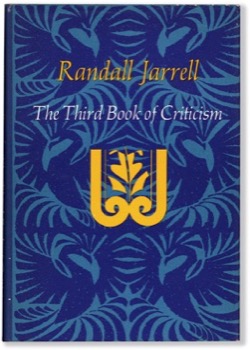
Hardcover. NY, Farrar, Straus, and Giroux, 1st, 1969, Book: Very Good, Dust Jacket: Very Good, Hardcover in a bright dust jacket with minor edgewear, unclipped, 334 pages. Poet/critic's posthumously published third volume of essays, here mostly writer's he loved, including: Stead, Frost, Stevens, Kipling, Auden, Graves and Chekov and other Russians. Name on blank prelim page, otherwise clean.
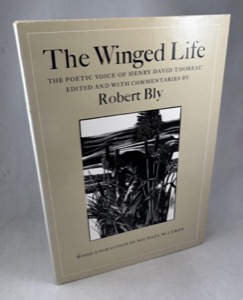
Hardcover. San Francisco, Sierra Club Books, 1st, 1986, Book: Very Good, Dust Jacket: Very Good, Hardcover in a lightly worn dust jacket. 51 pages, illustrated with wood engravings by Michael McCurdy. Bly's commentary sheds important new light on the intellectual and spiritual development of a major American literary figure. Mild fade to dj spine. Clean copy.
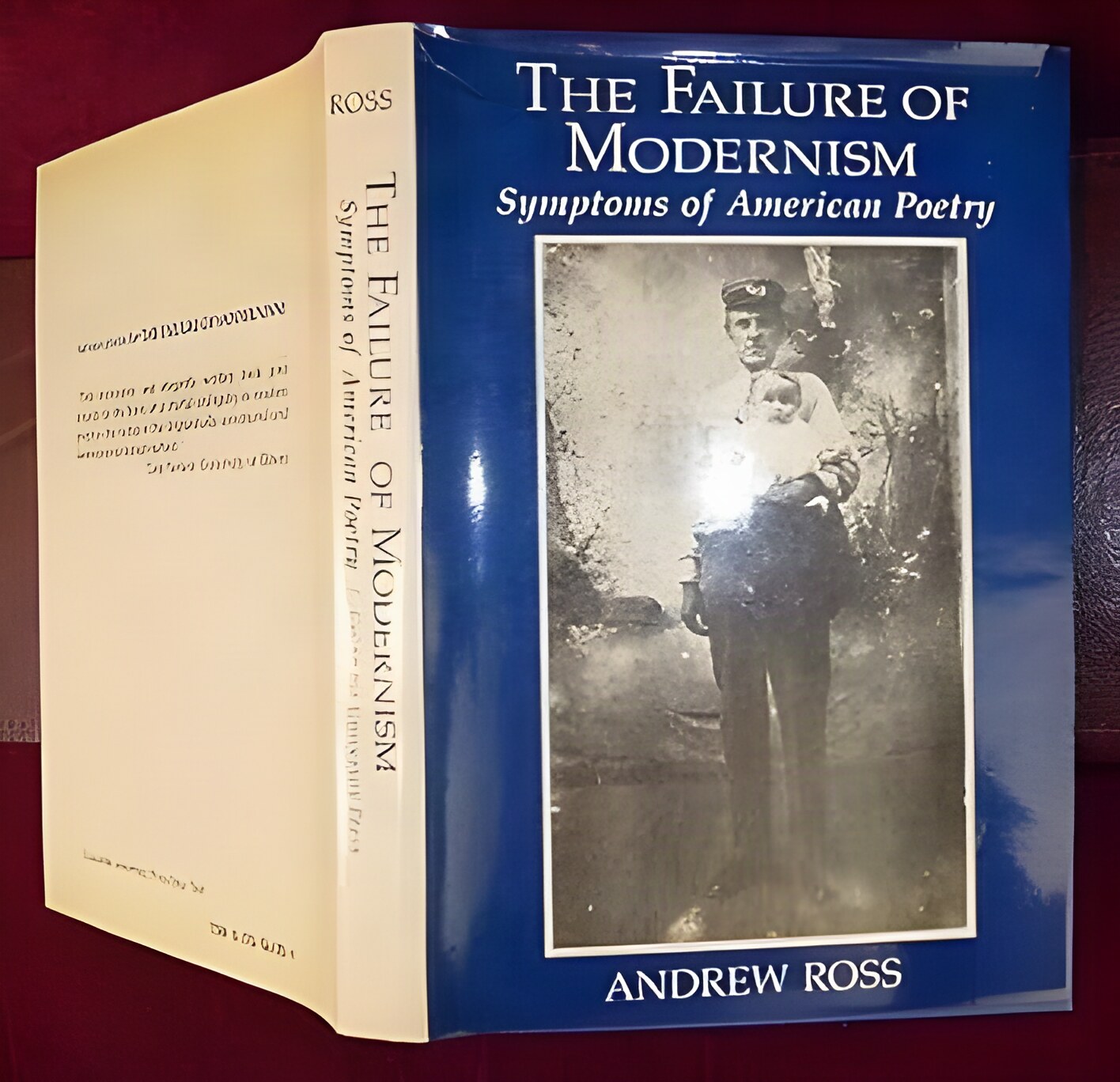
Hardcover. NY, W.W. Norton & Co., 1st, 2005, Book: Very Good, Dust Jacket: Very Good, Hardcover in a bright, unclipped dust jacket, 299 pages. The author investigate the trauma behind poets Robert Lowell, Elizabeth Bishop, Sylvia Plath, John Berryman, Randall Jarrell, and Delmore Schwartz. They formed one of the great constellations of talent in American literature. In the decades after World War II, they changed American poetry forever by putting themselves at risk in their poems in a new and provocative way. Their daring work helped to inspire the popular style of poetry now known as 'confessional.' But partly as a result of their openness, they have become better known for their tumultuous lives-afflicted by mental illness, alcoholism, and suicide-than for their work. This book reclaims their achievement by offering critical 'biographies of the poetry'-tracing the development of each poet's work, exploring their major themes and techniques, and examining how they transformed life into art. Clean copy.


 "The Broken Angel: Myth and Method in Val")

![The Columbia History of American Poetry (SIGNED COPY)by: Parini, Jay [Editor]](https://www.browsingisarousing.com/shop/images/399544.jpg "The Columbia History of American Poetry (SIGNED COPY)by: Parini, Jay [Editor]")
 "The Complete Works of Hannah More, Volumes I and II (Complete) by: More, Hannah")



 "The Lonely Tower: Studies in the Poetry of W. B. Yeatsby: Henn, T. R.")
 "The Poetics of Wrongnessby: Rachel Zucker")
 "The Primary Language of Poetry in the 1940'sby: Josephine Miles")
 "The Resistance to Poetry (SIGNED COPY)by: James Longenbach")
 "The Signifying Monkey: A Theory of African American Literary Criticism by: Gates Jr, Henry Louis")
 "The Sun Is But a Morning Star: Studies in West Coast Poetry and Poeticsby: Lee Bartlett")