Hardcover. London, Dewi Lewis Publishing, 1st, 2007, Book: Very Good, Dust Jacket: Very Good, Hardcover, 156 pages, 121 duotone photographs. Like new in publishers shrink-wrap. In this, his third book, John Comino-James shows us the world that is contained within just a few streets in the very ordinary neighbourhood of Cayo Hueso in Havana, Cuba. Through portraits and candid observation he builds an honest and intimate record of a small and tight-knit community. This is not the Havana of the tourist, but a city in which people go about their daily lives, dealing with the everyday realities that have resulted from decades of political isolation.
Hardcover. London, Dewi Lewis Publishing, 1st, 2007, Book: Near Fine, Dust Jacket: Near Fine, Hardcover, 156 pages, 121 duotone photographs. Like new in publishers shrink-wrap. In this, his third book, John Comino-James shows us the world that is contained within just a few streets in the very ordinary neighbourhood of Cayo Hueso in Havana, Cuba. Through portraits and candid observation he builds an honest and intimate record of a small and tight-knit community. This is not the Havana of the tourist, but a city in which people go about their daily lives, dealing with the everyday realities that have resulted from decades of political isolation.
Hardcover. New York, Knopf, 1st, 1986, Book: Very Good, Dust Jacket: Good, Hardcover, 380 pages, SIGNED BY AUTHOR on front fly leaf, translated by Andrew Hurley. Minor dust jacket edge wear and rub, small water stain on top and bottom spine edge, otherwise, internally very clean and tight copy.
Softcover. London, Thames & Hudson, 1st, 2017, Book: Very Good, Dust Jacket: None, Softcover, 224 pages in color. A trip around the globe with fashion photographer Alice Hawkins, capturing unique personalities in locales as far-flung as Texas, India, Nairobi, Cuba, and Jamaica. Displaying an uncommon flair for storytelling that imbues each image with a sense of wonder, Alice Hawkins's work explores the importance of individuality, role play, dressing up, fantasy, and playfulness. Her extended series of stylized "fashion portraits" from around the world question and ultimately celebrate beauty and the representation of the feminine outside of the mainstream. Her photographs for some of the world's leading fashion magazines document the men and women Hawkins has encountered on "road trips" in far-flung locations, focusing on people she sees on the street or locals whose particular style or appearance she has sought out in lieu of fashion models'. Mild bumps to corners, otherwise like new.
Hardcover. New York, D. Appleton & Co., 1st, 1872, Book: Good, Dust Jacket: None, 74 pages. Hardcover. Green Pebbled cloth. Gilt title and decoration on front cover. Black & white illustrations by Toby. Front endpaper has been removed. Previous owners name on inside front cover and preliminary page. Moderate fraying at bottom of spine, light rubbing to corners. All edges gilt. Clean, tight copy.
Softcover. NY, Aperture Foundation, 1998, Book: Very Good, Dust Jacket: None, Softcover, 80 pages. A large, beautifully designed photography publication with many full page photographs in black and white and color. Glossy wraps. The Mexican book series Rio de Luz was a courageous and energetic presentation of Latin American photography. To honor the accomplishments of the series and the artists, an issue of Aperture is devoted to the Rio de Luz collection. Separate chapters address the outstanding themes concerning the editors of the Rio de Luz series-revolution, the American way of life and Cuba, the 1950s, and "poetry of the onlooker." Artists include Lazaro Blanco, Raul Corrales, Hector Garcia, Graciela Iturbide, Nacho Lopez, Pedro Meyer, Miguel Rio Branco, and Mariana Yampolsky. Authors include Carlos Monsivais, Alvaro Mutis, Victor Flores Olea, Pablo Ortiz Monasterio, Roberto Tejada, Raquel Tibol, and Veronica Volkow.
Hardcover. Boston, Houghton Mifflin, 2nd pr., 1998, Book: Very Good, Dust Jacket: Very Good, Hardcover, 414 pages, b&w illustrations. Very good, clean, in a lightly worn, unclipped dust jacket. World famous at twenty-four, brilliant and reckless, hard-living and scandalous, Stephen Crane wrote The Red Badge of Courage before he ever experienced war first-hand. So true was his portrait of a young man who runs from his first confrontation with battle that Civil War veterans argued about whose regiment Crane had been in. Considered by H.G. Wells as "beyond dispute, the best writer of our generation," Crane was also famous in his time as an unforgettable personality, an Adonis with tawny hair and gray-blue eyes that Willa Cather described as "full of luster and changing lights." A lover of women and truth at any cost, Crane, in his short life, paid dearly for both. He alienated the New York police when he testified against a policeman on behalf of a prostitute falsely accused of soliciting, forcing him to live the rest of his short life as an expatriate in England. Reporting on the Spanish American War, Crane described the Rough Riders blundering into a trap after arriving in Cuba, infuriating Roosevelt. He died tragically young, leaving behind a handful of fine short stories, including The Open Boat and The Blue Hotel, along with war reporting, novels, and poetry.
Softcover. London, Hard Case Crime, 1st thus, 2007, Book: Very Good, Dust Jacket: None, Softcover, colorful wraps with a retro-style illustration by Glen Orbik. From the Academy Award-Nominated Screenwriter of BREAKFAST AT TIFFANY'S and THE MANCHURIAN CANDIDATE Comes a Breathtaking Story of Murder and Mischief...IT'S THE STORY of a big-game hunter, fisherman, fighter, visitor to Cuba, drunk, and Nobel Prize-winning author, recently deceased of a self-inflicted gunshot wound, whose final unpublished manuscript could fetch a mint... IT'S THE STORY of a short, balding man with a high-pitched voice and a vicious wit, whose cocktail parties are the talk of the town, especially when a beautiful woman dies at one of them. And it's the story of Dick Sherman, intrepid New York publisher, on the trail of the literary find of the century--and the killer who will stop at nothing to keep it from being found. Like new.
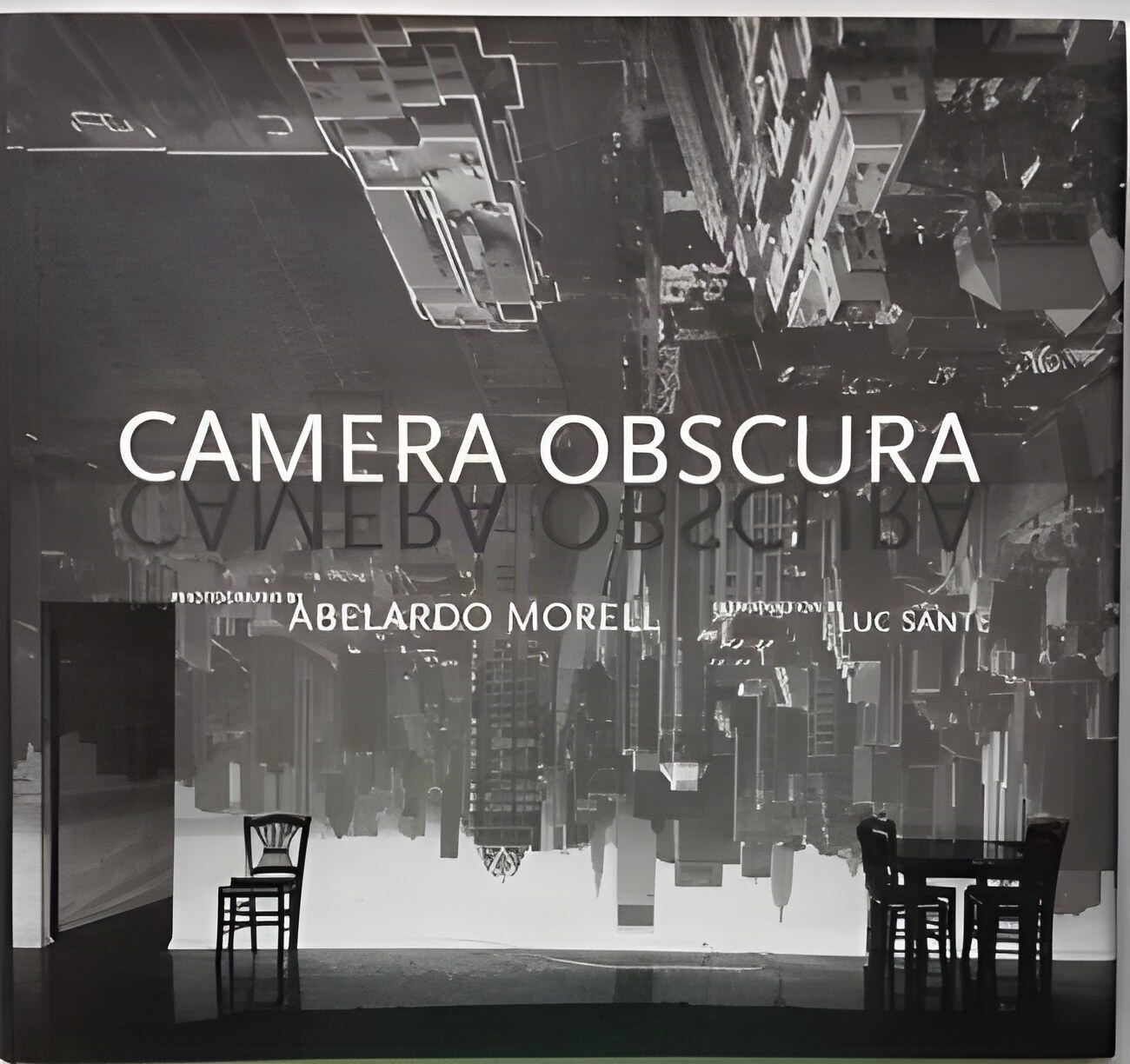
Hardcover. NY, Bulfinch Press, 1st, 2004, Book: Very Good, Dust Jacket: Very Good, Hardcover in a bright, unclipped dust jacket. 112 pages. Abelardo Morell makes magical camera obsucra images in darkened interiors. The deceptively simple process - he blacks out all the windows, leaving just a pinhole opening in one of them - produces photographs of astonishing, complex beauty. Because of the nature of refracted light, the world outside is projected upside down into the nearly blackened room, in essence converting the space into the interior of a camera. Morell then photographs the results with a large-format view camera, often requiring exposures of eight hours or more. Locations around the world were chosen for the interesting details and juxtapositions they would elicit - the Empire State Building lies across a bedspread in a midtown Manhattan interior; the Tower of London is imprinted on the walls of a room in the Tower Hotel; the countryside in rural Cuba, Morell's birthplace, plays across the walls of a crumbling chamber that is rich with the patina of its own history. Clean copy.
Softcover. Norman OK, University of Oklahoma Press, reprint, 1992, Book: Very Good, Dust Jacket: None, Softcover, 373 pages. Presents conflicting interpretations of caudillismo in twenty-seven essays written by an international group of historians, anthropologists, sociologists, political scientists, journalists, and caudillos themselves. The selections represent revisionists, apologists, enemies, and even a victim of caudillos. The personalities discussed include the Mexican priest Miguel Hidalgo, the Argentinian gaucho Facundo Quiroga, the Guatemalan Rafael Carrera, the Colombian Rafael Nunez, Mexico's Porfirio Diaz, the Somoza family of Nicaragua, the Dominican 'Benefactor' Rafael Trujillo, the Argentinians Juan Peron and his wife Evita, Paraguay's Alfredo Stroessner - called 'The Tyrannosaur,' Chile's Augusto Pinochet, and Cuba's Fidel Castro. Clean copy.
Hardcover. Cambridge MA, Wexner Center and MIT Press, 1sr, 2007, Book: Very Good, Dust Jacket: None, Hardcover, oblong pictorial boards, Any new film and any new book by French filmmaker Chris Marker is an event. Marker gave film lovers one of their most memorable experiences with La Jetee (1962)-a time-travel montage set after a nuclear war that inspired Terry Gilliam's Twelve Monkeys (1995). His still camerawork is not as well known, but Marker has been taking photographs as long as he has been making films. Staring Back presents 200 black-and-white photographs from Marker's personal archives, taken from 1952 to 2006. Some of the photographs are related to his classic films (which include Le Jetee, Sans Soleil, Cuba Si!, and The Case of the Grinning Cat), others are portraits of famous faces (Simone Signoret, Akira Kurosawa), but most are pictures of people Marker has encountered as he has traveled the world (an extra who appeared in Kurosawa's Ran, a woman seen on a street in Siberia). The central section of the book contains a series of photographs documenting political protests Marker has witnessed, including the march on the Pentagon in 1967, the events of May 1968 in Paris, and the tumultuous 2006 demonstrations protesting the French government's proposed employment policies. Still in publisher's shrinkwrap.
Hardcover. Cambridge MA, Harvard University Press , 1st, 2017, Book: Very Good, Dust Jacket: Very Good, Hardcover in a bright, unclipped dust jacket. 586 pages, b&w illustrations. Cuba's Revolutionary World examines in forensic detail how the turmoil that rocked a small Caribbean nation in the 1950s became one of the twentieth century's most transformative events. Initially, Castro's revolution augured well for democratic reform movements gaining traction in Latin America. But what had begun promisingly veered off course as Castro took a heavy hand in efforts to centralize Cuba's economy and stamp out private enterprise. Embracing the Soviet Union as an ally, Castro and his lieutenant Che Guevara sought to export the socialist revolution abroad through armed insurrection. Castro's provocations inspired intense opposition. Cuban anticommunists who had fled to Miami found a patron in the CIA, which actively supported their efforts to topple Castro's regime. The unrest fomented by Cuban-trained leftist guerrillas lent support to Latin America's military castes, who promised to restore stability. Brazil was the first to succumb to a coup in 1964; a decade later, military juntas governed most Latin American states. Thus did a revolution that had seemed to signal the death knell of dictatorship in Latin America bring about its tragic opposite. Clean copy.
Hardcover. London, Reel Art Press, 1st, 2015, Book: Very Good, Dust Jacket: Very Good, Hardcover, 176 pages, b&w and color photos by Glinn. One of the few books to capture the mayhem and idealism of the Cuban Revolution as it happened. All recorded in 10 days, it is photojournalism at it's best.
Hardcover. NY, Street & Smith, 1st, 1898, Book: Good, Dust Jacket: None, Hardcover. Book is divided into 4 sections: Cuba, Porto Rico, The Philippines, & Hawaii. Each with a fold-out color map. 178, 171, 174, & 178 pages respectively. All maps present and in very good condition. Previous owner's inscription on front fly leaf. The pale green covers suffer from rubbing and abrasions causing discoloration, fading. Internally very good.
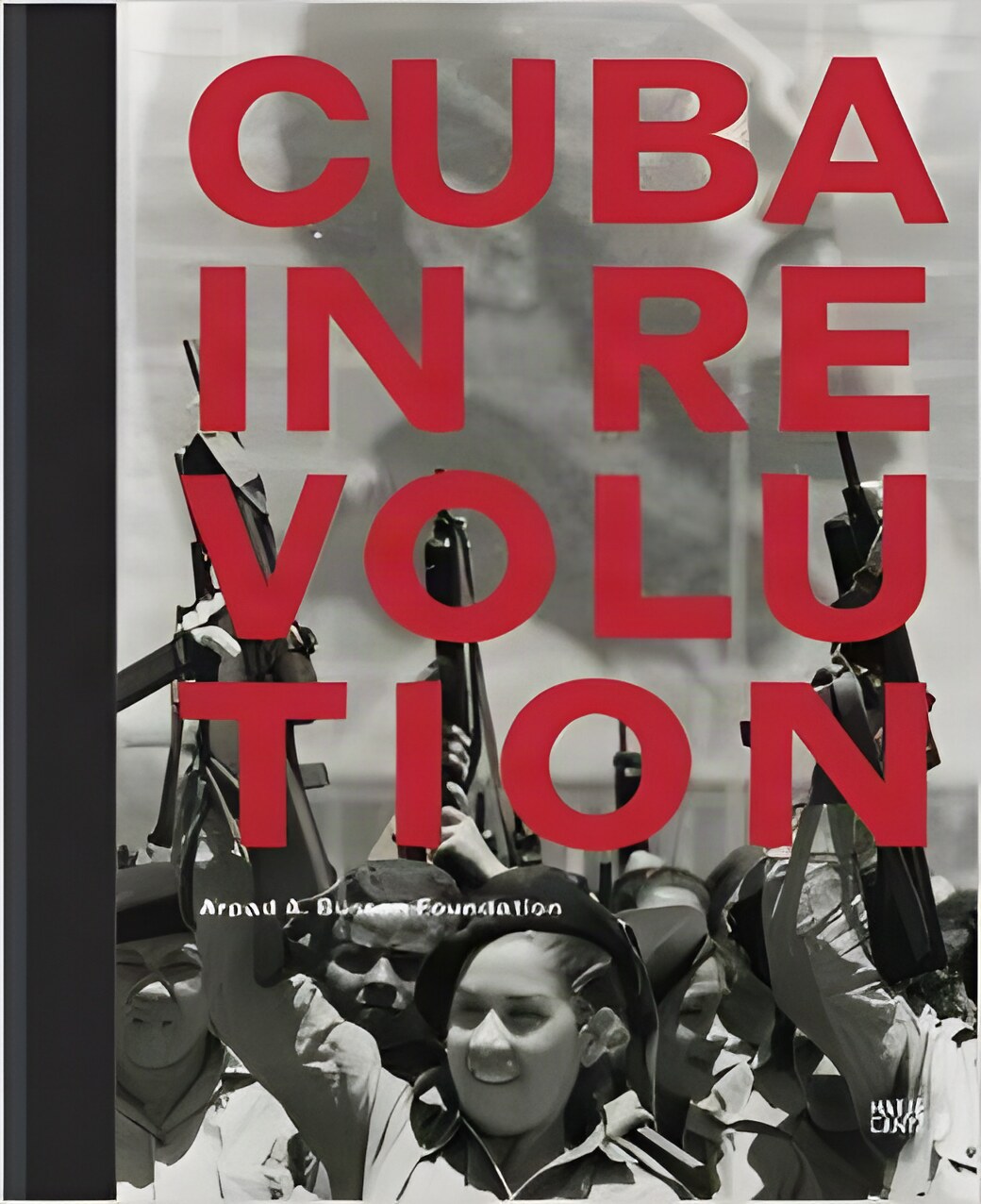
Hardcover. Hatje Cantz, 1st, 2014, Book: Very Good, Dust Jacket: Very Good, 511 pages. Clean, unmarked copy in excellent condition. From the earliest days of the Cuban Revolution, the Revolutionary High Command was intensely aware of the power of the photographic image to advance the ideals of the Revolution, at home and abroad. If portraying the human side of its leaders was an important part of the Revolution's visual ideology, so too was its conception and depiction of the Cuban populace: as early as 1959, the High Command organized mass rallies in Havana assembling more than a million Cubans from throughout the island to celebrate the victory of the Revolution. Cuba in Revolution captures the complexity and the energy of this moment in all its contradictory beauty. It gathers a colossal array of photographs by both known and anonymous photographers into five thematic, chronologically overlapping sections: "Pre-Revolutionary Cuba: 1933-1959"; "The Years of Struggle and Victory: 1953-1957"; "Sierra Maestra: The Revolutionary Movement: 1956-1959"; "Bay of Pigs 1961"; and "Picturing the Revolution: 1959-1968." From Constantino Arias' portraits of poverty and wealth in pre-revolutionary Havana to the photographs of the dead Che Guevara in Bolivia, this volume offers an epic photo-narrative of the Cuban story. Iconic pictures of Che Guevara by Alberto Korda and Rene Burri are complemented by snapshots of Fidel Castro playing golf or hunting in the Soviet Union. Raul Corrales' pictures of revolutionaries playing the conga drums during the Cuban Missile Crisis also reveal a different face of the Revolution; portraits of individual Cubans by Henri Cartier-Bresson present an equally fluid vision of everyday life in Cuba; and the political and the personal merge in startlingly intimate portraits of Che Guevara by Andrew Saint-George and images of the forbidden pop culture of the mid-1960s by Jose Figueroa. Throughout the publication there is an exhilarating tension between the heroic portrayal of the leaders-Castro, Guevara and Cienfuegos-and the dramatic portrayal of a people in the midst of revolutionary transformation.
Hardcover. Washington, D. C., Smithsonian, 1st, 1998, Book: Very Good, Dust Jacket: Very Good, Hardcover, 58 pages. Illustrated with full color photographs. Clean, bright copy.
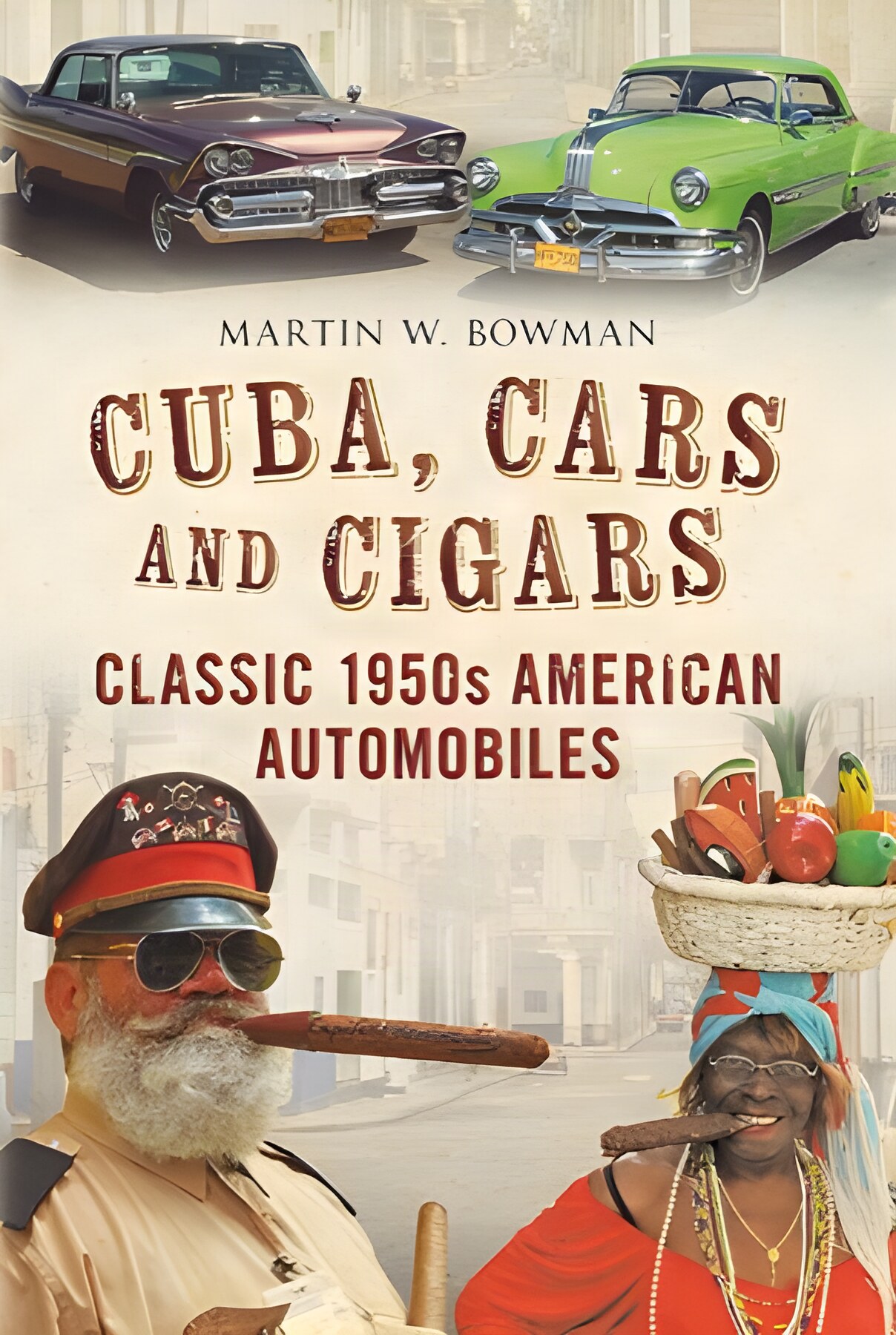
Softcover. Fonthill Media, reprint, 2017, Book: Very Good, Dust Jacket: None, Softcover, 144 pages illustrated in color. Cuba Cars and Cigars is full of glorious color images of the rare and varied Cuban-owned 1950s American and European automobiles, trucks, and station wagons that were imported before 1961. Among the famous Marques that feature are Cadillacs, Chevys, Buick, Dodge, Oldsmobile, Ford, Packard, De Soto, Pontiac, Plymouth, Edsel, Mercury and Metropolitan, Hillman, Singer and Austin, Nash Sedans, a Lloyd 600 German 2-cylinder/4-stroke 596cc car, Ramblers and SAABs, Mercs, Humber, Standard Vanguard, Ford Consul/Zephyr, Hillman Husky and Minx, Singer Gazelle and Austin. Most of these vehicles are still in running order, and are passed down from generation to generation. Trucks include Fords, a Fargo, Dodges and Chevys, not forgetting cigars, street urchins, and the lovely ladies of Havana. Clean copy.
Softcover. US, Prestel, 1st, 2009, Book: Very Good, Dust Jacket: None, Softcover, 424 pages, color and b&w illustrations. Like new in publisher's shrink-wrap. No dust jacket, as issued. From the exhibition produced by the Montreal Museum of Fine Arts in partnership with the Museo Nacional de Belias Artes and the Fototeca de Cuba in Havana. A comprehensive history of Cuban art and design.
Hardcover. New York, The Monacelli Press, 1st, 2010, Book: Very Good, Dust Jacket: None, 128 pages. Hardcover with no dust jacket. Like new in publisher's shrink-wrap.
Hardcover. Pound Press, 1st, 2009, Book: Very Good, Dust Jacket: Very Good, Hardcover in a bright dust jacket. Photographing the intersection between culture and nature for over 25 years, Virginia Beahan creates luminous and finely detailed images with an 8x10 view camera that describe the complexities of this relationship in diverse geographic settings. Her eight-year project in the waning years of Fidel Castro's revolutionary Cuba resulted in a major 2009 monograph entitled CUBA singing with bright tears. The images depict a country both tragic and beautiful, struggling beneath the weight of history. Larger-than-life images of revolutionary heroes Che Guevara and Jose Marti populate the island. The Bay of Pigs is sublime and treacherous; an atmospheric body of water rimmed with jagged black coral is the same unwelcoming shore that greeted invading CIA-trained Cuban exiles over forty-seven years ago. On a billboard, Fidel Castro reminds us that the US might invade again, and if so, he "will die fighting." Virginia Beahan's work falls within the tradition of great American photographers such as Walker Evans and Robert Adams. Her luminous and detailed large-format photographs reveal a landscape imbued with nuanced stories of culture shaped by geography and human action. Cuba's long and complicated relationship with the United States is part of this unfolding drama. Clean, bright copy.
Hardcover. New York, Charles Scribner's Sons, 1st, 1898, Book: Very Good, Dust Jacket: None, Hardcover, tan cloth covers stamped in blue and red, 360 pages. 116 b&w photos throughout, color maps in rear. In 1898 America intervened in the Cuban War of Independence, leading to conflict with Spain. This is a detailed account of this campaign, together with American military sea and land operations on the island of Puerto Rico during the Spanish American War. Cloth spine darkened otherwise clean, tight copy.
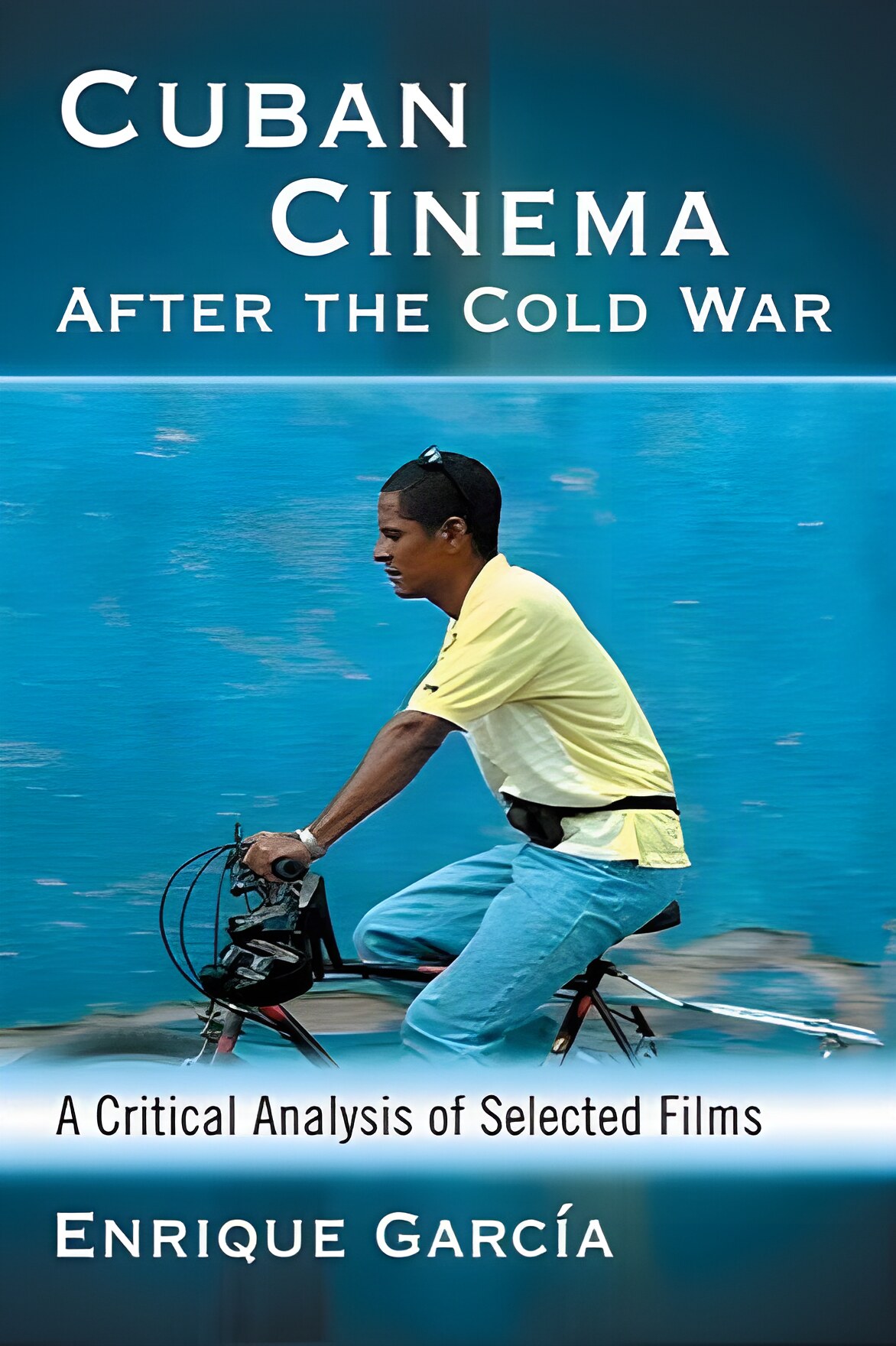
Softcover. Jefferson NC, McFarland & Company, 1st, 2015, Book: Very Good, Dust Jacket: None, Softcover, 222 pages. The changes Cuba experienced following the collapse of the Soviet Union compelled Cuban filmmakers to rethink the values developed after the 1959 Castro revolution. Long-forgotten genres re-emerged, established auteurs incorporated new aesthetics into their films and an influx of foreign capital led to the repackaging of revolutionary ideology into more visually attractive narratives. Films such as Alice in Wondertown (1991), Strawberry and Chocolate (1993) and Juan of the Dead (2011) stirred controversy, criticized revolutionary discourse and helped establish new models that allowed post-Castro cinema to find global audiences on an unprecedented scale. This book offers a detailed analysis of key post-Cold War Cuban films. Recurrent sociopolitical tropes are examined to reveal how Cuban cinema reflects the turbulent changes in the island.

 "90 Miles From Home - behind the beards, the oratory, the headlines, the everyday face of Cubaby: Miller, Warren")
 "a few streets, a few people: Photographs from the Havana neighbourhood of Cayo Huesoby: Comino-James, John")
 "a few streets, a few people: Photographs from the Havana neighbourhood of Cayo Huesoby: Comino-James, John")


 "American Tour of Messrs Brown, Jones and Robinson, Theby: Toby")
 "Aperture 153: Rio de Luz (Aperture Magazine)by: Aperture Foundation Inc. Staff")
 "Badge of Courage: The Life of Stephen Craneby: Davis, Linda H.")
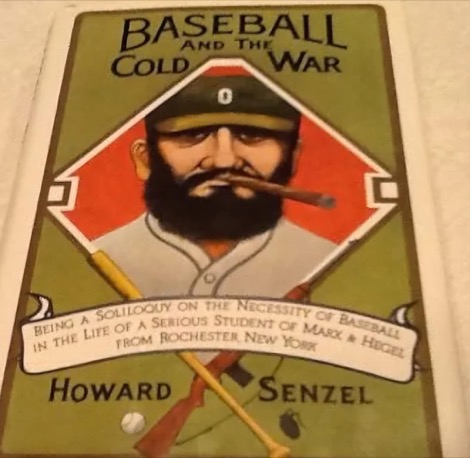


 "BLACKMAILERby: George Axelrod")
 "Caudillos: Dictators in Spanish America by: Hamill. Hugh M.")


 "Cuba 1959by: Glinn, Burt")
 "Cuba and Our New Possessionsby: Hall, A. D.")
 "Cuba y Cubaby: Burri, Rene")
 "Cuba: Art and History from 1868 to Todayby: Bondil, Nathalie")
 "Cuba: Photographs by Jeffrey Milsteinby: Milstein, Jeffrey")
 "CUBA: singing with bright tearsby: Virginia Beahan; Contributor Jon Lee Anderson/Pico Iyer")
 "Cuban and Porto Rican Campaigns, Theby: Davis, Richard Harding")