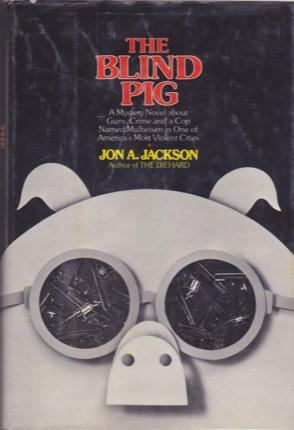
Hardcover. NY, Random House, 1st, 1978, Book: Very Good, Dust Jacket: Very Good, Hardcover in a bright, lightly worn dust jacket. The second and hardest-to-find book in Jackson's highly-praised mystery-crime series featuring Detroit Detective Sgt. Fang Mulheisen, this time dealing with the murders of five railroad trainmen in a spectacular freight train crash and a hijacked boxcar loaded with automatic rifles as well as several distractions such as a dozen Cuban revolutionaries, a greedy mob boss and a luscious Polish housewife. Light tan spotting area to front fly leaf and front board. Otherwise clean.
Hardcover. NY, Thomas Y. Crowell , 1st, 1979, Book: Very Good, Dust Jacket: Very Good, Hardcover in a bright, lightly worn dust jacket, 299 pages. Name on front fly leaf, otherwise clean.
Softcover. London, Hard Case Crime, 1st thus, 2011, Book: Very Good, Dust Jacket: None, Softcover, colorful wraps with a retro-style illustration by Robert McGinnis. Compared to the $40 million the cops think he stole, seventy-five thousand dollars may not sound like much. But it's all the money in the world to the struggling Cuban exiles of Miami who rescued Morgan the Raider. So when it's snatched by a man the Cubans trusted, Morgan sets out to get it back. A simple favor--but as the bodies pile up...dead men and beautiful women...the Raider wonders what kind of Latin hell he's gotten himself into, and just who or what is the mysterious Consummata? Begun by mystery master MICKEY SPILLANE in the late 1960s and completed four decades later by his buddy MAX ALLAN COLLINS (Road to Perdition), The Consummata is the long-awaited follow-up to Spillane's bestseller The Delta Factor--a breathtaking tale of treachery, sensuality, and violence, showcasing two giants of crime fiction at their pulse-pounding, two-fisted best. Like new.
Hardcover. NY, Farrar, Straus and Giroux, 1st, 1989, Book: Very Good, Dust Jacket: Very Good, Hardcover in a bright, price-clipped dust jacket. It's 1949 and two young Cuban musicians make their way up from Havana to the big arena of New York, where they are workers by day, stars of dance halls by night. Hijuelos's marvelous portrait of the Castillo brothers, their families, their fellow musicians and lovers, their triumphs and tragedies, re-creates the sights and sounds of an era in music and an unsung moment in American life. Pulitzer Prize Winner, 1990. Small inscription on front fly leaf, otherwise clean.
Hardcover. NY, Aperture, reprint, 1999, Book: Very Good, Dust Jacket: Very Good, Hardcover in a bright dust jacket, 107 pages. Henri Cartier-Bresson's writings on photography and photographers have been published sporadically over the past 45 years. His essays--several of which have never before been translated into English--are collected here for the first time. The Mind's Eye features Cartier-Bresson's famous text on "the decisive moment" as well as his observations on Moscow, Cuba and China during turbulent times. These essays ring with the same immediacy and visual intensity that characterize his photography. Clean copy.
Hardcover. London, Macgibbon & Kee, 1st, 1966, Book: Very Good, Dust Jacket: Fair, Hardcover in a worn, chipped dust jacket, 204 pages. "A valuable well-researched study of brinkmanship and of people under pressure presented fully for the first time." Name on front fly leaf, otherwise clean.
Hardcover. London, Macgibbon & Kee, 1st, 1966, Book: Very Good, Dust Jacket: Fair, Hardcover in a worn, chipped dust jacket, 204 pages. "A valuable well-researched study of brinkmanship and of people under pressure presented fully for the first time." Name on front fly leaf, otherwise clean.
Softcover. NY, National Railway Publication Company, 1939, Book: Very Good, Dust Jacket: None, Softcover, original printed paper wrappers, 1536 pages. Thick handbook for the railroad steamboat trade, with detailed schedules, maps, advertisements, all pertaining to the shipment of goods. Printed on thin, cheap stock that's tanning. Still very good wth clear tape reinforcement to spine.
Hardcover. Boston, Ticknor & Fields , 1st, 1859, Book: Very Good, Dust Jacket: None, Hardcover, original textured brown cloth with publisher's embossed decoration. some light wear to spine extremities. 288 pgs, 16 pgs of ads in back. The author of "Two Year's Before the Mast", here gives vivid and interesting description of his travels in Cuba. 'Kept in the form of a journal, this is a graphic account of the author's vacation trip to Cuba in February and March 1859. He made acute observations of the land and the people'.
Hardcover. New York, William Morrow, 1st, 2002, Book: Very Good, Dust Jacket: Very Good, 295 pages. Hardcover. Dust jacket unclipped. Gilt title on spine. Deckled edges. Binding tight. In great shape, clean inside and out.
Hardcover. Montpelier, State of Vermont, 1st, 1929, Book: Good, Dust Jacket: None, 163 pages. Hardcover. Ex-library copy with stamping and marking on endpapers. Illustrated with two black & white photographs. Features historical data, Vermont Roster 1898, etc. Green cloth covers with rubbing along edges. Clean, tight.
Hardcover. New York , Pantheon, 1st US, 1989, Book: Very Good, Dust Jacket: Very Good, 111 pages, illustrated throughout in b&w. Light edgewear and rubbing to dust jacket. Faint foxing to top edge, otherwise a clean, tight copy. In April 1933 an editor at Lippincott asked Evans to take photographs for a polemical book by Carlton Beals, a leftist writer who was very critical of the then Cuban dictator Gerardo Machado and anxious to show how American support of Machado had created an economic catastrophe in Cuba. Evans agreed after acceptance of his conditions that he have complete freedom to choose the photographs for publication and that they be collected at the end of the book so that they appeared to be an independent entity and not simply illustration of the text. Indeed, according to legend, Evans had not read Beals's text when he went to Havana in May 1933. He was in Cuba for three weeks. When his personal funds ran out, his way was paid for by Ernest Hemingway; the two had never met before, but Hemingway was eager for the company of someone equally qualified in literary conversation and in drinking. In the end, Evans contributed thirty-one photographs to the published "The Crime of Cuba". This book, WALKER EVANS: HAVANA 1933, contains seventy of the photographs Evans took in Cuba, including most of the photographs he selected for "The Crime of Cuba". The volume is introduced by an excellent essay by Gilles Mora that gives the historical background and discusses the place of Evans's Cuban photographs in his overall body of work. The photographs were selected by Mora and by John T. Hill, who also was responsible for the sequencing of their presentation. (One of Mora's points is that Evans attached a great deal of significance to the sequencing of his photographs, any collection of which he viewed as a composite artistic/documentary statement and, as such, more important than any single photograph.)
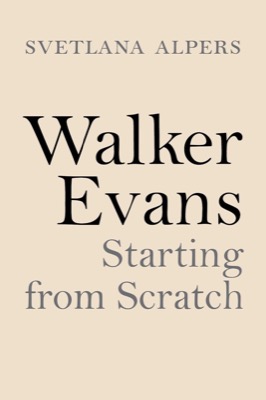
Hardcover. Princeton NJ, Princeton University Press, 1st, 2020, Book: Very Good, Dust Jacket: Very Good, Hardcocer in a bright dust jacket, 257 pages plus 143 b&w pages of photographs in the front of the book. Walker Evans (1903-75) was a great American artist photographing people and places in the United States in unforgettable ways. He is known for his work for the Farm Security Administration, addressing the Great Depression, but what he actually saw was the diversity of people and the damage of the long Civil War. In Walker Evans, renowned art historian Svetlana Alpers explores how Evans made his distinctive photographs. Delving into a lavish selection of Evans's work, Alpers uncovers rich parallels between his creative approach and those of numerous literary and cultural figures, locating Evans within the wide context of a truly international circle. Alpers demonstrates that Evans's practice relied on his camera choices and willingness to edit multiple versions of a shot, as well as his keen eye and his distant straight-on view of visual objects. Illustrating the vital role of Evans's dual love of text and images, Alpers places his writings in conversation with his photographs. She brings his techniques into dialogue with the work of a global cast of important artists--from Flaubert and Baudelaire to Elizabeth Bishop and William Faulkner--underscoring how Evans's travels abroad in such places as France and Cuba, along with his expansive literary and artistic tastes, informed his quintessentially American photographic style.
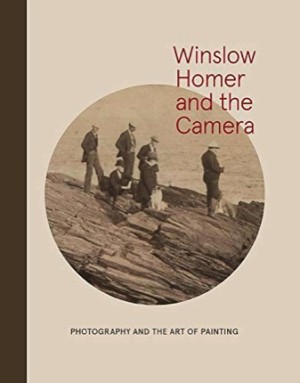
Hardcover. New Haven, Yale University, 1st, 2013, Book: Very Good, Dust Jacket: None, Hardcover with no dust jacket issued. Like new in publisher's shrink wrap. Clean, tight copy. One of the greatest American painters of the 19th century, Winslow Homer (1836-1910) also maintained a deep engagement with photography throughout his career. Focusing on the important, yet often-overlooked, role that photography played in Homer's art, this volume exposes Homer's own experiments with the camera (he first bought one in 1882). It also explores how the medium of photography and the larger visual economy influenced his work as a painter, watercolorist, and printmaker at a moment when new print technologies inundated the public with images. Frank Goodyear and Dana Byrd demonstrate that photography offered Homer new ways of seeing and representing the world, from his early commercial engravings sourced from contemporary photographs to the complex relationship between his late-career paintings of life in the Bahamas, Florida, and Cuba and the emergent trend of tourist photography. The authors argue that Homer's understanding of the camera's ability to create an image that is simultaneously accurate and capable of deception was vitally important to his artistic practice in all media. Richly illustrated and full of exciting new discoveries, Winslow Homer and the Camera is a long-overdue examination of the ways in which photography shaped the vision of one of America's most original painters.
Hardcover. New Haven, Yale University, 1st, 2013, Book: Very Good, Dust Jacket: None, Hardcover with no dust jacket issued. Like new in publisher's shrink wrap. Clean, tight copy. One of the greatest American painters of the 19th century, Winslow Homer (1836-1910) also maintained a deep engagement with photography throughout his career. Focusing on the important, yet often-overlooked, role that photography played in Homer's art, this volume exposes Homer's own experiments with the camera (he first bought one in 1882). It also explores how the medium of photography and the larger visual economy influenced his work as a painter, watercolorist, and printmaker at a moment when new print technologies inundated the public with images. Frank Goodyear and Dana Byrd demonstrate that photography offered Homer new ways of seeing and representing the world, from his early commercial engravings sourced from contemporary photographs to the complex relationship between his late-career paintings of life in the Bahamas, Florida, and Cuba and the emergent trend of tourist photography. The authors argue that Homer's understanding of the camera's ability to create an image that is simultaneously accurate and capable of deception was vitally important to his artistic practice in all media. Richly illustrated and full of exciting new discoveries, Winslow Homer and the Camera is a long-overdue examination of the ways in which photography shaped the vision of one of America's most original painters.
Hardcover. NY, William Morrow, 1st, 2015, Book: Very Good, Dust Jacket: Very Good, Hardcover in a bright, unclipped dust jacket. Pictorial boards The half-jacket dust jacket protects lower half of book, covering most of the pictorial design but displaying author's name . A novel of blood, crime, passion, and vengeance, set in Cuba and Ybor City, Florida, during World War II, in which Joe Coughlin must confront the cost of his criminal past and present. Clean copy.


 "THE CONSUMMATAby: Mickey Spillane, Max Allan Collins")

 "The Mind's Eye: Writings on Photography and Photographers by: Cartier-Bresson, Henri")


 "The Official Guide of the Railways and Steam Navigation Lines of the United States, Canada, Porto Rico, Mexico and Cuba. 72d Year, No. 9, October 1939by: National Rai")
 "To Cuba and Back - A Vacation Voyageby: Dana, Jr., Richard Henry")
 "Translator, Theby: Crowley, John")
 "Vermont in the Spanish-American Warby: Johnson, Herbert T./The General Assembly, 1929/State of Vermont")
 "Walker Evans: Havana 1933by: Mora, Gilles")


 "Winslow Homer and the Camera: Photography and the Art of Painting by: Goodyear III Frank; Byrd, Dana E.")