NY, Penguin Studio, 1st, 1998, Book: Very Good, Dust Jacket: Very Good, Hardcover, 129 pages, 13.5 X 10". Foreword by Bernard Gersten. Introduction by John Guare. Well-illustrated throughout in color. On buses, billboards, and train platforms, in newspapers and magazines, a poster's swift promise in glorious color or powerful dark tones offers a vivid impression of what awaits a theatergoer, and provides the lasting mental image of a play long after its closing night. No one creates such images with more invention, honesty, and beauty--sometimes disturbingly, but always memorably--than James McMullan. The Theater Posters of James McMullan is an illuminating collection of thirty-six posters from 1976 to the present (from Arcadia and Carousel to Six Degrees of Separation), almost all of them for New York's Lincoln Center Theater, by this artist for whom "the body itself becomes a quickly understood gesture like the movement of a mime or a dance." The ragman hanging off the lamppost with his flaming match in Road, the French-postcard wink of the Anything Goes woman, Eros aiming his arrow in Four Baboons Admiring the Sun . . . full-page reproductions of McMullan's posters accompany his stories of their geneses. Reference photographs, sketches, and alternate versions illustrate his search for the perfect visual metaphor. Most of all, the personalities and dramas of the theater people who surrounded each poster's birth--from Wole Soyinka and John Guare to Liv Ullmann, Patti LuPone, and Mike Nichols--fill this gift book of choice for all theater and art lovers.Newspaper review laid in. Clean, very goog in a bright, unclipped dust jacket.
Softcover. Chicago, University of Chicago Press, 1997, Book: Very Good, Dust Jacket: None, Softcover, pictorial wrappers, 311 pages. For generations of anthropologists, the Baining people have presented a challenge, because of their apparent lack of cultural or social structure. This group of small-scale horticulturists seems devoid of the complex belief systems and social practices that characterize other traditional peoples of Papua New Guinea. Their daily existence is mundane and repetitive in the extreme, articulated by only the most elementary familial relationships and social connections. The routine of everyday life, however, is occasionally punctuated by stunningly beautiful festivals of masked dancers, which the Baining call play and to which they attribute no symbolic significance. In a new work sure to evoke considerable repercussions and debate in anthropological theory, Jane Fajans courageously takes on the "Baining Problem," arguing that the Baining define themselves not through intricate cosmologies or social networks, but through the meanings generated by their own productive and reproductive work.
Softcover. NY, Thames & Hudson, 1st, 2005, Book: Very Good, Dust Jacket: None, Softcover, 256 pages. Why did Frankie say "Relax"? Did anyone really want to hurt Boy George? And why didn't anybody walk in L.A.? This Ain't No Disco can't answer all these head-scratchers, but it does bring the New Wave era back with page after totally awesome page of 300 of the best album covers. This rad collection includes covers from the late 1970s to the mid-'80s and will have true believers of a certain generation totally spazzing. New Wave was defined as much by style, fashion, and graphic design as the music itself witness the ruffled cuffs and heavy makeup of the New Romantics, the skinny ties and peg-pants of the neo-Mods, and the unsettling robotic personae of Devo and Gary Numan. Bursting with wild hairstyles, futuristic typography, pastel shapes, and outlandish clothing, these are the album covers that defined an era and continue to influence music and fashion styles today. A nostalgic trek with a mental soundtrack, This Ain't No Disco will inspire readers to don those rubber bracelets once again and proclaim, "Let's dance this mess around!"
Hardcover. Santa Fe, NM, Twin Palms Publishers, 1st, 1997, Book: Very Good, Dust Jacket: None, 96 pages. Hardcover with no dust jacket. Very clean. like new copy in publisher's shrink-wrap. 78 full-page, black and white photographs. Limited to 3000 copies. Tight copy. A look at the black experience in late-20th-century America with powerful documentary images that will remain with the viewer long after the books are closed. Mauskopf presents a quiet collection of images made in one part of the South, the most isolated black communities of the Mississippi Delta, where time seems to have stopped in midcentury. The photographs are full of love, joy, and religious faith and are richly reproduced here as sheet-fed gravures. Mauskopf portrays the poorest Americans, who are nonetheless rich in family, church, and community bonds. He documents the unifying and dominant role of religion as well as the joys and sustenance provided by music, dance, romance, family life, and the land itself. These images capture a sense of place so powerfully that captions aren't necessary, though a brief and poetic essay by novelist Kenan nicely complements the photographs.
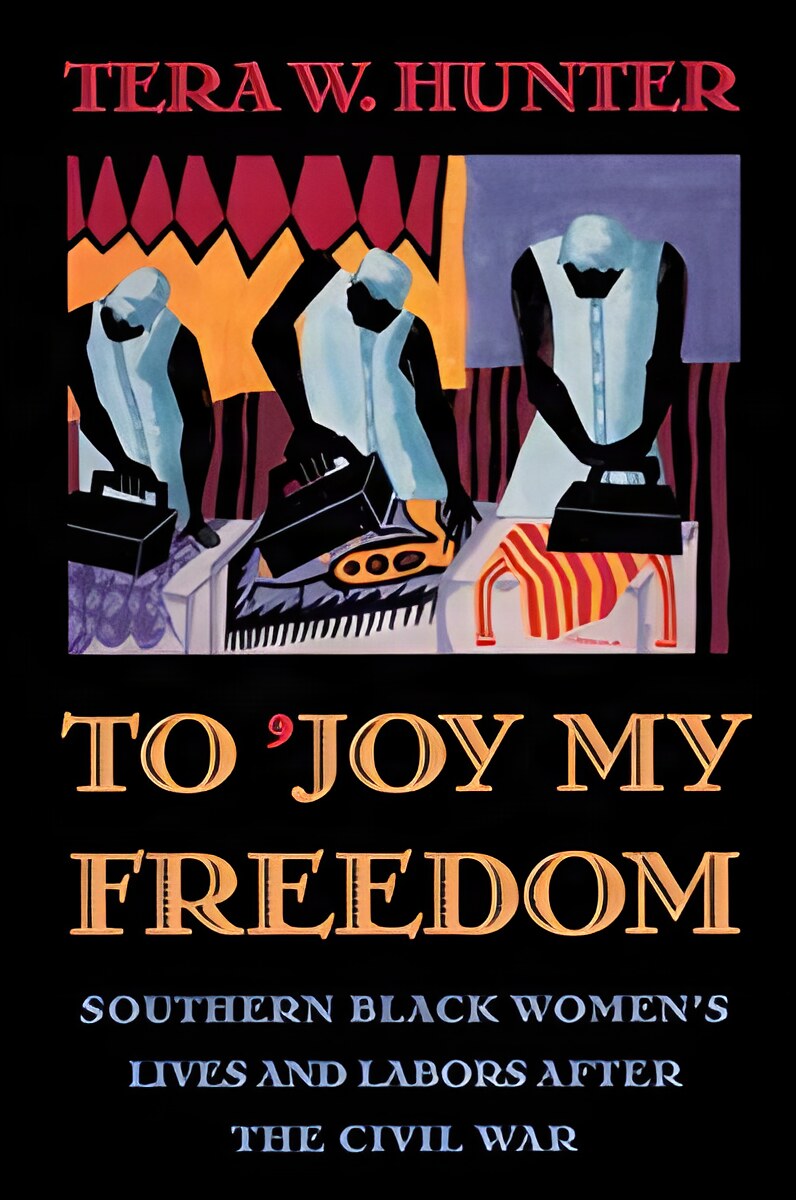
Softcover. Cambridge MA, Harvard University Press, reprint, 1998, Book: Very Good, Dust Jacket: None, Softcover, 311 pages. As the Civil War drew to a close, newly emancipated black women workers made their way to Atlanta-the economic hub of the newly emerging urban and industrial south-in order to build an independent and free life on the rubble of their enslaved past. In an original and dramatic work of scholarship, Tera Hunter traces their lives in the postbellum era and reveals the centrality of their labors to the African-American struggle for freedom and justice. Household laborers and washerwomen were constrained by their employers' domestic worlds but constructed their own world of work, play, negotiation, resistance, and community organization. Hunter follows African-American working women from their newfound optimism and hope at the end of the Civil War to their struggles as free domestic laborers in the homes of their former masters. We witness their drive as they build neighborhoods and networks and their energy as they enjoy leisure hours in dance halls and clubs. We learn of their militance and the way they resisted efforts to keep them economically depressed and medically victimized. Finally, we understand the despair and defeat provoked by Jim Crow laws and segregation and how they spurred large numbers of black laboring women to migrate north. Clean copy.
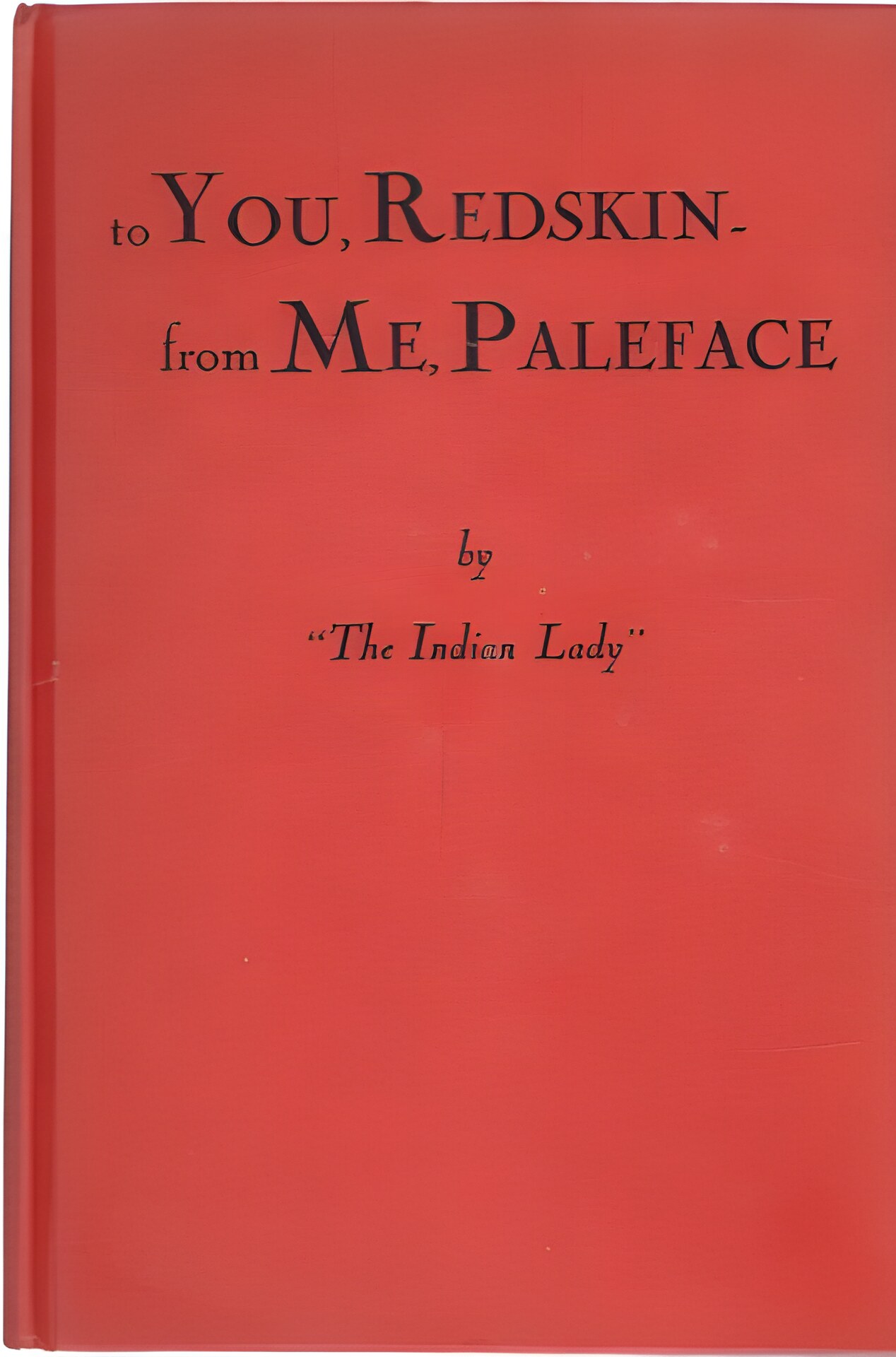
Hardcover. Northampton MA, Kraushar Press, 1st, 1943, Book: Very Good, Dust Jacket: None, Hardcover, orange cloth covers with black lettering, 163 pages, b&w photos. Inspired by a visit to Stoney Reservation in Alberta, Canada, the author spent 15 years visiting & living among 47 tribes, and developed a touring show of pictures, songs, dances, stories & sign language. Clean, bright copy.
Hardcover. Gainesville FL, University Press of Florida, 1st, 2005, Book: Very Good, Dust Jacket: Very Good, Hardcover, 267 pages, b&w photos. Biography of the Russian ballet dancer and teacher Agrippina Vaganova (1879-1951).
Hardcover. New York, Clarkson N Potter, 1st, 1982, Book: Very Good, Dust Jacket: Very Good, 203 pages. Hardcover with clipped dust jacket. Clean, tight copy with black and white photographs throughout. Collects vivid photographic portraits of a wide variety of authors, artists, movie stars, politicians, dancers, and other celebrities.
Softcover. NY, Palgrave Macmillan, reprint, 2002, Book: Very Good, Dust Jacket: None, Softcover, 270 pages, b&w illustrations. The career of Norton and Margot, a ballroom dance team whose work was thwarted by the racial tenets of the era, serves as the barometer of the times and acts as the tour guide on this excursion through the worlds of African American vaudeville, black and white America during the swing era, the European touring circuit, and pre-Civil Rights era racial etiquette. Clean copy.
London, Hardie Grant, 1st, 2022, Book: Very Good, Dust Jacket: None, Hardcover, embossed black boards stamped in white, 250 pages, color photos. Wanting You to Want Me is a collection of anonymous stories from the world of London strip clubs, documented by the women themselves. The stories range from behind-the-scenes conversations in the changing rooms, to dancefloor and private room etiquette, from emotional and intellectual connections between dancer and client, to the often-blurred boundaries that exist in between. Journalist Emily Dinsdale and filmmaker Bronwen Parker-Rhodes have collected images and stories from the women working in the London strip clubs over several years. Having been part of the industry themselves, they have a unique and intimate access to the seldom-heard stories, giving voice to an age-old industry, from the perspective of the traditionally voiceless workers. Supported by original, behind the scenes photography from the authors, these narratives express vulnerability, empowerment, curiosity and the complexity and duplicity of relationships--in short, what it is to be human.
Hardcover. Prestel Publishing/ Montreal Museum of Fine Arts, 1st, 2008, Book: Very Good, Dust Jacket: Very Good, Hardcover, 286 pages, color illustrations. This catalogue reveals the myriad ways Warhol immersed himself in the music of his time. Tracing back to Warhol's introduction to music through the musical comedies. songs and soundtracks of his youth. this book opens with Warhol's portraits of the great films stars of his childhood. As the fascinating essays collected in this volume discuss. Warhol's renowned portraits of pop music icons such as Mick Jagger. Debbie Harry and Grace Jones are just one manifestation of his interest in music. Warhol collaborated with choreographer Merce Cunningham. served as producer for the Velvet Underground. incorporated music into his films. produced video-clips. designed dozens of record albums. filmed live concerts and created multimedia spectacles. Although never a musician himself. Warhol appropriated the imagery of a pop icon for some of his most arresting and haunting self portraits.
Hardcover. NY, Penguin Press, 1st, 2012, Book: Very Good, Dust Jacket: Very Good, Hardcover in a bright dust jacket. 474 pages, b&w illustrations. "A "heroic" and "fascinating" biography of John Cage showing how his work, and that of countless American artists, was transformed by Zen Buddhism". (The New York Times). Where the Heart Beats is the story of the tremendous changes sweeping through American culture following the Second World War, a time when the arts in America broke away from centuries of tradition and reinvented themselves. Painters converted their canvases into arenas for action and gesture, dancers embraced pure movement over narrative, performance artists staged "happenings" in which anything could happen, poets wrote words determined by chance.
Hardcover. NY, Random House, 1st, 1999, Book: Very Good, Dust Jacket: Very Good, The photographs by Annie Leibovitz in Women, taken especially for the book, encompass a broad spectrum of subjects: a rap artist, an astronaut, two Supreme Court justices, farmers, coal miners, movie stars, showgirls, rodeo riders, socialites, reporters, dancers, a maid, a general, a surgeon, the First Lady of the United States, the secretary of state, a senator, rock stars, prostitutes, teachers, singers, athletes, poets, writers, painters, musicians, theater directors, political activists, performance artists, and businesswomen. "Each of these pictures must stand on its own," Susan Sontag writes in the essay that accompanies the portraits. "But the ensemble says, So this what women are now -- as different, as varied, as heroic, as forlorn, as conventional, as unconventional as this."
Softcover. NY, Archipelago Books, 1st transl. thus, 2006, Book: Very Good, Dust Jacket: None, Softcover in pictorial wrappers, 109 pages. Dedicated to Duras' companion with whom she spent her last decade of life, Yann Andrea Steiner is a haunting dance between two parallel stories of love and solitude: the love between Duras and the young Yann Andrea and a seaside romance observed - or imagined - by the narrator between a camp counselor and an orphaned camper, a Holocaust survivor who witnessed his sister's murder at the hands of a German soldier. Memory blurs into desire as the summer of 1980 flows into 1944. An enigmatic elegy of history, creation, and raw emotion. Clean copy.
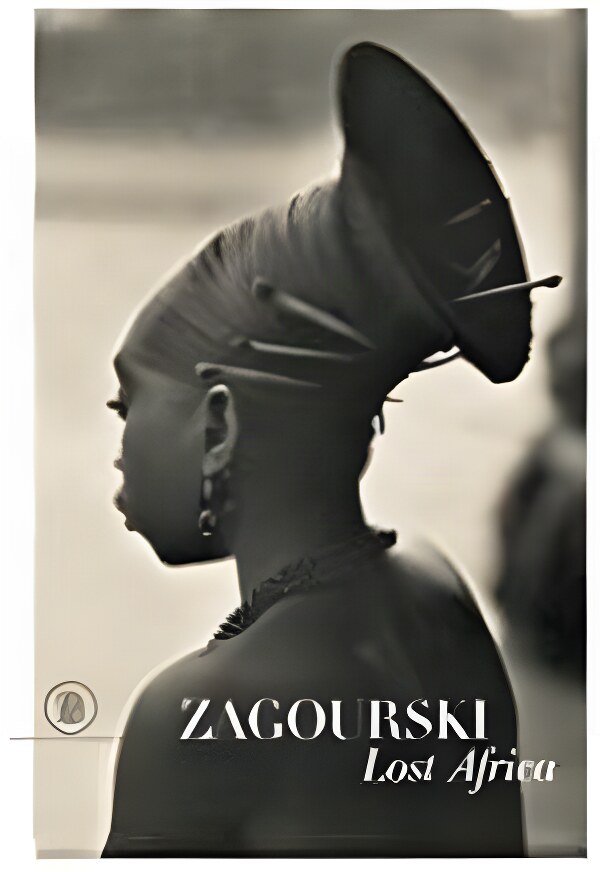
Hardcover. Milan, Skira, 1st, 2001, Book: Very Good, Dust Jacket: Very Good, Hardcover, 224 pages. An outstanding photographic monograph from the Twenties and Thirties brings back the memory of ways of living, ceremonies, adorned bodies of an Africa that be aptly defined as "lost". These extraordinary, unpublished pictures, taken with great technical skill and with a sense of great dignity of the people portrayed, constitute a monument to the African continent as it was. Kazimir Ostoja Zagourski (1880-1941) was born in Poland and moved to Congo in 1924. Zagourski was the first professional photographer to travel throughout the interior of Congo and visited also the neighboring countries, Tchad, Rwanda, Burundi, Uganda, Kenya, and South Africa. During his long stay in Africa he took hundred of pictures, 500 of which, divided in two extraordinary series on different tribes, build up to a unique historic and ethnographic survey. In a sense, Zagourski's work constitutes the first "non-European" look, devoid of the colonial overtones that characterize much contemporary work. His forays into the depths of the African continent took him into the most remote villages of Kuba, Mangbetu, Bwaka, Tutsi, Masai, etc. where he took unprecedented pictures of great ethnographic interest. he documented for example, ceremonies (initiation, circumcision, excision, masked dances, etc.), the great African creativity in body ornament (from scarification to hair dresses, from jewels to lip plugs), clothes and all utilitarian objects placed in their appropriate cultural context (musical instruments, shields, stools, knives, containers, etc.).

 "Theater Posters of James McMullan, Theby: McMullan, James")
 "They Make Themselves: Work and Play among the Baining of Papua New Guineaby: Jane Fajans")
 "This Ain't No Disco : New Wave Album Coversby: McKnight-Trontz, Jennifer")
 "Time Not Here, A: The Mississippi Deltaby: Mauskopf/Randall Kenan, Norman")
 "TWO MOVIE STILLS- Ann Reinking/ All That Jazz/ 8x10 BW and colorby: N/A")


 "TWO MOVIE STILLS- Ann Reinking/ All That Jazz/2 8x10 BWby: N/A")


 "Vaganova: A Dance Journey from Petersburg to Leningradby: Krasovskaya, Vera")
 "Vanity Fair: Photographs of an Age 1914-1936by: Richardson (Editor), Diana Edkins")
 "Wanting You to Want Me: Anonymous Stories From Secret World of Strip Clubsby: Dinslade, Emily/ Parker-Rhodes, Bronwen")
 "Warhol Live: Music and Dance in Andy Warhol's Work by: Andy Warhol; Stephane Aquin; Emma Lavigne; Matt Wrbican")

 "Womenby: Leibovitz, Susan Sontag, Annie")