Hardcover. New Haven CT, Yale University Art Gallery, 1st, 2013, Book: Very Good, Dust Jacket: None, Like new in publisher's shrink-wrap. "Fifty years after Kennedy's death, this book observes the public's reaction to the president's election and assassination, featuring many photographs published here for the first time. In his travels throughout America during this period, Lee Friedlander (b. 1934) encountered these responses and photographed what he witnessed. From Washington, D.C., to Buffalo to Minneapolis to Los Angeles, Friedlander has captured a moment in American history that galvanized the nation and continues to resonate today." 48 b&w images by Friedlander.
Hardcover. New Haven CT, Yale University Art Gallery, 1st, 2013, Book: Very Good, Dust Jacket: None, Like new in publisher's shrink-wrap. "Fifty years after Kennedy's death, this book observes the public's reaction to the president's election and assassination, featuring many photographs published here for the first time. In his travels throughout America during this period, Lee Friedlander (b. 1934) encountered these responses and photographed what he witnessed. From Washington, D.C., to Buffalo to Minneapolis to Los Angeles, Friedlander has captured a moment in American history that galvanized the nation and continues to resonate today." 48 b&w images by Friedlander.
Hardcover. Washington DC, Dumbarton Oaks Research Library, 1st, 1998, Book: Very Good, Dust Jacket: Very Good, Hardcover in a bright dust jacket, 310 pages. John Evelyn (1620-1706), an English virtuoso and writer, was a pivotal figure in seventeenth-century intellectual life in England. He left an immensely rich literary heritage, which is of great significance for scholars interested in garden history and the histories of intellectual life and architecture. Evelyn is perhaps best known for Sylva, a compilation of thoughts on practical estate management, gardening, and philosophy, and the first book published by the Royal Society in London. As one of the group of learned men who founded the Royal Society in 1660 to promote scientific research, discussion, and publications, John Evelyn was at the center of many of the vital intellectual currents of the time. "Elysium Britannicum," Evelyn's unpublished manuscript of almost a thousand pages of densely packed drafts, rewrites, and projects, was perhaps something of an enigma to his contemporaries, who nevertheless urged its publication. It remains for scholars today a treasure-trove of fascinating insights on Evelyn and his milieu. Clean copy.
Hardcover. Boston, Boston Book & Art, 1st, 1971, Book: Very Good, Dust Jacket: Good, Hardcover, 215 pages, 176 illustrations in b&w and color. A book issued in conjunction with an exhibition at the National Gallery of Art in Washington celebrating the centennial of Sloan's birth. Includes a list of books illustrated by the artist, other selected bibliography. Dust Jacket with light edgewear, rubbing.
Softcover. Washington DC, National Gallery of Art, 1st, 1995, Book: Near Fine, Dust Jacket: None, 118 pages, illustrated in color and b&w. INSCRIBED BY CHOTNER TO JOHN (WILMERDING) on title page. Softcover exhibition catalog in like new condition.
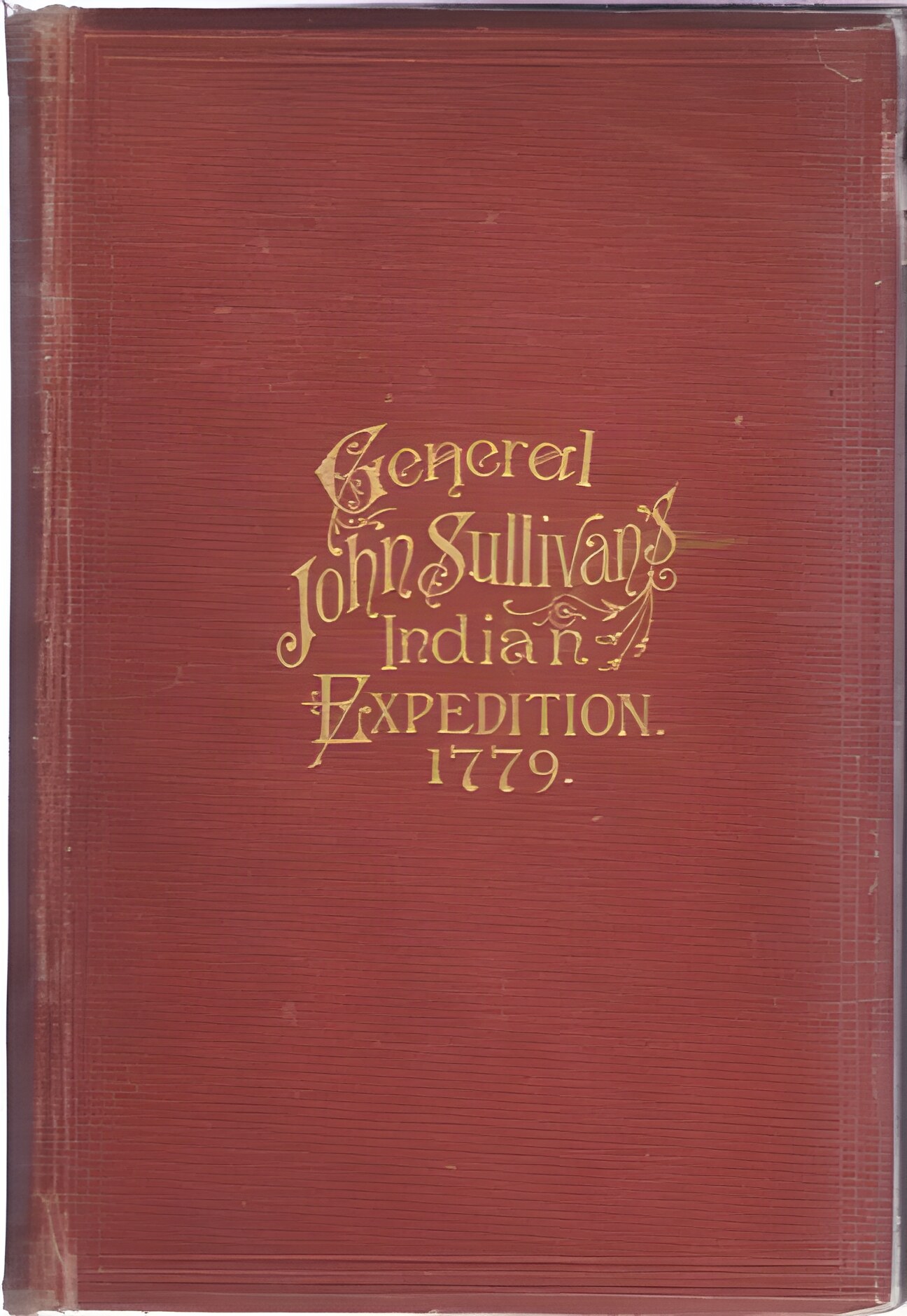
Hardcover. Auburn NY, Knapp, Peck and Thomson, 1st, 1887, Book: Fair, Dust Jacket: None, Hardcover, original red cloth, gilt titles and rules, blind-stamped double border. 581 pages including Errata leaf. Includes several fold-out maps, plus pockets inside the front and rear boards containing maps and plans. Engraved frontispiece of Sullivan, engraved portraits in text of Brigadier General James Clinton, Colonel Peter Gansevoort (from a portrait by Gilbert Stuart, famous for his portrait of George Washington), and Colonel Philip Van Cortlandt. John Sullivan was an American general in the Revolutionary War and a delegate in the Continental Congress. Sullivan served as a major general in the Continental Army and as Governor (or 'President') of New Hampshire. He is most famous for leading the Sullivan Expedition in 1779, a scorched earth campaign against the Iroquois towns that had taken up arms against the American revolutionaries. This volume contains journals by 27 officers present during the campaign, and has become the authoritative primary source of the event. Both front and rear hinges cracked with spine cloth loose, battlefield map at page 288 has a tear but no loss, front signature with title page loose but whole. All other maps present in envelopes and in very good condition. Covers worn.
Hardcover. Washington, D.C., National Rifle Association of America, 1st, 1924, Book: Very Good, Dust Jacket: None, 124 pages plus 6 page reference index. Hardcover. INSCRIBED BY EDITOR KENDRICK SCOFIELD ON FRONT ENDPAPER. Black & white photographs and illustrations throughout. Gilt title and decoration on blue cover. Corner and edge wear and fray, minor foxing throughout. Rubbing along spine and edges of blue cloth covers. Unmarked pages and text.
Hardcover. NY, Harry N Abrams, 1st, 1989, Book: Very Good, Dust Jacket: Very Good, 264 pages, illustrated throughout in b&w. Clean, unmarked copy with only minor wear to dust jacket. "A lavish, information-packed look at the people and places of an important, exciting era in art history. "?Publishers Weekly. From 1900 to 1930, Montparnasse was the center of artistic life for the whole world. A major contribution to the social and cultural history of the period? with its informative text and hundreds of photographs?. As The Washington Post said, Kiki's Paris "celebrates the people who made the modern movement in art, music and literature, most of whom were friends or lovers of Kiki, the woman Hemingway called 'The Queen of Montparnasse.'"
Hardcover. New York, G. P. Putnam's Sons, reprint, 1894, Book: Very Good, Dust Jacket: None, Two hardcover volumes. Van Twiller Edition, with b&w illustrations by Edward W. Kemble throughout both volumes. In 1809, New Yorkers were buzzing about a series of classified ads concerning the whereabouts of Dutch historian Diedrich Knickerbocker. They were unaware that Washington Irving had invented the man entirely and placed the ads himself. Knickerbocker's purported manuscript, A History of New York, was Irving's own. Told from Knickerbocker's point of view, A History of New York is a chronicle of New York's fifty years under Dutch rule in the 1600s that plays fast and loose with the facts, to uproarious effect. A History of New York propelled Irving to the heights of literary stardom. Gilt and blue design on beveled covers, spine. Top edge gilt, decorated pages, frontispiece with tissue guard. Slight corner bump, edge wear, age darkening to spine, otherwise,very clean and tight copies.
Hardcover. NY, D.A.P./Distributed Art Publishers, 1st, 2008, Book: Very Good, Dust Jacket: None, Hardcover, 89 pages, large format. Tipped-on front board. Slight bump to bottom right corner. In publisher shrink wrap. A natural chronicler of all things uniquely American, photographer Lee Friedlander here puts his lens to the work of Frederick Law Olmsted (1822-1903), designer of many of this country's most iconic public landscapes and the father of North American landscape architecture. Olmsted was responsible for a staggering number of America's greatest parks, including the Niagara reservation (North America's oldest state park), Washington Park, the Biltmore Estate, the U.S. Capitol building landscape and entire parkway systems in Buffalo and Louisville. His most famous work remains New York City's Central Park, a pioneering egalitarian gesture that, at the time, was very unusual for its ready accessibility. No dust jacket issued. DOMESTIC SHIPPING ONLY.
Hardcover. San Marino,CA, The Huntington Library, 1st, 1949, Book: Very Good, Dust Jacket: Very Good, Hardcover in a lightly worn, price-clipped dust jacket, 161 pages. Official records from the Pinkerton detective agency & other documentary sources are drawn on to present the story of "a plot and counterplot, stranger than fiction" involving a plan to assassinate president-elect Abraham Lincoln while en route to his inauguration in Washington in 1861, over 4 years before he was killed by John Wilkes Booth at Ford's Theatre. Previous owner's inscription on front fly leaf, otherwise clean.
Hardcover. New York, William Morrow & Co, 1st, 1992, Book: Very Good, Dust Jacket: Very Good, Hardcover, 250 pages, spotless and tight copy with dust jacket. Pulitzer Prize winner's debut collection of short stories, set in his native Washington, D.C.
Softcover. Washington DC, Hirshhorn Museum and Sculpture Garden and Smithsonian Institution Press, 1st, 1978, Book: Near Fine, Dust Jacket: None, Softcover exhibition catalog. 108 pages, illustrated in color and b&w. Gray pictorial stiff wrappers. Minor wear to edges and spine, else like new.
Hardcover. New York, Washington Book Co., 1st, 1953, Book: Very Good, Dust Jacket: None, 124 pages, plus appendices. Tan cloth covers, over 50 chapters and 40 b&w photographs. Library binding and titles, but without any of the usual ex-lib markings, stamps, or envelopes inside covers, very light rubbing to covers; a clean, tight copy.
Hardcover. NY, Random House;, 1st, 2020, Book: Very Good, Dust Jacket: Very Good, Hardcover, 220 pages. Kurt Vonnegut's eldest daughter, Edith, was cleaning out her mother's attic when she stumbled upon a dusty, aged box. Inside, she discovered an unexpected treasure: more than two hundred love letters written by Kurt to Jane, spanning the early years of their relationship. The letters begin in 1941, after the former schoolmates reunited at age nineteen, sparked a passionate summer romance, and promised to keep in touch when they headed off to their respective colleges. And they did, through Jane's conscientious studying and Kurt's struggle to pass chemistry. The letters continue after Kurt dropped out and enlisted in the army in 1943, while Jane in turn graduated and worked for the Office of Strategic Services in Washington, D.C. They also detail Kurt's deployment to Europe in 1944, where he was taken prisoner of war and declared missing in action, and his eventual safe return home and the couple's marriage in 1945.
Softcover. Washington DC, National Gallery of Art, 1st, 2009, Book: Very Good, Dust Jacket: None, Softcover, 178 pages, color illustrations. Offers a look at the life and work of Luis Melendez, one of eighteenth-century Europe's greatest still-life painters. This catalogue details thirty of Luis Melendez's wonderful still-life paintings beautifully presented with new insights about Melendez's life, the everyday objects in his paintings, and the materials and methods he used in creating these works.
Hardcover. Boston, Massachusetts, Harry N. Abrams, 1st, 1992, Book: Very Good, Dust Jacket: Very Good, 470 pages. Brown cloth cover, color illustrated dust jacket, 113 color and 206 illustrations. Still in original shrink wrap; book in excellent condition. American artists have been inspired by Italy since the 1760s, when Benjamin West, the first American painter to travel there, was drawn to the ancient Roman ruins and magnificent Renaissance architecture, statuary, and frescoes. This intriguing, superbly illustrated book is the first to explore the fascination Italy held for the American artist from West's time to the eve of World War I.The unique sense of the past found in Italy, where tangible evidence exists of a continual civilization from antiquity to the present, lured countless American artists to its cities, towns, and countryside. Painters from West and Copley in the eighteenth century to Cole, Inness, Whistler, Sargent, and Prendergast in the nineteenth century were inspired to create many of their finest works in Italy, as were American sculptors such as Hiram Powers and Harriet Hosmer and writers from Washington Irving to Henry James. This in-depth study includes 319 illustrations, of which 113 are reproduced in full color, many of works that have not previously been published. Theodore E. Stebbins, Jr., John Moors Cabot Curator of American Paintings at the Museum of Fine Arts, Boston, and Professor of Art History at Boston University, provides a broad overview of the American perception of Italy and the unique role that Italy played in the formation of American art.
Hardcover. Boston, Massachusetts, Harry N. Abrams, 1st, 1992, Book: Very Good, Dust Jacket: Very Good, 470 pages. Brown cloth cover, color illustrated dust jacket, 113 color and 206 illustrations. Still in original shrink wrap; book in excellent condition. American artists have been inspired by Italy since the 1760s, when Benjamin West, the first American painter to travel there, was drawn to the ancient Roman ruins and magnificent Renaissance architecture, statuary, and frescoes. This intriguing, superbly illustrated book is the first to explore the fascination Italy held for the American artist from West's time to the eve of World War I.The unique sense of the past found in Italy, where tangible evidence exists of a continual civilization from antiquity to the present, lured countless American artists to its cities, towns, and countryside. Painters from West and Copley in the eighteenth century to Cole, Inness, Whistler, Sargent, and Prendergast in the nineteenth century were inspired to create many of their finest works in Italy, as were American sculptors such as Hiram Powers and Harriet Hosmer and writers from Washington Irving to Henry James. This in-depth study includes 319 illustrations, of which 113 are reproduced in full color, many of works that have not previously been published. Theodore E. Stebbins, Jr., John Moors Cabot Curator of American Paintings at the Museum of Fine Arts, Boston, and Professor of Art History at Boston University, provides a broad overview of the American perception of Italy and the unique role that Italy played in the formation of American art.
Softcover. Boston/Washington DC, David R. Godine/Corcoran Gallery, 1st, 1978, Book: Very Good, Dust Jacket: None, Softcover, 82 b&w photo-plates plus catalogue of exhibition, biographical notes, exhibitions/catalogues/reviews, general bibliography. One of 2000 softbound copies. Issued as a monograph and the catalogue to accompany a major retrospective exhibition. With an essay on the photographer by Alex Castro. Clean copy.
Hardcover. Washington.DC, Smithsonian, 1st , 1995, Book: Very Good, Dust Jacket: Very Good, Hardcover in a bright, unclipped dust jacket. Black & white illustrations.
Softcover. Washington, DC, Smithsonian Institution Press, 1st, 1981, Book: Very Good, Dust Jacket: None, Softcover. Exhibition catalog. Unpaginated, illustrated throughout with 50 plates in color and b&w. White pictorial stiff wrappers. Light wear to edges and spine, slight foxing to covers, else a very nice, tight copy.
Hardcover. NY, Abbeville, 1st, 1990, Book: Very Good, Dust Jacket: Very Good, Hardcover, 256 pages. Hank Ketcham, the self-styled "Merchant of Dennis," passed away in 2001 at the age of 81, but not before writing this engaging memoir. In this volume, the Dennis the Menace creator charmingly tells his own colorful story, starting when he was about "five-ana-half" and first picked up the "magic pencil." A child of the Great Depression from Seattle, Ketcham abandoned college for Hollywood, to pursue a dream of making drawings for Walt Disney films. Initially rebuffed at Disney, he persisted in huffing and puffing at the Mouse Factory door (all the while drawing "Andy Pandas, rabbits, squirrels, and monkeys" at Walter Lantz studio) until finally he was let inside to labor happily on Pinocchio, Bambi, Fantasia and a host of Donald Duck shorts. World War II intervened, but Photographer's Mate Ketcham was, nevertheless, able to resume his artistic career in the Navy, where, in Washington, D.C., he created cartoons for the War Bond program. Following the war, Ketcham developed into a successful freelancer, placing cartoons in The New Yorker, Saturday Evening Post and Collier's.Then one fateful day, his harried wife screamed at him that his son Dennis was a menace! That, of course, sparked an idea that subsequently was sold to a newspaper syndicate in the fall of 1950. Within a year, Dennis the Menace was up to a hundred daily subscribers-a figure that climbed steadily.The Merchant of Dennis the Menace not only traces the humorous adventures of Hank Ketcham-with copious illustrations of his artistic development from a kid with an early knack for copying cartoon characters to a mature and masterful artist of everyday life in the Mitchell and Wilson households-it also offers a special insight into the life and times of the half-pint "Menace." In one unique section, Ketcham takes us behind the scenes of Dennis and provides complete backgrounds for all the major characters, including their genealogies. We are also treated to official model sheets, in-depth analysis of each character's personality and motivations, and an exclusive peek at the private sketches that Ketcham referred to of rooms in the Wilson and Mitchell homes, their backyards, and the neighborhood. To top it all off, the book includes a dozen of Ketcham's hand-picked, all-time favorite strips.

 "JFK: A Photographic Memoirby: Friedlander, Lee")
 "JFK: A Photographic Memoirby: Friedlander, Lee")

 "John Sloan 1871-1951by: Scott, David W. and E. John Bullard")
 "John Twachtman: Connecticut Landscapesby: Chotner, Deborah, Lisa Peters and Kathleen Pyne")
 "Kentucky Rifle, The (SIGNED BY EDITOR)by: Dillin/Kendrick Scofield, Captain John G. W.")
 "Ki Ki's Paris: Artists and Lovers 1900-1930by: Kluver, Billy/ Julie Martin")
 "Knickerbocker's History of New York (2 Volumes)by: Irving, Washington")
 "Lee Friedlander: Photographs, Frederick Law Olmsted: Landscapesby: Lee Friedlander")


 "Louis M. Eilshemius: Selections from the Hirshhorn Museum and Sculpture Gardenby: Karlstrom, Paul J.")
 "Love & Life Near the Chesapeake: true tales of romances, pirates, ghosts & famous persons who give glamour to the Chesapeake Bay areaby: Morgan (Ed.), Richard")
 "Love, Kurt: The Vonnegut Love Letters, 1941-1945by: Kurt Vonnegut / Edith Vonnegut")
 "Luis Melendez: Master of the Spanish Still Life by: Hirschauer Gretchen A. Catherine A. Metzger with Peter Cherry Natacha Sesena")
 "Lure of Italy, The: American Artists and The Italian Experience, 1760 - 1914by: Stebbins, Theodore E. Et al.")
 "Lure of Italy, The: American Artists and The Italian Experience, 1760 - 1914by: Stebbins, Theodore E. Et al.")
 "Main Street Amusements - Movies and Commercial Entertainment in a Southern City 1896-1930by: Waller, Gregory A.")
 "Main Street Amusements: Movies and Commercial Entertainment in a Southern City, 1896-1930by: Waller, Gregory A.")


 "Merchant of Dennis the Menace, Theby: Ketcham, Hank")