Hardcover. NY, Hacker Art Books, 1st US, 1981, Book: Very Good, Dust Jacket: Good, Hardcover, 269 pages, illustrated throughout with 119 plates in color. Light edgewear and rubbing to dust jacket. Clean, tight copy.
Hardcover. London, Gingko Press, 1st, 2010, Book: Very Good, Dust Jacket: None, Hardcover, pictorial boards, 256 pages. Modart editors showcase some of the actions and events from the first decade of the new millennium. It features now iconic images, passionate writing and a veritable fount of great new art from around the world.
Hardcover. New York, Wiley-Interscience, 1st, 1989, Book: Very Good, Dust Jacket: Very Good, 402 pages. Light shelf-wear to dust jacket with slightly sun-faded spine. Clean, tight copy.
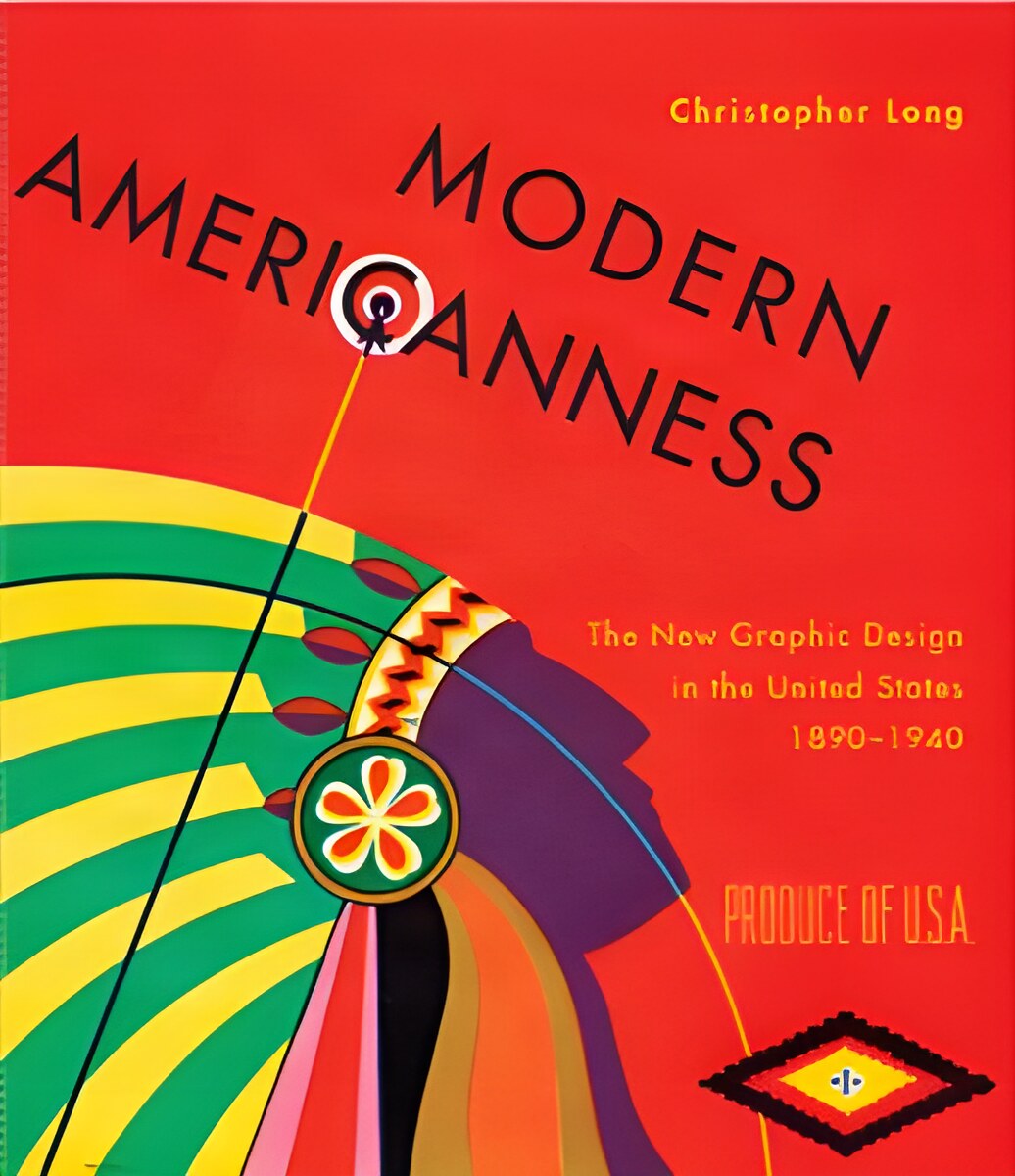
Hardcover. Czech Republic, Kant, 1st, 2025, Book: Very Good, Dust Jacket: None, Hardcover, pictorial boards, 264 pages. Venturing across five decades of American culture, this landmark book explores how modern graphic design emerged in the United States and how it became an intrinsic feature of the country's identity. Author and design professor Christopher Long tells this story in a wholly new way, exposing many long-forgotten figures and movements and resurrecting the debates and conceptions that were integral to the new art. In a series of deeply involving portraits of American artists and innovators who helped shape the very look of the modern age, Modern Americanness offers a sweeping story of the country's visual culture and its distinctiveness across a variety of designed objects: magazine covers, food labels, event posters, chapbooks, advertisements, propaganda and much more. Still in publisher's shrinkwrap.
Hardcover. London, Black Dog Publishing, 1st, 2010, Book: Very Good, Dust Jacket: None, 192 pages. Hardcover no dust jacket. Clean, unmarked copy with only minor wear to boards.
Hardcover. NY, William Helburn, 1st, Book: Very Good, Dust Jacket: None, Hardcover, blue cloth with silver stamping. Folio, 9 1/4 X 13 1/2". 80 plates printed on one side only, most in color. No date given but appears to be late 20s/1930. With architect Albert Kahn's ownership signature in pencil on front fly leaf. Covers with edgewear but interior is clean and bright. Bookplate on inside front cover. Scarce. DOMESTIC SHIPPING ONLY.
Hardcover. New Haven CT, Yale University Press, 1st, 2020, Book: Very Good, Dust Jacket: None, Hardcover, Original black lettered cloth quarter laid on pictorial boards, 184 pages. A fascinating exploration of how photography, graphic design, and popular magazines converged to transform American visual culture at mid-century. This dynamic study examines the intersection of modernist photography and American commercial graphic design between 1930 and 1960. Avant-garde strategies in photography and design reached the United States via European emigres, including Bauhaus artists forced out of Nazi Germany. The unmistakable aesthetic made popular by such magazines as Harper's Bazaar and Vogue--whose art directors, Alexey Brodovitch and Alexander Liberman, were both immigrants and accomplished photographers--emerged from a distinctly American combination of innovation, inclusiveness, and pragmatism. Beautifully illustrated with more than 150 revolutionary photographs, layouts, and cover designs, Modern Look considers the connections and mutual influences of such designers and photographers as Richard Avedon, Lillian Bassman, Herbert Bayer, Robert Frank, Lisette Model, Gordon Parks, Irving Penn, Cipe Pineles, and Paul Rand. Essays draw a lineage from European experimental design to innovative work in American magazine design at mid-century and offer insights into the role of gender in fashion photography and political activism in the mass media.
Hardcover. London & New York , The Studio Publications, 1st, 1941, Book: Good, Dust Jacket: None, Hardcover, red cloth stamped in black, 127 pages + ads, illustrated throughout in b&w. INSCRIBED BY AUTHOR on front fly leaf. Light rubbing, fraying to edges, binding slightly shaken. Internally very good.
Hardcover. NY, Metropolitan Museum of Art, 1st, 2021, Book: Very Good, Dust Jacket: None, Hardcover, pictorial boards, 200 pages. A look at the artistic and technical innovation of British printmaking from World War I to the eve of World War II, as artists from the Grosvenor School and beyond harnessed an emerging modernist style. This richly illustrated volume reintroduces rare print works from the collection of Leslie and Johanna Garfield into the narrative of modernism, demonstrating their relationship to other movements such as Cubism, Futurism, and Constructivism. Essays explore how artists turned to printmaking to alleviate trauma, memorialize their wartime experiences, and capture the aspirations and fears of the twenties and thirties. Special attention is given to the linocut technique revolutionized by Claude Flight and his students at London's Grosvenor School of Modern Art. Highlighted as well are the pioneering works of artists such as C. R. W. Nevinson, Sybil Andrews, Cyril E. Power, Paul Nash, Edward Wadsworth, Edith Lawrence, Ursula Fookes, and Lill Tschudi. In their quest to promote a more democratic art, these artists created innovative graphics that portrayed in subject, form, material, and technique the dynamic era in which they lived. In publisher's shrinkwrap.
Softcover. London, Batsford, 1st, 2012, Book: Very Good, Dust Jacket: Very Good, Softcover in pictorial dust jacket, 224 pages, color illustrations. A stunning survey of modern illustration that uses older styles of artistic expression to evoke a sense of another time and place. These vintage-style illustrations play with the past, subvert it, on occasion, but always feel fresh. Organized into 12 chapters by historical or cultural period, the book features hundreds of the best examples of modern retro illustration including styles as varied as Constructivist, Dada and Art Noveau. From work showing the ornamentation of Victorian fonts, the stylized angles of Art Deco, the lines of soviet poster art, the influence of Saul Bass and Blue Note record sleeves to the new slant on photorealism, and the renaissance of punk and comic art. Hundreds of artists from all over the world have contributed to a beautiful, witty and inspiring collection of vintage illustration. Clean copy.
Softcover. Seattle, Fantagraphics, 1st, 2005, Book: Very Good, Dust Jacket: None, Softcover, 112 pages. Written and Illustrated by Andrice Arp, Gabrielle Bell, Jonathan Bennett, Jeffrey Brown, Sophie Crumb, David Heatley, Paul Hornschemeier, Anders Nilsen, John Pham and Kurt Wolfgang. Designed by Jordan Crane. A quarterly anthology of literary comics.
Softcover. Seattle, Fantagraphics, 1st, 2005, Book: Very Good, Dust Jacket: None, Softcover, 112 pages. Written and Illustrated by Andrice Arp, Gabrielle Bell, Jonathan Bennett, Jeffrey Brown, Sophie Crumb, David Heatley, Paul Hornschemeier, Anders Nilsen, John Pham and Kurt Wolfgang. Designed by Jordan Crane. A quarterly anthology of literary comics.
Hardcover. Montreal, Drawn & Quarterly, 1st, 2012, Book: Very Good, Dust Jacket: None, Hardcover, 176 pages. Adrian Tomine's illustrations and comics have been appearing for more than a decade in the pages (and on the cover) of The New Yorker. Instantly recognizable for their deceptively simple and evocative style, these images have garnered the attention of The New Yorker's readership and the approbation of such venerable institutions as the Art Directors Club and American Illustration. New York Drawings is a loving homage to the city that Tomine, a West Coast transplant, has called home for the past seven years. This lavish, beautifully designed volume collects every cover, comic, and illustration that he has produced for The New Yorker to date, along with an assortment of other rare and uncollected illustrations and sketches inspired by the city. Complete with notes and annotations by the author, New York Drawings will also feature a new introductory comic focusing on Tomine's experiences as a New York illustrator.
Hardcover. Corte Madera CA, Gingko Press, 1st, 2008, Book: Very Good, Dust Jacket: None, Clean, unmarked copy in excellent condition. The latest limited edition from Ryan McGinness - No Sin/No Future follows the trajectory of the artist's book Project Rainbow (2003, Gingko Press). A collection of snapshots, sketches, and scans, all extracted with a discerning eye from the artist's studio archives. Sketchbook notes collide with paintings-in-progress and combine with vectors and bitmaps to create a dense site-specific visual concoction that provides unprecedented insight into how this artist's mind works and the mental processes that deliver his unique style. The work of Ryan McGinness has exercised great influence in graphic design and visual art circles, and is collected by venerable institutions around the world including the Museum of Modern Art in New York. The edition is limited to 2500 copies.
Hardcover. London, Fuel, 1st, 2007, Book: Very Good, Dust Jacket: Very Good, Hardcover. 192 pages. Plutser-Sarno has been collecting Russian street messages, usually hand-written and posted on walls, for two decades; this book is a sampling from his Museuam of Ads and Announcements. The notes are of a great variety: seeking recruits for cults or prostitution, offering items, some of them bizzare ones, for barter, warning miscreants of dire harm should they, for example, continue to steal light bulbs from a common corridor, prohibiting--predictably--a wide range of activities, and occasionally pleading in tones of insanity. Many of the messages are shown in illustrations, and Pluter-Sarno offers brief comments, sometimes necessary ones: Without them I shouldn't have known, for example, that 'artificial rock' was a euphemism for a concrete slab. (I'm sorry though that he didn't explain what curious Slavic behaviors created the need for notices in public lavoratories asking users to abstain from standing on toilet bowls.) Given the range of notes here, it's possible for the reader to get a hint of Soviet and post-Soviet customs and beliefs, the daily struggling with poverty and paucity, and the impact of the political upon the individual. Because Fuel, the publisher, is a design company it's small wonder that as an object this is a wonderful book. It's a small hardback with a cover done in relief, and sewn in signatures. The outer 2/3 of the pages are a kraft-paper brown and the inner 1/3, with colour illustrations, a cream color.
Hardcover. Seattle, WA, Fantagraphics, 1st, 2012, Book: Very Good, Dust Jacket: None, 192 pages. Hardcover with no dust jacket. Clean, unmarked copy. Black and white pictures throughout. The author's memoir of the seven years spent in collaboration with
Hardcover. Seattle, WA, Fantagraphics, 1st, 2012, Book: Very Good, Dust Jacket: None, 192 pages. Hardcover with no dust jacket. Clean, unmarked copy. Black and white pictures throughout. The author's memoir of the seven years spent in collaboration with Burroughs.
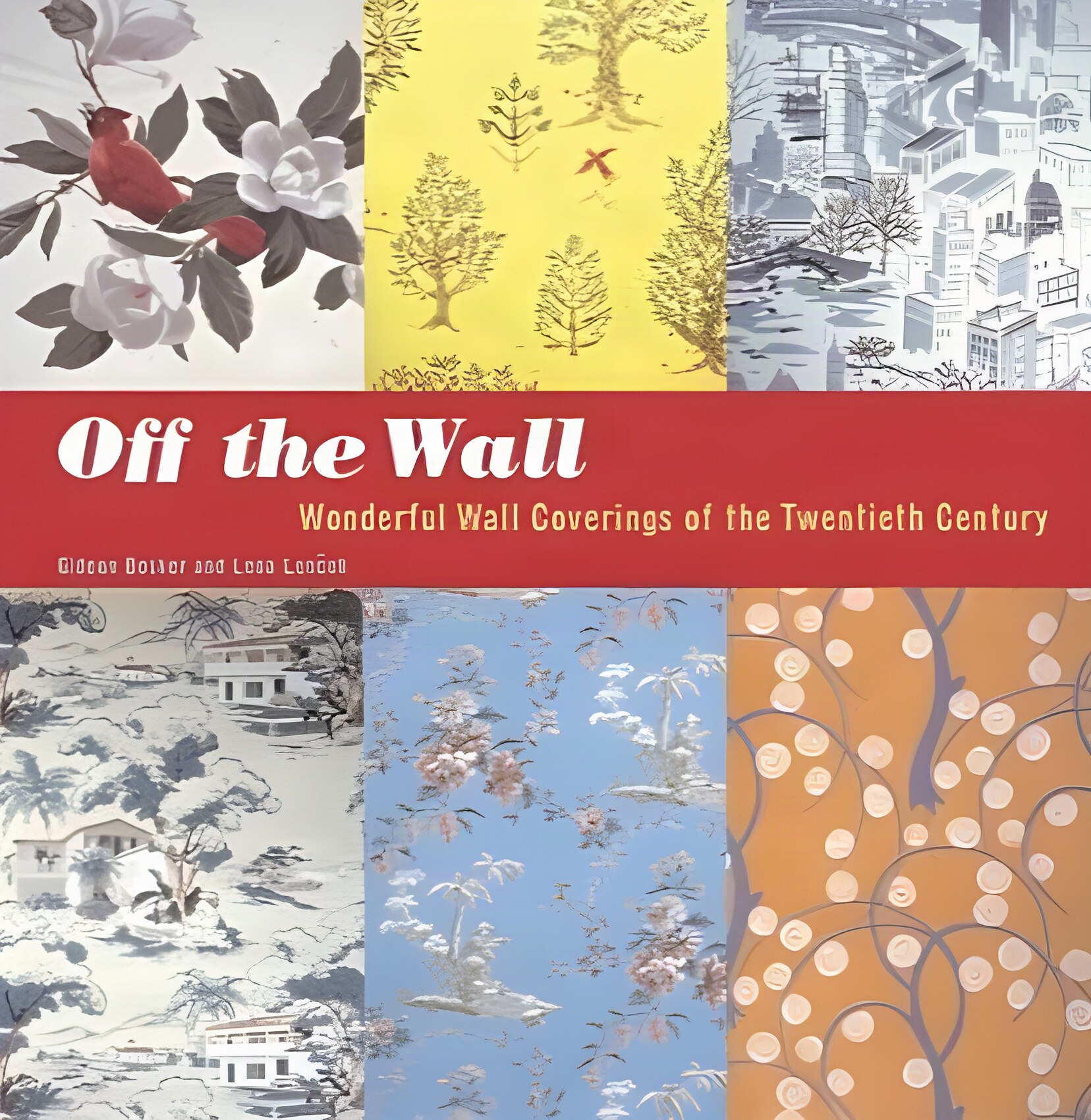
Softcover. San Francisco, Chronicle Books, 1st, 2004, Book: Very Good, Dust Jacket: None, Softcover, 120 pages. Hypnotic flowering vines, black-and-white Op Art odysseys, and seas of patriotic warships are just some of the beautiful, strange, and fantastic patterns that have adorned the walls of homes the world over. In the tradition of best-seller Fabulous Fabrics of the 50s, this home decor reference book entertains while it inspires with flawless reproductions of 150 classic and unique wallpapers; many of which are drawn from the collections of the Cooper-Hewitt, National Design Museum, Smithsonian Institution. Covering every decade of the century, Off the Wall celebrates robust pattern and detail in all their manifestations. Lively text and captions help to capture the designers, trends, and world events relevant to each piece, and the broader evolution of the genre, from a 1948 mural of rural America, replete with plump livestock and ripening fields, to the boldly colored abstractions produced in the 1950s by Herman Miller for MOMA. A useful resource for collectors, designers, decorators, and artists, Off the Wall is a colorful and captivating tribute to a widely appreciated medium. Clean copy.
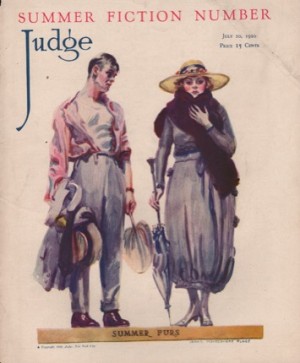
1920, Book: Very Good, Dust Jacket: None, Summer Furs, man and woman in different summer wear. Art by James Montgomery Flagg. 8 X 11". very good. PLEASE NOTE: The image shown is a scan of the actual product you are purchasing. What you see is what you get. The sheet may have some imperfections beyond the cropped area shown. You are buying THIS PAGE ONLY- not the entire magazine. Your order will be placed carefully between stiff paper and an acetate overlay, then packed in a rigid cardboard sleeve to prevent bending.
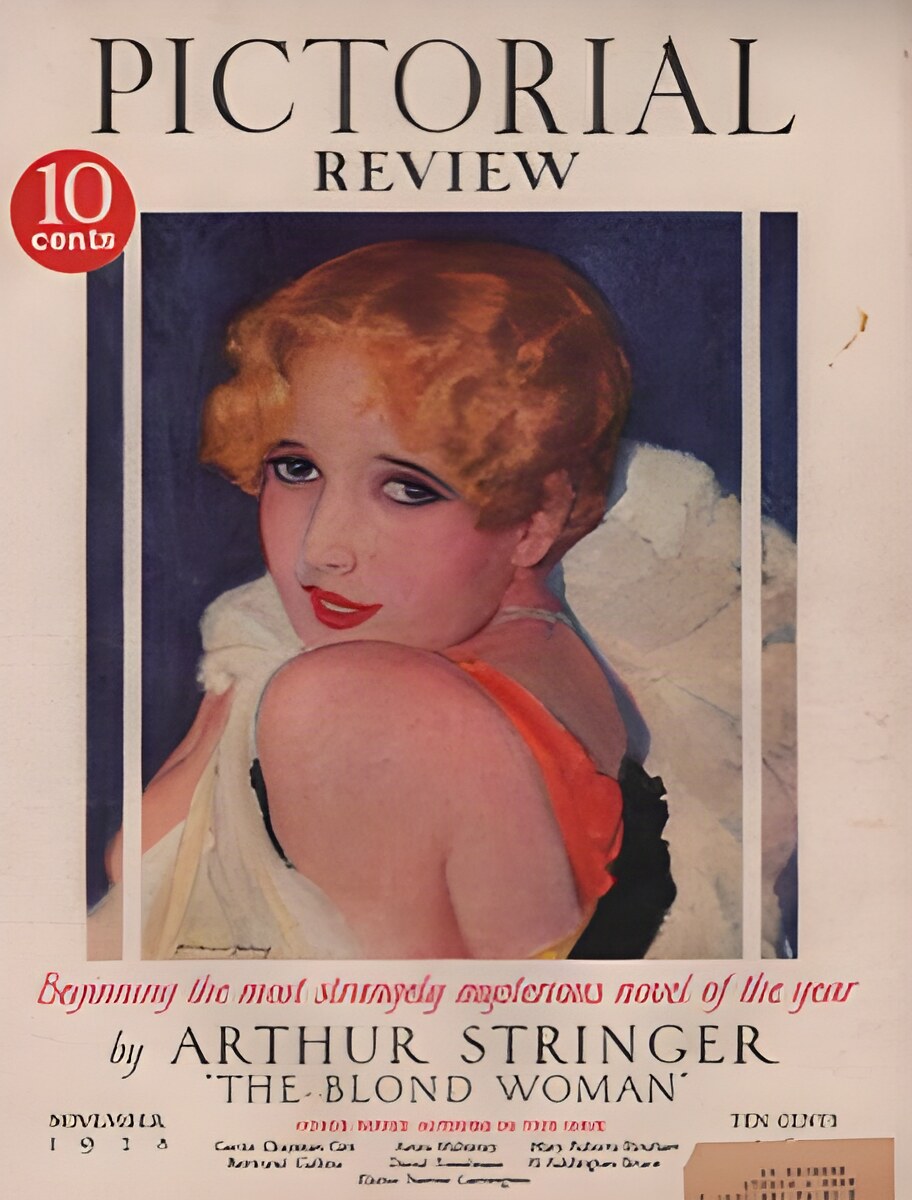
Portrait of glamorous woman in white fur, art by McClelland Barclay. 10 1/4 X 13 1/2", very good. Mailing label. During the 1920s and 1930s, Barclay's images were used by art directors for the nation's most popular periodicals including Collier's, Country Gentleman, Redbook, Pictorial Review, Coronet, Country Life, The Saturday Evening Post, The Ladies' Home Journal, Cosmopolitan, and a host of movie magazines. During the 1930s, Barclay also began painting movie poster art for Hollywood studios. He was one of the first artists to paint World War II pin-up girl, Betty Grable.
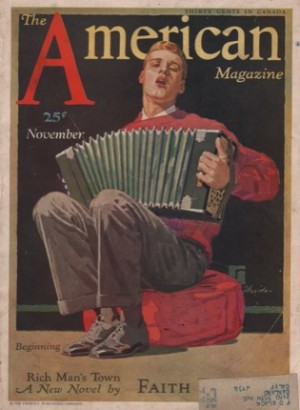
1931, Book: Very Good, Dust Jacket: None, College man playing accordion, art by John Sheridan. 8 X 11", light wear, mailing label. PLEASE NOTE: The image shown is a scan of the actual product you are purchasing. What you see is what you get. The sheet may have some imperfections beyond the cropped area shown. You are buying THIS PAGE ONLY- not the entire magazine. Your order will be placed carefully between stiff paper and an acetate overlay, then packed in a rigid cardboard sleeve to prevent bending.
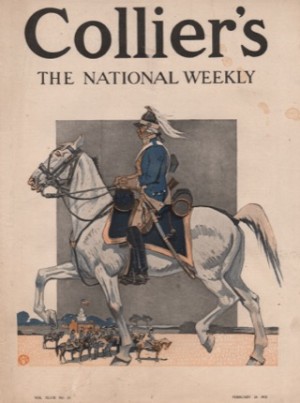
1912, Book: Very Good, Dust Jacket: None, Mounted soldier in profile, three-color art by Edward Penfield. 11 X 14", faint soil, very good. PLEASE NOTE: The image shown is a scan of the actual product you are purchasing. What you see is what you get. The sheet may have some imperfections beyond the cropped area shown. You are buying THIS PAGE ONLY- not the entire magazine. Your order will be placed carefully between stiff paper and an acetate overlay, then packed in a rigid cardboard sleeve to prevent bending.

 "Miro's Postersby: Corredor-Matheos, Jose")
 "Modart No. 01: Forget Art: In Order to Feel It. The Best of Modart Magazine by: Harlan Levey/ Editor")
 "Modeling Objects and Environmentsby: Kalay, Yehuda E.")
 "Modern British Posters: Art, Design & Communicationby: Rennie, Paul")
 "Modern Lettering: Design and Applicationby: Herbert Hoffmann")


 "Modern Look: Photography and the American Magazine by: Klein, Mason")
 "Modern Publicity in War (SIGNED COPY)by: Weir, K.B.E. . M.C., Sir Cecil M.")
 "Modern Vintage Illustration by: Dawber, Martin/ Bayley, Stephen (Foreward)")
 "MOME Fall 2005by: Gary Groth/ Eric Reynolds")
 "MOME Fall 2005by: Gary Groth/ Eric Reynolds")
 "Mythological Zoo, Theby: Herford, Oliver")
 "Naked Vinyl: Classic Album Cover Art Unveiledby: O'Brien, Tim")
 "New York Drawingsby: Adrian Tomine")
 "No Sin / No Future: Ryan McGinnessby: McGinness, Ryan")
 "Notes From Russiaby: Alexei Plutser-Sarno")
 "Observed While Falling: Bill Burroughs, Ah Pook, and Meby: McNeill, Malcolm")
 "Observed While Falling: Bill Burroughs, Ah Pook, and Meby: McNeill, Malcolm")