Softcover. NY, Farrar, Straus and Giroux, reprint, 1986, Book: Very Good, Dust Jacket: None, Softcover, 192 pages. Roman Vishniac's A Vanished World is an extraordinary record of the lives of German and Eastern European Jews in the years immediately preceding the Holocaust. Vishniac, a Russian Jew, began to take photographs of village life during World War I, when Russian Jews who lived near the front were accused of being German spies and were deported to Siberia. He later moved to Germany, where he witnessed the horrible events of Kristallnacht and the anti-Jewish legislation that allowed Hitler to declare his enemies stateless and therefore unworthy of international protection. As we study Vishniac's photographs--a surviving fraction of the more than 16,000 he took--we are aware that we are seeing the faces of those soon to die, witnessing a world that has all but perished. Yet that world, of shops and schools, of busy streets and quiet farms, remains with us if only as a ghostly memory, thanks in part to Vishniac's compassionate eye.
Hardcover. New York, Norton, 1st, 2005, Book: Very Good, Dust Jacket: Very Good, A monograph focusing for the first time exclusively on Kertesz's early Hungarian prints; selected from more than 1,000 contact prints in the artist's estate and reproduced actual size. Photographs by Andre Kertesz; introduction by Bruce Silverstein; essay by Robert Gurbo. 160 pages; 66 duo-toned b&w plates + 11 text illustrations; 5.25 x 5.25 inches.
Softcover. NY, Aperture Foundation, 1998, Book: Very Good, Dust Jacket: None, Softcover, 80 pages. A large, beautifully designed photography publication with many full page photographs in black and white and color. Glossy wraps. A new generation of Czech and Slovak photographers--heirs to the legacy of such modern masters as Josef Sudek and Frantisek Driktol--will be the subject of the August 1998 issue of Aperture, featuring images never before published in the West. In the Aperture tradition of investigating the contemporary photography of individual nations, Crossing Borders probes the cultural, social, and emotional climate of the post-Communist era as experienced by twenty-three photographers.
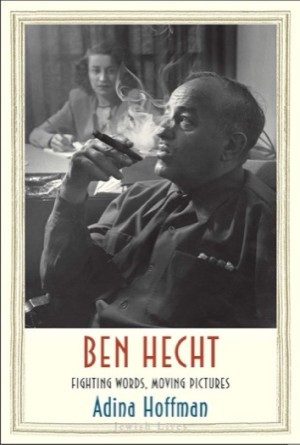
Hardcover. New Haven CT, Yale University Press, 1st, 2019, Book: Very Good, Dust Jacket: Very Good, Hardcover in a bright dust jacket, 245 pages, b&w illustrations, index. He was, according to Pauline Kael, "the greatest American screenwriter." Jean-Luc Godard called him "a genius" who "invented 80 percent of what is used in Hollywood movies today." Besides tossing off dozens of now-classic scripts--including Scarface,Twentieth Century, and Notorious--Ben Hecht was known in his day as ace reporter, celebrated playwright, taboo-busting novelist, and the most quick-witted of provocateurs. During World War II, he also emerged as an outspoken crusader for the imperiled Jews of Europe, and later he became a fierce propagandist for pre-1948 Palestine's Jewish terrorist underground. Whatever the outrage he stirred, this self-declared "child of the century" came to embody much that defined America--especially Jewish America--in his time. Hecht's fame has dimmed with the decades, but Adina Hoffman's vivid portrait brings this charismatic and contradictory figure back to life on the page. Hecht was a renaissance man of dazzling sorts, and Hoffman--critically acclaimed biographer, former film critic, and eloquent commentator on Middle Eastern culture and politics--is uniquely suited to capture him in all his modes.
Hardcover. London, Macmillan & Co., reprint, 1942, Book: Good, Dust Jacket: None, Hardcovers, two-volume set, green cloth with gilt lettering on spine. Rebecca West, 1892-1983, wrote Black Lamb & Grey Falcon after spending 6 weeks in Yugoslavia. Publication occurred at the same time as the Nazi invasion of the state. West pays tribute in the book's epigram to the thousands of civilians who lost their lives in the horrific events that followed; "To my friends in Yugoslavia, who are now all dead or enslaved." 32 black and white photographic plates, map endpapers to both volumes. Clean, tight bindings. Tattered dust jackets laid in. No markings. DUE TO WEIGHT, DOMESTIC SHIPPING ONLY.
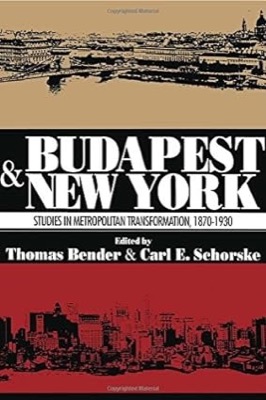
Hardcover. NY, Russell Sage Foundation, 1st, 1994, Book: Very Good, Dust Jacket: Very Good, Hardcover, 400 pages, b&w illustrations. Little over a century ago, New York and Budapest were both flourishing cities engaging in spectacular modernization. By 1930, New York had emerged as an innovating cosmopolitan metropolis, while Budapest languished under the conditions that would foster fascism. Budapest and New York explores the increasingly divergent trajectories of these once-similar cities through the perspectives of both Hungarian and American experts in the fields of political, cultural, social and art history. Their original essays illuminate key aspects of urban life that most reveal the turn-of-the-century evolution of New York and Budapest: democratic participation, use of public space, neighborhood ethnicity, and culture high and low. What comes across most strikingly in these essays is New York's cultivation of social and political pluralism, a trend not found in Budapest. Nationalist ideology exerted tremendous pressure on Budapest's ethnic groups to assimilate to a single Hungarian language and culture. In contrast, New York's ethnic diversity was transmitted through a mass culture that celebrated ethnicity while muting distinct ethnic traditions, making them accessible to a national audience. Mild fade to spine of dust jacket, otherwise clean.
Hardcover. New Haven CT, Yale University Press, 1st, 1998, Book: Very Good, Dust Jacket: Very Good, Hardcover in a bright dust jacket, 436 pages, b&w illustrations. The humiliation of Russia by separatist rebels in the Chechen War marked a key moment in Russian - and perhaps world - history. In this new analysis Anatol Lieven offers a riveting account of the war as a means to explore the painful fate of the post-Soviet state. Lieven looks into the long, troubled history of Russian-Chechen relations, noting that each side despised the other for largely cultural reasons (the Chechens have long been involved in organized crime in major Russian cities, whereas Russians have long tried to strip Chechnya of its resources). He notes that Chechen society has historically been militarized (one Armenian said to Lieven, "The men are always fighting and the women are cooking for them, nursing their wounds, and bringing up their children"), making the mountain people a formidable foe. In the meanwhile, writes Lieven, the Russian military suffered from low morale and from corruption of various kinds: Russian field soldiers sold their guns to Chechen guerrillas for vodka and currency, while Russian officers stole their soldiers' pay and Russian politicians skimmed off the top. This is an extraordinary look at a little-known conflict. Clean copy.
Hardcover. Canada, Deutscher Kunstverlag, 1st, 2012, Book: Very Good, Dust Jacket: None, 159 pages. Like new in publisher's shrink-wrap. The material that was saved from Warsaw in 1939 included more than ten color slides. These slides are the only color photo documents showing that historic moment from the perspective of city residents. The slides were found only in recent years by the photographer's son, Sam Bryan. In addition to color slides this album also includes photographs recorded by Julien Bryan on black-and-white film at that time and iater subjected to a complicated process of colorizing. The colorizing took piace after Bryan's return to the United States in 1939.
Hardcover. Vilnius, Baltos Lankos, 1st, 1995, Book: Very Good, Dust Jacket: Very Good, 69 duotone plates, images taken by the Lithuanian photographer Jozef Chechowicz (1819-1888). Mostly landscapes of the city and it's buildings, some with people. Beautifully produced volume, limited to 2000 copies. Light edgewear to dust jacket.
Hardcover. Princeton NJ, Princeton University Press, 1st, 1984, Book: Very Good, Dust Jacket: Very Good, Hardcover, 353 pages, illustrated throughout in color and b&w. Light edgewear and two tiny closed tears to pictorial dust jacket and faint foxing to edges of textblock. Otherwise, a clean, tight copy.
Hardcover. NY, St. Martin's Press, 1st, 2023, Book: Very Good, Dust Jacket: Very Good, Hardcover in a bright, unclipped dust jacket, 381 pages. From the beginning of World War II through the early days of Vietnam, groundbreaking female photojournalist and war correspondent Dickey Chapelle chased dangerous assignments her male colleagues wouldn't touch, pioneering a radical style of reporting that focused on the humanity of the oppressed. She documented conditions across Eastern Europe in the wake of the Second World War. She marched down the Ho Chi Minh Trail with the South Vietnamese Army and across the Sierra Maestra Mountains with Castro. She was the first reporter accredited with the Algerian National Liberation Front, and survived torture in a communist Hungarian prison. She dove out of planes, faked her own kidnapping, and endured the mockery of male associates, before ultimately dying on assignment in Vietnam with the Marines in 1965, the first American female journalist killed while covering combat. Small remainder dot on bottom edge otherwise clean.
Hardcover. Montreal, Drawn & Quarterly, 1st, 2003, Book: Very Good, Dust Jacket: None, 140 pages. Hardcover NO dust jacket. Black and white comic. Clean, unmarked copy with minor wear to boards. Award-winning comix-journalist Joe Sacco goes behind the scene of war correspondence to reveal the anatomy of the big scoop. He begins by returning us to the dying days of Balkan conflict and introduces us to his own fixer; a man looking to squeeze the last bit of profit from Bosnia before the reconstruction begins. Thanks to a complex relationship with the fixer Joe discovers the crimes of opportunistic warlords and gangsters who run the countryside in times of war. But the west is interested in a different spin on the stories coming out of Bosnia. Almost ten years later, Joe meets up with his fixer and sees how the new Bosnian government has "dealt" with these criminals and Joe ponders who is holding the reins of power these days...
Hardcover. London, Hamish Hamilton, 1st, 2008, Book: Very Good, Dust Jacket: Very Good, Hardcover, 496 pages. SIGNED BY THEROUX on title page. In 1975 a young and ambitious writer named Paul Theroux made his literary mark by taking the 28,000-mile intercontinental journey via rail from London to Tokyo and back home again. Thirty years later, an older and wiser Theroux decided to retrace his steps. The result is Ghost Train to the Eastern Star, a fascinating account of the places you vaguely knew existed, yet definitely should know something about. Get on board Theroux's fast-moving travelogue, which features some of the most astute commentary on our distorted notions of time, space, and each other in the age of jet speed, broadband connections, and cultural extinction. A railway journey through Eastern Europe, India, and Asia. Clean copy
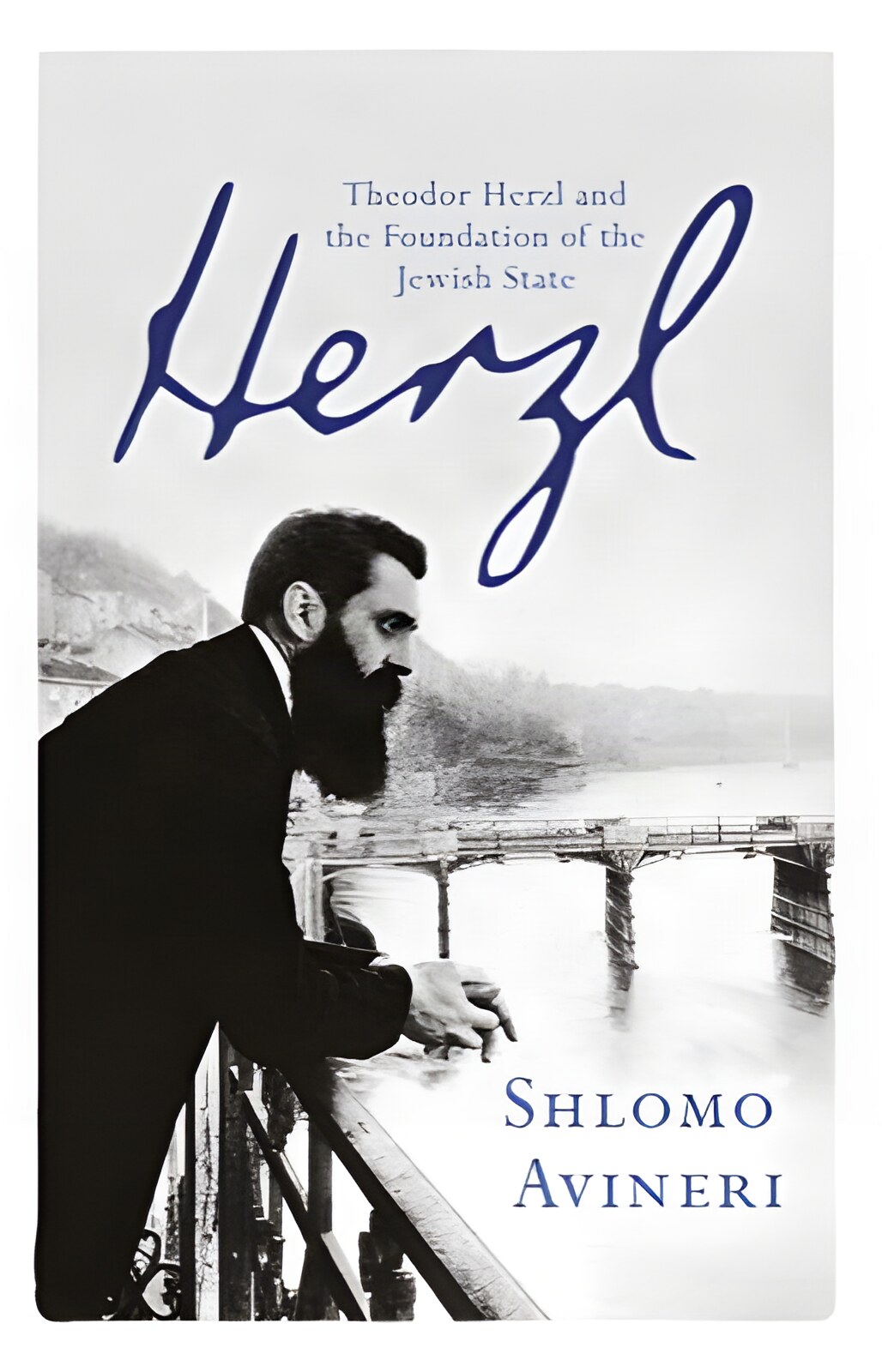
Hardcover. London, Weidenfeld & Nicolson, 1st UK, 2013, Book: Very Good, Dust Jacket: Very Good, Hardcover in a bright, unclipped dust jacket. Drawing extensively on his diaries as well as his published works, this intellectual biographical follows Herzl's transformation from a private person into the founder and leader of a political movement which made the quest for a Jewish state into a player in international politics. Contrary to the conventional view which saw the Dreyfus affair as the trigger for Herzl's loss of belief in the promise of Jewish emancipation, Avineri shows how it was the political crisis of the Austro-Hungarian Habsburg Empire, torn apart by contending national movements, which convinced Herzl of the need for a Jewish polity. In response to the wide resonance for his 1896 The Jewish State, Herzl convened the first Zionist Congress in Basel in 1897, which established the World Zionist Organization with its representative and elected institutions; this in turn became the foundation for Israel's democratic political system. In his efforts to gain international support for a Jewish state, Herzl met with the Ottoman Sultan, the German Emperor Wilhelm II, Pope Pius X, British, Russian and German ministers, as well as an enormous number of other government and public opinion leaders of most European countries. By the time of his early death in 1904 at the age of 44, Herzl succeeded in putting Zionism on the map of world politics, no longer an esoteric idea held by a small group of Jewish intellectuals in Eastern Europe. Clean copy.
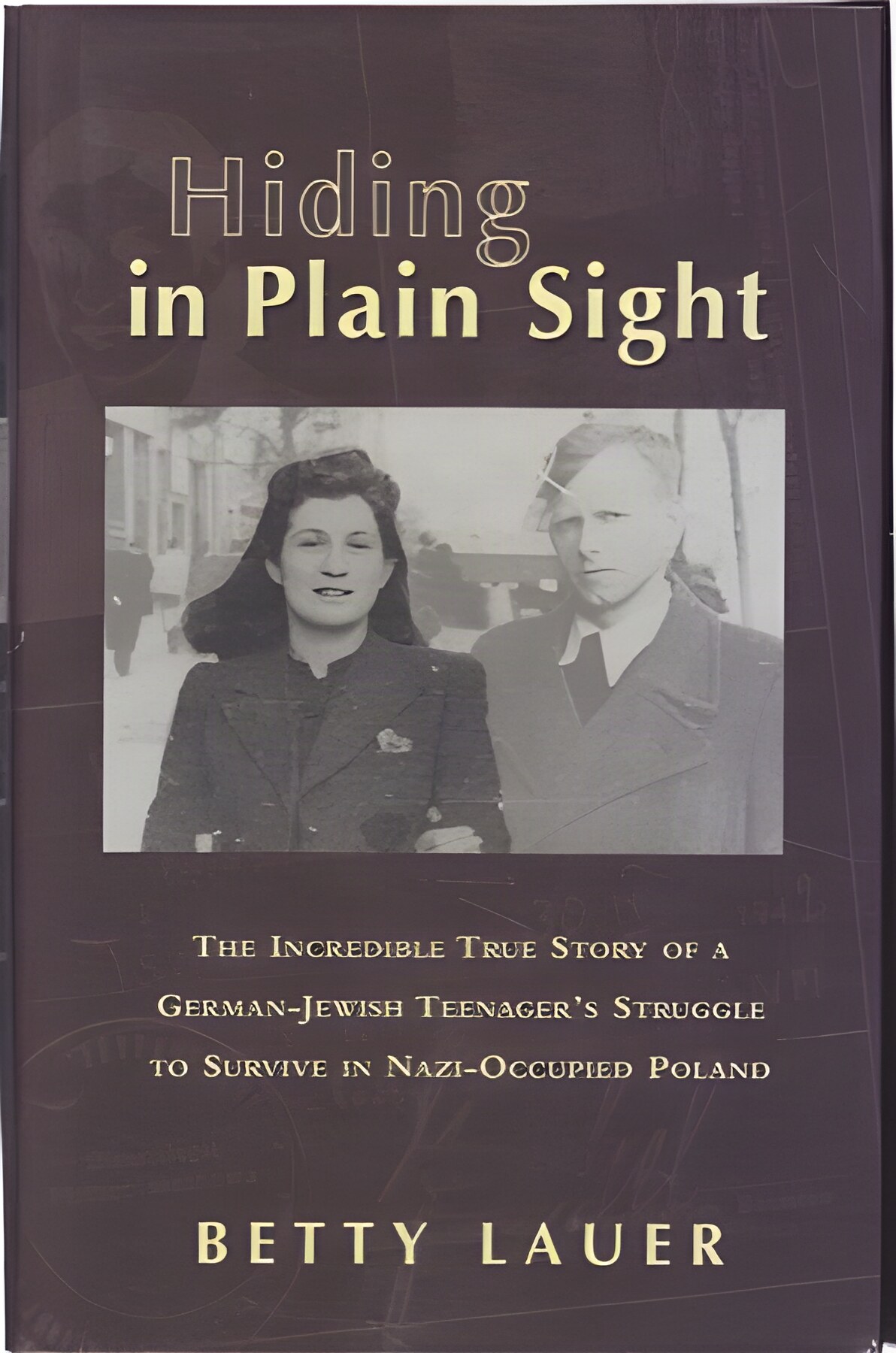
Hardcover. Hanover NH, Smith and Kraus, 1st, 2004, Book: Very Good, Dust Jacket: Very Good, Hardcover in a bright dust jacket, 561 pages, b&w illustrations. 12 year old Bertel, living in Hindenburg, Germany in 1938, was forced by the Nazis to leave Germany for Poland. Disguising herself as a young Polish woman, this is the story of Bertel's survival. INSCRIBED TWICE BY LAUER on the front fly leaf. Clean copy.
Nafziger Collection , reprint, 2007, Book: Very Good, Dust Jacket: None, Softcover, 214 pages. Large size 28cm x 21cm in soft card covers. Clean and sound. History of the Polish Revolution of 1830 by Joseph Hordynski - Major of the Late Tenth Regiment of Lithuanian Lancers (Originally pub. in 1833) .
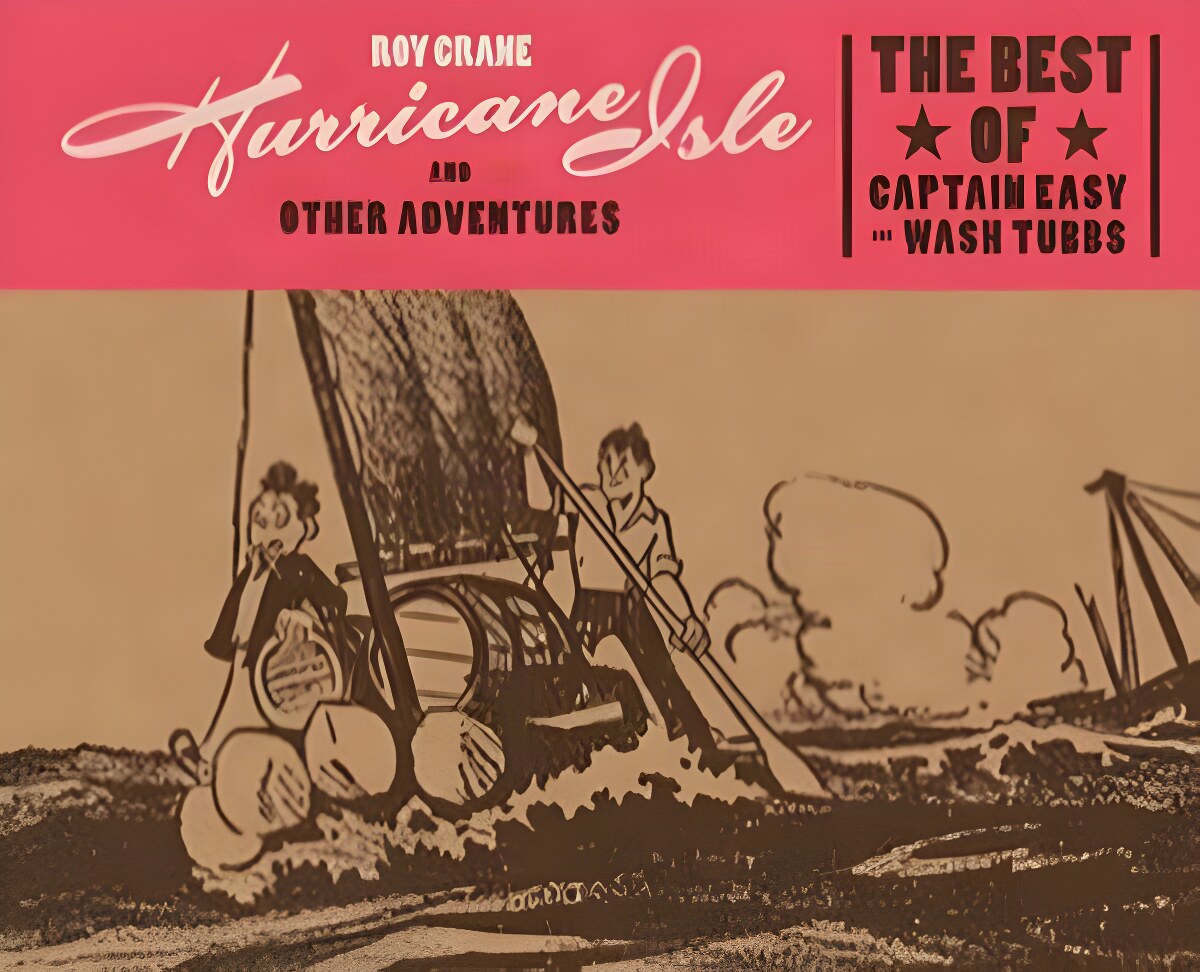
Hardcover. Seattle, Fantagraphics Books, 1st, 2015, Book: Very Good, Dust Jacket: None, Hardcover, oblong format, pictorial boards, 319 pages illustrated in b&w. Royston Campbell Crane (1901-1977), who signed his work Roy Crane, created the comic-strip characters Wash Tubbs, Captain Easy, and Buz Sawyer. His work continues to inspire cartoonists today. A collection of his classic Captain Easy and Wash Tubbs. The very best of the indispensable daily comic strip adventures featuring Wash running a dinky railroad in a comic-opera version of Eastern Europe, the gripping narrative of Easy waging total war against The Phantom King, battles with pirates in the South Seas, and the harrowing story of Easy and Wash as prisoners on the infamous Devil's Island. Clean copy.
Hardcover. NY, Paragon House, 1st, 1991, Book: Very Good, Dust Jacket: Very Good, Hardcover in a bright dust jacket. 274 pages. Black cloth spine over brown boards. First published in 1925.
Hardcover. Cambridge MA, MIT Press, 1st, 1999, Book: Very Good, Dust Jacket: Very Good, 420 pages, illustrated with mostly b&w plates, 8 color pages. Small remainder stamp on bottom edge. "Tiege was at one and the same time both an agent provocateur and seismograph, at once provoking action and debate and yet simultaneously reacting with the utmost sensitivity to the shifting political spectrum of his time."--from the introduction by Kenneth FramptonKarel Teige (1900-1951), a leading figure of the avant-garde of the 1920s and 1930s, participated in every important argument and controversy of those turbulent years. He edited the most influential avant-garde journals on Czech and international cultural affairs and wrote profoundly original essays and books on the theory and criticism of art and architecture. He also produced paintings, collages, photomontages, film scripts, book covers, and typefaces and participated in theatrical performances.
Hardcover. Ostfildern GR, Hatje Cantz, 1st, 2010, Book: Very Good, Dust Jacket: None, Like new in publishers shrink-wrap. Dutch documentary photographer Martin Roemers decided to track down the remains of deserted atom bomb shelters of the Cold War period. For over ten years he traveled through formerly hostile countries on both sides of the line: through eastern and western Germany, England, Belgium, the Netherlands, Poland, Ukraine, and other former East Bloc nations. Hardcover, 144 pages, 73 color plates, essays by Roemers, H.J.A. Hofland, and Nadine Barth.
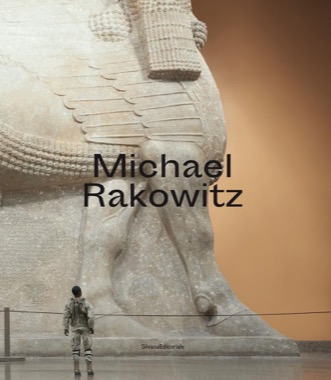
Hardcover. Milan, Silvana Editoriale, 1st, 2020, Book: Very Good, Dust Jacket: Very Good, Hardcover in a bright dust jacket. Iraqi-American artist Michael Rakowitz's (b. 1973, USA) first major European survey presents a sequence of installations drawing on architecture, cultural artifacts and cuisine to tell stories of social ritual, conflict and loss. It encompasses work considering the citizen visionaries of post Soviet Hungary, Middle Eastern Beatles fans and the stonecarvers of Afghanistan, with Rakowitz's casts of players and objects revealing the legacy of colonization, modernism and globalism. The artist's life-size replica of the gigantic lamassu, one of two monumental winged bulls that once guarded the gates of Nineveh in Iraq, currently features on Trafalgar Square's Fourth Plinth. This recreation of an ancient mythological creature is made from everyday date syrup cans and is part of an epic endeavour to recreate all 7,000 objects looted from the Iraq Museum in 2003, as well as those destroyed more recently at archaeological sites like Nimrud, also presented here. Text in English and Italian. Short closed tear to dj corner. otherwise like new. DOMESTIC SHIPPING ONLY.

 "A Vanished World by: Roman Vishniac (Author, Photographer), Elie Wiesel (Foreword)")
 "Andre Kertesz: The Early Yearsby: Kertesz, Andre")
 "Aperture 152: Crossing Borders, Contemporary Czech & Slovak Photography (Aperture Magazine)by: Aperture Foundation Inc. Staff")
 "Aperture 152: Crossing Borders, Contemporary Czech & Slovak Photographyby: Staff, Aperture Foundation Inc.")
 "Black Lamb And Grey Falcon: The Record Of A Journey Through Yugoslavia In 1937 - Volumes I and 2 (Two Volume Set) by: Rebecca West")
 "Chechnya: Tombstone of Russian Powerby: Anatol Lieven")
 "COLORS OF WAR, THE: THE SIEGE OF WARSAW IN JULIEN BRYAN'S COLOR PHOTOGRAPHSby: Bryans, Julien (Photographer)")

 "Field Guide to Birds of the USSR, A : Including Eastern Europe and Central Asiaby: Flint, V. E. and others")
 "First to the Front: The Untold Story of Dickey Chapelle Trailblazing Female War Correspondent by: Lorissa Rinehart")
 "Fixer, The: A Story from Sarajevo by: Sacco, Joe")
 "Ghost Train to the Eastern Star: On the Tracks of the Great Railway Bazaar (SIGNED COPY)by: Theroux, Paul")
 "Good-Hearted Youngest Brother, Theby: Severo, Emoke de Papp and Diane Goode")
 "History of the Polish Revolution of 1830by: Hordynski, Joseph")
 "Ivan Franko, The Poet of Western Ukraine: Selected Poems by: Ivan Franko, Editor: Clarence A. Manning, Translator: Percival Cundy")

 "Karel Teige/1900-1951: L'Enfant Terrible of the Czech Modernist Avant-Gardeby: Dluhosch (Ed.), Eric and Rostislav Svacha")
 "Martin Roemers: Relics of the Cold Warby: Hofland, H.J.A.")