Softcover. NY, Farrar, Straus and Giroux, reprint, 1986, Book: Very Good, Dust Jacket: None, Softcover, 192 pages. Roman Vishniac's A Vanished World is an extraordinary record of the lives of German and Eastern European Jews in the years immediately preceding the Holocaust. Vishniac, a Russian Jew, began to take photographs of village life during World War I, when Russian Jews who lived near the front were accused of being German spies and were deported to Siberia. He later moved to Germany, where he witnessed the horrible events of Kristallnacht and the anti-Jewish legislation that allowed Hitler to declare his enemies stateless and therefore unworthy of international protection. As we study Vishniac's photographs--a surviving fraction of the more than 16,000 he took--we are aware that we are seeing the faces of those soon to die, witnessing a world that has all but perished. Yet that world, of shops and schools, of busy streets and quiet farms, remains with us if only as a ghostly memory, thanks in part to Vishniac's compassionate eye.
Hardcover. Tokyo, University of Tokyo Press, 1st US, 1984, Book: Very Good, Dust Jacket: Very Good, 251 pages, beige cloth covers with dark brown lettering on spine. Scholarly, but accessible to a wider intellectual audience. Nakayama lucidly describes the similarities and differences between "Eastern" and "Western" science from Aristotle to the twentieth century.
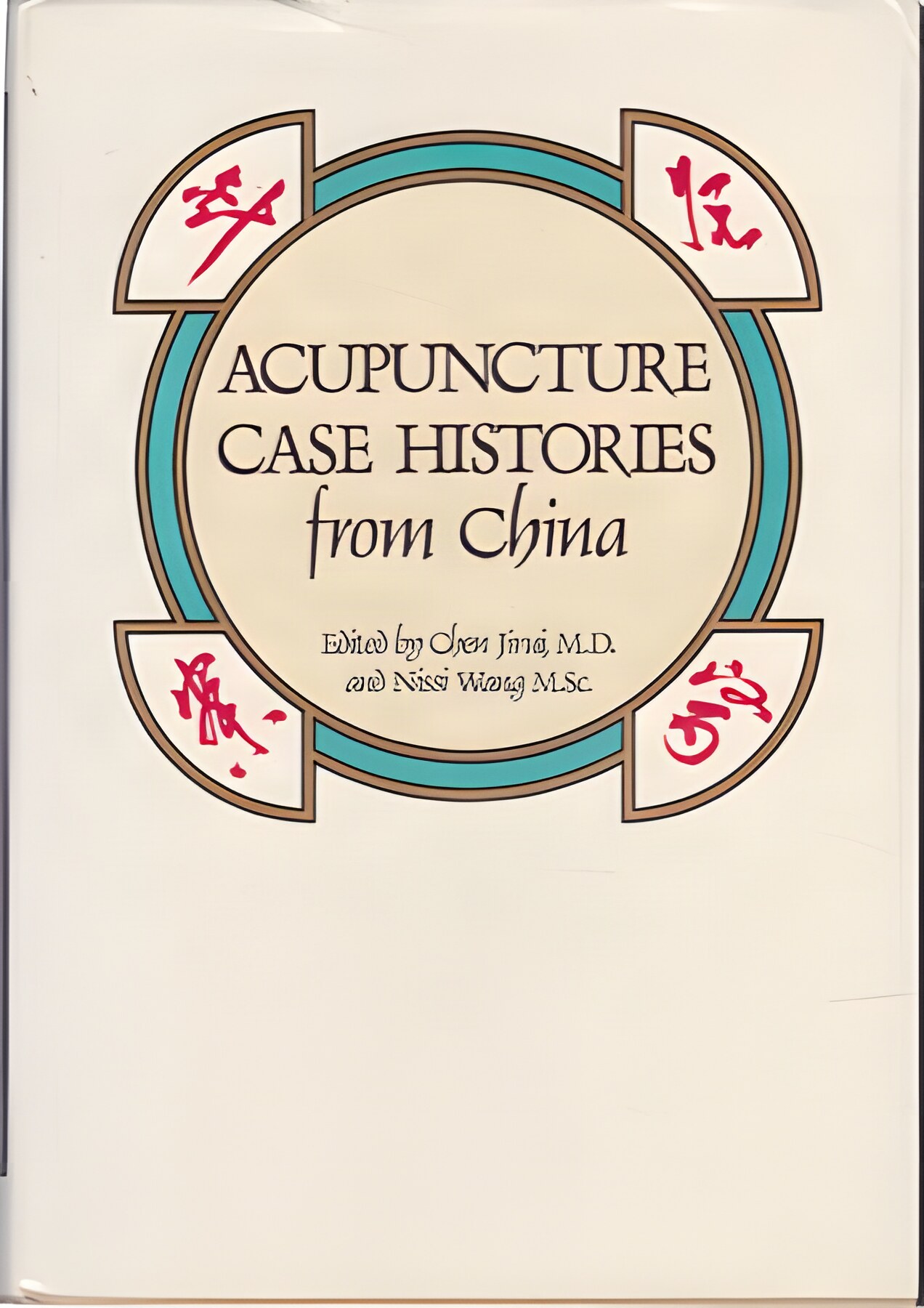
Hardcover. Seattle Wa, Eastland Press, 1st, Book: Very Good, Dust Jacket: Very Good, Hardcover in a bright dust jacket, 300 pages. This book marks the first original collection of acupuncture case histories in English. Included are over one hundred case histories contributed by prominent practitioners of acupuncture in China. The case histories represent a broad spectrum of disorders for which acupuncture is used in contemporary China. Each of the case histories provides a thorough discussion of the traditional Chinese diagnosis and syndrome differentiation, together with the points and techniques selected for treatment. The course of therapy is described, and alterations in the diagnosis and treatment regimen are analyzed. The results of treatment--both favorable and unfavorable--are noted. Name on front fly leaf, otherwise clean.
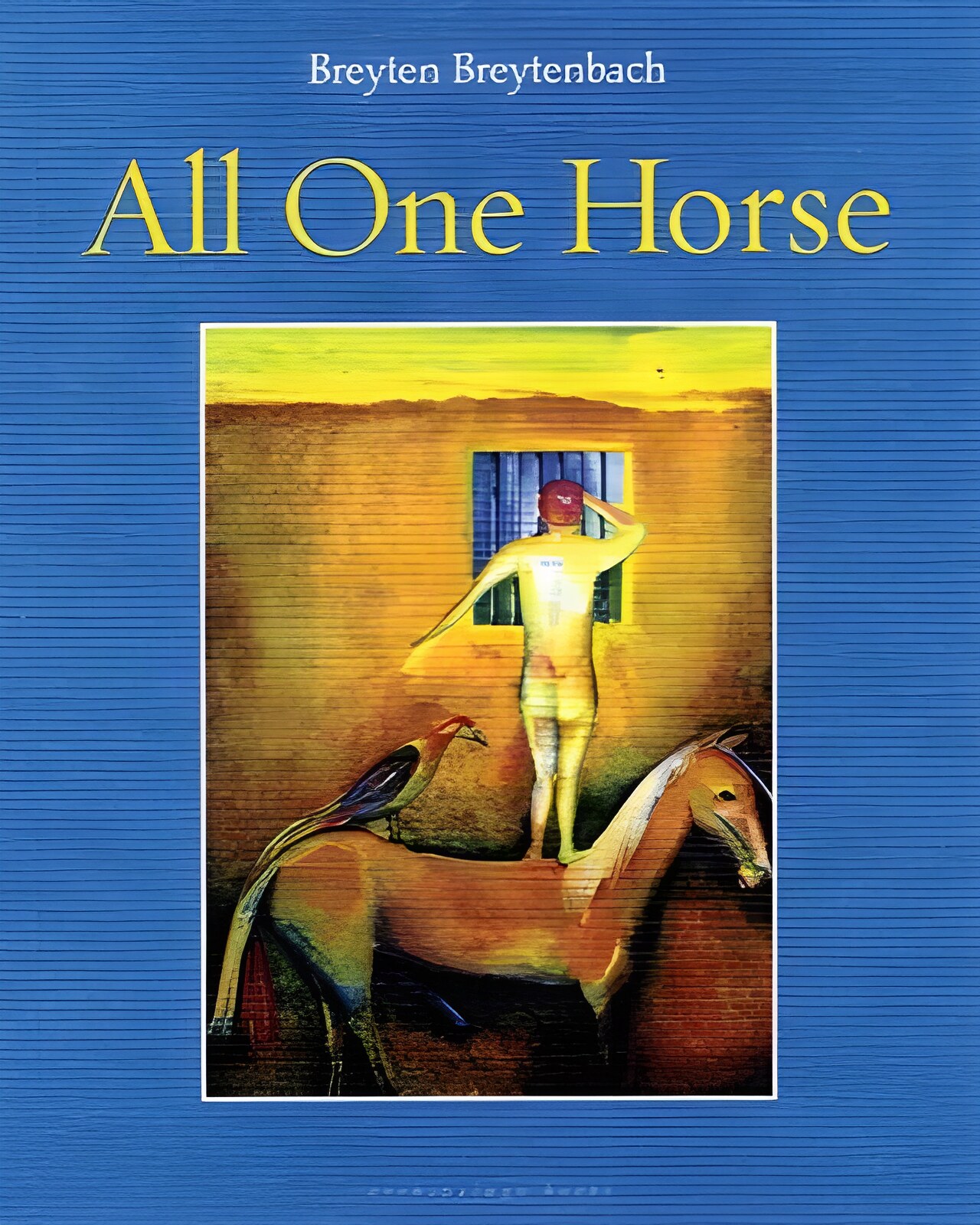
Softcover. NY, Archipelago Books, reprint, 2008, Book: Very Good, Dust Jacket: None, Softcover in pictorial wrappers, 115 pages, color illustrations. All One Horse is a marvel-filled journey through Breyten Breytenbach's kaleidoscopic imagination. The electrifying colors and penetrating images of his paintings converse with his lyrical and satirical dream-fables. These visions and parables emerge from a melange of cultures and traditions: African and Eastern thought, the spirit world, and the spheres of visual art, philosophy, history and politics. Breytenbach's watercolors communicate in hieroglyphs, where private conversation embraces myth and dream. These reflections and images - clear and complex at once - are cries for human dignity and justice, are truth disguised as play. An outspoken human rights activist, Breyten Breytenbach is a poet, painter, memoirist, essayist and novelist. His paintings and drawings have been exhibited around the world. Born in South Africa, he emigrated to Paris in the late '60s and became deeply involved in the anti-Apartheid movement. Clean Copy.
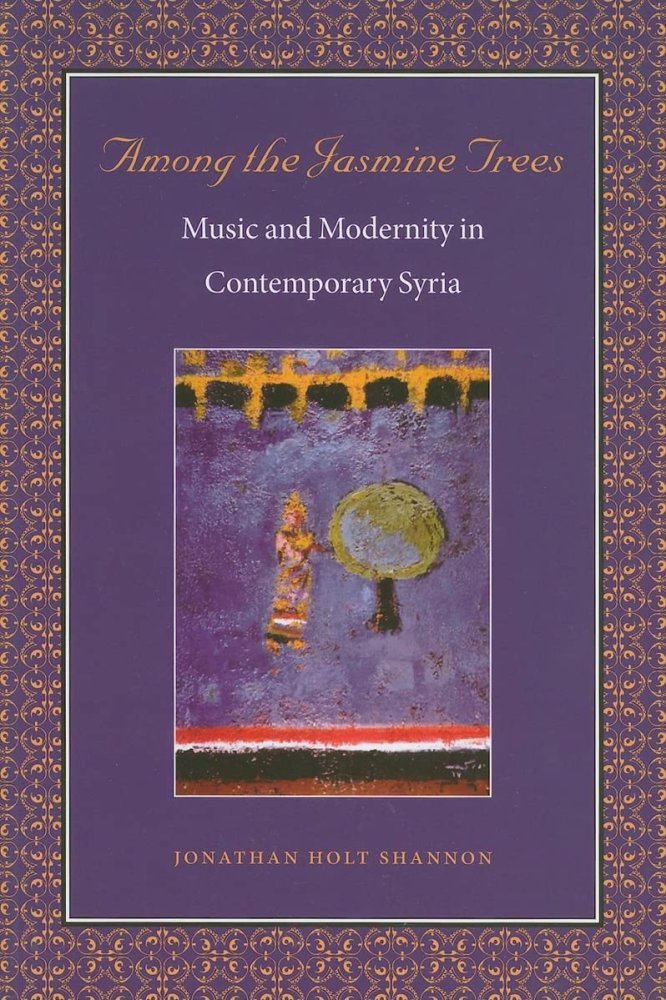
Softcover. Middletown CT, Wesleyan University Press, 2nd pr., 2006, Book: Very Good, Dust Jacket: None, Softcover, 252 pages. How does a Middle Eastern community create a modern image through its expression of heritage and authenticity? In Among the Jasmine Trees: Music and Modernity in Contemporary Syria, Jonathan H. Shannon investigates expressions of authenticity in Syria's musical culture, which is particularly known for embracing and preserving the Arab musical tradition, and which has seldom been researched in depth by Western scholars. Music plays a key role in the process of self-imaging by virtue of its ability to convey feeling and emotion, and Shannon explores a variety of performance genres, Sufi rituals, song lyrics, melodic modes, and aesthetic criteria. Clean copy.
Hardcover. New York, Norton, 1st, 2005, Book: Very Good, Dust Jacket: Very Good, A monograph focusing for the first time exclusively on Kertesz's early Hungarian prints; selected from more than 1,000 contact prints in the artist's estate and reproduced actual size. Photographs by Andre Kertesz; introduction by Bruce Silverstein; essay by Robert Gurbo. 160 pages; 66 duo-toned b&w plates + 11 text illustrations; 5.25 x 5.25 inches.
Softcover. NY, Aperture Foundation, 1998, Book: Very Good, Dust Jacket: None, Softcover, 80 pages. A large, beautifully designed photography publication with many full page photographs in black and white and color. Glossy wraps. A new generation of Czech and Slovak photographers--heirs to the legacy of such modern masters as Josef Sudek and Frantisek Driktol--will be the subject of the August 1998 issue of Aperture, featuring images never before published in the West. In the Aperture tradition of investigating the contemporary photography of individual nations, Crossing Borders probes the cultural, social, and emotional climate of the post-Communist era as experienced by twenty-three photographers.
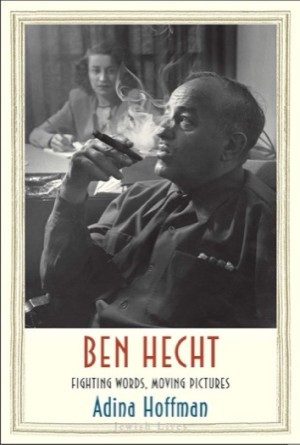
Hardcover. New Haven CT, Yale University Press, 1st, 2019, Book: Very Good, Dust Jacket: Very Good, Hardcover in a bright dust jacket, 245 pages, b&w illustrations, index. He was, according to Pauline Kael, "the greatest American screenwriter." Jean-Luc Godard called him "a genius" who "invented 80 percent of what is used in Hollywood movies today." Besides tossing off dozens of now-classic scripts--including Scarface,Twentieth Century, and Notorious--Ben Hecht was known in his day as ace reporter, celebrated playwright, taboo-busting novelist, and the most quick-witted of provocateurs. During World War II, he also emerged as an outspoken crusader for the imperiled Jews of Europe, and later he became a fierce propagandist for pre-1948 Palestine's Jewish terrorist underground. Whatever the outrage he stirred, this self-declared "child of the century" came to embody much that defined America--especially Jewish America--in his time. Hecht's fame has dimmed with the decades, but Adina Hoffman's vivid portrait brings this charismatic and contradictory figure back to life on the page. Hecht was a renaissance man of dazzling sorts, and Hoffman--critically acclaimed biographer, former film critic, and eloquent commentator on Middle Eastern culture and politics--is uniquely suited to capture him in all his modes.
Hardcover. London, Macmillan & Co., reprint, 1942, Book: Good, Dust Jacket: None, Hardcovers, two-volume set, green cloth with gilt lettering on spine. Rebecca West, 1892-1983, wrote Black Lamb & Grey Falcon after spending 6 weeks in Yugoslavia. Publication occurred at the same time as the Nazi invasion of the state. West pays tribute in the book's epigram to the thousands of civilians who lost their lives in the horrific events that followed; "To my friends in Yugoslavia, who are now all dead or enslaved." 32 black and white photographic plates, map endpapers to both volumes. Clean, tight bindings. Tattered dust jackets laid in. No markings. DUE TO WEIGHT, DOMESTIC SHIPPING ONLY.
Hardcover. NY, Amistad/HarperCollins, 3rd pr., 2005, Book: Very Good, Dust Jacket: Very Good, Hardcover in a bright, unclipped dust jacket. 540 pages, b&w illustrations, index. An important book of epic scope on America's first racially integrated, religiously-inspired political movement for change-The Underground Railroad, a movement peopled by daring heroes and heroines, and everyday folk For most, the mention of the Underground Railroad evokes images of hidden tunnels, midnight rides, and hairsbreadth escapes. Yet the Underground Railroad's epic story is much more morally complex and politically divisive than even the myths suggest. Against a backdrop of the country's westward expansion,which brought together Easterners who had engaged in slavery primarily in the abstract alongside slaveholding Southerners and their slaves, arose a clash of values that evolved into a fierce fight for nothing less than the country's soul. Beginning six decades before the Civil War, freedom-seeking blacks and pious whites worked together to save tens of thousands of lives, often at the risk of great physical danger to themselves. Not since the American Revolution had the country engaged in an act of such vast and profound civil disobedience that not only subverted federal law but also went against prevailing mores.
Hardcover. NY, Russell Sage Foundation, 1st, 1994, Book: Very Good, Dust Jacket: Very Good, Hardcover, 400 pages, b&w illustrations. Little over a century ago, New York and Budapest were both flourishing cities engaging in spectacular modernization. By 1930, New York had emerged as an innovating cosmopolitan metropolis, while Budapest languished under the conditions that would foster fascism. Budapest and New York explores the increasingly divergent trajectories of these once-similar cities through the perspectives of both Hungarian and American experts in the fields of political, cultural, social and art history. Their original essays illuminate key aspects of urban life that most reveal the turn-of-the-century evolution of New York and Budapest: democratic participation, use of public space, neighborhood ethnicity, and culture high and low. What comes across most strikingly in these essays is New York's cultivation of social and political pluralism, a trend not found in Budapest. Nationalist ideology exerted tremendous pressure on Budapest's ethnic groups to assimilate to a single Hungarian language and culture. In contrast, New York's ethnic diversity was transmitted through a mass culture that celebrated ethnicity while muting distinct ethnic traditions, making them accessible to a national audience. Mild fade to spine of dust jacket, otherwise clean.
Hardcover. Delhi, Motilal, 1st, 1982, Book: Very Good, Dust Jacket: None, Hardcover, blue cloth, gilt lettering on spine, 320 pages. All forms of Buddhism--The Theravada, the Mahayana and the Vajrayana--affirm the perfectability of the person, and one finds this notion of perfection embodied in three images; the arahant, the bodhisattva and the mahasiddha. Reader also finds, in scholarly treatments of Buddhism, much made of the perceived differences among these three `vehicles` (yana). By close textual analysis as well as by extensive field work, Katz criticizes this emphasis on difference and prefers to treat Buddhism as a whole, a position he finds in accord with the teachings of both Buddhists and Buddhist texts. By a close examination of these three images of human perfection, bridges among the Theravada, the Mahayana and the Vajrayana are built and continuities within Buddhism are explored. This comparison involves pioneering discussions of Buddhist philosophy of language and hermeneutics, which are facilitated by Katz`s familiarity with Pali, Sanskrit and Tibetan Buddhist texts as well as his sympathetic involvement with the living Buddhist tradition. Light pencil marking to several pages in the margins. Otherwise clean, no dust jacket.
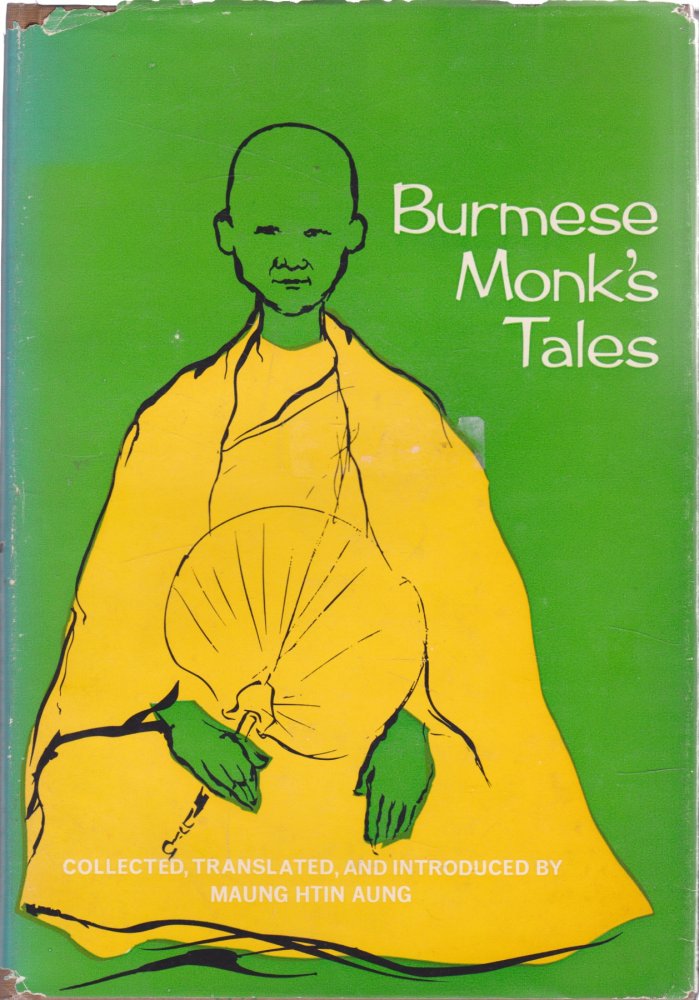
Hardcover. NY, Columbia University Press, 1st, 1966, Book: Very Good, Dust Jacket: Good, Hardcover in a lightly worn, chipped dust jacket, 181 pages. The tales contained in this collection were first told in the dark decade of Burmese history (1876-85) during the coming event of the British conquest. The stories combine exotic background with strong details that offer the Western reader both a picture of Burma in the nineteenth century and an understanding of the basic good sense, gaiety, and gentleness of the Burmese people and the Buddhist clergy. The characters that appear in the book illustrate timeless truths about human nature, which today's reader can apply to existing people and situations. For the first time since the eleventh century the future of Burmese Buddhism became uncertain, and there was widespread fear, both in Upper Burma still under a Burmese king and in Lower Burma already under British rule, that the final fall of the Burmese kingdom would result in the total extinction of both the national religion and the Burmese way of life. Told with the purpose of allaying this anxiety and fear, these tales give a full and faithful resume and appraisal of the position of Burmese Buddhism on the eve of the British conquest of 1886. Name on front fly leaf which has mild edgewear. Clean, tight copy.
Hardcover. New Haven CT, Yale University Press, 1st, 1998, Book: Very Good, Dust Jacket: Very Good, Hardcover in a bright dust jacket, 436 pages, b&w illustrations. The humiliation of Russia by separatist rebels in the Chechen War marked a key moment in Russian - and perhaps world - history. In this new analysis Anatol Lieven offers a riveting account of the war as a means to explore the painful fate of the post-Soviet state. Lieven looks into the long, troubled history of Russian-Chechen relations, noting that each side despised the other for largely cultural reasons (the Chechens have long been involved in organized crime in major Russian cities, whereas Russians have long tried to strip Chechnya of its resources). He notes that Chechen society has historically been militarized (one Armenian said to Lieven, "The men are always fighting and the women are cooking for them, nursing their wounds, and bringing up their children"), making the mountain people a formidable foe. In the meanwhile, writes Lieven, the Russian military suffered from low morale and from corruption of various kinds: Russian field soldiers sold their guns to Chechen guerrillas for vodka and currency, while Russian officers stole their soldiers' pay and Russian politicians skimmed off the top. This is an extraordinary look at a little-known conflict. Clean copy.
Hardcover. Canada, Deutscher Kunstverlag, 1st, 2012, Book: Very Good, Dust Jacket: None, 159 pages. Like new in publisher's shrink-wrap. The material that was saved from Warsaw in 1939 included more than ten color slides. These slides are the only color photo documents showing that historic moment from the perspective of city residents. The slides were found only in recent years by the photographer's son, Sam Bryan. In addition to color slides this album also includes photographs recorded by Julien Bryan on black-and-white film at that time and iater subjected to a complicated process of colorizing. The colorizing took piace after Bryan's return to the United States in 1939.
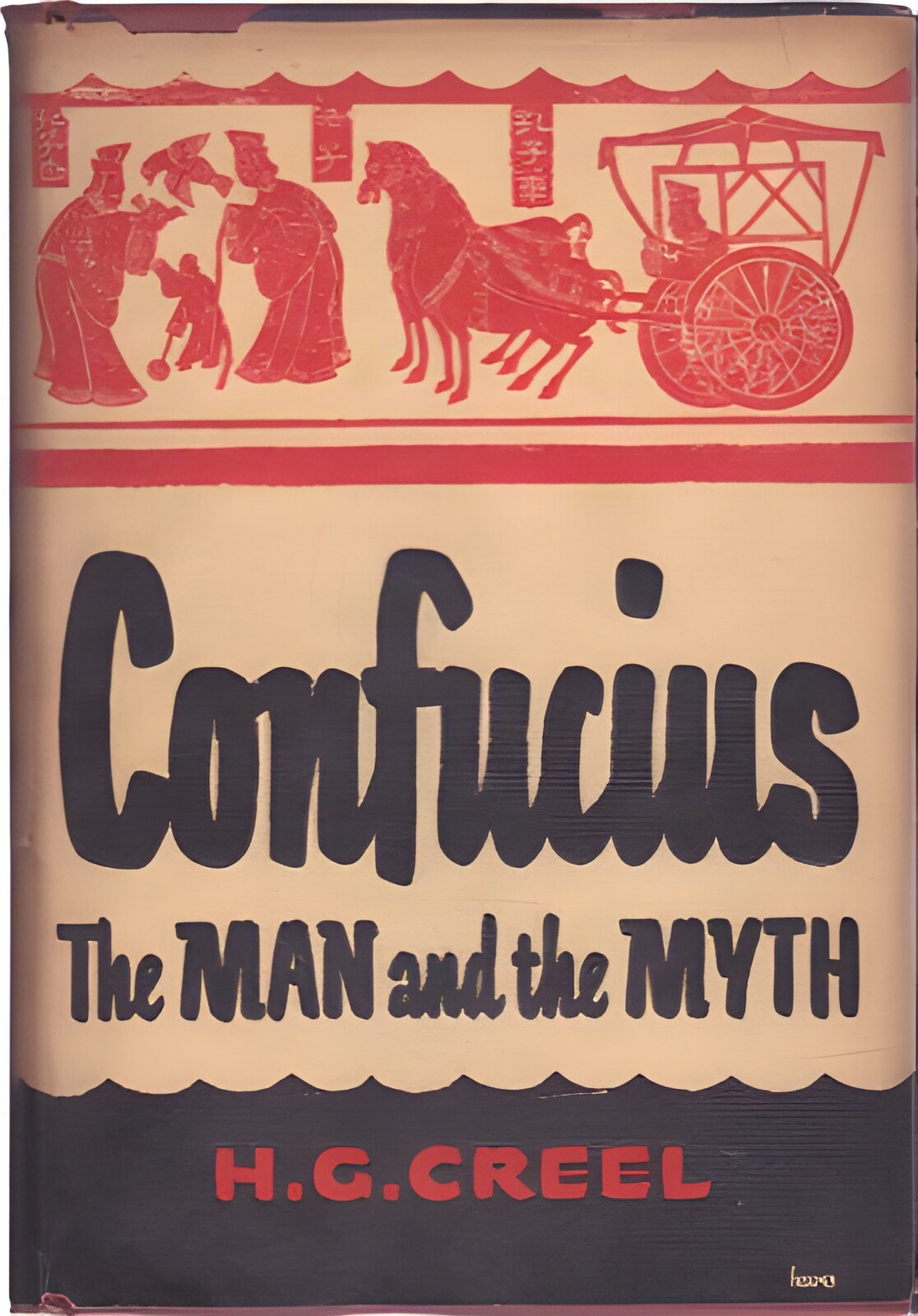
Hardcover. NY, John Day, 1st, 1949, Book: Good, Dust Jacket: Good, Hardcover in a bright, edgeworn and chipped dust jacket. Explores the life and teachings of the ancient Chinese philosopher, Confucius. The book delves into Confucius' background, upbringing, and the cultural and political context in which he lived. It also examines the various interpretations of Confucianism throughout history and how his teachings have influenced Chinese society and beyond. The author offers a critical analysis of Confucius' philosophy and challenges some of the popular myths and misconceptions that have surrounded him. Mild musty smell, clean copy.
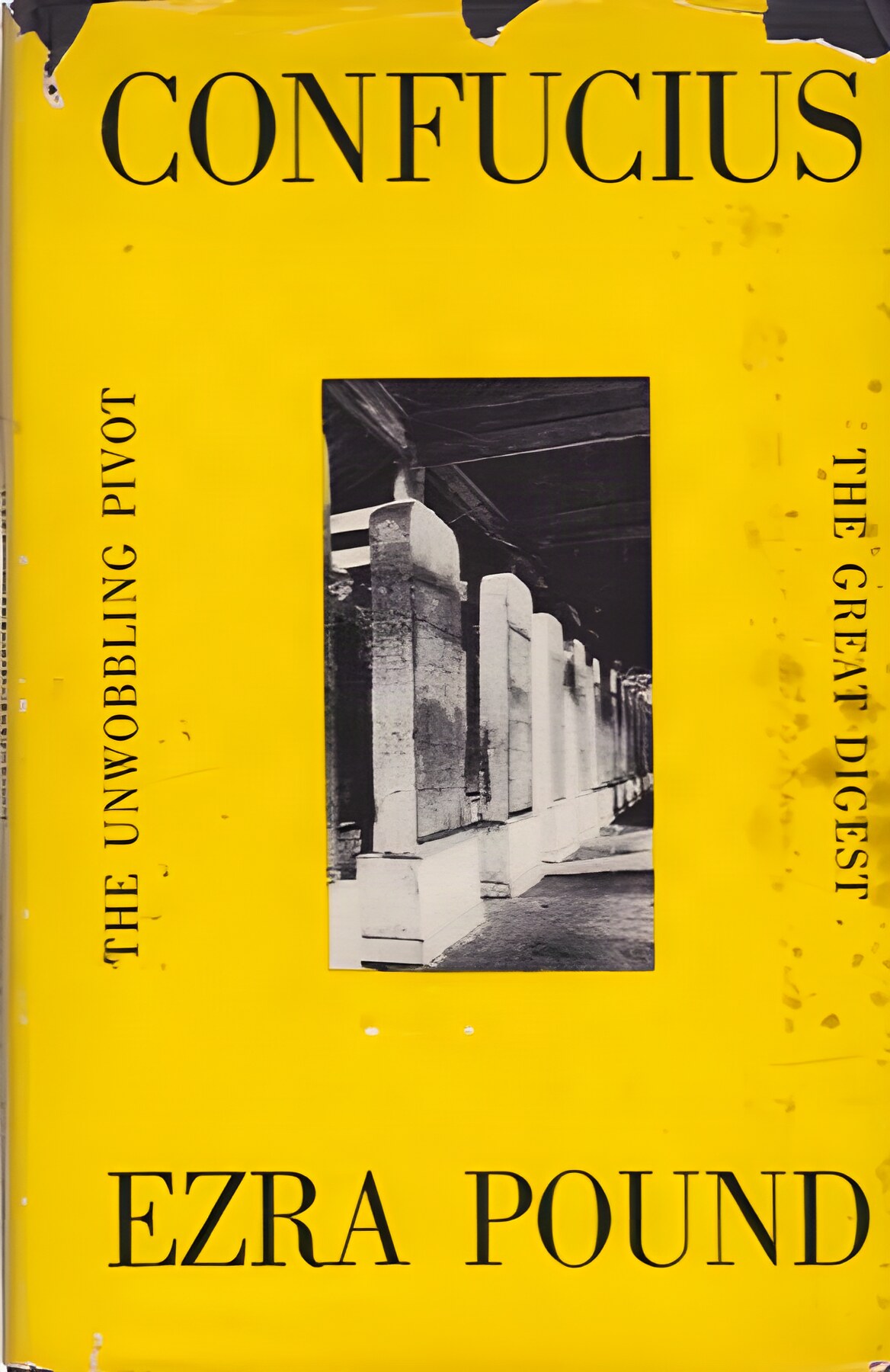
Hardcover. NY, New Directions, 1st, 1951, Book: Very Good, Dust Jacket: Fair, Hardcover in a yellow dust jacket with chipping, soiling. 187 pages. Black cloth binding with titling on the spine in gilt; with Chinese ideogram on the front cover. Illustrated with rubbings by William Hawley; and a Note on the Stone Classics by Achilles Fang. Previous owner's name and address on front fly leaf, otherwise clean.
Hardcover. NY, The Overlook Press, 1st, 2010, Book: Very Good, Dust Jacket: Very Good, Hardcover in a bright dust jacket. 358 pages, Illustrated with three sections of color plates. b&w maps, illustrations. Clean copy. A fascinating survey of the life and enduring legacy of perhaps the greatest and most unjustly ignored of the Roman emperors-written by a richly gifted historian. In 312 A.D., Constantine-one of four Roman emperors ruling a divided empire-marched on Rome to establish his control. On the eve of the battle, a cross appeared to him in the sky with an exhortation, "By this sign conquer." Inscribing the cross on the shields of his soldiers, Constantine drove his rivals into the Tiber and claimed the imperial capital for himself. Under Constantine, Christianity emerged from the shadows, its adherents no longer persecuted. Constantine united the western and eastern halves of the Roman Empire. He founded a new capital city, Constantinople. Thereafter the Christian Roman Empire endured in the East, while Rome itself fell to the barbarian hordes.
Hardcover. Vilnius, Baltos Lankos, 1st, 1995, Book: Very Good, Dust Jacket: Very Good, 69 duotone plates, images taken by the Lithuanian photographer Jozef Chechowicz (1819-1888). Mostly landscapes of the city and it's buildings, some with people. Beautifully produced volume, limited to 2000 copies. Light edgewear to dust jacket.
Softcover. NY, Routledge, reprint, 2016, Book: Very Good, Dust Jacket: None, Softcover, pictorial wrappers, 265 pages. Dialogue between characters is an important feature of South Asian religious literature: entire narratives are often presented as a dialogue between two or more individuals, or the narrative or discourse is presented as a series of embedded conversations from different times and places. Including some of the most established scholars of South Asian religious texts, this book examines the use of dialogue in early South Asian texts with an interdisciplinary approach that crosses traditional boundaries between religious traditions. The contributors shed new light on the cultural ideas and practices within religious traditions, as well as presenting an understanding of a range of dynamics - from hostile and competitive to engaged and collaborative. This book is the first to explore the literary dimensions of dialogue in South Asian religious sources, helping to reframe the study of other literary traditions around the world. Clean, bight copy.
Hardcover. NY, Clarkson N Potter, 1st, 1978, Book: Very Good, Dust Jacket: Very Good, Hardcover in a bright, unclipped dust jacket. Dr Michael Wood, cofounder of Kenya's Flying Doctor Service, brings a beautiful and troubled land into sharpe focus in his written account of forty years in Africa. More than 90 brilliant full-color photographs provide a vivid scenic background to this absorbing memoir. Flying from his base in nairobi to tribal lands of the Maasai, the Muslim villages on he coast, and the Ethiopian highlands, Wood established hospitals and conducted clinics, responding to medical emergencies throughout the area. He came to know the land and its peoples intimately. 223 pages, clean copy.
Hardcover. Lincoln NE, University of Nebraska Press, 1st, 2011, Book: Very Good, Dust Jacket: Very Good, Hardcover, oblong format, in a bright dust jacket, 144 pages. B&w and color photographs by Delevingne. Focusing on Adams County in the Columbia Plateau in eastern Washington, Drylands, a Rural American Saga is a pictorial essay documenting the reality underlying our national self-portrait. Both an exception to and a paradigm of the country's agricultural folkways, Adams County offers a panorama of rolling cropland, sagebrush scree, and deep coulees formed by volcanic forces and ice-age floods. The shortage of rainfall, however, mocks the richness of the soils produced by prehistoric events. Yet as documented in these pages, the harvests of Adams County produce a significant share of the nation's food, standing as clear testimony to the skill and perseverance of those who work the land. Clean copy.

 "A Vanished World by: Roman Vishniac (Author, Photographer), Elie Wiesel (Foreword)")
 "Academic and Scientific Traditions in China, Japan, and the Westby: Nakayama, Shigeru")
 "Andre Kertesz: The Early Yearsby: Kertesz, Andre")
 "Aperture 152: Crossing Borders, Contemporary Czech & Slovak Photography (Aperture Magazine)by: Aperture Foundation Inc. Staff")
 "Aperture 152: Crossing Borders, Contemporary Czech & Slovak Photographyby: Staff, Aperture Foundation Inc.")
 "Black Lamb And Grey Falcon: The Record Of A Journey Through Yugoslavia In 1937 - Volumes I and 2 (Two Volume Set) by: Rebecca West")
 "Bound for Canaan: The Underground Railroad and the War for the Soul of America by: Bordewich, Fergus")



 "Chechnya: Tombstone of Russian Powerby: Anatol Lieven")
 "COLORS OF WAR, THE: THE SIEGE OF WARSAW IN JULIEN BRYAN'S COLOR PHOTOGRAPHSby: Bryans, Julien (Photographer)")



 "Different Drums: A Doctor's Forty Years in Eastern Africa by: Wood, Michael")