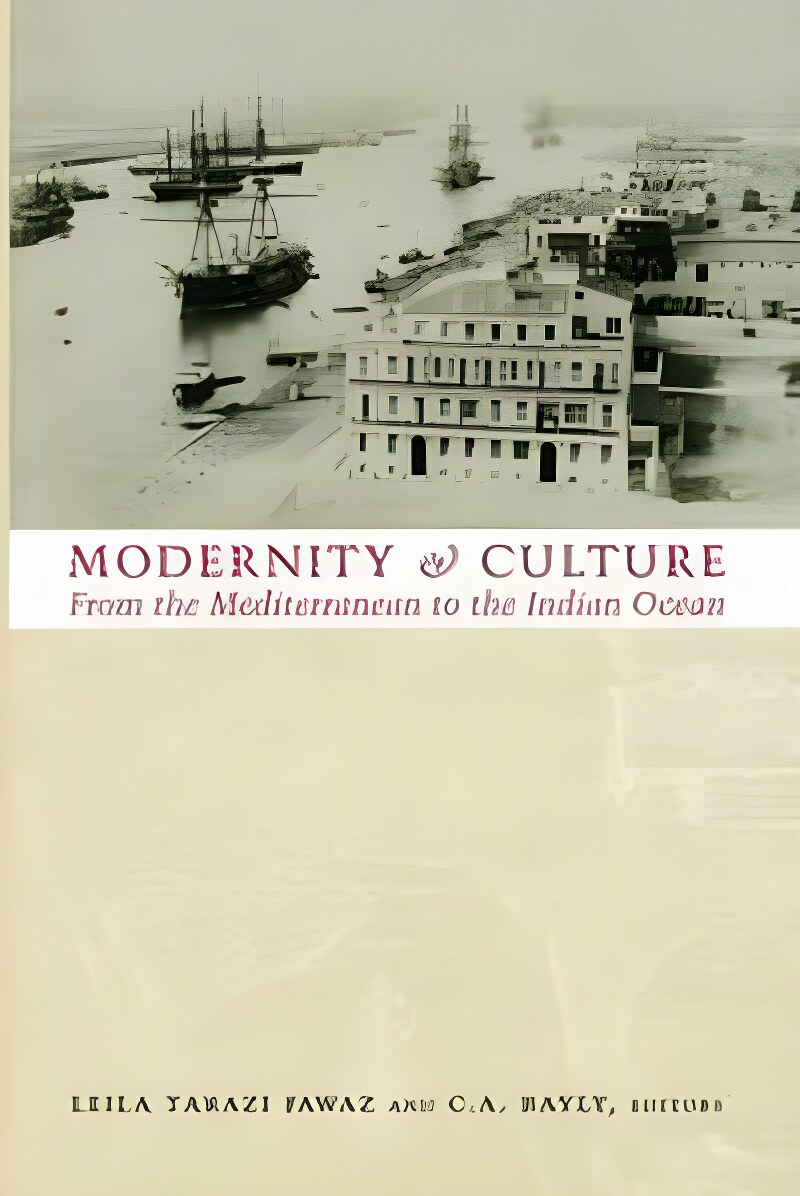
Softcover. NY, Columbia University Press, 1st pbk, 2002, Book: Very Good, Dust Jacket: None, Softcover, 410 pages. Collection of essays on the impact of global modernity in the region. Between the 1890s and 1920s, cities in the vast region stretching from the Mediterranean Sea to the Indian Ocean were experiencing political, social, economic, and cultural changes that had been set in motion at least since the early nineteenth century. As the age of pre-colonial empires gave way to colonial and national states, there was a sense that a particular liberalism of culture and economy had been irretrievably lost to a more intolerant age. The book provides a comparative analysis of contested versions of the concept of modernity. The book examines not only the "high" culture of scholars and the literati, but also popular music, the visual arts, and journalism. Clean.
Hardcover. Toronto, Madison Press Books, 1st, 2006, Book: Very Good, Dust Jacket: Very Good, Hardcover in a bright dust jacket, 192 pages illustrated in color. Offering a thrilling introduction to the underworld of stolen art, this investigation reveals the little-known story of modern art theft and shows how the legitimate art market, with its hyped auctions and landmark sales, has ignited criminal interest in these high-end pieces. The photographs, illustrations, and case studies give a fascinating and detailed behind-the-scenes account of the major thefts during the past hundred years?ranging from Edvard Munch's The Scream and looting during World War II and the Iraq wars to a brazen and bizarre theft of a two-ton bronze Henry Moore sculpture. A gallery lists the estimated value of each stolen piece, painting an overview of the cultural, historical, and economic losses. Clean copy, mild fade to spine.
Hardcover. OH, Kent State University, 1st, 2006, Book: Very Good, Dust Jacket: Very Good, Hardcover, 328 pages. During the nineteenth century-a time of great technical and cultural change-fashion was a cultivating force in the development of American society, influenced by one's social status, geographic location, and economic standing. My Likeness Taken is a collection of daguerreotype portraits of men, women, and children taken between 1840 and 1860. Selected from the top collections in the United States, each image is analyzed to clarify datable clothing and fashion components. With subjects from among the best-dressed members of society, these portraits-reproduced in full color-reflect the latest fashion developments, trends, and influences. For students of photographic and costume history, this is extraordinary material. Many of these images have never before been published, and Severa's keen analysis adds immeasurably to our understanding of the importance of dress in American society. Photo archivists and collectors, costume curators, social historians, material culturalists, and theater designers will find My Likeness Taken an invaluable resource.
Hardcover. Chicago, University Of Chicago Press , 1st, 2017, Book: Very Good, Dust Jacket: Very Good, Hardcover in a bright dust jacket, 330 pages with index. At the close of the nineteenth century, new printing and paper technologies fueled an expansion of the newspaper business and publishers were soon reeling off as many copies as Americans could be convinced to buy. Newspapers quickly saturated the United States, especially its cities, which were often home to more than a dozen daily papers apiece. Using New York, Philadelphia, Milwaukee, and Chicago as case studies, Julia Guarneri shows how city dailies became active agents in creating metropolitan spaces and distinctive urban cultures. Newsprint Metropolis offers a vivid tour of these papers, from the front to the back pages. Paying attention to much-loved features, including comic strips, sports pages, advice columns, and Sunday magazines, she tells the linked histories of newspapers and the cities they served. Themed sections for women, businessmen, sports fans, and suburbanites illustrated entire ways of life built around consumer products. Guarneri also argues that while papers provided a guide to individual upward mobility, they also fostered a climate of civic concern and responsibility. Charity campaigns and metropolitan sections painted portraits of distinctive, cohesive urban communities. Real estate sections and classified ads boosted the profile of the suburbs, expanding metropolitan areas while maintaining cities' roles as economic and information hubs. Clean, like new.
Hardcover. Baltimore, The Johns Hopkins University Press, 2nd printing, 1995, Book: Very Good, Dust Jacket: Very Good, Hardcover, 348 pages, illustrated throughout in b&w. Light shelf-wear to dust jacket. Overall, a tight clean copy. "In this original and authoritative work, Vance argues that the railroad in North America is a distinct indigenous creation and not an importation from Britain and Europe. His combined familiarity with railroading, routes and cities, facilities, and North American geography is unsurpassed and the result is quite unlike anything in the historical or specialist literature."--Donald Meinig, Syracuse University "No previous book has presented the over-all picture of the development of the North American railroad network with Vance's emphasis on the reciprocal relationships among the economic and technological conditions on the one hand and the geographic aspects of development on the other. The scope of the presentation is virtually encyclopedic -- and there is no doubt that the book will quickly become a standard reference on the subject." -- Harold M. Mayer, University of Wisconsin, Milwaukee
Hardcover. Paris, Editions Hazan, 1st, 2016, Book: Very Good, Dust Jacket: None, Hardcover, 240 pages. This beautifully illustrated book offers a comprehensive look at the career of photographer William Notman (1826-1891). Born in Scotland, Notman emigrated to Canada in 1856; he settled in Montreal and opened a photography studio that later had branches throughout Canada and the United States. Notman documented the development of a continent, photographing street scenes in burgeoning cities and modern transportation by steam and rail, and creating portraits of such notable figures as Mark Twain, Henry Wadsworth Longfellow, Sitting Bull, and Buffalo Bill. By fully exploiting the commercial and aesthetic potential of the rapidly advancing photographic technology, Notman contributed to the establishment of the socio-economic prominence of Montreal and played a key role in the formation of a Canadian national identity. Published and unpublished photographs are paired with texts that explore the photographer's numerous achievements.
Hardcover. Paris, Editions Hazan, 1st, 2016, Book: Very Good, Dust Jacket: None, Hardcover, 240 pages. This beautifully illustrated book offers a comprehensive look at the career of photographer William Notman (1826-1891). Born in Scotland, Notman emigrated to Canada in 1856; he settled in Montreal and opened a photography studio that later had branches throughout Canada and the United States. Notman documented the development of a continent, photographing street scenes in burgeoning cities and modern transportation by steam and rail, and creating portraits of such notable figures as Mark Twain, Henry Wadsworth Longfellow, Sitting Bull, and Buffalo Bill. By fully exploiting the commercial and aesthetic potential of the rapidly advancing photographic technology, Notman contributed to the establishment of the socio-economic prominence of Montreal and played a key role in the formation of a Canadian national identity. Published and unpublished photographs are paired with texts that explore the photographer's numerous achievements.
Hardcover. Seattle, University of Washington Press, 1st, 1991, Book: Very Good, Dust Jacket: Very Good, 388 pages, hardcover. B&w plates. INSCRIBED BY ECKERT. Light foxing to edge and light wear to bottom edges of cover. According to conventional interpretations, the Japanese annexation of Korea in 1910 destroyed a budding native capitalist economy on the peninsula and blocked the development of a Korean capitalist class until 1945. In this expansive and provocative study, now available in paperback, Carter J. Eckert challenges the standard view and argues that Japanese imperialism, while politically oppressive, was also the catalyst and cradle of modern Korean industrial development. Ancient ties to China were replaced by new ones to Japan - ties that have continued to shape the South Korean political economy down to the present day. Eckert explores a wide range of themes, including the roots of capitalist development in Korea, the origins of the modern business elite, the nature of Japanese colonial policy and the Japanese colonial state, the relationship between the colonial government and the Korean economic elite, and the nature of Korean collaboration. He conveys a clear sense of the human complexity, archival richness, and intellectual challenge of the historical period. His documentation is thorough; his arguments are compelling and often strikingly innovative.
Hardcover. Boston Mills Press , 1st, 2007, Book: Very Good, Dust Jacket: Very Good, Hardcover in a bright, unclipped dust jacket. For a world coming out of economic depression in the 1930s, the Pan American Airways Clipper "flying boats" symbolized elegance and luxury, adventure and romance. Illustrated with rare period photographs, vintage travel posters, magazine ads and colorful company brochures, this fascinating book covers every aspect of the fabulous era of Pan American's graceful clippers. Like their maritime namesakes, the Clippers used the oceans to form a vast global network of travel routes. Pan Am founder Juan Trippe was a visionary who saw the importance of international travel to a changing world. His Clippers would play a key role in the evolution of transoceanic flight, setting time and distance records over the Atlantic and Pacific, providing airmail delivery between countries, and eventually serving the Allies as troop and cargo transports during World War II. A major appeal is the 200 color images and 100 historical black-and-white photographs. Clean copy.
Hardcover. NY, Prestel, 1st, 2018, Book: Very Good, Dust Jacket: None, Hardcover in pictorial boards. While sheets of paper are disappearing from our homes and offices, the medium is experiencing a renaissance in the worlds of art, design, and architecture. Suddenly, paper is everywhere--but not only in the old familiar places or forms. This fascinating book looks at every aspect of paper: its history, composition, production, application, and trade. Beginning with the anatomy of paper and its earliest forms, this book looks at paper as a symbol of political and economic importance and as a carrier of ideas, from literature to art, design, and music. It looks at the different surfaces, opacities, weights and volumes of paper and how it is used for printing, typography, graphics, and maps as well as a vehicle for origami, architecture, and fashion. Sumptuously illustrated with photographs and drawings, this book includes a variety of papers for readers to examine and feel, highlighting the sensual aspects of this seemingly ordinary product. Engaging, entertaining, and informative, this book contains a wealth of useful and surprising information on every printed, colored, and textured page
Hardcover. NY, Vendome Press, 1st, 1989, Book: Very Good, Dust Jacket: Very Good, Hardcover in a bright dust jacket, 208 pages. Best-selling French author Perrault provides moving personal reminiscences of his childhood in occupied Paris. The brief but eloquent narrative is accompanied by hundreds of previously unpublished photos from French and German archives, collected and cataloged by Parisian art historian Azema. Together, text and photos present a graphic portrait of everyday life, recording daily human struggles to find food and fuel, the psychological warfare waged by the occupiers, and the methods of German economic exploitation. As artists, the authors place special emphasis on the arts under the occupation and document the heroism of the writers' resistance. In sum, they show how Paris "kept alive a sense of the enemy."
Softcover. Chicago, University of Chicago , 1992, Book: Very Good, Dust Jacket: None, Softcover, 201 pages. In this concise but ambitious historiographical essay, Wilson argues for an approach to the Meiji Restoration that emphasizes multiple lines of motive and action. The four groups under discussion: 1. The loyalists -wanted to redeem the national image and thought themselves patriots. 2.The old guard -the samurai loyal to the shogunate. 3. The common people who only wanted stability. Some favored one side or the other and some just wanted change. 4. The foreigners -most sided with the Shogunate for economic stability. Name on front fly leaf, otherwise clean.
Hardcover. NY, Viking Press, 1st, 1967, Book: Very Good, Dust Jacket: Very Good, Hardcover in a bright dust jacket with light edgewear, 371 pages. After WW II the US acquired an empire - one that embraces much of the world in a network of military pacts, economic ties, and political commitments. Steel describes how this empire originated, how it grew, and why is has been incapable of defending America's real interests, or of spreading her humanitarian ideals to other nations. Name on front fly leaf, otherwise clean.
Hardcover. New Haven CT, Yale University Press, 1st, 1927, Book: Very Good, Dust Jacket: Good, Hardcover in a worn dust jacket, 152 pages, b&w illustrations. Explores the relationship between peasant society and pottery production in ancient times. The book delves into the history of pottery-making, from its earliest origins to its development as a vibrant industry that sustained many rural communities. The author examines the various techniques and materials used by potters, as well as the social and economic factors that influenced the production and distribution of pottery. Peasants and Potters also provides insight into the daily lives of peasants who worked in the pottery industry, highlighting the challenges and rewards of their work.
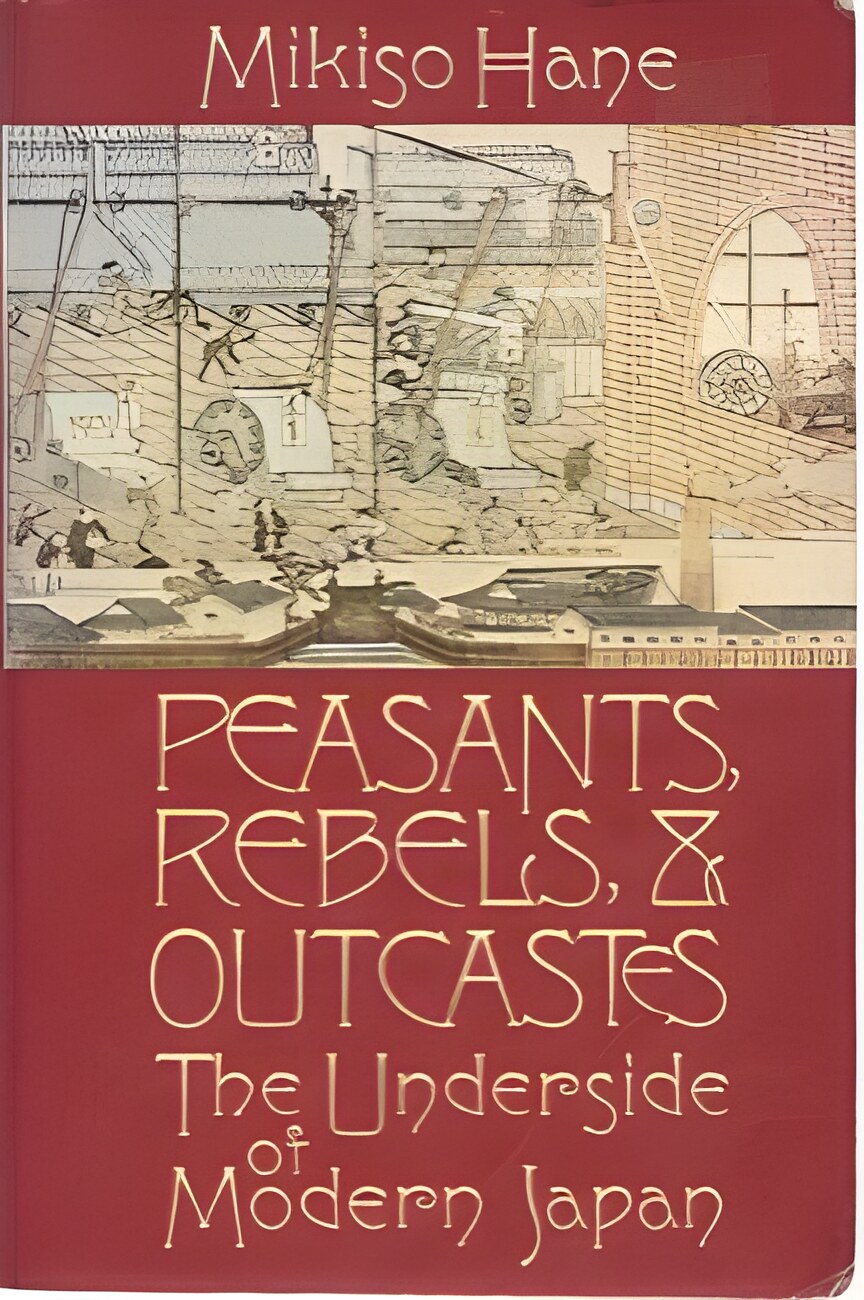
Softcover. NY, Pantheon Books, 1st, 1982, Book: Very Good, Dust Jacket: None, Softcover, 297 pages. This compelling social history uses diaries, memoirs, fiction, trial testimony, personal recollections, and eyewitness accounts to weave a fascinating tale of what ordinary Japanese endured throughout their country's era of economic growth. Through vivid, often wrenching accounts of peasants, miners, textile workers, rebels, and prostitutes, Mikiso Hane forces us to see Japan's "modern century" (from the beginnings of contact with the West to World War II) through fresh eyes. In doing so, he mounts a formidable challenge to the success story of Japan's "economic miracle." Starting with the Meiji restoration of 1868, Hane vividly illustrates how modernization actually widened the gulf, economically and socially, between rich and poor, between the mo-bo and mo-ga ("modern boy" and "modern girl") of the cities and their rural counterparts. He interlaces his scholarly narrative with sharply etched individual stories that allow us see Japan from the bottom up. Clean copy.
Hardcover. Prestel Publishing, 1st, Book: Very Good, Dust Jacket: Very Good, Hardcover in a bright dust jacket, 576 pages. Unlike many other artistic media, photographys origins are well documented, as are its ever-changing technologies and applications. Written by an international team of experts, this definitive history of photography looks at every step of the fields dynamic evolution, period by period and movement by movement. Each key genre is chronologically presented within its social, economic, and political context, along with close analysis of specially selected works that best exemplify the characteristics of the period. With more than 500 gorgeous examples in black and white and color, the book explores in-depth virtually every aspect of the medium since its first public demonstration in 1839 to the latest innovations: from early portraits and the birth of photojournalism to travel photography and the mapping of the world; from the Pictorialists to the avant-garde; from celebrity and fashion to documentary and landscape. Along the way readers will learn why some photographs are considered iconic, and why the medium as an art form continues to challenge and enthrall us. DUE TO WEIGHT, DOMESTIC SHIPPING ONLY.
Hardcover. Washington DC, Smithsonian, 1st, 2003, Book: Very Good, Dust Jacket: Very Good, Hardcover, 260 pages. Working for the government's Farm Security Administration in the 1930s, photographers set out across the country to capture the human face of the Depression. Walker Evans' portraits of sharecroppers and Dorothea Lange's images of migrant families today stand as the most popular images from the FSA's project. Yet, in their own time, the pictures functioned as urgent, powerful reminders that one-third of the nation was in a real crisis. Focusing on these and other well-known FSA photographs, Finnegan examines how popular magazines constructed complex and often contradictory messages about poverty. Picturing Poverty also explores a moment in American history when visual images took center stage as the nation struggled with economic, political, and social strife. By striving to understand the original context of the photographs, Finnegan shines new light on the meanings of poverty, the Depression, and the various roles of the media. At once a persuasive analysis of FSA images and a balanced commentary on the role of the media, Picturing Poverty is above all a look into the difficult issue of how the mass media presents social issues to Americans.
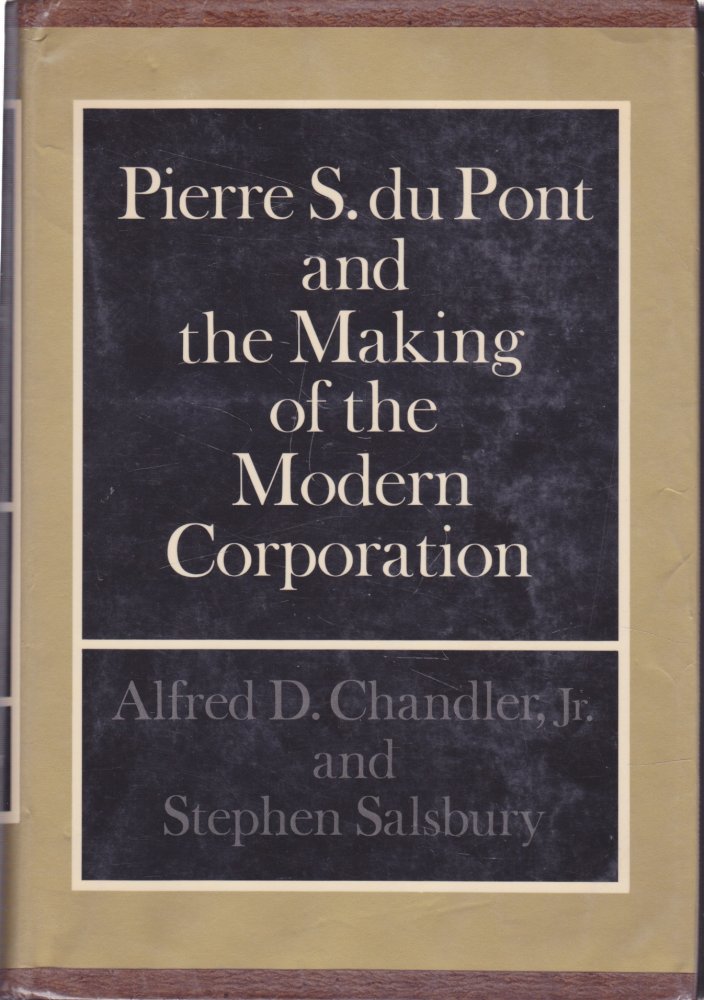
Hardcover. NY, Harper & Row, 1st, 1971, Book: Good, Dust Jacket: Good, Hardcover in a bright dust jacket. 722 pages, b&w illustrations. Ex-lib with residue and stamping to front endpapers, otherwise a clean, bright copy. One of the finest business histories ever written by an author who won both the Pulitzer and Bancroft Prizes for History. A detailed account of how Pierre S. du Pont transformed a family gunpowder factory into the Du Pont Company and revitalized General Motors into a highly prosperous corporation.
Softcover. London, Cambridge University Press , 1st, 1982, Book: Very Good, Dust Jacket: None, Softcover, 500 pages, maps and charts. The papers collected in this volume present important information on the history and culture of contemporary gathering and hunting peoples from Canada, India, Africa, Australia and the Philippines. The volume focuses on two themes: first, on the techniques which band-living foraging peoples employ to organise their social and economic lives; and second, on their fight for the right to their own lands and for a measure of cultural and political autonomy. The contributors maintain that gatherer-hunters are not examples of a disappearing way of life, but peoples who have maintained their social and economic practices through long periods of contact with stratified societies. The aim of this volume it to make known to as wide an audience as possible the daily lives, the patterns of relations between the sexes and the political orientations of the world's contemporary foragers. Clean copy.
Hardcover. Northfield VT, Norwich University, 1st, 1916, Book: Very Good, Dust Jacket: None, Hardcover, light tan cloth with black lettering on front cover, 39 pages. A study of the social conditions in the counties of Vermont in the earl part of the 20th century. Flint was Professor of Political Science at Norwich University.
Hardcover. Boston, Kluwer Academic Publishers, 1st, 1987, Book: Very Good, Dust Jacket: None, 271 pages. Light pink boards, 8 essays by various authors. Letter laid-in from editor of the book review section of The Bulletin of the History of Economics, to a professor at Indiana University, requesting the latter's assistance in reviewing this books, printed on Skidmore College's letterhead, dated 5/8/88. Faded spine, light edgewear to covers, very minor pencil markings in page margins to a few pages; overall a very clean, tight copy.
Hardcover. Cambridge MA, MIT Press], 2nd pr., 2010, Book: Very Good, Dust Jacket: Very Good, Hardcover in a bright dust jacket, 261 pages. The story of how diesel engines and gas turbines, used to power cargo ships and jet airplanes, made today's globally integrated economy possible. Clean copy.
Hardcover. Chapel Hill NC, University of North Carolina, 1st, 1991, Book: Very Good, Dust Jacket: Very Good, Hardcover in a bright dust jacket, 363 pages. In examining the founding of New England towns during the seventeenth century, John Frederick Martin investigates an old subject with fresh insight. Whereas most historians emphasize communalism and absence of commerce in the seventeenth century, Martin demonstrates that colonists sought profits in town-founding, that town founders used business corporations to organize themselves into landholding bodies, and that multiple and absentee landholding was common. In reviewing some sixty towns and the activities of one hundred town founders, Martin finds that many town residents were excluded from owning common lands and from voting. It was not until the end of the seventeenth century, when proprietors separated from towns, that town institutions emerged as fully public entities for the first time. Name on front endpaper, otherwise clean.

 "My Likeness Taken: Daguerreian Portraits in America, 1840-1860by: Joan L. Severa")
 "Newsprint Metropolis City Papers and the Making of Modern Americans by: Guarneri, Julia")
 "North American Railroad, The : Its Origin, Evolution, and Geographyby: Vance Jr., James E.")
 "Notman: Visionary Photographerby: H")
 "Notman: Visionary Photographerby: H")
 "Offspring of Empire: The Koch'ang Kims and the Colonial Origins of Korean Capitalism 1876-1945 (SIGNED COPY)by: Eckert, Carter J.")
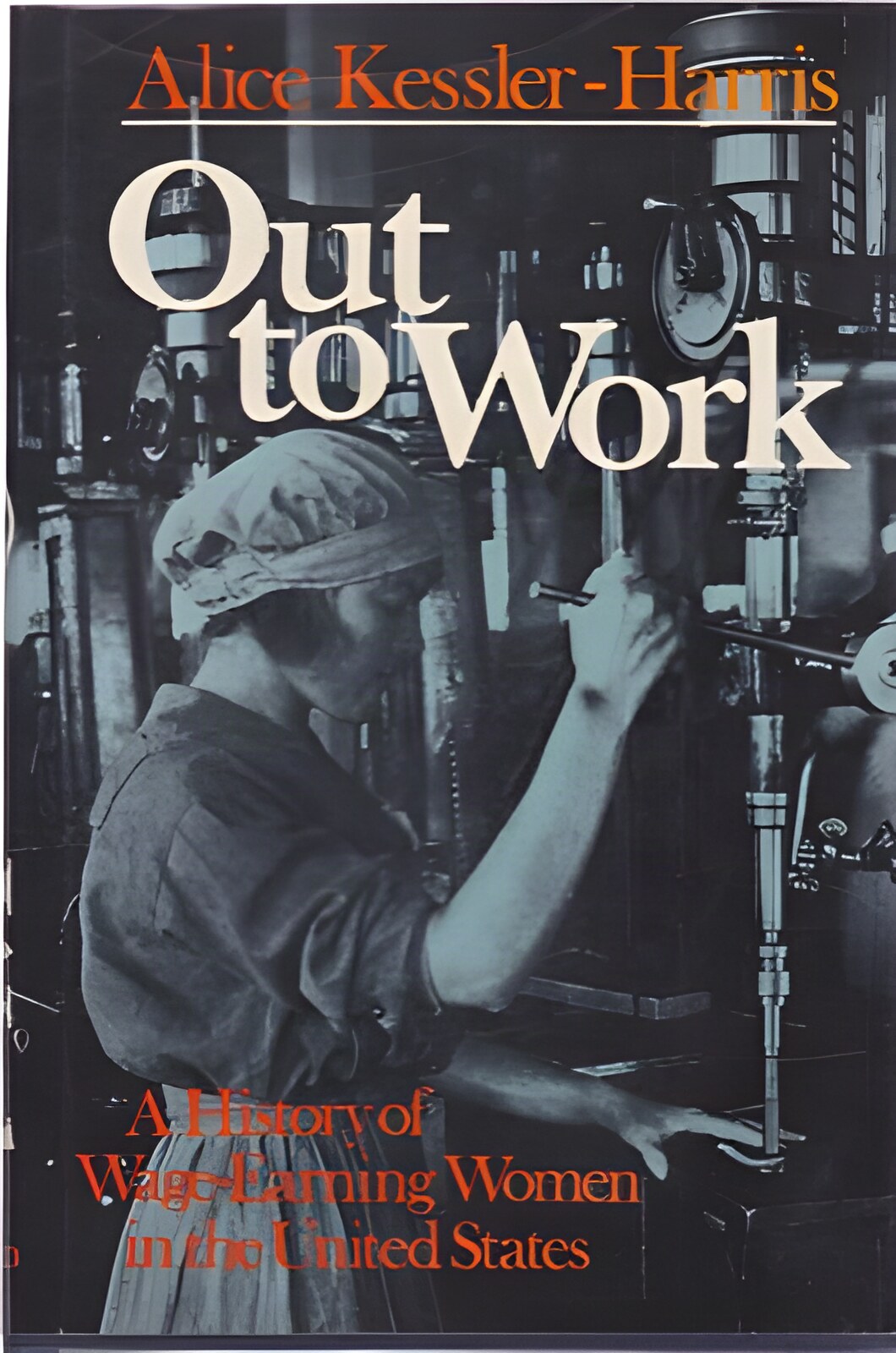
 "Pan American Clippers: The Golden Age of Flying Boats by: James Trautman")
 "Paper: Material, Medium, Magicby: Nicola Von Velsen (Editor), Neil Holt (Editor)")
 "Paris Under the Occupationby: Gilles Perrault")
 "Patriots and Redeemers in Japan: Motives in the Meiji Restoration by: Wilson, George M.")



 "Picturing Poverty: Print Culture and FSA Photographsby: Cara A. Finnegan")
 "Politics and History in Band Societiesby: Eleanar Leacock and Richard Lee (Ed.)")

 "Pre-Classical Economic Thought: From the Greeks to the Scottish Enlightenmentby: Lowry (ed.), S. Todd")