Hardcover. London/NY, Oxford University Press, 1st, 1995, Book: Very Good, Dust Jacket: Very Good, Hardcover in a bright dust jacket, 304 pages. Reforming Sex reconstructs the complicated history of a movement that has been romanticized as the harbinger of 1960s sexual radicalism and demonized as a precursor to Nazi racial policy, but mostly buried and obscured by Nazi book-burnings and repression. Relying on a broad range of sources--from police reports, films and personal interviews to sex manuals unearthed from library basements and secondhand book stores--the book analyzes a remarkable mass mobilization during the turbulent and innovative Weimar years of doctors and lay-people for women's right to abortion and public access to birth control and sex education. Clean copy.
Paperback. Albany, NY, Education Department, Albany Institute of History and Art., revised, 1984, Book: Very Good, Dust Jacket: None, Softcover, 201 pages. Very little wear to cover. Inside is bright and clean with many b&w illustrations throughout.
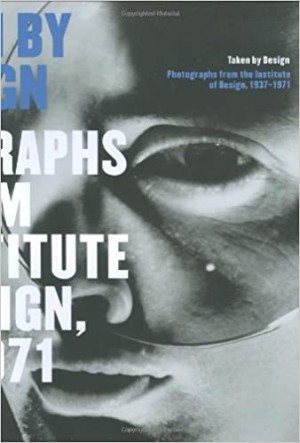
Hardcover. Chicago, University of Chicago Press;, 1st, 2002, Book: Very Good, Dust Jacket: None, Hardcover, 272 pages. One of Chicago's great cultural achievements, the Institute of Design was among the most important schools of photography in twentieth-century America. It began as an outpost of experimental Bauhaus education and was home to an astonishing group of influential teachers and students, including Lazlo Moholy-Nagy, Harry Callahan, and Aaron Siskind. To date, however, the ID's enormous contributions to the art and practice of photography have gone largely unexplored. Taken by Design is the first publication to examine thoroughly this remarkable institution and its lasting impact. With nearly 300 illustrations, including many never-before published photographs, Taken by Design examines the changing nature of photography over this critical period in America's midcentury. It starts by documenting the experimental nature of Moholy's Bauhaus approach and photography's new and enhanced role in training the "complete designer." Next it traces the formal and abstract camera experiments under Harry Callahan and Aaron Siskind, which aimed at achieving a new kind of photographic subjectivity. Finally, it highlights the ID's focus on conscious references to the processes of the photographic medium itself. In addition to photographs by Moholy, Callahan, and Siskind, the book showcases works by Barbara Crane, Yasuhiro Ishimoto, Joseph Jachna, Kenneth Josephson, Gyorgy Kepes, Nathan Lerner, Ray K. Metzker, Richard Nickel, Arthur Siegel, Art Sinsabaugh, and many others. Major essays from experts in the field, biographies, a chronology, and reprints of critical essays are also included, making Taken by Design an essential work for anyone interested in the history of American photography.
Hardcover. NY, Free Press, 1st, 1991, Book: Very Good, Dust Jacket: Very Good, Hardcover, 219 pages. B&W photos. The twentieth-century rise of the automobile collided head on with Victorian prescriptions for the proper role and place of women in society. Gender conventions cast women as too weak, dependent, and flighty to manage the fiery motored beast. Overcoming that stereotype was as difficult for women as gaining access to the vote, the professions, and education, yet their personal feats of driving in both war and peace demolished the gender barriers against their taking the road. After women proved once and for all that they could drive under the worst conditions in World War I, they adapted the automobile to their domestic roles in urban society during the 1920s. Written with flair and verve, this volume displays Scharff's erudition in social, cultural, gender, and technological history.
Softcover. Washington DC, National Gallery of Art, 1st, 2010, Book: Very Good, Dust Jacket: None, Softcover, pictorial wrappers, 430 pages. This volume of essays reexamines the establishment and early history of the Accademia di San Luca in Rome, one of the most important centers of governance, education, and theory in the arts for the early modern period and the model for all subsequent academies of art worldwide. It is the most comprehensive history of the Accademia to be published in more than forty years, and the first in nearly two hundred years to be based almost entirely on new primary and documentary material. In reconstructing the early history of the institution, the volume also provides a new basis for tracking the careers of painters, sculptors, and architects working in Rome in the early 16th century, and for understanding the artistic and professional issues that engaged them.
Hardcover. Princeton NJ, Princeton University Press, 1st, 2011, Book: Very Good, Dust Jacket: Very Good, Hardcover in a bright, unclipped dust jacket, 543 pages. This is the history of how two countries on the northern edge of Europe built societies in the twentieth century that became objects of inspiration and envy around the world. Francis Sejersted, one of Scandinavia's leading historians, tells how Norway and Sweden achieved a rare feat by realizing grand visions of societies that combine stability, prosperity, and social welfare. It is a history that holds many valuable lessons today, at a time of renewed interest in the Scandinavian model. The book tells the story of social democracy from the separation of Norway and Sweden in 1905 through the end of the century, tracing its development from revolutionary beginnings through postwar triumph, as it became a hegemonic social order that left its stamp on every sector of society, the economy, welfare, culture, education, and family. The book also tells how in the 1980s, partly in reaction to the strong state, a freedom and rights revolution led to a partial erosion of social democracy. Yet despite the fracturing of consensus and the many economic and social challenges facing Norway and Sweden today, the achievement of their welfare states remains largely intact.
Hardcover. NY, VIking, 1st, 2010, Book: Very Good, Dust Jacket: Very Good, Hardcover in a bright, unclipped dust jacket, 261 pages, illustrations. Philip Mould takes a wonderfully interesting look at how art restoration works. But, in looking at restoration of existing paintings, he also delves into how he, as a gallery owner, along with his team, find work that has remained under-valued or unvalued for centuries. And then how that piece, now restored by Mould's experts, ventures back into the art world in renewed glory. Mould takes five or so examples of "found" paintings - one from his "Antique Roadshow" - and writes how instinct and education about a painter, his other work, the painting's subject's history, and other "intangables' go into Mould and his staff taking on an often dirty and undistinguished painting on the chance that the painting is "the real thing" - a real Rembrandt, a real Homer Winslow, etc. Probably the most interesting story was that of a Norman Rockwell painting on display at the Rockwell Museum in Massachusetts that...wasn't. Wasn't the "real" Rockwell painting, but rather one done by a disciple of Rockwell, who copied the original for reasons sort of murky, and donated to the museum. The "real" Rockwell was found by the copier's sons after his death and turned over to the museum. Clean copy.
Hardcover. NY, The Monacelli Press, 1st, 2005, Book: Very Good, Dust Jacket: Very Good, Hardcover, 640 pages, pofusely illustrated. In the late nineteenth century, Chicago -- the birthplace of modern architecture in the United States -- was a magnet for aspiring architects. The city was forced to rebuild after the destruction wrought by the Great Fire of 1871 and also to expand to accommodate a surge in the population. The seemingly endless demand for taller and more sophisticated buildings offered young draftsmen an unprecedented opportunity to influence the design of the American skyscraper. The Chicago Architecture Club: Prelude to the Modern documents the history of these draftsmen, the organization they founded, and its role in shaping architectural education and modern architectural practice.
Hardcover. NY, The Monacelli Press, 1st, 2005, Book: Very Good, Dust Jacket: Very Good, Hardcover, 640 pages, pofusely illustrated. In the late nineteenth century, Chicago -- the birthplace of modern architecture in the United States -- was a magnet for aspiring architects. The city was forced to rebuild after the destruction wrought by the Great Fire of 1871 and also to expand to accommodate a surge in the population. The seemingly endless demand for taller and more sophisticated buildings offered young draftsmen an unprecedented opportunity to influence the design of the American skyscraper. The Chicago Architecture Club: Prelude to the Modern documents the history of these draftsmen, the organization they founded, and its role in shaping architectural education and modern architectural practice.
Hardcover. Baton Rouge LA, Louisiana State University Press, 1st, 1988, Book: Very Good, Dust Jacket: Very Good, Hardcover in a bright dust jacket. 360 pages, b&w illustrations. Following the American Civil War, many former Confederates fled their southern homeland. Some left the United States, some moved to the western territories. Still others moved north to northeastern and midwestern towns and cities, believing that northern economic and educational opportunities offered the quickest means of rebuilding shattered fortunes and lives. Sutherland provides a detailed and illuminating account of the contributions these displaced southerners made to the financial, literary, artistic, and political life of the nation. Very nice copy.
Hardcover. Oxford UK, Clarendon Press, Revised Ed., 1992, Book: Very Good, Dust Jacket: Very Good, Hardcover in a bright dust jacket, 592 pages, b&w illustrations. Lady Anne Conway was a remarkable woman who became a philosopher in her own right at a time when most women were denied even basic education. The Conway Letters is the record of her friendship with the Cambridge Platonist, Henry More, which began when he acted as her unofficial tutor in philosophy and lasted until her death. The letters cover a wide range of topics - personal, philosophical, religious, and social. They give a detailed picture of the More-Conway circle, including such figures as Jeremy Taylor, Ralph Cudworth, Robert Boyle, and Francis Mercury van Helmont, as well as Lady Conway's Quaker associates, George Keith and William Penn. The letters are thus a valuable source for mid-seventeenth-century history, and especially for the intellectual history of the period. Revised from the 1930 printing with new material and introduction by Sarah Hutton. Name on front fly leaf, small chip/tear to top spine of the dust jacket.
Softcover. Washington D. C., Eastern High School, 1st, 1915, Book: Very Good, Dust Jacket: None, Softcover with heavy gray wrappers stamped in blue and black, 40 pages, stapled. Magazine format. Illustrated with black & white photographs and drawings, local ads. Cover chipped, interior clean, sound.
Hardcover. NY, Columbia University Press, 1st, 2003, Book: Very Good, Dust Jacket: Very Good, Hardcover in a bright, unclipped dust jacket, 562 pages. During John Dewey's lifetime (1859-1952), one public opinion poll after another revealed that he was esteemed to be one of the ten most important thinkers in American history. His body of thought, conventionally identified by the shorthand word "Pragmatism," has been the distinctive American philosophy of the last fifty years. His work on education is famous worldwide and is still influential today, anticipating as it did the ascendance in contemporary American pedagogy of multiculturalism and independent thinking. His University of Chicago Laboratory School (founded in 1896) thrives still and is a model for schools worldwide, especially in emerging democracies. But how was this lifetime of thought enmeshed in Dewey's emotional experience, in his joys and sorrows as son and brother, husband and father, and in his political activism and spirituality? Acclaimed biographer Jay Martin recaptures the unity of Dewey's life and work, tracing important themes through the philosopher's childhood years, family history, religious experience, and influential friendships. Clean copy.
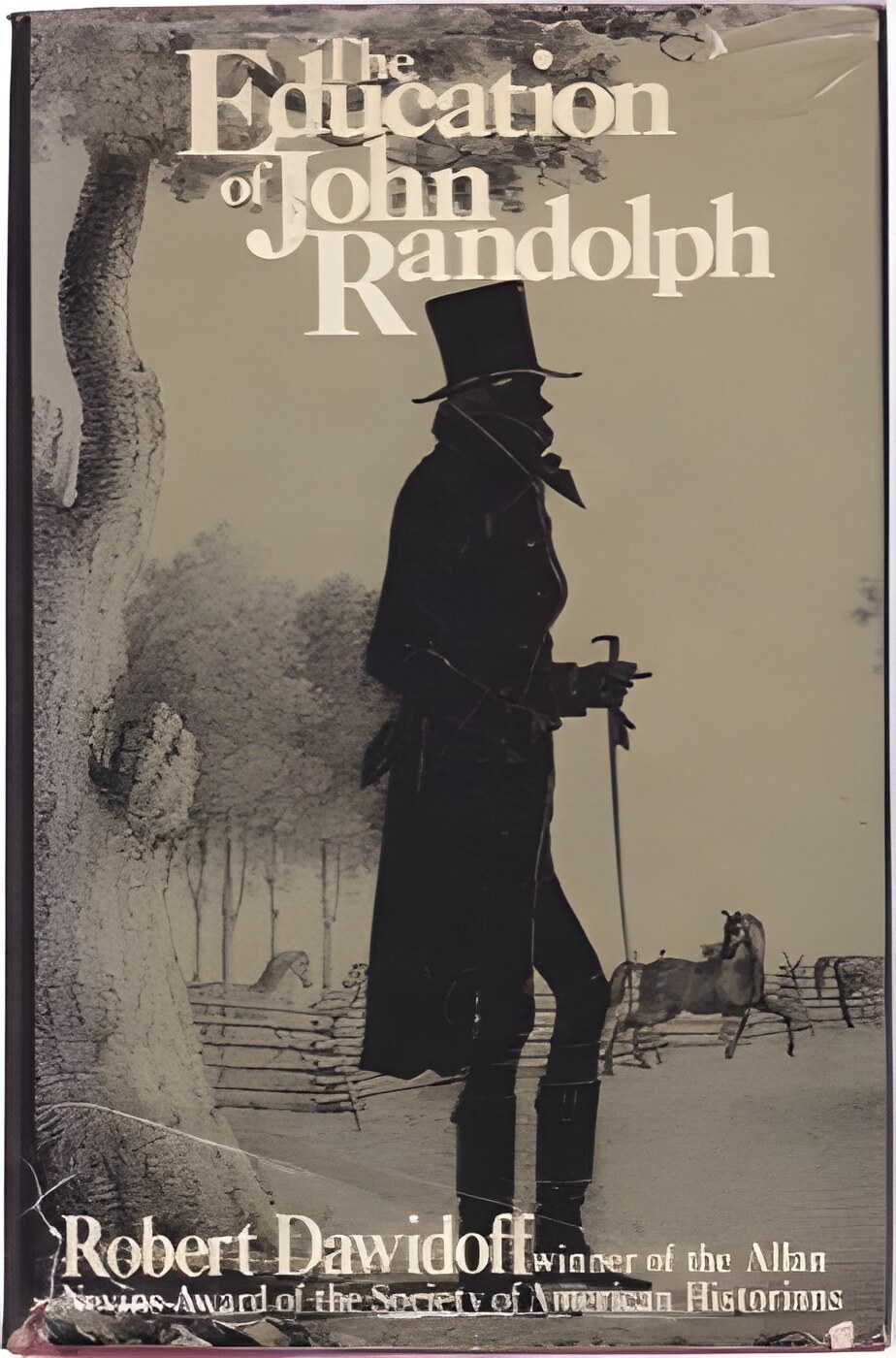
Hardcover. NY, W.W. Norton and Co., 1st, 1979, Book: Very Good, Dust Jacket: Good, Hardcover in a worn, price-clipped dust jacket, 346 pages. John Randolph of Roanoke, the notorious Virginian congressman and senator, was as renowned for his eccentric behavior as for his unusual political positions. Frontispiece portrait. Clean copy.
Hardcover. New Haven CT, Yale University Press, 1st, 1968, Book: Very Good, Dust Jacket: Good, Hardcover in a dust jacket with fading to spine, 289 pages, b&w illustrations. Turner's work on the frontier and on sectional development helped transform the teaching and writing of American history. Here are 150+ letters excerpted or given in full (to Woodrow Wilson, Arthur Schlesinger, Carl Becker, Merle Curti and others.
Hardcover. New Haven CT, The Colony Foundation, 1st, 1999, Book: Very Good, Dust Jacket: None, Hardcover, blue cloth boards with silver rules and decoration to spine. 78 pages, b&w illustrations. Clean copy.
Hardcover. Princeton NJ, Princeton University Press, 1st, 1969, Book: Very Good, Dust Jacket: None, Hardcover, decorated boards with green cloth spine with gilt lettering. 116 pages, clean, bright copy, no dj. This is a collection of excerpts from the public addresses of Robert F. Goheen during his twelve years as President of Princeton University. The emphasis is on the people whose responsibility it is to promote and defend the principles underlying the modern American university-students, faculty, administrators, trustees, alumni. Several fundamental themes emerge the theme of individual responsibility, and the ever-present need to join rational intelligence with moral commitment, for example. Dr. Goheen sees the university as a continuing institution with long range goals, responding conservatively (in its best sense) to the human needs of the times. He seeks to define its institutional relationships in the context of the university's tasks in educ1tion and research, which must be understood and kept in balance if universities are to serve their functions effectively. Laid in are two reprints of postcards from the 1890s featuring Princeton athletes.
Softcover. UK, Pearson Education, 1st, 2007, Book: Very Good, Dust Jacket: None, Softcover, 411 pages. Recounts the development of the nations of England, Scotland, Wales and Ireland from the time of the Anglo-French dual monarchy under Henry VI through the Wars of the Roses, the Reformation crisis, the reigns of Henry VIII and Elizabeth I, the Anglo-Scottish dynastic union, the British multiple monarchy and the Cromwellian Republic, ending with the acts of British Union and the Restoration of the Monarchy. Clean copy.
Hardcover. Chapel Hill , University of North Carolina, 1st, 1949, Book: Very Good, Dust Jacket: None, Hardcover, dark green cloth, gilt lettering, design on spine, 280 pages. "The story of a Confederate childhood, a Reconstruction boyhood, and the education of a medical pioneer in the new South." This book is first of all a personal narrative that is alternately dramatic, thoughtful, and hilariously funny. It is also a vivid picture of plantation life before and during the Civil War and the beginnings of the building of a New South. Clean copy, spine a bit darkened.
Softcover. Montpelier VT, St. Michael's High School, 1940-1950, Book: Good, Dust Jacket: None, Nine stapled softcover booklets, 44-60 pages each, b&w photos. A history of this Vermont high school during WW2 and the post-war years. A few with ink name on cover, otherwise clean.
Hardcover. New Haven, Yale University, 1st, 1938, Book: Very Good, Dust Jacket: None, 29 pages. Hardcover. INSCRIBED ON FRONT ENDPAPER BY AUTHOR. Portrait of Winthrop opposite title page. Darkening to title on spine, with chip missing at very top. Moderate rubbing with small section of abrasion at bottom right corner of front cover. Clean, unmarked copy.
NY, Da Capo Press , 1st, 2019, Book: Very Good, Dust Jacket: Very Good, Hardcover in a bright, unclipped dust jacket. Thomas Paine's words were like no others in history: they leaped off the page, inspiring readers to change their lives, their governments, their kings, and even their gods. In an age when spoken and written words were the only forms of communication, Paine's aroused men to action like no one else. The most widely read political writer of his generation, he proved to be more than a century ahead of his time, conceiving and demanding unheard-of social reforms that are now integral elements of modern republican societies. Among them were government subsidies for the poor, universal housing and education, pre- and post-natal care for women, and universal social security. An Englishman who emigrated to the American colonies, he formed close friendships with Benjamin Franklin, Thomas Jefferson, and James Madison, and his ideas helped shape the Declaration of Independence and the Bill of Rights.
Hardcover. Boston, MA, Phillips, Samson, and Company, 1st, 1859, Book: Good, Dust Jacket: None, Original 1859 publisher's cloth, 365 pages. Brown cover with gilt title to spine. Extensive sun-fading and some soiling. Soiled along edges. Slight foxing. Lacking front fly leaf. Overall, a tight copy.


 "Rose Blancheby: Innocenti, Roberto/Christophe Gallaz")
 "Seventeenth Century Albany: A Dutch Profile.by: Wilcoxen, Charlotte")
 "Taking the Wheel - Women and the Coming of the Motor Ageby: Scharff, Virginia")
 "The Accademia Seminars: The Accademia di San Luca in Rome, c. 1590-1635by: Peter M. Lukehart")
 "The Age of Social Democracy: Norway and Sweden in the Twentieth Centuryby: Francis Sejersted")
 "The Art Detective: Fakes, Frauds, and Finds and the Search for Lost Treasuresby: Philip Mould")
 "The Chicago Architectural Club: Prelude to the Modernby: Wilbert Hasbrouck")
 "The Chicago Architectural Club: Prelude to the Modernby: Wilbert Hasbrouck")


 "THE EASTERNER (EASTERN HIGH SCHOOL, WASHINGTON, D.C.) Volume XVIII Number 3, February 1915by: Eastern High School")
 "The Education of John Dewey: A Biographyby: Jay Martin")


 "The Human Nature of a University by: Goheen, Robert F.")

 "The Natural Bent:The Memoirs of Dr. Paul B. Barringer by: Barringer, Paul B.")
 "The Saint Michael's Banner - 9 High School Booklets from the 1940sby: N/A")


 "Theodore Winthrop (SIGNED COPY)by: Eliot, Jr., Ellsworth")
 "Thomas Paine and the Clarion Call for American Independenceby: Unger, Harlow Giles")
 "Thoughts on Educational Topics and Institutionsby: Boutwell, George S.")