Hardcover. Oxford UK, Clarendon Press, Revised Ed., 1992, Book: Very Good, Dust Jacket: Very Good, Hardcover in a bright dust jacket, 592 pages, b&w illustrations. Lady Anne Conway was a remarkable woman who became a philosopher in her own right at a time when most women were denied even basic education. The Conway Letters is the record of her friendship with the Cambridge Platonist, Henry More, which began when he acted as her unofficial tutor in philosophy and lasted until her death. The letters cover a wide range of topics - personal, philosophical, religious, and social. They give a detailed picture of the More-Conway circle, including such figures as Jeremy Taylor, Ralph Cudworth, Robert Boyle, and Francis Mercury van Helmont, as well as Lady Conway's Quaker associates, George Keith and William Penn. The letters are thus a valuable source for mid-seventeenth-century history, and especially for the intellectual history of the period. Revised from the 1930 printing with new material and introduction by Sarah Hutton. Name on front fly leaf, small chip/tear to top spine of the dust jacket.
Hardcover. NY, Atheneum, 1st US, 1981, Book: Very Good, Dust Jacket: Very Good, Hardcover in a bright dust jacket. Second novel of the Francouer Family in Rhode Island. Review slip laid in. praise on back from Ivan Doig, The Guardian, The Sunday Times and others. Clean copy.
Hardcover. NY, Times Books, 1st, 2002, Book: Very Good, Dust Jacket: Very Good, Hardcover in a bright, unclipped dust jacket, 312 pages. A masterful guide to human development that redefines the nature versus nurture debate. A much-needed antidote to genetic determinism, The Dependent Gene reveals how all traits-even characteristics like eye and hair color-are caused by complex interactions between genes and the environment at every stage of biological and psychological development, from the single fertilized egg to full-grown adulthood. How we understand the nature versus nurture debate directly affects our thoughts about such basic issues as sex and reproduction, parenting, education, and crime, and has an enormous impact on social policy. Clean copy.
Softcover. Washington D. C., Eastern High School, 1st, 1915, Book: Very Good, Dust Jacket: None, Softcover with heavy gray wrappers stamped in blue and black, 40 pages, stapled. Magazine format. Illustrated with black & white photographs and drawings, local ads. Cover chipped, interior clean, sound.
Hardcover. NY, Columbia University Press, 1st, 2003, Book: Very Good, Dust Jacket: Very Good, Hardcover in a bright, unclipped dust jacket, 562 pages. During John Dewey's lifetime (1859-1952), one public opinion poll after another revealed that he was esteemed to be one of the ten most important thinkers in American history. His body of thought, conventionally identified by the shorthand word "Pragmatism," has been the distinctive American philosophy of the last fifty years. His work on education is famous worldwide and is still influential today, anticipating as it did the ascendance in contemporary American pedagogy of multiculturalism and independent thinking. His University of Chicago Laboratory School (founded in 1896) thrives still and is a model for schools worldwide, especially in emerging democracies. But how was this lifetime of thought enmeshed in Dewey's emotional experience, in his joys and sorrows as son and brother, husband and father, and in his political activism and spirituality? Acclaimed biographer Jay Martin recaptures the unity of Dewey's life and work, tracing important themes through the philosopher's childhood years, family history, religious experience, and influential friendships. Clean copy.
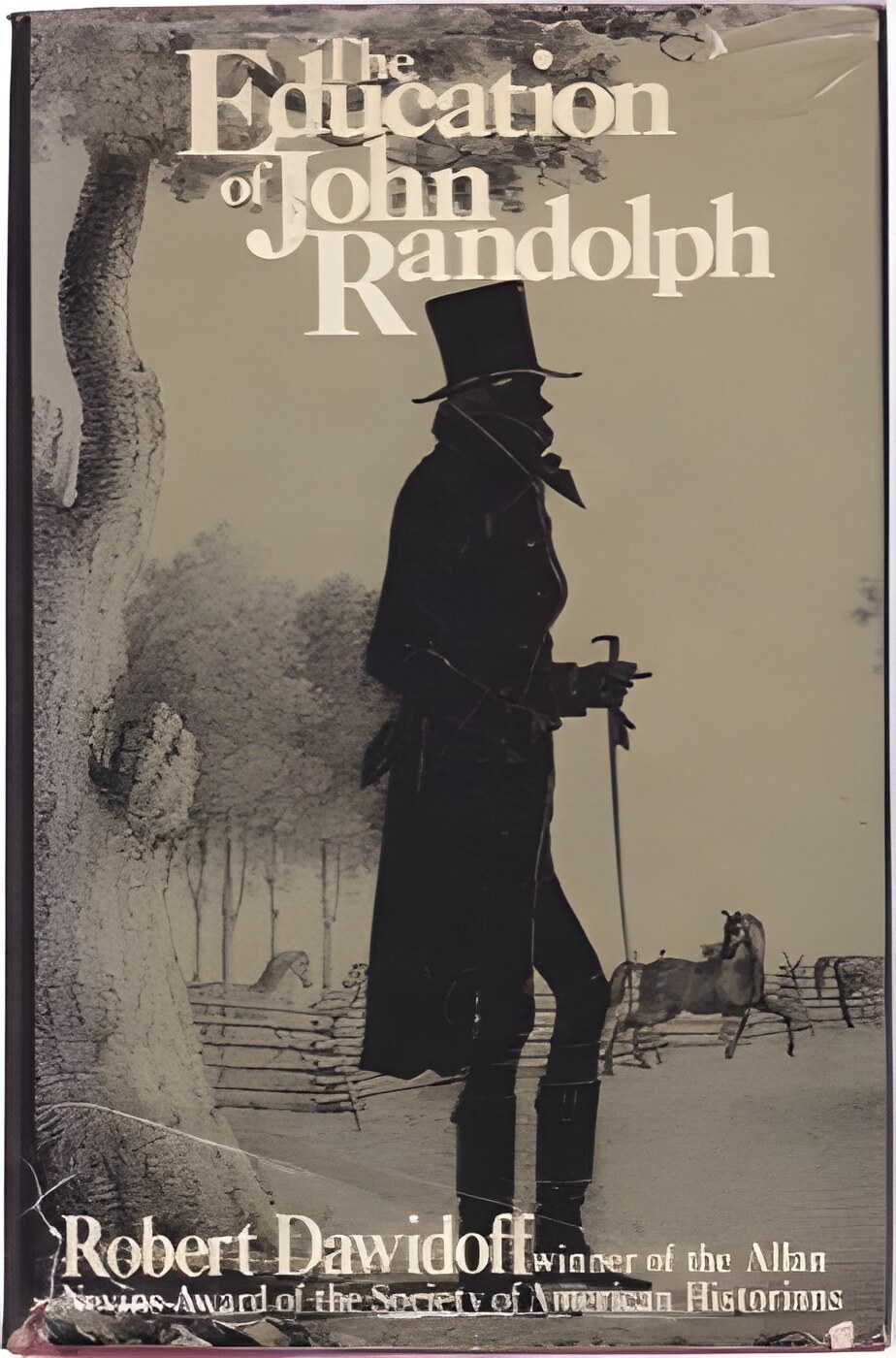
Hardcover. NY, W.W. Norton and Co., 1st, 1979, Book: Very Good, Dust Jacket: Good, Hardcover in a worn, price-clipped dust jacket, 346 pages. John Randolph of Roanoke, the notorious Virginian congressman and senator, was as renowned for his eccentric behavior as for his unusual political positions. Frontispiece portrait. Clean copy.
Hardcover. New Haven CT, Yale University Press, 1st, 1968, Book: Very Good, Dust Jacket: Good, Hardcover in a dust jacket with fading to spine, 289 pages, b&w illustrations. Turner's work on the frontier and on sectional development helped transform the teaching and writing of American history. Here are 150+ letters excerpted or given in full (to Woodrow Wilson, Arthur Schlesinger, Carl Becker, Merle Curti and others.
Hardcover. New Haven CT, The Colony Foundation, 1st, 1999, Book: Very Good, Dust Jacket: None, Hardcover, blue cloth boards with silver rules and decoration to spine. 78 pages, b&w illustrations. Clean copy.
Hardcover. Chicago, Foundation Desk Company, 1st, 1924, Book: Very Good, Dust Jacket: None, Hardcover, embossed green cloth with a color label on front cover, 384 pages, illustrated in color and b&w. Introduction by Patty Hill. Tips on child learning, health, activities and games, Name on front fly leaf, otherwise clean, tight copy.
Hardcover. Princeton NJ, Princeton University Press, 1st, 1969, Book: Very Good, Dust Jacket: None, Hardcover, decorated boards with green cloth spine with gilt lettering. 116 pages, clean, bright copy, no dj. This is a collection of excerpts from the public addresses of Robert F. Goheen during his twelve years as President of Princeton University. The emphasis is on the people whose responsibility it is to promote and defend the principles underlying the modern American university-students, faculty, administrators, trustees, alumni. Several fundamental themes emerge the theme of individual responsibility, and the ever-present need to join rational intelligence with moral commitment, for example. Dr. Goheen sees the university as a continuing institution with long range goals, responding conservatively (in its best sense) to the human needs of the times. He seeks to define its institutional relationships in the context of the university's tasks in educ1tion and research, which must be understood and kept in balance if universities are to serve their functions effectively. Laid in are two reprints of postcards from the 1890s featuring Princeton athletes.
Softcover. NY, Cleanliness Institute, 2nd pr., 1932, Book: Very Good, Dust Jacket: None, Softcover in pictorial wrappers. 118 pages illustrated in 2-colors by Warren Chappell. Pioneers struggle with not only the wilderness but with keeping things clean (geared to 7th & 8th graders). Name on front fly leaf, otherwise clean.
Softcover. UK, Pearson Education, 1st, 2007, Book: Very Good, Dust Jacket: None, Softcover, 411 pages. Recounts the development of the nations of England, Scotland, Wales and Ireland from the time of the Anglo-French dual monarchy under Henry VI through the Wars of the Roses, the Reformation crisis, the reigns of Henry VIII and Elizabeth I, the Anglo-Scottish dynastic union, the British multiple monarchy and the Cromwellian Republic, ending with the acts of British Union and the Restoration of the Monarchy. Clean copy.
Hardcover. NY, Viking Press, 1st US, 1977, Book: Very Good, Dust Jacket: Good, Hardcover in a lightly sunned, price-clipped dust jacket, 254 pages. "In this elegant memoir, Quennell turns from biographer of others to creating a self-portrait as well as frank and affectionate pictures of his parents. His father, C.H.B. Quennell, was an architect, a popular historian, and a formidable eccentric. The two men could scarcely have been more dissimilar, yet they shared many tastes and traits, and although they were lifelong adversaries the influence of the father had a determining effect on the education of the son." (from the jacket) Previous owner's inscription on front fly leaf which is tanned from clipping laid in.
Hardcover. Chapel Hill , University of North Carolina, 1st, 1949, Book: Very Good, Dust Jacket: None, Hardcover, dark green cloth, gilt lettering, design on spine, 280 pages. "The story of a Confederate childhood, a Reconstruction boyhood, and the education of a medical pioneer in the new South." This book is first of all a personal narrative that is alternately dramatic, thoughtful, and hilariously funny. It is also a vivid picture of plantation life before and during the Civil War and the beginnings of the building of a New South. Clean copy, spine a bit darkened.
Softcover. Princeton NJ, Princeton University Press, 1st, 1983, Book: Very Good, Dust Jacket: None, Softcover, 419 pages. The author clarifies the mutually constructive relationship between transnational and the modernizing Peruvian state, showing how the state maintains this relationship while simultaneously nurturing the new class. This book presents a useful analysis of Peru's mining sector in the post-1968 period. It has four sections: background on Peruvian mining and the international market; the role of transnational mining corporations in Peru; the characteristics of the domestically owned mining sector; and a class analysis of the mining bourgeoisie and proletariat. Although these chapters are mostly based on secondary sources, that material is supplemented by interviews conducted by Becker and some limited access to company and government documents. A particularly interesting section is a comparative analysis of the two major foreign firms in Peruvian mining: Cerro de Pasco and Southern Peru Copper Corporation. Useful detail is also supplied on the development of the main government mining corporation, Mineroperu. In addition, Becker provides a careful class analysis of the "new bourgeoisie" in social, economic, and political terms. Included are discussions of education, career patterns, and guild associations as well as of ideology. Clean copy.
Hardcover. NY, Henry Holt, 1st, 1986, Book: Very Good, Dust Jacket: Very Good, Hardcover in a bright, unclipped dust jacket. Fifteen-year-old Sammy di Cantini, resident of a mining region of Pennsylvania, is determined to rise above his class, falls disastrously in love with a Protestant, and visits his Mafia brother in New York where he becomes involved in impossible struggles. Takes place in 1925 in Pennsylvania's coal country. Clean, bright copy.
Softcover. Cambridge University Press, reprint, 2007, Book: Very Good, Dust Jacket: None, Two softcover volumes: Vol. 1: Books 1-V, 364 pages. Vol. 2: Books VI-X and Indexes, 531 pages. Previous owner's name, otherwise clean. James Adam (1860-1907) was a Scottish classics scholar who taught at Emmanuel College, Cambridge. A strong defender of the importance of Greek philosophy in a well-rounded education, Adam published a number of Plato's works including Protagoras and Crito. This two-volume critical edition of the Republic (1902) was another major contribution to the field. Though his preface claims 'an editor cannot pretend to have exhausted its significance by means of a commentary,' Adam's depth of knowledge and erudite analysis of the Greek text ensured that his edition remained the standard reference for decades to follow, and it remains a thought-provoking evaluation of one of the great works of Western thought.
Softcover. Montpelier VT, St. Michael's High School, 1940-1950, Book: Good, Dust Jacket: None, Nine stapled softcover booklets, 44-60 pages each, b&w photos. A history of this Vermont high school during WW2 and the post-war years. A few with ink name on cover, otherwise clean.
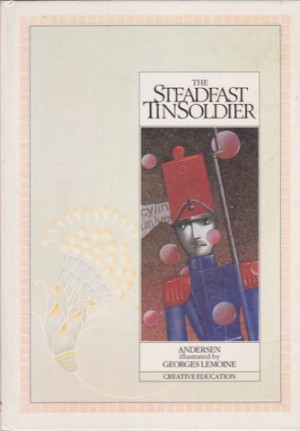
Hardcover. Mankato, MN, Creative Education, 1st thus, 1982, Book: Very Good, Dust Jacket: None, Hardcover. Color illustrations by Georges Lemoine. Laminated paper covered boards with color illustration on front cover.
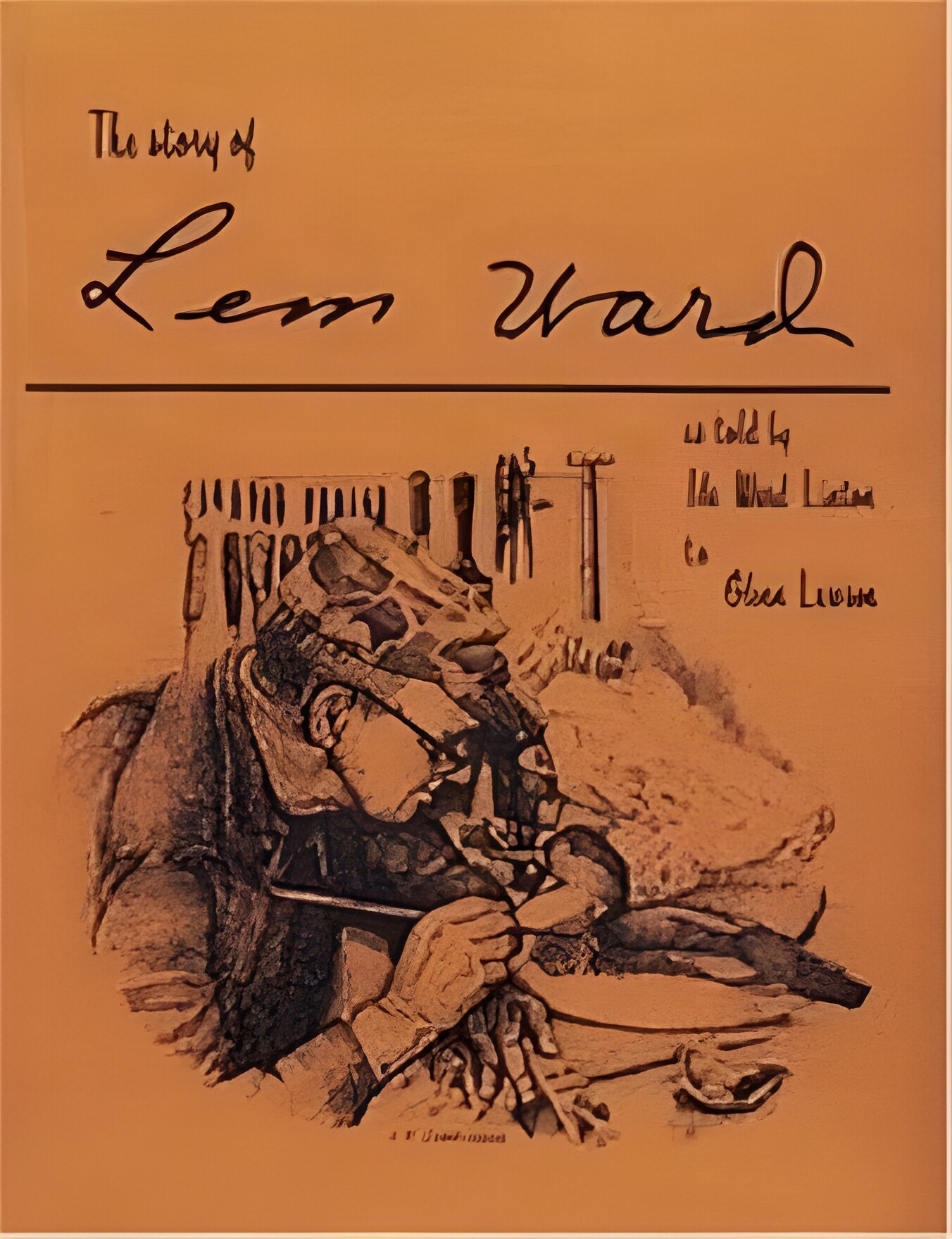
Hardcover. West Chester PA, Schiffer Publishing, 1st, 1984, Book: Very Good, Dust Jacket: Very Good, Hardcover in a bright dust jacket, 128 pages illustrated in color and b&w. The story of the life and works of an American wildfowl artist. Lem's life is a tale of courage - of a man who overcame a withered arm, lack of formal education, cultural isolation, and severe illness to become one of the founders of American Wildfowl Art. This is a close look at how he and his brother, Steve, grew up together in the marshes along the Chesapeake Bay, how they subsisted as barbers and foragers, how they retained their independent spirits to create birds that pleased them - wildfowl art - while carvers around them were creating decoys just good enough for hunting ducks. Lem's work is described in pictures, accompanied by colorful comments and interesting insights by a collector who became one of the artist's closest friends. Clean copy.
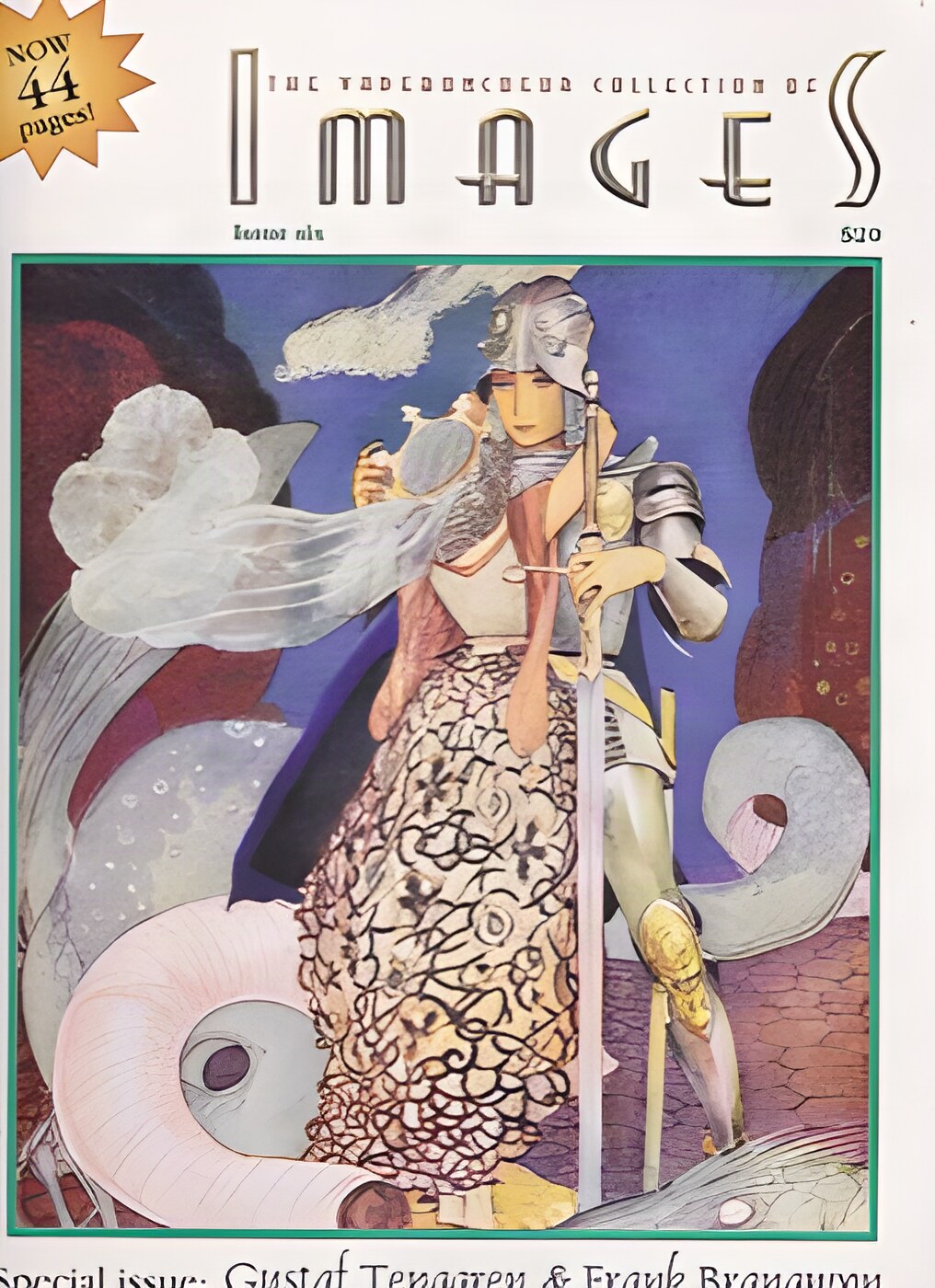
Softcover. Palo Alto CA, Jim Vadeboncoeur, 1st, 2003, Book: Very Good, Dust Jacket: None, Softcover magazine, 44 pages, features many rare color illustrations and lavish production. This issue concentrates on the work of just two artists, Gustaf Tenggren (1896-1970) & Frank Brangwyn (1967-1956). Tenggren originated in Sweden but emigrated to the USA in 1920, where he continued to provide illustrations for Swedish illustrated editions. Frank Brangwyn hailed from Bruges, Belgium. He moved to England with his English family to complete his education. Both artists work is illustrated with detailed texts to accompany the many illustrations. Clean copy.
Softcover. Boston, Samuel Hall, reprint, 1794, Book: Fair, Dust Jacket: None, Softcover 12mo, 56 pp. Small, tall 16mo, original marbled paper wrappers. First published in 1695 by Lady Mary Cressy, under the title The Whole Duty of a Woman; or, A Guide to the Female Sex, from the Age of Sixteen to Sixty, &c. For a new edition in 1753, the author was simply listed as "A Lady." In fact, this author was William Kenrick (1725-1779), English novelist, playwright, and founder of the book review digest The London Review. Kenrick was described by Paul Fussell in PMLA (June 1951) as "one of London's most despised, drunken, and morally degenerate hack writers in the later eighteenth century." In this tiny volume, Kenrick assumes the persona of a fallen woman, now reformed, who wants to persuade other women to live a life of virtue. Chapters include Curiosity, Reflection, Vanity, Knowledge, Reputation, Applause, Censure, Insinuation, Affectation, Modesty, Chastity, Complacence, Acquaintance, Friendship, Elegance, Frugality, Employment, Virginity, Marriage, Education, Authority, Widowhood, and Religion. Considerable wear to wrappers, still intact.
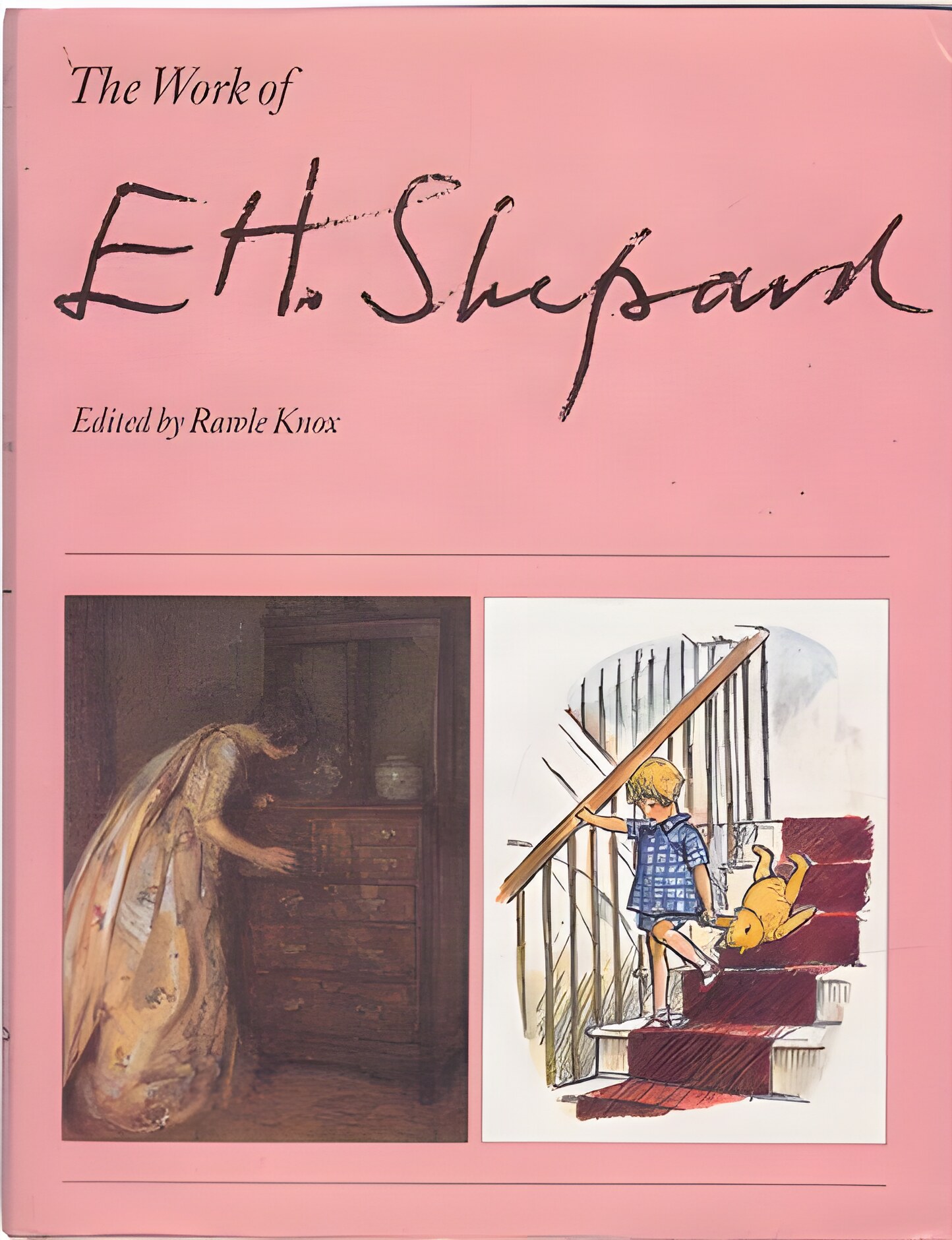
Hardcover. London, Methuen, reprint, 1990, Book: Very Good, Dust Jacket: Very Good, Hardcover in a bright dust jacket. 256 pages illustrated in color and b&w. Ernest Howard Shepard was an English artist and book illustrator, best remembered for his charming illustrations of the beloved anthropomorphic animals in The Wind in the Willows and Winnie-the-Pooh. This fascinating study of Shepard, detailing his childhood, education and artistic development, is richly illustrated throughout with his works. Clean copy.










 "The Human Nature of a University by: Goheen, Robert F.")


 "The Marble Foot: An Autobiography, 1905-1938by: Quennell, Peter")
 "The Natural Bent:The Memoirs of Dr. Paul B. Barringer by: Barringer, Paul B.")
 "The New Bourgeoisie and the Limits of Dependency: Mining, Class, and Power in Revolutionary Peruby: Becker, David G.")