Softcover. UK, Cambridge University Press, 1st, 1997, Book: Very Good, Dust Jacket: None, Softcover, 316 pages. How have women's lives changed in the republics of the former Soviet Union since the fall of the USSR? This is the first book systematically to examine changes and continuities across these states, focusing on women and work, social roles and women in politics. Drawing on interviews with women in factories, on farms and with women street-sellers, politicians and activists, the book questions whether women are "victims" or "agents" of change, and describes various strategies of coping and adaptation to new economic and social instabilities. Clean copy.
Hardcover. Bloomington IN, Indiana University Press, 1st, 1955, Book: Very Good, Dust Jacket: Fair, Hardcover in a worn, chipped dust jacket, 90 pages. Previous owner's signature and date on front fly leaf, internally clean.
Hardcover. NY, William Morrow, 1st, 1948, Book: Good, Dust Jacket: None, Hardcover, light gray cloth with maroon stamping, 64 pages illustrated in 2-colors by Joy Buba. Covers with edgewear. A simple and direct little fact book about the characteristics and care of rabbits charmingly illustrated by Buba. Ex-lib with light marking, envelope in inside rear cover, clean internally.
Hardcover. UK, Cambridge University Press, 1st, 2006, Book: Very Good, Dust Jacket: Very Good, Hardcover in a bright dust jacket, 286 pages. Extremists are people whose ideas or tactics are viewed as outside the mainstream. Looked at this way, extremists are not necessarily twisted or evil. But they can be, especially when they are intolerant and violent. What makes extremists turn violent? This book assumes that extremists are rational: given their ends, they choose the best means to achieve them. The analysis explains why extremist leaders use the tactics they do, and why they are often insensitive to punishment and to loss of life. It also explains how rational people can be motivated to die for the cause. The book covers different aspects of extremism such as revolution, suicide terrorism, and global jihad. The arguments are illustrated with important episodes of extremism, including the French Revolution, the rise of nationalism in Yugoslavia under Milosevic, and the emergence of suicide terror and Al Qaeda. Clean copy.
Softcover. NY, Monthly Review Press, 1st, 1996, Book: Very Good, Dust Jacket: None, Softcover, 288 pages. "Robert Weil has written a brilliant, powerfully argued book that cuts through the hogwash pouring from the West and from China about the 'miracle' of the Deng reforms. Weil shows how Deng's use of 'capitalism to build socialism' has resulted in the use of 'socialism to build capitalism.' This is powerful stuff, must-reading for all those who care about the future of humanity." --William Hinton. Clean, bright copy.
Hardcover. NY, Harper and Row, 1st US, 1970, Book: Very Good, Dust Jacket: Very Good, Hardcover in a bright dust jacket, 269 pages. 'Weber's famous study of the 'affinity' between the rise of rational bourgeois capitalism in England and Calvinist-Puritanism has for almost a century stirred up a cloud of dust and misunderstanding. Toward the end of settling some of the dust no one has previously made such an acute analysis of pre-revolutionary England as has David Little. On the one hand, he has applied and extended Weber's method, especially in the sphere of the law-monopoly and corporation law-thus filling a gap in these studies. He has also delineated the sharply conflicting conceptions of social order and of legitimation. On the the other hand, Little has given an invaluable critical survey of the extensive literature of Weber's thesis. This is a landmark in the study of the complex and varying relations between religion and society.' -James Luther Adams, Harvard Divinity School. Clean copy.
Softcover. Berkeley, Evolver Editions/North Atlantic, reprint, 2011, Book: Very Good, Dust Jacket: None, Softcover, 468 pages. Sacred Economics traces the history of money from ancient gift economies to modern capitalism, revealing how the money system has contributed to alienation, competition, and scarcity, destroyed community, and necessitated endless growth. Today, these trends have reached their extreme--but in the wake of their collapse, we may find great opportunity to transition to a more connected, ecological, and sustainable way of being. This book is about how the money system will have to change--and is already changing--to embody this transition. Clean copy.
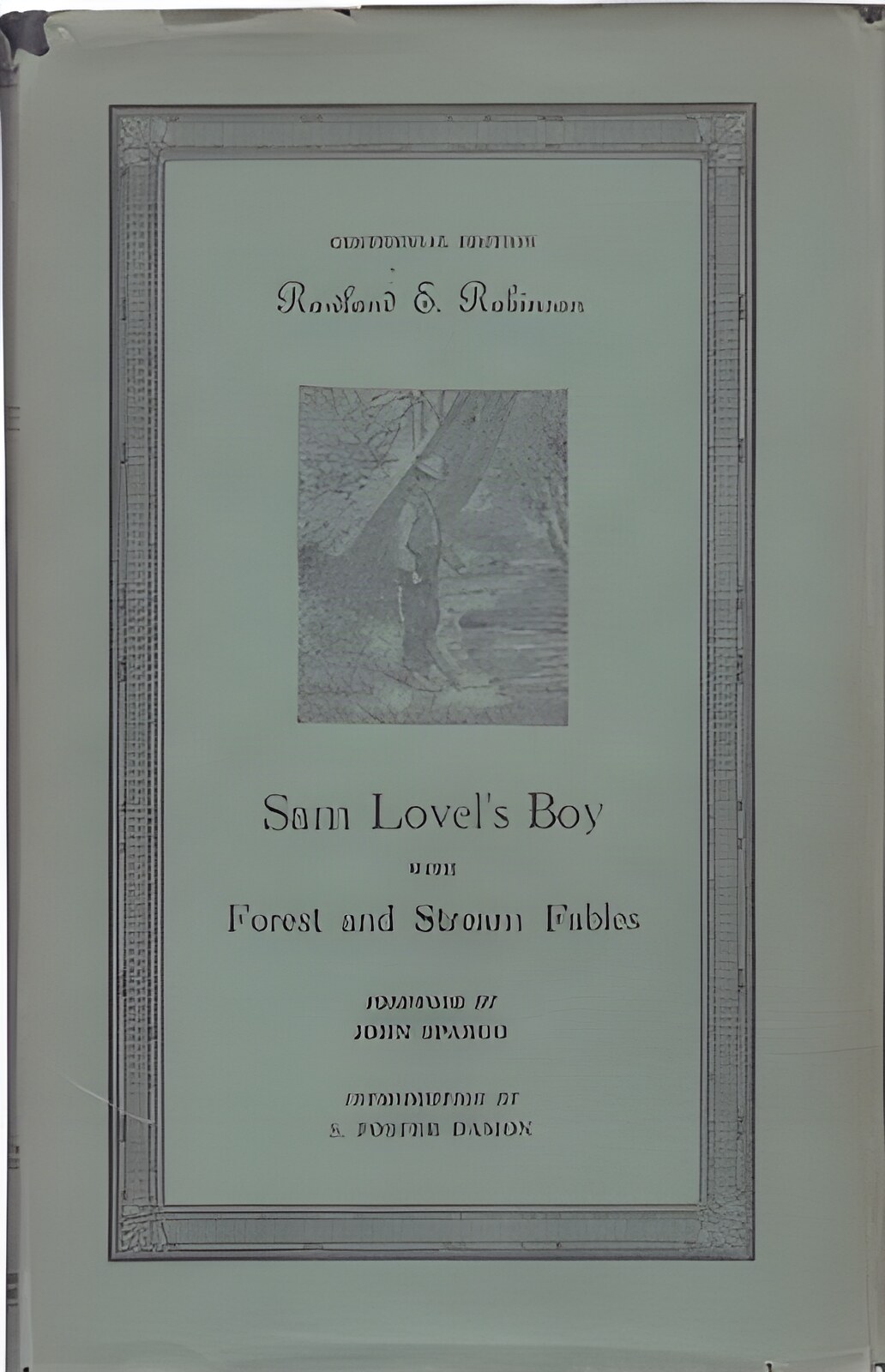
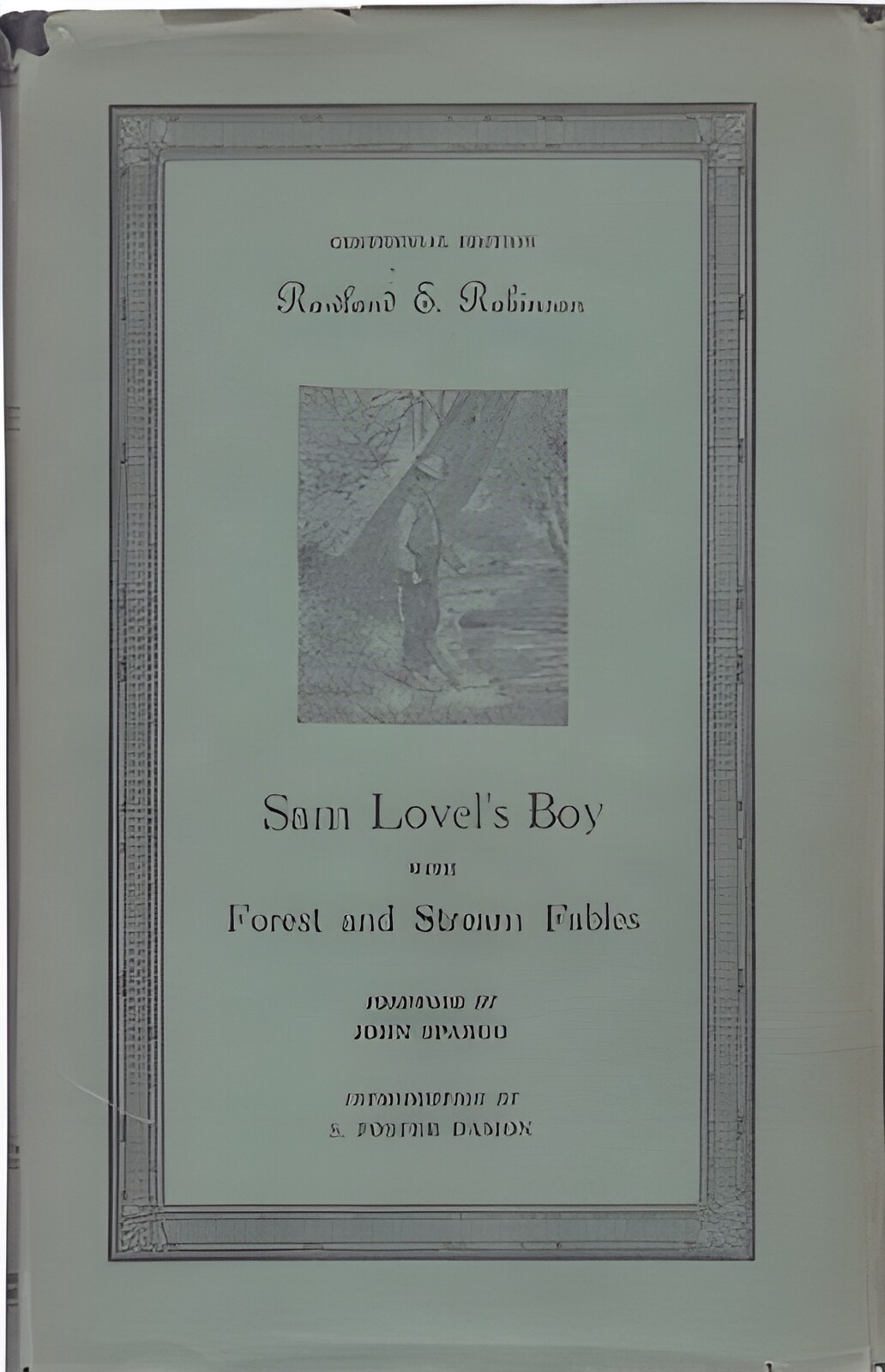
Hardcover. Rutland VT, Chas. E. Tuttle Co., reprint, 1936, Book: Very Good, Dust Jacket: Very Good, Hardcover in a bright dust jacket. Fine green textured cover with gilt to front and spine. B&w photo frontispiece. Foreword by John Spargo, Introduction by S. Foster Damon. A collection of tales capturing the essence of 19th-century rural life, primarily set in Vermont. Stories told in dialect, including chapters on trapping, hunting foxes, and some fishing. Clean copy.
Hardcover. Rutland VT, Chas. E. Tuttle Co., reprint, 1936, Book: Very Good, Dust Jacket: Good, Hardcover in a lightly worn and chipped dust jacket. Fine green textured cover with gilt to front and spine. B&w photo frontispiece. Foreword by John Spargo, Introduction by S. Foster Damon. A collection of tales capturing the essence of 19th-century rural life, primarily set in Vermont. Stories told in dialect, including chapters on trapping, hunting foxes, and some fishing. Clean copy.
Softcover. Cambridge MA, Belknap Press / Harvard, reprint, 1996, Book: Very Good, Dust Jacket: None, Softcover, 760 pages. Representing ten years of research into the history of the managerial business system, this book concentrates on patterns of growth and competitiveness in the United States, Germany, and Great Britain, tracing the evolution of large firms into multinational giants and orienting the late twentieth century's most important developments. Clean,bright copy.
Hardcover. NY, Pellegrini & Cudahy, 1st US, 1950, Book: Very Good, Dust Jacket: None, Hardcover, blue cloth with gilt lettering, 260 pages. Originally entitled ADEPTS OF AFRICA, SHADOWS OF ECSTACY, which was written in seven weeks in 1925, was the first novel Williams wrote but the fifth to be published in 1933. Follows the story of Nigel Constantine, an evangelical preacher who discovers the ability to cheat death. The charismatic occult leader stirs up an African revolt against Western Europe, with predictably devastating results. An unusual work on the occult and spiritualism, dealing with themes of colonialism, power, and global politics. Charles Williams, 1886-1945, was an English writer and theologian. He was a friend of J.R.R. Tolkien and C.S. Lewis, and was a member of their informal Oxford literary group, the Inklings. Clean copy, no dust jacket.
Hardcover. NY, Prestel, 1st, 2019, Book: Very Good, Dust Jacket: Very Good, Hardcover in a bright dust jacket, 176 pages. This book features the vintage archaeological photography of John Beasley Greene, one of the first photographers in Egypt and Algeria. Few figures in 19th-century photography remain as elusive and intriguing as John Beasley Greene (1832-1856). Over the course of an exceptionally brief career he created a body of photographs that were publicly admired by his peers and continue to capture the imagination of contemporary audiences. Born in France to an American banker, he made his first expedition to Egypt in 1853, where he photographed ancient Egyptian monuments and is thought to be the first archaeologist to use photography. In these photographs, he positioned his horizon lines with precision, at times placing them so low in the frame that the photograph is nearly all blank sky, or so high that the monuments are almost swallowed up by vast seas of sand. Some of his Egyptian landscapes are so visually spare they appear to be of nothing at all. Greene also traveled to Algeria where he photographed the ancient cliff-top city of Constantine and the seaport town, Cherchell. By contrast, Greene's photographs from Algeria frequently present a densely layered abundance of visual detail. Breathtakingly beautiful, Greene's photographs construct a visual record of archaeological monuments and landscapes. Featuring some 100 vintage prints, this comprehensive book aims to introduce Greene's work to a new audience and to reconsider his place in the history of photography. Clean copy in shrinkwrap.
Softcover. Racine WI, Whitman Publishing, 1st, 1942, Book: Very Good, Dust Jacket: None, Softcover, stapled wraps, 16 pages illustrated in color by Ethel Bonney Taylor. Well-known nursery rhymes set to a musical score. No markings.
Hardcover. NY., Thomas Y. Crowell, 4th pr., 1974, Hardcover in a lightly worn dust jacket with a spine sticker. Illustrated in b&w and 3-colors by Wendy Watson. A lovely picture book that illustrates the importance of sleep through various animals and a comparison to humans. Readers can see the different sleep positions and consider their own. Ex-lib with light stamping and residue to endpapers. Clean internally.
Softcover. Seattle, Fantagraphics, 2nd pr., 2026, Book: Very Good, Dust Jacket: None, Softcover, 264 pages in color. Basil Wolverton is one of the greatest, most idiosyncratic talents in comic book history. Though he is best known for his humorous grotesqueries in MAD magazine, it is his science-fiction character Spacehawk that Wolverton fans have most often demanded be collected. The wait is over: Spacehawk features every story from Spacehawk's intergalactic debut in 1940 to his final, Nazi-crushing adventure in 1942. Spacehawk is the closest thing to a colorfully-costumed, conventional action hero Wolverton ever created, yet the strip is infused with Wolverton's quintessential weirdness: controlled, organic artwork of strangely repulsive aliens and monsters and bizarre planets, and stories of gruesome retribution that bring to mind Wolverton's peer, Fletcher Hanks. Spacehawk had no secret identity, no fixed base of operations beyond his spaceship, and no sidekicks or love interests. He had but one mission in life: to protect the innocent throughout the Solar System, and to punish the guilty. Clean copy.
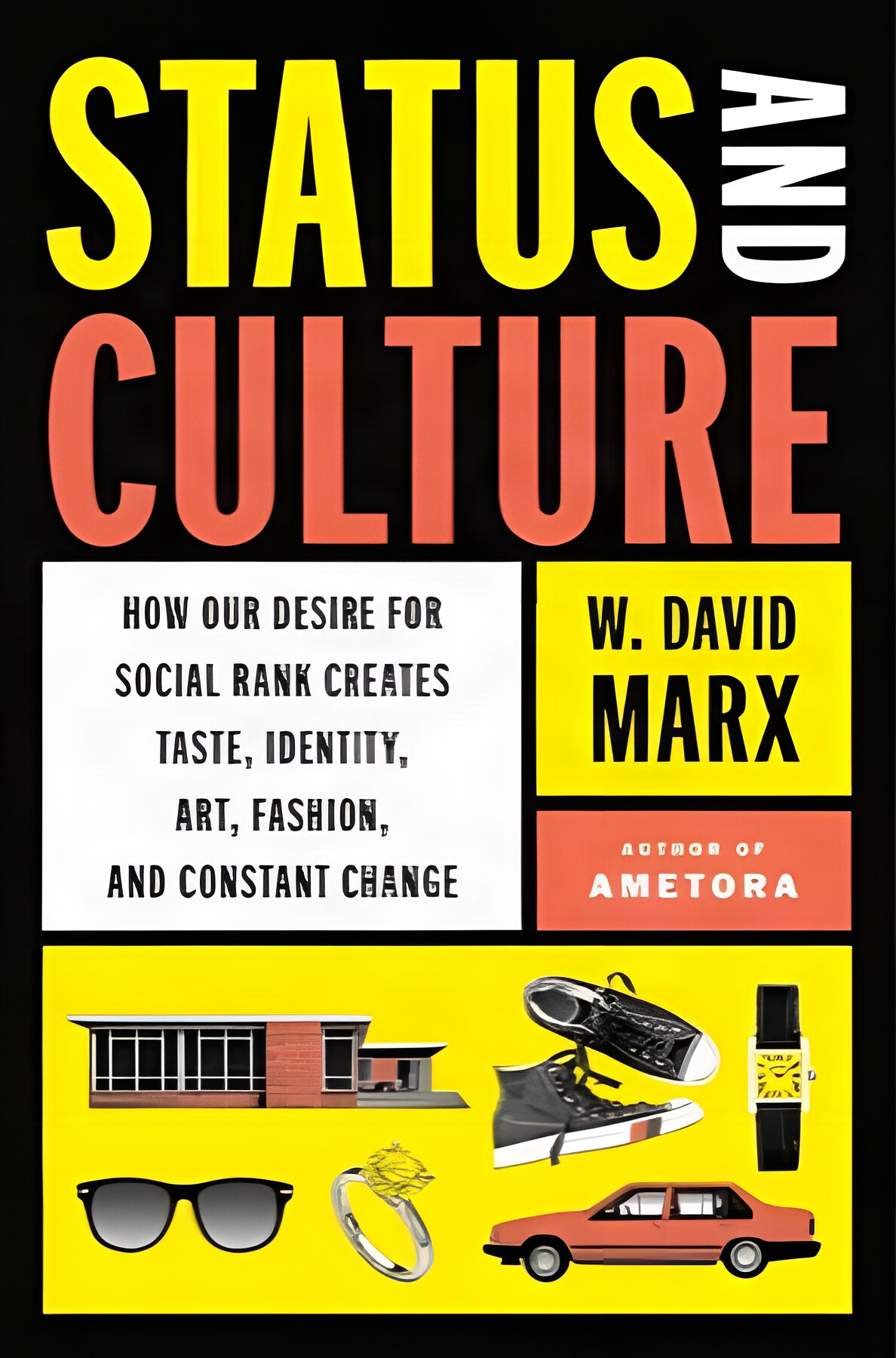
Hardcover. NY, Viking, 1st, 2022, Book: Very Good, Dust Jacket: Very Good, Hardcover in a bright dust jacket, 346 pages. In Status and Culture, W. David Marx weaves together the wisdom from history, psychology, sociology, anthropology, economics, philosophy, linguistics, semiotics, cultural theory, literary theory, art history, media studies, and neuroscience to demonstrate exactly how individual status seeking creates our cultural ecosystem. Marx examines three fundamental questions: Why do individuals cluster around arbitrary behaviors and take deep meaning from them? How do distinct styles, conventions, and sensibilities emerge? Why do we change behaviors over time and why do some behaviors stick around? The answers then provide new perspectives for understanding the seeming "weightlessness" of internet culture. Clean copy.
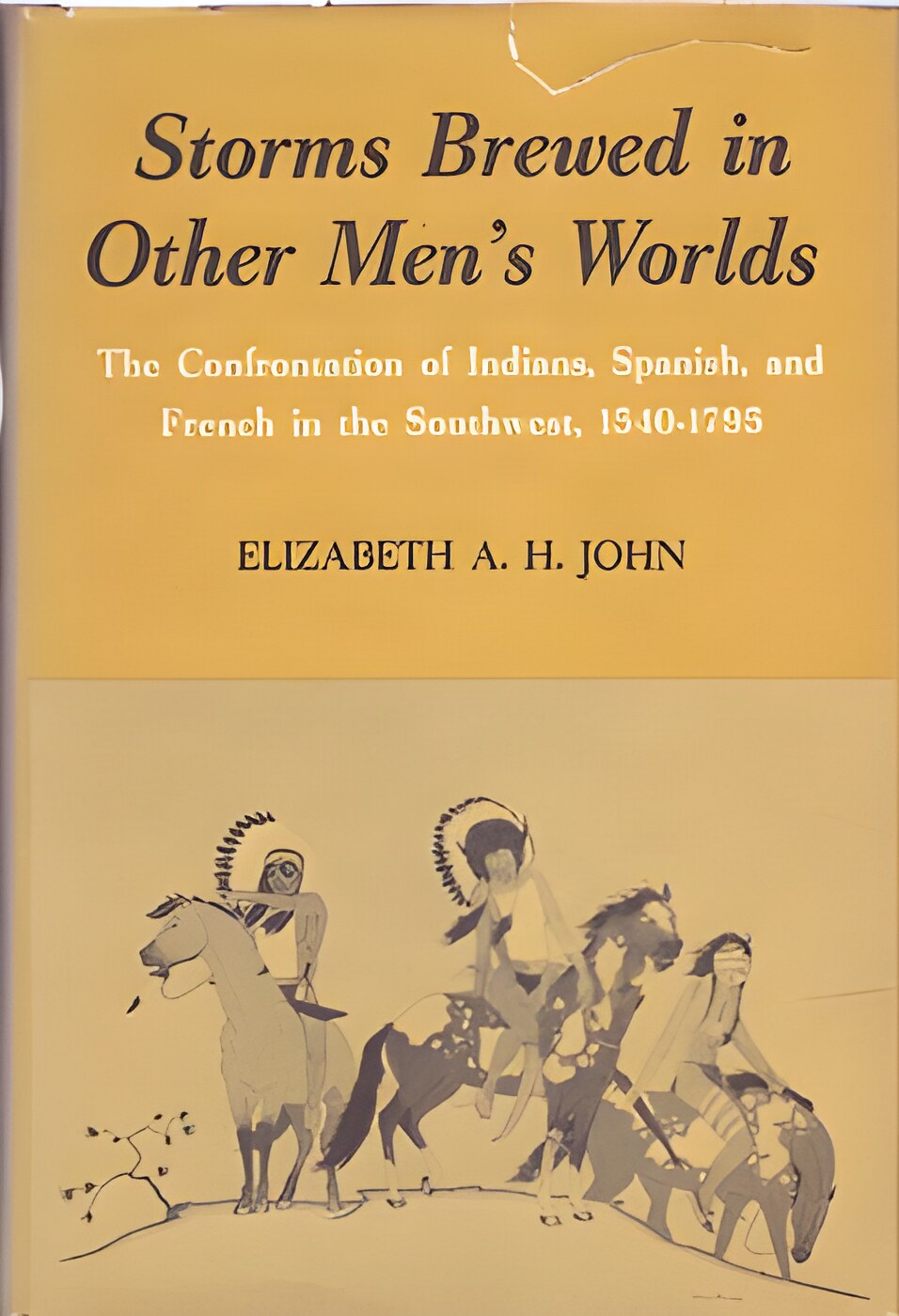
Hardcover. College Station, Texas A&M University Press, 1st, 1975, Book: Very Good, Dust Jacket: Very Good, Hardcover in a bright dust jacket with a small tape repair, 805 pages. The Confrontation of Indians, Spanish, and French in the Southwest, 1540-1795. Spanning two and a half centuries, from the earliest contacts in the 1540s to the crumbling of Spanish power in the 1790s. Storms Brewed in Other Men's Worlds is a panoramic view of Indian peoples and Spanish and French intruders in the early Southwest. The primary focus is the world of the American Indian, ranging from the Caddos in the east to the Hopis in the west, and including the histories of the Pueblo, Apache, Navajo, Ute, and Wichita peoples. Within this region, from Texas to New Mexico, the Comanches played a key, formative role, and no less compelling is the story of the Hispanic frontier peoples who weathered the precarious, often arduous process of evolving coexistence with the Indians on the northern frontier of New Spain. Clean copy.
Softcover. NY, Columbia University Press, 1st pbk., 1997, Book: Very Good, Dust Jacket: None, Softcover, 232 pages, b&w illustrations. Focusing on the immediate pre-revolutionary period and the first decade of the Islamic Republic, Bayat discusses the economic and political strategies of 'ordinary'[Iranian] people, mainly in Tehran.... He demonstrates that, for these people at least, the populist revolution did not bring about the changes that they needed or wanted. Clean copy.
Hardcover. London, NLB, 1st transl. thus, 1972, Book: Very Good, Dust Jacket: None, Hardcover, light blue cloth stamped in gilt, 257 pages. The articles and essays collected in this book were written during the decade of Lukacs's life when he was most active in politics. The first texts mark his transition from an anti-bourgeois aestheticism to Marxism and the newly founded Hungarian Communist Party. They are followed by material which displays the full range of his activity and thought during the subsequent ten years. Some of these essays were written when Lukacs was deputy commissar of education in the embattled, short-lived Hungarian Soviet Republic. Others include the famous article on parliamentarianism which earned its author the respectful yet severe criticism of Lenin.The volume includes short studies on German revisionism, Bukharin's Marxism, and Karl Wittfogel, and longer pieces on Lassalle and Moses Hess. The collection ends with the theses Luckas wrote, under his cover name "Blum", in opposition to the policies of the Third Period of the Comintern. Clean copy.
Hardcover. Philadelphia, Temple University Press, 1st, 1991, Book: Very Good, Dust Jacket: Very Good, Hardcover in a dust jacket with fading to spine, 174 pages. In this interpretation of Bolivia's political and social development, Carmenza Gallo focuses on the impact of the Bolivian tax code and its relationship to class structure. She argues that differences in state formation in primary export economies merge from variation of three main elements: class structure; the economic base and the export sector's degree of integration into the domestic economy; and the reliance of fiscal resources on export sectors. Gallo produces a more complete view of the state's responses to internal and international circumstances and a better understanding of the conditions under which officials of weak states, like Bolivia, act independently of upper classes.
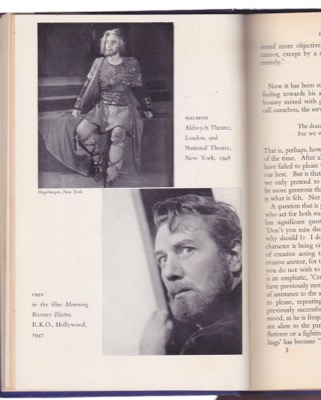
Hardcover. NY/London, Theatre Arts/W. Heinemann, reprint, 1956, Book: Very Good, Dust Jacket: None, Hardcover, blue cloth with faded gilt lettering on spine, 90 pages. Written when Michael Redgrave was at the height of his power and acclaim, The Actor's Ways and Means is a spirited and knowledgeable account of the most influential ideas about the art and craft of acting. Drawing on his own direct experience, Redgrave evaluates the influence of famous actors and directors, from Copeau to Stanislavski, from Meyerhold to Edward Gordon Craig. Illustrated with b&w photos of Redgrave in performance. Checkmark on front flyleaf, otherwise clean.
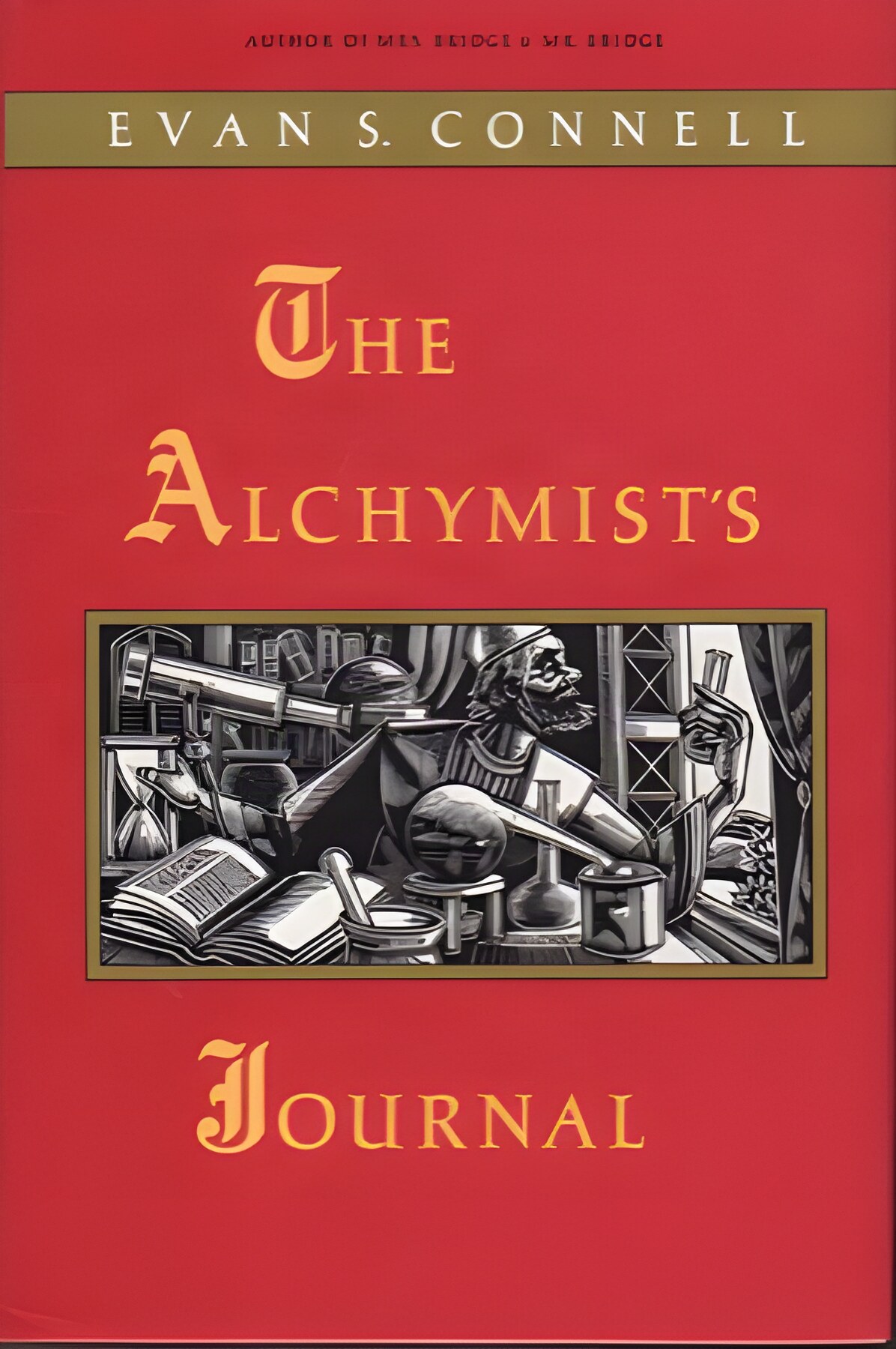
Hardcover. North Point Press, 1st, 1991, Book: Very Good, Dust Jacket: Very Good, Hardcover in a bright dust jacket, 214 pages. The journals of seven very different alchemists evoke the mystery of pre-Renaissance times and a sense of humanity for today. Clean copy.
Hardcover. NY, Harcourt, Brace and World, 1st, 1964, Book: Very Good, Dust Jacket: Very Good, Hardcover in a lightly worn, price-clipped dust jacket. In the heart of Brooklyn, New York, there is an alley that is the most beautiful place to live in the whole wide world. Or so Connie Ives believes. The alley is the perfect location to sharpen Connie's swinging skills, hold practices for the Alley Conservatory of Music, "and" convict a burglar by trial. Ten-year-old Connie, who lives in the Brooklyn neighborhood called The Alley, investigates a burglary with her friend Billy Maloon. Drawings by Edward Ardizzone. Clean copy.
Softcover. UK, Cambridge University Press, reprint, 1978, Book: Very Good, Dust Jacket: None, Softcover, 309 pages. The classic study, looking at Habsburg Spain's handling of the Dutch Revolt. Clean copy.

 "Post-Soviet Women: From the Baltic to Central Asiaby: Mary Buckley (Editor)")




 "Rational Extremism: The Political Economy of Radicalismby: Ronald Wintrobe")



 "Scale and Scope: The Dynamics of Industrial Capitalismby: Alfred DuPont Chandler Jr.")









 "Taxes And State Power: Political Instability in Bolivia, 1900-1950by: Carmenza Gallo")