Softcover. Wesleyan University Press, reprint, 1986, Book: Very Good, Dust Jacket: None, Softcover, 398 pages. "A Glimpse of Sion's Glory" signals an important new direction in the study of American Puritanism. The presence of dissenters in the colonies was not unknown, but never before have they been seen as a major shaping force for seventeenth-century American Puritanism. Gura displays a thorough knowledge of New England dissent from 1620 to 1660. This is a ground-braking study. Clean copy.
Hardcover. NY, Da Capo Press, reprint, 1971, Book: Very Good, Dust Jacket: None, Original publisher's red cloth, lettered gilt on spine and front cover, 64 pages. English experience, no. 354. A facsimile reprint made from a copy in the library of King's College Cambridge. Clean copy.
Hardcover. London, England, Gret Western Railway, 1st edition, 1925, Book: Very Good, Dust Jacket: None, 154 pages. Hardcover. Color illustrated frontispiece, color and b/w illustrations, including several fold out blueprint diagrams, throughout. Previous owner's ID stamp on front flyleaf. Red cover boards (some fading), black quarter cloth, gilt title on spine and front cover board. Pages unmarked, some light tanning from age. Binding good, spine straight. With additional chapter on "Monastic Life and Buildings" by A. Hamilton Thompson, M.A., D.LITT., F.S.A. Professor of Mediaeval History in the University of Leeds. With One Hundred Illustrations by Photographic Reproduction, fifty-six drawings, thirteen plans, seven color plates and map (in pocket on back endpapers).
Hardcover. Philadelphia, The American Philosophical Society, reprint, 1968, Book: Very Good, Dust Jacket: Good, Hardcover, 579 pages. B&w photographs. Previous owner's inscription on front flyleaf. Light foxing to top edge. Wear, chipping to dust jacket. A nice, clean copy.
Hardcover. London, England, Macmillan and Co. , 2nd Edition, 1922, Book: Very Good, Dust Jacket: None, 503 pages. Hardcover. Previous owner's name on front flyleaf. Blue cloth cover boards, gilt title on spine, some chipping to edges of boards. Tanning to pages and edges from age. Binding very good. Spine straight. Benedetto Croce is one of the most influential philosophers of the twentieth century. His work in aesthetics and historiography has been controversial, but enduring.
Hardcover. Cambridge UK, Cambridge University Press, 1st, 2015, Book: Very Good, Dust Jacket: Very Good, Hardcover in a bright dust jacket, pages. Seventeenth-century England has long been heralded as the birthplace of a so-called 'new' philosophy. Yet what contemporaries might have understood by 'old' philosophy has been little appreciated. In this book Dmitri Levitin examines English attitudes to ancient philosophy in unprecedented depth, demonstrating the centrality of engagement with the history of philosophy to almost all educated persons, whether scholars, clerics, or philosophers themselves, and aligning English intellectual culture closely to that of continental Europe. Drawing on a vast array of sources, Levitin challenges the assumption that interest in ancient ideas was limited to out-of-date 'ancients' or was in some sense 'pre-enlightened'; indeed, much of the intellectual justification for the new philosophy came from re-writing its history. At the same time, the deep investment of English scholars in pioneering forms of late humanist erudition led them to develop some of the most innovative narratives of ancient philosophy in early modern Europe. Name on front fly leaf, otherwise clean.
Hardcover. Paris, Zodiaque, 1st, 1983, Book: Very Good, Dust Jacket: Very Good, 374 pages plus index. Color, b&w gravure photographs, plans of churches, cathedrals, abbeys and monasteries in England. Text in French. Ribbon marker.
Hardcover. Oxford UK, Oxford University Press, 1st, 2008, Book: Very Good, Dust Jacket: Very Good, Hardcover in a bright dust jacket, 293 pages. A study of the Anglican Reformed tradition (often inaccurately described as Calvinist) after the Restoration. Hampton sets out to revise our picture of the theological world of the later Stuart period. Arguing that the importance of the Reformed theological tradition has frequently been underestimated, his study points to a network of conforming reformed theologians which included many of the most prominent churchmen of the age. Focussing particularlyon what these churchmen contributed in three hotly disputed areas of doctrine (justification, the Trinity and the divine attributes), he argues that the most significant debates in speculative theologyafter 1662 were the result of the Anglican Reformed resistance to the growing influence of continental Arminianism. Hampton demonstrates the strength and flexibility of the Reformed response to the developing Arminian school, and shows that the Reformed tradition remained a viable theological option for Anglicans well into the eighteenth century. Clean, bright copy.
Softcover. London, Routledge, reprint, 2016, Book: Very Good, Dust Jacket: None, Softcover, 287 pages. St Anselm's archiepiscopal career, 1093-1109, spanned the reigns of two kings: William Rufus and the early years of Henry I. As the second archbishop of Canterbury after the Norman Conquest, Anselm strove to extend the reforms of his teacher and mentor at Bec, and his predecessor at Canterbury, Archbishop Lanfranc. Exploring Anselm's thirty years as Prior and Abbot of the large, rich, Norman monastery of Bec, and teacher in its school, this book notes the wealth of experiences which prepared Anselm for his archiepiscopal career--in particular Bec's missionary attitude toward England. Sally Vaughn examines Anselm's intellectual strengths as a teacher, philosopher and theologian: exploring his highly regarded theological texts, including his popular Prayers and Meditations, and how his statesmanship was influenced as he dealt with conflict with the antagonistic King William Rufus. Clean copy.
Hardcover. London, England, Messrs. Luzac & Co., 1st Edition, 1954, Book: Very Good, Dust Jacket: None, Two volume set. Hardcovers. Domestic shipping only. Previous owner's name on front flyleaf. Vol. 1: 374 pages; Vol. 2: 217 pages. Black cover boards, gilt title on spine. Volume 2 has fading to spine. Pages unmarked. Spines straight. Binding tight. An important Islamic philosophical treatise in which the author defends the use of Aristotelian philosophy within Islamic thought. DOMESTIC SHIPPING ONLY.
Hardcover. Oxford, Thomas Baskett and Robert Baskett, 1st, 1743, Book: Good, Dust Jacket: None, Unpaginated in parts. Leather binding shows heavy wear to edges, especially corners. Gilt decoration on spine and stamped embellishment on front. Heavy foxing on pages. Gutter cracked in center. Black and white illustrations.
Hardcover. Cambridge, England, Cambridge University, 1st Edition, 1777, Book: Good, Dust Jacket: None, Nonpaginated. Hardcover. Cover boards bound in polished calf (agewear--see image), gilt bands on spine. Front cover boards and front flyleaf still attached but coming loose from binding,Binding tight otherwise. Spine straight. Previous owner's inscription on front flyleaf and dated signatures (178? and 1792) on title page (see image). Some light pencil on top of title page (see image). Tanning throughout from age. Beautiful old volume, a collector's dream.
Hardcover. Oxford UK, Oxford University Press, 1st, 2015, Book: Very Good, Dust Jacket: Very Good, Hardcover in a bright dust jacket, 286 pages. Sarah Hutton presents a rich historical study of one of the most fertile periods in modern philosophy. It was in the seventeenth century that Britain's first philosophers of international stature and lasting influence emerged. Its most famous names, Hobbes and Locke, rank alongside the greatest names in the European philosophical canon. Bacon too belongs with this constellation of great thinkers, although his status as a philosopher tends to be obscured by his statusas father of modern science. The seventeenth century is normally regarded as the dawn of modernity following the breakdown of the Aristotelian synthesis which had dominated intellectual life since the middle ages. In this period of transformational change, Bacon, Hobbes, Locke are acknowledged tohave contributed significantly to the shape of European philosophy from their own time to the present day. But these figures did not work in isolation. Sarah Hutton places them in their intellectual context, including the social, political and religious conditions in which philosophy was practised. She treats seventeenth-century philosophy as an ongoing like all conversations, some voices will dominate, some will be more persuasive than others and there will be enormous variationsin tone from the polite to polemical, matter-of-fact, intemperate. The conversation model allows voices to be heard which would otherwise be discounted. Hutton shows the importance of figures normally regarded as 'minor' players in philosophy (e.g. Herbert of Cherbury, Cudworth, More, Burthogge,Norris, Toland) as well as others who have been completely overlooked, notably female philosophers. Crucially, instead of emphasizing the break between seventeenth-century philosophy and its past, the conversation model makes it possible to trace continuities between the Renaissance and seventeenth century, across the seventeenth century and into the eighteenth century, while at the same time acknowledging the major changes which occurred.
Hardcover. Oxford, England, Oxford University Press, 1st, 2010, Book: Very Good, Dust Jacket: Very Good, 328 pages. Hardcover. B/w illustrations throughout. Previous owner's name on front flyleaf. Black cover boards, gilt title on spine. Binding tight. Spine straight. Pages clean, unmarked, bright. Dust jacket unclipped, excellent, glossy. Assesses the comexity and fluidity of Christian identity from the reign of Elizabeth I and the early Stuart kings through the English Revolution, and into the Restoration, which the English Church and monarchy were restored.
Softcover. Los Angeles, Augustan Reprint Society, reprint, 1990, Book: Very Good, Dust Jacket: None, Softcover, 23 and 27 pages, introduction by Claudis Johnson. Facsimile reprints of two pamphlets written to benefit priests who were expelled by the revolutionary French Government. Both authors championed causes to relieve their plight. Clean copy.
Softcover. Oxford UK, Cambridge University Press, 2nd Ed., 2000, Book: Very Good, Dust Jacket: None, Softcover, 580 pages. INSCRIBED BY AUTHOR on inside front cover. This classic work of recent historiography broke the hold of the "old guard" on this key period of English history. It has now been extensively rewritten, and in its updated form reinforces its arguments with new evidence and addresses some of the historical preoccupations of the past fifteen years.
Hardcover. London, England, Oxford at the Clarendon Press, Reprint, 1962, Book: Very Good, Dust Jacket: None, 480 pages. Hardcover. Previous owner's bookplate on front endpaper and names written on front flyleaf. Light pencil notes and underlining. Spine straight. Black cover boards, gilt title on spine. Split at gutter on title page, but binding good. Bradley was a leading member of the philosophical movement known as British idealism.
Hardcover. Bristol UK, Thoemmes, reprint, 1990, Book: Very Good, Dust Jacket: None, Hardcover, red cloth with gilt lettering on spine, 464 pages. The handsome 1990 re-issue of the 1768 1st edition with a new introduction by John Stephens. Name on front fly leaf, otherwise clean.
Hardcover. UK, Oxford University Press, 1st, 2004, Book: Very Good, Dust Jacket: Very Good, Hardcover in a bright dust jacket, 482 pages. This is the first comprehensive study of Gangraena, an intemperate anti-sectarian polemic written by a London Presbyterian Thomas Edwards and published in three parts in 1646. These books, which bitterly opposed any moves to religious toleration, were the most notorious and widely debated texts in a Revolution in which print was crucial to political moblization. They have been equally important to later scholars who have continued the lively debate over the value of Gangraena as a source for the ideas and movements its author condemned. This study includes a thorough assessment of the usefulness of Edwards' work as a historical source, but goes beyond this to provide a wide-ranging discussion of the importance of Gangraena in its own right as a lively work of propaganda, crucial to Presbyterian campaigning in the mid-1640s. Name, date on front fly leaf, otherwise clean.
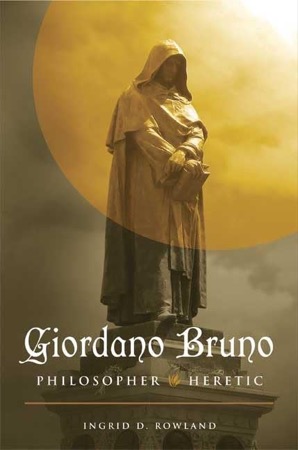
Hardcover. NY, Farrar, Straus and Giroux, 2nd pr., 2008, Book: Very Good, Dust Jacket: Very Good, Hardcover in a bright dust jacket, 335 pages. Giordano Bruno is one of the great figures of early modern Europe, and one of the least understood. Ingrid D. Rowland's pathbreaking life of Bruno establishes him once and for all as a peer of Erasmus, Shakespeare, and Galileo, a thinker whose vision of the world prefigures ours. By the time Bruno was burned at the stake as a heretic in 1600 on Rome's Campo dei Fiori, he had taught in Naples, Rome, Venice, Geneva, France, England, Germany, and the Prague of Emperor Rudolph II. His powers of memory and his provocative ideas about the infinity of the universe had attracted the attention of the pope, Queen Elizabeth and the Inquisition, which condemned him to death in Rome as part of a yearlong jubilee. Writing with great verve and sympathy for her protagonist, Rowland traces Bruno's wanderings through a sixteenth-century Europe where every certainty of religion and philosophy had been called into question and shows him valiantly defending his ideas (and his right to maintain them) to the very end. Clean copy.
Softcover. New Haven CT, Yale University Press, 1st pbk, 2022, Softcover, 483 pages. An engaging, richly illustrated account of parish churches and churchgoers in England, from the Anglo-Saxons to the mid-sixteenth century. Parish churches were at the heart of English religious and social life in the Middle Ages and the sixteenth century. In this comprehensive study, Nicholas Orme shows how they came into existence, who staffed them, and how their buildings were used. He explains who went to church, who did not attend, how people behaved there, and how they--not merely the clergy--affected how worship was staged. Clean, bright copy.
Hardcover. Oxford, England, Clarendon Press, 1st Edition, 1983, Book: Very Good, Dust Jacket: Very Good, 627 pages. Hardcover. Sequel to Hegel's Development: Toward the Sunlight 1770-1801(Clarendon Press, 1972). Black cover boards, gilt title and design on spine. Pages clean and bright. Binding tight. Spine straight. Dust jacket unclipped, faded (shelfwear), light agewear, glossy. Harris distinguishes three main phases in Hegel's development over this period: the period of callaboration with Schelling (1801-3); the appearance of a three-part 'phenomenological' system (1803-50; and the emergence of the mature system.
Hardcover. London, England, Oxford at the Clarendon Press, 3rd Edition reprint, 1959, Book: Very Good, Dust Jacket: Good, 741 pages. Hardcover. B/w illustrated frontispiece. Previous owner's name on front flyleaf. Pages clean, unmarked. Binding good. Spine straight. Dark blue cloth cover boards, gilt title on spine. Dust jacket has some agewear, price-clipped. An impressive eye-witness account of life in India at the turn of the century. It combines descriptions of the Hindu religion and Hindu sociology with masterful portraits of the intimate lives of the people among whom the author lived.
Hardcover. London, England, Routledge & Kegan Paul Limited, 1st Editions, 1950, Book: Very Good, Dust Jacket: None, International Library of Sociology and Social Reconstruction. Two Volumes: Vol. 1: 352 pages. Vol. 2: 706 pages plus publisher ads. Previous owner's name on front flyleafs. Green cloth cover boards, gilt title on spine, fading to boards, especially to spines. Binding tight. Spines straight. Pages/edges have light tanning, otherwise clean. Appearing in isolation as they do, autobiographies demand for their description and appreciation, a comprehensive view of the development of the human mind. DOMESTIC SHIPPING ONLY.


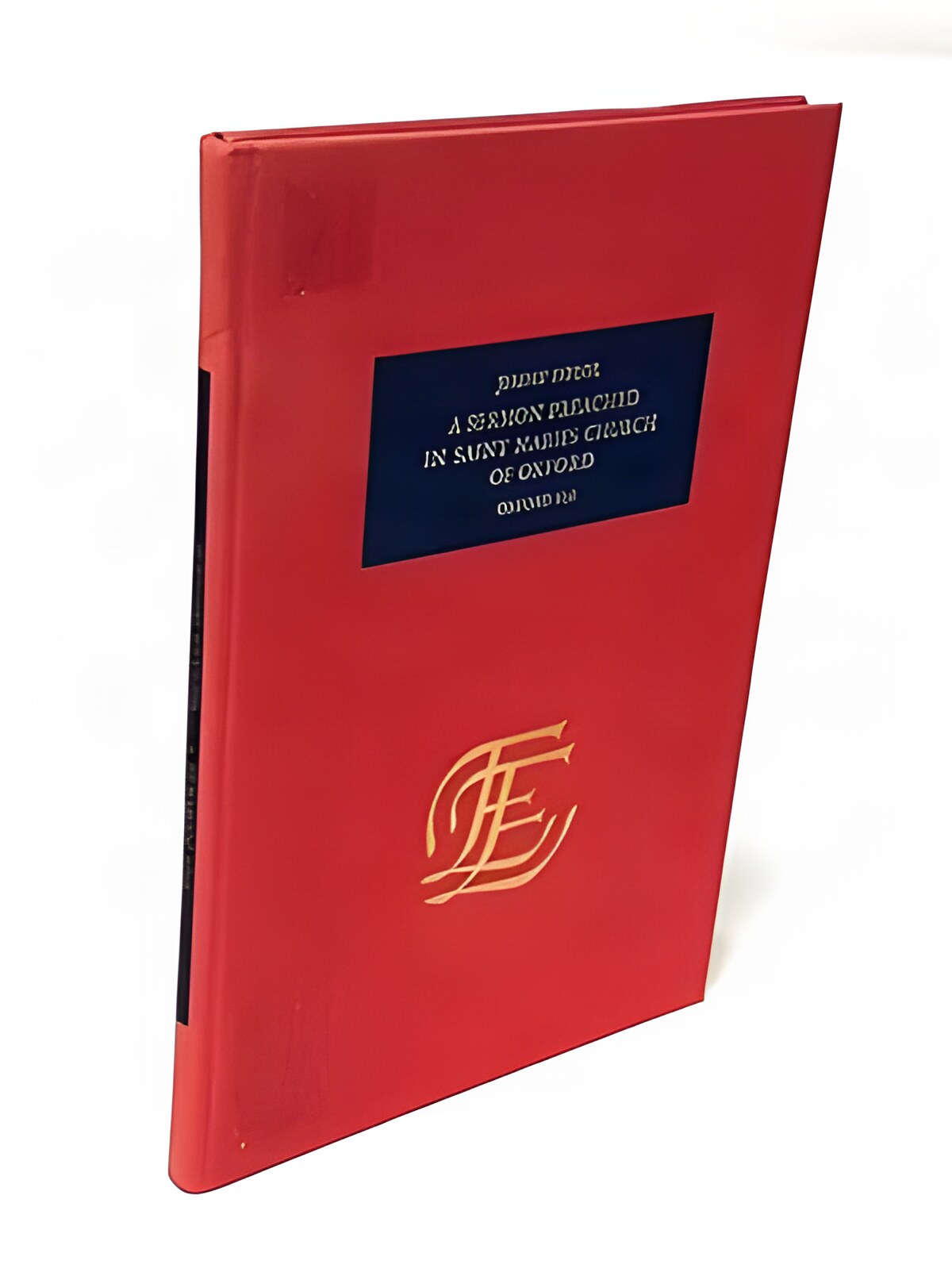


 "Accounts Rendered by Papal Collectors in England 1317-1378by: Lunt, William E.")
 "Aesthetic as Science of Expression and General Linguisticby: Croce, Benedetto, Douglas Ainslie (Translation)")


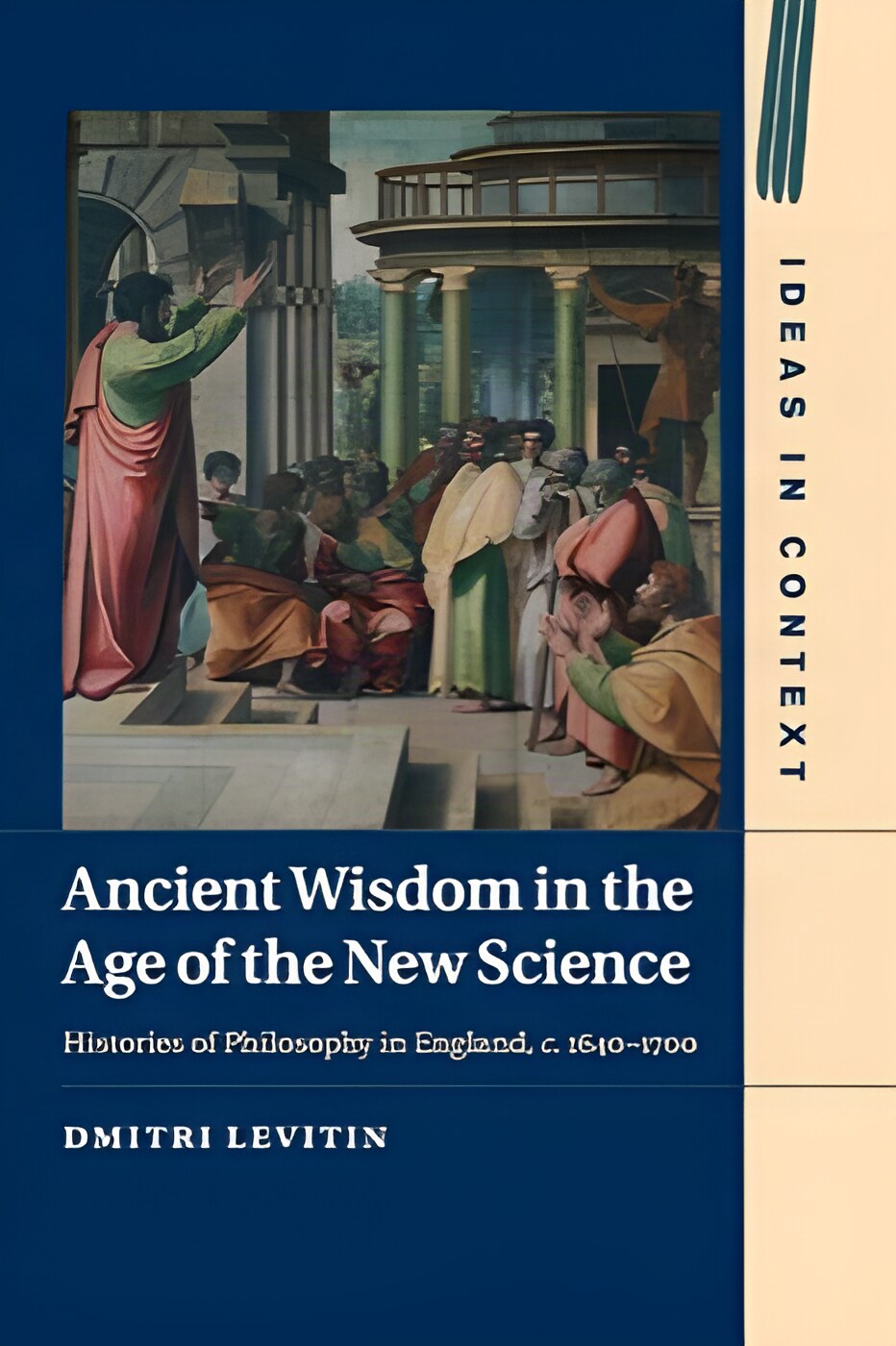

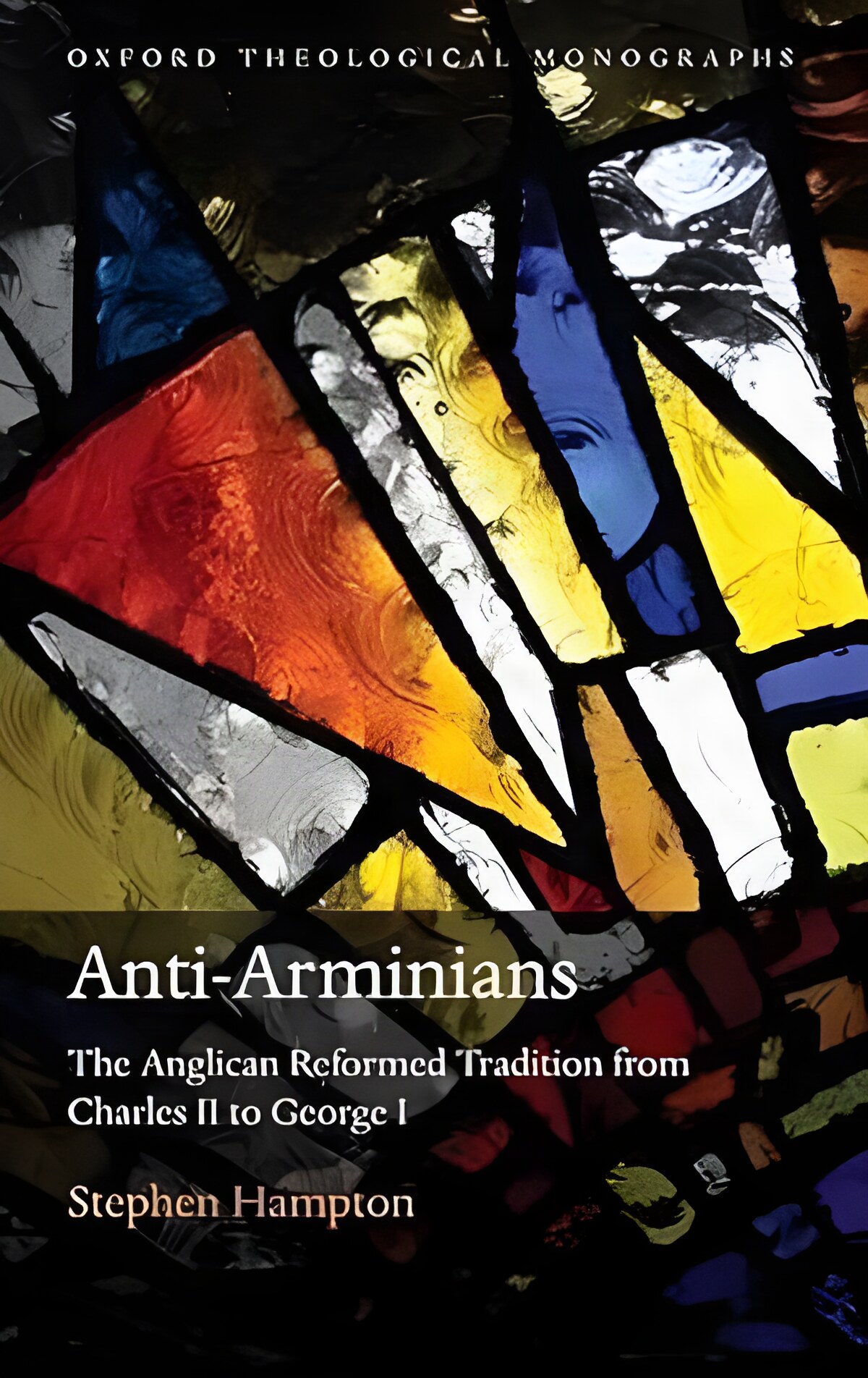

 "Averroes' Tahafut Al-Tahafut (The Incoherence of the Incoherence) Volume 1 & 2by: Van Den Bergh, Somin")


 "Book of Common Prayer, and Administration of the Sacraments and other Rites and Ceremonies of the Church, According to the use of the Church of England: Together with the Psalter or Psalms of David, Pointed as they are to be sung and")
 "Book of Common Prayer, The: and Administration of the Sacraments, and Other Rites and Ceremonies of the Church, According to the Use of the Church of England; Together with the Psalter or Psalms of David, Pointed as they are to be su")


 "British Philosophy in the Seventeenth Century by: Hutton, Sarah")
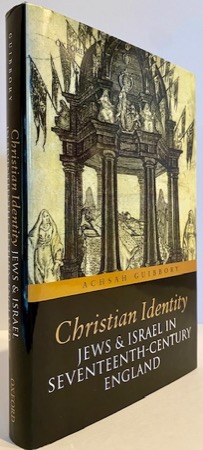


 "English Society, 1660-1832: Religion, Ideology and Politics During the Ancien Regime (INSCRIBED COPY)by: Clark, J. C. D.")
 "Essays on Truth and Realityby: Bradley, F.H.")

 "Four Dissertations by: Richard Price")

 "Going to Church in Medieval Englandby: Nicholas Orme")
 "Hegel's Development: Night Thoughts (Jena 1801-1806)by: Harris, H.S.")


 "Hindu Manners Customs and Ceremoniesby: Dubois, Abbe J.A. , Beauchamp, Henry K. (Tranlation, edit with notes, biography)")


 "History of Autobiography in Antiquity (Two Volumes)by: Misch, Georg, Dr. Karl Mannheim (Editor)")

