Hardcover. NY, Harcourt, Brace and Company, 1st, 1941, Book: Very Good, Dust Jacket: None, Hardcover, tan cloth covers stamped in blue, 294 pages. Endpapers art and b&w illustrations by Eva A. Watson. A story based on the formation of the Coat-Rolls. New England women were asked to make coats for their men fighting in the War of Independence. Clean copy.
Hardcover. NY, Schocken Books, 1st, 1966, Book: Very Good, Dust Jacket: Very Good, Hardcover in a lightly worn dust jacket, 326 pages. Ivan Roots covers the period from 1642-1651, during which the English Civil War took place. The book discusses the causes of the war, the battle of Worcester, the fall of the Protectorate, and the aftermath of the war. Name on front fly leaf, otherwise clean.
Hardcover. Germany, Taschen, 1st, 2013, Book: Very Good, Dust Jacket: Very Good, 3-vol set in slip case. Hardcovers. Like new in publisher's shrink-wrap. Editor Dian Hanson traces the fascinating development of the genre from 1900 to 1969 in three compact, informative volumes. In Volume 1 you'll learn about the first magazines that appeared around 1900 in France, Germany, and the U.S., and follow the development of the genre through the First and Second World Wars. Covered are men's magazines masquerading as movie magazines, humor magazines, art magazines, nudist magazines, and "spicy" fiction. Volume 2 documents the proliferation of pin-up magazines following World War II, most notably a little item called Playboy that debuted in December 1953 and spawned dozens of imitators. This volume also charts the emergence of English men's magazines, fetish magazines, and the top five covergirls of the 1950s. Volume 3 begins with an explosion of new American pin-up magazines following the loosening of U.S. obscenity laws, and continues with French titles in decline, England going pervy; nudists going hippy, and Germany going pervy, hippy and political.
NY, St. Martin's Press, 1st, 1981, Book: Very Good, Dust Jacket: Very Good, Hardcover in a bright dust jacket. 227 pages. This second volume of the author's autobiography covers World War II and his stay at a Children's Home. Clean copy.
Hardcover. NY, Overlook Press, 1st US, 2013, Book: Very Good, Dust Jacket: Very Good, Hardcover in a bright, unclipped dust jacket. Against the background of the Cold War, and the looming spectre of Soviet-sponsored subversion in Britain's dwindling colonial possessions, the imperial intelligence service MI5 played a crucial but top secret role in passing power to newly independent national states across the globe. Walton reveals this `missing link' in Britain's post-war history. He sheds light on everything from violent counter-insurgencies fought by British forces in the jungles of Malaya and Kenya, to urban warfare campaigns conducted in Palestine and the Arabian Peninsula. Draws on (among other sources) records from the Foreign Office's secret archive at Hanslope Park, which contains some of the darkest and most shameful secrets from the last days of Britain's empire. 411 pages, b&w illustrations. Clean copy.
Hardcover. London, Lawrence & Bullen, Revised Ed., 1899, Book: Very Good, Dust Jacket: None, Hardcover, 262 pages plus 37 preliminary pages. Bound in half leather and marbled boards. Spine with raised bands, gilt design. End papers with marbled design. Near Fine. With a 4 line inscription by poet and literary critic Joseph Warren Beach.
Hardcover. London, Routledge, 1st, 1989, Book: Very Good, Dust Jacket: Very Good, Hardcover in a bright dust jacket, 210 pages, b&w illustrations. Beard examines the English country house life, its gentry, and the changes they undertook through the century in order to survive. The author shows how after World War Two, their political power had eroded and they began to run their estates as businesses, instead of paternalistic rural communities. Clean copy.
Softcover. Cambridge MA, Harvard University Press, reprint, 1985, Book: Very Good, Dust Jacket: None, Softcover, 291 pages with index. A social history of Europe in all its aspects: economic, political, diplomatic military, colonial-expansionist. Crisply and succinctly written, it describes Europe not through a history of individual countries, but in a common context during the three quarters of a century between the death of Louis XIV and the industrial revolution in England and the social and political revolution in France. It presents the development of government, institutions, cities, economies, wars, and the circulation of ideas in terms of social pressures and needs, and stresses growth, interrelationships, and conflict of social classes as agents of historical change, paying particular attention to the role of popular, as well as upper- and middle-class, protest as a factor in that change. Clean, bright copy.
Hardcover. Boston / New York, Houghton Mifflin Company, 1st US, 1920, Book: Very Good, Dust Jacket: None, TWO VOLUMES. Volume I, 621 pages. Volume II, 581 pages. In depth history of WWI. In very good condition, some wear to maroon boards and soiled edges of pages. Otherwise clean and well-bound. Pages unmarked.
Hardcover. New York , Crown, 1st US, 1993, Book: Very Good, Dust Jacket: Very Good, Hardcover, 354 pages, color & black and white plates. In a bright, unclipped dust jacket. Traces the development of the painter's art and the course of his life, discussing his earliest memories, Sinn Fein uprisings in Ireland, World War I, Paris of the surrealists, and England during World War II.
Hardcover. London, England, Faber and Faber Limited, 1st, N. D., Book: Very Good, Dust Jacket: None, Hardcover, unpaginated, in French, color illustrations by author, clean, tight copy, cover slightly warped, slight foxing. Not dated but from around 1945.
Softcover. Ithaca NY, Cornell University Press, 1st, 1987, Book: Very Good, Dust Jacket: None, Softcover, 390 pages. Since World War II, an important transformation has occurred in American society as wives and others have increasingly taken jobs outside the home. American women has always worked, however - first almost solely in the home and later also as wage earners outside the home. Anthropologist Louise Lamphere here provides an analysis of both kinds of work and shows how they have been interconnected in the lives of women in the industrial community of Central Falls, Rhode Island. The author offers a dynamic picture of working-class women, one that sees them not as passive victims but as active agents who draw upon a range of strategies and behaviors both to deal with their employment and to help their families cope with the industrial order. The book will be engaging reading for anthropologists, social and labor historians, sociologists, political economists, and students of women's studies. Clean copy.
Hardcover. London, Ward & Downey, 1st, 1885, Book: Very Good, Dust Jacket: None, Hardcover, 567 pages. Expertly rebound in a plain black buckram with the gilt title on spine. INSCRIBED BY O'CONNOR on the half-title page and dated March 2 1895. O'Connor was a famous Irish politician and journalist. Very clean.
Hardcover. New York, Scribner, 1st, 2018, Book: Very Good, Dust Jacket: Very Good, 287 pages. Hardcover with dust jacket. Black and white pictures in center. Clean, tight copy with light edgewear to cover boards.
Hardcover. New York , E.P. Dutton & Co., 1st, 1970, Book: Very Good, Dust Jacket: Very Good, Hardcover in a bright, lightly worn dust jacket. 216 pages, Library Ed. stiker on dj, spine slightly faded. Dickon sets to find and warn the playwright Marlowe of danger. He is aided and hindered by a tough little urchin, Cecily, who teaches him the culture of the road. Set in Elizabethan England, with glossary.
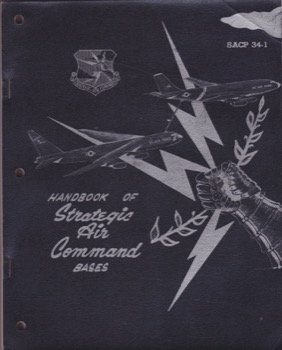
Softcover. Washington DC, United States Air Force, 1959, Book: Very Good, Dust Jacket: None, Softcover, unpaginated, approximately 300 stapled pages. A guide to the SAC's worldwide bases, circa 1959. 8 1/2 X 11", three hole punched. Profusely illustrated with b&w photos of airfields, barracks, NCO clubs, housing for airmen and other facilities covering bases in the states, England, Guam, Germany, etc. Also maps showing locations. Not classified in the early days of the Cold War. Front fly leaf with and introduction by Thomas Power, Commanding General.
Hardcover. NY, Macmillan, 1st U.S., 1892, Book: Very Good, Dust Jacket: None, Hardcover, two-tone cloth stamped in gilt and dark blue, 576 pages. First published in England in 1891. Clean, bright copy.
London, Baynard Press, 1st, N.D., Book: Very Good, Dust Jacket: None, Hardcover, 124 pages, Illustrated with 5 b&w portraits of Generals, 15 fold-out maps in color. Label on front cover is torn, chipped, with paper loss to 3 sides. Otherwise book is very good with all maps in excellent condition. Scarce.
Hardcover. Vermont, Tenth Vermont Regimental Association, 1st, 1870, Book: Very Good, Dust Jacket: None, 249 pages, green cover, small gilt design to front cover, gilt lettering on spine. Previous owner's bookplate to front endpaper, light wear to cover, small date stamp to corner of rear endpaper; otherwise book in great condition. Includes a complete roster of the regiment & details of Virginia actions.
Hardcover. Annapolis MD, Naval Institute Press, 2nd pr., 1991, Book: Very Good, Dust Jacket: Very Good, Hardcover in a bright dust jacket, 313 pages. Red cloth covers, gilt titles, red dust jacket with color illustration, b&w maps and illustrations. Slight wear to dust jacket, pages crisp and unmarked, tight binding; overall, a clean, tight copy. In 1949, as the Chinese Civil War was about to enter its final, explosive stage, the small British frigate HMS Amethyst was sent on a dangerous mission up the Yangtze River to protect British citizens in Nanking. En route it was attacked by the Chinese Communists and held hostage on the river for several months before the crew managed to make a daring escape. The Amethyst captured news headlines around the world and became an unlikely symbol of the cold war in Asia. This dramatic episode, hailed in the West as a triumph of the human spirit but bitterly condemned by the Chinese Communists, was to prejudice Anglo-Chinese relations for years to come.
Softcover. London, Tate Publishing, 1st, 2007, Book: Very Good, Dust Jacket: None, Softcover, 240 pages illustrated in color and b&w. One page(128) creased in production. This is the first book to tell the story of British photography as a coherent whole, from the pioneers of the early 19th century to photographers today who display their images on websites, on computer screens?even iPods. The authors have traveled the length and breadth of the UK, researching both well-known and forgotten bodies of work. Many famous names are here: Henry Fox Talbot, Lewis Carroll, Julia Margaret Cameron, Bill Brandt, Madame Yeronde, Angus McBean, Susan Lipper, and Tom Hunter are just a few. Among the works shown are postcards, family albums, photographic illustrations in books, medical photographs, wartime propaganda, and social documents. Through their exhaustive research the authors demonstrate the extraordinary range and diversity of roles that photography has played in British cultural life over the past 150 years.
Hardcover. Oxford UK, Clarendon Press, 1st, 1986, Book: Very Good, Dust Jacket: Very Good, Hardcover in a very good dust jacket with light fading to dj spine. 139 pages of text, 124 b&w plates in rear section. This is the second volume of Edgar Wind's selected papers, a companion to The Elegance of Symbols. Of all the scholars associated with the early development of the Warbur Institute Edgar Wind was the first to apply different theoretical principles to the study of English Art, above all in his early study of English portraiture, now a classic art history text. As the seminal essay, it gives title to the present volume, and is here translated into English for the first time. In this essay, which marked a change of direction in Wind's own development, he argues that two opposing styles of portraiture, exemplified in the art of Gainsborough and Reynolds, can be related to the different notions of humanity subscribed to by the philosophers David Hume and James Beattie. Other important studies, also reprinted here, make this volume an excellent resource to Wind's tremendous contributions to art history. Clean copy.
Hardcover. Chiselbury, 1st, 2024, Book: Very Good, Dust Jacket: None, Hardcover in glossy pictorial boards, 356 pages. An amazing real-life story of espionage, of courage and resistance, and of friendship and love. It pulls back the veil on the hidden history of the struggle for the identity of the Resistance in France. The life of 'André' Joseph Scheinmann is more intriguing and compelling than any work of fiction. His true-life story of derring-do starts as a Jewish youth in Munich, whose family moves to France in 1933 to escape the Nazi tide. He joins the French army at the outbreak of WW2 and escapes from a prisoner-of war camp after the bitterly brief fight for France in the summer of 1940. André becomes a spy and saboteur for the British and Free French whilst working undercover as translator and liaison with the German high command at the Brittany headquarters of the French National Railroads. Summoned by the British, he clandestinely crosses the Channel for initiation and training as an MI6 agent in England. His network betrayed during his absence, he is arrested on his return to France. André then begins an even more perilous journey with interrogation in Gestapo prisons and the little-known Natzweiler concentration camp in Alsace, before being transferred to Dachau and Allach, ahead of the advancing Allies. Illustrated with over 120 vintage and color photographs and letters. Clean copy.

 "Coat for a Soldierby: Florence Maule Updegraff")


 "Dian Hanson's History of Pin-up Magazines Vol. 1-3by: Hanson, Dian (editor)")


 "Dwellers All in Time and Space: A Memory of the 1940s by: Oakes, Philip")

 "England's Helicon - A Collection of Lyrical and Pastoral Poems: Published in 1600by: Bullen (Ed.), A. H.")


 "English Landed Society in the Twentieth Centuryby: Beard, Madeleine")

 "First World War, The : 1914-1918 - Personal Experiences of Lieut. Col. C.A. Court Repington (2 Volumes)by: Repington, Colonel")
 "Francis Bacon - His Life & Violent Timesby: Sinclair, Andrew")
 "French Alphabet, Aby: Cardew, Margaret")

 "Gladstone's House of Commons (SIGNED COPY)by: T. P. O'Connor")
 "God, War, and Providence: The Epic Struggle of Roger Williams and the Narragansett Indians against the Puritans of New Englandby: Warren, James A.")
 "Great Reckoningby: Faulkner, Nancy")


 "Hero of the Empire: The Boer War, a Daring Escape, and the Making of Winston Churchill by: Millard, Candice")
 "History of David Grieve, Theby: Ward, Mrs. Humphry")

 "History of the Tenth Regiment, Vermont Volunteers with Biographical Sketchesby: Haynes, E. M.")

 "How We Are: Photographing Britain from the 1840s to the Presentby: Williams, Val and Susan Bright")