NY, St. Martin's Press, 1st, 1981, Book: Very Good, Dust Jacket: Very Good, Hardcover in a bright dust jacket. 227 pages. This second volume of the author's autobiography covers World War II and his stay at a Children's Home. Clean copy.
Hardcover. London, George Allen, 1st, 1938, Book: Very Good, Dust Jacket: None, 250 pages. Hardcover with blue cloth coverings. SIGNED and INSCRIBED by author on front fly leaf. Light foxing on end papers. Gilt lettering on spine. Light soil.
Hardcover. Athens, Georgia, The University of Georgia Press, 1st, 1986, Book: Very Good, Dust Jacket: Very Good, 246 pages, b&w illustrations throughout. AN important study of early gravestone carvers in Georgia and South Carolina and the influences of their likes from New England. Black cloth with silver lettering to spine. Gray pictorial dust jacket with minor wear to edges of spine, else like new.
Hardcover. London, Bradbury & Evans, 1st, Book: Good, Dust Jacket: None, 252 full page engravings of Leech's 19th century political cartoons. 3/4 leather front cover (detached) deletes "Early" from title. Back cover mostly detached, but good internally. Shipping extra for this volume.
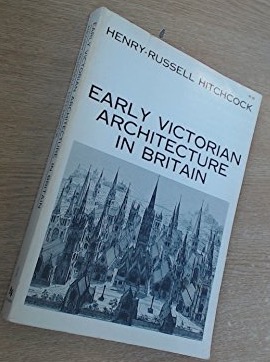
Softcover. NY, Da Capo Press, 1st pbk, 1976, Book: Very Good, Dust Jacket: None, Softcover, 50 pages of text, followed by hundreds of b&w illustrations. The original edition of Early Victorian Architecture in Britain was published in two volumes, one containing an extensive discussion and appreciation of early Victorian architecture by Mr Hitchcock, and the other containing a list of the illustrations the author had collected and the plates themselves. This single-volume paperback edition includes the original Preface, Acknowledgements, and first chapter of the original, as well as the illustrations. Clean, bright copy, small ownership stamp to front fly leaf.
Softcover. London, Random House UK, 1st, 1995, Book: Very Good, Dust Jacket: None, 160 pages, illustrated throughout with b&w photos of England's coastline. Light wear to wrappers, else a very neat, tight copy.
Hardcover. NY, Macmillan, 1st, 1961, Book: Very Good, Dust Jacket: Very Good, Hardcover in a bright dust jacket, 215 pages plus index. Illustrated by Don Pottinger plus b&w photos. Clean copy.
Hardcover. NY, Hatje Cantz, 1st, 2013, Book: Very Good, Dust Jacket: None, Hardcover, illustrated boards, 192 pages. This volume surveys the work of Viennese photographer Edith Tudor-Hart (1908-1973), who was among the foremost social documentarians of the 1930s. In 1933 she fled to the U.K., where she documented social divisions in London, Wales and Scotland, posthumously gaining notoriety for her involvement with the "Cambridge Five" spies.
Hardcover. NY, Hatje Cantz, 1st, 2013, Book: Very Good, Dust Jacket: None, Hardcover, illustrated boards, 192 pages. This volume surveys the work of Viennese photographer Edith Tudor-Hart (1908-1973), who was among the foremost social documentarians of the 1930s. In 1933 she fled to the U.K., where she documented social divisions in London, Wales and Scotland, posthumously gaining notoriety for her involvement with the "Cambridge Five" spies.
Hardcover. Hanover NH, University Press of New England, 1st, 2012, Book: Very Good, Dust Jacket: Very Good, Hardcover in a bright dust jacket, 214 pages, color and b&w illustrations. Edward and Jo Hopper first discovered Vermont in 1927, making day trips from the Whitney Studio Club's summer retreat for New York artists in Charlestown, New Hampshire. In 1935 and 1936 the Hoppers again traveled to Vermont, this time from their summer home in Cape Cod, in Edward's continuing search for new places to paint. During these quests they identified the White River and what Edward considered to be Vermont's "finest" river valley, and they returned there for longer visits in 1937 and 1938, boarding at Robert and Irene Slater's Wagon Wheels farm in South Royalton. These "vacations" were a change from the usual tempo of their lives, a break from the studio-bound easels, canvas, and oils, an opportunity to paint something different, to be in a new place and paint en plein air. Over the course of Vermont sojourns, Edward Hopper produced some two dozen paintings, watercolors that are among the most distinctive of his regional works, strongly characterized by place. In this accessible volume, Bonnie Tocher Clause tells the story of the Hoppers' visits to Vermont, their stays on the Slater farm, and their introduction to farm life. She locates the sites shown in Hopper's Vermont paintings, identifies two watercolors not previously recognized as Vermont scenes, and traces the development of Hopper's singular interpretations of the Vermont landscape. Clean copy.
Hardcover. Cambridge, Belknap/Harvard University Press, 1st, 1967, Book: Very Good, Dust Jacket: Very Good, 109 pages. INSCRIBED BY AUTHOR on front endpaper. Illustrated with black & white reproductions of drawings and paintings by Edward Lear. Dust jacket has small closed tear on front bottom edge. Dust jacket protected with clear plastic cover. Clean, tight copy.
Hardcover. East Sussex UK, Book Guild, 1st, 2000, Book: Very Good, Dust Jacket: Very Good, Hardcover, b&w period photos from the turn of the last century. Like new in shrink-wrap. From a box brimming with fantastic photographs come this collection of the works of photojournalist Andrew Pitcairn-Knowles assembled by his grandson. 38 pages of text. 110 plates.
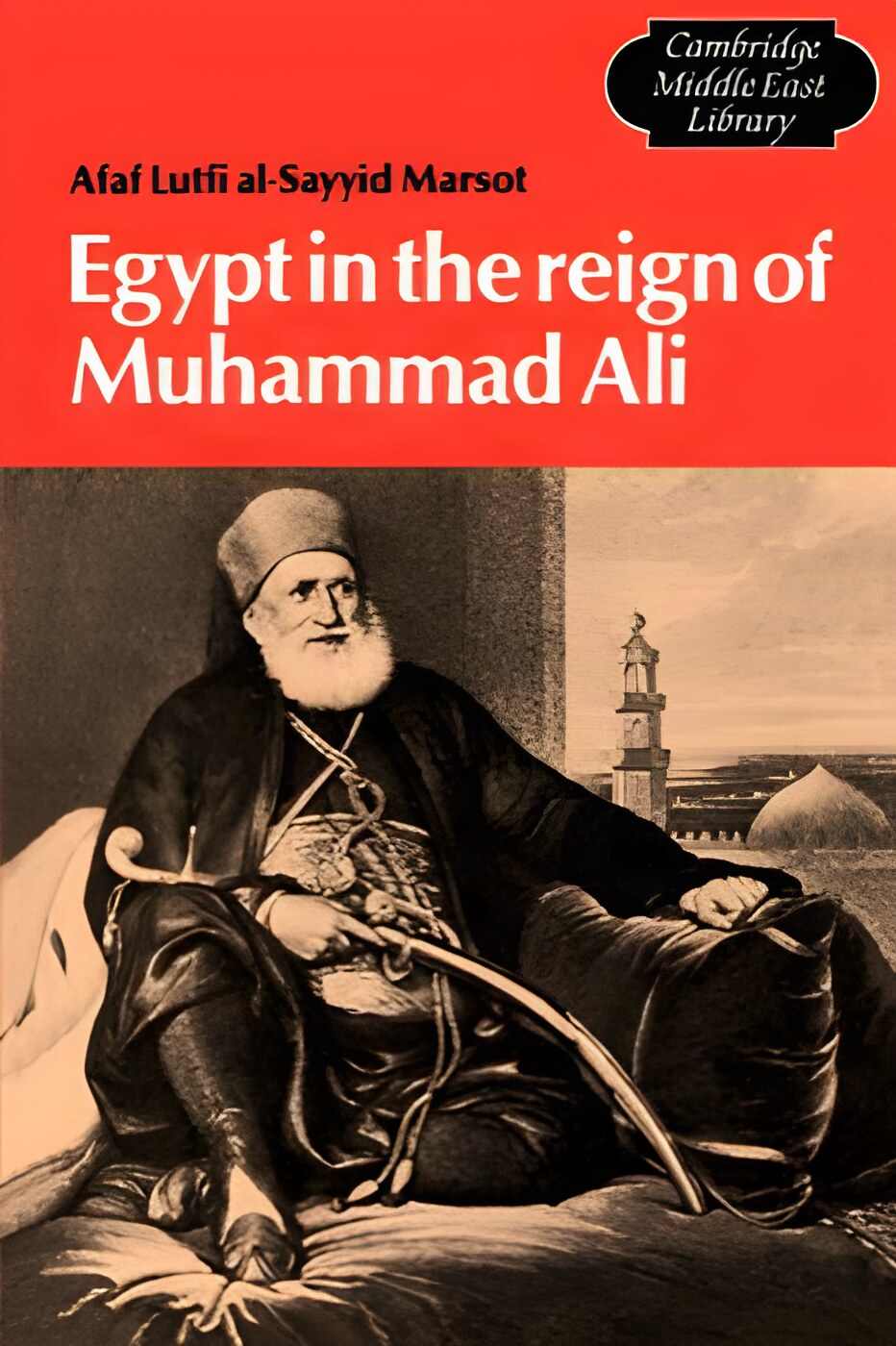
Softcover. UK, Cambridge University Press, 1st pbk., 1984, Book: Very Good, Dust Jacket: None, Softcover, 300 pages. This account of Egyptian society in the reign of Muhammad Ali traces the beginnings of the nation state in Egypt. It considers Muhammad Ali as part of a social group whose economic interests led them in the direction of trade with Europe as a means of raising money for further investments. They attempted to increase agricultural exports and to use the profits to create industry; then, following the logic of imperialists, their next step was to seek to conquer the surrounding areas to find markets for their industries and sources of raw materials. These policies brought them into conflict with their suzerain, the Ottoman sultan, and with England, since England needed markets in the Middle East. England sought to destroy the new regime in Egypt as a means of exerting influence on the region. In carrying out these economic changes, the country underwent a series of internal developments that were to revolutionize the structure and shape of Egyptian society. The rules of landownership were altered and large estates were formed, Egyptian fallahin were drafted into the army, and the administration was Egyptianized, establishing the groundwork for a nation state. Small embossed stamp on title page, otherwise clean.
Hardcover. Netherlands, Kluwer Academic Publishers, 1st, 2000, Book: Very Good, Dust Jacket: Very Good, Hardcover in a bright dust jacket, 223 pages. In Elements, Principles and Particles, Antonio Clericuzio explores the relationships between chemistry and corpuscular philosophy in the age of the Scientific Revolution. Science historians have regarded chemistry and corpuscular philosophy as two distinct traditions. Clericuzio's view is that since the beginning of the 17th century atomism and chemistry were strictly connected. This is attested by Daniel Sennert and by many hitherto little-known French and English natural philosophers. They often combined a corpuscular theory of matter with Paracelsian chemical (and medical) doctrines. Boyle plays a central part in the present book: Clericuzio redefines Boyle's chemical views, by showing that Boyle did not subordinate chemistry to the principles of mechanical philosophy. When Boyle explained chemical phenomena, he had recourse to corpuscles endowed with chemical, not mechanical, properties. The combination of chemistry and corpuscular philosophy was adopted by a number of chemists active in the last decades of the 17th century, both in England and on the Continent. Using a large number of primary sources, the author challenges the standard view of the corpuscular theory of matter as identical with the mechanical philosophy. He points out that different versions of the corpuscular philosophy flourished in the 17th century. Most of them were not based on the mechanical theory, i.e. on the view that matter is inert and has only mechanical properties. Throughout the 17th century, active principles, as well as chemical properties, are attributed to corpuscles. Given its broad coverage, the book is a significant contribution to both history of science and history of philosophy.
Softcover. Philadelphia, J.B. Lippincott, reprint, 1970, Book: Very Good, Dust Jacket: None, Softcover, 186 pages. A detailed study of the politics underlying British policies of mercantilism in the American colonies. Focusing on the political activity of interest groups in the British Empire of the eighteenth century, Professor Kammen relates political influence in Georgian England to American colonial history, to the early history of the industrial revolution, to the incredible flood of writings in the later eighteenth century on political economy, and to the dynamics of Anglo-American political society, public life, and the empire. Name on front fly leaf otherwise clean.
Hardcover. Berkeley CA, University of California Press, 1st, 1974, Book: Very Good, Dust Jacket: Good, Hardcover in a lightly worn dust jacket, 205 pages. Name on front fly leaf otherwise clean. Small hole on dj front.
Hardcover. NY, Overlook Press, 1st US, 2013, Book: Very Good, Dust Jacket: Very Good, Hardcover in a bright, unclipped dust jacket. Against the background of the Cold War, and the looming spectre of Soviet-sponsored subversion in Britain's dwindling colonial possessions, the imperial intelligence service MI5 played a crucial but top secret role in passing power to newly independent national states across the globe. Walton reveals this `missing link' in Britain's post-war history. He sheds light on everything from violent counter-insurgencies fought by British forces in the jungles of Malaya and Kenya, to urban warfare campaigns conducted in Palestine and the Arabian Peninsula. Draws on (among other sources) records from the Foreign Office's secret archive at Hanslope Park, which contains some of the darkest and most shameful secrets from the last days of Britain's empire. 411 pages, b&w illustrations. Clean copy.
Hardcover. New Haven CT, Yale University Press, 1st, 2006, Book: Very Good, Dust Jacket: Very Good, Hardcover in a bright dust jacket, 546 pages. This epic history compares the empires built by Spain and Britain in the Americas, from Columbus's arrival in the New World to the end of Spanish colonial rule in the early nineteenth century. J. H. Elliott, one of the most distinguished and versatile historians working today, offers us history on a grand scale, contrasting the worlds built by Britain and by Spain on the ruins of the civilizations they encountered and destroyed in North and South America. Elliott identifies and explains both the similarities and differences in the two empires, processes of colonization, the character of their colonial societies, their distinctive styles of imperial government, and the independence movements mounted against them. Based on wide reading in the history of the two great Atlantic civilizations, the book sets the Spanish and British colonial empires in the context of their own times and offers us insights into aspects of this dual history that still influence the Americas. Color illustrations. Clean copy.
Hardcover. London, UK, Barrie & Jenkins, 1st, 1991, Book: Very Good, Dust Jacket: Very Good, Hardcover, 304 pages, illustrated throughout in color and b&w. Scarce title. Light gray cloth with gilt title to spine. Pictorial dust jacket. Minor bump to upper front corner, else like new.
Hardcover. New York, Excalibur Books, reprint, 1985, Book: Very Good, Dust Jacket: Very Good, Hardcover. 216 pages. 169 black & white illustrations. Edgewear to dust jacket.
Hardcover. London, Lawrence & Bullen, Revised Ed., 1899, Book: Very Good, Dust Jacket: None, Hardcover, 262 pages plus 37 preliminary pages. Bound in half leather and marbled boards. Spine with raised bands, gilt design. End papers with marbled design. Near Fine. With a 4 line inscription by poet and literary critic Joseph Warren Beach.
Hardcover. Bristol/Philadelphia, Institute of Physics Publishing, 1st , 2005, Book: Very Good, Dust Jacket: Very Good, Hardcover in a bright dust jacket, 330 pages, b&w illustrations. All physicists are familiar with Hooke's law of springs, but few will know of his theory of combustion, that his Micrographia was the first book on microscopy, that his astronomical observations were some of the best seen at the time, that he contributed to the knowledge of respiration, insect flight and the properties of gases, that his work on gravitation preceded that of Newton's, that he invented the universal joint, and that he was an architect of distinction and a surveyor for the City of London after the Great Fire. England's Leonardo is a biography of Hooke covering all aspects of his work, from his early life on the Isle of Wight through his time at Oxford University, where he became part of a group who would form the original Fellowship of the Royal Society. The author adopts a novel approach at this stage, dividing the book by chapter according to the fields of research-Physiology, Engineering, Microscopy, Astronomy, Geology, and Optics-in which Hooke applied himself. The book concludes with a chapter considering the legacy of Hooke and his impact on science.
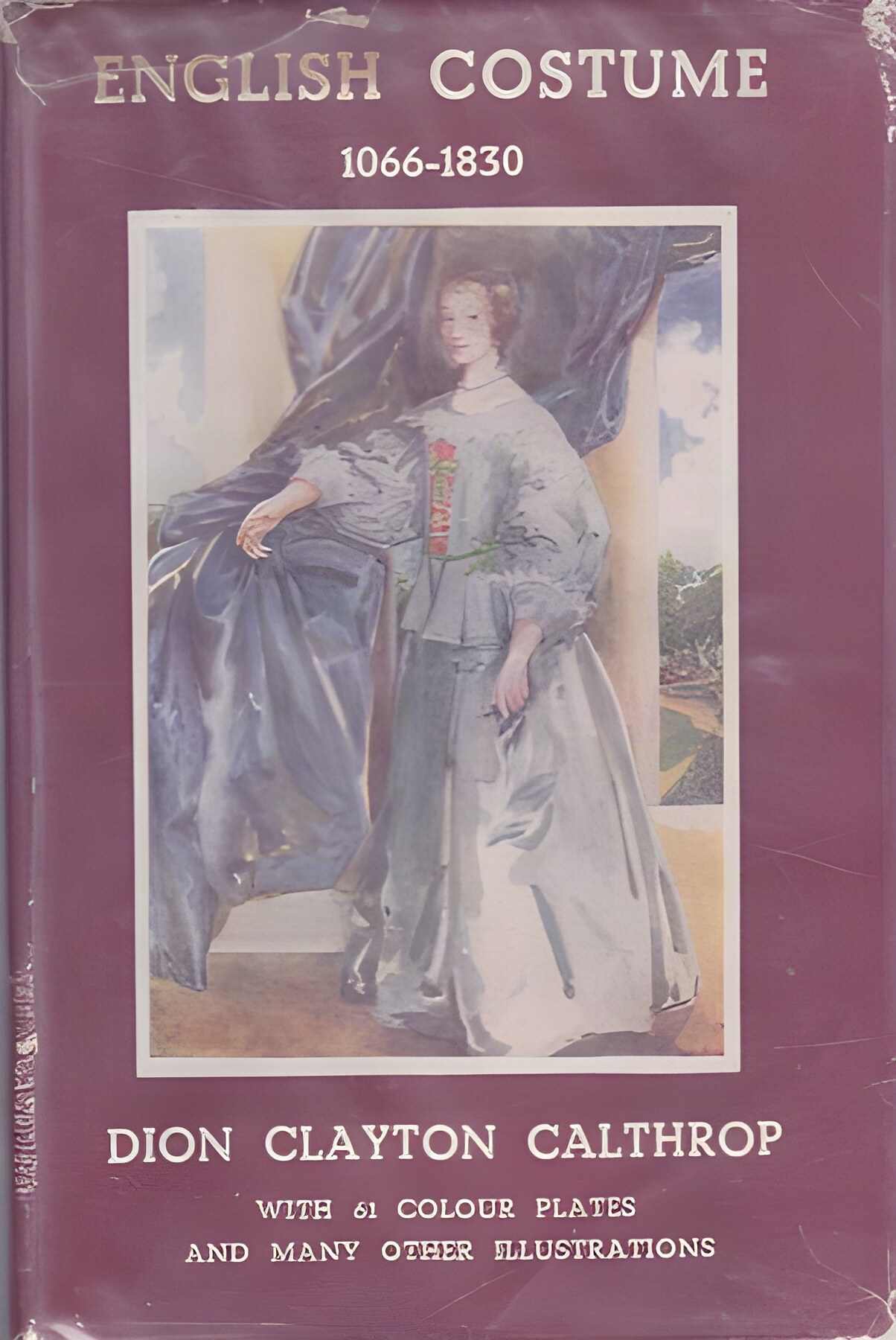
Hardcover. London, Adam & Charles Black, 1st, 1941, Book: Very Good, Dust Jacket: Good, Hardcover, illustrated with black & white drawings, color paintings by Calthrop. 463 pages. Dust jacket with edgewear. chunk gone from spine top, corners.
UK, Cambridge University Press, 1st, 1927, Book: Very Good, Dust Jacket: None, Hardcover, blue cloth with gilt decoration, lettering, 56 pages plus 111 b&w plates. This 1927 book presents an accessible guide to Gothic foliage sculpture, aimed at visitors to ancient English churches. 186 pages total. Decorative bookplate inside front cover otherwise clean copy.

 "Dwellers All in Time and Space: A Memory of the 1940s by: Oakes, Philip")
 "Early British Economics (SIGNED)by: Beer, M.")


 "Early Gravestone Art in Georgia and South Carolinaby: Combs , Diana Williams")
 "Early Pencillings from Punch (Chiefly Political) by: Leech, John")
 "Edge of the Land, The by: Godwin, Fay")

 "Edith Tudor Hart: In the Shadow of Tyrannyby: Edith Tudor Hart (Photographer), Duncan Forbes (Contributor)")


 "Edith Tudor Hart: In the Shadow of Tyrannyby: Edith Tudor Hart (Photographer), Duncan Forbes (Contributor)")



 "Edward Lear as a Landscape Draughtsman (SIGNED COPY)by: Hofer, Philip")


 "Edwardian Eye of Andrew Pitcairn-Knowles 1871-1956, Theby: Pitcairn-Knowles, Richard")
 "Elements, Principles, and Corpuscles: A Study of Atomism and Chemistry in the Seventeenth Century by: Clericuzio, Antonio")


 "Encyclopaedia of British Art Pottery 1870-1920by: Bergesen, Victoria")
 "England 100 Years Ago: The Charm of Victorian England Illustratedby: Manning, Rev. Samuel and Rev. S. G. Green")
 "England's Helicon - A Collection of Lyrical and Pastoral Poems: Published in 1600by: Bullen (Ed.), A. H.")


 "England's Leonardo: Robert Hooke and the Seventeenth-Century Scientific Revolution by: Chapman, Allan")
 "English Gothic Foliage Sculptureby: Samuel Gardner")