Hardcover. NY, Doubleday, 1st, 2002, Book: Very Good, Dust Jacket: Very Good, Hardcover in a bright, unclipped dust jacket. The discovery of gold by a team of Mormon mill workers in 1848 sparked a frenzy that shook the world. People swarmed to California from as far as China and Australia. They came from England and France, from Ireland and Chile, leaving behind their families and everything they owned in the hope of making their fortunes in the new world. They came by ship and overland, braving Tierra del Fuego and the pestilences of Panama, lured by the promise of gold. In a spellbinding narrative that spans several continents, Brands brings the fervour and excitement of the gold rush vividly to life. The Age of Gold is narrative history at its best -- the astonishing tale of one of the most extraordinary speculative frenzies in history, told by a master historian. 547 pages, clean copy.
Softcover. London, Tate Gallery, 1999, Book: Very Good, Dust Jacket: None, Softcover, 296 pages, illustrated in color and b&w. Wonderfully written and illustrated account of the work of the Bloomsbury artists, Vanessa Bell, Duncan Grant and Roger Fry. Contains detailed chronologies of their lives. Catalogue entries on two hundred works, all illustrated in color, bring out the chief characteristics of Bloomsbury painting--domestic, contemplative, sensuous, and essentially pacific. These are seen in landscapes, portraits, and still lifes set in London, Sussex, and the South of France, as well as in the abstract painting and applied art that placed these artists at the forefront of the avant-garde before the First World War. Portraits of family and friends--from Virginia Woolf and Maynard Keynes to Aldous Huxley and Edith Sitwell--highlight the cultural and social setting of the group. Essays by leading scholars provide further insights into the works and the changing critical reaction to them, exploring friendships and relationships both within and outside of Bloomsbury, as well as the movement's wider social, economic, and political. Clean, bright copy.
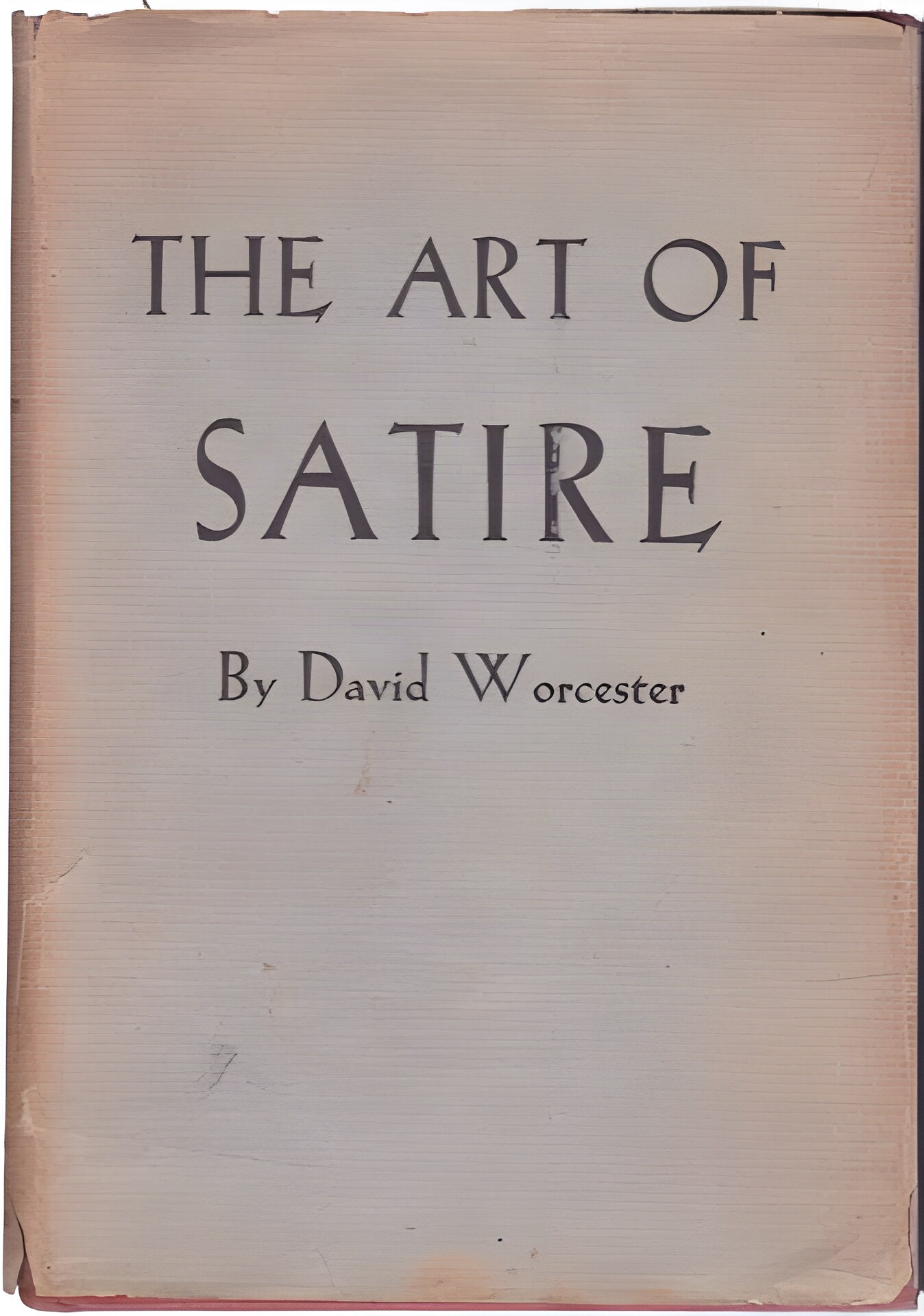
Hardcover. Cambridge MA, Harvard University Press, 1st, 1940, Book: Very Good, Dust Jacket: Poor, Hardcover, red cloth in a worn and chipped dust jacket with closed tears, 191 pages with index. Dr. Worcester presents a theory of satire, surveying the whole field since Dryden's Discourse of the Origin of Satire and drawing illustrations not only from English but from classical, French, German, and American literature. At the same time he makes a penetrating study of irony and its uses. Name on inside front cover otherwise clean.
Softcover. Baltimore, Johns Hopkins University Press, 1st, 2007, Book: Very Good, Dust Jacket: None, Softcover, 155 pages. Thomas Dennis emigrated to America from England in 1663, settling in Ipswich, a Massachusetts village a long day's sail north of Boston. He had apprenticed in joinery, the most common method of making furniture in sixteenth- and seventeenth-century Britain, and he became Ipswich's second joiner, setting up shop in the heart of the village. During his lifetime, Dennis won wide renown as an artisan. Today, connoisseurs judge his elaborately carved furniture as among the best produced in seventeenth-century America. Robert Tarule, historian and accomplished craftsman, brilliantly recreates Dennis's world in recounting how he created a single oak chest. Writing as a woodworker himself, Tarule vividly portrays Dennis walking through the woods looking for the right trees; sawing and splitting the wood on site; and working in his shop on the chest-planing, joining, and carving. Dennis inherited a knowledge of wood and woodworking that dated back centuries before he was born, and Tarule traces this tradition from Old World to New. He also depicts the natural and social landscape in which Dennis operated, from the sights, sounds, and smells of colonial Ipswich and its surrounding countryside to the laws that governed his use of trees and his network of personal and professional relationships. Clean copy.
Hardcover. NY/London, Sotheby's Parke Bernet, Revised Ed., 1985, Book: Very Good, Dust Jacket: Very Good, Hardcover, 376 pages. 26 illustrations in color, and 420 in black and white. Originally published in 1979. John Harris was one of England's leading Architectural Historians at the time this book was written. He was curator of the Drawing Collection for RIBA. (Royal Institute of British Architects). Each section introduces a period such as: the Age of Estate Cartographers and the Garden Converstations, The Country House and Sporting Art: John Wootton, Peter Tillemans and Others, Caneletto and the Architectural Topographers, Gainsborough and the Picturesque, The Art of Turner and Constable. Harris comments on the artists , their style and pictures.
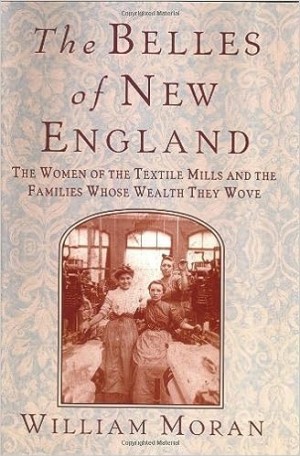
NY, St. Martin's Press, 1st, 2002, Book: Very Good, Dust Jacket: Very Good, Hardcover in a bright, unclipped dust jacket. A masterful, definitive, and eloquent look at the enormous cultural and economic impact on America of New England's textile mills. The author, an award-winning CBS producer, traces the history of American textile manufacturing back to the ingenuity of Francis Cabot Lodge. The early mills were an experiment in benevolent enlightened social responsibility on the part of the wealthy owners, who belonged to many of Boston's finest families. But the fledgling industry's ever-increasing profits were inextricably bound to the issues of slavery, immigration, and workers' rights. William Moran brings a newsman's eye for the telling detail to this fascinating saga that is equally compelling when dealing with rags and when dealing with riches. Clean copy.
Hardcover. NY, G.P. Putnam's Sons, 1st US, 1873, Book: Good, Dust Jacket: None, Hardcover, brown cloth stamped in black and gilt, 442 pages. While a fictional story based on actual events, the author relates a wealth of information on the history, customs and political divisions in the Arab world at the time. Hinges weak but holding, bookplate on inside front cover. Light shelf wear.Originally published in England in 1850.
Hardcover. NY, George Braziller, 1st, 1959, Book: Good, Dust Jacket: Good, Hardcover in an edgeworn, price-clipped dust jacket, 111 pages. Wonderful b&w illustrations by Ronald Searle. The first collaboration between these Atkinson and Searle, a look at the 'new poor' in the London of the 1950's. Taking Henry Mayhew's 19th century work 'London Labour and London Poor' as their guide, the writer and artist take a perceptive, compassionate and subtly humorous, look at how the burden of poverty has shifted into some surprising quarters - including a look at a literary exile, an aging actress, enclyopedia salesman, ice cream seller and more. Shelfworn copy, but sound with a light ownership stamp to front fly leaf.
Softcover. Madison WI, University of Wisconsin, reprint., 2005, Book: Very Good, Dust Jacket: None, Softcover in pictorial wraps, 244 pages. The Blind African Slave recounts the life of Jeffrey Brace (ne Boyrereau Brinch), who was born in West Africa around 1742. Captured by slave traders at the age of sixteen, Brace was transported to Barbados, where he experienced the shock and trauma of slave-breaking and was sold to a New England ship captain. After fighting as an enslaved sailor for two years in the Seven Years War, Brace was taken to New Haven, Connecticut, and sold into slavery. After several years in New England, Brace enlisted in the Continental Army in hopes of winning his manumission. After five years of military service, he was honorably discharged and was freed from slavery. As a free man, he chose in 1784 to move to Vermont, the first state to make slavery illegal. There, he met and married an African woman, bought a farm, and raised a family. Although literate, he was blind when he decided to publish his life story, which he narrated to a white antislavery lawyer, Benjamin Prentiss, who published it in 1810. Upon his death in 1827, Brace was a well-respected abolitionist. In this first new edition since 1810, Kari J. Winter provides a historical introduction, annotations, and original documents that verify and supplement our knowledge of Brace's life and times. Clean copy.
Hardcover. London , Rupert Hart=Davis, 1st, 1968, Book: Very Good, Dust Jacket: Good, Hardcover in a dust jacket with light edgewear, 365 pages. An informal military history of the North American continent. The two major campaigns covered being the war with France for the possession of Canada & the American War of Independence. Service discipline in the British Army meant a bloody back, hence the nickname for the soldiers of the time. Name on front fly leaf, otherwise clean.
Hardcover. UK, Osprey Military Books, 1st, 1999, Book: Very Good, Dust Jacket: None, Hardcover, brown cloth with gilt lettering on spine, 160 pages. The Boer War devastated the South African economy and left a legacy of bitterness. It saw the invention of the concentration camp and a new style of guerilla warfare. This history of the campaign includes artwork of maps, weapons and uniforms, with contemporary photography from the period. Clean copy. No dust jacket.
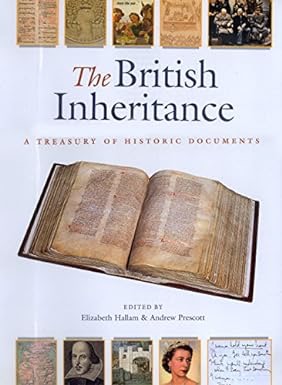
Hardcover. Berkeley CA, University of California Press, 1st, 1999, Book: Very Good, Dust Jacket: Very Good, Hardcover in a bright dust jacket, 150 pages. Superbly illustrated in full color throughout, bound in black cloth over boards, gilt lettering to spine. Illustrated endpapers. Includes major treasures such as the Domesday Book and the Magna Carta, Oscar Wilde's calling card and the last letter written by Mary Queen of Scots. Clean copy.
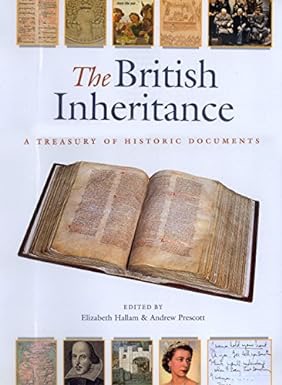
Hardcover. Berkeley CA, University of California Press, 1st, 1999, Book: Very Good, Dust Jacket: Very Good, Hardcover in a bright dust jacket, 150 pages. Superbly illustrated in full color throughout, bound in black cloth over boards, gilt lettering to spine. Illustrated endpapers. Includes major treasures such as the Domesday Book and the Magna Carta, Oscar Wilde's calling card and the last letter written by Mary Queen of Scots. Clean copy.
Hardcover. NY, Farrar & Rinehart, 1st US, 1939, Book: Good, Hardcover, blue cloth with dark blue lettering, 251 pages. Endpapers tanned and soiled at edges. Name on front fly leaf, otherwise clean.
Hardcover. NY, Scholastic Press,, 1st, 2008, Book: Very Good, Dust Jacket: Very Good, Hardcover in a bright, unclipped dust jacket. First printing with full number line. "When Calder Pillay travels with is father to a remote village in England, he finds a mix of mazes and mystery...including an unexpected Alexander Calder sculpture in the town square. Calder is strangely drawn to the sculpture, while other people have less-than-friendly feelings toward it. Both the boy and the sculpture seem to be out of place...and then, on the same night, they disappear!" Clean copy.
Hardcover. NY, Macmillan , 1st US, 1976, Book: Very Good, Dust Jacket: Very Good, Hardcover in a bright, unclipped dust jacket, 278 pages. Name on front fly leaf otherwise clean.
Hardcover. London, Faber and Faber, 1st, 1939, Book: Very Good, Dust Jacket: None, Hardcover, green cloth with gilt lettering on spine, 292 pages, b&w plates. An affectionate and mostly literal account of the early years of Williamson's growing family, based in part on a series of articles called 'Tales of My Children' which he had contributed to 'Family' in 1935. With a frontispiece and sixteen photographs by the author. Mild shelf wear, clean copy.
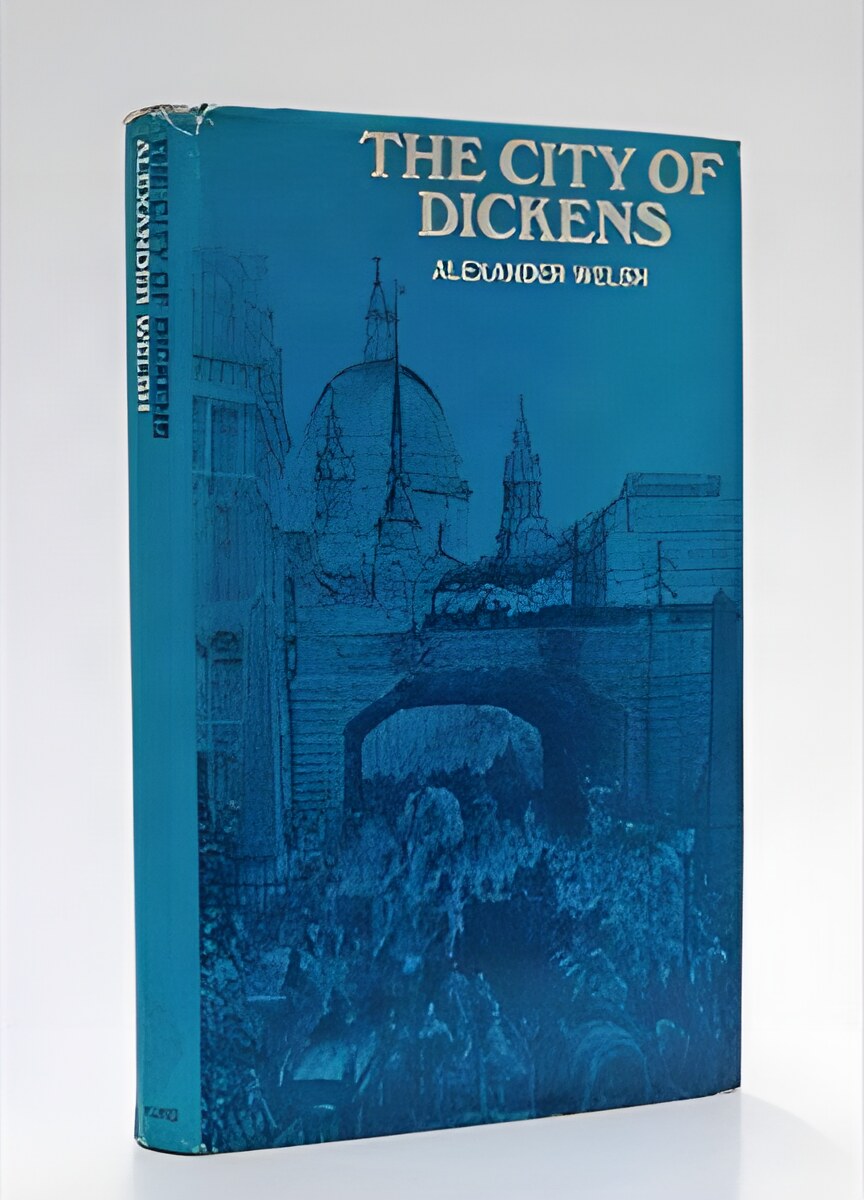
Hardcover. Oxford UK, Clarendon Press, 1st, 1971, Book: Very Good, Dust Jacket: Very Good, Hardcover in a bright, price-clipped dust jacket, 233 pages. The worship of hearth and home that culminates in the nineteenth century, and which survives in our own lives, is not fully explicable without the pressures that the modern city has brought to bear upon it. Alexander Welsh treats 'The City of Dickens' both as a historical reality and as a metaphor that provides a context for values and purposes expressed by the English novel. B&w illustrations. Clean copy.
Hardcover. New Haven CT, Yale University Press, 1st, 1938, Book: Very Good, Dust Jacket: Very Good, Hardcover in a lightly worn, price-clipped dust jacket, 477 pages. Original edition of this major study of British policies toward its North American colonies by a premiere early 20th century historian of Colonial America, Charles M. Andrews. Name on front fly leaf, otherwise a clean, tight copy.
Hardcover. London, Paul Holberton Publishing, 1st, 2015, Book: Very Good, Dust Jacket: Very Good, Hardcover in a bright dust jacket, 197 pages. Color and b&w plates throughout. This groundbreaking architectural history examines what people actually wanted in their institutional and private patronage over the last two centuries as opposed to what architects and theorists thought they should want - as seen through the prism of Oxford's principal building contractor and craft practitioner, Symm & Company. Clean, bright copy.
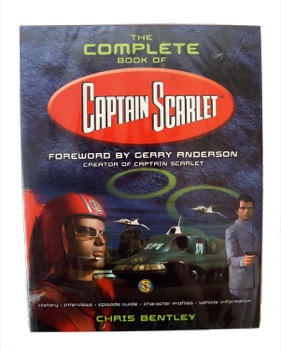
Softcover. London, Carlton Books, 1st, 2001, Book: Very Good, Dust Jacket: None, Softcover, 128 pages. "Captain Scarlet and the Mysterons" is one of the better "Supermarionation" series that came from the hands of Gerry and Sylvia Anderson, known by Americans as well as those in the UK for their many classic puppet series "Supercar", "Fireball XL5", "Stingray", and especially "Thunderbirds"- and their classic live action "UFO" and "Space Precinct".The Captain Scarlet series also was shown in the USA, but in a limited market originally and with wider exposure via compilation films on Showtime and HBO and later on SciFi Channel. Captain Scarlet marked one of the first Supermarionation series to have a truly dark and serious storyline, with an invisible alien race, the Mysterons, seeking revenge for an attack made in error on their cities on Mars. The Mysterons then declared war on Earth. Chris Bentley presents a complete production history and guide to all 32 episodes of the Captain Scarlet and the Mysterons series, plus information about voice artists, merchandising and spin-offs. PLEASE NOTE: the book is clean and tight, but was once owned by a smoker and has a smoke odor.
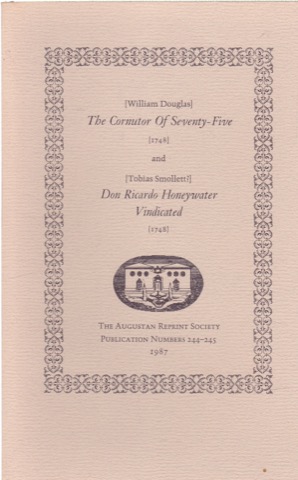
Softcover. Los Angeles, Augustan Reprint Society, reprint, 1987, Book: Very Good, Dust Jacket: None, Softcover. Facsimile reprints of two 18th century pamphlets, 29 and 52 pages. Introduction by Robert Adams Day. Two profiles of a infamous doctor named Richard Mead in mid-18th century London. The first an attack, the second a defense. Clean copy.


 "The Art of Bloomsburyby: Shone, Richard")

 "The Artist & the Country House: A History of Country House & Garden View Painting 1540-1870by: John Harris")


 "The Big City or the New Mayhewby: Atkinson, Alex & Ronald Searle")
 "The Blind African Slave: Or Memoirs of Boyrereau Brinch, Nicknamed Jeffrey Brace by: Jeffrey Brace; Editor Kari J. Winter; Contributor Benjamin F. Prentiss")



 "The Calder Gameby: Balliett, Blue")

![The Central New England Railroad 1867-1967: Boyhood Memories of the C.N.E. [Ashman, 1970] and the History of the C.N.E. [Milmine, 1957]by: Robert Ashman and Charles M](https://www.browsingisarousing.com/shop/images/The-Central-New-England-Railroad-1867-1967-Boyhood-Memories-of-the-C.N.E.-Ashman-1970-and-the-Histor396591-446648.jpg "The Central New England Railroad 1867-1967: Boyhood Memories of the C.N.E. [Ashman, 1970] and the History of the C.N.E. [Milmine, 1957]by: Robert Ashman and Charles M")