Hardcover. Berg Publishers, 1st, 1988, Book: Very Good, Dust Jacket: None, Hardcover, 528 pages. This historico-critical edition of Schopenhauer's manuscript remains contains Schopenhauer's entire surviving philosophical notes, from his university years until his death in 1860. Translated here into English for the first time, it provides a fascinating insight into the workings of Schopenhauer's mind and an important key to his philosophical work. Translated by E.F.J. Payne
Hardcover. NY, D. Appleton and Company, 1st US, 1875, Book: Very Good, Dust Jacket: None, Hardcover, terra-cotta cloth with black design and gilt lettering, 363 pages plus publisher's ads. A late nineteenth century reference on natural science and philosophy. Papillon's engrossing essays, written at various times and put together in this volume as - after the fashion of the time - an effort to dovetail science, metaphysics and philosophy into a higher understanding of life. Name on front fly leaf otherwise a clean, bright copy.
Softcover. Chicago, University of Chicago Press, reprint, 1996, Book: Very Good, Dust Jacket: None, Softcover, 253 pages. Friedrich Nietzsche's work has had a significant impact on the intellectual life of non-Western cultures and elicited responses from important thinkers outside of the Anglo-American philosophical traditions as well. Bringing together thirteen internationally renowned scholars, this is the first collection of essays to address the connection between Nietzsche's ideas and philosphies in India, China, and Japan. The contributors are Roger T. Ames, Johann Figl, Chen Guying, Michel Hulin, Arifuku Kogaku, David A. Kelly, Glen T. Martin, Sonoda Muneto, Graham Parkes, okochi Ryogi, Eberhard Scheiffele, Mervyn Sprung, and Joan Stambaugh.
Softcover. Ithaca NY, State University of New York , 2nd pr., 1990, Book: Very Good, Dust Jacket: None, Softcover, 350 pages. The contributors discuss the current debate about what philosophy is, how it works, and how Nietzsche's thought clarifies or complicates its understanding. They represent a wide range of views and practices, some aggressively postmodern in their approach, some profoundly skeptical about postmodernism. Although the issue of postmodernism is the central focus, the essays also touch on many other areas of interest to readers of Nietzsche. Spine faded, light pencil underlining to a few pages.
Softcover. Hanover NH, Wesleyan University Press, 3rd pr., 1987, Book: Very Good, Dust Jacket: None, Softcover in pictorial wraps, 343 pages. The focus of this book is the secular cultures of pagan Greece and imperial Rome, and the religious cultures of Judaism and Christianity which, in turn, grew from and influenced them and the modern world. For Momigliano, religion, secular ideology, and politics live in and illuminate the present. Brings together nineteen essays written over five years from sources such as The New York Review of Books, The American Scholar, and the Annali della Scuola Normale Superiore di Pisa. Clean copy.
Softcover. Cambridge University Press, reprint, 1992, Book: Very Good, Dust Jacket: None, Softcover, 314 pages. Essays on language, action and interpretation. This is a collection in translation of essays by Paul Ricoeur which presents a comprehensive view of his philosophical hermeneutics, its relation to the views of his predecessors in the tradition and its consequences for the social sciences. The major theme that unites his writings is that of a philosophical anthropology. This anthropology, which Ricoeur came to call an anthropology of the "capable human being," aims to give an account of the fundamental capabilities and vulnerabilities that human beings display in the activities that make up their lives.
Softcover. Albany, State University of New York Press , 1st, 1983, Book: Very Good, Dust Jacket: None, Softcover, 317 pages. Phenomenology in a Pluralistic Context contains papers selected from three years of meetings of the Society for Phenomenology and Existential Philosophy (SPEP). The essays are representative of the most current thinking among North American philosophers who have been influenced by the phenomenological movement. A majority of the selections reveals a considerable mutual influence between phenomenology and other philosophical currents. Special emphasis is given to issues in social and political theory; the philosophy of medicine, of art, of language, and of religion; phenomenology's relationship to Kantianism and to Marxism; and the figures of Merleau-Ponty, Sartre, and Heidegger. Clean copy.
Softcover. Rochester NY, University of Rochester Press, reprint, 1994, Book: Very Good, Dust Jacket: None, Softcover, 539 pages. The essays in this collection illustrate the interdisciplinary approach to the history of ideas fostered by the Journal of the History of Ideas. Science, philosophy and religion were closely connected in the 17th and 18th centuries, and common threads run through all the articles. A number of essays revolve around Locke: the implications of his doctrines for religion, and their relation to and support of the new science; several of these articles refer to Descartes, Leibniz andHume. There are essays on optics and vision in the work of Berkeley, Reid and Newton, and on the relation between biology and physiology, especially as these disciplines contribute to the science of man. The authors include HENRY GUERLAC, MARGARET C. JACOB, SHIRLEY ROE, L. LAUDAN, NICHOLAS JOLLEY, JAMES FORCE, G. A. J. ROGERS and CATHERINE WILSON. Name on front fly leaf, otherwise clean.
Hardcover. Oxford UK, Cambridge University Press, 1st, 1992, Book: Good, Dust Jacket: Very Good, Hardcover in a bright dust jacket, 287 pages. This collection of essays looks at the distinctively English intellectual, social and political phenomenon of Latitudinarianism, which emerged during the Civil War and Interregnum and came into its own after the Restoration, becoming a virtual orthodoxy after 1688. Dividing into two parts, it first examines the importance of the Cambridge Platonists, who sought to embrace the newest philosophical and scientific movements within Church of England orthodoxy, and then moves into the later seventeenth century, from the Restoration onwards, culminating in essays on the philosopher John Locke. These contributions establish a firmly interdisciplinary basis for the subject, while collectively gravitating towards the importance of discourse and language as the medium for cultural exchange. The variety of approaches serves to illuminate the cultural indeterminacy of the period, in which inherited models and vocabularies were forced to undergo revisions, coinciding with the formation of many cultural institutions still governing English society. Name on front fly, pencil marking to about 20 pages.
Softcover. Souix City IA, Parnassos Press, 1st, 2019, Book: Very Good, Dust Jacket: None, Softcover, 312 pages. This book is born from a desire to understand how Plato influenced and was influenced by the intellectual culture of Western Greece, the ancient Hellenic cities of Sicily and Southern Italy. In 2018, a seminar on Plato at Syracuse was organized, in which a small group of scholars discussed a new translation of the Seventh Letter and several essays on the topic. The essays consider the historical, political, and philosophical implications of Plato's involvement in Syracuse. They also look at the reception of his voyage among fellow philosophers, ancient and modern. Clean copy.
Softcover. UK, Oxford University Press, Revised Ed., 2001, Book: Very Good, Dust Jacket: None, Softcover, 384 pages. Published here for the first time is much of a final and long-anticipated work on the philosophy of history by the great Oxford philosopher and historian R. G. Collingwood (1889-1943). The original text of this uncompleted work has only recently been discovered and is accompanied here by Collingwood's shorter writings on historical knowledge and inquiry. Besides containing entirely new ideas, these incredible writings discuss many of the issues which Collingwood famously raised in The Idea of History and in his Autobiography. This book also includes two conclusions written by Collingwood, which were eventually revised and published as The Idea of Nature. and a lengthy editorial introduction that puts Collingwood's writings in their context and discusses the philosophical questions they initiate. A landmark publication, this work will appeal not only to those studying Collingwood but also to anyone broadly curious about philosophy of history. Clean copy.
Hardcover. NY/London, Oxford University Press, 1st, 2011, Book: Very Good, Dust Jacket: Very Good, Hardcover in a bright, unclipped dust jacket, 350 pages. Reason in Action collects John Finnis' work on the theory of practical reason and moral philosophy. The essays in the volume range from foundational issues of meta-ethics to the practical application of natural law theory to ethical problems such as nuclear deterrence, obscenity and free speech, and abortion and cloning.
Hardcover. NY/London, Oxford University Press, 1st, 2013, Book: Very Good, Dust Jacket: Very Good, Hardcover in a bright, unclipped dust jacket, 450 pages. The essays in Religion and Public Reasons seek to argue for, and illustrate, a central element of John Finnis' theory of natural law: that the main tenets of personal and political morality, and of a good legal order, are taught both by reason (arguments accessible to everyone) and by authentic divine revelation (teachings accessible to all who have a reasonable faith in its witnesses). The author's main books each include arguments for rejecting atheism and agnosticism; several papers here take up these arguments and indicate ways in which they open onto the reasonable grounds for accepting that more about God's nature, and about the meaning of Creation (including ongoing natural evolution), is disclosed by the revelation carried far forward among the Jewish people, and given definitive form by the Jews and Greeks who assembled in the universal Church, as witnesses of Christ, to carry forward that revelation into our present. Several papers argue that "public reason" properly includes such a religion, and that Humeian, Nietzschean, Deweyian, Rawlsian or other atheistically or deistic understandings of a reasonable secularism are badly mistaken. Many substantial papers record the author's position in controversies within Catholicism since the 1960's: on social justice, contraception and abortion; nuclear deterrence; Newman on conscience before pope; Maritain's hopes for a new Christendom and von Balthasar's for a hell empty of human persons; and on "proportionalism" and Lonerganian "historical consciousness" as moral-theological methods. Previously unpublished papers include several University and college sermons, and a substantial introduction.
Hardcover. UK, Cambridge University Press, 1st, 1996, Book: Very Good, Dust Jacket: None, Hardcover, blue cloth with gilt lettering on spine, 518 pages. This volume collects for the first time in a single volume all of Kant's writings on religion and rational theology. These works were written during a period of conflict between Kant and the Prussian authorities over his religious teachings. The historical context and progression of this conflict are charted in the general introduction to the volume and in the translators' introductions to particular texts. All the translations are new with the exception of The Conflict of the Faculties, where the translation has been revised and redited to conform to the guidelines of the Cambridge Edition. Name on front fly leaf, otherwise a clean, bright copy.
Hardcover. Boston, J. Stilman Smith & Co., 1st, 1893, Book: Very Good, Dust Jacket: None, Hardcover, white buckram with maroon rules and gilt lettering, decorations. 293 pages, a collection of sermons given the previous year by the author who was Minister of the South Congregational Church in Boston. From a church library with a spine label, bookplate on inside front cover and a stamp on a blank prelim page. Otherwise clean and bright.
Hardcover. New York, Daniel Hitt and Thomas Ware, 1815, Book: Good, Dust Jacket: None, Two volumes complete, 478 and 632 pages respectively. Leather bound with red labels, covers worn and rubbed. Bottom of spine on volume 2 fraying. Still, a sound and attractive set with moderate foxing to pages. Previous owner's 1828 notation on front fly leaf of both volumes stating where, when and for how much he purchased the set.
Hardcover. Netherlands, Springer, 1st, 2008, Book: Very Good, Dust Jacket: Very Good, Hardcover in a dust jacket, 289 pages. This collection of new essays on John Locke by a constellation of leading Locke scholars focuses on his philosophy, biography, sources and influence. The topics discussed here include his theory of ideas, his debt to Stoicism, his relations the Dry Club and with his translator, Pierre Coste, and the hitherto overlooked critique by Thomas Beconsall. A major emphasis of the collection is the relationship between Locke and seventeenth-century philosophers, Descartes, Hobbes, Cudworth, Bayle, Malebranche and Leibniz. The coverage of Locke's legacy extends to into the eighteenth-century legacy as far as Rousseau and Kant. Ink name on front fly leaf, otherwise clean.
Hardcover. London, NLB, 1st transl. thus, 1972, Book: Very Good, Dust Jacket: None, Hardcover, light blue cloth stamped in gilt, 257 pages. The articles and essays collected in this book were written during the decade of Lukacs's life when he was most active in politics. The first texts mark his transition from an anti-bourgeois aestheticism to Marxism and the newly founded Hungarian Communist Party. They are followed by material which displays the full range of his activity and thought during the subsequent ten years. Some of these essays were written when Lukacs was deputy commissar of education in the embattled, short-lived Hungarian Soviet Republic. Others include the famous article on parliamentarianism which earned its author the respectful yet severe criticism of Lenin.The volume includes short studies on German revisionism, Bukharin's Marxism, and Karl Wittfogel, and longer pieces on Lassalle and Moses Hess. The collection ends with the theses Luckas wrote, under his cover name "Blum", in opposition to the policies of the Third Period of the Comintern. Clean copy.
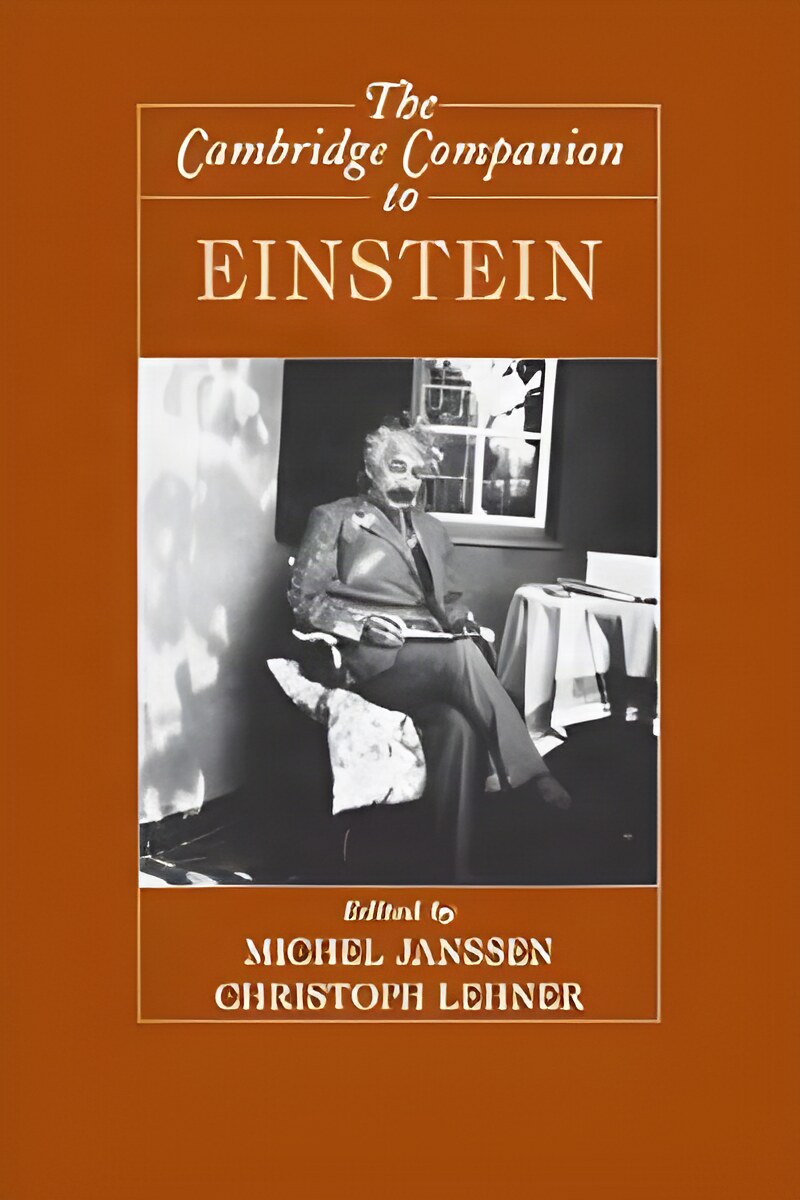
Softcover. UK, Cambridge University Press, 1st pbk, 2014, Book: Very Good, Dust Jacket: None, Softcover, 562 pages with index. This volume is the first systematic presentation of the work of Albert Einstein, comprising fourteen essays by leading historians and philosophers of science that introduce readers to his work. Following an introduction that places Einstein's work in the context of his life and times, the book opens with essays on the papers of Einstein's 'miracle year', 1905, covering Brownian motion, light quanta, and special relativity, as well as his contributions to early quantum theory and the opposition to his light quantum hypothesis. Further essays relate Einstein's path to the general theory of relativity (1915) and the beginnings of two fields it spawned, relativistic cosmology and gravitational waves. Essays on Einstein's later years examine his unified field theory program and his critique of quantum mechanics. The closing essays explore the relation between Einstein's work and twentieth-century philosophy, as well as his political writings. Clean, bright copy.
Hardcover. NY, St. Martin's Press, 1st, 1963, Book: Very Good, Dust Jacket: None, Hardcover, blue cloth with gold lettering on spine, 272 pages. The nine essays compiled in this work deal with the nature of philosophical arguments and the degree to which they are linguistic; the possibility and status of private experience; the criteria of personal identity and the relation between mind and body; the interplay of the referential and descriptive functions of language; the criteria of truth; the interpretation of judgments of probability; the distinction between generalizations of law and generalizations of fact; and the status of judgments about the future and the question of free will and determinism. New theories are advanced and old theories are criticized. Bright, clean copy, lacks dust jacket.
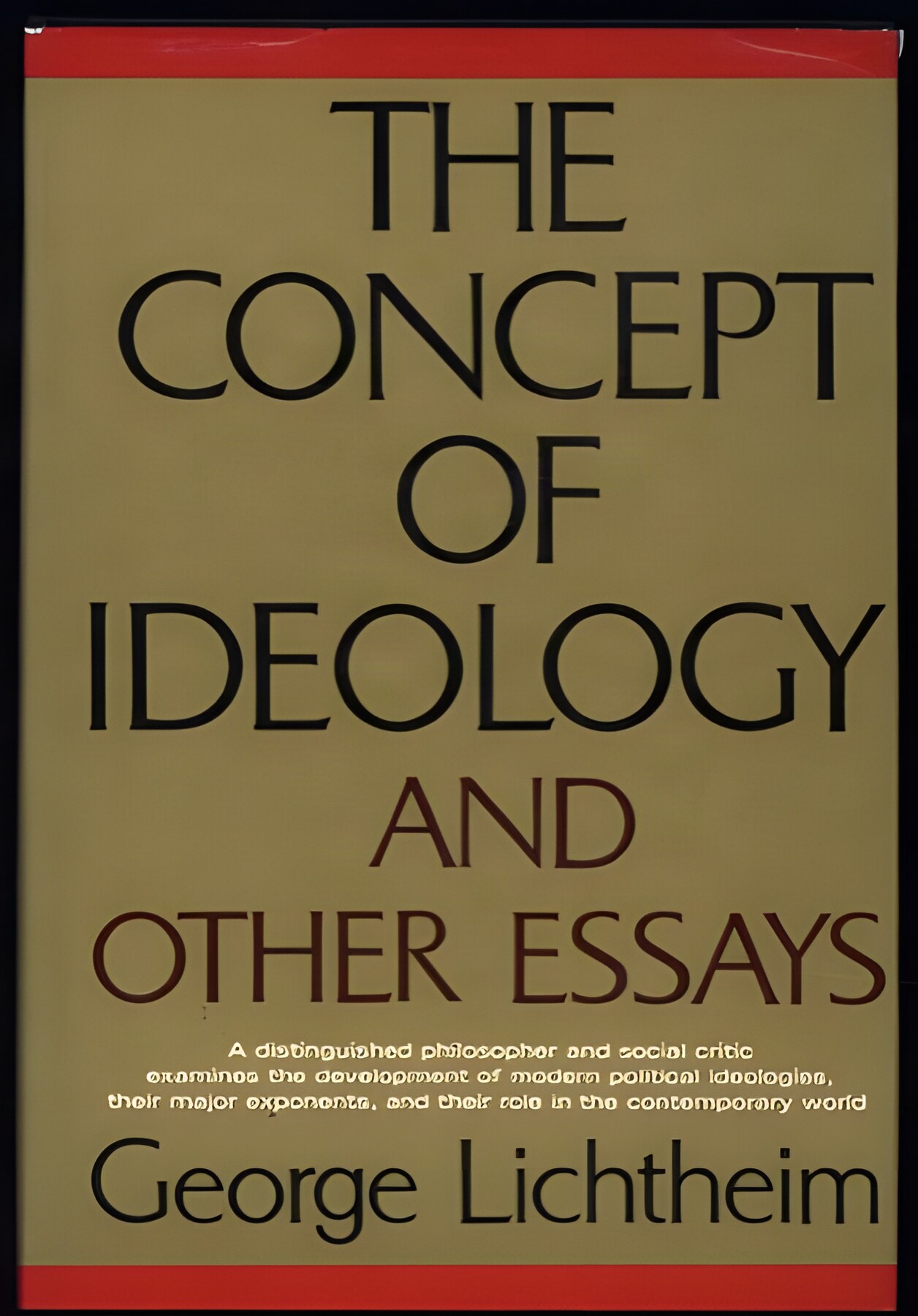
Hardcover. NY, Random House, 1st, 1967, Book: Very Good, Dust Jacket: Very Good, Hardcover in a bright, unclipped dust jacket, 327 pages. George Lichtheim (1912-1973) was a German-born intellectual whose works focused on the history and theory of socialism and Marxism. He defined himself as a socialist and stated in a 1964 letter to the New York Review of Books that "I am not a liberal and never have been. I find liberalism almost as boring as communism and have no wish to be drawn into an argument over which of these two antiquated creeds is less likely to advance us any further." His work appeared in the Palestine Post, Commentary, Partisan Review, Dissent, the New Leader, Encounter, the Times Literary Supplement and the New York Review of Books. Additionally, he translated Gershom Scholem's Main Currents in Jewish Mysticism. His death was by suicide. Clean, tight copy.
Hardcover. NY, Verso, 1st, 2021, Book: Very Good, Dust Jacket: Very Good, Hardcover in a bright dust jacket, 241 pages. In essays that range from ancient Greece to the end of the Anthropocene, Bull addresses questions central to contemporary political theory in novel readings of texts by Aristotle, Machiavelli, Marx, and Arendt, and shows how classic philosophical problems have a bearing on issues like political protest and climate change. The result is an entirely original account of political agency for the twenty-first century in which uncertainty and idleness are limned with utopian promise. Clean, bright copy.
Hardcover. Duke University Press, 1st, 2003, Book: Very Good, Dust Jacket: None, Hardcover, 440 pages. Black cloth, no dust jacket. The Edge of Surrealism is an essential introduction to the writing of French social theorist Roger Caillois. Caillois was part of the Surrealist avant-garde and in the 1930s founded the College of Sociology with Georges Bataille and Michel Leiris. He spent his life exploring issues raised by this famous group and by Surrealism itself. Though his subjects were diverse, Caillois focused on concerns crucial to modern intellectual life, and his essays offer a unique perspective on many of twentieth-century France's most significant intellectual movements and figures. Including a masterful introductory essay by Claudine Frank situating his work in the context of his life and intellectual milieu, this anthology is the first comprehensive introduction to Caillois's work to appear in any language. These thirty-two essays with commentaries strike a balance between Caillois's political and theoretical writings and between his better known works, such as the popular essays on the praying mantis, myth, and mimicry, and his lesser-known pieces. Presenting several new pieces and drawing on interviews and unpublished correspondence, this book reveals Caillois's consistent effort to reconcile intellectual rigor and imaginative adventure. Perhaps most importantly, The Edge of Surrealism provides an overdue look at how Caillois's intellectual project intersected with the work of Georges Bataille and others including Breton, Bachelard, Benjamin, Lacan, and Levi-Strauss.

 "Manuscript Remains, Volume II: Critical Debates (1809-1818) by: Schopenhauer/ Arthur Hubscher (Editor), Arthur")

![Nietzsche as Postmodernist: Essays Pro and Contra by: Clayton Koelb [Ed.]](https://www.browsingisarousing.com/shop/images/399735.jpg "Nietzsche as Postmodernist: Essays Pro and Contra by: Clayton Koelb [Ed.]")

 "Religion and Rational Theology (The Cambridge Edition of the Works of Immanuel Kant)by: Immanuel Kant / Allen W. Wood (Translator)")
 "Sermons of the Winterby: Hale, Edward Everett")

 "The Concept of the Social: Scepticism, Idleness and Utopiaby: Malcolm Bull")
 "The Edge of Surrealism: A Roger Caillois Readerby: Roger Caillois; Editor Claudine Frank; Translator Camille Naish")