Hardcover. New York, Bulfinch Press, 1st, 1999, Book: Very Good, Dust Jacket: Very Good, Hardcover, 232 pages. Full pages of 145 duotone and 30 color photographs. Includes essays by Anne Hollander, Diane Johnson, Ann Lauterbach, and Charles Simic. Introduction by Ellen Handy. Brief biographical entries on artists starting on page 307. Large format.
Hardcover. NY/London, Oxford University Press, 1st, 2013, Book: Very Good, Dust Jacket: Very Good, Hardcover in a bright, unclipped dust jacket, 450 pages. The essays in Religion and Public Reasons seek to argue for, and illustrate, a central element of John Finnis' theory of natural law: that the main tenets of personal and political morality, and of a good legal order, are taught both by reason (arguments accessible to everyone) and by authentic divine revelation (teachings accessible to all who have a reasonable faith in its witnesses). The author's main books each include arguments for rejecting atheism and agnosticism; several papers here take up these arguments and indicate ways in which they open onto the reasonable grounds for accepting that more about God's nature, and about the meaning of Creation (including ongoing natural evolution), is disclosed by the revelation carried far forward among the Jewish people, and given definitive form by the Jews and Greeks who assembled in the universal Church, as witnesses of Christ, to carry forward that revelation into our present. Several papers argue that "public reason" properly includes such a religion, and that Humeian, Nietzschean, Deweyian, Rawlsian or other atheistically or deistic understandings of a reasonable secularism are badly mistaken. Many substantial papers record the author's position in controversies within Catholicism since the 1960's: on social justice, contraception and abortion; nuclear deterrence; Newman on conscience before pope; Maritain's hopes for a new Christendom and von Balthasar's for a hell empty of human persons; and on "proportionalism" and Lonerganian "historical consciousness" as moral-theological methods. Previously unpublished papers include several University and college sermons, and a substantial introduction.
Hardcover. UK, Cambridge University Press, 1st, 1996, Book: Very Good, Dust Jacket: None, Hardcover, blue cloth with gilt lettering on spine, 518 pages. This volume collects for the first time in a single volume all of Kant's writings on religion and rational theology. These works were written during a period of conflict between Kant and the Prussian authorities over his religious teachings. The historical context and progression of this conflict are charted in the general introduction to the volume and in the translators' introductions to particular texts. All the translations are new with the exception of The Conflict of the Faculties, where the translation has been revised and redited to conform to the guidelines of the Cambridge Edition. Name on front fly leaf, otherwise a clean, bright copy.
Hardcover. NY, The Modern Library, 1st, 2004, Book: Very Good, Dust Jacket: Very Good, Hardcover in a bright, price-clipped dust jacket. 344 pages. Food articles collected from Gourmet Magazine, dispatched from Paris over the last 60 years and published together in print for the first time. Clean copy.
Hardcover. Cambridge MA, MIT Press, 2nd Pr., 1994, Book: Very Good, Dust Jacket: Very Good, Hardcover, 251 pages, with her photo-illustrated dust jacket. Who speaks? Who is silent? Who is seen? Who is absent? These questions focus on how cultures are constructed through pictures and words, how we are seduced into a world of appearances: into a pose of who we are and aren't. On both an emotional and an economic level, images and texts have the power to make us rich or poor. In these essays and reviews, written over the last decade, Barbara Kruger addresses that power with intelligence and wit, in the hope of engaging both our criticality and our dreams of affirmation. Barbara Kruger is an artist whose pictures and words engage issues of power, sex, money, difference, and death. Her work has appeared throughout America, Europe, and Japan in galleries, newspapers, magazines, and museums and on billboards, matchbooks, TV programs, t-shirts, postcards, and shopping bags. She has written about television, film, and cultures for Artforum, Esquire, the New York Times, and the Village Voice.
Hardcover. Washington DC, National Gallery of Art, 1st, 2007, Book: Very Good, Dust Jacket: Very Good, 296 pages, color plates throughout. Exhibition catalog, five scholarly essays. In publisher's shrinkwrap.
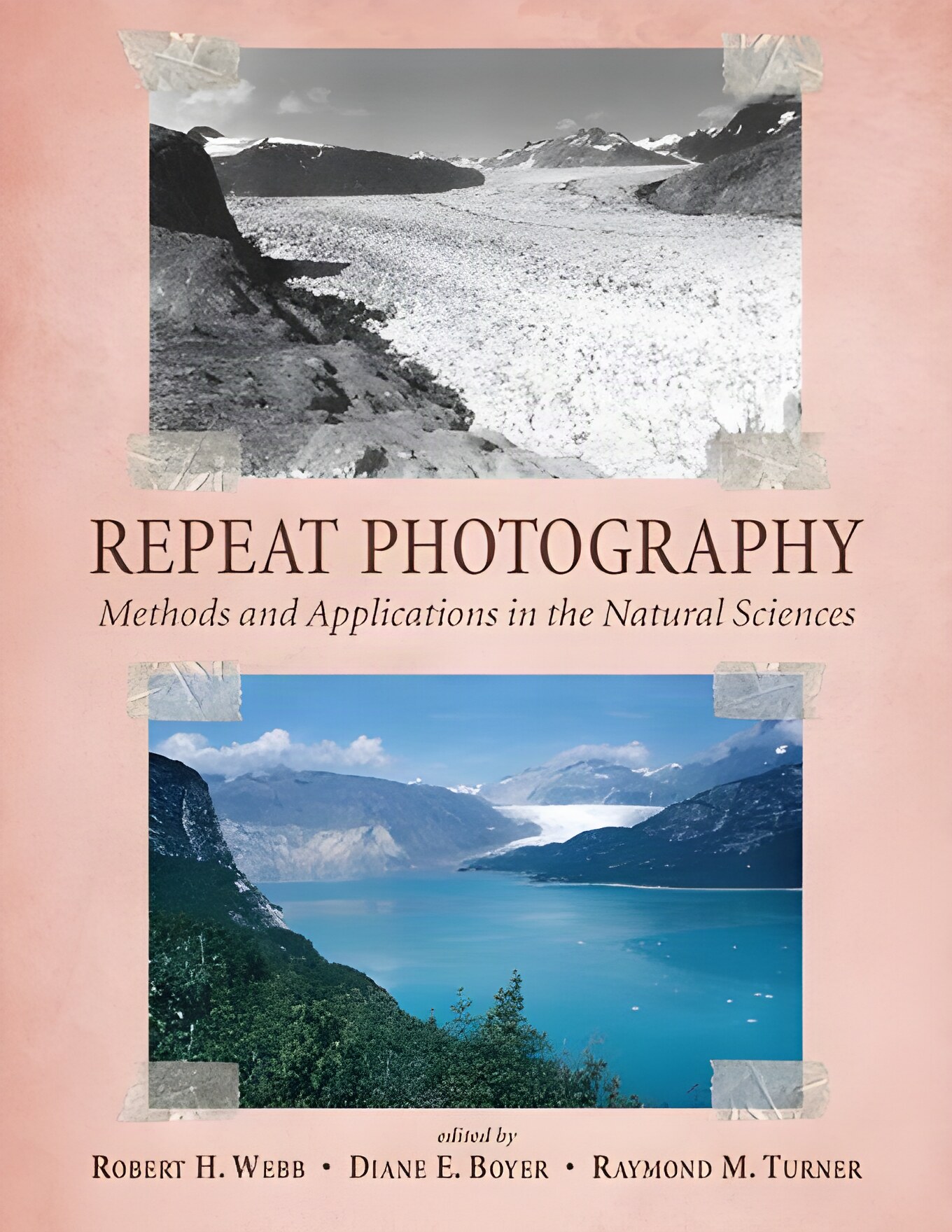
Softcover. Washington DC, Island Press, 1st, 2010, Book: Very Good, Dust Jacket: None, Softcover, 337 pages. Repeat photography is a scientific technique in which photographs are taken from the same vantage point over different points in time. This text explores the technical and geographic scope of this method through a series of essays by 35+ scholars. Topics include techniques for creation and analysis of repeat photographs, applications in the geosciences, population ecology, and ecosystem change. Thirty two pages of color photographs are included. Clean copy.
Hardcover. NY, Knopf, 1st, 1980, Book: Very Good, Dust Jacket: Very Good, Hardcover in a bright dust jacket. 227 pages. Previous owner's signature on front fly leaf, else a clean, tight copy. Naipaul presents here four essays about the "half-made" societies, those still suffering from the profound deprivations of colonialism and prey to corruption." He examines the role of Eva Peron as the catalyst for violence in Argentina, with its yearning for a European culture and the physical, historical, cultural reality of the land in which the native Indians were wiped out and the colonialists took over. He writes of the infamous Michael X in Trinidad whose pretensions to power and destiny led to the man's insanity and execution following two pointless murders. Shorter essays address nihilism in the Congo and Naipaul's take on Joseph Conrad and the Heart of Darkness.
Hardcover. The Monacelli Press , 1st, 2018, Book: Very Good, Dust Jacket: Very Good, Hardcover in a bright dust jacket, 264 pages. Richard Filipowski (1923-2008) was among the most gifted polymaths in the annals of American modernism. Whether as a painter, sculptor, or designer of furniture and jewelry, Filipowski developed a lush, abstract, and amazingly consistent visual language that marks him among the finest figures of midcentury art and design. As a student at the Institute of Design (formerly the New Bauhaus) in Chicago, he quickly became a protege of founder Laszlo Moholy-Nagy, who featured several of Filipowski's works in his seminal text Vision in Motion (1947); Filipowski was the only student Moholy-Nagy called upon to join the faculty, where he taught alongside Walter Gropius and Marcel Breuer. Recruited by Gropius to develop a course in design fundamentals at Harvard, which remains a cornerstone of design pedagogy to this day, he would move to MIT where he taught for more than three decades, until his retirement in 1988. With a foreword by Laszlo Moholy-Nagy's daughter Hattula, Richard Filipowski: Art and Design Beyond the Bauhaus is the first monograph of this master, who over the course of his career created a unique body of work in diverse media that has largely, until recently, been held in private collections due to his relative lack of compulsion to seek media attention or worldly rewards. But now through the efforts of the Filipowski family and new attention by design scholars--several of whom contribute essays here on Filipowski's graphic and painted works, sculpture, furniture, and position in design history--the work is being revealed to a new generation of aficionados. Richard Filipowski is a rich document of a life and career that is poised to reenter the canon of modernism.
Hardcover. London, Merrell Publishing, 1st, 2004, Book: Very Good, Dust Jacket: Very Good, 254 pages illustrated with 85 color and 100 b&w plates. Essays by William Ewing and Adelheid Rasche. In publisher's shrinkwrap. A lavishly illustrated retrospective of one of the greatest international fashion photographers. From the 1950s until his death in the crash of TWA Flight 800 in 1996, Puhlmann worked with most of the top models, stylists and designers in the fashion industry. Features arresting portraits of Isabella Rossellini, Cindy Crawford, Cheryl Tiegs, Mel Gibson, Calvin Klein, Jerry Hall, Naomi Sims and many others.
Hardcover. New York, Thames and Hudson, 3rd Revised, 1988, Book: Very Good, Dust Jacket: Very Good, 285 pages. Hardcover with dust jacket. Minor yellowing to dust jacket edges and spine. Previous owners inscription in pen to top edge of front flyleaf. An otherwise very clean, unmarked copy with only minor edgewear. 206 photographs, 16 in color. Follows the developments in the art and science of photography from the invention of the wet-collodion process through the evolution of dry plates.
Hardcover. Germany, Steidl, 1st, 2010, Book: Very Good, Dust Jacket: None, 160 pages. Hardcover with no dust jacket. Very clean, unmarked copy still in publishers shrink-wrap. Over 100 black and white photographs. Tight copy.
Hardcover. Germany, Steidl, 1st, 2010, Book: Very Good, Dust Jacket: None, 160 pages. Hardcover with no dust jacket. Very clean, unmarked copy still in publishers shrink-wrap. Over 100 black and white photographs. Tight copy.
Hardcover. New York, Scalo Publishers, 1st, 1994, Book: Very Good, Dust Jacket: Very Good, 320 pages, profusely illustrated in b&w, some color. A hardcover exhibition catalog for a show that opened at the National Gallery of Art in Washington, DC. This comprehensive volume presents the works of the Swedish photographer, and includes five essays which analyze different aspects of Frank's photographs, films and videos. DOMESTIC SHIPPING ONLY.
Hardcover. New York, Scalo Publishers, 1st, 1994, Book: Very Good, Dust Jacket: Very Good, 320 pages, profusely illustrated in b&w, some color. A hardcover exhibition catalog for a show that opened at the National Gallery of Art in Washington, DC. This comprehensive volume presents the works of the Swedish photographer, and includes five essays which analyze different aspects of Frank's photographs, films and videos.
Hardcover. NY, Guggenheim Museum, 1st, 2004, Book: Very Good, Dust Jacket: Very Good, Hardcover. Catalogue for an exhibition in Berlin in 2004, which explored the relationship between Mapplethorpe's photography and classical art, particularly the Flemish mannerist engravings and sculpture. 232 pages includes 120 plates and 30 text illustrations, with extended essays by Blessing and Celant.
Hardcover. New York, Skira, 1st, 2014, Book: Very Good, Dust Jacket: None, Hardcover, 199 pages. Like new in publisher's shrink-wrap. Twenty-five years after Mapplethorpe"s death, an overview on his nudes, portraits, self-portraits, floral still lifes, and other works compiled by the art critic Germano Celant. Robert Mapplethorpe"s wide, provocative, and powerful body of work has established him as one of the most important artists of the twentieth century. Since 1977, Germano Celant has studied the life and work of Robert Mapplethorpe, participating in interviews and writing essays for several publications and exhibitions. For the first time, this volume gathers the complete anthology of Celant"s writings on the artist.
Softcover. New York, Whitney Museum of American Art, 1st, 1988, Book: Very Good, Dust Jacket: None, Softcover. Exhibition catalog of Robert Mapplethorpe's photography. 216 pages; 130 photographs, 45 in color. Text by Richard Marshall, Associate Curator, Exhibitions, at the Whitney Museum of American Art, New York; essays by Richard Howard and Ingrid Sischy. In very good condition; small rubbing mark on back cover; no marks on front cover.
Hardcover. Berkeley CA, University of California Press/Dia Art Foundation, 1st, 2005, Book: Very Good, Dust Jacket: None, Hardcover, 208 pages, b&w and color plates. Essays and interview with the artist, bibliography, pictorial boards. In publisher's shrinkwrap.
Hardcover. Boston, Houghton Mifflin, reprint, 1918, Book: Very Good, Dust Jacket: Good, Hardcover, gray/green cloth stamped with a black and white design. In a dust jacket with two chunks gone from spine. A naturalist ruminates on birds (mostly) and woodchucks in these essays on wildlife. B&w illustrations by R. Bruce Horsfall,Most of these pieces were previously published in magazines.
Hardcover. NY, Norton, 1st US, 1965, Book: Very Good, Dust Jacket: Fair, Hardcover, 142 pages. Humoroue instructions for the man living on his own. Cartoons by Quenin Blake. Book is clean, very good, dust jacket is worn, chipped.
Hardcover. Hatje Cantz, 1st, 2010, Book: Very Good, Hardcover, 208 pages. Between 1961 and 1968, at the height of the Pop art movement, Roy Lichtenstein (1923-1997) created about 50 large black-and-white drawings. Not only was their imagery, culled from consumer culture, entirely new--baked potatoes, ads for foot medication and BB Guns--but so was their treatment, which drew on the rudimentary character of cheaply printed commercial drawings. Conceived independently from Lichtenstein's paintings, these drawings recast illustrations from newspaper ads and comic books into works of keen visual intensity, curiously echoing the clean-edge aesthetic of 1960s geometric abstraction. "Drawing is the basis of my art," Lichtenstein later affirmed; "It is where my thinking takes place." Published for an exhibition at the Morgan Library in New York, this richly illustrated publication offers 120 color illustrations, plus essays on Lichtenstein's technique and on his little-known 1967 Aspen project, in which the artist transformed a room into a black-and-white cartoon drawing.

 "REFLECTIONS IN A GLASS EYE. works from the International Center of Photography Collectionby: NA")

 "Religion and Rational Theology (The Cambridge Edition of the Works of Immanuel Kant)by: Immanuel Kant / Allen W. Wood (Translator)")
![Remembrance of Things Paris: Sixty Years of Writing from Gourmet by: Reichl, Ruth [Editor]](https://www.browsingisarousing.com/shop/images/Remembrance-of-Things-Paris-Sixty-Years-of-Writing-from-Gourmet_by_Reichl-Ruth-Editor-399427-454964.jpg "Remembrance of Things Paris: Sixty Years of Writing from Gourmet by: Reichl, Ruth [Editor]")
 "Reminiscences of a Portrait Painterby: Healy, George P.A.")
 "Remote Control: Power Cultures and the World of Appearancesby: Kruger, Barbara")
 "Renoir Landscapes 1865-1883by: Bailey, Colin and Christopher Riopelle")

 "Richard Filipowski: Art and Design Beyond the Bauhausby: Marisa Bartolucci (Editor), Hattula Moholy-Nagy (Foreword)")
 "Rico Puhlmann a Fashion Legacy: Photographs and Illustrations 1955-1996by: Puhlmann/, Rico")
 "Rise of Photography, The: 1850-1880 by: Gernsheim, Helmut")
 "Robert Doisneau: From Craft to Artby: ChEvrier, Jean-FranAois")
 "Robert Doisneau: From Craft to Artby: ChEvrier, Jean-FranAois")
 "Robert Feke: Colonial Portrait Painter by: Foote, Henry Wilder")
 "Robert Frank: Moving Outby: Frank, Robert, Sarah Greenough, Philip Brookman and Martin Gasser")
 "Robert Mapplethorpe And The Classical Tradition: Photographs and Mannerist Printsby: Celant, Germao and Arkady Ippolitov, with Karole Vail/ Jennifer Blessing")
 "Robert Mapplethorpe: The Nymph Photographyby: Celant, Germano")
 "Robert Mapplethorpeby: Marshall, Richard")
 "Robert Smithson: Spiral Jetty: True Fictions, False Realitiesby: Smithson, Robert with others")


 "Rough Husbandry by: Campbell/Quentin Blake, Patrick")
 "Roy Lichtenstein: The Black-and-White Drawings, 1961-1968by: Isabelle Dervaux , Graham Bader, et al.")