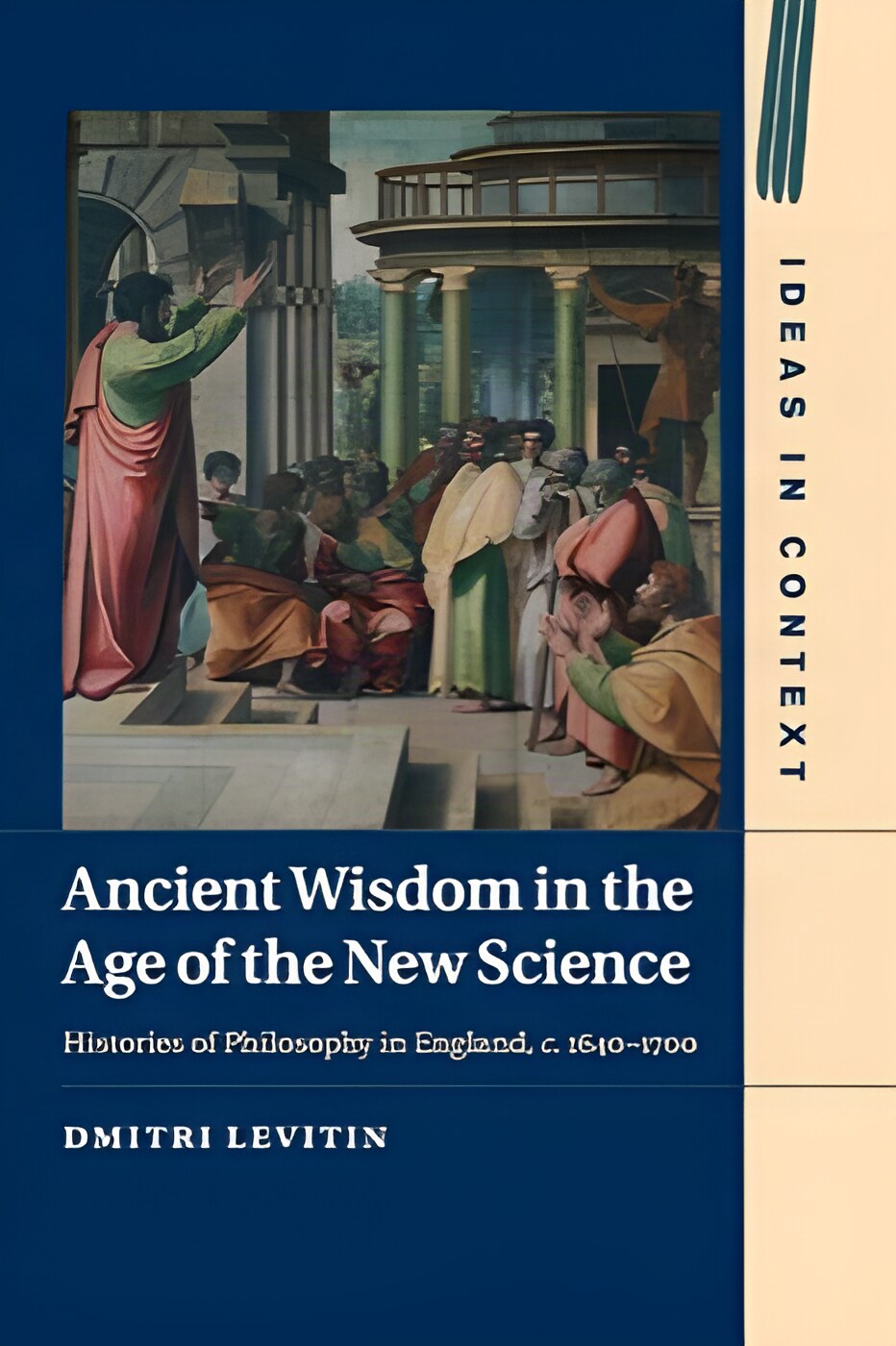
Hardcover. Cambridge UK, Cambridge University Press, 1st, 2015, Book: Very Good, Dust Jacket: Very Good, Hardcover in a bright dust jacket, pages. Seventeenth-century England has long been heralded as the birthplace of a so-called 'new' philosophy. Yet what contemporaries might have understood by 'old' philosophy has been little appreciated. In this book Dmitri Levitin examines English attitudes to ancient philosophy in unprecedented depth, demonstrating the centrality of engagement with the history of philosophy to almost all educated persons, whether scholars, clerics, or philosophers themselves, and aligning English intellectual culture closely to that of continental Europe. Drawing on a vast array of sources, Levitin challenges the assumption that interest in ancient ideas was limited to out-of-date 'ancients' or was in some sense 'pre-enlightened'; indeed, much of the intellectual justification for the new philosophy came from re-writing its history. At the same time, the deep investment of English scholars in pioneering forms of late humanist erudition led them to develop some of the most innovative narratives of ancient philosophy in early modern Europe. Name on front fly leaf, otherwise clean.
Hardcover. Oxford UK, Oxford University Press, 1st, 2015, Book: Very Good, Dust Jacket: Very Good, Hardcover in a bright dust jacket, 286 pages. Sarah Hutton presents a rich historical study of one of the most fertile periods in modern philosophy. It was in the seventeenth century that Britain's first philosophers of international stature and lasting influence emerged. Its most famous names, Hobbes and Locke, rank alongside the greatest names in the European philosophical canon. Bacon too belongs with this constellation of great thinkers, although his status as a philosopher tends to be obscured by his statusas father of modern science. The seventeenth century is normally regarded as the dawn of modernity following the breakdown of the Aristotelian synthesis which had dominated intellectual life since the middle ages. In this period of transformational change, Bacon, Hobbes, Locke are acknowledged tohave contributed significantly to the shape of European philosophy from their own time to the present day. But these figures did not work in isolation. Sarah Hutton places them in their intellectual context, including the social, political and religious conditions in which philosophy was practised. She treats seventeenth-century philosophy as an ongoing like all conversations, some voices will dominate, some will be more persuasive than others and there will be enormous variationsin tone from the polite to polemical, matter-of-fact, intemperate. The conversation model allows voices to be heard which would otherwise be discounted. Hutton shows the importance of figures normally regarded as 'minor' players in philosophy (e.g. Herbert of Cherbury, Cudworth, More, Burthogge,Norris, Toland) as well as others who have been completely overlooked, notably female philosophers. Crucially, instead of emphasizing the break between seventeenth-century philosophy and its past, the conversation model makes it possible to trace continuities between the Renaissance and seventeenth century, across the seventeenth century and into the eighteenth century, while at the same time acknowledging the major changes which occurred.
Hardcover. Leiden/NY, E.J. Brill, 1st, 1996, Book: Very Good, Dust Jacket: Very Good, Hardcover in a bright dust jacket, 376 pages. This volume consists of 21 papers delivered at an international Spinoza conference on Disguised and Overt Spinozism around 1700, held at the Erasmus University (Rotterdam) in October 1994. In these papers, scholars from Italy, France, Germany, Great Britain, the Netherlands and the United States examine the impact of Spinoza's philosophy on the European Republic of Letters, one generation after the death, in 1677, of the greatest philosopher in the history of the Netherlands. Clean copy.
Hardcover. UK, Oxford University Press, 1st, 2014, Book: Very Good, Dust Jacket: Very Good, Hardcover in a bright dust jacket, 284 pages. Thirteen original essays by leading scholars explore aspects of Spinoza's ethical theory and, in doing so, deepen our understanding of the richly rewarding core of his system. Given its importance to his philosophical ambitions, it is surprising that his ethics has, until recently, received relatively little scholarly attention. Anglophone philosophy has tended to focus on Spinoza's contribution to metaphysics and epistemology, while philosophy in continental Europe has tended to show greater interest in his political philosophy. This tendency is problematic not only because it overlooks a central part of Spinoza's project, but also because it threatens to present a distorted picture of his philosophy. Moreover, Spinoza's ethics, like other branches of his philosophy, is complex, difficult, and, at times, paradoxical. The essays in this volume advance our understanding of his ethics and also help us to appreciate it as the centerpiece of his system. Clean copy.
Softcover. London/NY, Bloomsbury, 1st, 2016, Book: Very Good, Dust Jacket: None, Softcover, 346 pages. This volume makes the key essays of 19th century French philosopher Felix Ravaisson available in English for the first time. In recent years, Ravaisson has emerged as an extremely important and influential figure in the history of modern European philosophy. The volume contains the classic 1838 dissertation Of Habit, studies of Pascal, Stoicism and the wider history of philosophy together with the Philosophical Testament that he left unfinished when he died in 1900. The volume also features Ravaisson's work in archaeology, the history of religions and art-theory, and his essay on the Venus de Milo, which occupied him over a period of twenty years after he noticed, when hiding the statue behind a false wall in a dingy Parisian basement during the Franco-Prussian war, that it had previously been presented in a way that deformed its original bearing and meaning. Clean copy.
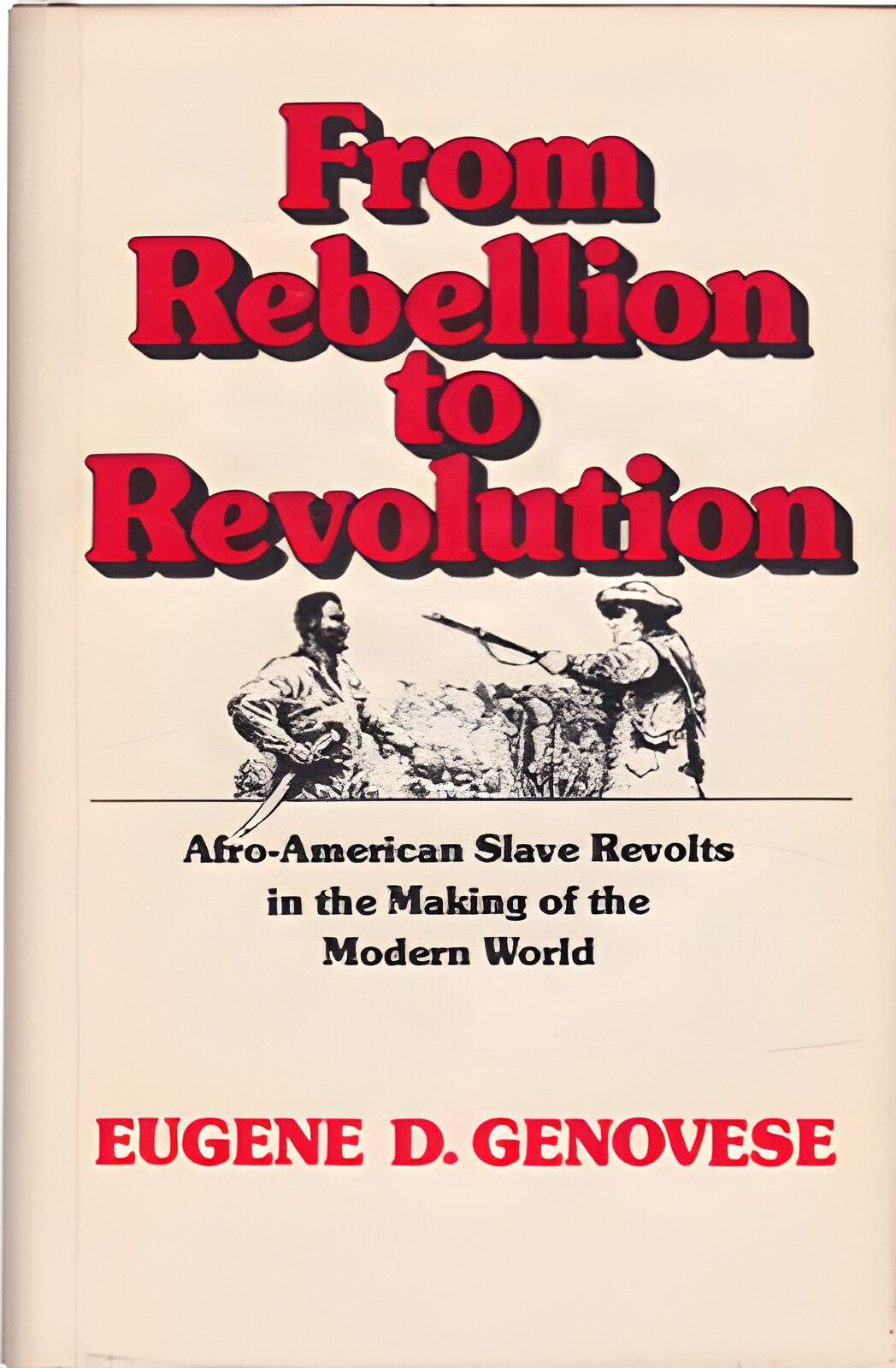
Hardcover. Baton Rouge, Louisiana State University , 1st, 1979, Book: Very Good, Dust Jacket: Very Good, Hardcover in a bright dust jacket, 173 pages. This work is a brief look at worldwide slave revolts in the 17th through 19th centuries, emphasizing their interrelations with European power struggles, which gave rebels hope of finding weak spots in the defenses of the slave powers. The French Revolution also had an influence on slave revolts, but the canny European powers used indigenous peoples to suppress slave revolts (e.g., native Americans) and took advantage of African ethnic divisions as well. American slaves stood little chance of revolt and were under constant surveillance from Southerners, who coward in fear after the successful rebellions in the Caribbean, particularly in Hispaniola, and after Nat Turner and John Brown's efforts. Genovese also brings up religion's double-edged sword: one side used to pacify slaves and the other side to inspire them to break their chains. In short, this scholarly treatise is thought-provoking as well as informative and ends with an inspirational quote from one of Frederick Douglass's lectures. Name on front fly leaf, otherwise a clean copy.
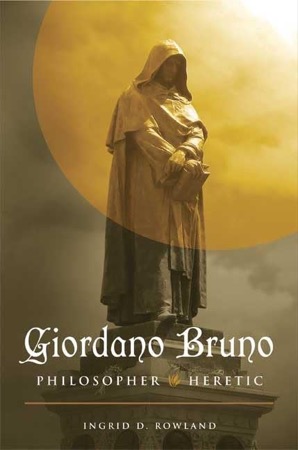
Hardcover. NY, Farrar, Straus and Giroux, 2nd pr., 2008, Book: Very Good, Dust Jacket: Very Good, Hardcover in a bright dust jacket, 335 pages. Giordano Bruno is one of the great figures of early modern Europe, and one of the least understood. Ingrid D. Rowland's pathbreaking life of Bruno establishes him once and for all as a peer of Erasmus, Shakespeare, and Galileo, a thinker whose vision of the world prefigures ours. By the time Bruno was burned at the stake as a heretic in 1600 on Rome's Campo dei Fiori, he had taught in Naples, Rome, Venice, Geneva, France, England, Germany, and the Prague of Emperor Rudolph II. His powers of memory and his provocative ideas about the infinity of the universe had attracted the attention of the pope, Queen Elizabeth and the Inquisition, which condemned him to death in Rome as part of a yearlong jubilee. Writing with great verve and sympathy for her protagonist, Rowland traces Bruno's wanderings through a sixteenth-century Europe where every certainty of religion and philosophy had been called into question and shows him valiantly defending his ideas (and his right to maintain them) to the very end. Clean copy.
Hardcover. Cambridge, U.K. ; New York, Cambridge University Press, 1st, 2001, Book: Very Good, Dust Jacket: Very Good, Hardcover, 442 pages. Light shelf-wear to dust jacket with slight sun-fade on spine. Clean, tight copy.
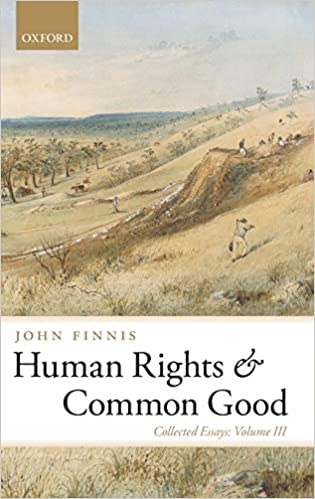
Hardcover. NY/London, Oxford University Press, 1st, 2011, Book: Very Good, Dust Jacket: Very Good, Hardcover in a bright, unclipped dust jacket, 470 pages. This central volume in the Collected Essays brings together John Finnis's wide-ranging contribution to central issues in political philosophy. The volume begins by examining the general theory of political community and social justice. It includes the powerful and well-known Maccabaean Lecture on Bills of Rights -- a searching critique of Ronald Dworkin's moral-political arguments and conclusions, of the European Court of Human Rights' approach to fundamental rights, and of judicial review as a constitutional institution. It is followed by an equally searching analysis of Kant's thought on the intersection of law, right, and ethics. Other papers in the book's opening section include an early assessment of Rawls's A Theory of Justice, a radical re-interpretation of Aquinas on limited government and the significance of the private/public distinction, and a challenging paper on virtue and the constitution. The volume then focuses on central problems in modern political communities, including the achievement of justice in work and distribution; the practice of punishment; war and justice; the public control of euthanasia and abortion; and the nature of marriage and the common good. There are careful and vigorous critiques of Nietzsche on morality, Hart on punishment, Dworkin on the enforcement of morality and on euthanasia, Rawls on justice and law, Thomson on the woman's right to choose, Habermas on abortion, Nussbaum and Koppelman on same-sex relations, and Dummett and Weithman on open borders. The volume's previously unpublished papers include a foundational consideration of labor unions, a fresh statement of a new grounding for the morality of sex, a surprising reading of C.S. Lewis's Abolition of Man on contraception, and an introduction reviewing some of the remarkable changes in private and public morality over the past half-century.
Hardcover. Cambridge UK, Cambridge University Press, 1st, 2006, Book: Very Good, Dust Jacket: Very Good, Hardcover in a bright dust jacket, 767 pages. 'This book is a major new intellectual and cultural history of intolerance and toleration in early modern and early Enlightenment Europe. John Marshall offers an extensive study of late seventeenth-century practices of religious intolerance and toleration in England, Ireland, France, Piedmont and the Netherlands and of the arguments which John Locke and his associates made in defence of 'universal religious toleration'. He analyses early modern and early Enlightenment discussions of toleration; debates over toleration for Jews and Muslims as well as for Christians; the limits of toleration for the intolerant, atheists, 'libertines' and 'sodomites'; and the complex relationships between intolerance and resistance theories including Locke's own Treatises. This study is a significant contribution to the history of the 'republic of letters' of the 1680s and the development of early Enlightenment culture and will be essential reading for scholars of early modern European history, religion, political science, and philosophy.' Clean copy.
Hardcover. Cambridge MA, Harvard University Press, 1st, 2007, Book: Very Good, Dust Jacket: Very Good, Hardcover in a bright dust jacket, 206 pages. Lorenzo Valla (1407-1457) was the most important theorist of the humanist movement. He wrote a major work on Latin style, On Elegance in the Latin Language, which became a battle-standard in the struggle for the reform of Latin across Europe, and Dialectical Disputations, a wide-ranging attack on scholastic logic. His most famous work is On the Donation of Constantine, an oration in which Valla uses new philological methods to attack the authenticity of the most important document justifying the papacy's claims to temporal rule. It appears here in a new translation with introduction and notes by G. W. Bowersock, based on the critical text of Wolfram Setz (1976). This volume also includes a text and translation of the Constitutum Constantini, commonly known as the Donation of Constantine.
Hardcover. Princeton NJ, Princeton University Press, 1st, 2015, Book: Very Good, Dust Jacket: Very Good, Hardcover in a bright dust jacket, 354 pages. From the turn of the fifth century to the beginning of the eighteenth, Christian writers were fascinated and troubled by the "Problem of Paganism," which this book identifies and examines for the first time. How could the wisdom and virtue of the great thinkers of antiquity be reconciled with the fact that they were pagans and, many thought, damned? Related questions were raised by encounters with contemporary pagans in northern Europe, Mongolia, and, later, America and China. Pagans and Philosophers explores how writers-philosophers and theologians, but also poets such as Dante, Chaucer, and Langland, and travelers such as Las Casas and Ricci-tackled the Problem of Paganism. Augustine and Boethius set its terms, while Peter Abelard and John of Salisbury were important early advocates of pagan wisdom and virtue. University theologians such as Aquinas, Scotus, Ockham, and Bradwardine, and later thinkers such as Ficino, Valla, More, Bayle, and Leibniz, explored the difficulty in depth. Meanwhile, Albert the Great inspired Boethius of Dacia and others to create a relativist conception of scientific knowledge that allowed Christian teachers to remain faithful Aristotelians. At the same time, early anthropologists such as John of Piano Carpini, John Mandeville, and Montaigne developed other sorts of relativism in response to the issue. Clean copy.
Hardcover. New Haven CT, Yale University Press, 1st, 2000, Book: Very Good, Dust Jacket: Very Good, Hardcover in a bright dust jacket, 234 pages, b&w illustrations. Nicolas-Claude Fabri de Peiresc (1580-1637) was, during his lifetime, one of Europe's most famous men. A friend of Pope Urban VIII and Galileo, of Peter-Paul Rubens and Hugo Grotius, of Tommaso Campanella and Marin Mersenne, Peiresc played an important role in the intellectual culture of his time. This book is the first study in English of this extraordinary man, as well as a vivid portrait of his whole circle. Looking through the lens of Peiresc's life, Peter N. Miller brings into focus the early-seventeenth-century world of learning-its people, places, and ideas. Drawing on the extensive Peiresc archive (more than 50,000 pieces of paper), Miller brilliantly evokes the lives of antiquaries, philosophers, theologians, and politicians of Peiresc's day, only some of whom remain known today. He explores the age in which Peiresc's toleration and sociability, his political action and cosmopolitanism, and his serious scholarship without dogmatism were identified as a set of virtues and practices by which to live. Peiresc's notion of scholarship as a moral exercise, the sweep of his interests, and the cross-Continental reach of his intellectual life show with new clarity what it meant to be a man of learning during the decades around 1600. Name on front fly leaf, otherwise clean copy.
Softcover. Jerusalem/NY, Shalem Press, 1st, 2008, Book: Very Good, Dust Jacket: None, Softcover, 287 pages. Between the 16th and 18th centuries, European political philosophy felt intimately at home with the Hebrew Bible, enjoyed some familiarity with later Jewish texts and exegeses, and accommodated a small number of Jews within its political discourse. The period was characterized by a search for Hebraica Veritas, a view of De Republica Hebraeorum as the idealized polity, and biblical and Jewish ideas permeating the political imagination through art, literature, and legal codes. This volume is comprised of papers from the first ever international conference on political Hebraism held in Jerusalem in August 2004 under the auspices of the Shalem Center. The topic of political Hebraism is broached here from a number of approaches, including historical, literary, philosophical, theological, critical, and sociopolitical.
Hardcover. Edinburgh, Edinburgh University Press, 1st, 1996, Book: Very Good, Dust Jacket: Very Good, Hardcover in a bright dust jacket, 340 pages. Proclus was the most important figure in Neo-Platonism when it was established as the dominant philosophy of Late Antiquity. Neo-Platonism is not only the final flowering of Greek thought but also the mode in which it was transmitted to the Byzantine, Western European and Islamic civilisations. Stripping away the complexities surrounding this traditionally difficult philosopher, Lucas Siorvanes takes the reader through Proclus' metaphysics and theory of knowledge with original research examining all aspects of Proclus' work. This is the first book which places Proclus in his complete intellectual context and sheds new light on aspects of Proclus' thought, to which previous scholars have rarely done justice. - Presents a general survey of Proclus and his Neo-Platonism- Introduces results of original research, mainly on his metaphysics, theory of knowledge and science. All areas of Proclus' philosophical interest are covered including religion, physics, astronomy, mathematics and poetry. His philosophy is found in all these because concern with being and truth is central to all. Also introduced is the neglected area of his natural philosophy with its remarkable freshness of thought punctuated by the rejection of Aristotelian science and Ptolemy's cosmology. In this book, Proclus is shown as much more than just a metaphysician.
Softcover. Princeton NJ, Princeton University Press, 2nd pr., 1991, Book: Very Good, Dust Jacket: None, Softcover, 488 pages, b&w illustrations. Addressing problems of objectivity and authenticity, Sabine MacCormack reconstructs how Andean religion was understood by the Spanish in light of seventeenth-century European theological and philosophical movements, and by Andean writers trying to find in it antecedents to their new Christian faith. Some fading to spine, otherwise a clean, tight copy.
NY, Crown, 1st, 2018, Book: Very Good, Dust Jacket: Very Good, Hardcover in a bright, unclipped dust jacket. The monumental life of Benjamin Rush, medical pioneer and one of our most provocative and unsung Founding Fathers. By the time he was thirty, Dr. Benjamin Rush had signed the Declaration of Independence, edited Common Sense, toured Europe as Benjamin Franklin's protege, and become John Adams's confidant, and was soon to be appointed Washington's surgeon general. And as with the greatest Revolutionary minds, Rush was only just beginning his role in 1776 in the American experiment. As the new republic coalesced, he became a visionary writer and reformer; a medical pioneer whose insights and reforms revolutionized the treatment of mental illness; an opponent of slavery and prejudice by race, religion, or gender; an adviser to, and often the physician of, America's first leaders; and "the American Hippocrates." Rush reveals his singular life and towering legacy, installing him in the pantheon of our wisest and boldest Founding Fathers.
Softcover. Cambridge MA, Harvard University Press, 1st, 1999, Book: Very Good, Dust Jacket: None, Softcover, 528 pages. Clean copy. Reconstructing religious motivation, conviction and behaviour in early modern Europe, this text shows the shifting perspectives of authorities willing to kill, martyrs willing to die, martyrologists eager to memorialize and controversialists keen to dispute.
Softcover. Cambridge UK, Cambridge University Press, 1st, 1970, Book: Very Good, Dust Jacket: None, Softcover, 310 pages. One of the incidental consequences of the success of British arms in eighteenth-century India was the appearance of a number of publications which reflect the intense curiosity of contemporary Europeans about strange peoples, their manners and religions. Of the three principal religions of India, Hinduism attracted the most attention. European contact with Islam was several centuries old, while few travellers could identify Buddhism with any certainty. This book reprints some of the most significant English contributions to the early European understanding of Hinduism. Paper covers with light wear.
Hardcover. Cambridge UK, Cambridge University Press, 1st, 1998, Book: Very Good, Dust Jacket: Very Good, Hardcover in a dust jacket with mild fading to spine, 949 pages. Volume 1 only of a 2-volume set. The Cambridge History of Seventeenth-Century Philosophy offers a uniquely comprehensive and authoritative overview of early-modern philosophy written by an international team of specialists. As with previous Cambridge Histories of Philosophy the subject is treated by topic and theme, and since history does not come packaged in neat bundles, the subject is also treated with great temporal flexibility, incorporating frequent reference to medieval and Renaissance ideas. The basic structure corresponds to the way an educated seventeenth-century European might have organized the domain of philosophy. Thus, the history of science, religious doctrine, and politics feature very prominently. Name on front fly leaf, about 12 pages with light pencil markings. Otherwise clean.
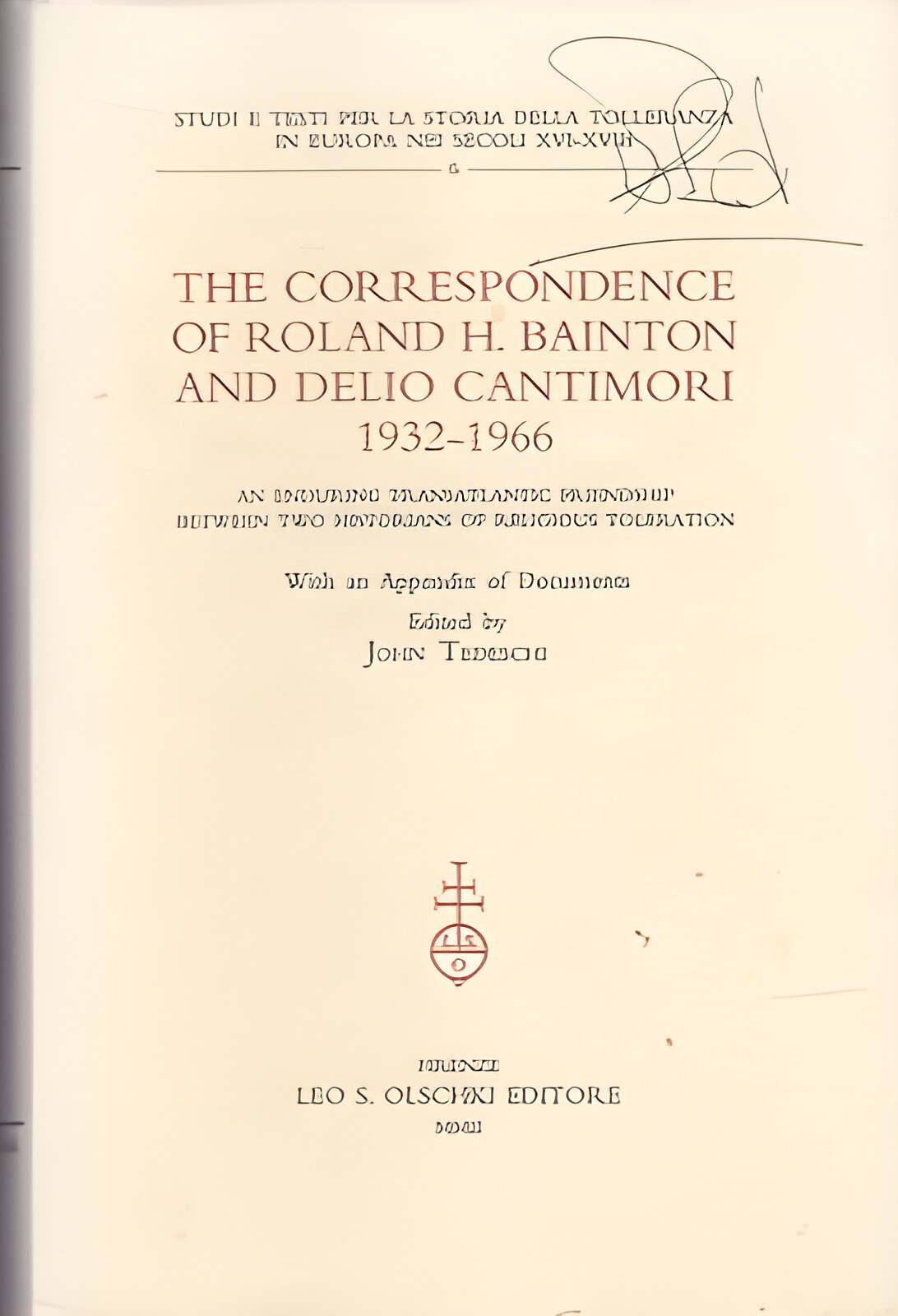
Softcover. Italy, Leo S. Olschki Editore, 1st, 2002, Book: Very Good, Dust Jacket: Very Good, Softcover in a dust jacket, 313 pages. The first complete collection of all that is conserved of the correspondence that endured for more than thirty years between two great scholars of 16th century religious toleration. The ample introduction and detailed erudite comments accompanying each letter provide precious information on four decades of American and European historiography on the 16th century. Name on cover
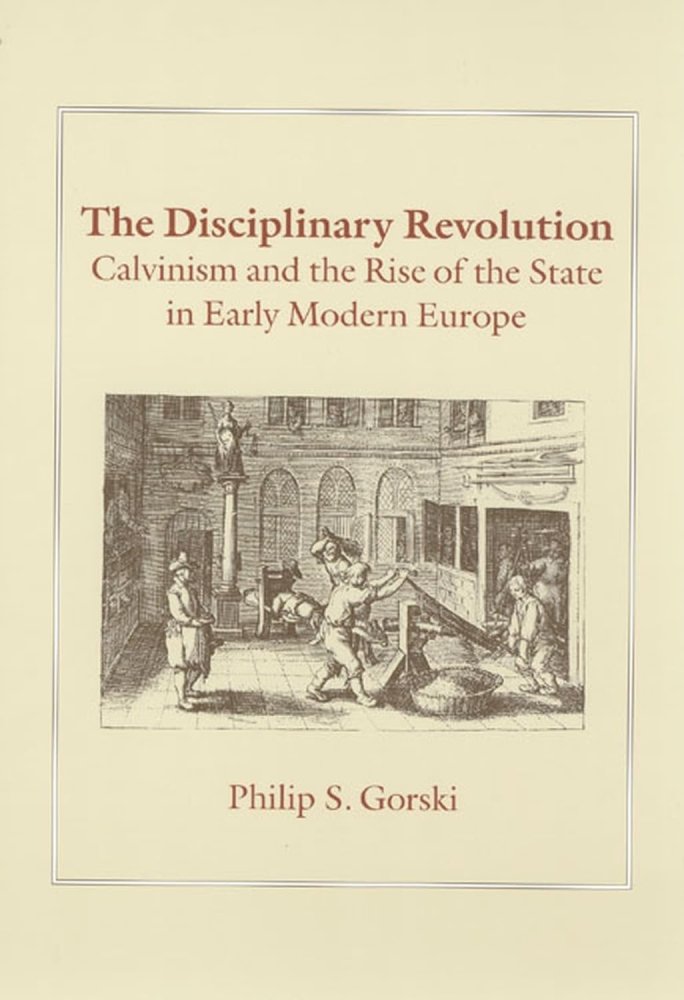
Softcover. University of Chicago Press, reprint, 2010, Book: Very Good, Dust Jacket: None, Softcover, 249 pages. What explains the rapid growth of state power in early modern Europe? While most scholars have pointed to the impact of military or capitalist revolutions, Philip S. Gorski argues instead for the importance of a disciplinary revolution unleashed by the Reformation. By refining and diffusing a variety of disciplinary techniques and strategies, such as communal surveillance, control through incarceration, and bureaucratic office-holding, Calvin and his followers created an infrastructure of religious governance and social control that served as a model for the rest of Europe--and the world. Clean, bright copy.
Softcover. Urbana, University of Illinois Press, 1st, 2005, Book: Very Good, Dust Jacket: None, Softcover, 277 pages. Starting in the 1980s, anti-immigrant discourse shifted away from the "color" of immigrants to their religion and culture. It focused in particular on newcomers from Muslim countries--people feared both as terrorists and as products of tribal societies with values opposed to those of secular Western Europe. Leo Lucassen tackles the question of whether the integration process of these recent immigrants will fundamentally differ in the long run (over multiple generations) from the experiences of similar immigrant groups in the past. For comparison, Lucassen focuses on "large and problematic groups" from Western Europe's past (the Irish in the United Kingdom, the Poles in Germany, and the Italians in France) and demonstrates a number of structural similarities in the way migrants and their descendants integrated into these nation states. Lucassen emphasizes that the geographic sources of the "threat" have changed and that contemporaries tend to overemphasize the threat of each successive wave of immigrants, in part because the successfully incorporated immigrants of the past have become invisible in national histories. Clean copy.

 "British Philosophy in the Seventeenth Century by: Hutton, Sarah")
 "Disguised and Overt Spinozism around 1700: Papers presented at the international colloquium held at Rotterdam 5-8 October 1994by: Bunge, Wiep van & Wim Klever (Ed.)")


 "Hegel and Aristotleby: Ferrarin, Alfredo")
 "John Locke, Toleration and Early Enlightenment Culture (Cambridge Studies in Early Modern British History)by: Marshall, John")


 "Religion in the Andes: Vision and Imagination in Early Colonial Peruby: Sabine MacCormack")
 "Ruin of The Ancient Civilization and The Triumph of Christianity, Theby: Ferrero, Guglielmo")
 "Rush: Revolution, Madness, and Benjamin Rush, the Visionary Doctor Who Became a Founding Fatherby: Stephen Fried")
 "Salvation at Stake: Christian Martyrdom in Early Modern Europe (Harvard Historical Studies)by: Gregory, Brad S.")
 "The British Discovery Of Hinduism In The Eighteenth Centuryby: Marshall, P. J. (Ed)")
 "The Immigrant Threat: The Integration of Old and New Migrants in Western Europe since 1850 by: Leo Lucassen")