Softcover. NY, Archipelago Books, 1st, Book: Very Good, Dust Jacket: None, Softcover in pictorial wrappers, 259 pages. Written in a pared-down, direct language, and filled with allusions to everything from philosophy to TV talk shows, the poetry of Tadeusz Rozewicz encompasses the complexity of human experience in the early 21st century. Rozewicz's unique voice, formed during his experiences as a member of the Polish resistance in World War II, and honed by decades living under communist rule, holds a merciless mirror up to the crimes and excesses of the poet's lifetime. In his eighties now, Rozewicz continues to be a prolific writer and an acerbic commentator on his life and times. This collection combines his latest three volumes: professor's knife, gray zone, and exit. These are extraordinary poems from an acknowledged European master. Clean copy.
Hardcover. New York , Phaidon Press, 1st us, 2010, Book: Very Good, Dust Jacket: Very Good, Hardcover in a bright dust jacket. Wonderful color illustrations by the master Ungerer. An old teddy bear recalls his life, beginning as a birthday present, later shared by two boys separated under European bombardment, companion to the daughter of an American soldier whose life he had saved, battered by nasty boys, trashed, and restored as a collector's item displayed in an antique shop. The moving denouement re-unites the two men, who as boys were separated by war's travails.
Hardcover. Cambridge MA, Harvard University Press, 1st, 2018, Book: Very Good, Dust Jacket: Very Good, Hardcover in a bright dust jacket, 404 pages. The Napoleonic wars did not end with Waterloo. That famous battle was just the beginning of a long, complex transition to peace. After a massive invasion of France by more than a million soldiers from across Europe, the Allied powers insisted on a long-term occupation of the country to guarantee that the defeated nation rebuild itself and pay substantial reparations to its conquerors. Our Friends the Enemies provides the first comprehensive history of the post-Napoleonic occupation of France and its innovative approach to peacemaking. From 1815 to 1818, a multinational force of 150,000 men under the command of the Duke of Wellington occupied northeastern France. From military, political, and cultural perspectives, Christine Haynes reconstructs the experience of the occupiers and the occupied in Paris and across the French countryside. The occupation involved some violence, but it also promoted considerable exchange and reconciliation between the French and their former enemies. Clean copy.
Hardcover. Seattle, Fantagraphics, 1st, Book: Very Good, Dust Jacket: None, Hardcover in pictorial boards, 298 pages. Published for the first time in English -- and the first time in color -- the classic Petra Chérie by Italian master Attilio Micheluzzi follows the dramatic adventures of a mysterious heroine during the end of World War I. Originally published in serial format from 1977-1982, Petra Chérie follows the adventures of Petra De Karlowitz, 'Chérie' to creator Micheluzzi, who addresses her throughout the book. Born to a Polish businessman and the most beautiful woman in Paris, raised in Canton, China, and now based in neutral Holland, she is a spy who answers only to herself. Evoking but cleverly eschewing stereotypes of the femme fatale, Petra is equally at home in the cockpit of an airplane and behind the wheel of a motorcar. More than that, she is an endlessly fascinating enigma and one of the most iconic characters in Italian comics. In short, thrilling tales across sky, sea, and land, zipping from Northern Europe to Mitteleuropa, from the Balkans to the Bosphorus to the nascent Soviet Union, Micheluzzi grapples with an era when Europe's borders were in flux and battle lines were often blurred. Clean copy.
Hardcover. Bloomington, Indiana University Press, 1st, Book: Very Good, Dust Jacket: Very Good, Hardcover in a bright dust jacket, 341 pages. This book presents the remarkable correspondence between Alfred Schutz and Aron Gurwitsch, emigre philosophers influenced by Edmund Husserl, who fled Europe on the eve of World War II and ultimately became seminal figures in the establishment of phenomenology in the United States. Their deep and lasting friendship grew out of their mutual concern with the question of the connections between science and the life-world. Interwoven with philosophical exchange is the two scholars' encounter with the unfamiliar problems of American academic life-what Gurwitsch called the "passology" of exile. Apart from its brilliant and moving portrait of two distinguished men, the correspondence holds rich significance for current issues in philosophy and the social sciences. Clean copy.
Hardcover. Washinton DC, Smithsonian Institution Press, 1st, 1992, Book: Very Good, Dust Jacket: Very Good, Hardcover, 192 pages, b&w photos. Light shelf-wear to dust jacket, else a clean, tight copy. Hine became famous for his photographs of immigrants at Ellis Island, child laborers and European war refugees, and for his later celebrations of industrial workers.
Hardcover. Lexington KY, University Press of Kentucky, 1st, 2014, Book: Very Good, Dust Jacket: Very Good, Hardcover, 320 pages, in a bright unclipped dust jacket, b&w illustrations. Pola Negri (1897-1987) rose from an impoverished childhood in Warsaw, Poland, to become one of early Hollywood's greatest stars. After tuberculosis ended her career as a ballerina in 1912, she turned to acting and worked under legendary directors Max Reinhardt and Ernst Lubitsch in Germany. Negri preceded Lubitsch to Hollywood, where she quickly became a fan favorite thanks to her beauty, talent, and diva personality. Known for her alluring sexuality and biting artistic edge, she starred in more than sixty films and defined the image of the cinematic femme fatale. Author Mariusz Kotowski brings the screen siren's story to English-speaking audiences for the first time in this fascinating biography. At the height of her fame, Negri often portrayed exotic and mysterious temptresses, headlining in such successes as The Spanish Dancer (1923) and Forbidden Paradise (1924), before returning to Europe in the 1930s. The devastating effects of World War II soon drove her back to the United States, where she starred in Hi Diddle Diddle (1943) and pursued her vaudeville career before retiring from the entertainment industry. Kotowski also illuminates Negri's dramatic personal life, detailing her numerous love affairs-including her engagement to Charlie Chaplin and her romance with Rudolph Valentino-as well as her multiple marriages. This long-overdue biography not only paints a detailed portrait of one classic Hollywood's most intriguing stars and the film industry's original Jezebel, but also explores the link between Hollywood and European cinema during the interwar years.
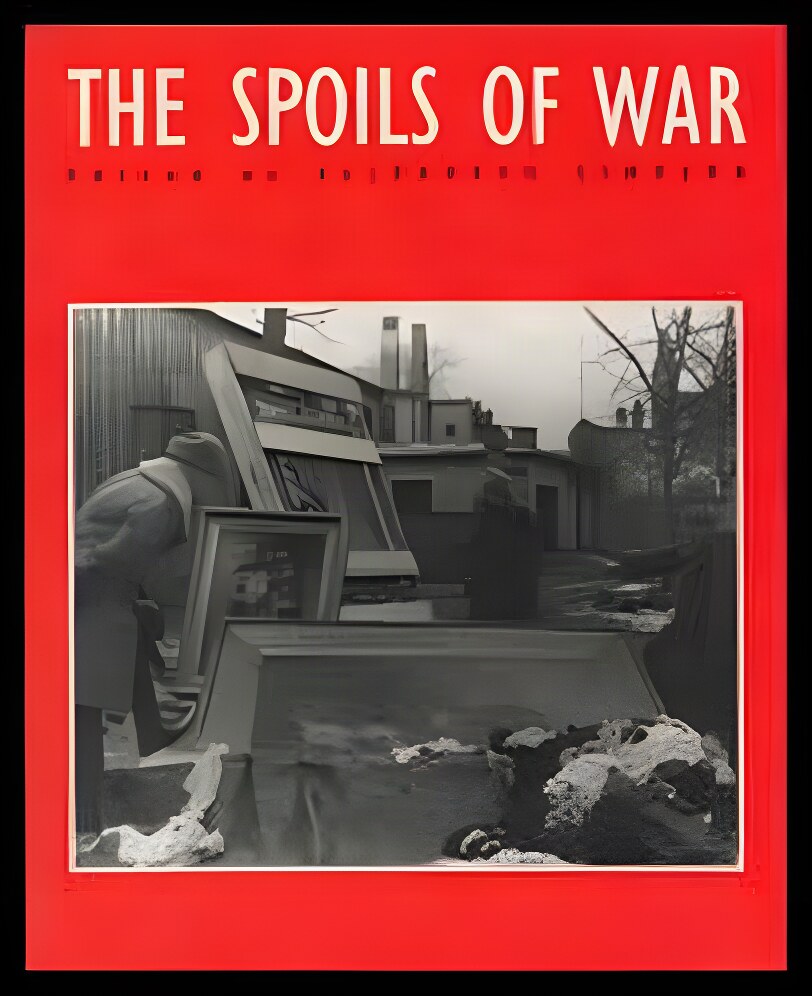
Hardcover. Washington D.C., Smithsonian Institution Press , reprint, Book: Very Good, Dust Jacket: Very Good, 171 pages. Hardcover with dust jacket. Extensive b&w photographs throughout. Silver gilt titles on spine. Clean, unmarked copy with only minor wear to dust jacket. In September 1939, the German invasion of Poland propelled the world into war. By the spring of 1946, Poland was beginning to recover from five years of cataclysmic destruction. Liberated from the occupation of the Third Reich, the nation celebrated a peace already overshadowed by the emerging Cold War.John Vachon was in Poland to witness this transformation of almost mythic proportions. Assigned to cover United Nations relief efforts, this American photographer documented in images and letters a nation at the crossroads of the postwar East and West. Taken with a keen yet sympathetic eye, Vachon's photographs, most of them never before published, reveal the destitution and unfounded optimism of Poles, many of them returning in boxcars from German labor camps and Siberian exile, ready to reclaim their burned-out cities and farms left fallow by war. Vachon's letters home to his wife provide a rare context for the images. He writes of the luxuries enjoyed by the foreign corps amid Warsaw's rubble, the equal measures of hospitality and anti-Semitism among ordinary Poles, and of the anti-Soviet sentiment in the countryside, where "they love Russian songs, but always apologize when they sing one." In one account of a village fire, he conveys the often conflicting emotions of the photojournalist, documenting scenes of suffering he feels powerless to assuage.
Softcover. NY, Museum of Modern Art, 1st, 1999, Book: Very Good, Dust Jacket: None, Softcover, 136 pages. From the early 1960s through the early 70s, Pop Art swept the industrialized world. Iconoclastic, rebellious, and immediately popular, the new movement found its roots in an unprecedentedly prosperous consumer society. Encouraged by galleries and publishers who catered to a new collectors' market, many Pop artists were drawn to the creation of editions on paper and in multiples. 60 vibrant examples by such American icons as Andy Warhol and Roy Lichtenstein, and by such European artists as Richard Hamilton, Niki de Saint Phalle, Gerhard Richter, Eduardo Paolozzi, and Sigmar Polke, are organized according to the themes of mass media consumer culture, politics, erotica and more. All of the works included herein are from The Prints and Illustrated Books Collection at The Museum of Modern Art, New York, an exceptionally rich repository of such work.
Softcover. New York, Rizzoli, 1st US, 1983, Book: Very Good, Dust Jacket: Very Good, Hardcover, 302 pages. Blue cloth cover with gilt lettering to spine, color illustrated dust jacket, 405 b&w and 80 color illustrations, stapled cardboard slipcase. Bottom right corner of cover slightly bumped. Very light wear to dust jacket edges; a very clean, tight copy. This book is the first to survey the whole i development of porcelain n Europe between the Napoleonic era and the First World War. The nineteenth century was a period of technological change and of artistic innovation: both these strands came together in the development of porcelain, which industrialization brought within the reach of the burgeoning middle classes of industrial Europe. While early in the century Neoclassicism had brought about a new purity of line and decoration, in Germany and in England taste demanded more elaborate styles and resulted in the emergence of the 'new Rococo' and later in the development of revived styles of decoration such as Minton's 'Majolica' and the work of studio potters. This book covers not only the great factories, Sevres, Limoges, Copenhagen, Meissen, but also the smaller producers in Holland, Italy and Spain and extends to the birth of Art Nouveau.
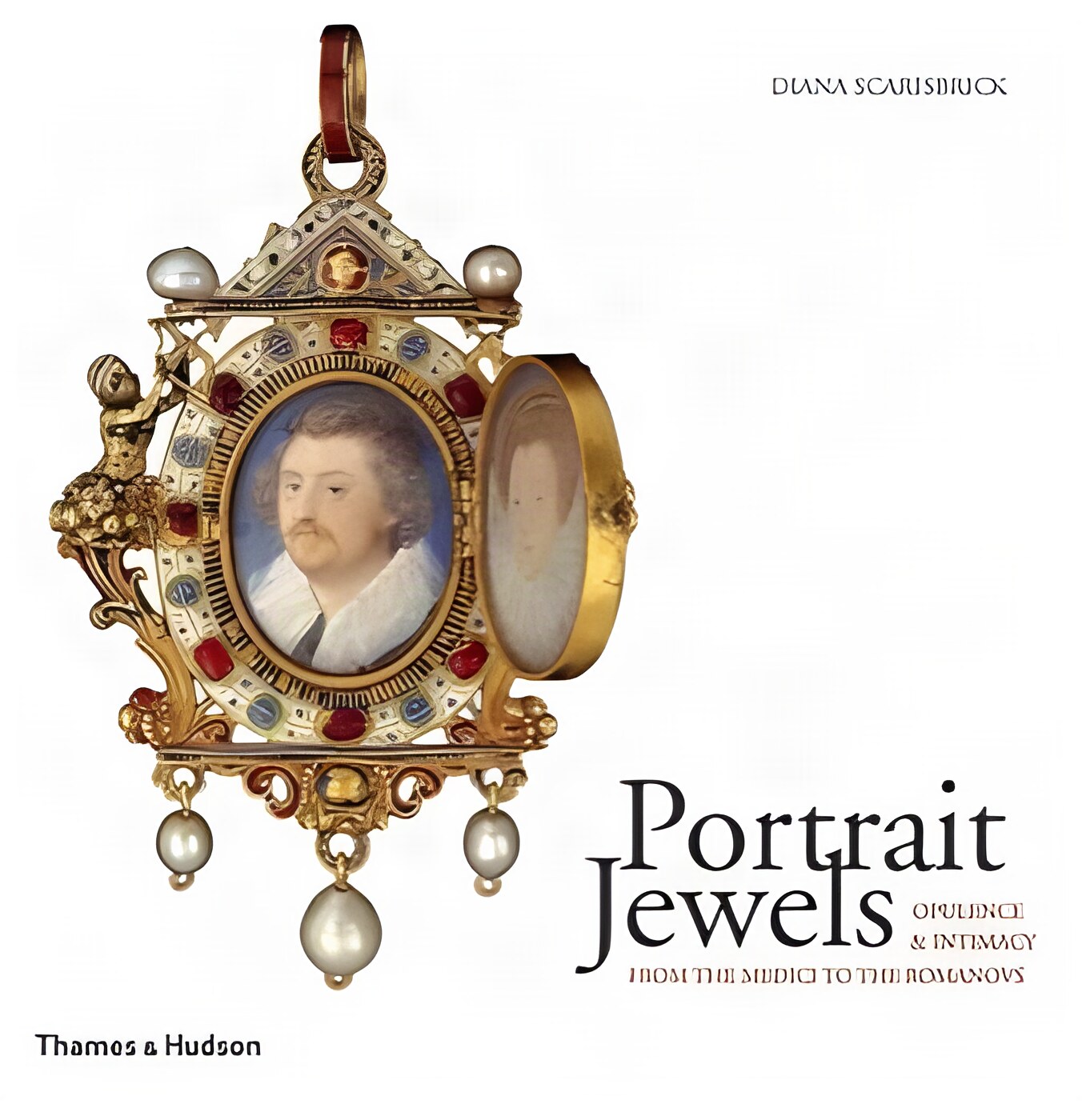
Hardcover. NY, Thames & Hudson, 1st, 2011, Book: Very Good, Dust Jacket: Very Good, Hardcover in a bright dust jacket, 352 pages, color illustrations. While cameo and intaglio portraits, other forms of deluxe jewelry, medals, and miniatures featuring famous personalities have been surveyed, a historian and curator of jewelry and engraved gems, notes that their settings have surprisingly not attracted as much attention. Covering periods from 16th to early 17th centuries Renaissance Europe to the Napoleonic to World War I eras, the author describes the pieces and names their designers in historical and personal contexts. A chapter is devoted to the portrait diamond from the Medici dynasty to the fall of the Romanovs. Clean copy. DOMESTIC SHIPPING ONLY.
Hardcover. Boston, Little Brown and Company, 1st, 1969, Book: Very Good, Dust Jacket: Good, Hardcover in a lightly worn and rubbed dust jacket, 548 pages. A biography of the famous CBS radio and television newsman Edward R. Murrow (1908-1965). Much of what Americans knew about the events in Europe during World War II were learned from Murrow's broadcasts. After the war, Murrow was a regular on prime-time television. B&w illustrations, index and bibliography. Spine faded. Clean copy.
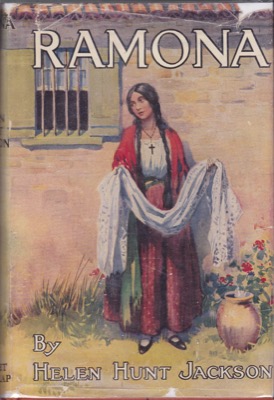
Hardcover. NY, Grosset & Dunlap, reprint, Book: Very Good, Dust Jacket: Good, Hardcover in a bright wraparound dust jacket. Ramona, written by Helen Hunt Jackson, is a timeless work of historical fiction that first captured hearts in 1884. Set against the rugged beauty of post-Mexican-American War California, this powerful novel weaves together romance, cultural heritage, and social justice in a narrative that resonates deeply with readers. We follow the life of a young woman of mixed Native American and European descent as she navigates the complexities of identity, love, and survival in a land fraught with change. Name on front fly leaf otherwise clean.
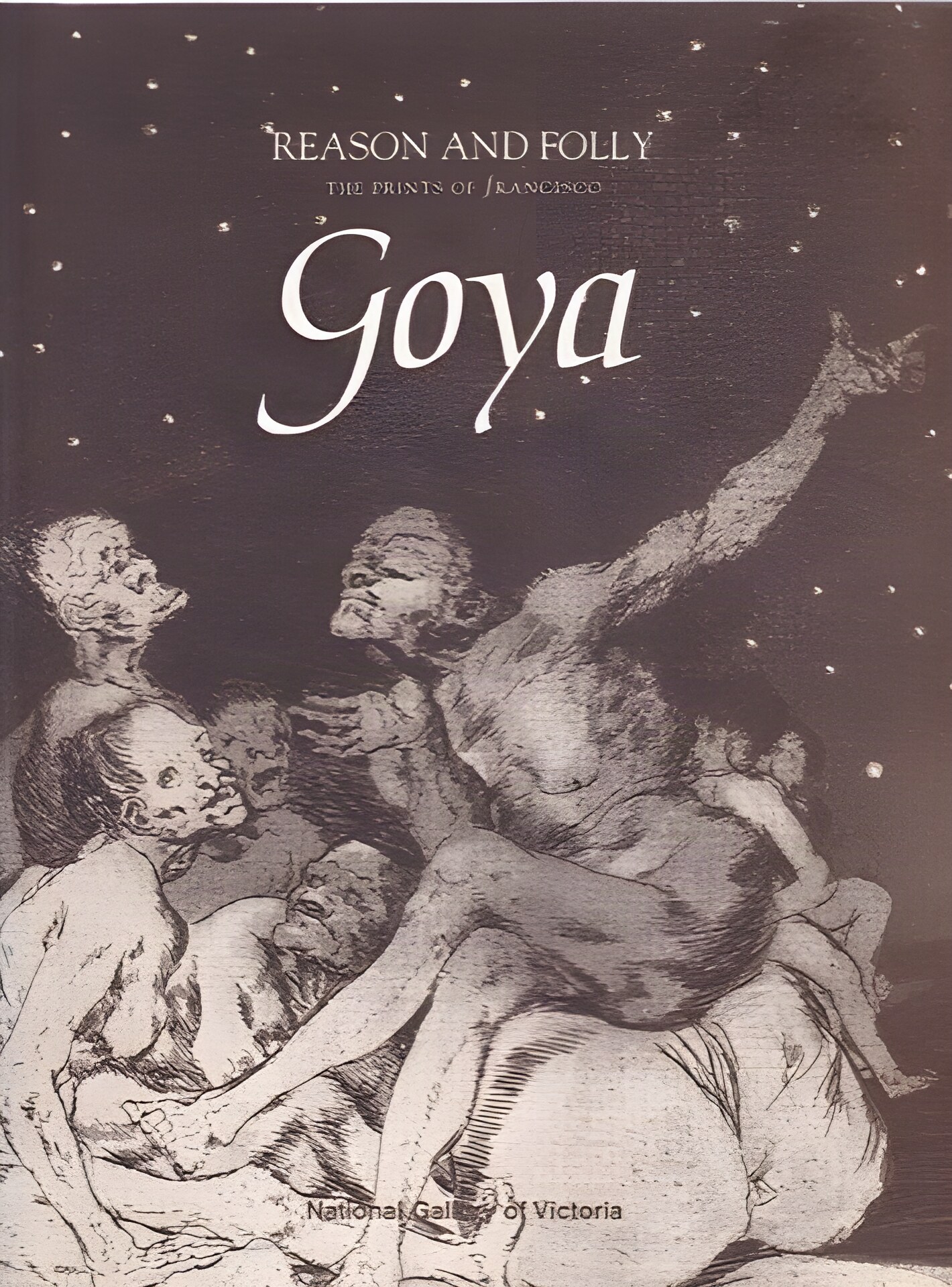
Softcover. Melbourne, National Gallery of Victoria, 1st, 1998, Book: Very Good, Dust Jacket: None, Softcover, 128 pages, profusely illustrated in b&w. The great Francesco Goya was pivotal to the development of European art. His engagement with dreams and fantasy link him to the Romantic era while his skeptical view of society, his questioning of the strictures of the Church and State, reflect Enlightenment attitudes familiar to contemporary viewers. His humane and shocking portrayal and denunciation of war still evokes an understanding and immediate response. This publication looks at the motivations of his art, to shine the light of Reason on human relations, and explores his patrons, his career and the times in which he lived. Clean, bright copy.
Softcover. US, Top Shelf Productions, 1st, 2007, Book: Very Good, Dust Jacket: None, Softcover. 285 pages, illustrated throughout in b&w. Clean, unmarked copy with only minor wear to wrappers. As the NATO bombs fell on his hometown of Pancevo in 1999, Serbian cartoonist Aleksandar Zograf used his diary comics and e-mail to reach out to the world and offer a glimpse at the effects of the attacks. Over the weeks and months of the war, Zograf documented not only how the bombings shattered the lives of his friends and neighbors, but also how the routine of daily life remained unchanged. The most recent attacks on Pancevo's oil refinery are contrasted with the latest local soccer matches -- and American propaganda flyers are as likely to fall from the sky as American comics are to arrive in the mail.
Softcover. US, Top Shelf Productions, 1st, 2007, Book: Very Good, Dust Jacket: None, Softcover. 285 pages, illustrated throughout in b&w. Clean, unmarked copy with only minor wear to wrappers. As the NATO bombs fell on his hometown of Pancevo in 1999, Serbian cartoonist Aleksandar Zograf used his diary comics and e-mail to reach out to the world and offer a glimpse at the effects of the attacks. Over the weeks and months of the war, Zograf documented not only how the bombings shattered the lives of his friends and neighbors, but also how the routine of daily life remained unchanged. The most recent attacks on Pancevo's oil refinery are contrasted with the latest local soccer matches -- and American propaganda flyers are as likely to fall from the sky as American comics are to arrive in the mail.
Hardcover. NY, Thames & Hudson, 1st, 2006, Book: Very Good, Dust Jacket: Very Good, Hardcover, 249 pages. Marking the fiftieth anniversary of the October 1956 Hungarian revolt against Soviet domination after World War II, this imposing volume contains powerful black-and-white photographs taken during the years preceding as well as the outbreak and crushing of the uprising by a German member of the international photojournalist cooperative Magnum. Introduced by Lessing's recollections and Hungarian French historian Francois Fejto's precis of the momentous events, the pictures appear in three chapters, "Communist Hungary," "The Revolution," and "The Failure." Hungarian novelist George Konrad's intense impressions of the time, during which he carried a rifle as a revolutionary young intellectual, follow the first chapter, and French political scientist Nicolas Bauquet's assessment of the revolt's impact on Western Europe's Communist parties, the USSR, and subsequent European history follows the third. Views of the cemetery in which the uprising's martyrs are now buried conclude the book elegiacally, and brief last words by Lessing and the director of Hungary's Institute 56 indicate who may forget what happened and why the rest of us should always remember. An extraordinary document.
Hardcover. Toronto, Trafalgar Press, 1st, 1986 , Book: Very Good, Dust Jacket: Very Good, Hardcover in a bright "(Skillfully traces the causes of the Crimean War and sketches a vivid picture of an age which made possible 'the world's most curious and unneccesary struggle'. Troubetzkoy ingeniously weaves together the varied developments in diplomacy, trade, nationalistic expression and personality conflict in the decade which led to the hostilities. The armies of the belligerents are described (and the) reader is introduced to the principal personages of the drama - Napoleon III, Marshal St. Arnaud, Lord Raglan and the great Russian engineer, Todleben, who, apart from Florence Nightingale, was the only one to earn true distinction during the War. Vividly described are Nicholas I and the Russian Empire." Clean copy.
Hardcover. Berkeley CA, University of California Press, 1st, 1999, Book: Very Good, Dust Jacket: Very Good, Hardcover, 156 pages. Between 1935 and 1938 the celebrated photographer Roman Vishniac explored the cities and villages of Eastern Europe, capturing life in the Jewish shtetlekh of Poland, Romania, Russia, and Hungary, communities that even then seemed threatened-not by destruction and extermination, which no one foresaw, but by change. Using a hidden camera and under difficult circumstances, Vishniac was able to take over sixteen thousand photographs; most were left with his father in a village in France for the duration of the war. With the publication of Children of a Vanished World, seventy of those photographs are available, thirty-six for the first time. The book is devoted to a subject Vishniac especially loved, and one whose mystery and spontaneity he captured with particular poignancy: children.
Hardcover. NY, Grossman Publishers, 1st, 1974, Book: Very Good, Dust Jacket: Very Good, Hardcover, 96 pages. Frontispiece of Vishniac. Illustrated with color and b/w reproductions of photographs by Vishniac of microscopic life and Eastern European Jewry prior to World War II. Clean copy in a bright dust jacket.
NY, Crown, 1st, 2018, Book: Very Good, Dust Jacket: Very Good, Hardcover in a bright, unclipped dust jacket. The monumental life of Benjamin Rush, medical pioneer and one of our most provocative and unsung Founding Fathers. By the time he was thirty, Dr. Benjamin Rush had signed the Declaration of Independence, edited Common Sense, toured Europe as Benjamin Franklin's protege, and become John Adams's confidant, and was soon to be appointed Washington's surgeon general. And as with the greatest Revolutionary minds, Rush was only just beginning his role in 1776 in the American experiment. As the new republic coalesced, he became a visionary writer and reformer; a medical pioneer whose insights and reforms revolutionized the treatment of mental illness; an opponent of slavery and prejudice by race, religion, or gender; an adviser to, and often the physician of, America's first leaders; and "the American Hippocrates." Rush reveals his singular life and towering legacy, installing him in the pantheon of our wisest and boldest Founding Fathers.
Hardcover. New York, Association Press, 1st, 1922, Book: Very Good, Dust Jacket: None, Volume 1: 636 pages. Volume 2: 664 pages. Hardcovers. Bound in maroon, gilt titles on spine, somewhat muted with age. Letter from Trustees of the War Fund, dated April 11, 1924, presenting volumes to previous owner (Gilbert Colgate), as well as original packing list enclosed in Volume 1. Full color fold-out maps throughout both books. Gutter cracked in a few spots, but both book's pages still completely intact. Pages slightly yellowed with age. In very good condition.
Hardcover. NY, Knopf, 1st, 2012, Book: Very Good, Dust Jacket: Very Good, Hardcover in a bright, unclipped dust jacket. 418 pages, b&w illustrations. From the author of the best-selling One Minute to Midnight, a riveting account of the pivotal six-month period spanning the end of World War II, the dawn of the nuclear age, and the beginning of the Cold War. When Roosevelt, Stalin, and Churchill met in Yalta in February 1945, Hitler's armies were on the run and victory was imminent. The Big Three wanted to draft a blueprint for a lasting peace--but instead set the stage for a forty-four-year division of Europe into Soviet and western spheres of influence. After fighting side by side for nearly four years, their political alliance was rapidly fracturing. By the time the leaders met again in Potsdam in July 1945, Russians and Americans were squabbling over the future of Germany and Churchill was warning about an "iron curtain" being drawn down over the Continent. These six months witnessed some of the most dramatic moments of the twentieth century: the cataclysmic battle for Berlin, the death of Franklin Roosevelt, the discovery of the Nazi concentration camps, Churchill's electoral defeat, and the dropping of atomic bombs on Japan. While their armies linked up in the heart of Europe, the political leaders maneuvered for leverage: Stalin using his nation's wartime sacrifices to claim spoils, Churchill doing his best to halt Britain's waning influence, FDR trying to charm Stalin, Truman determined to stand up to an increasingly assertive Soviet superpower.
Softcover. New York, Harry N. Abrams, Inc., 1st, 1997, Book: Very Good, Dust Jacket: None, 336 pages. Softcover. Color and b/w illustrations throughout. Covers in excellent condition. Touch of foxing to top edge. Pages clean and bright. The ever-rapacious Nazis looted staggering quantities of great art and antiques from the nations they occupied. Much of it found its way back to Germany, and following the Allied victory, many thousands of rare (and some priceless) pieces were identified, and returned to the countries from which they had been taken. But not all of the paintings, statues, and archaeological treasures were recovered: Some were taken by Soviet troops and disappeared into Russia. Still others slipped into the black market in western Europe, and were snapped up by wealthy (if unprincipled) collectors. A 1995 symposium at the Bard Graduate Center for Studies in the Decorative Arts brought together European and American investigators and historians to discuss both the the Nazi thefts and the current state of knowledge of the whereabouts of the many still missing treasures. Those papers are reprinted here. While the pieces are detailed, dry, and likely to be of most interest to specialists, there are some extraordinary stories, most prominently the description of the recent rediscovery of ``Priam's treasure,'' excavated by Schliemann at Troy and hidden since WW II in a Russian museum. (123 illustrations, 25 in color).


 "Otto: The Autobiography of a Teddy Bearby: Ungerer, Tomi")

 "Petra Chérie by: Atillio Micheluzzi")

 "Photo Story: Selected Letters and Photographs of Lewis W. Hineby: Hine, Lewis W.")
 "Pola Negri: Hollywood's First Femme Fataleby: Kotowski, Mariusz")

 "Pop Impressions Europe/USA: Prints and Multiples from the Museum of Modern Artby: Wendy Weitman")
 "Porcelain of the Nineteenth Centuryby: Fay-Halle, Antoinette and Barbara Mundt")
 "Prime Time: The Life of Edward R. Murrowby: Alexander Kendrick")


 "Regards From Serbiaby: Zograf, Aleksandar")
 "Regards From Serbiaby: Zograf, Aleksandar")
 "Revolution in Hungary: The 1956 Budapest Uprisingby: Erich Lessing")

 "Roman Vishniac: Children of a Vanished Worldby: Mara Vishniac Kohn/Roman Vishniac")
 "Roman Vishniacby: Vishniac, Roman")
 "Rush: Revolution, Madness, and Benjamin Rush, the Visionary Doctor Who Became a Founding Fatherby: Stephen Fried")
 "Service with Fighting Men: An Account of the Work of the American Young Men's Christian Associations in the World War (2 volume set)by: Taft (Chairman), William Howar")
 "Six Months in 1945: FDR, Stalin, Churchill, and Truman--from World War to Cold Warby: Michael Dobbs")