Hardcover. Boston, MA, University of Massachusetts Press, 1st, 2013, Book: Very Good, Dust Jacket: Very Good, 516 pages. Hardcover with dust jacket. A very clean, unmarked copy with only minor wear to dust jacket edges. This volume documents Fenn's prolific career from the 1860s until his death in 1911. Sue Rainey also recounts his adventurous sketching trips in the western United States, Europe, and the Middle East, which enhanced his reputation for depicting far-flung places at a time when the nation was taking a more prominent role on the world stage.
Hardcover. Boston, MA, University of Massachusetts Press, 1st, 2013, Book: Very Good, Dust Jacket: Very Good, 516 pages. Hardcover with dust jacket. A very clean, unmarked copy with only minor wear to dust jacket edges. This volume documents Fenn's prolific career from the 1860s until his death in 1911. Sue Rainey also recounts his adventurous sketching trips in the western United States, Europe, and the Middle East, which enhanced his reputation for depicting far-flung places at a time when the nation was taking a more prominent role on the world stage.
Softcover. Fonthill Media, reprint, 2017, Book: Very Good, Dust Jacket: None, Softcover, 144 pages illustrated in color. Cuba Cars and Cigars is full of glorious color images of the rare and varied Cuban-owned 1950s American and European automobiles, trucks, and station wagons that were imported before 1961. Among the famous Marques that feature are Cadillacs, Chevys, Buick, Dodge, Oldsmobile, Ford, Packard, De Soto, Pontiac, Plymouth, Edsel, Mercury and Metropolitan, Hillman, Singer and Austin, Nash Sedans, a Lloyd 600 German 2-cylinder/4-stroke 596cc car, Ramblers and SAABs, Mercs, Humber, Standard Vanguard, Ford Consul/Zephyr, Hillman Husky and Minx, Singer Gazelle and Austin. Most of these vehicles are still in running order, and are passed down from generation to generation. Trucks include Fords, a Fargo, Dodges and Chevys, not forgetting cigars, street urchins, and the lovely ladies of Havana. Clean copy.
Softcover. Durham NC, Duke University Press, 1st, 1993, Book: Very Good, Dust Jacket: None, Softcover, 672 pages. Pointing to a glaring blind spot in the basic premises of the study of American culture, leading critics and theorists in cultural studies, history, anthropology, and literature reveal the "denial of empire" at the heart of American Studies. Challenging traditional definitions and periodizations of imperialism, this volume shows how international relations reciprocally shape a dominant imperial culture at home and how imperial relations are enacted and contested within the United States.Drawing on a broad range of interpretive practices, these essays range across American history, from European representations of the New World to the mass media spectacle of the Persian Gulf War. The volume breaks down the boundary between the study of foreign relations and American culture to examine imperialism as an internal process of cultural appropriation and as an external struggle over international power. Clean copy.
Hardcover. Cambridge MA, The MIT Press, 1st, 2002, Book: Very Good, Dust Jacket: Very Good, 311 pages, illustrated throughout. Not until the fall of the communist regime in 1989 and the end of Czechoslovakia's cultural isolation did the world begin to appreciate the Czech avant-garde photographers of the first half of the twentieth century. This first survey of Czech avant-garde photography introduces the important work of Frantisek Drtikol, Jaromir Funke, Jaroslav Rossler, Jindoich Styrsky, Josef Sudek, and numerous others whose work made Czech photography synonymous with visions of modernity. The essays introduce the period and explore the background and connections among the photographers. Biographical profiles are also included. But the book's main attraction is its outstanding collection of duotone and color images, many published here for the first time.
Hardcover. Vilnius, Baltos Lankos, 1st, 1995, Book: Very Good, Dust Jacket: Very Good, 69 duotone plates, images taken by the Lithuanian photographer Jozef Chechowicz (1819-1888). Mostly landscapes of the city and it's buildings, some with people. Beautifully produced volume, limited to 2000 copies. Light edgewear to dust jacket.
Softcover. Burlington IA, Craftsman Press , 1st, 1995, Book: Very Good, Dust Jacket: None, Softcover, pictorial wraps, 190 pages, b&w illustrations. An infantryman's memoir of World War II in Europe's waning months. INSCRIBED BY BIED on half-title page. Clean copy.
Hardcover. Amsterdam, Schetern & Giltay, 1st, 1915, Book: Very Good, Dust Jacket: None, Hardcover, color illustrated boards, 190 pages. A collection of b&w (a few 2-color) political cartoons preceding WW I. Dutch text. Scarce.
Hardcover. Amsterdam, Uitgeverij Van Oorschot , 1st, 2017, Book: Very Good, Dust Jacket: Very Good, Hardcover, 1060 pages, DUTCH LANGUAGE. Bright copy in a similar dust jacket. Clean.
Hardcover. France, Editions du ChIne, 1st, 2002, Book: Very Good, Dust Jacket: Very Good, 167 pages. Hardcover with dust jacket. A very clean, unmarked copy with only minor wear to dust jacket edges. A tight copy. Black & white and color photographs throughout.
Softcover. Univ of Washington Press, 1st, 1997, Book: Very Good, Dust Jacket: None, Softcover, 111 pages. America between 1885 and 1905 was in the heat of a poster craze. The country's finest artists and illustrators were commissioned to design advertising posters whose popularity soon overshadowed the products they were meant to promote. Designed to Sell presents vintage posters by 45 artists, including Maxfield Parrish, Blanche McManus, and Maurice Prendergast. Essays describe innovations in printing, compare American and European posters, and explain the emergence of a new profession -- graphic design. Biographical notes on the artists include eight women. Special technical notes outline historic printing methods and explain how an artist's drawing becomes a poster.
Hardcover. Leiden/NY, E.J. Brill, 1st, 1996, Book: Very Good, Dust Jacket: Very Good, Hardcover in a bright dust jacket, 376 pages. This volume consists of 21 papers delivered at an international Spinoza conference on Disguised and Overt Spinozism around 1700, held at the Erasmus University (Rotterdam) in October 1994. In these papers, scholars from Italy, France, Germany, Great Britain, the Netherlands and the United States examine the impact of Spinoza's philosophy on the European Republic of Letters, one generation after the death, in 1677, of the greatest philosopher in the history of the Netherlands. Clean copy.
Hardcover. Taschen, 1st, 2008, Book: Very Good, Dust Jacket: Very Good, Hardcover, 580 pages. 1940-1949: Destruction and Reconstruction. This volume covers the 1940s, when fascism came to a climax and World War II led to the extensive destruction of Europe. But the second half of this decade was also a time of reconstruction, democratization, and the related search for new social values. Unlike in Nazi Germany, in fascist Italy Modernism was able to advance in architecture and design - as proved impressively by the buildings and designs by Carlo Mollino, Gian Luigi Banfi, Franco Albini, and Giuseppe Terragni that are documented herein. After the war, Organic Design emerged alongside the International style. This edition reflects upon the economic, social, and cultural problems of the time, but also shows how the force of the avant-garde continued to thrive in Italy, Switzerland, Scandinavia and the USA. Reports and features on modern industrial design and furniture, as well as domestic and business interiors stand side by side with articles about novel prefabricated houses. In publisher's shrink wrap. Due to size and weight, DOMESTIC SHIPPING ONLY.
Hardcover. Boston, Roberts Bros., reprint, 1892, Book: Very Good, Dust Jacket: None, Hardcover, bright blue cloth stamped in maroon, making the front cover hard to read. Spine stamped in bright gilt. Many b&w text and full-page illustrations, not credited. A story of twins brought up in Europe by their uncle, whose full story remains a mystery. Inscription on front fly leaf otherwise clean.
Hardcover. London, B. T. Batsford, 1st, 1984, Book: Very Good, Dust Jacket: Very Good, Hardcover in a bright, unclipped dust jacket. Many b&w plates, some color, 216 pages. In this beautiful book, Aileen Ribeiro surveys the clothing worn by the middle and upper classes throughout Europe in the eighteenth century and discusses what this meant in terms of social definition and identity. Ribeiro, one of the world's premier historians of dress, also looks at such subjects as developments in retailing and distribution, etiquette, the rise of the dress designer and couturier, the evolution of ready-made clothes, fancy dress and the masquerade. Clean copy.
Hardcover. Princeton NJ, Princeton University Press, 1st, 1994, Book: Very Good, Dust Jacket: Very Good, Hardcover in a bright dust jacket, 268 pages. The question of what it takes "to be a man" comes under scrutiny in this sharp, often playful, cultural critique of the German duel--the deadliest type of one-on-one combat in fin-de-siecle Europe. At a time when dueling was generally restricted to swords or had been abolished altogether in other nations, the custom of fighting to the death with pistols flourished among Germany's upper-class males, who took perverse comfort in defying their country's weakly enforced laws. From initial provocation to final death agony, Kevin McAleer describes with ironic humor the complex protocol of the German duel, inviting his reader into the disturbing mindset of its practitioners and the society that valued this socially important but ultimately absurd pastime. Clean copy.
Hardcover. NY, W. W. Norton , 1st, 2007, Book: Very Good, Dust Jacket: Very Good, Hardcover, 176 pages, 120 b&w images. Once locked away in European archives, these early modernist photographs of America rival those of Steichen and Evans. Emil Otto Hoppe was born in Munich in 1878 but lived in London from 1900 until his death in 1972. He was an early and important modernist whose seminal views of the United States in the 1920s rival those of his peers: Paul Strand, Edward Steichen, Alfred Stieglitz, and Walker Evans. His work shows us an America as only an outsider could: brave, new, and grand in scale but with a hint of trouble brewing in the gaps between its multicultural and economic diversities.
Hardcover. New York, Praeger, 1st, 1967, Book: Very Good, Dust Jacket: Good, 117 pages of text followed by black & white plates. Minor age darkening along top edge. Dust jacket worn along edges - now protected with clear plastic cover. Clean, tight copy.
Hardcover. Tucson AZ, University of Arizona Press, 1st, 1987, Book: Very Good, Dust Jacket: Very Good, Hardcover in a bright dust jacket, 339 pages, b&w illustrations. A study of the people and customs of Tonga, based on the ethnographic observations of European visitors before the period of intensive Christian missionary activity. Clean copy.
Hardcover. New York, Alfred A. Knopf, 1st Edition, 2023, Book: Near Fine, Dust Jacket: Near Fine, 695 pages. Hardcover. Decorated endpapers. Color and b/w illustrations throughout, including maps. Pages clean and bright. Spine straight. Binding tight. Dust jacket unclipped, excellent condition. Yellow cover boards, green quarter cloth, gilt title on spine.
Hardcover. Florence, Flor & Findel, 3rd, 1907, Book: Good, Dust Jacket: None, 254 pages. Tipped in illustrations and photographs. Age discoloration to pages, beveled brown leather over covers with three bands on spine continued on front and back cover ending in flor de lis decoration. Rubbing all edges. front and rear hinge cracked.
Hardcover. New Haven CT, Yale University Press, 1st, 2019, Book: Very Good, Dust Jacket: None, Hardcover, pictorial boards, 232 pages. The question "What is American art?" might conjure the hyperrealism of Raphaelle Peale and William Harnett, the bold graphic style of Stuart Davis and Jacob Lawrence, or the Precisionist forms of Charles Sheeler. Little known, however, is that such notions of American art are significantly owed to a Russian Jewish immigrant named Edith Halpert. The founder of the Downtown Gallery in New York, Halpert shaped an identity for American art, declaring that its thrilling heterogeneity and democratic values were what most distinguished it from the European avant-garde. For forty-plus years, Halpert's gallery brought recognition and market success to now-legendary American artists--among them Arthur Dove, Marsden Hartley, and Georgia O'Keeffe, in addition to the artists mentioned above. She relentlessly championed nonwhite, female, and unknown artists and was a formative advisor in the shaping of many of the nation's most celebrated art museums and collections, from San Francisco to Boston. Not content with those achievements, she also pioneered the appreciation and collecting of American folk art. Richly illustrated with works that passed through her groundbreaking gallery, this book tells the extraordinary and largely overlooked story of her career and legacy. The artists Halpert launched into the American canon are household names--and this book compellingly argues that hers should be, as well. In publisher's shrinkwrap.
Hardcover. Berkeley, University of California Press, 1st, 1990, Book: Very Good, Dust Jacket: Very Good, Hardcover in a bright dust jacket, 480 pages. Although he is referred to as a "genius" more often than any other scholar of his period, Edward Sapir has received no full-scale biography since his death in 1939. At long last, Regna Darnell provides a comprehensive assessment of the life, ideas, and wide-ranging interests of this remarkable man. Sapir, the foremost linguist and anthropologist of his generation, contributed substantially to the professionalization of linguistics as an independent discipline. He was the first to apply comparative Indo-European methods to the study of American Indian languages, on which he conducted extensive fieldwork. His theoretical work on the relationship of the individual personality to culture remains fundamental to culture theory in anthropology, as does his insistence on the symbolic nature of culture and the importance of culture as understood by its members, in their own words.Sapir became the first professional anthropologist in Canada and teacher of a whole generation of linguists and anthropologists at Chicago and Yale. Holding to a humanistic view of anthropology (his own work included poetry and literary criticism), he was the most articulate spokesman for the interdisciplinary social science of the late 1920s and 1930s. In both linguistics and anthropology Sapir is a revered master whose ideas continue to inspire discussion and research. A sixteen-volume Collected Works is now in progress. Clean copy.
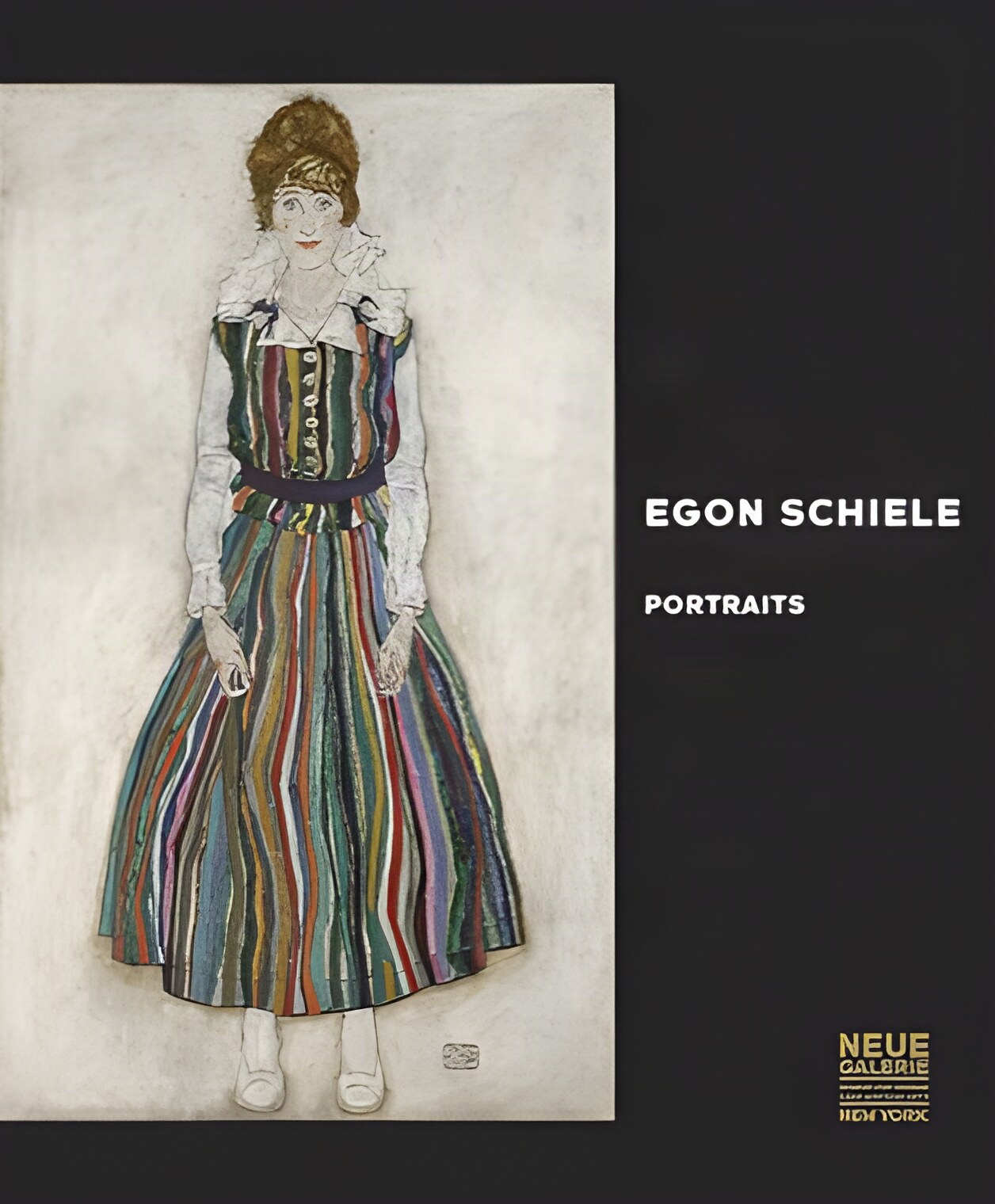
Hardcover. Munich/NY, Prestel, 1st, 2014, Book: Very Good, Dust Jacket: Very Good, Hardcover in a bright dust jacket, 296 pages, color illustrations and portraits throughout. Issued in conjunction with a 2014-2015 exhibition of portraiture rendered by Austrian painter Egon Schiele (1890-1918). "Despite a career that lasted less than a decade, Schiele is considered one of the most important artists of the twentieth century. A protege of Gustav Klimt, Schiele is celebrated for his singular style of draftsmanship, unusual use of color, and physically raw, often sexually provocative depictions of his sitters. Schiele's expressive style and controversial subject matter played an important role in the advancement of modernism in Europe. ... Both the catalogue and the exhibition are divided into six groupings of the artist's work: Family and Academy; Fellow Artists; Sitters and Patrons; Eros; Lovers; and Self-Portraits and Allegorical Self-Portraits. In addition, there is a section highlighting a traumatic and pivotal period in Schiele's life: his arrest and imprisonment during the spring of 1912. The color plates document the evolution of the artist's style, both pre- and post-imprisonment. Schiele's untimely death at the age of 28 adds a mythic quality to his abbreviated career." (dj) With five thematic and illustrated essays, and many illustrations. Clean copy.

 "Creating a World on Paper: Harry Fenn's Career in Artby: Rainey, Sue")


 "Cultures of United States Imperialism by: Kaplan, Amy and Donald E Pease (Editors)")
 "Czech Photographic Avant-Garde, 1918-1948by: Birgus, Vladimir (Editor)")


 "De Oorlog In Prent / Karikaturen Uit De Versehillende Landenby: Feith, Jan")
 "De Wereld Waar ik Buiten Sta: Oorlogsdagboek 1940-1945 (Dutch Edition)by: Michaelis, Hanny")
 "Des Photographes Et Parisby: Paviot, Francoise")
 "Designed to Sell: Turn-Of-The Century American Posters in the Virginia Museum of Fine Artsby: Frederick R. Brandt , Robert Koch, et al.")
 "Disguised and Overt Spinozism around 1700: Papers presented at the international colloquium held at Rotterdam 5-8 October 1994by: Bunge, Wiep van & Wim Klever (Ed.)")

 "Donald and Dorothyby: Dodge, Mary Mapes")
 "Dress in Eighteenth Century Europe 1715-1789by: Ribeiro, Aileen")

 "E. O. Hopp")
 "Early Tonga As the Explorers Saw It, 1616-1810by: Ferdon, Edwin N.")


 "Echoes of Old Florence: Her Palaces and those who have lived in themby: Leader, Scott")
 "Edith Halpert: The Downtown Gallery and the Rose of American Artby: Shaykin, Rebecca")
 "Edward Sapir. Linguist Anthropologist Humanistby: Darnell, Regna")