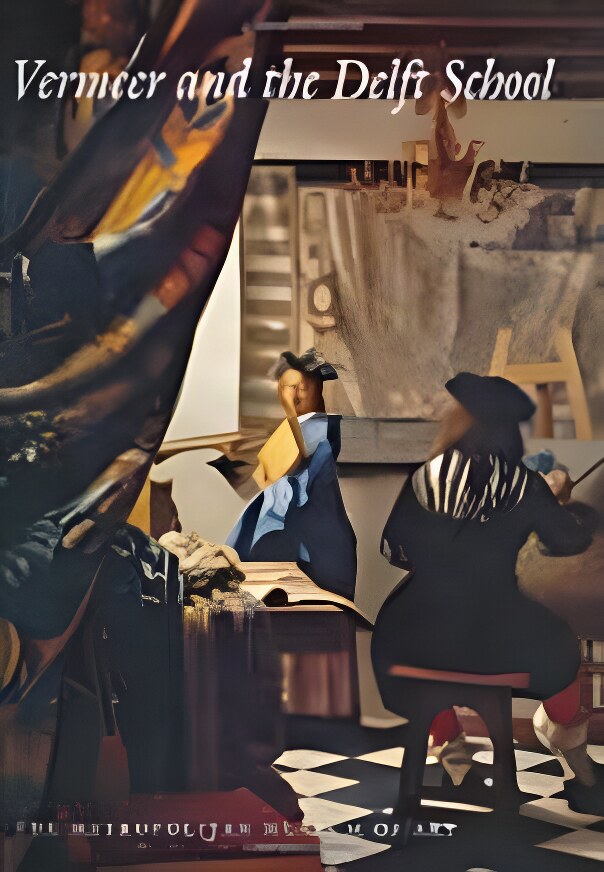
Hardcover. NY, Metropolitan Museum of Art, 1st, 2001, Book: Very Good, Dust Jacket: Very Good, Hardcover in a bright dust jacket, still sealed in publisher's shrinkwrap. 550 pages. Seventeenth-century Delft has traditionally been viewed as a quaint town whose artists painted scenes of domestic life. This important book revises that image, showing that the small but vibrant Dutch city produced fine examples of all the major arts--including luxury goods and sophisticated paintings for the court at The Hague and for patrician collectors in Delft itself. The book traces the history and culture of Delft from the 1200s through the lifetime of the city's most renowned painter, Johannes Vermeer. The authors discuss at length some ninety major paintings (seventeen by Vermeer), forty drawings, and a choice selection of decorative arts, all of which are reproduced in full color. Among the paintings are state portraits, history pictures, still lifes, views of palaces and church interiors, illusionistic murals, and refined genre pictures by Vermeer and Pieter de Hooch. The rich works on paper encompass exquisite drawings by Delft artists and sketches of the town by visiting artists. Included in the decorative arts are tapestries, bronze statuary, silver, Delftware, and glass. The volume concludes with an essay that takes the reader on a walk through seventeenth-century Delft. It is accompanied by maps of the city's neighborhoods that indicate major monuments and the homes of patrons, art dealers, and painters.
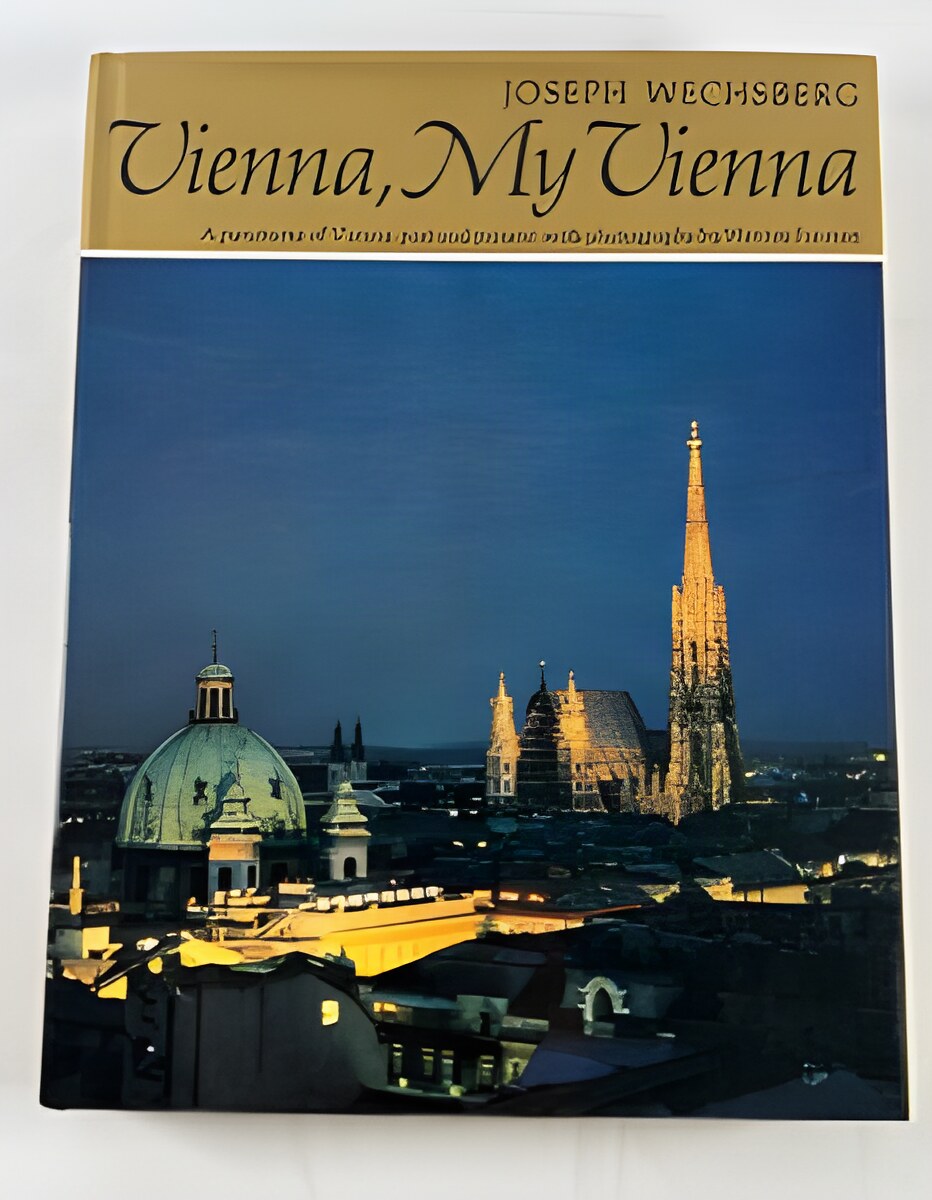
Hardcover. NY, Macmillan, 1st, 1968, Book: Very Good, Dust Jacket: Very Good, Hardcover in a bright, unclipped dust jacket. 300 pages, 136 b&w photographs by Werner Forman, 12 in color. "Vienna, as everyone knows, is the city of music, and Joseph Wechsberg's lively book evokes the music of the city, the popular music of the Strauss family and of the Heuringer-singers, the great music of the Classical masters, the soft sound of Viennese speech and the harmony of the baroque city set in the unspoiled beauty of the Vienna Woods...[Wechsberg] reveals the Vienna of the Viennese, not always glamorous, sometimes a little shabby, but a city of living people to whom the past is a reality, who have bred or entertained many of the greatest masters of European music and poetry." Clean copy.
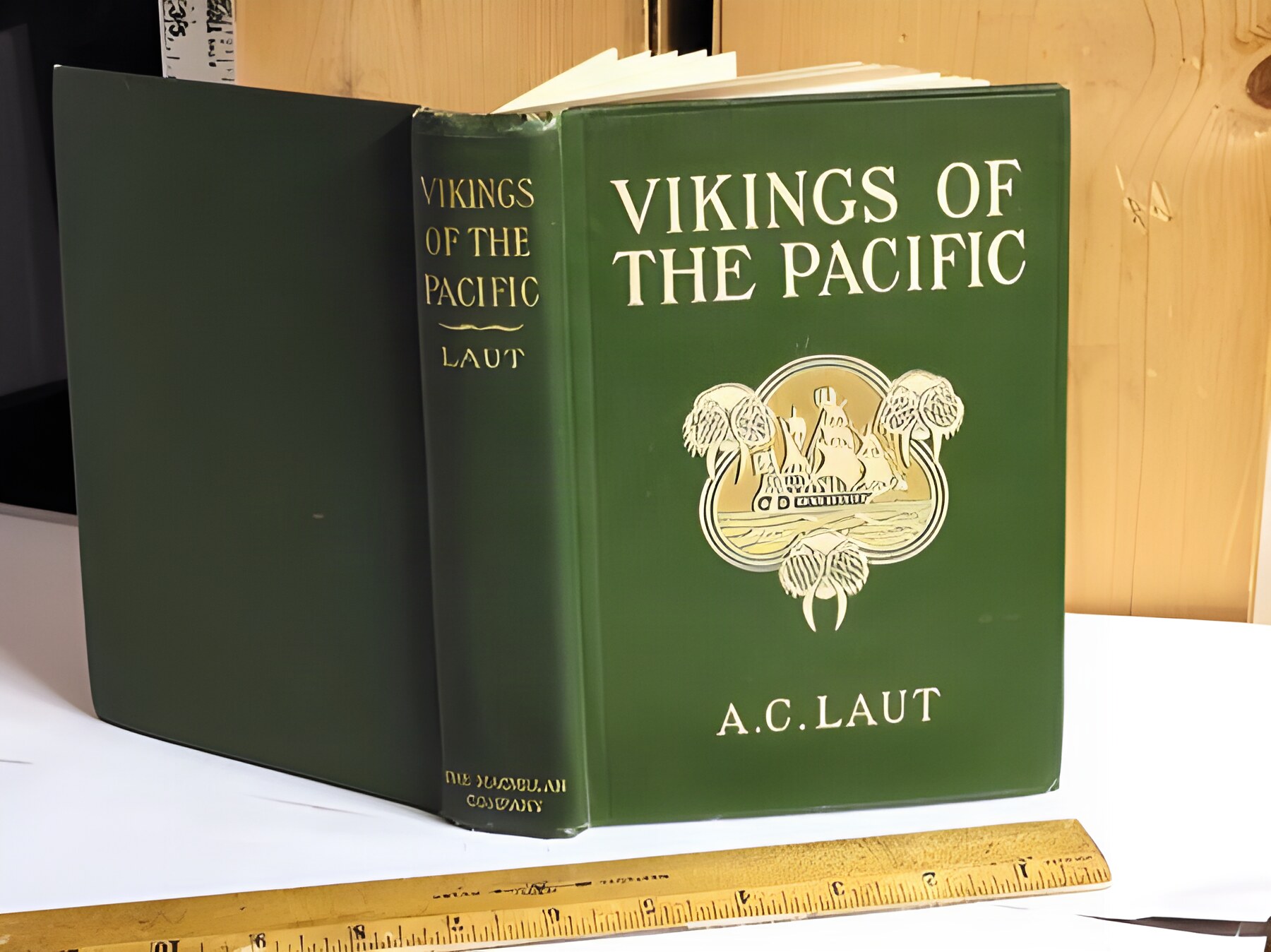
Hardcover. NY, Macmillan, 1st, 1905, Book: Very Good, Dust Jacket: None, Hardcover, green cloth stamped in white and gilt, 349 pages, b&w illustrations, top edge gilt. Chronicles the daring explorers who crossed oceans from the West to the far shores of the North Pacific. From the dawn of Russian and European ambitions to the first American and British voyages, the book weaves together the lives, motives, and trials of men who chased a sea of unknowns. It presents a vivid look at discovery, rivalry, and the costs of pushing beyond the maps. Drawing on primary sources, Laut illustrates the fierce competition for discovery and dominance in the fur trade among these intrepid adventurers. Previous owner's signature on front fly leaf, mild wear to top of spine, otherwise a clean, tight copy.
Hardcover. New York, Princeton Architectural Press, 1st, 2003, Book: Very Good, Dust Jacket: Very Good, 152 pages. Hardcover with dust jacket. Minor soiling to front cover of dust jacket. An otherwise clean, unmarked copy with only minor wear to dust jacket edges. Color illustrations throughout. A tight copy. "A collection of exquisite large-format pen-and-ink watercolor renderings of all of Palladio's villas."
Softcover. New York, Guggenheim Museum, 1st, 1997, Book: Very Good, Dust Jacket: None, 147 pages. Softcover. Full color illustrations. Light bump to top right corner. Clean, unmarked copy.
Hardcover. New York, Harry N. Abrams, 1st, 2015, Book: Very Good, Dust Jacket: None, 160 pages. Hardcover with no dust jacket. Clean, unmarked copy with only minor wear to boards. Color and black and white pictures throughout. Originally born in Algeria, Yves Saint Laurent moved to Paris when he was 18, and only three years later he was handpicked by Christian Dior to take the reins as designer of his fashion house. Over time, Saint Laurent resurrected haute couture from the casual mores that predominated in the 1960s, but also offered chic cachet to ready-to-wear clothing. He was among the earliest of designers to incorporate non- European references into his work, and in 1983 he became the first living designer to be feted with a solo exhibition at The Metropolitan Museum of Art in New York. Vogue on Yves Saint Laurent is a stellar volume in the series from the editors of British Vogue, featuring 20,000 words of original biography and history and studded with more than 80 images from their unique archive of images taken by leading photographers.
Hardcover. Honolulu, University of Hawaii, 1st, 2002, Book: Very Good, Dust Jacket: Very Good, Hardcover, 250 pages with 160 color and 20 black & white photographs of the elaborately carved and costumed puppets and portraits of the master puppeteers and carvers, list of Wayang characters, glossary, bibliography. Indonesia's wayang golek puppet theatre is among the world's oldest and richest puppetry traditions, contemporary with Japanese Noh drama and the mystery plays of Europe. In an unclipped dust jacket with some light fading to spine.
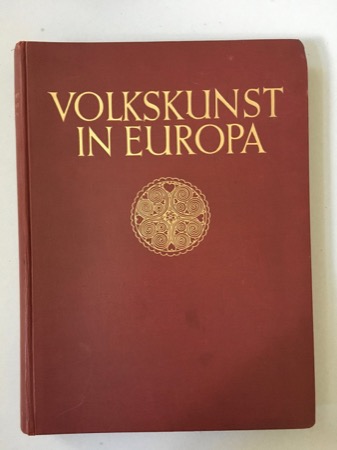
Hardcover. NY, E. Weyhe, 1st US, Book: Very Good, Dust Jacket: None, Hardcover, large folio, ( over 12" - 15" tall ), red cloth stamped in gilt. 56 pages of German text, comprising introduction and detailed catalogue of plates, the origins of objects (textiles, ceramics and wood) which demonstrate the origins and continued use of traditional design in the folk arts of Europe. Followed by 132 color plates of the objects mostly from Eastern Europe, most pasted in. First published in Germany in 1926, this appears to be the first US edition produced the same year. Architect Albert Kahn's copy with his ownership signature in pencil and date of 1926 on the front fly leaf. DOMESTIC SHIPPING ONLY.
Hardcover. NY, Grove Press, 1st US, 2005, Book: Very Good, Dust Jacket: Very Good, Hardcover in a bright, unclipped dust jacket. In 1753, Voltaire -- playwright, poet, philosopher, and one of the most feted figures in Europe -- was forced by Louis XV into exile, where he remained for the last twenty-five years of his life. These years heralded a startling new beginning for this remarkable man. Voltaire carved out a new and vibrant world in his isolation, becoming a successful entrepreneur and writing his masterpiece Candide. In Voltaire in Exile, Ian Davidson re-creates this period in the life of one of the giants of the Enlightenment. By painstakingly translating the rich correspondence between Voltaire and his family, members of the Court at Versailles, and the French intellectual elite, Davidson allows us to discover Voltaire the artist, the campaigner, the aesthete, the lover, the humorist. The result is a wonderfully vivid portrait of this extraordinarily funny, iconoclastic, complex, and, above all, ferociously intelligent individual. Clean copy.
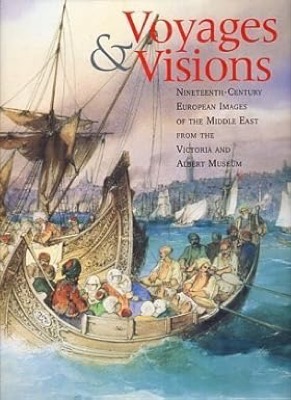
Hardcover. Smithsonian Institution / Victoria and Albert Museum, 1st, 1995, Book: Very Good, Dust Jacket: Very Good, Hardcover in a bright dust jacket. Eighty-two watercolors and drawings selected from the extensive Searight Collection in London present a variety of 19th-century artists' encounters with the diverse cultures and dramatic lands of the fabled Ottoman Empire. Complementing the artworks are essays by experts in Middle Eastern studies elucidating the exchange of ideas and influences between East and West. Artists include Edward Lear, Luigi Meyer, David Roberts etc. 128 pages. Clean copy.
Hardcover. New York, Frances Foster Books/Farrar Straus and Giroux, 1st, 2007, Book: Very Good, Dust Jacket: Very Good, Hardcover in a very good dust jacket. Non-paginated. SIGNED WITH DRAWING BY PETER SIS ON COPYRIGHT PAGE. Full color illustrations. Clean, bright copy.
Hardcover. New York , Farrar Straus Giroux , 1st, 2007, Book: Very Good, Dust Jacket: Very Good, Non-paginated. Hardcover with dust jacket. Theft protection sticker on front fly leaf. Clean, tight copy otherwise. Color illustrations by Sis.
Softcover. Cambridge MA, Harvard University Press, 1st pbk, 2014, Book: Very Good, Dust Jacket: None, Softcover, 755 pages. Walter Benjamin is one of the twentieth century's most important intellectuals, and also one of its most elusive. His writings-mosaics incorporating philosophy, literary criticism, Marxist analysis, and a syncretistic theology-defy simple categorization. And his mobile, often improvised existence has proven irresistible to mythologizers. His writing career moved from the brilliant esotericism of his early writings through his emergence as a central voice in Weimar culture and on to the exile years, with its pioneering studies of modern media and the rise of urban commodity capitalism in Paris. That career was played out amid some of the most catastrophic decades of modern European history: the horror of the First World War, the turbulence of the Weimar Republic, and the lengthening shadow of fascism. Now, a major new biography from two of the world's foremost Benjamin scholars reaches beyond the mosaic and the mythical to present this intriguing figure in full. Clean copy.
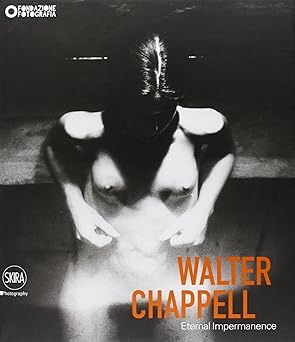
Hardcover. NY, Skira, 1st, 2013, Book: Very Good, Dust Jacket: Very Good, Hardcover in a bright dust jacket, 224 pages. A splendid monograph on an unconventional photographer who developed a unique and deeply personal vision of the world surrounding him. Walter Chappell (1925-2000) is considered one of the foremost figures in twentieth-century American photography. His thinking and vision of the world were closely connected with the intimistic, spiritual explorations undertaken between the 1950s and the 1970s by artists like Minor White and Paul Caponigro. While Chappell photographed various subjects, his inner eye was stimulated in particular by the form of the human body and landscapes as well as the combination of both, through which he endeavored to perceive the creative flow, the energy that runs through and connects all things. Produced to accompany the first major European retrospective of Walter Chappell's work, this catalog presents over 130 photographs, all originals, as well as the unfinished and previously unpublished album World of Flesh, which the photographer intended as the primary publication on his work. Clean copy.
Softcover. NY, Palgrave Macmillan, reprint, 2002, Book: Very Good, Dust Jacket: None, Softcover, 270 pages, b&w illustrations. The career of Norton and Margot, a ballroom dance team whose work was thwarted by the racial tenets of the era, serves as the barometer of the times and acts as the tour guide on this excursion through the worlds of African American vaudeville, black and white America during the swing era, the European touring circuit, and pre-Civil Rights era racial etiquette. Clean copy.
Softcover. New Haven CT, Yale University Press, reprint, 1996, Book: Very Good, Dust Jacket: None, Softcover, 292 pages. This fascinating book examines Western perceptions of war in and beyond the nineteenth century, surveying the writings of novelists, anthropologists, psychiatrists, poets, natural scientists, and journalists to trace the origins of modern philosophies about the nature of war and conflict. Daniel Pick compares philosophical and historical models of conflict with fictions of invasion and biological speculation about the nature and value of conquest. He discusses the work of such familiar commentators on war as Clausewitz, Engels, and von Bernhardi, and examines little-known writings by Proudhon, De Quincey, Ruskin, Valery, and many others. He explores nineteenth-century English fears of French contamination through the Channel Tunnel and the widespread continuing dread of German domination. And he analyzes the history of the widely-shared European belief that war is beneficial or at least functionally necessary. Clean copy.
Hardcover. NY, Thames and Huson, 1st, 2007, Book: Very Good, Dust Jacket: Very Good, Hardcover, 256 pages. Published to accompany an exhibition at London's Imperial War Museum, this book features more than 250 superb full-color illustrations of hard-hitting propaganda and groundbreaking graphic art. It encompasses iconic images such as Alfred Leete's "Your Country Needs You" as well as additional material drawn from the world of advertising and documentary photographs of posters in situ. Through posters, the author examines the social, political, ethnic, and cultural aspirations of America, Britain, Ireland, Germany, France, the Netherlands, Belgium, Russia, Austria, Hungary, and the Czech Republic. Covering topics as diverse as advertising in World War I, the Bolshevik Revolution, the Spanish Civil War, Germany and Occupied Europe in World War II, anti-nuclear campaigns, and Vietnam, the book is comprehensive and highly analytical, yet accessible. 300 illustrations, 250 in color.
Hardcover. Barnsley UK, Pen & Sword Books, 1st, 2012, Book: Very Good, Dust Jacket: Very Good, Hardcover, 155 pages., b/w plates., maps, index, This remarkable account describes the open warfare Polish Underground fighters waged against the Nazi occupiers of their city-with a shortage of arms, ammunition, and medical support-in the expectation of Soviet assistance that came too late to help the precipitous uprising.
Hardcover. Chicago, University Of Chicago Press, 1st, 2006, Book: Very Good, Dust Jacket: Very Good, Hardcover, pages. In When Buildings Speak,Anthony Alofsin explores the rich yet often overlooked architecture of the late Austro-Hungarian Empire and its successor states. He shows that several different styles emerged in this milieu during the late nineteenth and early twentieth centuries. Moreover, he contends that each of these styles communicates to us in a manner resembling language and its particular means of expression. Covering a wide range of buildings--from national theaters to crematoria, apartment buildings to warehouses, and sanatoria to postal savings banks--Alofsin proposes a new way of interpreting this language. He calls on viewers to read buildings in two ways: through their formal elements and through their political, social, and cultural contexts. By looking through Alofsin's eyes, readers can see how myriad nations sought to express their autonomy by tapping into the limitless possibilities of art and architectural styles. And such architecture can still speak very powerfully to us today about the contradictory issues affecting parts of the former Habsburg Empire.
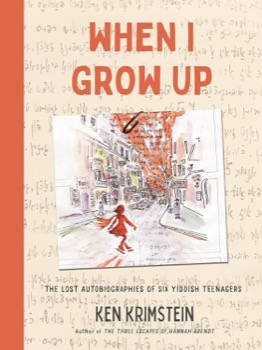
Hardcover. NY, Bloomsbury Publishing, 2nd pr., 2021, Book: Very Good, Dust Jacket: None, Hardcover, pictorial boards with orange cloth spine. 232 pages. From the prize-winning author of The Three Escapes of Hannah Arendt, a stunning graphic narrative of newly discovered stories from Jewish teens on the cusp of WWII.When I Grow Up is New Yorker cartoonist Ken Krimstein's new graphic nonfiction book, based on six of hundreds of newly discovered, never-before-published autobiographies of Eastern European Jewish teens on the brink of WWII-found in 2017 hidden in a Lithuanian church cellar. These autobiographies, long thought destroyed by the Nazis, were written as entries for three competitions held in Eastern Europe in the 1930s, just before the horror of the Holocaust forever altered the lives of the young people who wrote them.
Hardcover. NY, Metro Books, 1st, 1998, Book: Very Good, Dust Jacket: Very Good, Hardcover in a bright dust jacket. The late nineteenth century brought a transportation explosion in North America and Europe, much of it produced by the steam engine, which by that time had become strong and versatile enough to power ocean-crossing vessels and large freight trains. Where Rails Meet the Sea tells the exciting story of how the transportation industry was revolutionized by steam power and how the industry in turn changed the face of the world. Written by an expert in the history of ships and trains and heavily illustrated throughout in color and b&w.
Softcover. Hollywood CA, Paramount Pictures, N/A, 1981, Book: Very Good, Dust Jacket: None, Softcover, 117 pages plus additional revised pages in pink and blue at rear. Three-hole punched with two brads, plain yellow wrappers. Title page date is March 20, 1981, the revised pages dated 3/24/81 and 4/13/81. Print shop requisition for script dated 4/15/81 and signed for approval by Jeff Katzenberg. Light soil to wrappers otherwise clean, very good. The film was completed in 1981 and only had limited exposure in the U.S. because of it's controversial nature but was distributed in 1983 in Europe. Criterion released the DVD in 2008 in it's original uncut version.
Hardcover. New York, Alfred A. Knopf, 1st, 1956, Book: Very Good, Dust Jacket: Good, Hardcover, 178 pages. Dust jacket slightly worn and with short tears. Some foxing on endpages, top edge stained red.
Hardcover. Boston, Little Brown, reprint, 1913, Book: Very Good, Dust Jacket: None, Hardcover, maroon cloth with gilt lettering on spine. 470 pages with index, b&w frontis of an English church. A detailed history of the Willard family first published 1n 1848. Clean copy.



 "Villas of Palladio, Theby: Giaconi, Giovanni")
 "Vogue on Yves Saint Laurentby: Fraser-Cavassoni, Natasha")
 "Voices of the Puppet Masters: The Wayang Golek Theater of Indonesiaby: Herbert, Mimi")


 "Voltaire In Exile: The Last Years, 1753-78 by: Ian Davidson")
 "Wall, The - Growing Up Behind the Iron Curtain (SIGNED WITH DRAWING)by: Sis, Peter")
 "Wall, The: Growing Up Behind the Iron Curtainby: Sis, Peter")
 "Walter Benjamin: A Critical Lifeby: Eiland, Howard; /Jennings, Michael W.")

 "War Posters: Weapons of Mass Communicationby: James Aulich")
![Warsaw 1944: An Insurgent's Journal of the Uprisingby: Czajkowski, Zbigniew; Marek Czajkowski [trans.]](javascript:largeIMTop('https://www.browsingisarousing.com/shop/images/Warsaw-1944-An-Insurgents-Journal-of-the-Uprising_by_Czajkowski-Zbigniew-Marek-Czajkowski-trans.370433-385520.jpg','https://www.browsingisarousing.com/shop/images/Warsaw-1944-An-Insurgents-Journal-of-the-Uprising_by_Czajkowski-Zbigniew-Marek-Czajkowski-trans.370433-385520.jpg',0,'370433',0,'') "Warsaw 1944: An Insurgent's Journal of the Uprisingby: Czajkowski, Zbigniew; Marek Czajkowski [trans.]")
 "When Buildings Speak: Architecture as Language in the Habsburg Empire and Its Aftermath, 1867-1933by: Alofsin, Anthony")
 "Where Rails Meet the Sea: America's Connections Between Ships & Trains by: Krieger, Michael")
 "White Dog: Screenplay - Based on a Book by Romain Garyby: Fuller, Samuel and Curtis Hanson")
 "Willa Cather in Europe; Her Own Story of the First Journeyby: Cather, Willa")
 "Willard Memoir; or, Life and Times of Major Simon Willard: with Notices of Three Generations of His Descendants, and Two Collateral Branches in the United States; also, Some Account of the Name and Family in Europe, from an Early Day")