Hardcover. london, Reaktion Books, 1st, 2019, Book: Very Good, Dust Jacket: Very Good, Hardcover in a bright dust jacket, 444 pages, b&w illustrations. Show People offers a comprehensive history of the idea of the film star from Mary Pickford to Andy Serkis, traversing more than one hundred years and drawing on examples from America, Britain, Europe, and Asia. Renowned film writer Michael Newton explores our enduring love affair with fame, glamour, and the cinematic image. Newton builds up an expansive picture of movie stardom through explorations of striking and diverse figures such as Ingrid Bergman and John Wayne, Anna Karina and Sidney Poitier, Maggie Cheung, and Raj Kapoor. He celebrates the great performers of the past, and he looks forward to developments in the future, while also illuminating the inner workings of the movie industry and what moves us in a film and in an actor's performance. An encyclopedic, illustrated history of film idols ready for their close-ups, Show People is ultimately a book about cinephilia, the love of cinema, and our complex connection to that celebrated and beleaguered figure, the movie star. Clean, like new.
Hardcover. NY, Overlook Press, 1st, 2003, Book: Very Good, Dust Jacket: Very Good, Hardcover, 180 pages. Jeff Gusky, a doctor of emergency medicine, decided at the age of 42 that he wanted to better confront the reality of modern Jewish history. A self-taught photographer who subsequently learned to make museum quality prints, he bought what he calls "a good, journalist-type camera and some lenses" and traveled to Poland-once the home of the largest concentration of Diaspora Jews. He read the instruction manuals on the plane en route. Over four trips, accompanied each time by a top Polish guide, Gusky traveled through the country, beyond the city ghettos and the sites of concentration camps, into remote villages where Jews had lived and worked for almost 1,000 years before the Holocaust-capturing on film the austere landscapes and the remains of a once thriving Jewish culture. The silence is deafening: here are Jewish cemeteries full of broken gravestones, ruined synagogues filled with trash and disfigured with graffiti, a Jewish home now used as a public toilet-"where people lived, walked, worshipped, and were, ultimately, exterminated," says Gusky. The doleful, understated clarity of what he saw and photographed captures a poignant sense of loss-making at the same time an indelible connection to the past.
Hardcover. London, Thames and Hudson, 1st, 2015, Book: Very Good, Dust Jacket: Very Good, Hardcover in a bright dust jacket, 144 pages, Color photos by Ara Guller. Sinan was the greatest architect of the Ottoman Golden Age of the sixteenth century when the Ottoman Empire reached its zenith of power and magnificence. His style marks the apogee of Turkish art. Under Sleyman the Magnificent and his succcessor Selmi II, Sinan designed hundreds of buildings: mosques, palaces, tombs, mausolea, hospitals, schools, caravanserai, bridges, aqueducts and baths, many of them presented and analysed in this book. In his greatest works, he adapted Byzantine and Islamic styles to produce something quite new: a centralized organization of absolute space unhindered by pillars or columns and covered by a soaring dome. An architect of genius in a dynamic new empire expanding into both Asia and Europe, he was a true man of the Renaissance. Clean, bright copy.
Hardcover. NY, Knopf, 1st, 2012, Book: Very Good, Dust Jacket: Very Good, Hardcover in a bright, unclipped dust jacket. 418 pages, b&w illustrations. From the author of the best-selling One Minute to Midnight, a riveting account of the pivotal six-month period spanning the end of World War II, the dawn of the nuclear age, and the beginning of the Cold War. When Roosevelt, Stalin, and Churchill met in Yalta in February 1945, Hitler's armies were on the run and victory was imminent. The Big Three wanted to draft a blueprint for a lasting peace--but instead set the stage for a forty-four-year division of Europe into Soviet and western spheres of influence. After fighting side by side for nearly four years, their political alliance was rapidly fracturing. By the time the leaders met again in Potsdam in July 1945, Russians and Americans were squabbling over the future of Germany and Churchill was warning about an "iron curtain" being drawn down over the Continent. These six months witnessed some of the most dramatic moments of the twentieth century: the cataclysmic battle for Berlin, the death of Franklin Roosevelt, the discovery of the Nazi concentration camps, Churchill's electoral defeat, and the dropping of atomic bombs on Japan. While their armies linked up in the heart of Europe, the political leaders maneuvered for leverage: Stalin using his nation's wartime sacrifices to claim spoils, Churchill doing his best to halt Britain's waning influence, FDR trying to charm Stalin, Truman determined to stand up to an increasingly assertive Soviet superpower.
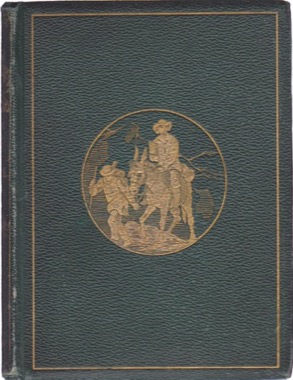
Hardcover. NY, Hurd and Houghton, 2nd Ed., 1869, Book: Very Good, Dust Jacket: None, Hardcover, dark green pebbled cloth with a gilt-stamped title on the spine and bright gilt illustration of the author riding a donkey on the front cover. Second Edition (first: 1868) of the American illustrator's trip to England and the Continent undertaken in 1867-68. 192 pages, 88 plates & text illus. (incl. frontis.) engraved on wood by J. Augustus Bogert & James L.Langridge after drawings by the author. Darley's volume is composed of excerpts from letters written home concerning his travels around the states and Europe. His sketches illuminate the scenes described in his letters. The final page is a charming self-portrait in miniature, of Darley tipping his cap to the reader for their time. A whimsical collection of brief travel vignettes. Inscribed on the first blank page. Bright copy in exceptional condition.
Hardcover. John L Caulon, 1st, 1880, Book: Very Good, Dust Jacket: None, 87 pages, brown cloth covers with gilt lettering on front. Previous owner's signature on front fly leaf otherwise clean, bright copy.
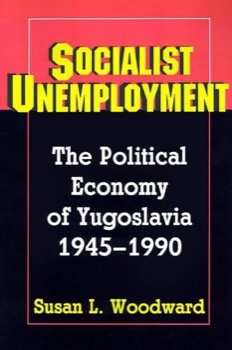
Softcover. Princeton NJ, Princeton University Press, 1st, 1995, Book: Very Good, Dust Jacket: None, Softcover, 443 pages. In the first political analysis of unemployment in a socialist country, Susan Woodward argues that the bloody conflicts that are destroying Yugoslavia stem not so much from ancient ethnic hatreds as from the political and social divisions created by a failed socialist program to prevent capitalist joblessness. Under Communism the concept of socialist unemployment was considered an oxymoron; when it appeared in postwar Yugoslavia, it was dismissed as illusory or as a transitory consequence of Yugoslavia's unorthodox experiments with worker-managed firms. In Woodward's view, however, it was only a matter of time before countries in the former Soviet bloc caught up with Yugoslavia, confronting the same unintended consequences of economic reforms required to bring socialist states into the world economy. Clean copy.

 "Show People: A History of the Film Starby: Michael Newton")
 "Silent Places: Landscapes of Jewish Life and Loss in Eastern Europeby: Gusky/Judith Miller, Jeffrey")
 "Sinan:Architect of Suleyman the Magnificent and the Ottoman Golden Ageby: Freely, John; Burelli, Augusto Romano")
 "Six Months in 1945: FDR, Stalin, Churchill, and Truman--from World War to Cold Warby: Michael Dobbs")