Hardcover. New Haven CT, Yale University Press, 1st, 2015, Book: Very Good, Dust Jacket: Very Good, Hardcover in a bright dust jacket. 282 pages, illustrated in b&w and color. Although Surrealism is usually associated with the 1920s and 1930s, it remained a vital force in Paris throughout the postwar period. This important book offers the first detailed account in English of the trajectory of the French Surrealists in the 1950s and 1960s, giving particular emphasis to the significance of myth for the group in its reception of science fiction and its engagement with fantastic art. Offering new readings of the art and writings of the later generation of Surrealists, Gavin Parkinson demonstrates how they were connected to the larger cultural and political debates of the time. Whereas earlier Surrealist art and writing drew on psychoanalytic practices, younger Surrealists engaged with contemporary issues, ideas, and themes of the period of the Cold War and Algerian War such as parapsychology, space travel, fantastic art, increasing consumerism in Europe, emerging avant-gardes such as Nouveau Realisme, and the rise of the whole genre of conspiracy theory, from Nazi occultism to flying saucers. Futures of Surrealism offers a unique perspective on this brave new world. Clean copy.
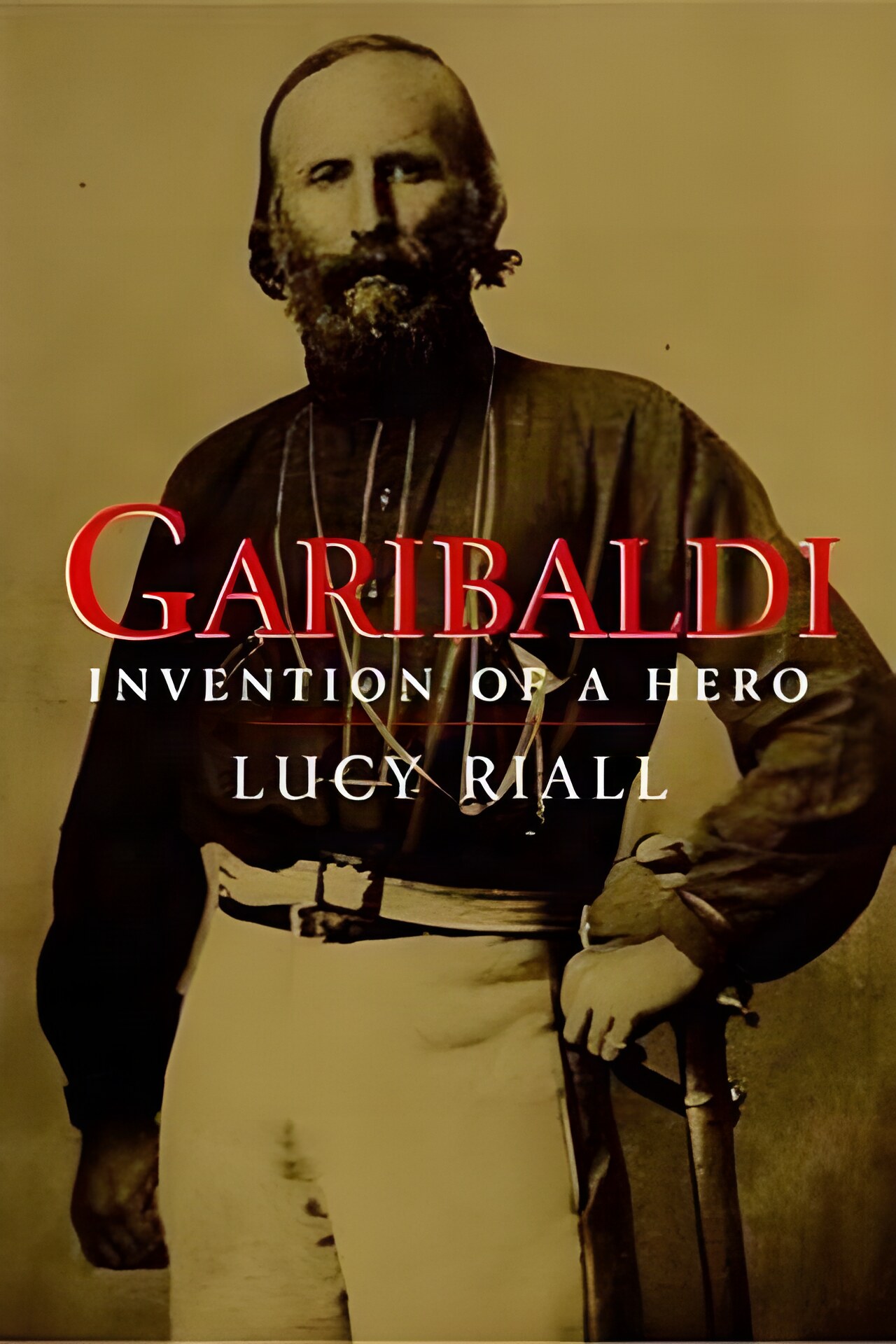
Hardcover. New Haven CT, Yale University Press, 1st, 2007, Book: Very Good, Dust Jacket: Very Good, Hardcover in a bright dust jacket, 482 pages with index. The first sustained analysis of the cult of the legendary Italian hero Giuseppe Garibaldi, the Italian revolutionary leader and popular hero, was among the best-known figures of the nineteenth century. This book seeks to examine his life and the making of his cult, to assess its impact, and understand its surprising success. For thirty years Garibaldi was involved in every combative event in Italy. His greatest moment came in 1860, when he defended a revolution in Sicily and provoked the collapse of the Bourbon monarchy, the overthrow of papal power in central Italy, and the creation of the Italian nation state. It made him a global icon, representing strength, bravery, manliness, saintliness, and a spirit of adventure. Handsome, flamboyant, and sexually attractive, he was worshiped in life and became a cult figure after his death in 1882. Lucy Riall shows that the emerging cult of Garibaldi was initially conceived by revolutionaries intent on overthrowing the status quo, that it was also the result of a collaborative effort involving writers, artists, actors, and publishers, and that it became genuinely and enduringly popular among a broad public. 33 b&w illustrations.
Softcover. Baltimore, Clearfield, reprint, 2000, Book: Very Good, Dust Jacket: None, Softcover, light gray wrappers, 278 pages. This volume consists of abstracts of genealogical data from four of New York's earliest newspapers--the New-York Gazette (1726-1744) and the New-York Weekly Journal (1733-1751), the two earliest city papers, and the New-York Mercury and the Weekly Mercury (1752-1783). These newspapers were originally produced as weeklies and usually consisted of four pages, with occasional supplementary issues. Their subject matter encompassed essays, treatises, parliamentary proceedings, governors' messages, European and West Indian news, shipping news, incidents culled from other newspapers, and many advertisements. In this volume of abstracts may be found items yielding information concerning marriage, birth, death, age, status, place of residence, and place of origin, covering, in all, the years 1726 through most of 1783. Treatment is not confined to New York, for among individuals mentioned are those from all the other colonies, especially New Jersey (which had no newspaper in the colonial period), New England, Pennsylvania, and Maryland.
Hardcover. Boston, Houghton Mifflin, 1st, 1994, Book: Very Good, Dust Jacket: Very Good, Hardcover on a lightly worn dust jacket, 641 pages, b&w illustrations. This is the first full-length biography of the man historian Michael Beschloss calls the keystone figure in the history of American intelligence. Allen Dulles (1893-1969) served in the Office of Strategic Services in Europe during WWII and was named director of the Central Intelligence Agency in 1953, serving under Eisenhower and Kennedy. In an overlong, sometimes tedious narrative, Grose (Israel in the Mind of America) describes how Dulles oversaw the firm establishment of the CIA in the Washington power structure during the Eisenhower years (his older brother, John Foster Dulles, was then the Secretary of State), only to be forced out after the CIA's failure in the 1961 Bay of Pigs invasion. Later appointed to the Warren Commission to investigate the assassination of President Kennedy, Dulles became its most diligent member, according to Grose, and a supporter of the view that Lee Harvey Oswald acted alone. Other controversial issues explored include Dulles's exploitation of ex-Nazi Reinhard Gehler's spy network in the early years of the Cold War, and whether JFK authorized, or even knew about, CIA attempts to liquidate Castro. Grose delves unenlighteningly into Dulles's shortcomings as husband and father; he kept a mistress or two and spent little time at home.
Hardcover. NY, Harper, 1st, 2014, Book: Very Good, Dust Jacket: Very Good, Hardcover in a bright, unclipped dust jacket. A major historical biography of George C. Marshall--the general who ran the U.S. campaign during the Second World War, the Secretary of State who oversaw the successful rebuilding of post-war Europe, and the winner of the Nobel Peace Prize--and the first to offer a complete picture of his life. While Eisenhower Patton, Bradley, Montgomery, MacArthur, Nimitz, and Leahy waged battles in Europe and the Pacific, one military leader actually ran World War II for America, overseeing personnel and logistics: Chief of Staff of the U.S. Army from 1939 to 1945, George C. Marshall. This interpretive biography of George C. Marshall follows his life from his childhood in Western Pennsylvania and his military training at the Virginia Military Institute to his role during and after World War II and his death in 1959 at the age of seventy-eight. It brings to light the virtuous historical role models who inspired him, including George Washington and Robert E. Lee, and his relationships with the Washington political establishment, military brass, and foreign leaders, from Harry Truman to Chiang Kai-shek. It explores Marshall's successes and failures during World War II, and his contributions through two critical years of the emerging Cold War--including the transformative Marshall Plan, which saved Western Europe from Soviet domination, and the failed attempt to unite China's nationalists and communists.
Hardcover. New York , George H. Doran, unknown, ND, Book: Very Good, Dust Jacket: None, Hardcover, red cloth, 249 pages. Faint foxing to edges, Previous owner's inscription on front end paper, else a clean, tight copy.
Hardcover. London, Hamish Hamilton, 1st, 2008, Book: Very Good, Dust Jacket: Very Good, Hardcover, 496 pages. SIGNED BY THEROUX on title page. In 1975 a young and ambitious writer named Paul Theroux made his literary mark by taking the 28,000-mile intercontinental journey via rail from London to Tokyo and back home again. Thirty years later, an older and wiser Theroux decided to retrace his steps. The result is Ghost Train to the Eastern Star, a fascinating account of the places you vaguely knew existed, yet definitely should know something about. Get on board Theroux's fast-moving travelogue, which features some of the most astute commentary on our distorted notions of time, space, and each other in the age of jet speed, broadband connections, and cultural extinction. A railway journey through Eastern Europe, India, and Asia. Clean copy
Hardcover. New York, Kennedy Galleries, Inc., & Da Capo Press, reprint, 1969, Book: Very Good, Dust Jacket: None, Biography of painter Gilbert Stuart. Contains 7 black/white illustrations; 6 are reproductions of Stuart's work, and one is a portrait of the artists himself. Very good condition; brown cloth with gilt lettering, corner of the back cover bumped. This edition is an unabridged republication of the first edition published in Cambridged, Massachusetts, in 1932. It is reprinted by arrangement with Harvard University Press.
Hardcover. NY, Farrar, Straus and Giroux, 2nd pr., 2008, Book: Very Good, Dust Jacket: Very Good, Hardcover in a bright dust jacket, 335 pages. Giordano Bruno is one of the great figures of early modern Europe, and one of the least understood. Ingrid D. Rowland's pathbreaking life of Bruno establishes him once and for all as a peer of Erasmus, Shakespeare, and Galileo, a thinker whose vision of the world prefigures ours. By the time Bruno was burned at the stake as a heretic in 1600 on Rome's Campo dei Fiori, he had taught in Naples, Rome, Venice, Geneva, France, England, Germany, and the Prague of Emperor Rudolph II. His powers of memory and his provocative ideas about the infinity of the universe had attracted the attention of the pope, Queen Elizabeth and the Inquisition, which condemned him to death in Rome as part of a yearlong jubilee. Writing with great verve and sympathy for her protagonist, Rowland traces Bruno's wanderings through a sixteenth-century Europe where every certainty of religion and philosophy had been called into question and shows him valiantly defending his ideas (and his right to maintain them) to the very end. Clean copy.
Hardcover. Beach Lloyd Publishers, 2nd Ed., 2008, Book: Very Good, Dust Jacket: None, Hardcover. pictorial boards, 142 pages. SIGNED BY AUTHOR on the title page. I had all kinds of courage and guts; I don t know where that came from, says Fernande Keufgens Davis ( Freddie ) of the risks that she took as a teenager in the Belgian Resistance of World War II. After the shock of finding her formerly occupied village annexed as part of Germany, Davis was drafted to work in a German munitions factory. Determined not to aid the enemy, she jumped from the train and went underground. Clean copy.
Hardcover. Dublin, Dolmen Editions, First Edition, 1977, Book: Very Good, Dust Jacket: None, 78 pages. Hardcover. Limited to 650 copies. Black cloth boards with white printed decoration & white titles to spine. Ink paintings by Louis le Brocquy in black & white throughout. Previous owner's bookplate to front endpaper. Clean, unmarked, tight copy. No dust jacket.
Hardcover. New York, Other Press, 1st US, 2002, Book: Very Good, Dust Jacket: Very Good, 584 pages. Hardcover with dust jacket. A very clean, unmarked copy with only minor wear to dust jacket edges. SIGNED BY AUTHOR ON TITLE PAGE. Publishers note within. A tight copy.
Hardcover. NY, Metropolitan Museum of Art, 1st, 1986, Book: Very Good, Dust Jacket: Very Good, Hardcover, 499 pages, profusely illustrated throughout with 562 plates, including 148 in full color. Previous owner's blind stamp on front end paper. Light shelf-wear to dust jacket, else a clean, tight copy.
Hardcover. New York, Harry N. Abrams, Inc., 1st English, 1972, Book: Very Good, Dust Jacket: Very Good, 527 pages. Hardcover. Previous owners name and brief inscription on front endpaper. Illustrated with black & white photographs. Dust jacket with light wear. Clean, tight copy.
Hardcover. San Marino CA, The Huntington Library, 1st, 2015, Book: Very Good, Dust Jacket: Very Good, Hardcover in a bright dust jacket, 326 pages, b&w illustrations. Early modern European governments and their subjects had difficulty agreeing to laws governing behavior on the sea - an environment that featured watery borders, rampant piracy, the threat of free trade, and the large-scale transportation of human cargo. The essays in this volume explore how the exploitation of the oceans changed the institution of slavery, long-distance trade, property crime, the environment, literature, and memory from medieval times to the nineteenth century. Clean copy.
Softcover. Zurich, Graphis Press, 1st, 1976, Book: Very Good, Dust Jacket: None, English, German and French text. B&w and color illustrations. Very good. Swiss Posters 1976. Kodak Colour Calender Contest, 1977. Fred Otnes. 1.international Animated Film Festival in Ottawa. Trends in Jewellery Design in Europe.
Hardcover. New York, Farrar, Straus and Giroux, 1st, 2003, Book: Near Fine, Dust Jacket: Near Fine, 278 pages, very clean and tight copy.The Great Fire was the winner of the 2003 National Book Award for Fiction. More than twenty years after the classic The Transit of Venus, Shirley Hazzard returns to fiction with a novel that in the words of Ann Patchett "is brilliant and dazzling..." The Great Fire is an extraordinary love story set in the immediate aftermath of the great conflagration of the Second World War. In war-torn Asia and stricken Europe, men and women, still young but veterans of harsh experience, must reinvent their lives and expectations, and learn, from their past, to dream again. Some will fulfill their destinies, others will falter. At the center of the story, a brave and brilliant soldier finds that survival and worldly achievement are not enough. His counterpart, a young girl living in occupied Japan and tending her dying brother, falls in love, and in the process discovers herself.
Hardcover. New York, Tim Duggan Books, 1st, 2017, Book: Very Good, Dust Jacket: Very Good, Hardcover, 248 pages, b&w illustrations. The first great portrait photographer, a pioneering balloonist, the first person to take an aerial photograph, and the prime mover behind the first airmail service, Nadar was one of the original celebrity artist-entrepreneurs. A kind of 19th-century Andy Warhol, he knew everyone worth knowing and photographed them all, conferring on posterity psychologically compelling portraits of Manet, Sarah Bernhardt, Delacroix, Daumier and countless others--a priceless panorama of Parisian celebrity. Born Gaspard-Felix Tournachon, he adopted the pseudonym Nadar as a young bohemian, when he was a budding writer and cartoonist. Later he affixed the name Nadar to the facade of his opulent photographic studio in giant script, the illuminated letters ten feet tall, the whole sign fifty feet long, a garish red beacon on the boulevard. Nadar became known to all of Europe and even across the Atlantic when he launched "The Giant," a gas balloon the size of a twelve-story building, the largest of its time. With his daring exploits aboard his humongous balloon (including a catastrophic crash that made headlines around the world), he gave his friend Jules Verne the model for one of his most dynamic heroes.
Hardcover. Great Britain, Octopus Publishing Group, Reprint, 2010, Book: Very Good, Dust Jacket: None, 192 pages. Softcover, French Flaps. color illustrations throughout. Text and photography by Dan Lepard. Binding tight. Pages clean and bright. Wrapper glossy, very good. A collection of recipes, personal stories and photographs that capture the breads and home bakers of Europe.
Softcover. Princeton NJ, Princeton University Press, 2nd pr., 1997, Book: Very Good, Dust Jacket: None, Softcover in pictorial wrappers, 255 pages. Color and black and white illustrations throughout. Second paperback printing. Bright and clean. Hans Holbein the Younger (1497/8-1543), one of the most versatile and admired painters of the Northern Renaissance, trained under his father in Augsburg and then worked for leading patrons in Switzerland before settling in England as Court Painter to Henry VIII. To commemorate the five-hundredth anniversary of the artist's birth, Oskar Batschmann and Pascal Griener offer this richly illustrated book the first comprehensive monograph on the artist to appear in more than forty years which is a major advance in our understanding of Holbein's contribution to European art.
Softcover. NY, Oxford University Press, 3rd pr., 2005, Book: Very Good, Dust Jacket: None, Softcover, 311 pages. Criminal punishment in America is harsh and degrading--more so than anywhere else in the liberal west. Executions and long prison terms are commonplace in America. Countries like France and Germany, by contrast, are systematically mild. European offenders are rarely sent to prison, and when they are, they serve far shorter terms than their American counterparts. Why is America so comparatively harsh? In this novel work of comparative legal history, James Whitman argues that the answer lies in America's triumphant embrace of a non-hierarchical social system and distrust of state power which have contributed to a law of punishment that is more willing to degrade offenders.
Hardcover. Cambridge, U.K. ; New York, Cambridge University Press, 1st, 2001, Book: Very Good, Dust Jacket: Very Good, Hardcover, 442 pages. Light shelf-wear to dust jacket with slight sun-fade on spine. Clean, tight copy.
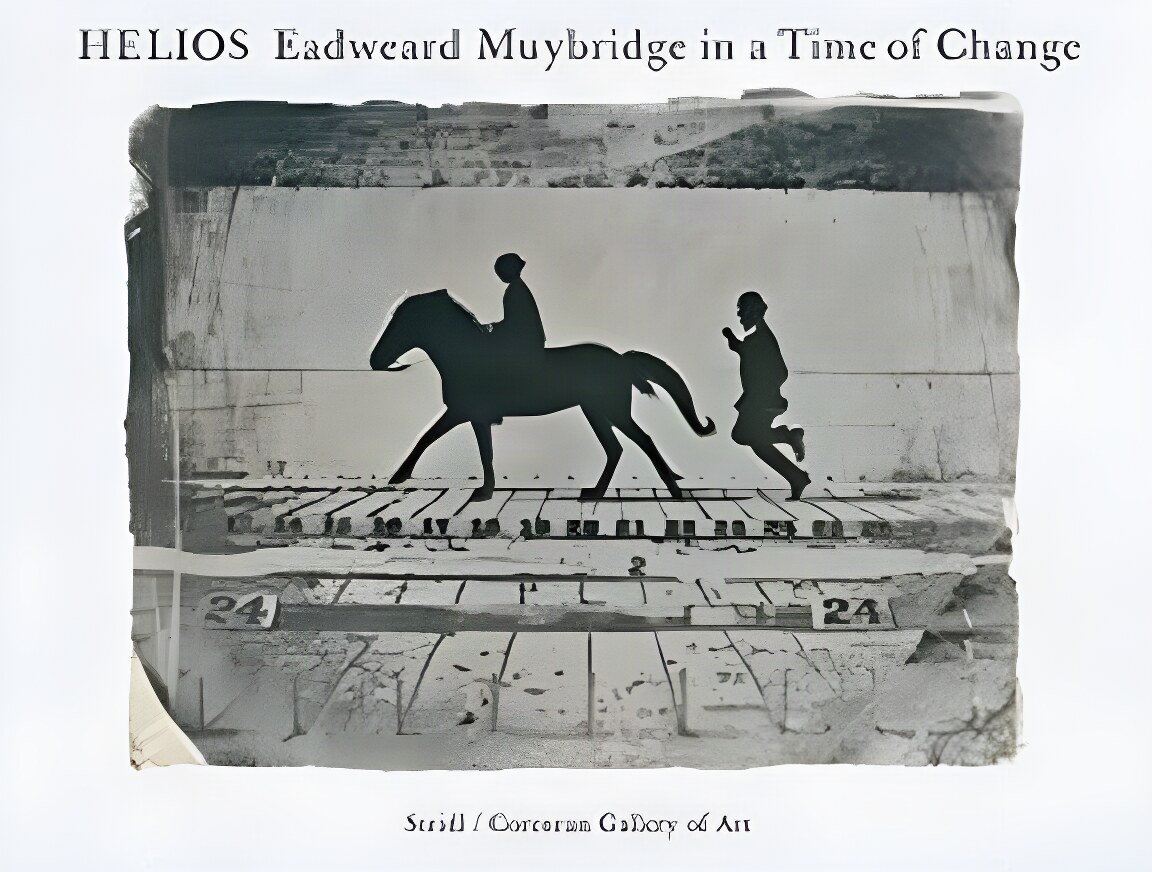
Hardcover. Steidl, 1st, 2010, Book: Very Good, Dust Jacket: Very Good, Hardcover, 360 pages. In 1878, the Photographic Times claimed that ten minutes provided sufficient exposure for photographing a landscape. Six years earlier, an English immigrant to the West Coast named Eadweard Muybridge, going by the commercial name of Helios, had already pushed photography far in the opposite direction: not to soak up time into pictures, but to divide time with the quickest exposures then imaginable. In 1872, the tycoon Leland Stanford had commissioned Muybridge to photograph his horse, Occident, to determine whether it ever lifted all four hooves off the ground at once. In proving that this was indeed the case, Muybridge achieved a five-hundredth-of-a-second exposure, and so began an anatomy of motion-in humans, horses, birds-that exploded the possibilities of photography and ultimately led to the development of the motion picture. Helios: Eadweard Muybridge in a Time of Change offers an opportunity to trace the life and art of the great photographer. In the wake of a wave of recent scholarship and renewed interest, it pitches his entire body of work against the backdrop of one of the most transformative periods of American and European history. Published to accompany a retrospective exhibition organized by the Corcoran Gallery of Art, Helios features essays by Philip Brookman, Marta Braun, Corey Keller and Rebecca Solnit that provide a variety of new approaches to Muybridge's art and influences.

 "Futures of Surrealism Myth, Science Fiction and Fantastic Art in France 1936-1969 by: Parkinson, Gavin")
 "Genealogical Data from Colonial New York Newspapers: A Consolidation of Articles from The New York Genealogical and Biographical Record by: Kenneth Scott (Compiler)")
 "Gentleman Spy: The Life of Allen Dullesby: Peter Grose")
 "George Marshall: A Biographyby: Debi Unger / Irwin Unger /Stanley Hirshson")
 "German Fury in Belgium, Theby: Mokveld, L.")
 "Ghost Train to the Eastern Star: On the Tracks of the Great Railway Bazaar (SIGNED COPY)by: Theroux, Paul")
 "Gilbert Stuartby: Whitley, William T.")

 "Girl in the Belgian Resistance: A Wakeful Eye in the Underground (SIGNED COPY)by: Fernande K. Davis")
 "Gododdin, Theby: O'Grady, Desmond")


 "Good People in an Evil Time (SIGNED COPY)by: Broz, Svetlana")
 "Good-Hearted Youngest Brother, Theby: Severo, Emoke de Papp and Diane Goode")
 "Gothic and Renaissance Art in Nuremberg, 1300-1550by: Metropolitan Museum of Art, New York.")
 "Gothic Sculpture in France 1140-1270by: Sauerlander, Willibald/Max Hirmer")

 "Graphis, No. 188, Volume 32by: Herdeg, Walter (Ed.)")
 "Great Fire, The by: Hazzard, Shirley")
 "Great Nadar, The: The Man Behind the Cameraby: Begley, Adam")
 "Handmade Loaf, The: Contemporary European Recipes for the Home Bakerby: Lepard, Dan")


 "Hegel and Aristotleby: Ferrarin, Alfredo")