Softcover. UK, Cambridge University Press, 1st pbk., 1984, Book: Very Good, Dust Jacket: None, Softcover, 300 pages. This account of Egyptian society in the reign of Muhammad Ali traces the beginnings of the nation state in Egypt. It considers Muhammad Ali as part of a social group whose economic interests led them in the direction of trade with Europe as a means of raising money for further investments. They attempted to increase agricultural exports and to use the profits to create industry; then, following the logic of imperialists, their next step was to seek to conquer the surrounding areas to find markets for their industries and sources of raw materials. These policies brought them into conflict with their suzerain, the Ottoman sultan, and with England, since England needed markets in the Middle East. England sought to destroy the new regime in Egypt as a means of exerting influence on the region. In carrying out these economic changes, the country underwent a series of internal developments that were to revolutionize the structure and shape of Egyptian society. The rules of landownership were altered and large estates were formed, Egyptian fallahin were drafted into the army, and the administration was Egyptianized, establishing the groundwork for a nation state. Small embossed stamp on title page, otherwise clean.
Hardcover. University of Pittsburgh Press, 1st , 1984, Book: Very Good, Dust Jacket: None, Hardcover, yellow cloth with gilt stamping, 283 pages. Between 1805 and 1879, Egypt evolved into a modern state with a Western-style military force and a central bureaucracy headed by an elite corps of European-trained officials. Viceroy Muhammad Ali and his successors used this new state apparatus to augment their autocratic power and to profit as intermediaries between Egypt and the capitalist West. This study is invaluable for it's unique and exhaustive research into the structure and foundations of the ruling elite and the process by which modern bureaucracy was built up in Egypt. It also highlights the dangers of rapidly developing a country's material infrastructure using massive outside assistance without adjusting for the destabilizing social changes that are the inevitable result. Clean copy.
Hardcover. NY, Harper & Row, 1st, 1972, Book: Very Good, Dust Jacket: Very Good, Hardcover in a bright dust dacket with minor wear, unclipped. Durkheim was a turn of the century French sociologist who argued that society is largely responsible for shaping an individual's moral values. He was largely critical of laissez-faire capitalism, arguing that society needed to be morally reconstructed. Lukes' comprehensive biography tells the story of Durkheim's life: how he responded to his critics, and how he tried to make his way in the academic world of pre-WWI Europe. Lukes examines Durkheim's work in its historical context, and offers a critical examination of it as well. Clean copy.
Hardcover. Paris, Flammarion, 1st, 1977, Book: Very Good, Dust Jacket: Very Good, 167 pages. Hardcover. Text in French only. Illustrated in full color and black & white. Dust jacket with wear to edges - jacket now protected with clear plastic cover. Clean, tight copy.
Hardcover. New Haven CT, Yale University Press, 1st, 2006, Book: Very Good, Dust Jacket: Very Good, Hardcover in a bright dust jacket, 546 pages. This epic history compares the empires built by Spain and Britain in the Americas, from Columbus's arrival in the New World to the end of Spanish colonial rule in the early nineteenth century. J. H. Elliott, one of the most distinguished and versatile historians working today, offers us history on a grand scale, contrasting the worlds built by Britain and by Spain on the ruins of the civilizations they encountered and destroyed in North and South America. Elliott identifies and explains both the similarities and differences in the two empires, processes of colonization, the character of their colonial societies, their distinctive styles of imperial government, and the independence movements mounted against them. Based on wide reading in the history of the two great Atlantic civilizations, the book sets the Spanish and British colonial empires in the context of their own times and offers us insights into aspects of this dual history that still influence the Americas. Color illustrations. Clean copy.
Hardcover. Seattle, WA, University of Washington Press, 1st, 2016, Book: Very Good, Dust Jacket: None, 224 pages. Hardcover with no dust jacket. A very clean, unmarked copy with only minor edgewear. A tight copy. Contemporary portraits of key personalities aboard the ship, scale models and plans of the ship itself, scientific instruments taken on the voyage, commemorative medals and sketches, the objects (over 140) featured in this book tell the story of the Endeavour voyage and its impact ahead of the 250th anniversary in 2018 of the launch of this seminal mission. Artwork made both during and after the voyage will be seen alongside actual specimens. By comparing the voyage originals with the often stylized engravings later produced in London for the official account, Endeavouring Banks investigates how knowledge gained on the mission was gathered, revised, and later received in Europe. Items that had been separated in some cases for more than two centuries are brought together to reveal their fascinating history not only during but since that mission. Original voyage specimens are featured together with illustrations and descriptions of them, showing a rich diversity of newly discovered species and how Banks organized this material, planning but ultimately failing to publish it. In fact, many of the objects in the book have never been published before.
Hardcover. Boston, Bulfinch Press, 1st, 1992, Book: Very Good, Dust Jacket: Very Good, Hardcover in a lightly worn dust jacket, introduction by Jim Hughes. 144 pages; 114 duo-toned plates plus text illustrations; 10 x 11.25 inches. Bibliography of b&w work. Best known for his masterful color work, this volume presents for the first time Ernst Haas' b&w work including street work from around the world, portraiture, abstractions and Europe after World War II. Minor chips to top of dust jacket, clean copy.
Hardcover. Hatje Cantz, 1st, 2009, Book: Very Good, Dust Jacket: Very Good, Hardcover, 224 pages. Erwin Blumenfeld (1897-1969) was born into a Jewish family in Berlin. In 1941, after being interned in a concentration camp, he left Europe for the United States, where he eventually became a citizen; during the 40s and 50s, he was to make his name here as one of the most sought-after fashion photographers in the world. But most people are unfamiliar with Blumenfeld's early work, the often bitingly satiric Dada photomontages and collages he produced between 1916 and 1933. This book, put together by Helen Adkins, renowned expert on the Berlin Dada movement, is the first to provide a study and a survey of these early works. Blumenfeld did not intend for these works to be shown publicly, as they were primarily personal gifts to his friends and acquaintance, or were enclosed in love letters to his fiancee. Nonetheless, they were conceived in the Dada spirit (Blumenfeld established the Dutch branch of Dada in 1918) and belong to its story. Approximately 100 works--including many previously unpublished, which Adkins discovered in the artist's family archives and in other public and private collections--are examined within the context of Blumenfeld's life, photographs, drawings and literary works.
Hardcover. UK, Oxford University Press, 1st, 2014, Book: Very Good, Dust Jacket: Very Good, Hardcover in a bright dust jacket, 284 pages. Thirteen original essays by leading scholars explore aspects of Spinoza's ethical theory and, in doing so, deepen our understanding of the richly rewarding core of his system. Given its importance to his philosophical ambitions, it is surprising that his ethics has, until recently, received relatively little scholarly attention. Anglophone philosophy has tended to focus on Spinoza's contribution to metaphysics and epistemology, while philosophy in continental Europe has tended to show greater interest in his political philosophy. This tendency is problematic not only because it overlooks a central part of Spinoza's project, but also because it threatens to present a distorted picture of his philosophy. Moreover, Spinoza's ethics, like other branches of his philosophy, is complex, difficult, and, at times, paradoxical. The essays in this volume advance our understanding of his ethics and also help us to appreciate it as the centerpiece of his system. Clean copy.
Softcover. Princeton, NJ, Markus Weiner Publishers, 1st English Translation, 2001, Book: Very Good, Dust Jacket: None, 327 pages. Softcover. B/w illustrations throughout. Decorated wrapper, excellent. Pages clean and bright. Binding good. Like new copy. This fascinating study of eunuchs guides readers as they travel through various lands and periods, familiarizing themselves with the duties and responsibilities, the unspeakable torments, and the passions and joys of these individuals.
Softcover. Cambridge MA, Harvard University Press, reprint, 1985, Book: Very Good, Dust Jacket: None, Softcover, 291 pages with index. A social history of Europe in all its aspects: economic, political, diplomatic military, colonial-expansionist. Crisply and succinctly written, it describes Europe not through a history of individual countries, but in a common context during the three quarters of a century between the death of Louis XIV and the industrial revolution in England and the social and political revolution in France. It presents the development of government, institutions, cities, economies, wars, and the circulation of ideas in terms of social pressures and needs, and stresses growth, interrelationships, and conflict of social classes as agents of historical change, paying particular attention to the role of popular, as well as upper- and middle-class, protest as a factor in that change. Clean, bright copy.
Hardcover. Los Angeles, J. Paul Getty Museum, 1st, 1996, Book: Very Good, Dust Jacket: Very Good, 211 pages, hardcover, 186 illustrations, 23 in color. A well illustrated detailed study of the 21 European clocks (19 French, 2 German) in the Getty Museum with detailed biographies of their makers.
Hardcover. Chicago, Quadrangle Books, 1st, 1972, Book: Very Good, Dust Jacket: Good, Hardcover in a rubbed, worn dust jacket, 277 pages. Name on front fly leaf, otherwise clean.
Hardcover. NY, Random House, 1st, 1969, Book: Very Good, Dust Jacket: Very Good, Hardcover in a lightly worn dust jacket, 387 pages. These essays originated in a series of lectures and seminars held by the Graduate School of Contemporary European Studies and the Centre for the Advanced Study of Italian Society of the University of Reading in 1966-1967. The countries covered include Italy, Germany, Austria, Hungary, Rumania, Poland, Finland, Norway, Great Britain, France, Spain, and Portugal. Name on front fly leaf otherwise clean.
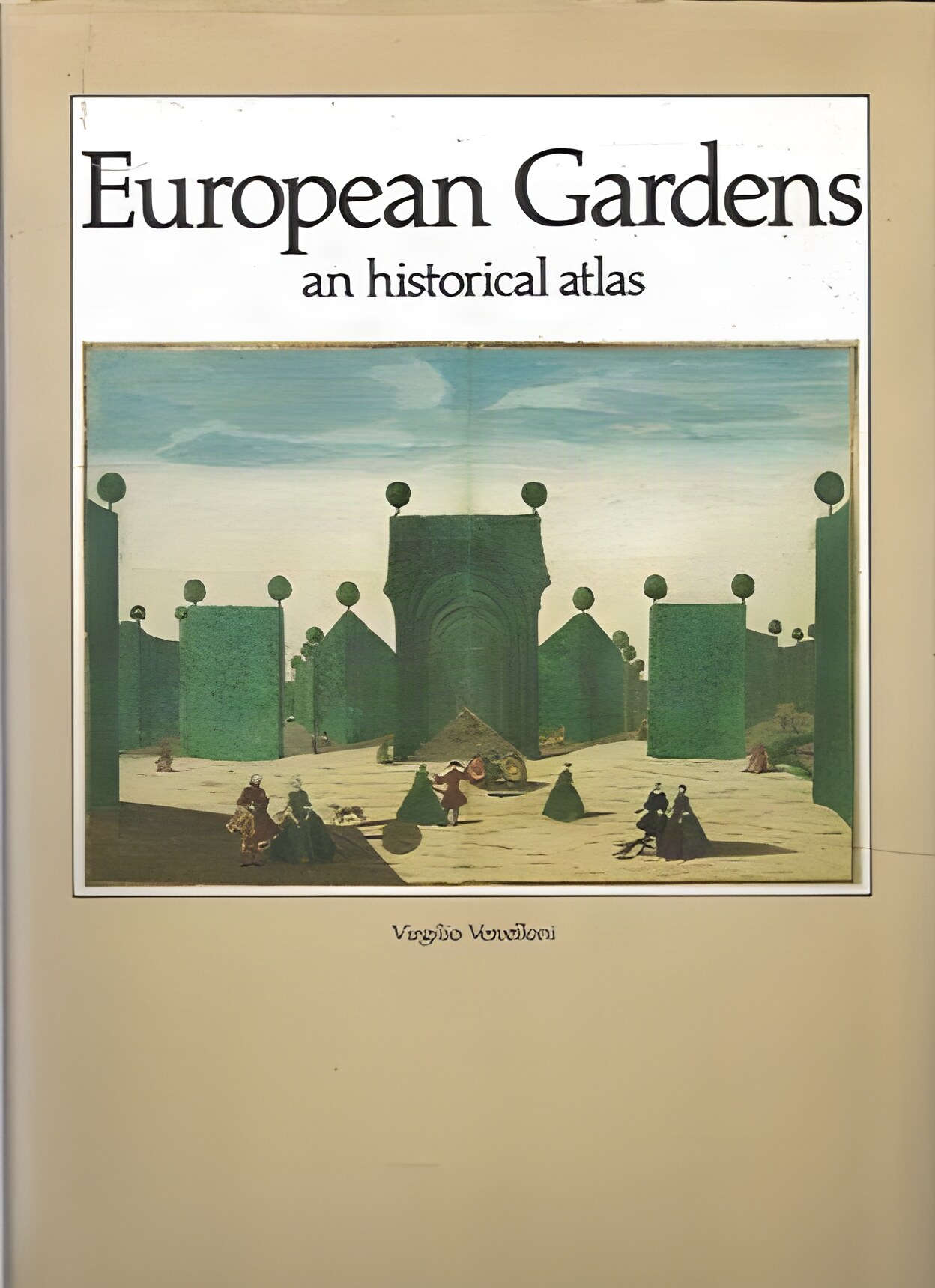
Hardcover. NY, Rizzoli, 1st US, 1990, Book: Very Good, Dust Jacket: Very Good, Hardcover in a bright dust jacket, 207 pages. Entertainingly idiosyncratic in its selection of material, this historical compendium of facts and fascinating lore takes off on a visual romp through the history of gardens. Rather than adhere to a conventional narrative format, Vercelloni--an Italian architect, city planner and landscape gardener--arranges his material as though it were a slide show, devoting each page to an image and accompanying text. Beginning with the "landscape" of the Ice Ages, forging ahead to the Renaissance and finally reaching contemporary times, the author presents a captivating grab-bag of information, covering such topics as the significance of flowers in Renaissance painting, the reasoning behind the 17th-century craze for tulips and the role of contemporary urban parks in society. With its strong visual orientation and pungent text, Vercelloni's "historical atlas" looks deftly and light-heartedly at humanity's ongoing love of gardens. Clean copy.
Hardcover. Boston, Charles C. Little and James Brown, 1st, 1849, Book: Very Good, Dust Jacket: None, Hardcover, embossed brown cloth covers with gilt lettering on spine. How respectable members of society communicated by letter with examples of mannered correspndence of the mid-19th century. Clean copy.
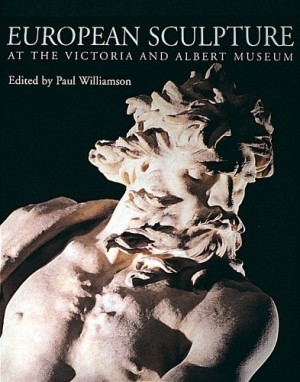
Softcover. London, V & A Publications, 1st pbk, 1996, Book: Very Good, Dust Jacket: None, Softcover, 191 pages. Containing over 100 masterpieces from a major collection, this volume traces the history of European sculpture, from the early-Christian period through to the beginning of the 20th century. Highlights include the medieval ivories, works by many of the Italian Renaissance masters, English 18th-century pieces, such as Roubillac's statue of Handel and sculptures by Rodin. Clean, bright copy.
Hardcover. Boston, Houghton Osgood and Company, 1st US, 1879, Book: Very Good, Dust Jacket: None, Hardcover, 281 pages, bright green cloth, beveled edges. First American Edition with 1879 on title page. Bright green cloth with gilt titles to spine. Previous owner's signature and date (June 27th 1879) in pencil on blank page preceeding title. There is a light water stain to bottom corner of pages, limited to the margin. It's more pronounced at back of book. Small chip to front endpaper at top corner. Pages slightly wavy. Two 4" stains on several pages where 4 leaf clover was laid in. Over all a tight, attractive copy despite the minor flaws.
Softcover. West Lafayette IN, Purdue University Press , 1st, 2020, Book: Very Good, Dust Jacket: None, Softcover, 529 pages, b&w illustrations. Eva and Otto is a true story about German opposition and resistance to Hitler as revealed through the early lives of Eva Lewinski Pfister (1910-1991) and Otto Pfister (1900-1985). It is an intimate and epic account of two Germans-Eva born Jewish, Otto born Catholic-who worked with a little-known German political group that resisted and fought against Hitler in Germany before 1933 and then in exile in Paris before the German invasion of France in May 1940. After their improbable escapes from separate internment and imprisonment in Europe, Eva obtained refuge in America in October 1940 where she worked to rescue other endangered political refugees, including Otto, with the help of Eleanor Roosevelt. As revealed in recently declassified records, Eva and Otto later engaged in different secret assignments with the US Office of Strategic Services (OSS) in support of the Allied war effort. Despite their vastly different backgrounds, Eva and Otto gave each other hope and strength as they acted upon what they understood to be an ethical duty to help others threatened by fascism. The book provides a sobering insight into the personal risks and costs of a commitment to that duty. Their unusually beautiful writing-directed to each other in diaries and correspondence during two long periods of wartime separation-also reveals an unlikely and inspiring love story.
Softcover. Durham NC, Duke University Press, 2nd pr., 1994, Book: Very Good, Dust Jacket: None, Softcover, 342 pages. In Extended Play, one of the country's most innovative music writers conducts a wide-ranging tour through the outer limits of contemporary music. Over the course of more than twenty-five portraits, interviews, and essays, John Corbett engages artists from lands as distant as Sweden, Siberia, and Saturn. With a special emphasis on African American and European improvisers, the book explores the famous and the little known, from John Cage and George Clinton to Anthony Braxton and Sun Ra. Employing approaches as diverse as the music he celebrates, Corbett illuminates the sound and theory of funk and rap, blues and jazz, contemporary classical, free improvisation, rock, and reggae. Using cultural critique and textual theory, Corbett addresses a broad spectrum of issues, such as the status of recorded music in postmodern culture, the politics of self-censorship, experimentation, and alternativism in the music industry, and the use of metaphors of space and madness in the work of African American musicians. He follows these more theoretically oriented essays with a series of extensive profiles and in-depth interviews that offer contrasting and complementary perspectives on some of the world's most creative musicians and their work. Clean copy.
Softcover. London/NY, Bloomsbury, 1st, 2016, Book: Very Good, Dust Jacket: None, Softcover, 346 pages. This volume makes the key essays of 19th century French philosopher Felix Ravaisson available in English for the first time. In recent years, Ravaisson has emerged as an extremely important and influential figure in the history of modern European philosophy. The volume contains the classic 1838 dissertation Of Habit, studies of Pascal, Stoicism and the wider history of philosophy together with the Philosophical Testament that he left unfinished when he died in 1900. The volume also features Ravaisson's work in archaeology, the history of religions and art-theory, and his essay on the Venus de Milo, which occupied him over a period of twenty years after he noticed, when hiding the statue behind a false wall in a dingy Parisian basement during the Franco-Prussian war, that it had previously been presented in a way that deformed its original bearing and meaning. Clean copy.
Hardcover. New York, Simon & Schuster Books, 1st, 1995, Book: Very Good, Dust Jacket: Very Good, 128 pages. Hardcover with dust jacket. Light abrasions on bottom corners. Light edgewaer to dust jacket. Clean, tight copy. Caldecott Honor Book with sticker on front. Handsomely illustrated with Brian Pinkney's color scratchboard drawings. Based on a West Indian folk-tale drawing on African, European and South American traditions.


 "Egypt Under the Khedives 1805-1879by: F. Robert Hunter")
 "Emile Durkheim; His Life and Work: A Historical and Critical Studyby: Lukes, Steven")
 "Emile Galleby: Garner, Philippe")

 "Endeavouring Banks: Exploring Collections from the Endeavour Voyage 1768-1771by: Chambers, Neil")
 "Ernst Haas in Black and White by: Haas, Alexander / Haas, Ernst / Hughes, Jim")


 "Erwin Blumenfeld: Nothing but a Berliner: Dada Montages 1916-1933by: Helen Adkins, Erwin Blumenfeld, et al.")

 "Eunuchs and Castrati: A Cultural Historyby: Scholz, Piotr O.")


 "Europe from a Motor Carby: Richardson, Russell")

 "Europe in the Sixteenth Centuryby: Koenigsberger, H. G. and George L. Mosse")
 "European Clocks in the J. Paul Getty Museumby: Wilson, Gillian")


 "European Life And Manners; In Familiar Letters To Friends Vol. 1 Only by: Colman, Henry")
 "Europeans, The - A Sketchby: James, Henry")
 "Eva and Otto: Resistance, Refugees, and Love in the Time of Hitlerby: Pfister, Tom; Pfister, Kathy; Pfister, Peter")


 "Faithful Friend, Theby: San Souci, Robert D. and Brian Pinkney")