Hardcover. New York, Assouline, 1st, 2005, Book: Very Good, Dust Jacket: Very Good, 152 pages, b&w and color illustrations. Fashions inspired by Fellini's cult film. In publisher's shrinkwrap.
Hardcover. New York, Assouline, 1st, 2005, Book: Very Good, Dust Jacket: Very Good, 152 pages, b&w and color illustrations. Fashions inspired by Fellini's cult film. In publisher's shrinkwrap.
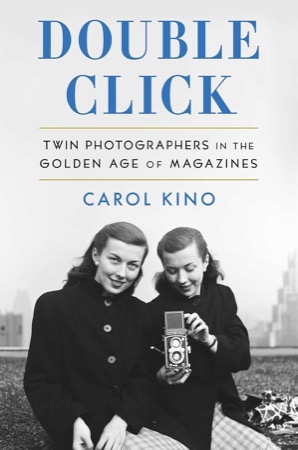
Hardcover. NY, Scribner, 1st, 2024, Book: Very Good, Dust Jacket: Very Good, Hardcover in a bright, unclipped dust jacket, 405 pages, b&w illustrations. The McLaughlin twins were trailblazing female photographers, celebrated in their time as stars in their respective fields, but have largely been forgotten since. Here, in Double Click, Carol Kino brings these two brilliant women and their remarkable accomplishments to vivid life. Frances was the only female photographer on staff in Conde Nast's photo studio, hired just after Irving Penn, and became known for streetwise, cinema verite-style work, which appeared in the pages of Glamour and Vogue. Her sister Kathryn's surrealistic portraits filled the era's new "career girl" magazines, including Charm and Mademoiselle. Both twins married Harper's Bazaar photographers and socialized with a glittering crowd that included the supermodel Lisa Fonssagrives and the photographer Richard Avedon. Kino uses their careers to illuminate the lives of young women during this time, an early 20th-century moment marked by proto-feminist thinking, excitement about photography's burgeoning creative potential, and the ferment of wartime New York.
Hardcover. NY, Pointed Leaf Press, 1st, 2008, Book: Very Good, Dust Jacket: Very Good, Hardcover in a bright dust jacket. The first monograph on the work of Kenneth Paul Block, one of the most influential fashion illustrators of the twentieth century. The oversize, lavishly illustrated book chronicles Block's lifetime of drawings, watercolors, and astute observations during the artist's over 30-year career at Women's Wear Daily, powerful fashion publication. A long awaited book of astonishingly vibrant fashion and portrait drawings of swan necked beauties by a much admired fashion-insider. Mr. Block studied at The Parsons school of Design and illustrated the work of the most influential fashion designers from about the mid 20th century to the nineties before unoriginal, mediocre photography (and unskilled illustrations) completely dominated how fashion was communicated to the celebrity obsessed, style challenged, uninformed masses. With seemingly effortless ease (the energy in the art looks like it could have been sketched yesterday!), Mr. Block drew the ever changing mood of fashion from London Mod to Italian Modern, Preppy Classic to Japanese Experimental, French couture to American casual and inspired many generations of fashion enthusiasts in the process. Mr. Block's portraits showcase a few of his favorite ladies. A rare and exquisite breed who set the standard for elegance and chic for most of the 20th century. Society beauties like Mrs. Guinness, Mrs. Paley, Mrs. Guest, Mrs. Vanderbilt and Mrs. Kennedy speak of a time when grace, poise and mystery mixed with a certain sense of knowing defined a chic, stylish lady. PLEASE NOTE: The book,while clean and bright, has a mild musty smell. DOMESTIC SHIPPING ONLY due to size and weight.
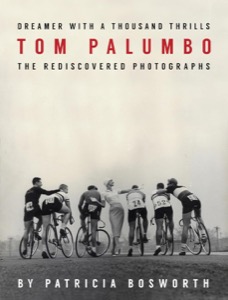
Hardcover. NY, powerHouse Books, 1st, 2018, Book: Very Good, Hardcover, 240 pages. During the 1950s and 60s, Tom Palumbo was part of an influential group of young photographers working for the best fashion magazines in America -Harper's Bazaar and Vogue. Tom perfected his craft under the guidance of legends like Alexey Brodovitch, Carmel Snow, Diana Vreeland, and Alex Liberman. Tom's serene style contrasted with Richard Avedon's jazzed-up images and Lillian Bassman's soft blurred effects. Often Tom's particular layouts provided the balance in an issue. His pictures invariably enhanced the fashions of the 50s, where women were thought of as objects of worship, and beauty was thought of as an ideal. Tom photographed every day, producing unique images like jazz legend Miles Davis laughing. He loved taking pictures of artists like next-door neighbors Comden and Green; the young Mia Farrow and Jane Fonda; novelist Jack Kerouac. Late in life, Tom worked in theatre. But to him there was never much difference in the photographs he took or the plays he directed since both contained drama. Paradox and revelation-these two elements energized Tom Palumbo's life. These rediscovered photographs, celebrated in their time but not seen in decades, are presented here in book form for the first time ever, by award-winning author and Palumbo's widow, Patricia Bosworth. Clean, still in publisher's shrinkwrap.
Hardcover. New Haven, Yale University Press, 1st, 2013, Book: Very Good, Dust Jacket: Very Good, Hardcover. Like new in publisher's shrink-wrap. 304 pages illustrated in color and b&w. A thought-provoking examination of the challenging and sometimes sinister roles that fashion has played in the history of cinema.
Hardcover. San Francisco, Chronicle Books, 1st, 2006, Book: Very Good, Dust Jacket: Very Good, Hardcover, 192 pages, illustrated with color, b&w photos throughout. A visual biography of Edie Sedgwick, 60's fashion and film icon. Like new in an acetate dust jacket.Model, film star, socialite, friend, lover, addict, Edie Sedgwick was the first "it" girl of the Andy Warhol Factory scene and later muse to Bob Dylan. The arc of Edie's life traced the rise and fall of the 1960s from idyllic experimentation to dissolute recklessness. After being toasted by the whole of New York City, Edie died alone of a drug overdose in California at the age of 28. David Weisman (with John Palmer) filmed Edie for the last five years of her life in his cult film Ciao! Manhattan. When he recently uncovered lost footage of Edie, David was inspired to create Edie: Girl on Fire, a book and a documentary film that explores Edie's true story. He and coauthor Melissa Painter have tracked down and interviewed many of Edie Sedgwick's surviving intimates, including Danny Fields, Baby Jane Holzer, and Ultra Violet. They also unearthed hundreds of never-before-published photos portraits, professional ad shoots, and heartbreaking snapshots of the girl who won New York's heart and nearly burned down the Chelsea hotel. The book also features a CD with Edie's last interview ever, a riveting account of a rollercoaster life.
Hardcover. New York, W. W. Norton & Company, 1st, 2008, Book: Very Good, Dust Jacket: Very Good, Hardcover, 288 pages, 242 photographs reproduced in four-color process. Like new in publishers shrink-wrap. Edward Steichen was already a famous painter and photographer in America and abroad when, in early 1923, he was offered the most prestigious position in photography's commercial domain: that of chief photographer for Vogue and Vanity Fair. Over the next fifteen years, he would produce a body of work of unequaled brilliance, dramatizing and glamorizing contemporary culture and its achievers. Here are icon images of Gloria Swanson, Gary Cooper, Greta Garbo, and Charles Chaplin, as well as numerous other celebrities drawn from an archive of more than 2,000 original prints.
Hardcover. New York, W. W. Norton & Company, 1st, 2008, Book: Very Good, Dust Jacket: Very Good, Hardcover, 288 pages, 242 photographs reproduced in four-color process. Like new in publishers shrink-wrap. Edward Steichen was already a famous painter and photographer in America and abroad when, in early 1923, he was offered the most prestigious position in photography's commercial domain: that of chief photographer for Vogue and Vanity Fair. Over the next fifteen years, he would produce a body of work of unequaled brilliance, dramatizing and glamorizing contemporary culture and its achievers. Here are icon images of Gloria Swanson, Gary Cooper, Greta Garbo, and Charles Chaplin, as well as numerous other celebrities drawn from an archive of more than 2,000 original prints.
Hardcover. NY, Norton, 1st, 2008, Book: Very Good, Dust Jacket: Very Good, Hardcover, 288 pages. Edward Steichen was already a famous painter and photographer in America and abroad when, in early 1923, he was offered the most prestigious position in photography's commercial domain: that of chief photographer for Vogue and Vanity Fair. Over the next fifteen years, Steichen would produce a body of work of unequaled brilliance, dramatizing and glamorizing contemporary culture and its achievers in politics, literature, film, sport, dance, theater, opera, and the world of high fashion. Here are iconic images of Gloria Swanson, Gary Cooper, Greta Garbo, and Charlie Chaplin as well as numerous other celebrities drawn from an archive of more than two thousand original prints. Until now, no more than a handful have been exhibited or published in book form. The photographs of the 1920s and 1930s represent the high point in Steichen's career and are among the most striking creations of twentieth-century photography. 242 illustrations.
Hardcover. NY, Scribner, 1st, 2012, Book: Very Good, Dust Jacket: Very Good, Hardcover in a bright, unclipped dust jacket. SIGNED BY OTTO on the title page. This captivating novel opens in 1917 as Cymbeline Kelley surveys the charred remains of her photography studio, destroyed in a fire started by a woman hired to help take care of the house while Cymbeline pursued her photography career. This tension-- between wanting and needing to be two places at once; between domestic duty and ambition; between public and private life; between what's seen and what's hidden from view--echoes in the stories of the other seven women in the book. Among them: Amadora Allesbury, who creates a world of color and whimsy in an attempt to recapture the joy lost to WWI; Clara Argento, who finds her voice working alongside socialist revolutionaries in Mexico; Lenny Van Pelt, a gorgeous model who feels more comfortable photographing the deserted towns of the French countryside after WWII than she does at a couture fashion shoot; and Miri Marx, who has traveled the world taking pictures, but also loves her quiet life as a wife and mother in her New York apartment. Crisscrossing the world and a century, Eight Girls Taking Pictures is an affecting meditation on the conflicts women face and the choices they make. These memorable characters seek extraordinary lives through their work, yet they also find meaning and reward in the ordinary tasks of motherhood, marriage, and domesticity. Most of all, this novel is a vivid portrait of women in love--in love with men, other women, children, their careers, beauty, and freedom.
Hardcover. Filipacchi Publishing, 1st, 2003, Book: Very Good, Dust Jacket: Very Good, Hardcover, 192 pages. Elle magazine, leader in fashion and style, has compiled a tribute to the 1980s in a fun, informative and colorful book that will set one musing on what was en vogue in days past and influencing fashion a la mode. Creations of major designers Azzedine Alaia, Jean Paul Gaultier, Karl Lagerfeld, Yves Saint Laurent, Issey Miyake and Thierry Mugler are featured, revisiting trends brought to life by the greatest fashion leaders of our time. Photos from the legendary fashion photographers of the decade, Gilles Bensimon, Pamela Hanson, Jean-Baptiste Mondino and Oliviero Toscani, among others, bring the decade to life.
Hardcover. US, Glitterati, 1st, 2015, Book: Very Good, Dust Jacket: Very Good, Like new in publisher's shrink-wrap. Hardcover, 272 pages. In his debut book of photography, with a foreword by one of the luminaries of NYC culture and entertainment, Adrian Buckmaster's monograph presents a staggeringly beautiful collection of portraits - a cross-section of humanity in all of its glorious diversity, from the ordinary to the extraordinary and everything in-between. Having spent his early years shooting commercial beauty and fashion, Buckmaster soon shifted focus to more personal projects, challenging conventional notions of beauty and celebrating the eccentricities of those whom society might classify as "misfits." Echoes of Buckmaster's early career remain, in the form of exquisite costuming, make-up, and scenic design. Despite an element of performance, there is an undeniable rawness to these portraits, in which subjects are both aware of the camera's gaze and sympathetically self-conscious, robing and disrobing, revealing and concealing. Buckmaster's photographic genius is encapsulated in his uncanny ability to fastidiously art direct while simultaneously stripping away layers of formality and convention. Arranged in three movements: Imposing, Revealing, and Inventing, this collection progresses from traditional portraiture to increasingly intimate portrayals, as subjects expose, create, and invent themselves. Included in this endlessly varied spectrum of characters are Burlesque performers, families, brides, lovers, and all manner of tattoos and body piercings. There are classical reclining nudes, reminiscent of Edouard Manet's Olympia or Titian's Sleeping Venus, dancers with incredible physical strength and dexterity, women costumed as peacocks and geishas, a contortionist inside a trunk, even a green-skinned man, bejewelled like an Indian deity.
Hardcover. Hatje Cantz, 1st, 2009, Book: Very Good, Dust Jacket: Very Good, Hardcover, 224 pages. Erwin Blumenfeld (1897-1969) was born into a Jewish family in Berlin. In 1941, after being interned in a concentration camp, he left Europe for the United States, where he eventually became a citizen; during the 40s and 50s, he was to make his name here as one of the most sought-after fashion photographers in the world. But most people are unfamiliar with Blumenfeld's early work, the often bitingly satiric Dada photomontages and collages he produced between 1916 and 1933. This book, put together by Helen Adkins, renowned expert on the Berlin Dada movement, is the first to provide a study and a survey of these early works. Blumenfeld did not intend for these works to be shown publicly, as they were primarily personal gifts to his friends and acquaintance, or were enclosed in love letters to his fiancee. Nonetheless, they were conceived in the Dada spirit (Blumenfeld established the Dutch branch of Dada in 1918) and belong to its story. Approximately 100 works--including many previously unpublished, which Adkins discovered in the artist's family archives and in other public and private collections--are examined within the context of Blumenfeld's life, photographs, drawings and literary works.
Softcover. Paris, Editions Hazan, 1st, 2013, Book: Very Good, Dust Jacket: None, Softcover, 273 pages. Like new in publisher's shrink-wrap. This landmark publication broadens our understanding of Blumenfeld's innovations, reuniting all the media used by the artist throughout his long career: drawing, photography, photomontage, and collage. The motifs of his experimental, sometimes overtly political, black-and-white photographs appear alongside numerous self-portraits and celebrity portraits, as well as the fashion photographs for which he is most known. Presenting some 150 images, this book provides a fresh understanding of Blumenfeld's photography for the commercial worlds of fashion and advertising.
Hardcover. NY, Prestel, 1st, 2015, Book: Very Good, Dust Jacket: None, Hardcover, 192 pages, color and b&w images. This first volume in a major new series of illustrated biographies of Magnum photographers traces the life and achievements of Eve Arnold, who captured an incredible array of subjects with remarkable clarity and compassion. Eve Arnold (1912-2012) was born to a poor immigrant family in Philadelphia and became a photographer by chance. In 1950 Arnold was a 38-year-old Long Island housewife when she enrolled in a six-week photography course that led to her groundbreaking photo essay on black fashion models in Harlem. She went on to become the first woman to join Magnum Photos and, eventually, one of the most accomplished photojournalists of her time. Filled with reproductions of Arnold's acclaimed photographs, shot in both color and black and white, as well as previously unseen archival images, this biography relates Arnold's bold images to the fascinating story of their making. Renowned for her intimate portraits of figures such as Marilyn Monroe, Malcolm X, and Queen Elizabeth, Arnold was equally comfortable documenting the lives of the poor and dispossessed. "I don't see anybody as either ordinary or extraordinary. I see them simply as people in front of my lens." To her images of migrant workers, disabled veterans, and protesters for civil rights in the US and against apartheid in South Africa, she brought an unflinching eye and a strong sense of social justice. This highly engrossing narrative tells a compelling story of an intrepid artist whose life's purpose was to report on the lives of others.
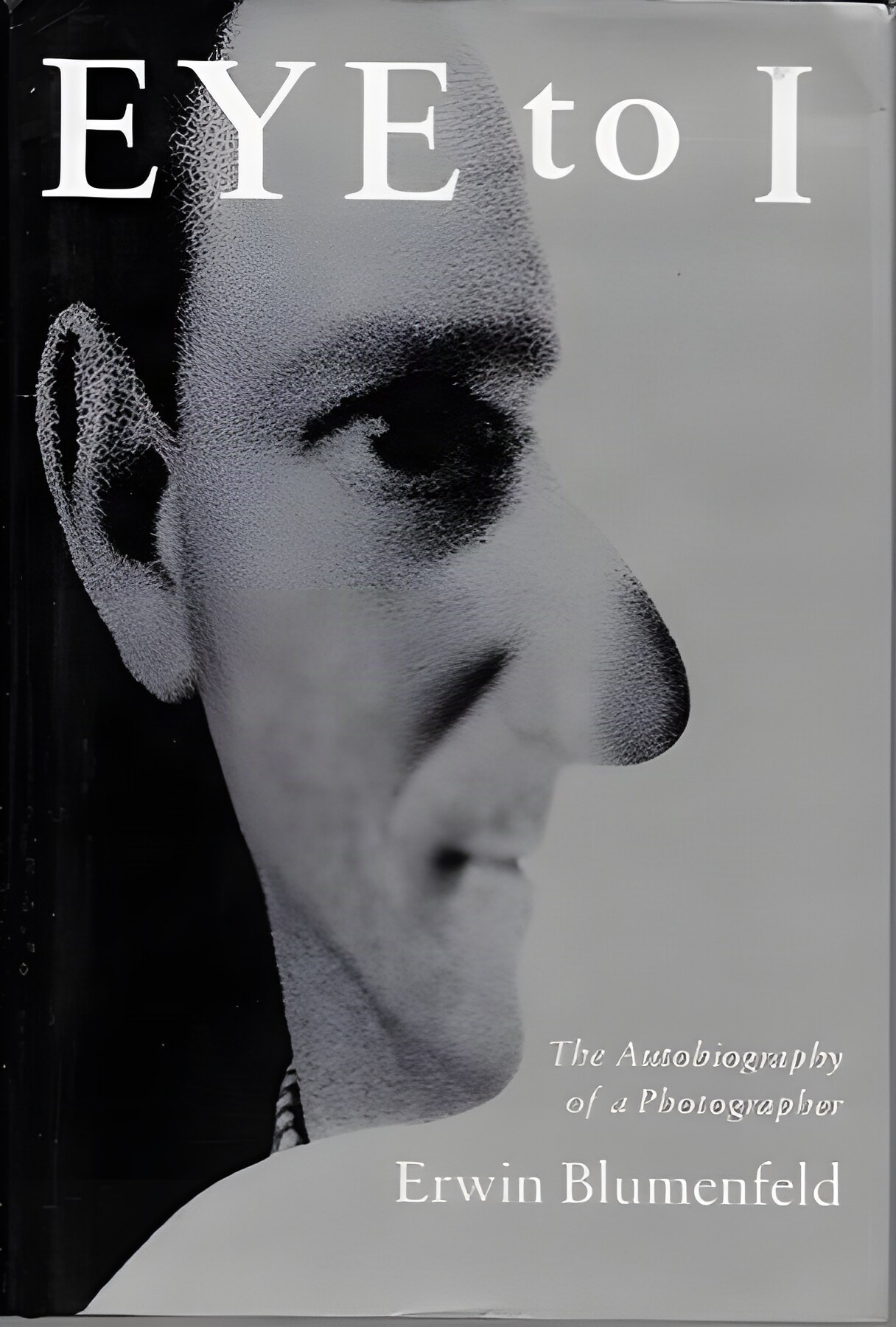
Hardcover. London, Thames and Hudson, 1st, 1999, Book: Very Good, Dust Jacket: Very Good, 384 pages. Hardcover with dust jacket. Clean, tight copy with black and white photographs throughout. Light wear ton dust jacket. The life of Erwin Blumenfeld, one of the century's best-known photographers, was by no means conventional. By turns acerbic, self-mocking, playful, even absurd, his autobiography is a compelling, virtuoso account of an extraordinary man. All his subjects--his Jewish family, the Germans, the Vichy French, his models, New York publishers--are dealt equal measures of wit, mockery, and merciless irony. He spares himself least of all. Born in turn-of-the-century Berlin, Blumenfeld was drafted to serve in the First World War, first as an ambulance driver (although he couldn't drive) and then as a bookkeeper in a field brothel, and he was awarded the Iron Cross for giving his sergeant French lessons. Between the wars he was part of an avant-garde circle that included such artists as Else Lasker-Schler, George Grosz, and members of the Dada movement. During the Second World War, Blumenfeld was interned in a series of French camps but eventually arrived in New York, where he found work with Vogue and Harper's Bazaar, producing many of their most memorable covers and becoming fashion's highest-paid photographer. From the creator of some of the most striking and influential photographs ever taken, Blumenfeld's autobiography--published here in English for the first time--is a biting and iconoclastic take on the century, and the insightful, gripping story of an exceptional life. Remainder line to bottom edge.
Hardcover. NY, Penguin Press, 1st, 2018, Book: Very Good, Dust Jacket: Very Good, Hardcover in a bright, unclipped dust jacket. 256 pages, b&w photos. For Bill Cunningham, New York City was the land of freedom, glamour, and, above all, style. Growing up in a lace-curtain Irish suburb of Boston, secretly trying on his sister's dresses and spending his evenings after school in the city's chicest boutiques, Bill dreamed of a life dedicated to fashion. But his desires were a source of shame for his family, and after dropping out of Harvard, he had to fight them tooth-and-nail to pursue his love. When he arrived in New York, he reveled in people-watching. He spent his nights at opera openings and gate-crashing extravagant balls, where he would take note of the styles, new and old, watching how the gowns moved, how the jewels hung, how the hair laid on each head. This was his education, and the birth of the democratic and exuberant taste that he came to be famous for as a photographer for The New York Times. After two style mavens took Bill under their wing, his creativity thrived and he made a name for himself as a designer. Taking on the alias William J.--because designing under his family's name would have been a disgrace to his parents--Bill became one of the era's most outlandish and celebrated hat designers, catering to movie stars, heiresses, and artists alike. Bill's mission was to bring happiness to the world by making women an inspiration to themselves and everyone who saw them. These were halcyon days when fashion was all he ate and drank. When he was broke and hungry he'd stroll past the store windows on Fifth Avenue and feed himself on beautiful things. Fashion Climbing is the story of a young man striving to be the person he was born to be: a true original. But although he was one of the city's most recognized and treasured figures, Bill was also one of its most guarded. Written with his infectious joy and one-of-a-kind voice, this memoir was polished, neatly typewritten, and safely stored away in his lifetime. He held off on sharing it--and himself--until his passing. Between these covers, is an education in style, an effervescent tale of a bohemian world as it once was, and a final gift to the readers of one of New York's great characters.
Hardcover. London, Mitchell Beazley, 1st, 2016, Book: Very Good, Dust Jacket: None, 224 pages. Hardcover with no dust jacket. A very clean, unmarked copy with only minor edgewear. Color photographs throughout. The Fashion of Film is the perfect book for the fashion fan. In it, fashion historian Amber Butchart takes a journey through the last 100 years of cinema style and its influence on the catwalks. With beautiful imagery and thoroughly-researched text, she looks at how our most iconic movies have transformed the world of high fashion. Karl Lagerfeld was influenced by the dystopian vision of Metropolis, the picture-perfect world of Wes Anderson's films are echoed in the collections of Miuccia Prada, and Audrey Hepburn was key to Hubert de Givenchy's work. Fashion designers have long taken their inspiration from silver screen idols, and continue to do so today.
Hardcover. New Haven, CT, Yale University Press, 1st, 2015, Book: Very Good, Dust Jacket: None, 440 pages. Hardcover in purple slipcase. Very clean, unmarked copy still in shrink wrap. Gilt lettering on spine. Profusely illustrated with over 200 color plates. Tight copy. Prior to the invention of photography, European and American magazines used colorful prints to depict the latest fashion trends. These illustrations, known as "fashion plates," conveyed the cutting-edge styles embraced by the fashion-conscious elite and proved inspirational to the upwardly mobile. This lavishly illustrated book provides a comprehensive survey of 200 color plates from publications dating from 1778 to the early 20th century, accompanied by authoritative and fascinating texts. Organized chronologically and featuring both men's and women's garments, these lively and colorful vignettes not only are beautiful, but also deftly illustrate the evolution of fashion over time.
Softcover. Berkeley, CA , Ginko Press, 1st, 2006, Book: Very Good, Dust Jacket: None, 221 pages. Softcover. Very clean, unmarked copy still in publishers shrink-wrap. Fashion Show explores the ideas and inspirations that have driven Paris fashion through the ages, and it investigates why, in an era of globalization, this venerable city remains an undisputed Mecca. Color photographs throughout.
Hardcover. NY, MOMA, 1st, 2004, Book: Very Good, Dust Jacket: None, Hardcover, 144 pages, color photos throughout. This groundbreaking book, and the exhibition it accompanies, includes lavish illustrations of the work by photographers such as Philip-Lorca diCorcia, Cedric Buchet, Glen Luchford, Tina Barney, Juergen Teller, Nan Goldin and Larry Sultan, among others. No dust jacket issued.
Hardcover. New York, Atria Books, 1st Hardcover, 2016, Book: Very Good, Dust Jacket: Very Good, 416 pages. Hardcover with dust jacket. Remainder mark to bottom edge of textblock. Otherwise a very clean, unmarked copy with only minor edgewear to dust jacket. Black and white photographs. Tracing the highs and lows of fashion photography from the late 1940s to today, Gross vividly chronicles the fierce rivalries between photographers, fashion editors, and publishers like Conde Nast and Hearst, weaving together candid interviews, never-before-told insider anecdotes and insights born of his three decades of front-row and backstage reporting on modern fashion. An unprecedented look at an eccentric and seductive profession and the men and women who practice it on the treacherous shifting sands of pop and fashion culture, Focus depicts--perhaps most importantly--the rewards and cost, both terribly high, of translating an artist's vision of beauty for an often cold and cruel commercial reality.

 "Dolce Vita Styleby: Dufreigne, Jean-Pierre")
 "Dolce Vita Styleby: Dufreigne, Jean-Pierre")
 "Drawing Fashion: The Art of Kenneth Paul Blockby: Susan Mulcahy")
 "Dressing Dangerously : Dysfunctional Fashion in Filmby: Faiers, Jonathan")
 "Duane Michals: Foto Follies: How Photography Lost Its Virginity on the Way to the Bankby: Michals, Duane")
 "Edie: Girl on Fireby: Painter, Melissa and David Weisman")
 "Edward Steichen: In High Fashion - The Conde Nast Years, 1923-1937by: Ewing, William A.")
 "Edward Steichen: In High Fashion - The Conde Nast Years, 1923-1937by: Ewing, William A.")
 "Edward Steichen: In High Fashion - The Conde Nast Years, 1923-1937by: Todd Brandow and William A. Ewing")
 "Eight Girls Taking Pictures: A Novelby: Whitney Otto")
 "Elle Style: The 1980sby: Francois Baudot")
 "Embarrassment of Riches, An: Photographsby: Buckmaster, Adrian/Susanne Bartsch")
 "Erwin Blumenfeld: Nothing but a Berliner: Dada Montages 1916-1933by: Helen Adkins, Erwin Blumenfeld, et al.")
 "Erwin Blumenfeld: Photographs Drawings and Photomontagesby: De Paume, Jeu")
 "Eve Arnold: Magnum Legacyby: Janine di Giovanni, Susan Meiselas , et al.")


 "Fashion Climbing: A Memoir with Photographsby: Bill Cunningham")
 "Fashion of Film, The: Fashion Design Inspired By Cinemaby: Butchart, Amber Jane")
 "Fashion Plates: 150 Years of Styleby: Calahan, April")
 "Fashion Show : Paris Styleby: Grumback, Didier Parmal Pamela")
 "Fashioning Fiction in Photography Since 1990 by: Kismaric, Susan; Repini, Eva")


 "Focus: The Secret, Sexy, Sometimes Sordid World of Fashion Photographersby: Gross, Michael")