Hardcover. Milwaukee, WI, Applause, 1st, 2012, Book: Very Good, Dust Jacket: Very Good, 192 pages. Color/BW photographs and illustrations. Clean, unmarked copy with only minor wear to dust jacket. William Travilla is one of the best costume designers of all time and Marilyn Monroe his most famous client. Dressing Marilyn: How a Hollywood Icon Was Styled by William Travilla focuses on the striking dresses that Travilla designed for Marilyn, from his early work on the thriller Don't Bother to Knock and the gorgeous pink dress in which Marilyn sang "Diamonds Are a Girl's Best Friend" to the legendary white dress from The Seven Year Itch , which arguably contributed to the collapse of Marilyn's marriage to Joe DiMaggio. Featuring Travilla's original sketches, rare costume test shots, dress patterns, photographs of Marilyn wearing the dresses, plus exclusive and never-before-seen extracts from interviews with Travilla, this book offers a fresh insight into the golden age of Hollywood.
Hardcover. NY, Harper Design, 1st, 2023, Hardcover in pictorial boards, 223 pages illustrated in color. From longtime fashion director, consultant, media personality, and author, Hal Rubenstein, comes a lush, full color, illustrated guide to the most influential fashion on television from the 1950s to today, revealing the surprising ways our favorite shows have significantly reflected and often shaped the way we dress. From Mary Tyler Moore's capri pants on The Dick van Dyke Show and Emma Peel's dominatrix jumpsuit on The Avengers to Olivia Pope's trademark white trench on Scandal and Don Drapers' grey sharkskin suits on Mad Men Dressing the Part is a rich history of popular American fashion and culture in the modern age. In this gorgeous compendium, the longtime fashion director and expert identifies the most stylish television shows of the past 70 years, highlighting the ways they have affected and often inspired ordinary Americans' wardrobes. Combining his decades of fashion expertise and insider knowledge with lush photographs, archival sketches, fascinating interviews with over two dozen of television's best costume designers, commentary from showrunners and co-stars, and little-known backstories, Rubenstein reveals with insight and wit how television has shaped everyday fashion, guiding and often elevating how we dress. Clean copy.
Hardcover. San Francisco, Chronicle Books, 1st, 2006, Book: Very Good, Dust Jacket: Very Good, Hardcover, 192 pages, illustrated with color, b&w photos throughout. A visual biography of Edie Sedgwick, 60's fashion and film icon. Like new in an acetate dust jacket.Model, film star, socialite, friend, lover, addict, Edie Sedgwick was the first "it" girl of the Andy Warhol Factory scene and later muse to Bob Dylan. The arc of Edie's life traced the rise and fall of the 1960s from idyllic experimentation to dissolute recklessness. After being toasted by the whole of New York City, Edie died alone of a drug overdose in California at the age of 28. David Weisman (with John Palmer) filmed Edie for the last five years of her life in his cult film Ciao! Manhattan. When he recently uncovered lost footage of Edie, David was inspired to create Edie: Girl on Fire, a book and a documentary film that explores Edie's true story. He and coauthor Melissa Painter have tracked down and interviewed many of Edie Sedgwick's surviving intimates, including Danny Fields, Baby Jane Holzer, and Ultra Violet. They also unearthed hundreds of never-before-published photos portraits, professional ad shoots, and heartbreaking snapshots of the girl who won New York's heart and nearly burned down the Chelsea hotel. The book also features a CD with Edie's last interview ever, a riveting account of a rollercoaster life.
Hardcover. New York, W. W. Norton & Company, 1st, 2008, Book: Very Good, Dust Jacket: Very Good, Hardcover, 288 pages, 242 photographs reproduced in four-color process. Like new in publishers shrink-wrap. Edward Steichen was already a famous painter and photographer in America and abroad when, in early 1923, he was offered the most prestigious position in photography's commercial domain: that of chief photographer for Vogue and Vanity Fair. Over the next fifteen years, he would produce a body of work of unequaled brilliance, dramatizing and glamorizing contemporary culture and its achievers. Here are icon images of Gloria Swanson, Gary Cooper, Greta Garbo, and Charles Chaplin, as well as numerous other celebrities drawn from an archive of more than 2,000 original prints.
Hardcover. New York, W. W. Norton & Company, 1st, 2008, Book: Very Good, Dust Jacket: Very Good, Hardcover, 288 pages, 242 photographs reproduced in four-color process. Like new in publishers shrink-wrap. Edward Steichen was already a famous painter and photographer in America and abroad when, in early 1923, he was offered the most prestigious position in photography's commercial domain: that of chief photographer for Vogue and Vanity Fair. Over the next fifteen years, he would produce a body of work of unequaled brilliance, dramatizing and glamorizing contemporary culture and its achievers. Here are icon images of Gloria Swanson, Gary Cooper, Greta Garbo, and Charles Chaplin, as well as numerous other celebrities drawn from an archive of more than 2,000 original prints.
Hardcover. NY, Norton, 1st, 2008, Book: Very Good, Dust Jacket: Very Good, Hardcover, 288 pages. Edward Steichen was already a famous painter and photographer in America and abroad when, in early 1923, he was offered the most prestigious position in photography's commercial domain: that of chief photographer for Vogue and Vanity Fair. Over the next fifteen years, Steichen would produce a body of work of unequaled brilliance, dramatizing and glamorizing contemporary culture and its achievers in politics, literature, film, sport, dance, theater, opera, and the world of high fashion. Here are iconic images of Gloria Swanson, Gary Cooper, Greta Garbo, and Charlie Chaplin as well as numerous other celebrities drawn from an archive of more than two thousand original prints. Until now, no more than a handful have been exhibited or published in book form. The photographs of the 1920s and 1930s represent the high point in Steichen's career and are among the most striking creations of twentieth-century photography. 242 illustrations.
Hardcover. NY, Scribner, 1st, 2012, Book: Very Good, Dust Jacket: Very Good, Hardcover in a bright, unclipped dust jacket. SIGNED BY OTTO on the title page. This captivating novel opens in 1917 as Cymbeline Kelley surveys the charred remains of her photography studio, destroyed in a fire started by a woman hired to help take care of the house while Cymbeline pursued her photography career. This tension-- between wanting and needing to be two places at once; between domestic duty and ambition; between public and private life; between what's seen and what's hidden from view--echoes in the stories of the other seven women in the book. Among them: Amadora Allesbury, who creates a world of color and whimsy in an attempt to recapture the joy lost to WWI; Clara Argento, who finds her voice working alongside socialist revolutionaries in Mexico; Lenny Van Pelt, a gorgeous model who feels more comfortable photographing the deserted towns of the French countryside after WWII than she does at a couture fashion shoot; and Miri Marx, who has traveled the world taking pictures, but also loves her quiet life as a wife and mother in her New York apartment. Crisscrossing the world and a century, Eight Girls Taking Pictures is an affecting meditation on the conflicts women face and the choices they make. These memorable characters seek extraordinary lives through their work, yet they also find meaning and reward in the ordinary tasks of motherhood, marriage, and domesticity. Most of all, this novel is a vivid portrait of women in love--in love with men, other women, children, their careers, beauty, and freedom.
Hardcover. Filipacchi Publishing, 1st, 2003, Book: Very Good, Dust Jacket: Very Good, Hardcover, 192 pages. Elle magazine, leader in fashion and style, has compiled a tribute to the 1980s in a fun, informative and colorful book that will set one musing on what was en vogue in days past and influencing fashion a la mode. Creations of major designers Azzedine Alaia, Jean Paul Gaultier, Karl Lagerfeld, Yves Saint Laurent, Issey Miyake and Thierry Mugler are featured, revisiting trends brought to life by the greatest fashion leaders of our time. Photos from the legendary fashion photographers of the decade, Gilles Bensimon, Pamela Hanson, Jean-Baptiste Mondino and Oliviero Toscani, among others, bring the decade to life.
Hardcover. Austin TX, University of Texas Press, 1st, 1982, Book: Very Good, Dust Jacket: Very Good, Hardcover, 150 pages. Light edgewear and sunning to dust jacket, else a clean, tight copy. Biography of the American Southern novelist which includes study of her later novels, when she was no longer content to imitate fashionable male novelists.
Hardcover. US, Glitterati, 1st, 2015, Book: Very Good, Dust Jacket: Very Good, Like new in publisher's shrink-wrap. Hardcover, 272 pages. In his debut book of photography, with a foreword by one of the luminaries of NYC culture and entertainment, Adrian Buckmaster's monograph presents a staggeringly beautiful collection of portraits - a cross-section of humanity in all of its glorious diversity, from the ordinary to the extraordinary and everything in-between. Having spent his early years shooting commercial beauty and fashion, Buckmaster soon shifted focus to more personal projects, challenging conventional notions of beauty and celebrating the eccentricities of those whom society might classify as "misfits." Echoes of Buckmaster's early career remain, in the form of exquisite costuming, make-up, and scenic design. Despite an element of performance, there is an undeniable rawness to these portraits, in which subjects are both aware of the camera's gaze and sympathetically self-conscious, robing and disrobing, revealing and concealing. Buckmaster's photographic genius is encapsulated in his uncanny ability to fastidiously art direct while simultaneously stripping away layers of formality and convention. Arranged in three movements: Imposing, Revealing, and Inventing, this collection progresses from traditional portraiture to increasingly intimate portrayals, as subjects expose, create, and invent themselves. Included in this endlessly varied spectrum of characters are Burlesque performers, families, brides, lovers, and all manner of tattoos and body piercings. There are classical reclining nudes, reminiscent of Edouard Manet's Olympia or Titian's Sleeping Venus, dancers with incredible physical strength and dexterity, women costumed as peacocks and geishas, a contortionist inside a trunk, even a green-skinned man, bejewelled like an Indian deity.
Hardcover. Seattle, University of Washington Press, 1st, 2019, Book: Very Good, Dust Jacket: Very Good, Hardcover in a bright dust jacket, color illustrations; 7.2 X 0.9 X 10.3 inches; 272 pages. Tang dynasty (618-907) China hummed with cosmopolitan trends. Its capital at Chang'an was the most populous city in the world and was connected via the Silk Road with the critical markets and thriving cultures of Central Asia and the Middle East. In Empire of Style, BuYun Chen reveals a vibrant fashion system that emerged through the efforts of Tang artisans, wearers, and critics of clothing. Across the empire, elite men and women subverted regulations on dress to acquire majestic silks and au courant designs, as shifts in economic and social structures gave rise to what we now recognize as precursors of a modern fashion system: a new consciousness of time, a game of imitation and emulation, and a shift in modes of production. This first book on fashion in premodern China is informed by archaeological sources-paintings, figurines, and silk artifacts-and textual records such as dynastic annals, poetry, tax documents, economic treatises, and sumptuary laws. Tang fashion is shown to have flourished in response to a confluence of social, economic, and political changes that brought innovative weavers and chic court elites to the forefront of history. Still in publisher's shrinkwrap.
Hardcover. New York, Harper, 1st, 2012, Book: Very Good, Dust Jacket: Very Good, Hardcover, 419 pages, photos in color and b&w. Remainder mark to bottom edge, else a clean, unmarked copy in excellent condition.
Hardcover. US, Harper, 1st, 2012, Book: Very Good, Dust Jacket: Very Good, 419 pages, photos in color and b&w. Remainder mark to bottom edge, else a clean, tight copy.
Hardcover. NY, Harper, 1st, 2012, Book: Very Good, Dust Jacket: Very Good, Hardcover, 419 pages, photos in color and b&w. Remainder mark to bottom edge, else a clean, tight copy.
Hardcover. Chicago, University of Chicago Library, 1st, 2014, Book: Very Good, Dust Jacket: None, Hardcover, 144 pages. Like new in publisher's shrink-wrap. With 2014 marking the one-hundredth anniversary of the commencement of World War I, En Guerre offers a fresh, thought-provoking exploration of the impact of the Great War as viewed through the lens of French graphic illustration of the period. Published in conjunction with an exhibition of these illustrations at the University of Chicago Library's Special Collections Research Center, this catalog draws from illustrated books, magazines, and prints to present a wide range of perspectives on themes essential to a deeper understanding of the war in France: patriotism, nationalism, propaganda, and the soldier's experience, as well as the mobilization of the French national home front as seen through fashion, music, humor, and children's literature. With a text by noted historians Neil Harris and Teri J. Edelstein and featuring more than one hundred reproductions of the vivid and colorful work of French illustrators, En Guerre reaffirms the persuasive role that art can play in the service of political and military power.
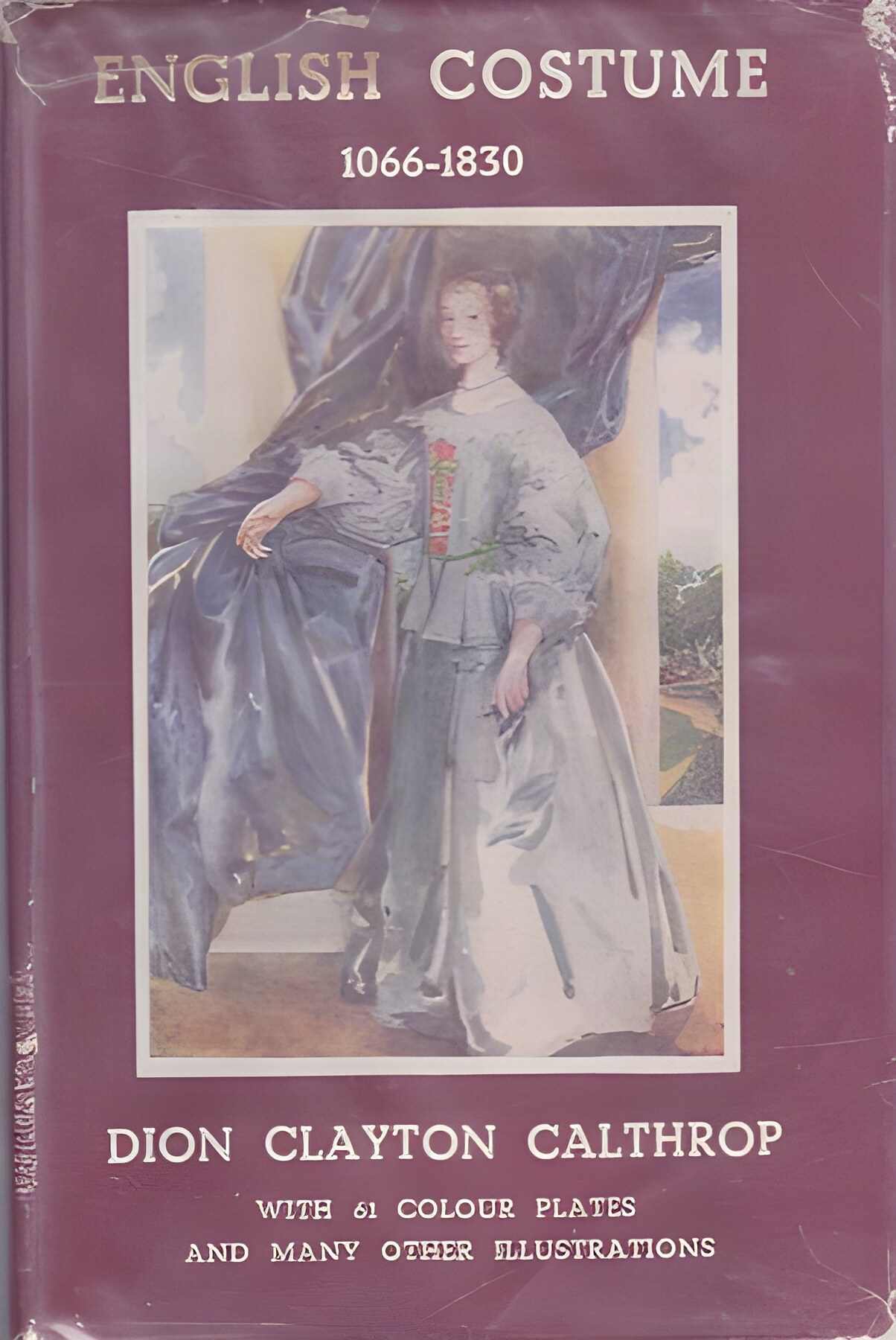
Hardcover. London, Adam & Charles Black, 1st, 1941, Book: Very Good, Dust Jacket: Good, Hardcover, illustrated with black & white drawings, color paintings by Calthrop. 463 pages. Dust jacket with edgewear. chunk gone from spine top, corners.
Hardcover. New York, E. P. Dutton, 1st, 1989, Book: Very Good, Dust Jacket: Very Good, Hardcover, 240 pages illustrated throughout with 156 plates including 74 in full color. Remainder mark on bottom edge. Large folio. Light edgewear to dust jacket, else a clean, tight copy. Follows the artist from his birth in St. Petersburg, Russia in 1892, through the 1980's. Beautiful color plates include costume design, magazine covers (Harper's Bazar), sculpture, vases, mirrors, medallions, jewelry, labels, bottles, playing cards, watches.
Hardcover. New York, Dutton Studio, 1st, 1992, Book: Very Good, Dust Jacket: Very Good, Hardcover, 208 pages, illustrated throughout with 176 plates in full color. Additional text by Ray Perman and David Rogath and photographs by Daniel Kramer. Light edgewear to dust jacket, else a clean, tight copy. Romain de Tirtoff, who worked under the pseudonym Erte (the French pronunciation of his initials), was a celebrated artist and designer who produced 250 covers for "Harper's Bazaar" as well as fashion designs for some of the world's most glamorous stars, and costume & set designs for Hollywood and stage productions.
Hardcover. New York, Clarkson Potter, Reprint, 1981, Book: Very Good, Dust Jacket: Very Good, Hardcover, 184 pages. Illustrated in full color and black & white. Beautiful examples of costume and set design by Erte. A bright, clean copy.
Hardcover. Hatje Cantz, 1st, 2009, Book: Very Good, Dust Jacket: Very Good, Hardcover, 224 pages. Erwin Blumenfeld (1897-1969) was born into a Jewish family in Berlin. In 1941, after being interned in a concentration camp, he left Europe for the United States, where he eventually became a citizen; during the 40s and 50s, he was to make his name here as one of the most sought-after fashion photographers in the world. But most people are unfamiliar with Blumenfeld's early work, the often bitingly satiric Dada photomontages and collages he produced between 1916 and 1933. This book, put together by Helen Adkins, renowned expert on the Berlin Dada movement, is the first to provide a study and a survey of these early works. Blumenfeld did not intend for these works to be shown publicly, as they were primarily personal gifts to his friends and acquaintance, or were enclosed in love letters to his fiancee. Nonetheless, they were conceived in the Dada spirit (Blumenfeld established the Dutch branch of Dada in 1918) and belong to its story. Approximately 100 works--including many previously unpublished, which Adkins discovered in the artist's family archives and in other public and private collections--are examined within the context of Blumenfeld's life, photographs, drawings and literary works.
Softcover. Paris, Editions Hazan, 1st, 2013, Book: Very Good, Dust Jacket: None, Softcover, 273 pages. Like new in publisher's shrink-wrap. This landmark publication broadens our understanding of Blumenfeld's innovations, reuniting all the media used by the artist throughout his long career: drawing, photography, photomontage, and collage. The motifs of his experimental, sometimes overtly political, black-and-white photographs appear alongside numerous self-portraits and celebrity portraits, as well as the fashion photographs for which he is most known. Presenting some 150 images, this book provides a fresh understanding of Blumenfeld's photography for the commercial worlds of fashion and advertising.
Hardcover. NY, Prestel, 1st, 2015, Book: Very Good, Dust Jacket: None, Hardcover, 192 pages, color and b&w images. This first volume in a major new series of illustrated biographies of Magnum photographers traces the life and achievements of Eve Arnold, who captured an incredible array of subjects with remarkable clarity and compassion. Eve Arnold (1912-2012) was born to a poor immigrant family in Philadelphia and became a photographer by chance. In 1950 Arnold was a 38-year-old Long Island housewife when she enrolled in a six-week photography course that led to her groundbreaking photo essay on black fashion models in Harlem. She went on to become the first woman to join Magnum Photos and, eventually, one of the most accomplished photojournalists of her time. Filled with reproductions of Arnold's acclaimed photographs, shot in both color and black and white, as well as previously unseen archival images, this biography relates Arnold's bold images to the fascinating story of their making. Renowned for her intimate portraits of figures such as Marilyn Monroe, Malcolm X, and Queen Elizabeth, Arnold was equally comfortable documenting the lives of the poor and dispossessed. "I don't see anybody as either ordinary or extraordinary. I see them simply as people in front of my lens." To her images of migrant workers, disabled veterans, and protesters for civil rights in the US and against apartheid in South Africa, she brought an unflinching eye and a strong sense of social justice. This highly engrossing narrative tells a compelling story of an intrepid artist whose life's purpose was to report on the lives of others.



 "Dryad Leaflet No. 114: Slippers from Felt or Suedeby: N/A")
 "Duane Michals: Foto Follies: How Photography Lost Its Virginity on the Way to the Bankby: Michals, Duane")
 "Edie: Girl on Fireby: Painter, Melissa and David Weisman")
 "Edward Steichen: In High Fashion - The Conde Nast Years, 1923-1937by: Ewing, William A.")
 "Edward Steichen: In High Fashion - The Conde Nast Years, 1923-1937by: Ewing, William A.")
 "Edward Steichen: In High Fashion - The Conde Nast Years, 1923-1937by: Todd Brandow and William A. Ewing")
 "Eight Girls Taking Pictures: A Novelby: Whitney Otto")
 "Elle Style: The 1980sby: Francois Baudot")
 "Ellen Glasgow: Beyond Conventionby: Wagner, Linda W.")
 "Embarrassment of Riches, An: Photographsby: Buckmaster, Adrian/Susanne Bartsch")
 "Empire of Style: Silk and Fashion in Tang Chinaby: BuYun Chen")
 "Empress of Fashion: A Life of Diana Vreelandby: Stuart, Amanda Mackenzie")
 "Empress of Fashion: A Life of Diana Vreelandby: Stuart, Amanda Mackenzie")
 "Empress of Fashion: A Life of Diana Vreelandby: Stuart, Amanda Mackenzie")
 "En Guerre: French Illustrators and World War Iby: Harris, Neil and Teri J. Edelstein")
 "Erte: My Life, My Art - An Autobiographyby: Erte")
 "Erte: The Last Works: Graphics / Sculptureby: Estorick, Eric")
 "Erteby: Spencer, Charles")
 "Erwin Blumenfeld: Nothing but a Berliner: Dada Montages 1916-1933by: Helen Adkins, Erwin Blumenfeld, et al.")
 "Erwin Blumenfeld: Photographs Drawings and Photomontagesby: De Paume, Jeu")
 "Eve Arnold: Magnum Legacyby: Janine di Giovanni, Susan Meiselas , et al.")

