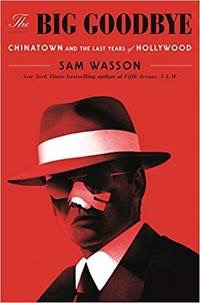
Hardcover. NY, Flatiron, 1st, 2020, Book: Very Good, Dust Jacket: Very Good, Hardcover in a bright dust jacket, 397 pages. Wasson for the first time peels off layers of myth to provide the true account of its creation. Looming over the story of this classic movie is the imminent eclipse of the '70s filmmaker-friendly studios as they gave way to the corporate Hollywood we know today.
Hardcover. NY, Rodale, 1st, 2003, Book: Very Good, Dust Jacket: Very Good, Hardcover in a bright, unclipped dust jacket. While The Big O: My Life, My Times, My Game will not disappoint basketball purists longing for Oscar Robertson's play-by-play of favorite games, the attraction of this autobiography is Robertson's perspective on the evolution of the sport and on the racial struggles that were the context of his formative years. Called by many basketball experts the greatest all-around player ever, Robertson earned an astonishing array of honors including an Olympic gold medal, 12 NBA All-Star appearances, the NBA Rookie of the Year award, and the 1964 NBA MVP award. Most remarkably, Robertson remains the only player in basketball history with a triple-double season (double-digit averages for scoring, rebounds, and assists). While Robertson could have easily candy-coated this impressive record for his retrospective, he devotes large sections of his book to the racial battles he faced off court, and his final chapters recount his controversial efforts as an NBA union leader to create free agency, a pension plan, and disability protection for players. In telling his life story, he lays bare the racism and mistreatment he suffered at the hands of individuals and institutions throughout his career, from the Mayor of Indianapolis and Cincinnati University to the NBA and CBS Sports. At times, his critiques can seem excessive (e.g. his discussions of the distortions in the film Hoosiers, while interesting, are repeated a bit too often), and some sections (like his attempts to compare himself to contemporary players) border on self-indulgence. Yet, he seems justified in arguing that his achievements--largely accomplished on second-rate teams, against a back-drop of unprecedented racial strife, and before the modern era of sports-media saturation--are easily underrepresented. In the end, The Big O offers a complex, human portrait to complement a spectacular sports career.
Hardcover. Chicago, University of Chicago Press, 1st, 2000, Book: Very Good, Dust Jacket: Very Good, Hardcover in a bright, unclipped dust jacket. In this daring reexamination of the connections between national politics and Hollywood movies, Lary May offers a fresh interpretation of American culture from the New Deal through the Cold War and one in which a populist, egalitarian ethos found itself eventually supplanted by a far different view of the nation. Clean copy.
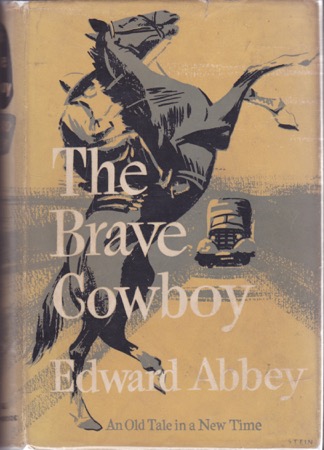
Hardcover. London, Eyre & Spottiswoode, 1st UK, 1957, Book: Very Good, Dust Jacket: Good, Hardcover in a lightly worn and soiled dust jacket. Green cloth covers with gilt title on spine. Second published work from the literary icon. The story of Jack Burns and his fight with modern society (a theme Abbey would revisit). The character of Jack Burns would turn up in later Abbey novels; Monkey Wrench Gang, Good News and Hayduke Lives! Basis for the film starring Kirk Douglas titled "Lonely are the Brave". The UK first edition had a much smaller print run than its US counterpart and has striking artwork (by Stein) of the cowboy on his rearing horse as a menacing truck aproaches.
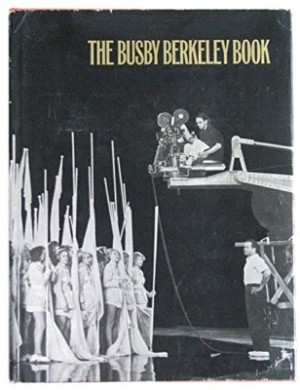
Hardcover. Greenwich CT, New York Graphic Society, 1st, 1973, Book: Very Good, Dust Jacket: Very Good, Hardcover, 187 pages. Written with Busby Berkeley. Foreward by Ruby Keeler. With more than 250 photographs. "The life and works of the Wizard of Oz of the Thirties and Forties with a complete filmography of his meticulously ordered fantasy world." Clean copy.
Hardcover. Boston, New York Graphic Society, 1st, 1973, Book: Very Good, Dust Jacket: Very Good, Hardcover in a bright, price-clipped dust jacket. 187 pages. Written with Busby Berkeley. Foreward by Ruby Keeler. With more than 250 photographs. "The life and works of the Wizard of Oz of the Thirties and Forties with a complete filmography of his meticulously ordered fantasy world."
Hardcover. Chicago, University of Chicago Press, 1st, 2015, Book: Very Good, Dust Jacket: None, Hardcover, 336 pages. In a world where nearly everyone has a cellphone camera capable of zapping countless instant photos, it can be a challenge to remember just how special and transformative Polaroid photography was in its day. And yet, theres still something magical for those of us who recall waiting for a Polaroid picture to develop. Writing in the context of two Polaroid Corporation bankruptcies, not to mention the obsolescence of its film, Peter Buse argues that Polaroid was, and is, distinguished by its processby the fact that, as the New York Times put it in 1947, the camera does the rest. Polaroid was often dismissed as a toy, but Buse takes it seriously, showing how it encouraged photographic play as well as new forms of artistic practice. Drawing on unprecedented access to the archives of the Polaroid Corporation, Buse reveals Polaroid as photography at its most intimate, where the photographer, photograph, and subject sit in close proximity in both time and spacemaking Polaroid not only the perfect party camera but also the tool for frankly salacious pictures taking. Along the way, Buse tells the story of the Polaroid Corporation and its ultimately doomed hard-copy wager against the rising tide of digital imaging technology. Still in publisher's shrinkwrap.
Softcover. Chicago, Chicago Review Press , 1st, 2002, Book: Very Good, Dust Jacket: None, Softcover, 320 pages, b&w illustrations. The popularity of cartoon music, from Carl Stalling's work for Warner Bros. to Disney sound tracks and The Simpsons' song parodies, has never been greater. This lively and fascinating look at cartoon music's past and present collects contributions from well-known music critics and cartoonists, and interviews with the principal cartoon composers. Here Mark Mothersbaugh talks about his music for Rugrats, Alf Clausen about composing for The Simpsons, Carl Stalling about his work for Walt Disney and Warner Bros., Irwin Chusid about Raymond Scott's work, Will Friedwald about Casper the Friendly Ghost, Richard Stone about his music for Animaniacs, Joseph Lanza about Ren and Stimpy, and much, much more. Clean copy.
Softcover. UK, Cambridge University Press, 1st pbk, 2008, Book: Very Good, Dust Jacket: None, Softcover in pictorial wrappers, 352 pages. A groundbreaking study of cultural life during a turbulent and formative decade in contemporary China, this book seeks to explode several myths about the Cultural Revolution (officially 1966-1976). Through national and local examination of the full range of cultural forms (film, operas, dance, other stage arts, music, fine arts, literature, and even architecture), Clark argues against characterizing this decade as one of chaos and destruction. Rather, he finds that innovation and creativity, promotion of participation in cultural production, and a vigorous promotion of the modern were all typical of the Cultural Revolution. Using a range of previously little-used materials, Clark forces us to fundamentally reassess our understanding of the Cultural Revolution, a period which he sees as the product of innovation in conflict with the effort by political leaders to enforce a top-down modernity. Clean copy.
Hardcover. Cinecitta Holding, 1st, 2005, Book: Very Good, Dust Jacket: Very Good, Hardcover in a bright dust jacket, 174 pages. Illustrated in color and b&w. Text in Italian and English. Clean copy.
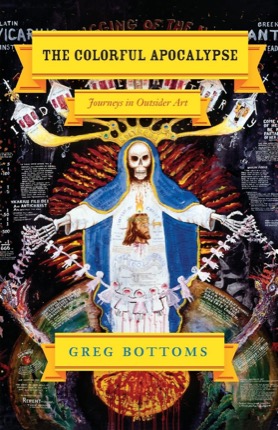
Hardcover. Chicago, University Of Chicago Press, 1st, 2007, Book: Very Good, Dust Jacket: Very Good, Hardcover in a bright dust jacket, 182 pages. The Reverend Howard Finster was twenty feet tall, suspended in darkness. Or so he appeared in the documentary film that introduced a teenaged Greg Bottoms to the renowned outsider artist whose death would help inspire him, fourteen years later, to travel the country. Beginning in Georgia with a trip to Finster's famous Paradise Gardens, his journey--of which The Colorful Apocalypse is a masterly chronicle--is an unparalleled look into the lives and visionary works of some of Finster's contemporaries: the self-taught evangelical artists whose beliefs and oeuvres occupy the gray area between madness and Christian ecstasy. With his prodigious gift for conversation and quietly observant storytelling, Bottoms draws us into the worlds of such figures as William Thomas Thompson, a handicapped ex-millionaire who painted a 300-foot version of the book of Revelation; Norbert Kox, an ex-member of the Outlaws biker gang who now lives as a recluse in rural Wisconsin and paints apocalyptic visual parables; and Myrtice West, who began painting to express the revelatory visions she had after her daughter was brutally murdered. These artists' works are as wildly varied as their life stories, but without sensationalizing or patronizing them, Bottoms--one of today's finest young writers--gets at the heart of what they have in common: the struggle to make sense, through art, of their difficult personal histories. Clean copy.
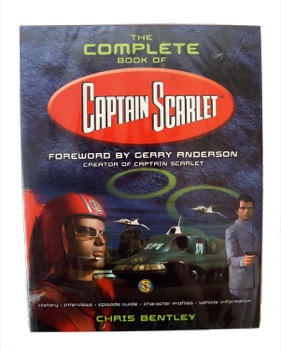
Softcover. London, Carlton Books, 1st, 2001, Book: Very Good, Dust Jacket: None, Softcover, 128 pages. "Captain Scarlet and the Mysterons" is one of the better "Supermarionation" series that came from the hands of Gerry and Sylvia Anderson, known by Americans as well as those in the UK for their many classic puppet series "Supercar", "Fireball XL5", "Stingray", and especially "Thunderbirds"- and their classic live action "UFO" and "Space Precinct".The Captain Scarlet series also was shown in the USA, but in a limited market originally and with wider exposure via compilation films on Showtime and HBO and later on SciFi Channel. Captain Scarlet marked one of the first Supermarionation series to have a truly dark and serious storyline, with an invisible alien race, the Mysterons, seeking revenge for an attack made in error on their cities on Mars. The Mysterons then declared war on Earth. Chris Bentley presents a complete production history and guide to all 32 episodes of the Captain Scarlet and the Mysterons series, plus information about voice artists, merchandising and spin-offs. PLEASE NOTE: the book is clean and tight, but was once owned by a smoker and has a smoke odor.
Softcover. NY, E.P. Dutton, 1st, 1973, Book: Good, Dust Jacket: None, Softcover, unpaginated, b&w plates. Illustrated with stills from the 1924 film. compiled and annotated with a foreword by Herman Weinberg. Probably Stroheim"s best remembered work as a director is Greed, a detailed filming of the novel McTeague by Frank Norris. Previous owner's name inside front cover, otherwise clean. Light soiling to wrappers, shelfwear.
Softcover. Lincoln NE, University of Nebraska Press, reprint, 1994, Book: Very Good, Dust Jacket: None, Softcover, 311 pages. A 1913 novel about a black homesteader in South Dakota based on the author's experiences in the midwest as a young man. He later went on to fame as a celebrated early filmmaker. Clean copy.
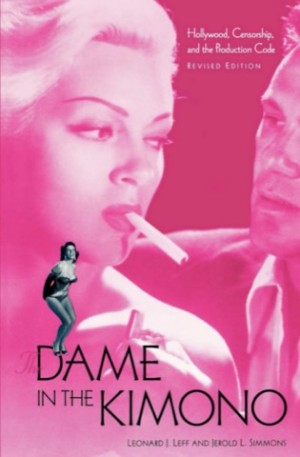
Softcover. Lexington KY, University Press of Kentucky, 2nd Ed., 2001, Softcover, 377 pages. The first part of the book deals with the production code as it existed from 1922-34 with the introduction of figures such as Will Hays, Mae West and Joe Breen. The second part deals with the administration of the production code from 1934-66. Specific detail is given on the movies Dead End; Gone With the Wind; The Outlaw and The Postman Always Rings Twice; The Bicycle Thief; Detective Story and A Streetcar Named Desire; The Moon is Blue and The French Line; Lolita and Who's Afraid of Virginia Woolf. This second edition is updated to include the introduction of the PG-13 and NC-17 ratings of the 1990s. Mild wear to covers, clean.
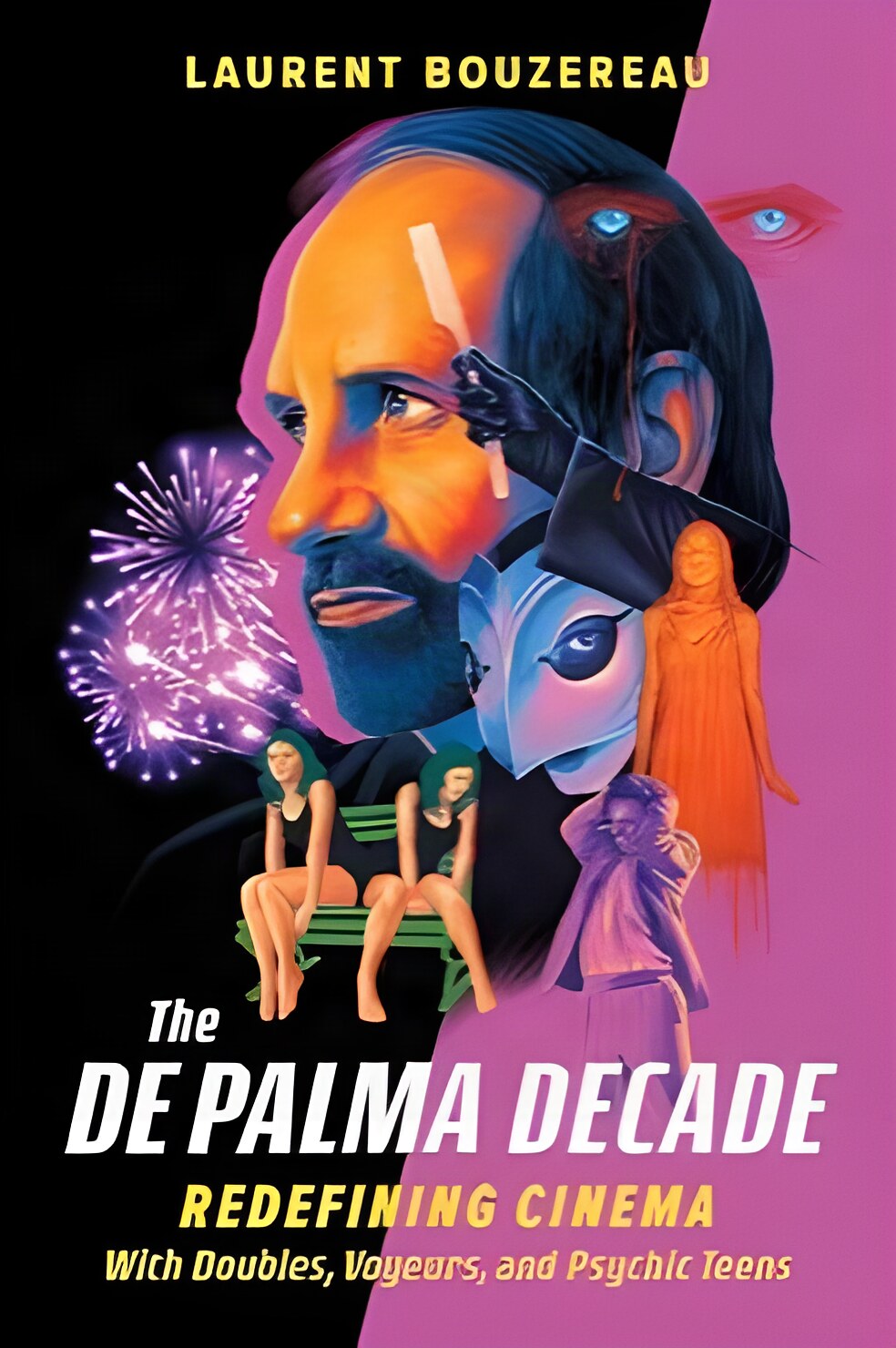
Hardcover. NY, Running Press, 1st, 2024, Book: Very Good, Dust Jacket: Very Good, Hardcover in a bright, unclipped dust jacket. 314 pages, b&w illustrations. Acclaimed filmmaker Laurent Bouzereau explores the seven films that came to define the De Palma decade-Sisters, Phantom of the Paradise, Obsession, Carrie, The Fury, Dressed to Kill, and Blow Out. Combining film analysis, detailed production histories, and new interviews with De Palma himself, his casts, and collaborators, Bouzereau presents the definitive record on this unrivaled period of cinematic creativity and the emergence of an auteur who would continue to influence filmmaking in the decades that followed. Clean copy.
Hardcover. NY, Dial Press, 1st, 1976, Book: Very Good, Dust Jacket: Very Good, Hardcover in a bright, unclipped dust jacket. A view of American film-making from the author's viewpoint.
Hardcover. NY, Crown Publishers, 3rd pr., 1973, Book: Very Good, Dust Jacket: Very Good, Hardcover in a bright, price-clipped dust jacket. 312 pages, many b&w illustrations. An attractive copy of Maltin's encyclopedic companion to Disney's work.
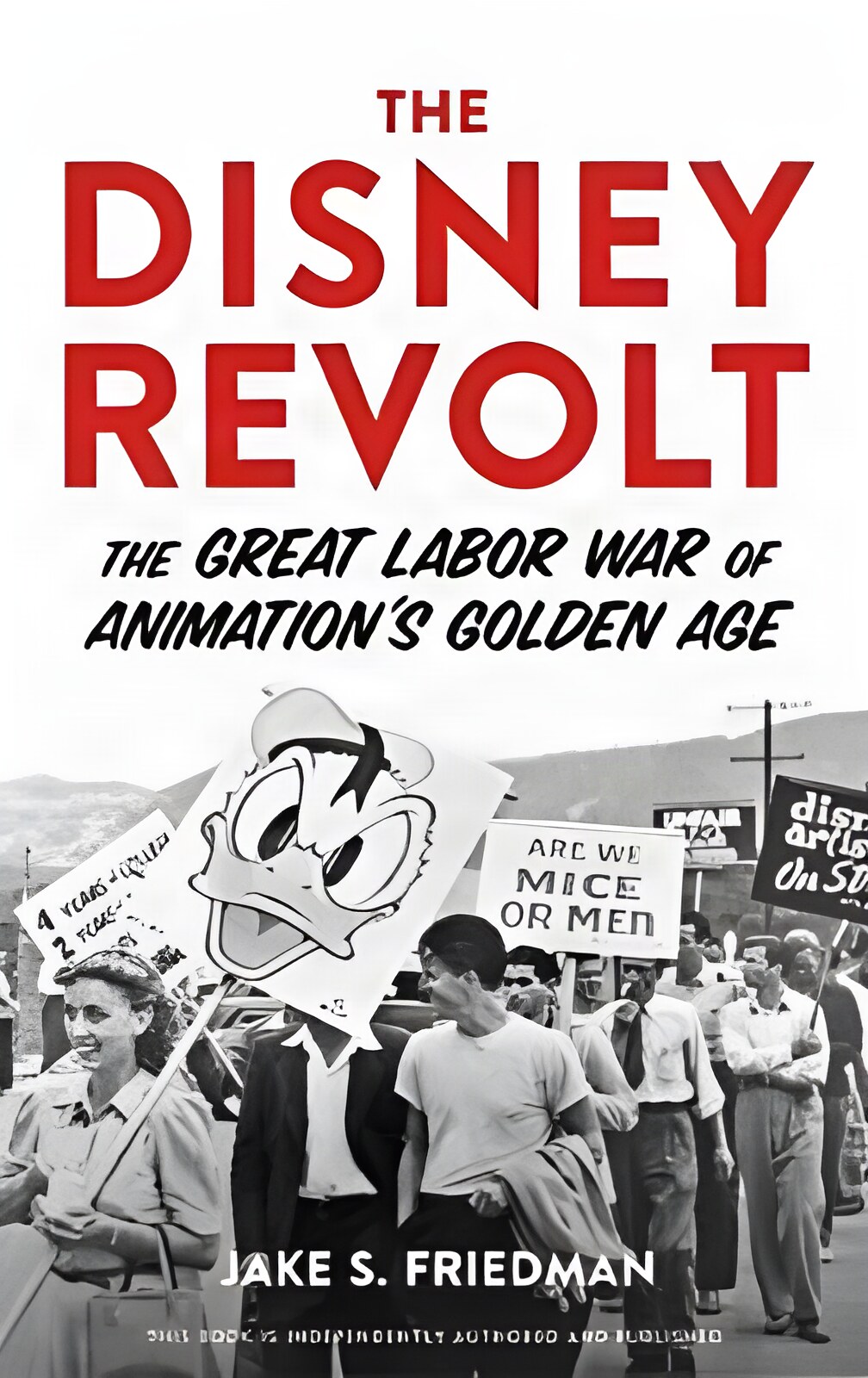
Hardcover. Chicago, Chicago Review Press, 1st, 2022, Book: Very Good, Dust Jacket: Very Good, Hardcover in a bright dust jacket, 322 pages, b&w photos. An essential piece of Disney history has been largely unreported for eighty years. Soon after the birth of Mickey Mouse, one animator raised the Disney Studio far beyond Walt's expectations. That animator also led a union war that almost destroyed it. Art Babbitt animated for the Disney studio throughout the 1930s and through 1941, years in which he and Walt were jointly driven to elevate animation as an art form, up through Snow White, Pinocchio, and Fantasia. But as America prepared for World War II, labor unions spread across Hollywood. Disney fought the unions while Babbitt embraced them. Soon, angry Disney cartoon characters graced picket signs as hundreds of animation artists went out on strike. Adding fuel to the fire was Willie Bioff, one of Al Capone's wiseguys who was seizing control of Hollywood workers and vied for the animators' union. Using never-before-seen research from previously lost records, including conversation transcriptions from within the studio walls, author and historian Jake S. Friedman reveals the details behind the labor dispute that changed animation and Hollywood forever. Clean copy.
Softcover. Chicago, Chicago Review Press, 1st, 2022, Book: Very Good, Dust Jacket: None, Softcover, 322 pages, b&w illustrations. An essential piece of Disney history has been unreported for eighty years.Soon after the birth of Mickey Mouse, one animator raised the Disney Studio far beyond Walts expectations. That animator also led a union war that almost destroyed it. Art Babbitt animated for the Disney studio throughout the 1930s and through 1941, years in which he and Walt were jointly driven to elevate animation as an art form, up through Snow White, Pinocchio, and Fantasia.But as America prepared for World War II, labour unions spread across Hollywood. Disney fought the unions while Babbitt embraced them. Soon, angry Disney cartoon characters graced picket signs as hundreds of animation artists went out on strike. Adding fuel to the fire was Willie Bioff, one of Al Capones wiseguys who was seizing control of Hollywood workers and vied for the animators union.Using never-before-seen research from previously lost records, including conversation transcriptions from within the studio walls, author and historian Jake S. Friedman reveals the details behind the labour dispute that changed animation and Hollywood forever. Clean copy.
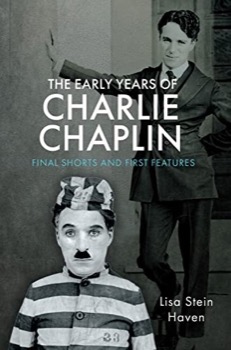
Hardcover. UK, White Owl/Pen & Sword, 20231st, Book: Very Good, Dust Jacket: Very Good, Hardcover in a bright dust jacket, 191 pages, b&w photos. Charlie Chaplin's career has been described, critiqued, and scrutinized. There are book-length studies on Chaplin's music hall career, his career at Keystone Studios and the Mutual Studios. Somehow, his tenure with First National studios, however, has been largely neglected, even though it was during this several-year contractual time period that Chaplin built and occupied his own studio for the first time, that he attempted and succeeded in filming a comedy feature (The Kid) and that he helped to set up United Artists, an organization that protected the salaries and creative freedom of actors in Hollywood. This period in Chaplin's story is especially interesting because such landmark moments are accompanied by Chaplin's first marriage and divorce, the death of his first child, his friendship with French silent film comedian Max Linder, World War I and the role he would play in it, and the production and release of several unsuccessful films that marked Chaplin's first creative blockage - one that threatened his future career. Clean copy.
Hardcover. Lunenburg VT, Stinehour Press, 1st, 1979, Book: Very Good, Dust Jacket: None, Hardcover, green cloth with gilt lettering and color label on front cover. 165 pages, b&w photos. Hildegarde Lasell was a concert singer. "Miss Lasell sang with refinement and cultivation," commented a reviewer in 1936, "she is obviously a serious student of the meaning and values of the music she interprets." She appeared in her husband's two short avant-garde films. She played Madeline Usher in the silent horror film The Fall of the House of Usher (1928),and Lot's wife in the Biblical adaptation Lot in Sodom (1933).In the 1950s, she persuaded composer Alec Wilder to write an original soundtrack for the 1928 film. Watson was vice-president of the Rochester (NY)Historical Society, and wrote the history of the society's Woodside mansion in 1962. She received a medal from the Rochester Museum and Science Center in 1972, alongside fellow recipients including Robert Jastrow, Roger Tory Peterson, and Yousuf Karsh. Her memoir, The Edge of the Woods: A Memoir (1979) was published posthumously. Some of her correspondence with poet Marianne Moore was also published posthumously. Limited to 1,000 copies. Clean.





 "The Busby Berkeley Bookby: Tony Thomas")
 "The Camera Does the Rest: How Polaroid Changed Photographyby: Peter Buse")
 "The Cartoon Music Bookby: Goldmark, Daniel /Taylor, Yuval / Taylor, Juval")

 "The Cinema of Stanley Kubrickby: Norman Kagan")