Softcover. NY, Aperture Foundation, 1996, Book: Very Good, Dust Jacket: None, Softcover, 80 pages. A large, beautifully designed photography publication with many full page photographs in black and white and color. Glossy wraps. "The Universe is nothing without the things that live in it, and everything that lives, eats" wrote Jean-Anthelme Brillat-Savarin in the preamble to his 1825 Physiology of Taste, or Meditations on Transcendental Gastronomy. Brillat-Savarin suggested that the forgotten tenth Muse was Gasterea, who presided over all the pleasures of taste. The feast of superb imagery related to both eating and the edible certainly attests to the possibility of such inspiration. And so inspired, for the first time Aperture serves up food . . . for thought. Here you'll find mouth-watering photographs by Bruce Davidson, Nan Goldin, Horst, Barbara Kruger, Sally Mann, Robert Mapplethorpe, Sylvia Plachy, Cindy Sherman, Nick Waplington, Andy Warhol, William Wegman . . . and more! Accompanying these treats are interviews with fifteen great cooks and chefs, including: Rose Levy Beranbaum, Daniel Boulud, Julia Child, Marcella and Victor Hazan, Nobu Matsuhisa, and Wolfgang Puck.
Hardcover. New York, Fox Duffield & Co., 1st, 1904, Book: Good, Dust Jacket: None, 350 pages, 13 pages of b&w photographs (12 African American portraits by A.L. Coburn). Textured blue cloth covers with dark blue lettering and ruled design. Some light soiling and wear to covers and spine. Internally clean, a few dog-eared pages.
Hardcover. NY, Clarkson Potter, 1st, 2024, Book: Very Good, Dust Jacket: None, Hardcover in pictorial boards, 319 pages, color illustrations. This stunning cookbook collects 100 of the most timeless and seminal recipes from the first leg of Bobby Flays monumental career in one place, for the first time ever. At the age of sixteen, Bobby Flay left high school and the idea of traditional education behind to pursue a life in professional restaurant kitchens. Through his groundbreaking restaurants, cookbooks, and numerous television shows, Flay has built a body of work that is one of the most influential in American culinary history. His stamp can be felt in restaurants across the country, as well as at the dinner table in many families' homes. Read the essays, absorb the photography, and most important, cook tantalizing dishes from this book. Bobby Flay has put decades of his daily work into these pages. Clean, bright copy.
Hardcover. New York , Assouline, 1st, 2005, Book: Very Good, Dust Jacket: Very Good, 80 pages, color illustrated throughout. Unclipped dust jacket. Mary Janes, Dots, Charms, Toostsie Rolls, Smarties, Chupa Chups lollypops. Candy is an sensual part of childhood. First there's the pleasure of seeing, then the practically mind-blowing pleasure of eating. And don't forget the simple pleasure of the creative, colorful wrapping. From the first candy shops in Medieval Europe to Tagada Strawberries that have delighted children worldwide, this book takes you on the historic journey of candy and sweets from New York to New Delhi, from Paris to Tokyo, London and beyond. Clean copy.
Hardcover. NY, Clarion Books;, 1st, 2005, Book: Very Good, Dust Jacket: Very Good, Hardcover, 128 pages. As he did for frontier children in his enormously popular Children of the Wild West, Russell Freedman illuminates the lives of the American children affected by the economic and social changes of the Great Depression. Middle-class urban youth, migrant farm laborers, boxcar kids, children whose families found themselves struggling for survival . . . all Depression-era young people faced challenges like unemployed and demoralized parents, inadequate food and shelter, schools they couldn't attend because they had to go to work, schools that simply closed their doors. Even so, life had its bright spots--like favorite games and radio shows--and many young people remained upbeat and optimistic about the future. Drawing on memoirs, diaries, letters, and other firsthand accounts, and richly illustrated with classic archival photographs, this book by one of the most celebrated authors of nonfiction for children places the Great Depression in context and shows young readers its human face. Endnotes, selected bibliography, index.
Softcover. US, ILR Press, 1st, 2009-08-06, Book: Very Good, Dust Jacket: None, Softcover, 142 pages, illustrated throughout in color. Clean, unmarked copy with only minor wear to wrappers. Since 2001, Candacy A. Taylor (a former waitress herself) has traveled more than 26,000 miles throughout the United States collecting stories of these "lifers," as many waitresses aged fifty or over playfully call themselves. She interviewed fifty-seven waitresses in thirty-eight towns and cities. Their compelling stories are complemented and enhanced by Taylor's striking color photographs of the waitresses at work.Taylor expected that the waitresses she'd meet would feel overworked and underappreciated, but was surprised and delighted to find that the opposite was true. The proud, capable waitresses Taylor interviewed loved their jobs and, even if given the opportunity, "wouldn't do anything else." Nearly all the waitresses said that the physical labor of waitressing helped them to age more gracefully and that the daily contact with customers and coworkers kept them socially engaged. Lifers generally make more money from serving regular customers with whom they forge bonds over decades and their seniority earns them respect from their coworkers and managers. Taylor's sensitive and respectful portrayal of career waitresses who have turned their jobs into a rewarding lifetime pursuit turns Counter Culture into an invaluable portrait of the continued importance of community in our changing society.
Softcover. NY, ILR Press, 1st, 2009, Book: Very Good, Dust Jacket: None, 170 pages. Softcover with light edgewear to wrappers. Color pictures throughout. "Career waitresses do more than just serve food. They are part psychiatrist, part grandmother, part friend, and they serve every walk of American life: from the retired and the widowed, to the wounded and the lonely, and from the working class to the wealthy. The classic diner waitress is an icon of American culture.... This book takes a moment to honor and recognize waitresses' contribution to our communities. Doing this project has helped me to redefine my perspective on life, work, and happiness. It has made me reevaluate the myth of the American dream that says you need to have an 'important' job to be happy."
Softcover. New York, ILR Press, 1st, 2009, Book: Very Good, Dust Jacket: None, 170 pages. Softcover with light edgewear to wrappers. Color pictures throughout. "Career waitresses do more than just serve food. They are part psychiatrist, part grandmother, part friend, and they serve every walk of American life: from the retired and the widowed, to the wounded and the lonely, and from the working class to the wealthy. The classic diner waitress is an icon of American culture.... This book takes a moment to honor and recognize waitresses' contribution to our communities. Doing this project has helped me to redefine my perspective on life, work, and happiness. It has made me reevaluate the myth of the American dream that says you need to have an 'important' job to be happy."
Hardcover. NY, Norton, 1st, 2003, Book: Very Good, Dust Jacket: Very Good, Hardcover, 160 pages. A tribute to the barn by the master documentarian of our time. As an elemental part of our landscape and our history, barns evoke childhood memories for many of us, recollections of a simpler way of life. Regardless of their size or shape, their forms follow their functions. They are honest. They are beautiful. And they are rapidly vanishing. Across the land we see abandoned farms with barns falling down, being torn down, and only occasionally being converted to other uses. As urban sprawl eats up the countryside and food-producing Goliaths put small farmers out of business, the need for old barns has diminished. For most of his life as a photographer, David Plowden has admired and photographed barns. In recent years, as their disappearance accelerated, he made it his mission to document these beautiful structures, before they too are lost. The result is this beautiful book, his hymn to the American barn. 130 duotone photographs.
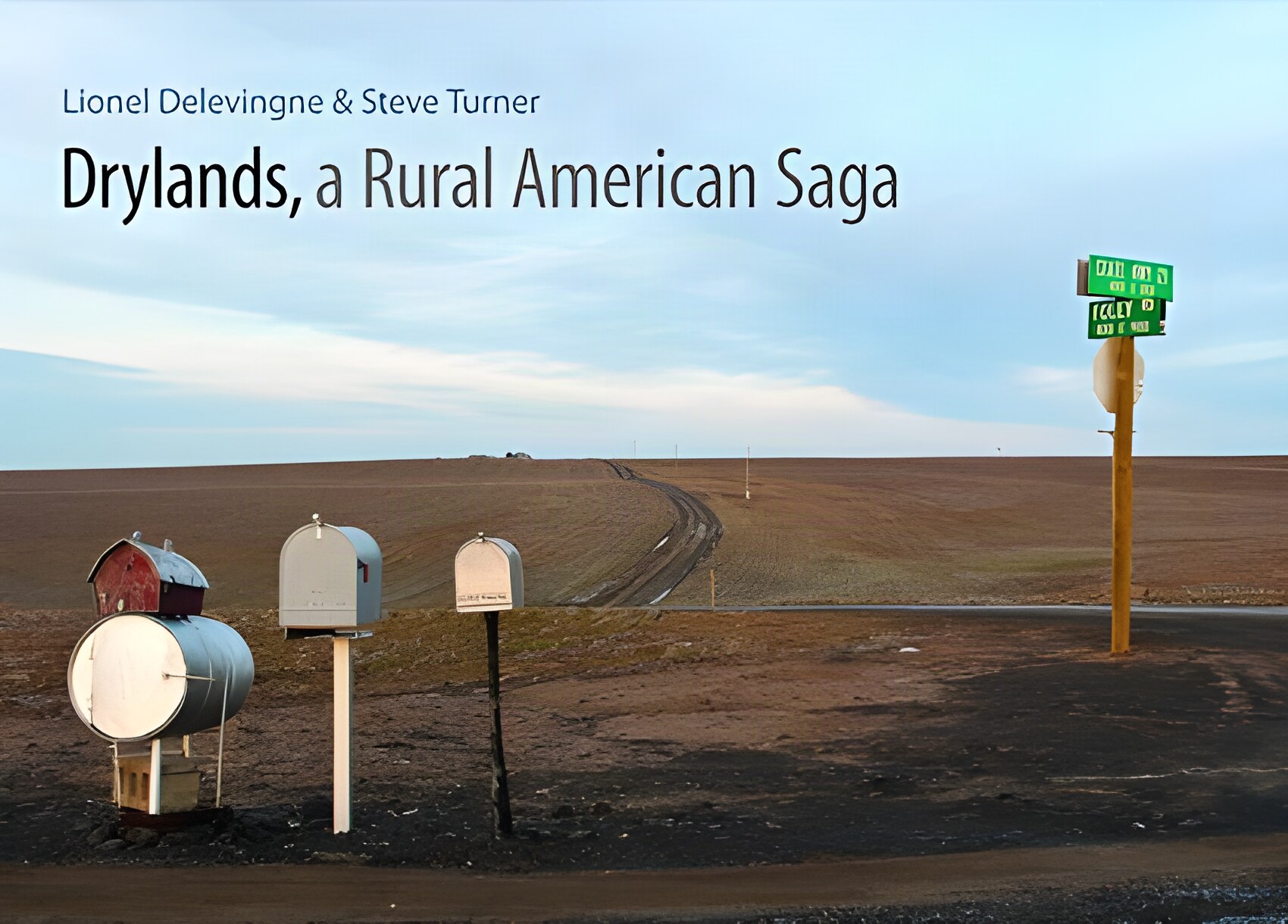
Hardcover. Lincoln NE, University of Nebraska Press, 1st, 2011, Book: Very Good, Dust Jacket: Very Good, Hardcover, oblong format, in a bright dust jacket, 144 pages. B&w and color photographs by Delevingne. Focusing on Adams County in the Columbia Plateau in eastern Washington, Drylands, a Rural American Saga is a pictorial essay documenting the reality underlying our national self-portrait. Both an exception to and a paradigm of the country's agricultural folkways, Adams County offers a panorama of rolling cropland, sagebrush scree, and deep coulees formed by volcanic forces and ice-age floods. The shortage of rainfall, however, mocks the richness of the soils produced by prehistoric events. Yet as documented in these pages, the harvests of Adams County produce a significant share of the nation's food, standing as clear testimony to the skill and perseverance of those who work the land. Clean copy.
Hardcover. NY, Knopf, 2nd printing, 1985-10-12, Book: Very Good, Dust Jacket: Very Good, Hardcover, 122 pages, illustrated with b&w photos. INSCRIBED BY AUTHOR on front end paper. Light edgewear to dust jacket, else a clean, tight copy.
Hardcover. Steidl , 1st, 2015, Hardcover, terra-cotta cloth with pastedown photo on front cover. 264 pages, 170 color illustrations. Balls and Bulldust is a rich collection of images that explores life and work among the cattlemen in the Northern Territory in Australia. It is not another cowboy story, rather one about men and women working very hard, and seeking some kind of solitude and sense of space in the midst of harsh conditions. For some, life in Australia's outback is a life-long routine. The young are attracted by its romanticism, which is-more often than not-shattered by reality's hardships. The red dust covering this vast scrubby landscape and filling the air is prevalent in Ludwigson's images. Days can be blistering hot and temperatures at nights may sometimes fall below zero. People sleep on "swags" on the ground for weeks. The food is drab and the men are in their saddles twelve hours a day mustering herds of cattle, branding and castrating young bulls. Hakan Ludwigson spent three months with the cattlemen of the Australian outback early in his career, and returned to his native Sweden with a body of work that became Balls and Bulldust. DOMESTIC SHIPPING ONLY.
Hardcover. Great Britain, Octopus Publishing Group, Reprint, 2010, Book: Very Good, Dust Jacket: None, 192 pages. Softcover, French Flaps. color illustrations throughout. Text and photography by Dan Lepard. Binding tight. Pages clean and bright. Wrapper glossy, very good. A collection of recipes, personal stories and photographs that capture the breads and home bakers of Europe.
Hardcover. Baltimore, Johns Hopkins University Press, 1st, 2003, Book: Very Good, Dust Jacket: Very Good, Hardcover in a bright dust jacket with a small closed tear to front panel. INSCRIBED BY HUDDLESTON on the dedication page. Huddleston has paired archival images of the first modern war with his own, contemporary color shots of the same locations, at the same time of year, at the same time of day. Some sites of suicidal charges have become Kmarts, mini-malls or swamps strewn with metal and plastic trash. The juxtapositions possess surprising power. In an overexposed and damaged archival shot of the Confederate prisoner of war camp at Andersonville, Ga., a filthy crowd of anonymous men packs the frame, while on the facing page Huddleston presents his own fine-tuned image of a muted, borderless sky. Office buildings, grocery stores and fast food franchises have sprouted where Union Major General George H. Thomas and Confederate General John Bell Hood slugged it out for December days in Nashville 141 years ago. Near the site of some of the heaviest fighting between blue and gray, a KFC sign now advertises discounts on the colonel's secret recipe. Clean copy.
Hardcover. Berkeley CA , Ten Speed Press, reprint, 2002, Book: Good, Dust Jacket: Very Good, 231 pages. Hardcover. SIGNED BY AUTHOR on front end paper. Extensive color photography throughout. Gilt titles on dust jacket cover. Some soil from previous owners book plate on front end paper. Dust jacket priced clipped, otherwise clean, tight copy.
Softcover. Washington DC, National Geographic Society, 1st, 1917, Book: Very Good, Dust Jacket: None, Original magazines January - June 1917, in a maroon pebbled hardcover binding. Magazines are dated and paged, with photographs and maps, but do not have covers, advertisements, etc. Several pages of color plates. Light chipping to spine labels otherwise a bright, clean volume. The half year dominated by America's entrance into World War I. Articles by Newton D. Baker, Secretary of War, America's Duty; Stand by the Soldier, by General John J. Pershing; President Wilson's Proclamation; Bind the Wounds of France, by Herbert Hoover; articles by the ambassadors of Britain and France; Russian Situation and its Significance to America and Russia's Democrats; War, Patriotism, and the Food Supply.
Softcover. Washington DC, National Geographic Society, 1st, 1917, Book: Very Good, Dust Jacket: None, Softcover, illustrated with b&w photos, maps, advertisements. Original yellow and black wrappers, spine with light wear, good to very good. Articles include: The Food Armies of Liberty, The Geography of Medicines, A Few Glimpses into Russia, Conserving the Nation's Man Power.
Softcover. Princeton Architectural Press, 1st, 2005, Book: Very Good, Dust Jacket: None, Softcover, 160 pages. The blue plate special, meatloaf, a cheeseburger deluxe, a milkshake in a frosty mixing canister, a hot cup of joe--all served by a friendly face in a well-lighted aluminum tube. Such are the special joys of the American diner. And it was just these pleasures that photographer Stephan Schacher set out to document when he left New York on a journey through North America that would test both his stomach and his resolve. Schacher's mission: to feed his hunger only at diners, and to photograph both his meal and his server every time. The result is a unique and deeply human story--quirky and nostalgic and generous--of one man's quest to discover North America's diner culture and his own place in it. Traveling from a Jersey diner to the Canadian Rockies to a shoreside clambake shack on the Pacific Ocean, Schacher's culinary adventure is documented here with a wealth of visual materials. The author's arresting photographs of succulent steaks and greasy fries, of smiling waitresses in uniforms or jeans, and brightly colored plastic dishes and table mats are supplemented by maps showing the photographer's route across the continent.
Softcover. New York, Princeton Architectural Press, 1st, 2005, Book: Very Good, Dust Jacket: None, 160 pages, color plates throughout. The blue plate special, meatloaf, a cheeseburger deluxe, a milkshake in a frosty mixing canister, a hot cup of joe--all served by a friendly face in a well-lighted aluminum tube. Such are the special joys of the American diner. And it was just these pleasures that photographer Stephan Schacher set out to document when he left New York on a journey through North America that would test both his stomach and his resolve. Schacher's mission: to feed his hunger only at diners, and to photograph both his meal and his server every time. The result is a unique and deeply human story--quirky and nostalgic and generous--of one man's quest to discover North America's diner culture and his own place in it. Traveling from a Jersey diner to the Canadian Rockies to a shoreside clambake shack on the Pacific Ocean, Schacher's culinary adventure is documented here with a wealth of visual materials. The author's arresting photographs of succulent steaks and greasy fries, of smiling waitresses in uniforms or jeans, and brightly colored plastic dishes and table mats are supplemented by maps showing the photographer's route across the continent.
Hardcover. New York, Glitterati Incorporated, 1st, 2008, Book: Very Good, Dust Jacket: Very Good, Hard cover, 128 pages. Clean, unmarked copy with only minor wear to dust jacket. Relatively unknown peer of innovative photographers Slim Aarons and Richard Avedon, Ronny Jaques' photographs captured the fashion, travel, food and lifestyle scenes for magazines like Town & Country, Harper's Bazaar, and Gourmet, where he established himself as the first true innovator of food photography. His work is chronicled and explained for the first time in book form by fashion luminary and friend, Pamela Fiori, editor for the past fifteen years of Town & Country magazine.
Hardcover. NY, Hyperion, 1st, 2006, Book: Very Good, Dust Jacket: Very Good, Hardcover, 383 pages. If you are into chocolate in any way, this highly regarded book is a "must have". There are loads of chocolate-centric recipes, written with the help of food writers, Ann Krueger Spivack and Susie Heller, and with contributions from many of the food elite: Michael Chiarello, Joanne Weir, Jacques Pepin, Alice Medrich, Nancy Oakes, Rick Bayliss, Elizabeth Falkner, David Lebovitz, Thomas Keller and so on. But this is more than a cookbook; it tells the story of chocolate and of the company, Scharffen Berger Chocolate Maker, founded by John Scharffenberger and the late Dr Robert Steinberg. And it contains anecdotes on the Legends and Lore of chocolate. All illustrated with great photography.
Hardcover. Bologna IT, Damiani, 1st, 2006, Book: Very Good, Dust Jacket: None, Hardcover, 100 pages. Original publisher's illustrated laminated boards. Issued without dust jacket. Copiously illustrated in color and black and white throughout. Beatrice Haverich believes that "trees embody life. They show us the seasons in a city landscape, and they provide us with wood, food and shelter. Their silence demands our respect." Her subjects, for whom she has the utmost sympathy, are survivors, stalwarts: for example, the Yew trees in Kingsley Vale, UK, are 4,000 years old. Among these portraits, she observes branches molded by the wind into lopsided hairstyles, and roots exposed by the rain. Some trees survive in cement planters or remain in the bounds of their sidewalk squares, but others reclaim their habitat, taking over old greenhouses and popping the glass panes one by one as they grow. Up from sand and boulders and cliffs and pavement, Haverich's trees are shaped by their landscape, but they persist in shaping it as well.
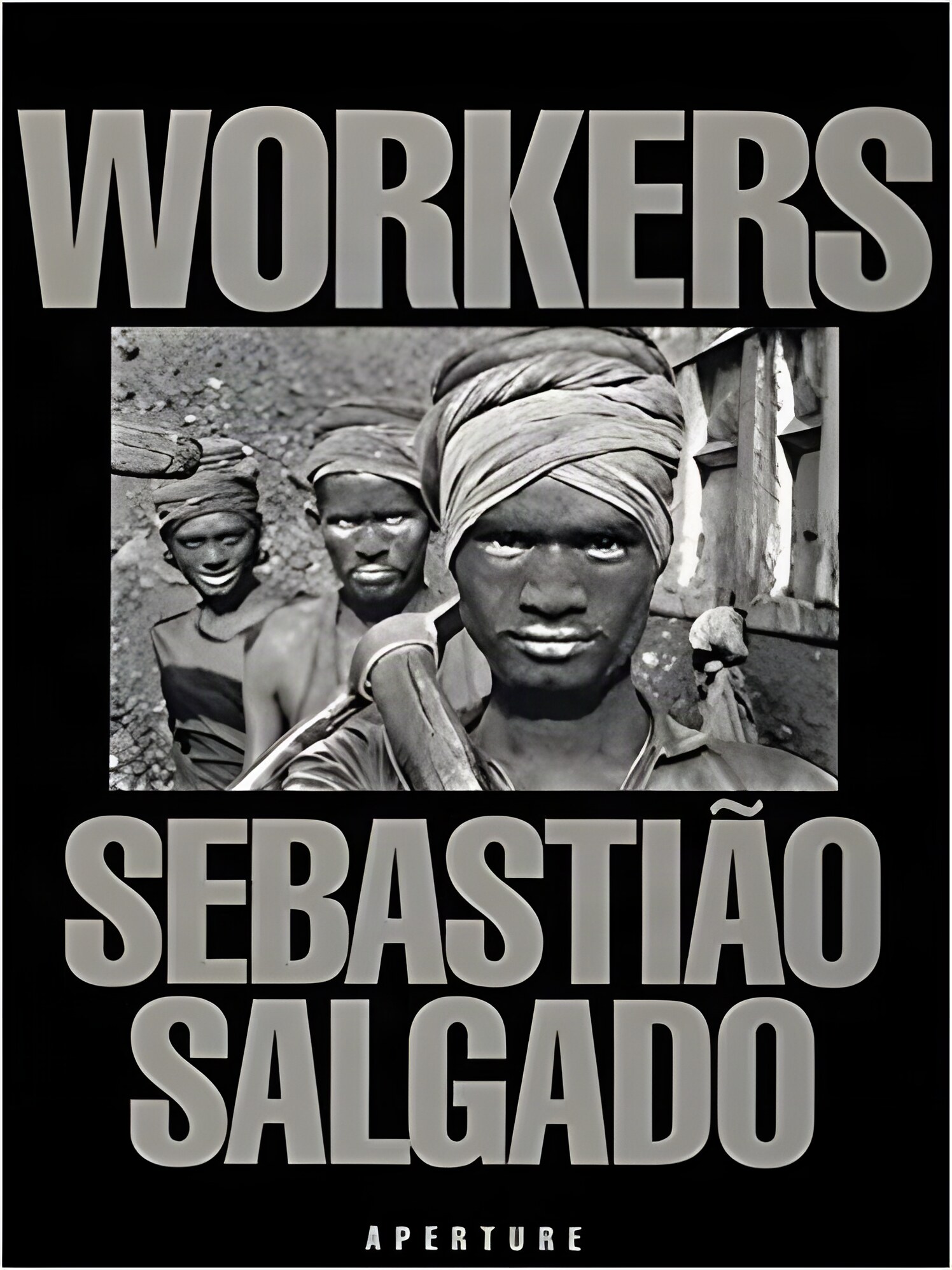
Hardcover. NY, Aperture, 1st, 1993, Book: Very Good, Dust Jacket: Very Good, Hardcover, 400 pages, 350 duotone images. More than those of any other living photographer, Sebastiao Salgado's images of the world's poor stand in tribute to the human condition. His transforming photographs bestow dignity on the most isolated and neglected, from famine-stricken refugees in the Sahel to the indigenous peoples of South America. "Workers" is a global epic that transcends mere imagery to become an affirmation of the enduring spirit of working women and men. The book is an archaeological exploration of the activities that have defined labor from the Stone Age through the Industrial Age, to the present. Divided into six categories -- "Agriculture," "Food," "Mining," "Industry," "Oil" and "Construction"-- the book unearths layers of visual information to reveal the ceaseless human activity at the core of modern civilization. Extended captions provide a historical and factual framework for the images. "Salgado unveils the pain, the beauty, and the brutality of the world of work on which everything rests," wrote Arthur Miller of this photobook classic, upon its original publication in 1993. "This is a collection of deep devotion and impressive skill." An elegy for the passing of traditional methods of labor and production, "Workers" delivers a message of endurance and hope. DOMESTIC SHIPPING ONLY.

 "Aperture 143: Everything That Lives, Eats (Aperture Magazine)by: Aperture Foundation Inc. Staff")
 "Blue Grass Cook Book, Theby: Fox, Minnie C.")


 "Children of the Great Depressionby: Russell Freedman")
 "Counter Culture: The American Coffee Shop Waitressby: Taylor, Candacy A.")
 "Counter Culture: The American Coffee Shop Waitressby: Taylor, Candacy A.")
 "Counter Culture: The American Coffee Shop Waitressby: Taylor, Candacy A.")

 "Fun of Cooking, The (SIGNED COPY)by: Krementz, Jill")
 "Hakan Ludwigson: Balls and Bulldust by: Hakan Ludwigson")
 "Handmade Loaf, The: Contemporary European Recipes for the Home Bakerby: Lepard, Dan")
 "Killing Ground: The Civil War and the Changing American Landscape (INSCRIBED COPY)by: John Huddleston")


 "Napa Valley (SIGNED COPY)by: O'Rear, Charles")
 "National Geographic Magazine - Vol. XXXI January - June 1917 (Six Issues)by: National Geographic Society")
 "National Geographic Magazine - Vol. XXXII No. 3 September 1917by: National Geographic Society")

 "Plates and Dishes: The Food and Faces of the Roadside Dinerby: Schacher, Stephan")
 "Stolen Moments: The Photographs of Ronny Jaquesby: Fiori, Pamela")
 "The Essence of Chocolate: Recipes from Scharffen Berger Chocolate Makers and Cooking with Fine Chocolateby: Robert Steinberg and John Scharffenberger")
 "The Whisper of a Million Leaves by: HAVERICH, Beatrice.")