Hardcover. Boston, Houghton Mifflin, reprint, 1882, Book: Very Good, Dust Jacket: None, Hardcovers, two-volume set complete. Matching dark brown cloth covers stamped in black and gilt, top edge gilt. 639; vi, 653 pages; index, bibliography, frontispiece portrait in each volume - one a quite formal portrait of Voltaire in his prime, the other a sketch of him in old age. Covers show light wear, name on title pages. This is the second printing, the first published a year earlier. A comprehensive life of the great Enlightenment writer. PLEASE NOTE: DUE TO WEIGHT, DOMESTIC SHIPPING ONLY.
Hardcover. Oxford UK, The Voltaire Foundation, 1st, 1991, Book: Very Good, Dust Jacket: None, Hardcover in blue cloth, gilt lettering on spine, 251 pages. As France moved from the seventeenth to the eighteenth century, it found itself in the grip of anglomanie - a fascination with new English ideas in the domains of science and philosophy. Chief among the English thinkers it enthusiastically embraced was John Locke. On his visits to France and in his personal correspondence, Locke interacted with prominent French thinkers, scientists and savants of the day, such as Charles Barbeyrac and Pierre Magnol, and his works engaged in a critical dialogue with those of Descartes. However, Locke has been feted to such an extent that his position in the history of ideas in France is often overlooked. In Locke in France 1688-1734, Ross Hutchison re-examines and re-contextualises the precise nature and extent of Locke's influence in France by exploring how his ideas were incorporated into contemporary French debates and controversies in the transitional period from the seventeenth to the eighteenth century. Hutchison highlights the various channels of dissemination which brought Locke to the attention of the French, including translations of his major works and his personal friendships with French Protestant exiles. Hutchison also presents case studies of interactions in which Lockean ideas played a dominant role in the evolution of French thought, ranging from political theory to the nature of language, theories of education, and the relation between soul and matter. Clean copy, no dust jacket.
Hardcover. Cambridge UK, Cambridge University Press, 1st, 1953, Book: Very Good, Dust Jacket: Good, Hardcover in a worn dust jacket with a chunk gone from rear panel, 309 pages. This book gives a complete account of all that Locke saw, did and heard during his four years in France. The entries vary from laconic jottings to detailed accounts - full of colour and wit - of life in Paris and the provinces. Locke's variety of interests presents a vivid and thorough account of France at that time. He observed and recorded the absolutism of Louis XIV and the poverty of the peasants, the growing persecution of the Protestants and the external manifestations of Catholicism, recent developments in science and technology - even agricultural methods and the system of taxes. So that this is a book for the general reader as well as for the student of Locke, the social historian and the historian of science. Three b&w plates including a map of his travels. Name on front fly leaf, rubber withdrawn stamp on copyright page, otherwise clean.
Hardcover. NY, Farrar, Straus and Giroux, 1st, 1971, Hardcover in a bright dust jacket, 378 pages. From dust jacket notes: "For most Americans, the Second World War started on December 7, 1941, and much of the fighting took place in strange, faraway places. For the British, the war started on September 3, 1939, and much of the action took place in the skies over England. In the spring of 1940, after months of uneasy calm, Germany invaded the Lowlands and conquered France within a few days, leaving England without her only meaningful ally on the Continent. A year would pass before the Soviet Union was drawn into the war, and eighteen months before the Japanese attacked Pearl Harbor. The United Kingdom, with a land area about the size of Wyoming, was alone, all alone, with only the Straits of Dover separating the island from Hitler's war machine. For six years Mollie Panter-Downes covered the war for The New Yorker magazine from her native England. Even at the height of the air war over London, when 'all that is best in the good life of civilized effort appears to be slowly and painfully keeling over,' she continued to file her fortnightly reports in an understated but dramatic fashion that reflected the fortitude of her fellow countrymen: 'The announcements of the first air-raid deaths are beginning to appear in the obituary columns of the morning papers. No mention is made of the cause of death, but the conventional phrase "very suddenly" is always used.' William Shawn, editor of The New Yorker, has assembled Miss Panter-Downes' 'Letter from London' columns into a consecutive, on-the-spot chronicle of the war in England."
Hardcover. Paris, Moutard, 1st, 1789, Book: Good, Dust Jacket: None, Hardcover, leatherbond, chipped and worn, marbled endpapers, 336 pages. Vol. 1 only (of 4). FRENCH TEXT. Interior pages very good. Anquetil (1723 - 1806) became prior of the abbey of La Roee, in Anjou, in 1759 and soon after was appointed director of the college of Senlis, where he taught history and theology. He published this work just on the eve of the French Revolution (the Approbation is dated 30 September 1788) and was imprisoned during the Terror for his troubles.
Hardcover. Prestel, 1st, 1998, Book: Very Good, Hardcover, 167 pages. Louise Bourgeois: The Secret of the Cells is both a catalog of works by and a biography of the famous Parisian artist. Born in 1911, the now-octogenarian Bourgeois has shown widely throughout the world and to great critical acclaim, especially within the last decade. Bourgeois's personal history is vastly important in the content of her work, and this book takes readers on a journey from her affluent childhood in France, including family photographs, to her schooling under painter Fernand Leger to her eventual marriage and move to the United States, where she continued her long and varied career working primarily as a sculptor and installation artist. Bourgeois's abstract figurative sculptures range in materials from plaster, marble, and bronze to the more nontraditional latex, glass, thread, etc. Regardless of the medium, the work is imbued with a strong physicality that echoes the forms of the human body. Included in the book are discussions of Bourgeois's work in relation to other artists and movements such as Rodin, Brancusi, and primitivism. Bourgeois has been an inspiration to an entire generation of artists, not just because of her long and illustrious career but because her work has pushed so many boundaries. Louise Bourgeois: The Secret of the Cells is an informative and beautiful book with 77 color and 176 black-and-white images.
Hardcover. NY, St. Martins Press, 1st, 1984, Book: Very Good, Dust Jacket: Very Good, Hardcover, 145 pages. From the front dust jacket flap "Louise Dahl-Wolfe, one of the most celebrated photographers of the thirties, forties and fifties, was a uniquely American artist whose work had enormous ramifications for Horst, Avedon, Penn, and other great photographers who followed her. Working in the heydey of Harper's Bazaar with editor-in-chief Carmel Snow and renowned fashion editor Diana Vreeland, she came to fashion photography at a time when formal, sometimes stilted, European elegance was the norm and infused it with her fresh new vision - informal, intimate, and undeniably American". Preface by Frances McFadden.
Softcover. NY, W. W. Norton , reprint, 1984, Book: Very Good, Dust Jacket: None, Softcover, 339 pages. In Felix Gilbert's skilled analysis, the figures of Niccolo Machiavelli, whose writing changed the way people think about politics, and Francesco Guicciardini, whose History of Italy is one of the first classics of modern historical writing, provide important clues to interpreting the Renaissance. "Instead of treating these two great figures in isolation, Professor Gilbert puts them into the context of their times, into the stream of political thinking and historical writing of which they were a part. . . .His book is the fruit of years of writing of which they were a part. . . .His book is the fruit of years of original research among Florentine archives and of careful thought about the problems of Renaissance politics and historiography." Clean, bight copy.
Hardcover. NY, Bloomsbury , 1st, 2016, Book: Very Good, Dust Jacket: Very Good, Hardcover, pictorial boards with wrap-around dust jacket band with title. 403 pages, color and b&w illustrations. Claude Monet's water lily paintings are among the most iconic and beloved works of art of the past century. Yet these entrancing images were created at a time of terrible private turmoil and sadness for the artist. The dramatic history behind these paintings is little known; Ross King's Mad Enchantment tells the full story for the first time and, in the process, presents a compelling and original portrait of one of our most popular and cherished artists. Clean, bright copy.
Hardcover. La Fabrica, 1st, 2009, Book: Very Good, Dust Jacket: Very Good, Like new in publishers shrink-wrap. Hardcover, 391 pages, profusely illustrated. This excellent catalog contributes a wealth of new information, providing a valuable contribution to our understanding of Man Ray. The treasure trove of images and objects collected here is drawn from the large archives of the Man Ray Trust in Long Island, New York, and includes little known early works, documents and objects from his private life, working drawings and sketches for major works as well as innumerable familiar masterpieces.
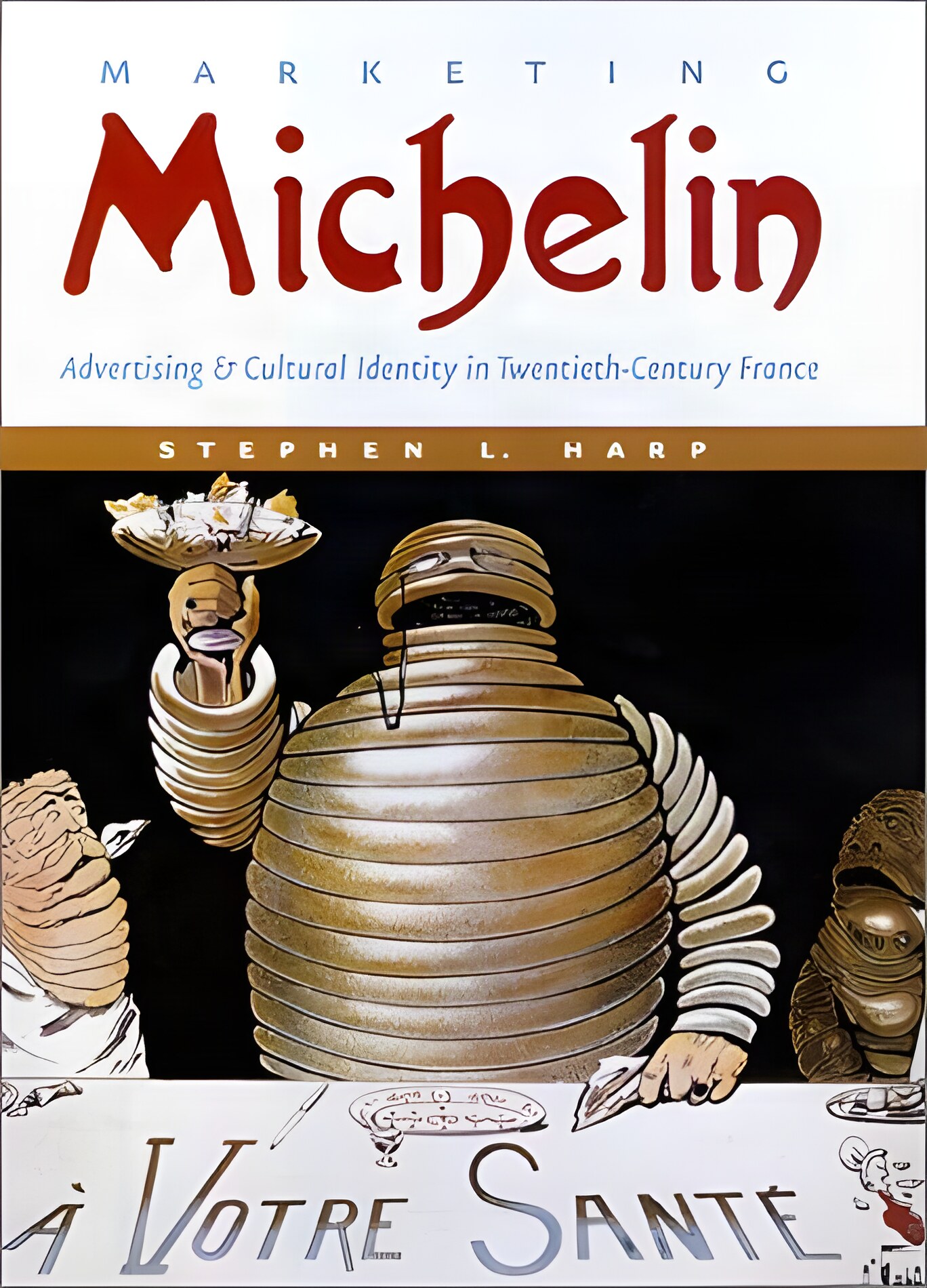
Hardcover. Baltimore, Johns Hopkins University Press, 1st, 2001, Book: Very Good, Dust Jacket: Very Good, Hardcover in a bright dust jacket, 356 pages. One of the world's largest tyre makers and an international corporation with interests in countries around the world, Michelin is also a uniquely French company, one that throughout its history has closely identified itself with the country's people and culture. In the process, it has helped shape the self-image of 20th-century France. This volume offers a provocative history of the company and its innovative advertising campaigns between 1898, when Bibendum - the company's iconic "Michelin Man" - was first introduced, to 1940, when France fell to the Nazis and the company's top executive, Edouard Michelin, died. Both events indelibly changed the company and the national context in which it operated. Clean copy.
Hardcover. University Park, Pennsylvania State Univ Press, 1st, 1984, Book: Very Good, Dust Jacket: Very Good, Two hardcover volumes in bright dust jackets. Professor Armi posits that the great third abbey at Cluny is the building where regional masons of different traditions first combined their talents to develop a new design, and that the artisans responsible for the masonry also created its sculpture. Volume I Text, 204 pages; Volume II contains 238 b/w Illustrations.
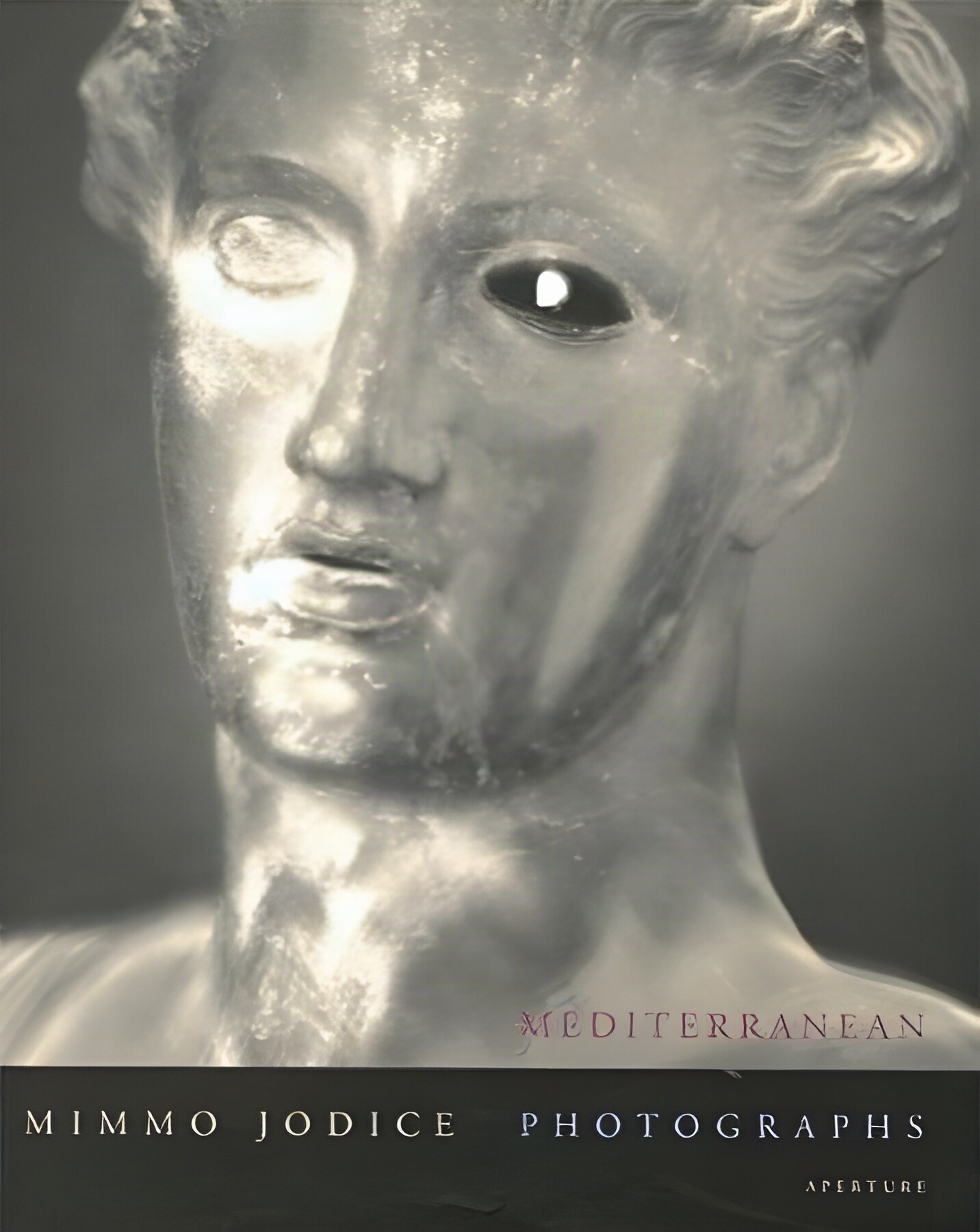
Hardcover. NY, Aperture, 1st, 1995, Book: Very Good, Dust Jacket: Very Good, Hardcover in a bright dust jacket. 118 pages with b&w plates. From Italy, France, Spain, Greece, Macedonia, Turkey, Tunisia, Syria, and Jordan, Jodice's luminous photographs evoke a vision of Mediterranean civilization that is a conflation of history and mythology. His dramatic yet ethereal images refuse both classical and contemporary boundaries in a fusion of the topographical and the intimate. Ruined temples, lost cities, heroic landscapes, gods and goddesses, vistas of Vesuvius and of the omnipresent sea transcend the constraints of their historical context in terms of both time and space. Clean copy.
Hardcover. NY, D. Appleton & Company, 1st US, 1894, Book: Very Good, Dust Jacket: None, Hardcovers, Three volumes complete, blue cloth hardcovers with gilt titles and oval decorations on the front covers. Gilt titles and decorations on the spines. Top edges gilt. Volume I: 421 pages, [4] pages advertisements, Volume II: 484 pages, [8] pages advertisements, Volume III: 541 pages, [2] pages advertisements. Illustrated with frontispieces in the three volumes. Illustrations and folding facsimile autographs and manuscripts. Previous owner's inscriptions written on inside front cover of Vol. 1, Otherwise a bright, clean set. PLEASE NOTE: DUE TO WEIGHT, DOMESTIC SHIPPING ONLY.
Softcover. NY, Seven Stories Press, reprint, 2012, Book: Very Good, Dust Jacket: None, Softcover, 431 pages. A fascinating document of an extraordinary life, Memoirs of A Breton Peasant reads with the liveliness of a novel and bristles with the vigor of an opinionated autodidact from the very lowest level of peasant society. Brittany during the nineteenth century was a place seemingly frozen in the Middle Ages, backwards by most French standards; formal education among rural society was either unavailable or dismissed as unnecessary, while the church and local myth defined most people's reasoning and motivation. Jean-Marie Deguignet is unique not only as a literate Breton peasant, but in his skepticism for the church, his interest in science, astronomy and languages, and for his keen--often caustic--observations of the world and people around him. Born into rural poverty in 1834, Deguignet escapes Brittany by joining the French Army in 1854, and over the next fourteen years he fights in the Crimean war, attends Napoleon III's coronation ceremonies, supports Italy's liberation struggle, and defends the hapless French puppet emperor Maximilian in Mexico. He teaches himself Latin, French, Italian and Spanish and reads extensively on history, philosophy, politics, and literature. He returns home to live as a farmer and tobacco-seller, eventually falling back into dire poverty. Throughout the tale, Deguignet's freethinking, almost anarchic views put him ahead of his time and often (sadly, for him) out of step with his contemporaries. Deguignet's voluminous journals (nearly 4,000 pages in total) were discovered in a farmhouse in Brittany a century after they were written. This narrative was drawn from them and became a surprise bestseller when published in France in 1998. Clean copy.
Hardcover. NY, Harcourt Brace And Company , reprint, nd, Book: Very Good, Dust Jacket: Good, Hardcover in a lightly worn and chipped dust jacket. 424 pages, 10 tipped-in color plates & 48 double-sided b/w plates. index. This book is an attempt to tell the story of modern French painting as developed by the Impressionists and subsequent adventurers in the last hundred years in Paris. No date, most likely early 1950s. Clean copy.
Hardcover. London, Hodder and Stoughton, 1st, 1916, Book: Fair, Dust Jacket: None, 158 pages. Hardcover. Features 46 tipped-in plates. Foxing throughout. Front hinged cracked. Covers worn with areas of staining, darkening to spine cloth.
Softcover. Princeton/New York, Markus Wiener, reprint, 1993, Book: Very Good, Dust Jacket: None, Softcover, 186 pages, b&w illustrations. Napoleon's conquest of Egypt in 1798 was the first contact between a Western power with imperial goals and an ancient regime of an African society. Sheik Al-Jabarti's chronicle is a unique combination of historical narration and reflection combined with daily observations about the atmosphere in Cairo and the mood among the local population. The book is an Arab view of a turning point in modern history.
Hardcover. London, Arthur L Humphreys, 2nd pr., 1900, Book: Very Good, Dust Jacket: None, Hardcover, maroon cloth with gilt staping. 261 pages including index. 261 pages. Written almost 80 years after the Emperor's death, the author attempts to bring together all the contemporary biographies and memoirs relating to the sojourn on St Helena. Mild foxing, otherwise clean.
Softcover. Washington DC, National Geographic Society, 1st, 1930, Book: Very Good, Dust Jacket: None, Original magazines July - December 1930, in a green pebbled hardcover binding. Magazines are dated and paged, with photographs and maps, but do not have covers, advertisements, etc. Includes: Mexico's west coast; 3 articles on the conquest of Antarctica; Unmapped areas of China, Unexplored areas of the Philippines; Chateau country of France; Yugoslavia; Virgil's Aeneid and Roman Geography; Strange tribes in the Shan States of Burma; The Yukon trail of 1898; Viking life in the Faeroes; and much more. Clean, bright volume.
Softcover. Washington DC, National Geographic Society, 1st, 1917, Book: Very Good, Dust Jacket: None, Original magazines January - June 1917, in a maroon pebbled hardcover binding. Magazines are dated and paged, with photographs and maps, but do not have covers, advertisements, etc. Several pages of color plates. Light chipping to spine labels otherwise a bright, clean volume. The half year dominated by America's entrance into World War I. Articles by Newton D. Baker, Secretary of War, America's Duty; Stand by the Soldier, by General John J. Pershing; President Wilson's Proclamation; Bind the Wounds of France, by Herbert Hoover; articles by the ambassadors of Britain and France; Russian Situation and its Significance to America and Russia's Democrats; War, Patriotism, and the Food Supply.
Hardcover. Washington, D.C., U.S. Government Printing Office, 1st, 1935, Book: Good, Dust Jacket: None, Hardcover, 653 pages. Gilt top edge. Minor spine and cover edge wear. Minor soiling on cover and spine. Otherwise, a clean and tight copy. Foreword by President Roosevelt and a preface by Captain Dudley W. Knox. plus 10 plates including 2 folded maps and the frontispiece. Fp: U.S. Ship of War Delaware. Cloth cover, gilt title on spine.
Hardcover. Washington, D.C., U.S. Government Printing Office, 1st, 1935, Book: Good, Dust Jacket: None, Hardcover, 624 pages. Gilt top edge. Minor spine and cover edge wear. Minor soiling on cover and spine. Otherwise, a clean and tight copy.




 "London War Notes 1939-1945by: Mollie Panter Downes")
 "LOUIS XIV SA COUR ET LE REGENT- tome I onlyby: ANQUETIL Pierre Louis")

 "Louise Dahl-Wolfe: A Photographer's Scrapbookby: Louise Dahl-Wolfe")


 "Man Ray: Despreocupado Pero No Indiferente / Unconcerned But Not Indifferent (English and Spanish Edition)by: Jacob, John P. and Noriko Fuku")
 "Masons and Sculptors in Romanesque Burgundy: The New Aesthetic of Cluny III (2 Volumes)by: Armi, C. Edson")


 "Memoirs of a Breton Peasant, 1834-1905by: Jean-Marie D?©guignet")
 "Middletown Springs, Vermont: A Gem in the Hillsby: Krouse, Frances B.")
 "Modern French Paintersby: R.H. Wilenski")
 "Mr. Poilu - Notes and Sketches with the Fighting French by: Ward, Herbert")


 "National Geographic Magazine - Vol. LVIII July - December 1930 (Six Issues)by: National Geographic Society")
 "National Geographic Magazine - Vol. XXXI January - June 1917 (Six Issues)by: National Geographic Society")
 "Naval Documents Related to the Quasi-War Between the United States and France: Naval Operations from February 1797 to October 1798by: Swanson, Claude A.")
 "Naval Documents Related to the Quasi-War Between the United States and France: Naval Operations from November 1798 to March 1799by: Swanson, Claude A.")